- EN


 Log in
-
- Live Auctions
- Past auctions
- More
- Kornfeld today
- The Story of Kornfeld
- Information









Borgonovo 1902 - 1985 Paris



1961-1964
Bronze
29.2x9.5x24.5 cm
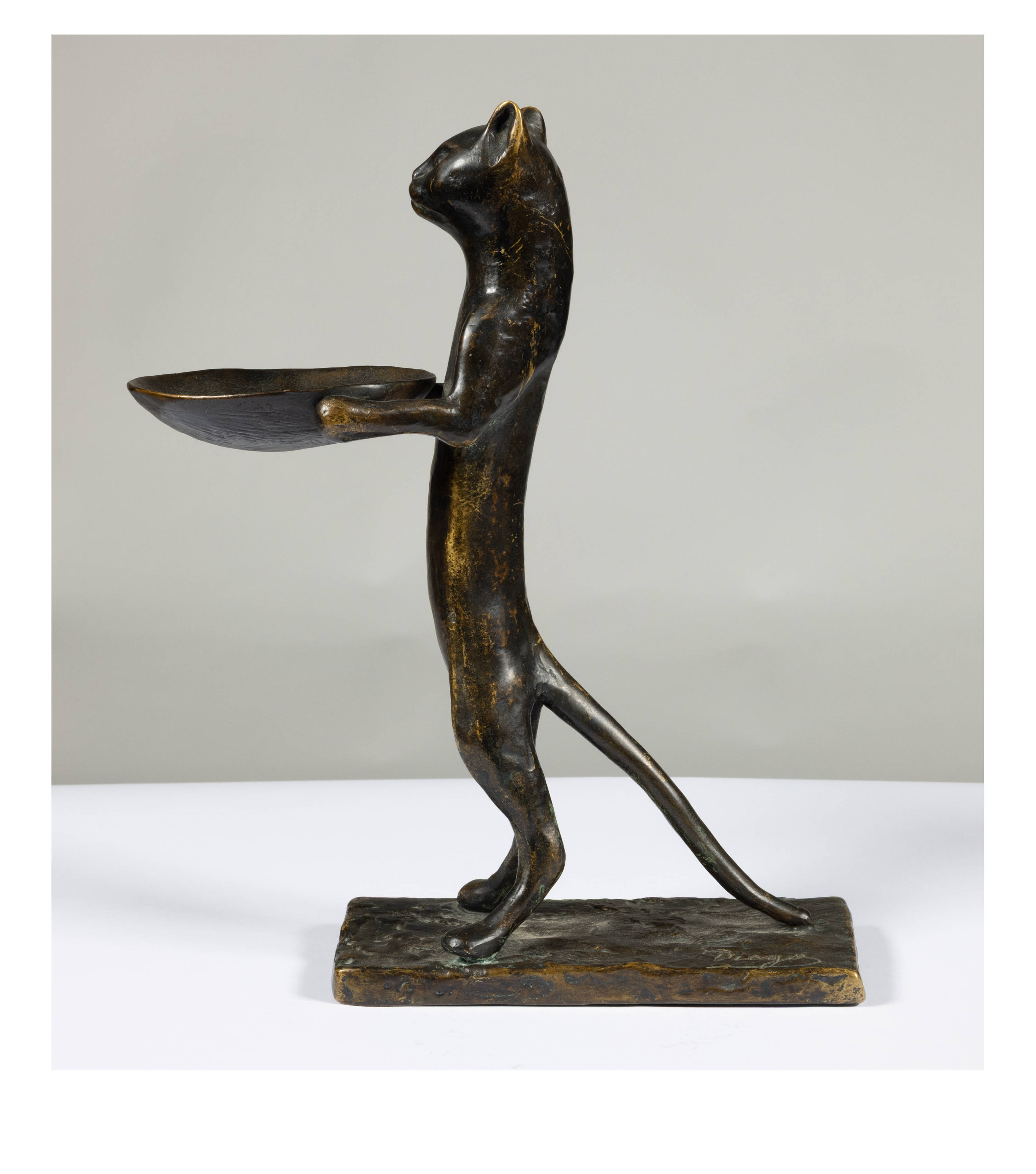
On the base with engraved signature 'Diego'
With confirmation of authenticity from Expertises Denis Vincenot/Philippe Meier, Dijon/Lausanne, dated 2 May 2024, no. C10/05/24PMCV2486
Atelier Diego Giacometti, Paris, acquired there in 1967 by
The Eberhard W. Kornfeld Collection, Bern
Daniel Marchesseau, Diego Giacometti, Paris 1986, see p. 120
Daniel Marchesseau, Diego Giacometti, Sculpteur de meubles, Paris 2018, see p. 140
Zurich 1988, Museum Bellerive, Diego Giacometti, cat. no. 65A
Lausanne 1989, Musée cantonal des Beaux-Arts, Petite Sculpture Suisse
Davos 1998/1999, Kirchner Museum, Werke aus der Sammlung Eberhard W. Kornfeld, cat. no. 142
Milan/Mannheim 2000, Fondazione A. Mazzotta/Städtische Kunsthalle, Die Familie Giacometti. Das Tal, die Welt
Bern 2002, Swiss National Library, Katz und Hund
Bern 2003, Kunstmuseum, Hommage an 'E.W.K.', Meisterwerke von Giovanni Giacometti, Alberto und Diego Giacometti aus der Sammlung von Eberhard W. Kornfeld, cat. no. 68
Vienna 2008/2009, Albertina, Wege der Moderne, Aus der Sammlung Eberhard W. Kornfeld, cat.no. 176
Riehen 2009, Fondation Beyeler, Giacometti, cat. no. 144
Bern 2009/2010, Zentrum Paul Klee, Paul Klees Grafik, Die Passion des Eberhard W. Kornfeld
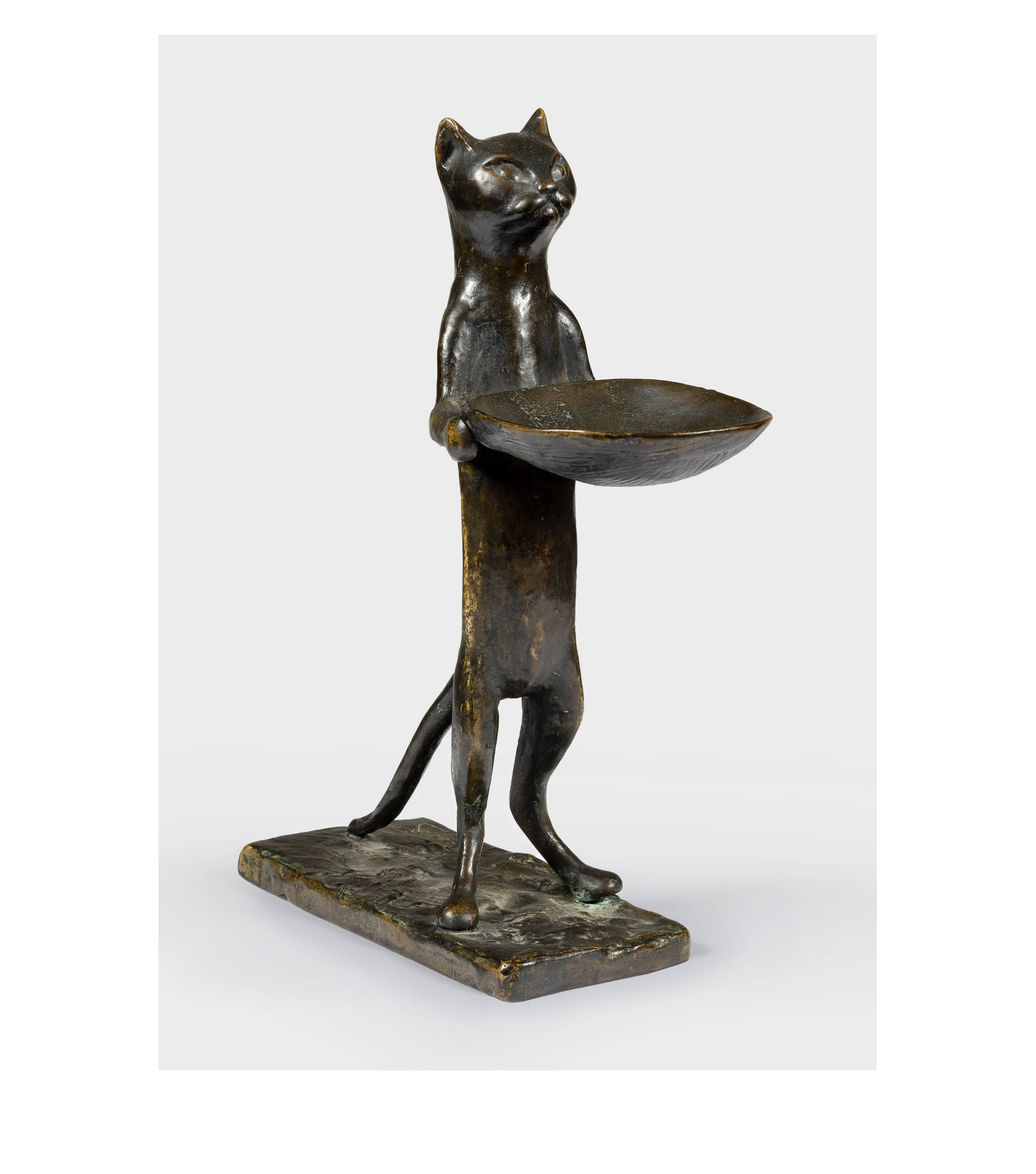
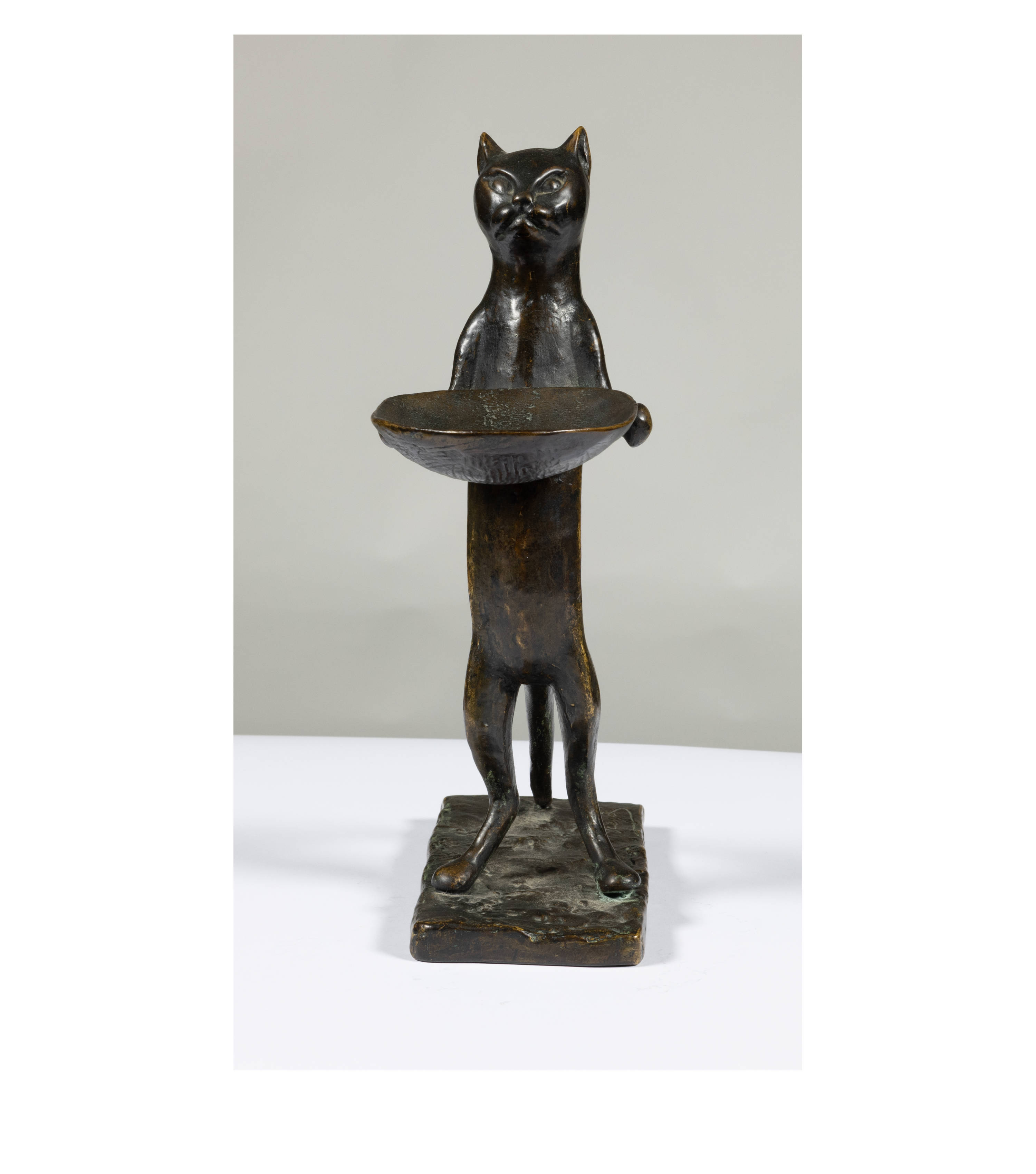
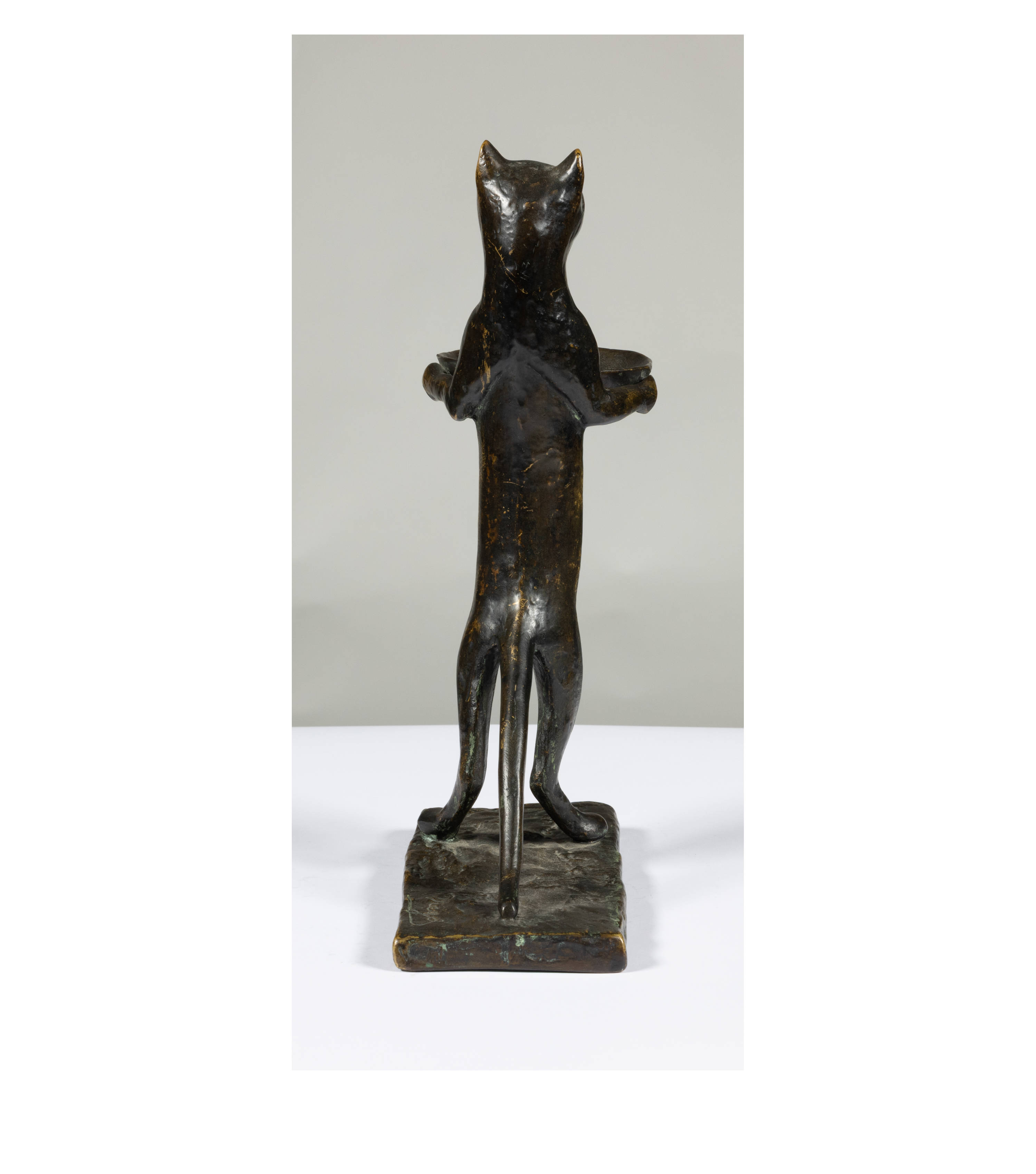
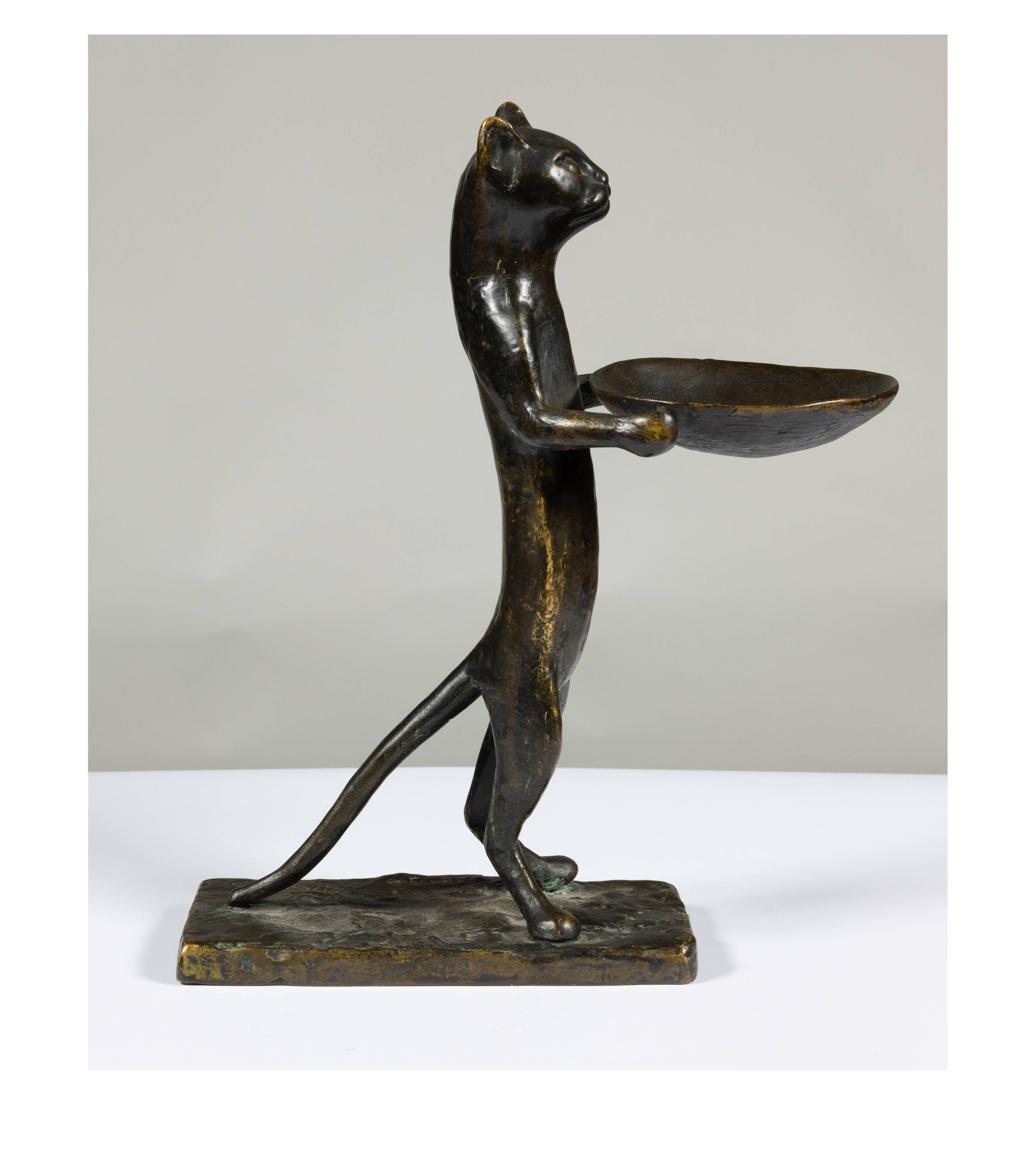
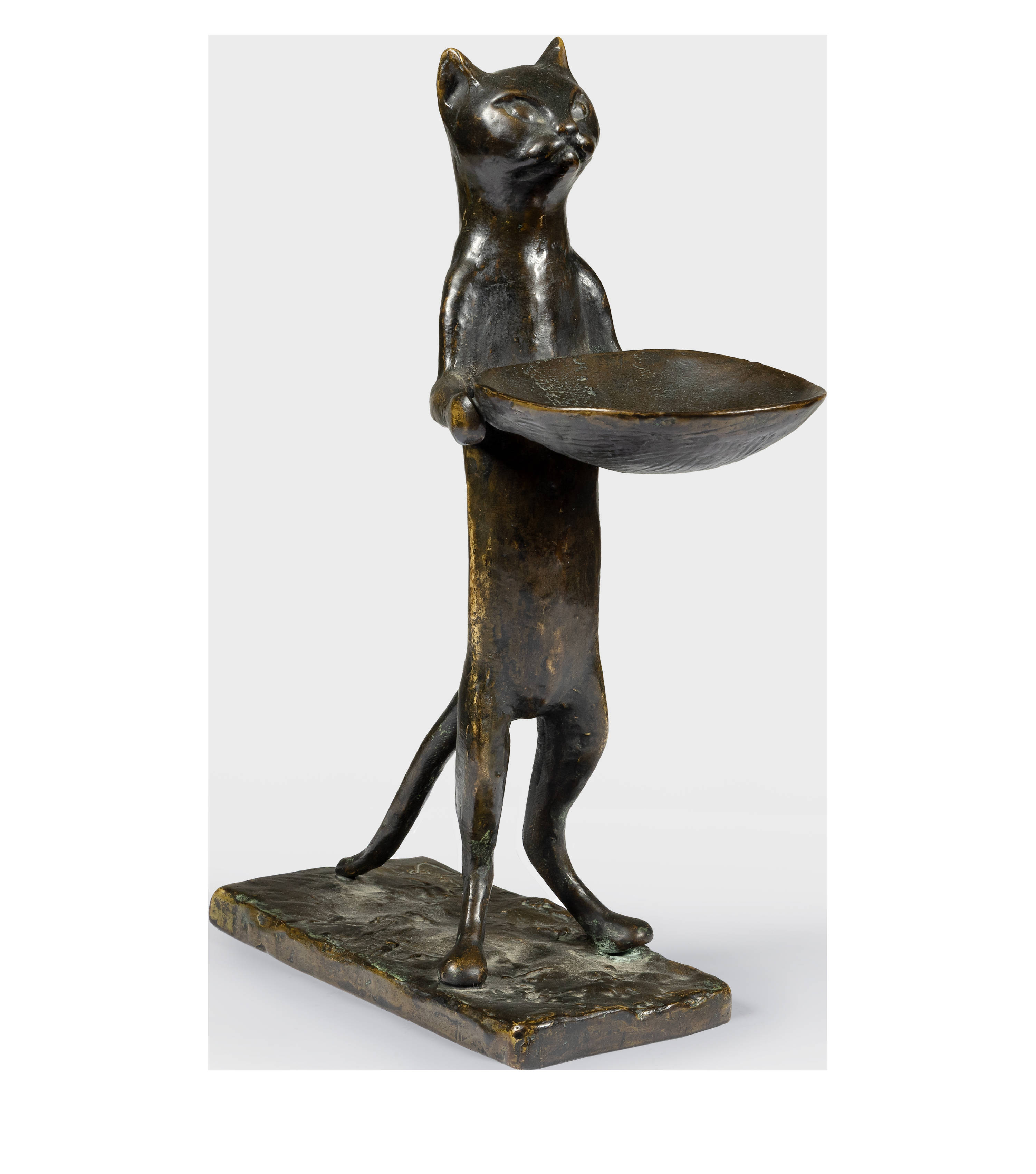
Very beautiful, impeccable cast with dark brown, rubbed patina
Diego Giacometti created what is probably his most popular sculpture around 1961. The first version, with a flat tray, was intended to hold visiting cards during receptions. The second version, created in spring 1964, was intended to serve as a dovecote for the Fondation Maeght in Saint-Paul-de-Vence. In this version, the tray was replaced by a bowl to hold birdseed. Diego Giacometti's 'Chat maître d'hôtel' perfectly embodies the artist's characteristic sense of humor. The cat, traditionally a bird predator, here becomes a benevolent hostess presenting seeds to the birds in its bowl. The anthropomorphic cat standing on its hind legs was originally intended to sit in a cage that served to feed the birds at the Fondation Maeght in Saint-Paul-de-Vence. Known for his love of animals, Diego Giacometti incorporated them into everyday life in sculptural form. With the present bronze, he created a work that is both amusing and profound, representing peaceful coexistence in a metaphorical way. In early versions of the cat with bowl, the tail reaches down to the base plate, while in later versions it hangs freely in the air. The piece offered here astonishes with a very rich, finely accentuated patina.
1961-1964
Bronze
29,2x9,5x24,5 cm
Auf dem Sockel mit eingravierter Signatur "Diego"
Mit Echtheitsbestätigung von Expertises Denis Vincenot/Philippe Meier, Dijon/Lausanne, datiert vom 2. Mai 2024,
Atelier Diego Giacometti, Paris, dort 1967 erworben von
Slg. Eberhard W. Kornfeld, Bern
Daniel Marchesseau, Diego Giacometti, Paris 1986, vgl.
Daniel Marchesseau, Diego Giacometti, Sculpteur de meubles, Paris 2018, vgl.
Zürich 1988, Museum Bellerive, Diego Giacometti,
Lausanne 1989, Musée cantonal des Beaux-Arts, Petite Sculpture Suisse
Davos 1998/1999, Kirchner Museum, Werke aus der Sammlung Eberhard W. Kornfeld,
Mailand/Mannheim 2000, Fondazione A. Mazzotta/Städtische Kunsthalle, Die Familie Giacometti. Das Tal, die Welt
Bern 2002, Schweizerische Landesbibliothek, Katz und Hund
Bern 2003, Kunstmuseum, Hommage an "E.W.K.", Meisterwerke von Giovanni Giacometti, Alberto und Diego Giacometti aus der Sammlung von Eberhard W. Kornfeld,
Wien 2008/2009, Albertina, Wege der Moderne, Aus der Sammlung Eberhard W. Kornfeld,
Riehen 2009, Fondation Beyeler, Giacometti,
Bern 2009/2010, Zentrum Paul Klee, Paul Klees Grafik, Die Passion des Eberhard W. Kornfeld
Sehr schöner, tadelloser Guss mit dunkelbrauner, beriebener Patina
Diego Giacometti schuf seine wohl populärste Plastik um 1961. Die erste Fassung war mit flachem Tablett für die Ablage von Visitenkarten bei einem Empfang gedacht. Die zweite Fassung entstand im Frühjahr 1964 im Hinblick auf die Gestaltung des Taubenschlages für die Fondation Maeght in Saint-Paul-de-Vence. Dabei wurde das Tablett durch eine Schale ersetzt, um Vogelfutter aufnehmen zu können. Diego Giacomettis "Chat maître d'hôtel" verkörpert perfekt den charakteristischen Sinn für Humor des Künstlers. Die Katze, eher ein Raubtier für Vögel, wird hier zur wohlwollenden Empfangsdame, die den Vögeln Körner in ihrer Schale präsentiert. Die anthropomorph auf den Hinterbeinen stehende Katze sollte ursprünglich in einem Käfig sitzen, der zur Fütterung der Vögel in der Fondation Maeght in Saint-Paul-de-Vence diente. Diego Giacometti, der für seine Tierliebe bekannt war, brachte die Tiere plastisch-skulptural in den Alltag. Mit der vorliegenden Bronze schuf er ein sowohl amüsantes als auch tiefgründiges Werk, das metaphorisch für die friedliche Koexistenz steht. Bei den frühen Versionen der Katze mit Schale reicht der Schwanz bis auf die Sockelplatte, während er bei den späteren frei in der Luft hängt. Das hier angebotene Stück verblüfft durch eine sehr reiche, fein akzentuierte Patina.
| Switzerland | CHF | Individual offer |
| Europe | CHF | Individual offer |
| USA | CHF | Individual offer |
| Overseas | CHF | Individual offer |