- EN


 Log in
-
- Live Auctions
- Online Only
- Past auctions
- Kornfeld today
- The Story of Kornfeld
- Information


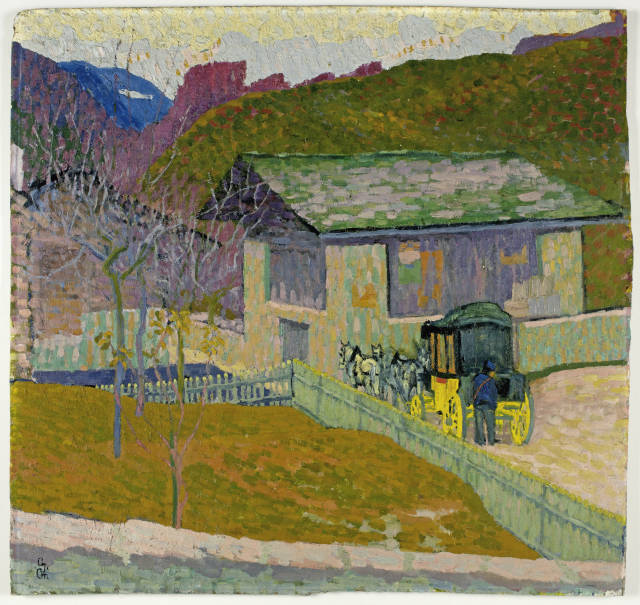








Stampa 1868 - 1933 Glion


Sale time 11-09-2026,
about 15:45 h (CET)
(+/- 30 min)

Circa 1907
Oil on fibre cement board
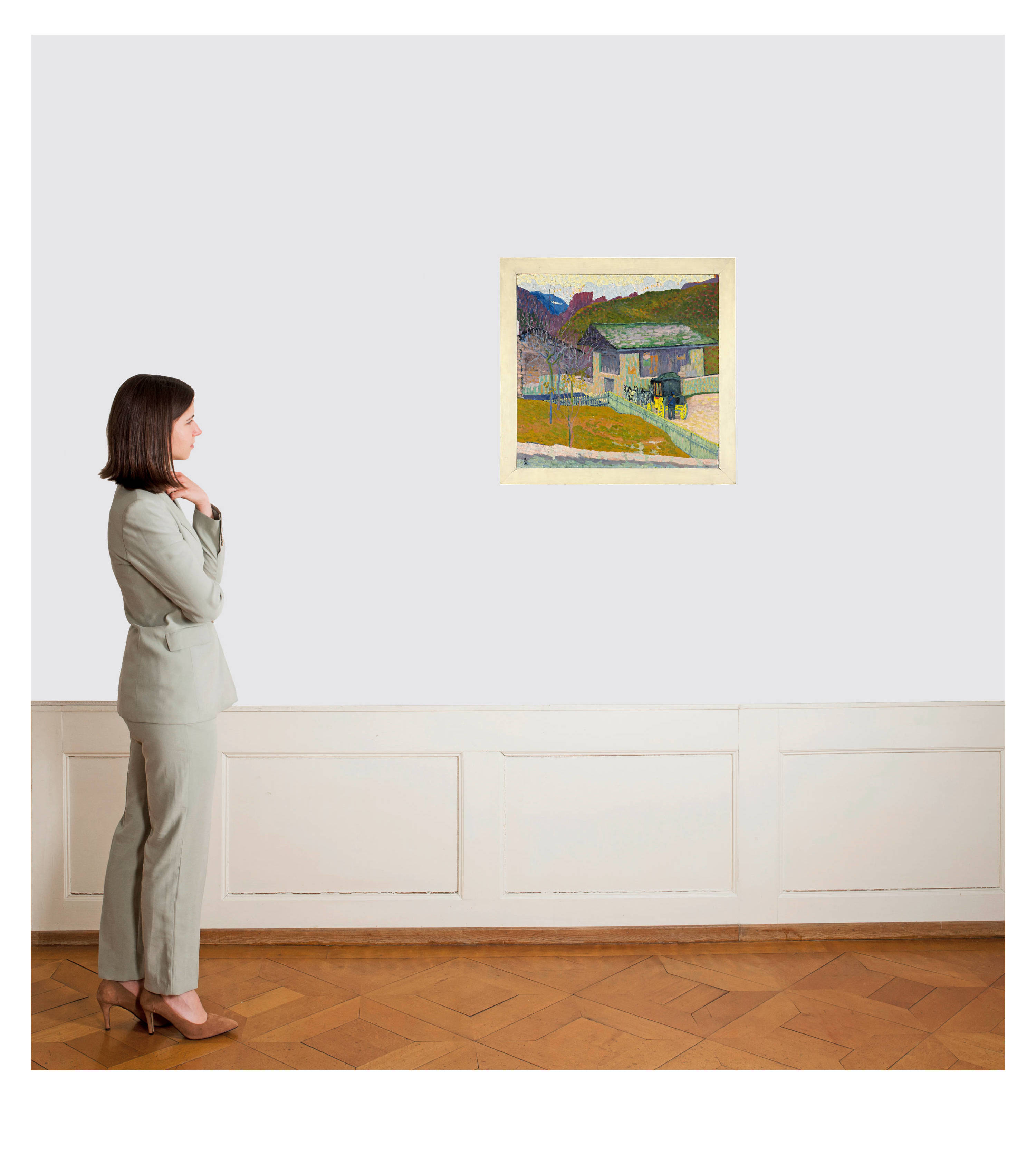
71.5x75 cm
Lower left monogrammed by the artist "GG"
Paul Müller/Viola Radlach, Giovanni Giacometti, Werkkatalog der Gemälde, vol. II/1, Zurich 1997, no. 1907.30
Registro dei quadri, issue 1, p. 23, no. 61
Directly from the artist to
Collection Richard Kisling (1862-1917), Zurich, acquired before 1913 by
Private collection Bern
Auction Galerie Kornfeld, Bern, 15 June 2007, lot 42, there acquired by
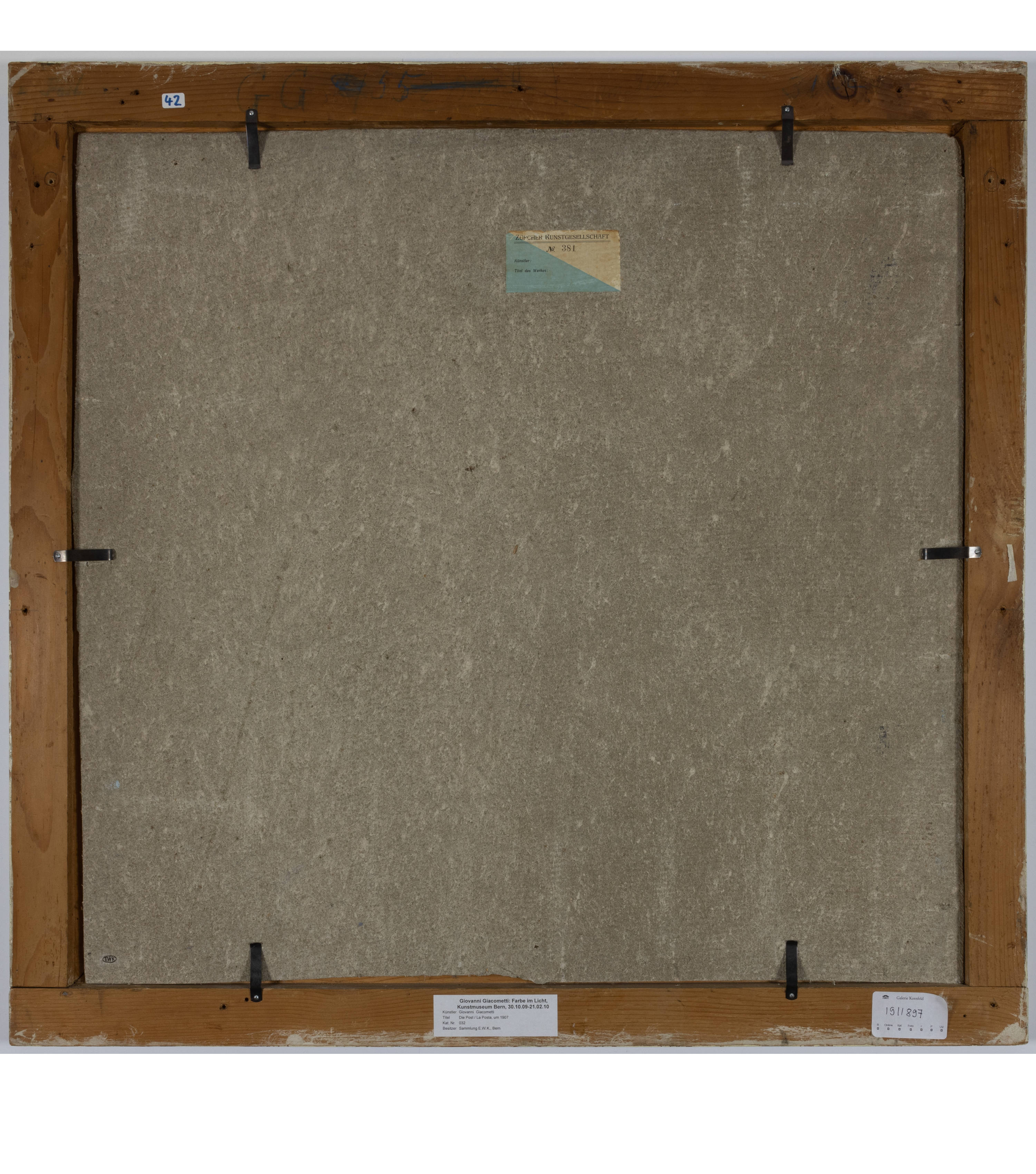
The Eberhard W. Kornfeld Collection, Bern, with the collector's stamp on the back, Lugt 913b
Hans Trog, Kunstchronik, Aus dem Künstlerhaus II, published in: Neue Zürcher Zeitung, no. 191, 12 July 1907, with the title "Post"
Silvia Volkart, Richard Kisling (1862-1917), Sammler, Mäzen und Kunstvermittler, Bern 2008, p. 200, No. 110
St. Gallen 1907, Kunstmuseum, Cuno Amiet, Hans Emmenegger, Giovanni Giacometti, Sigismund Righini and others, cat. no. 31
Zurich 1907, Künstlerhaus, Cuno Amiet, Giovanni Giacometti and others, cat. no. 57
Aarau 1908, Saalbau, Kunstverein, Cuno Amiet, Giovanni Giacometti, Ferdinand Hodler and others, cat. no. 52
Winterthur 1908, Kunsthalle, Giovanni Giacometti, Stampa and Carl Montag, Paris, cat. no. 25, where dated "1907"
Zurich 1913, Kunsthaus, Eine Zürcher Privatsammlung, Schweizerkunst des 19. und 20. Jahrhunderts [Sammlung Richard Kisling], no. 110, where dated "1907"
Bern/Chur 2009/2010, Kunstmuseum/Bündner Kunstmuseum, Giovanni Giacometti, Farbe im Licht, cat. no. 32
Lens/Crans-Montana 2013/2014, Fondation Pierre Arnaud, Divisionnisme, Couleur maîtrisée?, Couleur éclatée!, P. 287
Stampa 2018, Museo Ciäsa Granda, Giovanni Giacometi et Cuno Amiet, Un’amicizia / Eine Künstlerfreundschaft, cat. no. 30
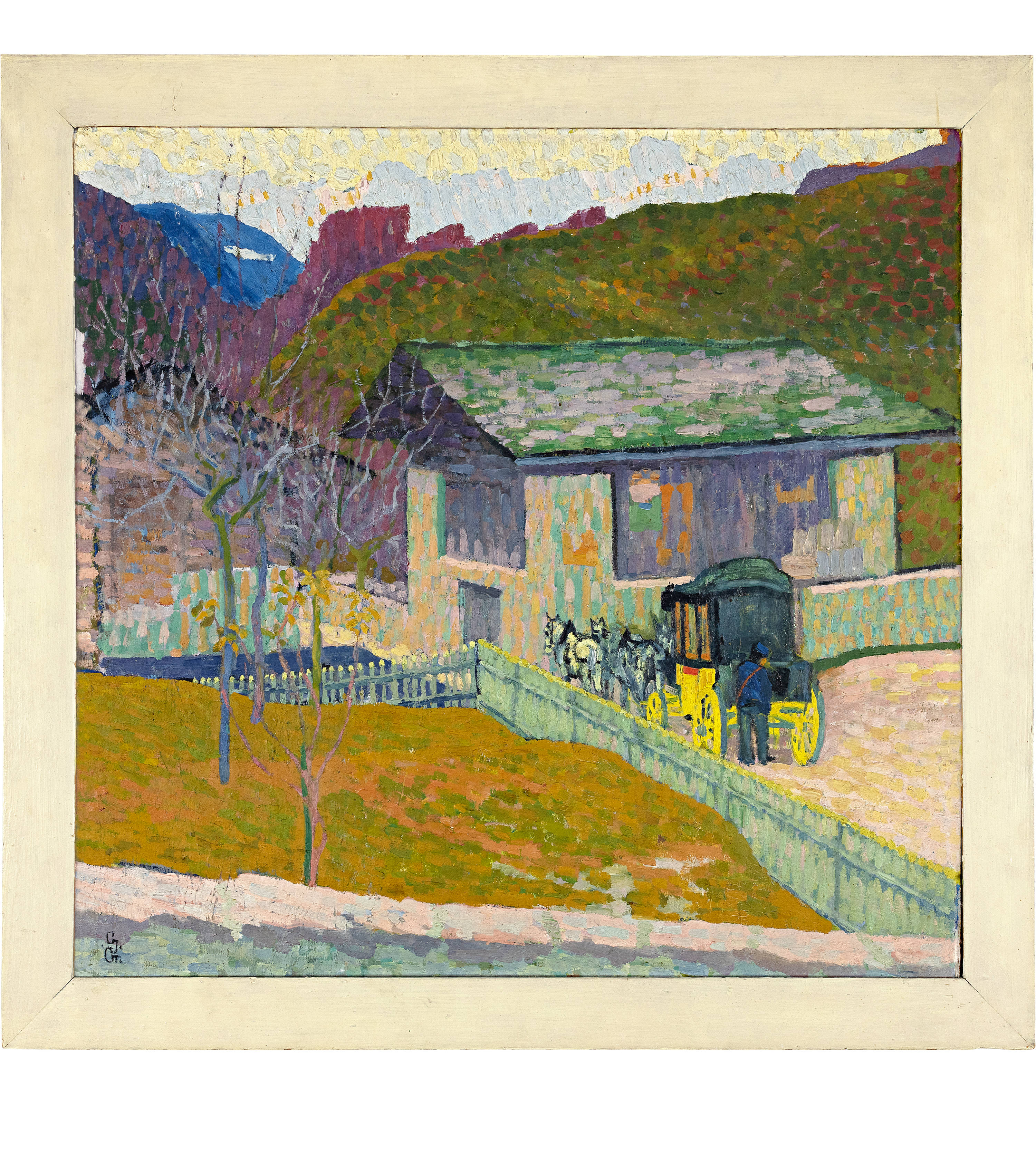
In original frame. Impasto paint application on intact Eternit panel. In impeccable condition
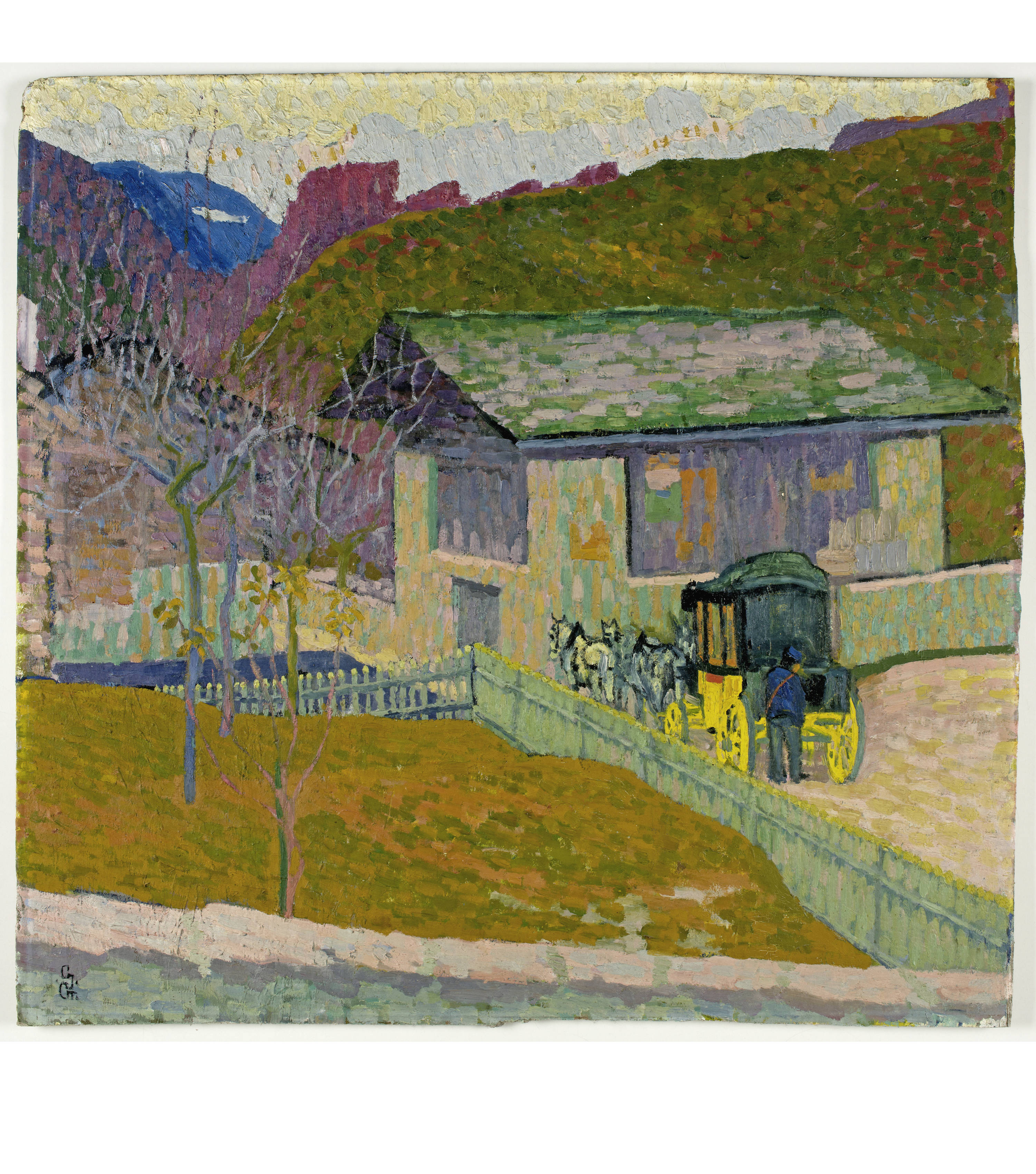
The painting is exemplary of the style of the painterly revolution at the beginning of the 20th century, which entered art history as Divisionism or Pointillism. This artistic movement developed in France with painters such as Georges Seurat and extended its influence even to the remote regions of the Swiss Alps. In this painting, Giovanni Giacometti created a fascinating effect of luminous colour with finely placed dots, spots, and lines of colour—a masterpiece of Neo-Impressionism. As a painting ground, he used an Eternit panel, a material then newly available on the market. Other artists such as Hodler and Amiet also used these extremely stable, but heavy and easily breakable panels for a short time.
The stagecoach stands in the village centre of Stampa on the small square at the head of the bridge over the river Maira. In the centre of the painting, one can see the house by the bridge, which was partially washed away by a flood in 1927. To the right of it, outside the painting, stands the artist’s birthplace, the inn Piz Duan, which housed not only the hotel and restaurant but also a shop, the post office, and a telegraph office. From 1906, Giovanni Giacometti lived with his wife Annetta and their children in a nearby house and worked in his studio next to the house.
The work was purchased by the Zurich art collector and patron Richard Kisling (1862–1917), who had the Villa Krähbühl built on the Zürichberg in 1913 with a gallery wing especially for his extensive art collection. Before moving to the stately family residence, the Kunsthaus Zürich showed a selection of 535 works from Kisling’s collection in the summer of 1913, including the painting offered here.
Um 1907
Öl auf Eternitplatte
71,5x75 cm
Unten links vom Künstler monogrammiert "GG"
Paul Müller/Viola Radlach, Giovanni Giacometti, Werkkatalog der Gemälde, Band II/1, Zürich 1997, Nr. 1907.30
Registro dei quadri, Heft 1,
Direkt vom Künstler an
Slg. Richard Kisling (1862-1917), Zürich, vor 1913 erworben von
Privatsammlung Bern
Auktion Galerie Kornfeld, Bern, 15. Juni 2007, Los 42, dort erworben von
Slg. Eberhard W. Kornfeld, Bern, rückseitig mit dem Sammlerstempel, Lugt 913b
Hans Trog, Kunstchronik, Aus dem Künstlerhaus II, erschienen in: Neue Zürcher Zeitung,
Silvia Volkart, Richard Kisling (1862-1917), Sammler, Mäzen und Kunstvermittler, Bern 2008,
St. Gallen 1907, Kunstmuseum, Cuno Amiet, Hans Emmenegger, Giovanni Giacometti, Sigismund Righini und andere,
Zürich 1907, Künstlerhaus, Cuno Amiet, Giovanni Giacometti und andere,
Aarau 1908, Saalbau, Kunstverein, Cuno Amiet, Giovanni Giacometti, Ferdinand Hodler und andere,
Winterthur 1908, Kunsthalle, Giovanni Giacometti, Stampa und Carl Montag, Paris,
Zürich 1913, Kunsthaus, Eine Zürcher Privatsammlung, Schweizerkunst des 19. und 20. Jahrhunderts [Sammlung Richard Kisling],
Bern/Chur 2009/2010, Kunstmuseum/Bündner Kunstmuseum, Giovanni Giacometti, Farbe im Licht,
Lens/Crans-Montana 2013/2014, Fondation Pierre Arnaud, Divisionnisme, Couleur maîtrisée?, Couleur éclatée!,
Stampa 2018, Museo Ciäsa Granda, Giovanni Giacometi et Cuno Amiet, Un’amicizia / Eine Künstlerfreundschaft,
In Originalrahmen. Pastoser Farbauftrag auf unversehrter Eternitplatte. In tadelloser Erhaltung
Das Gemälde steht exemplarisch für den Stil der malerischen Revolution zu Beginn des 20. Jahrhunderts, der als Divisionismus oder auch Pointillismus in die Kunstgeschichte eingegangen ist. Diese Kunstströmung entwickelte sich in Frankreich mit Malern wie Georges Seurat und fand ihre Ausstrahlung bis in die entlegenen Orte der Schweizer Alpen. Giovanni Giacometti hat in diesem Bild mit den fein nebeneinander gesetzten Farbpunkten, -flecken und -linien eine faszinierende Farbwirkung voller Leuchtkraft erzeugt - ein Meisterwerk des Neoimpressionismus. Als Malgrund verwendete er eine Eternitplatte, ein damals neu auf dem Markt erhältliches Material. Auch andere Künstler wie Hodler und Amiet nutzten diese zwar äusserst stabilen, aber schweren und leicht zerbrechlichen Platten für kurze Zeit.
Die Postkutsche steht im Dorfzentrum von Stampa auf dem kleinen Platz am Kopf der Brücke über den Fluss Maira. Im Zentrum des Bildes ist das Haus an der Brücke zu erkennen, das 1927 durch ein Hochwasser teilweise weggespült wurde. Rechts davon, ausserhalb des Bildes, steht das Geburtshaus des Künstlers, das Gasthaus Piz Duan, in dem sich nebst dem Hotel und Restaurant auch ein Laden, die Post und ein Telegrafenamt befand. Giovanni Giacometti wohnte ab 1906 zusammen mit seiner Frau Annetta und ihren Kindern in einem nahe gelegenen Wohnhaus und arbeitete in seinem Atelier neben dem Haus.
Das Werk kaufte der Zürcher Kunstsammler und Mäzen Richard Kisling (1862-1917), der für seine umfassende Kunstsammlung eigens die Villa Krähbühl am Zürichberg 1913 mit Galerietrakt erbauen liess. Vor dem Umzug in den herrschaftlichen Familiensitz zeigte das Kunsthaus Zürich im Sommer 1913 eine Auswahl von 535 Werken aus Kislings Sammlung, darunter auch das hier angebotene Gemälde.
| Switzerland | CHF | Individual offer |
| Europe | CHF | Individual offer |
| USA | CHF | Individual offer |
| Overseas | CHF | Individual offer |