- EN


 Log in
-
- Live Auctions
- Past auctions
- More
- Kornfeld today
- The Story of Kornfeld
- Information









Venedig 1721 - 1780 Warschau


Circa 1760-1765
Etching on firm laid paper
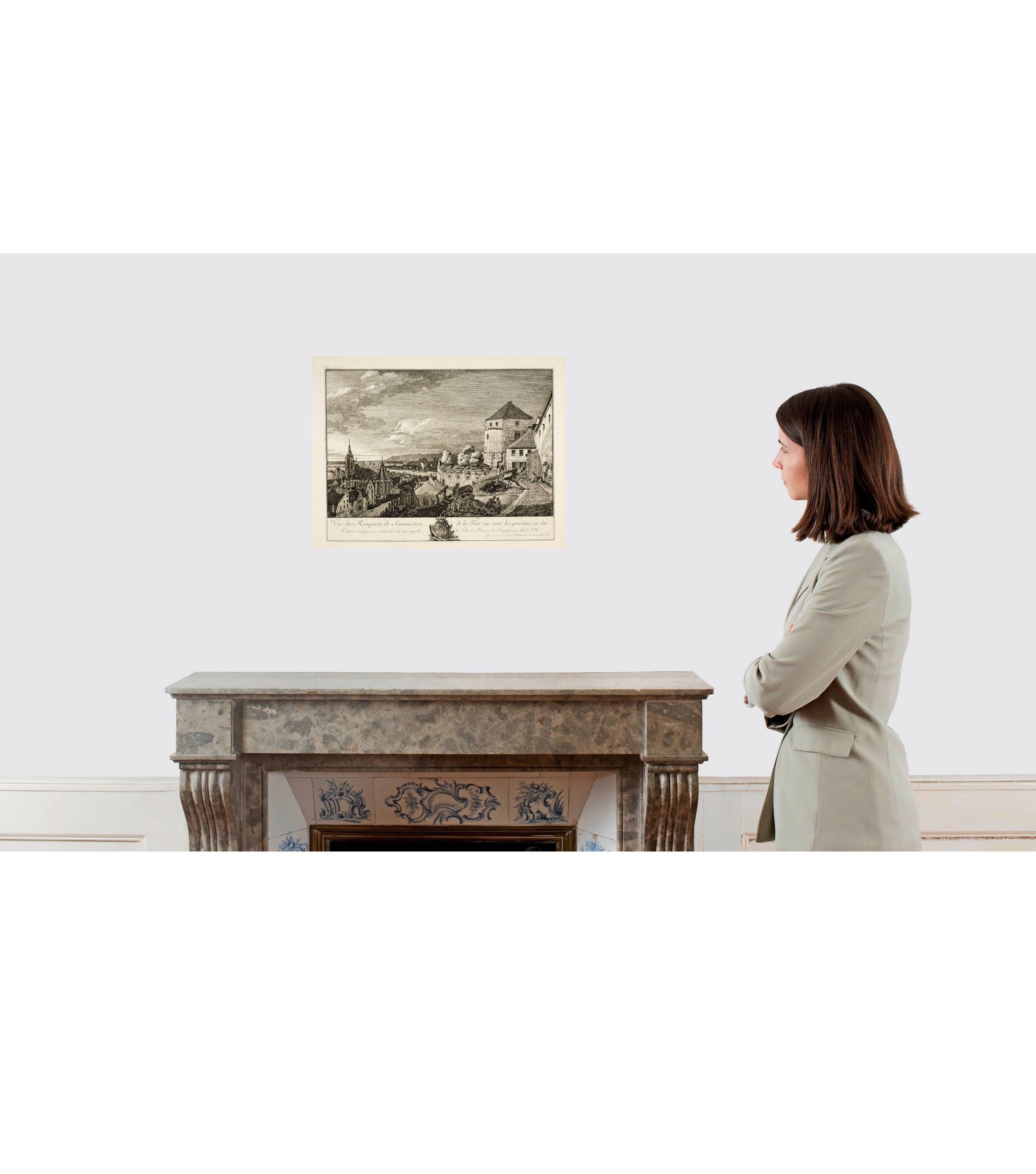
47x65.3 cm, sheet size
De Vesme 26 II
Kozakiewicz II, 229
Succi 26
Very good impression. Untreated and without centre fold, with full margins
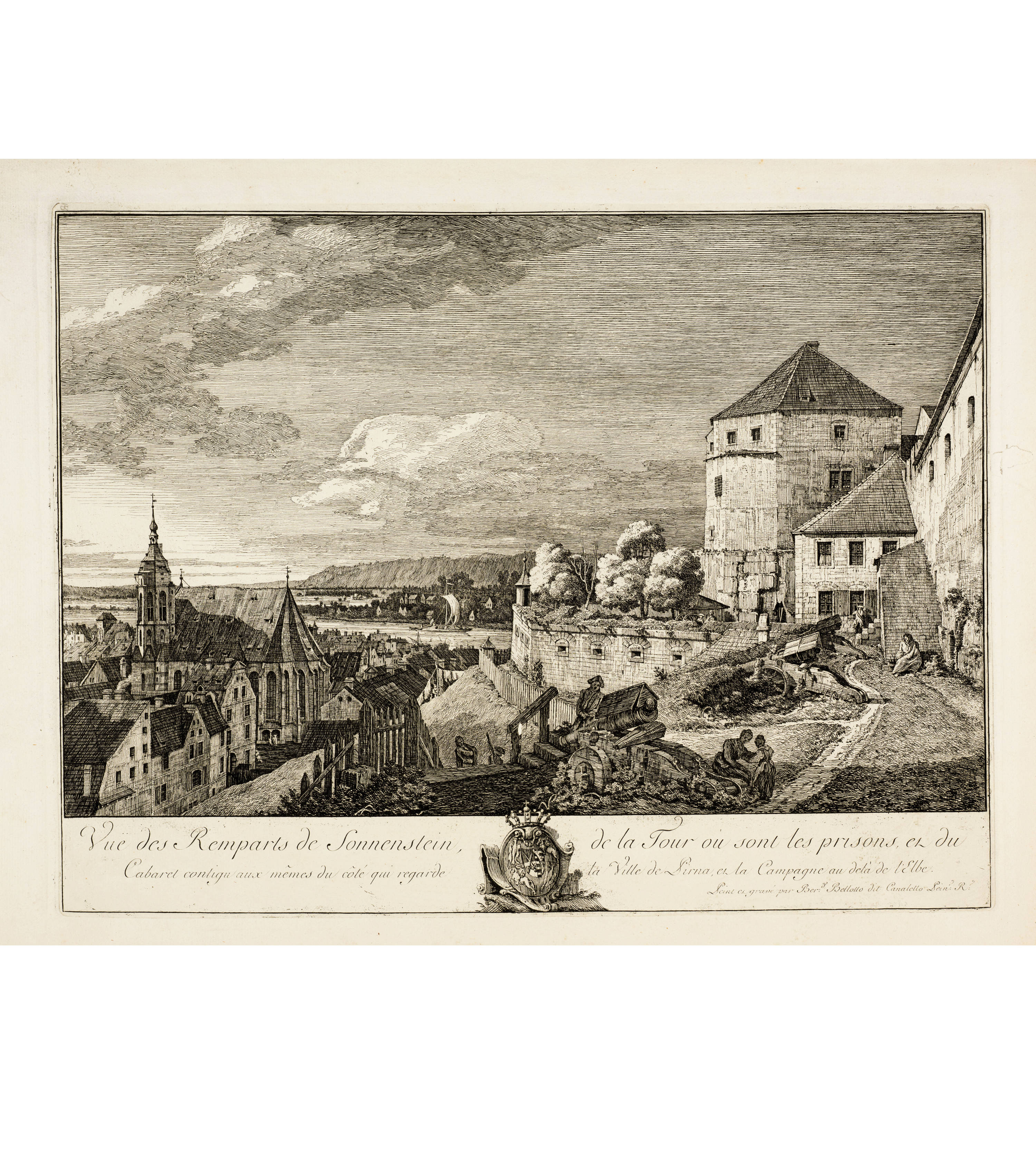
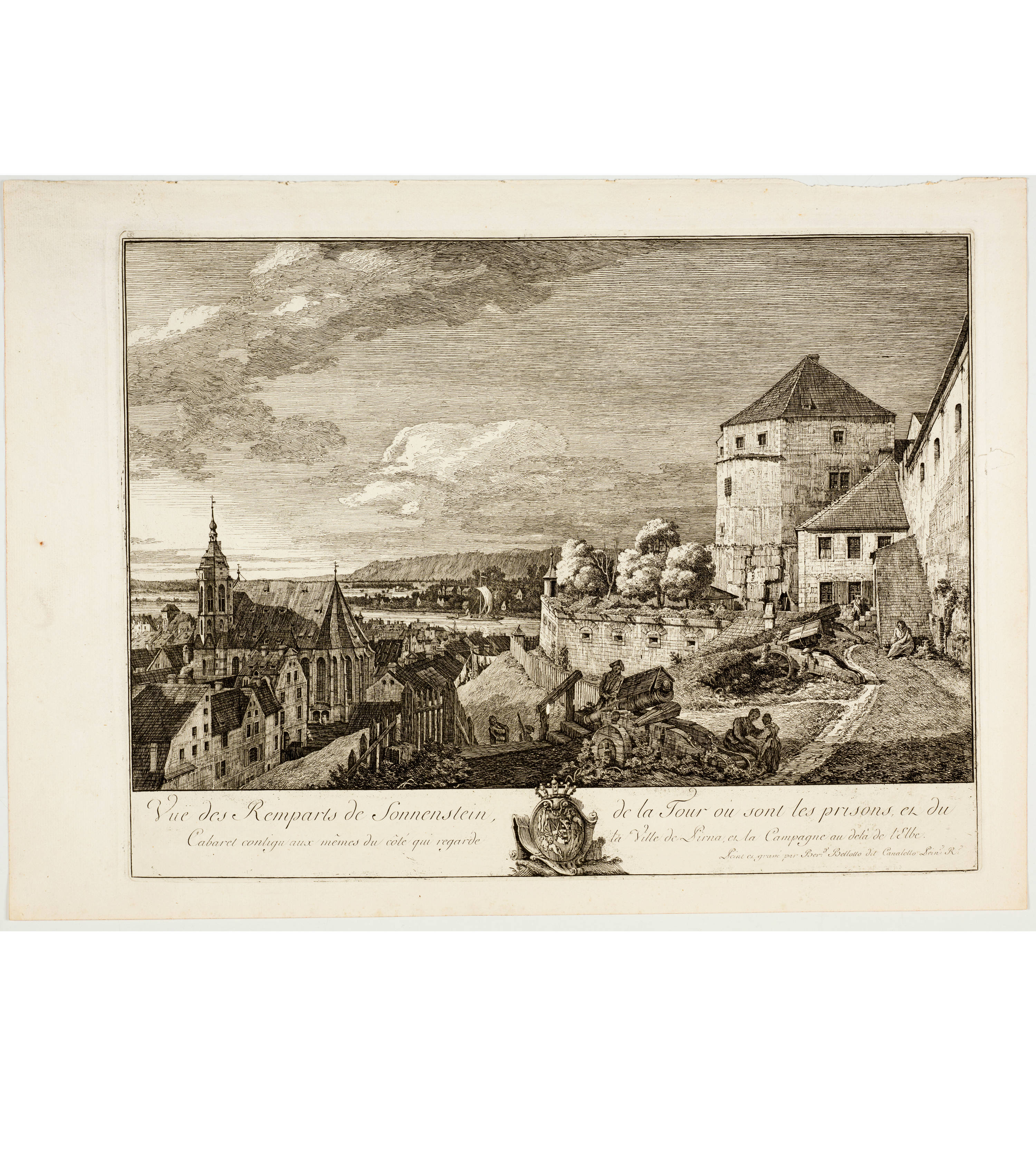
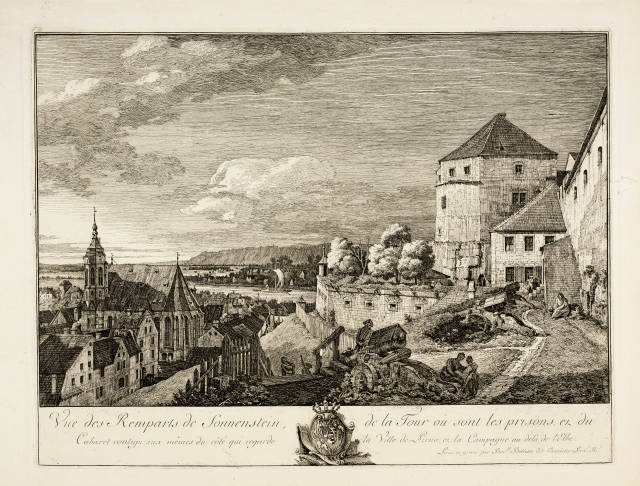
The view extends from the Sonnenstein Fortress to the city of Pirna lying below it, with the Church of St. Mary. In Bellotto’s depiction, the church tower appears slimmer than it actually is. Here, despite the vedutist’s comwithment to accuracy, a certain freedom is evident. Between the city’s architecture on one side and the fortress with its massive round tower on the other, the view opens over the Elbe into the landscape. A vast sky with a few clouds stretches over the scene. As always with Bellotto, this is constructed from numerous parallel lines and, in this case, is enlivened by clouds.
The fifteen lots 3075–3089 offer a representative cross-section of the genre of Italian vedute. The first true-to-life views of landscapes and cities appeared in art as early as around 1500. However, the genre experienced its heyday in Italy from the late 17th century and throughout the 18th century. International tourism to Italy provided a market that was served primarily by printed graphic sheets. First and foremost to be mentioned here are, of course, the etchings by Antonio Canaletto and Giovanni Battista Piranesi. Canaletto’s nephew Bernardo Bellotto established the concept of the highly naturalistic city view north of the Alps as well, while Piranesi expanded topographical motifs to include the architectural inventions of the "Carceri".
Chronologically, in the selection offered here, the series of important buildings and fountains in Rome published by the Roman publisher Rossi as early as the 17th century and engraved by Falda, Specchi, and Venturini form the starting point. The final chord is struck by Luigi Rossini’s extensive cycle of views of Rome, which continues Piranesi’s major project „Vedute di Roma“ into the 19th century.
(See also the individual sheets by Piranesi in our online auction, lots 4088ff., As well as, as interesting examples of Dutch vedute, the series by Reinier Nooms and Pieter Schenk, likewise lots 4083 and 4114.)
Um 1760-1765
Radierung auf festem Bütten
47x65,3 cm, Blattgrösse
De Vesme 26 II
Kozakiewicz II, 229
Succi 26
Sehr guter Abdruck. Unbehandelt und ohne Mittelfalte, mit umlaufendem Rand
Der Blick geht von der Festung Sonnenstein auf die unter ihr gelegene Stadt Pirna mit der Marienkirche. Bei Bellotto wirkt der Kirchturm schlanker als er tatsächlich ist. Hierin zeigt sich, bei aller Verpflichtung auf die Korrektheit des Vedutisten, eine gewisse Freiheit. Zwischen den Architekturen der Stadt auf der einen und der Festung mit dem mächtigen Rundturm auf der anderen Seite öffnet sich die Sicht über die Elbe in die Landschaft. Ein mächtiger Himmel mit wenigen Wolken spannt sich über die Szenerie. Dieser konstituiert sich wie stets bei Bellotto aus zahlreichen parallelen Strichen und wird im vorliegenden Fall durch Wolken belebt.
Die fünfzehn Lose 3075-3089 bieten einen repräsentativen Querschnitt durch das Genre der italienischen Vedute. Erste wirklichkeitsgetreue Ansichten von Landschaften und Städten kommen in der Kunst schon um 1500 vor. Seine Blütezeit erlebt das Genre aber im Italien des ausgehenden 17. und im Verlauf des 18. Jahrhunderts. Der internationale Italien-Tourismus bot dabei einen Absatzmarkt, der in seiner Breite vor allem durch druckgraphische Blätter bedient wurde. Zu nennen sind hier an erster Stelle natürlich die Radierungen von Antonio Canaletto und Giovanni Battista Piranesi. Canalettos Neffe Bernardo Bellotto etablierte das Konzept der höchst naturgetreuen Stadtansicht auch nördlich der Alpen während Piranesi topographische Motive noch um die architektonischen Inventionen der "Carceri" erweiterte.
Chronologisch betrachtet machen in der hier angebotenen Auswahl die bei dem römischen Verleger Rossi schon im 17. Jahrhundert erschienenen und von Falda, Specchi und Venturini gestochenen Folgen bedeutender Bauwerke und Brunnen in Rom den Anfang. Den zeitlichen Schlussakkord bildet dann Luigi Rossinis umfangreicher Zyklus von Rom-Ansichten, der Piranesis Grossprojekt der „Vedute di Roma“ bis ins 19. Jahrhundert weiterführt.
(Siehe auch die Einzelblätter Piranesis in unserer Online-Auktion, Lose 4088ff. sowie als interessante Beispiele niederländischer Veduten die Folgen von Reinier Nooms und Pieter Schenk, ebendort die Lose 4083 und 4114.)
| Switzerland | CHF | 170 |
| Europe | CHF | 270 |
| USA | CHF | 360 |
| Overseas | CHF | 380 |