- EN


 Log in
-
- Live Auctions
- Past auctions
- More
- Kornfeld today
- The Story of Kornfeld
- Information


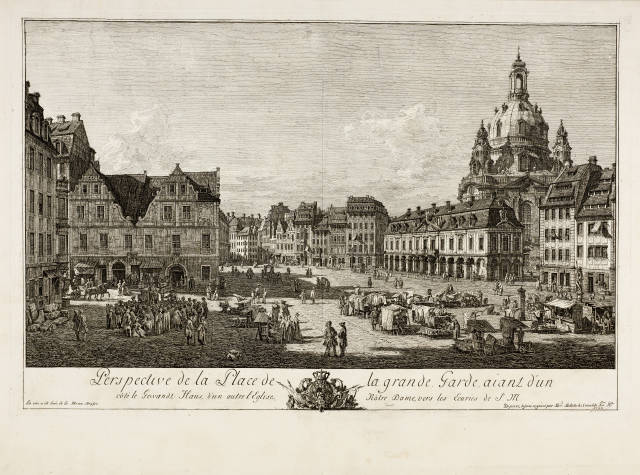







Venedig 1721 - 1780 Warschau


1750
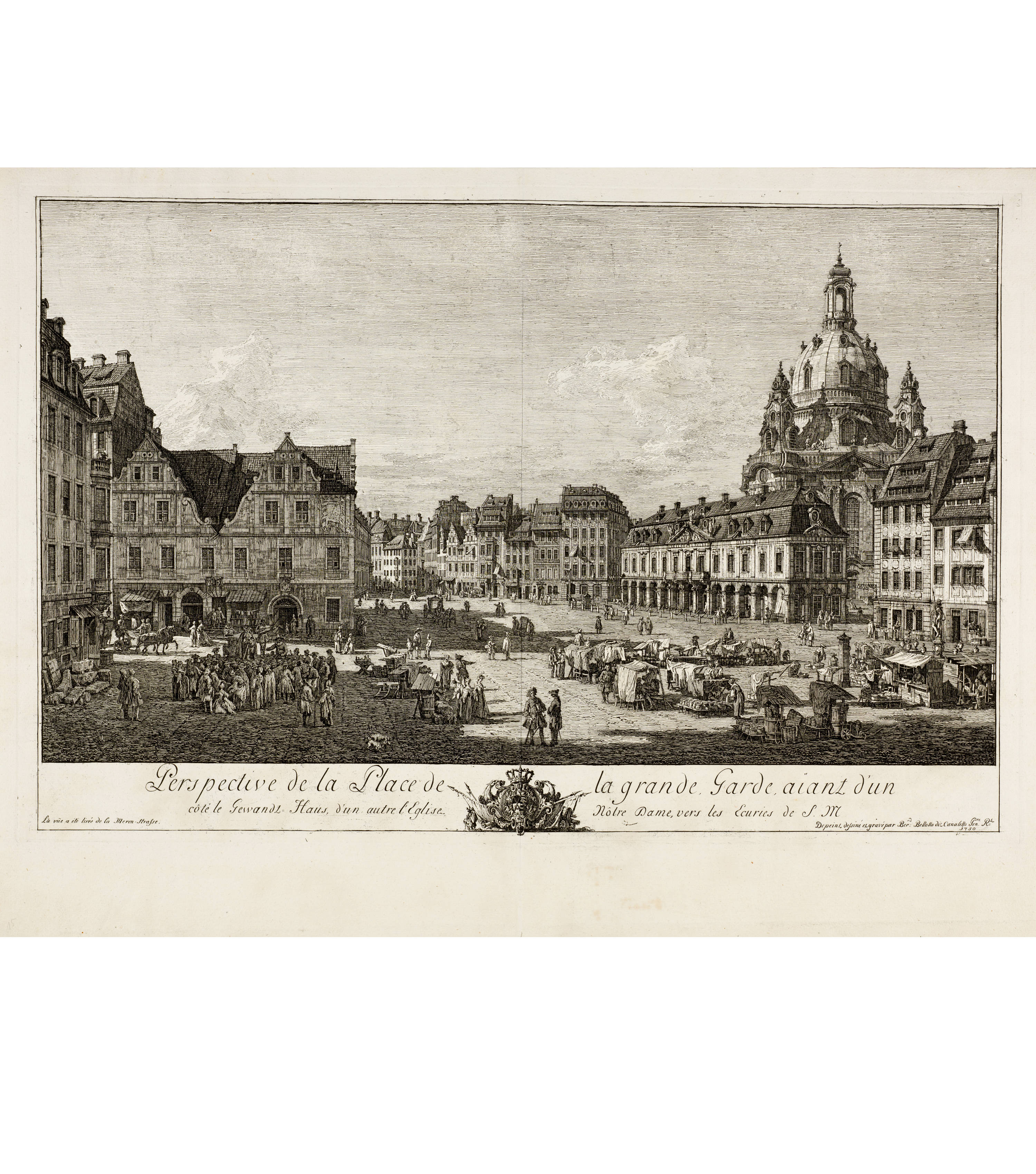
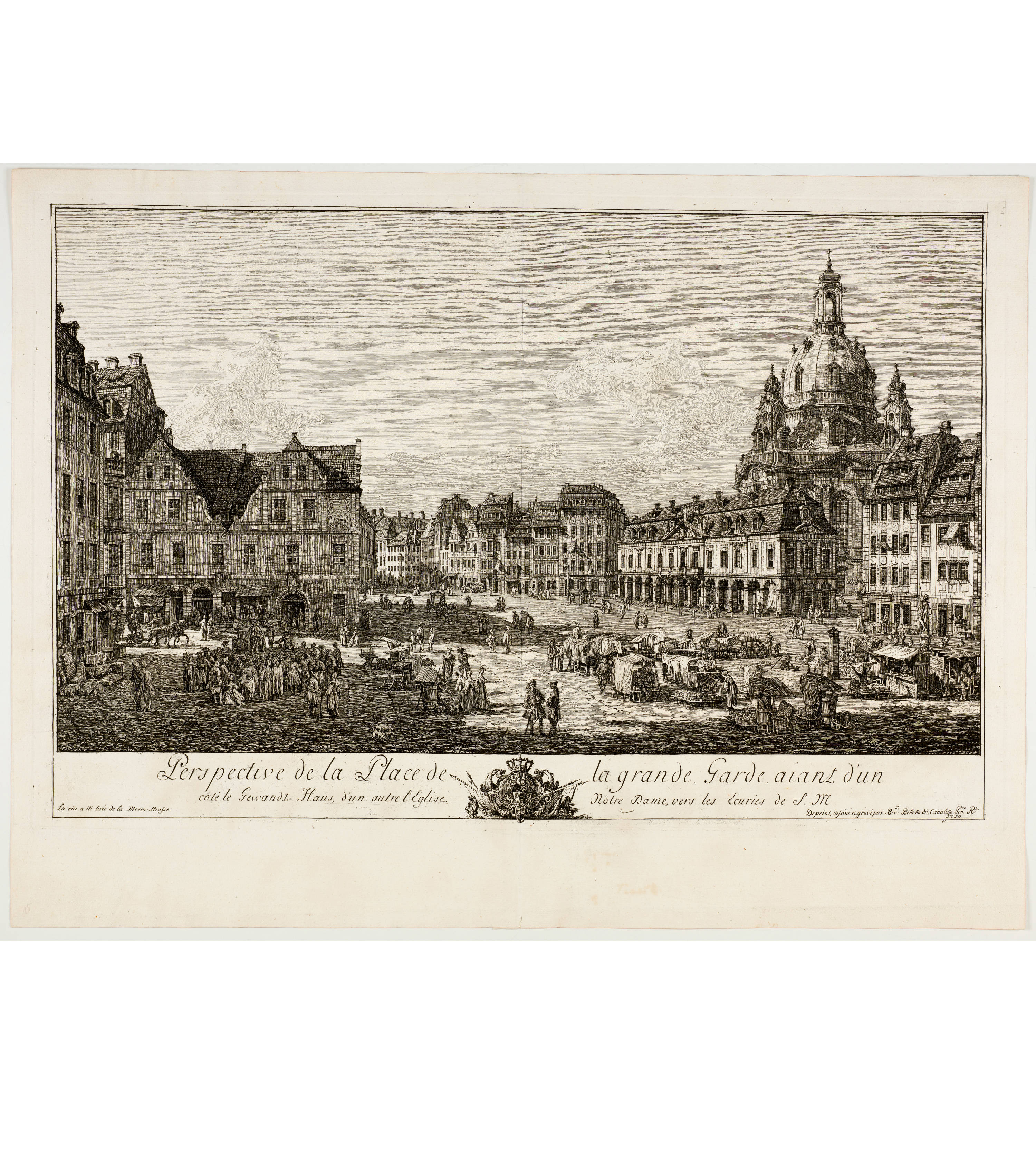
Etching on strong laid paper with the inscription "VAN GEN" and the letters "FA", both in cartouches
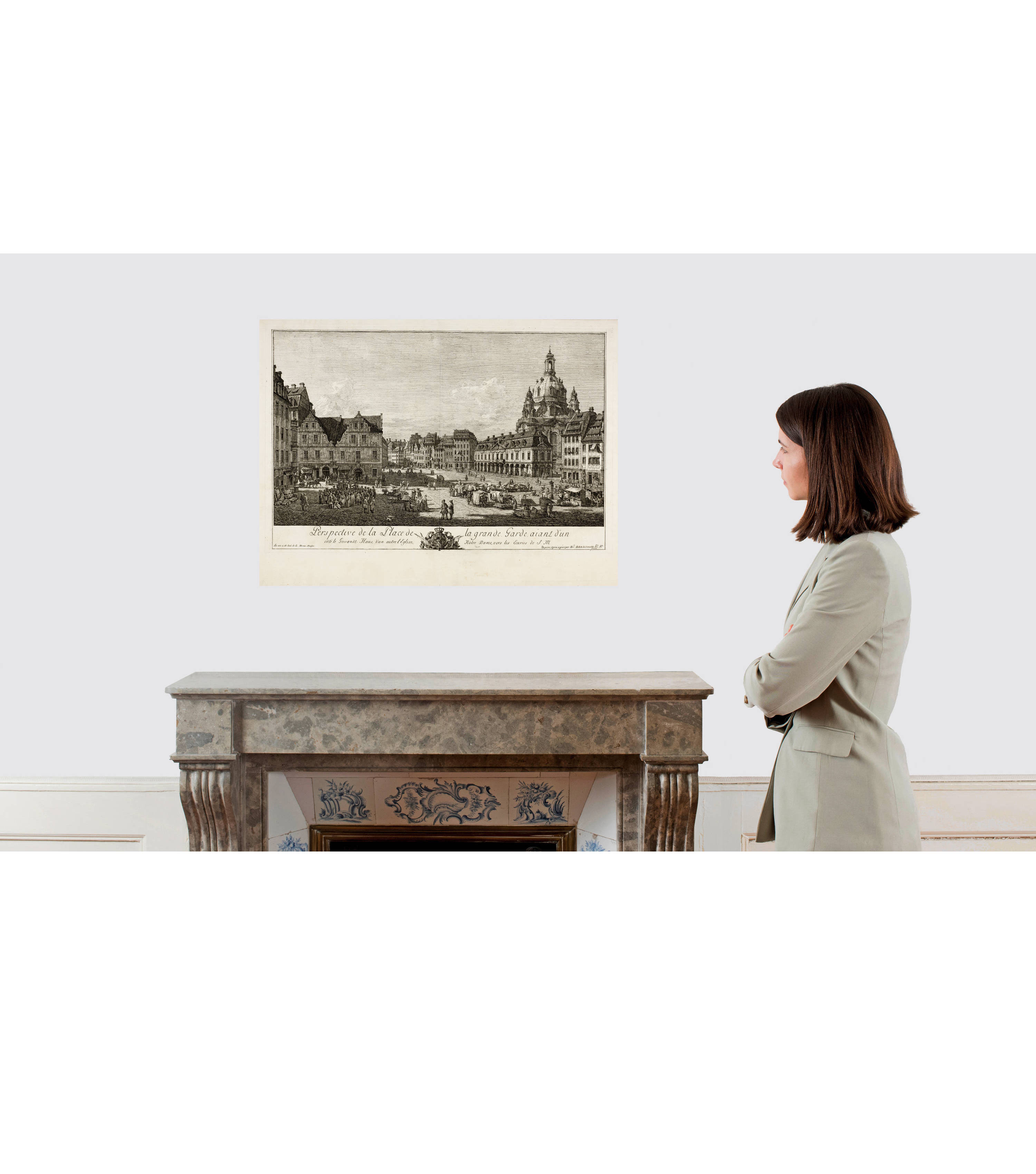
65x87.5 cm, sheet size
De Vesme 15/II (of IV)
Kozakiewicz II, 172/I (of II)
Auction Galerie Kornfeld, Bern, 21 June 1985, lot 8
Auction Galerie Kornfeld, Bern, 17 June 2016, lot 10
Bern 2020, Galerie Kornfeld, 100 Kunstwerke von um 1465 bis 2019, Galerie Kornfeld 100 Jahre in Bern, cat. no. 14
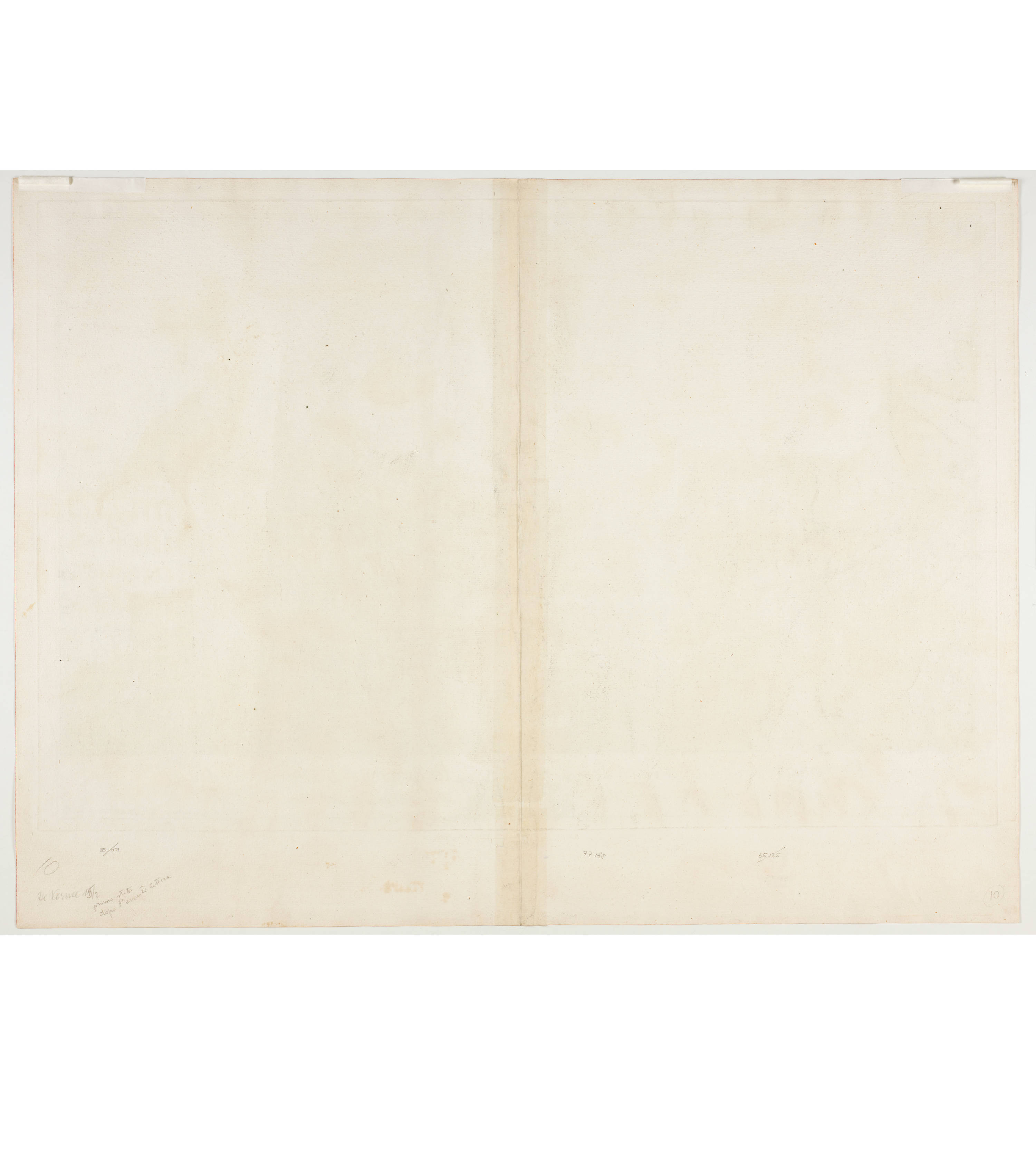
Outstanding early impression, still with the incorrect designation "Meren-Strasse" instead of "Moritz-Strasse" below, which was corrected very soon after the publication of the sheet. In this version, the coat of arms was engraved directly onto the large plate from the outset. With the usual vertical centre fold, otherwise flawless and completely untreated. With at least 1.8 cm paper margin on all four sides around the plate mark
As with the previous sheet (see lot 3076), one of Bellotto’s most prominent views of the city. Apart from minor changes in the staffage, the composition is based on the painting Kozakiewicz II, 170, probably begun in 1749 but only completed in 1751. The printing plate was destroyed in 1760 during the bombardment of Dresden by the Prussians.
The fifteen lots 3075–3089 offer a representative cross-section of the genre of Italian vedute. The first true-to-life views of landscapes and cities appeared in art as early as around 1500. However, the genre experienced its heyday in Italy from the late 17th century and throughout the 18th century. International tourism to Italy provided a market that was served primarily by printed graphic sheets. First and foremost to be mentioned here are, of course, the etchings by Antonio Canaletto and Giovanni Battista Piranesi. Canaletto’s nephew Bernardo Bellotto established the concept of the highly naturalistic city view north of the Alps as well, while Piranesi expanded topographical motifs to include the architectural inventions of the "Carceri".
Chronologically, in the selection offered here, the series of important buildings and fountains in Rome published by the Roman publisher Rossi as early as the 17th century and engraved by Falda, Specchi, and Venturini form the starting point. The final chord is struck by Luigi Rossini’s extensive cycle of views of Rome, which continues Piranesi’s major project „Vedute di Roma“ into the 19th century.
(See also the individual sheets by Piranesi in our online auction, lots 4088ff., As well as, as interesting examples of Dutch vedute, the series by Reinier Nooms and Pieter Schenk, likewise lots 4083 and 4114.)
1750
Radierung auf kräftigem Bütten mit dem Schriftzug "VAN GEN" und Buchstaben "FA", beides in Kartuschen
65x87,5 cm, Blattgrösse
De Vesme 15/II (v. IV)
Kozakiewicz II, 172/I (v. II)
Auktion Galerie Kornfeld, Bern, 21. Juni 1985, Los 8
Auktion Galerie Kornfeld, Bern, 17. Juni 2016, Los 10
Bern 2020, Galerie Kornfeld, 100 Kunstwerke von um 1465 bis 2019, Galerie Kornfeld 100 Jahre in Bern,
Prachtvoller Frühdruck, noch mit der falschen Bezeichnung "Meren-Strasse" statt "Moritz-Strasse" unten, was sehr bald nach der Publikation des Blattes korrigiert worden ist. Das Wappen war bei dieser Darstellung von Anfang an direkt auf die grosse Platte graviert worden. Mit der üblichen vertikalen Mittelfalte, sonst einwandfrei und gänzlich unbehandelt. Auf allen vier Seiten mit mindestens 1,8 cm Papierrand rings um die Plattenkante
Wie schon das vorige Blatt (siehe Los 3076) eine von Bellottos prominentesten Ansichten der Stadt. Von kleinen Veränderungen in der Staffage abgesehen, beruht die Komposition auf dem wohl 1749 begonnenen, aber erst 1751 fertiggestellten Gemälde Kozakiewicz II, 170. Die Druckplatte wurde 1760 beim Bombardement Dresdens durch die Preussen zerstört.
Die fünfzehn Lose 3075-3089 bieten einen repräsentativen Querschnitt durch das Genre der italienischen Vedute. Erste wirklichkeitsgetreue Ansichten von Landschaften und Städten kommen in der Kunst schon um 1500 vor. Seine Blütezeit erlebt das Genre aber im Italien des ausgehenden 17. und im Verlauf des 18. Jahrhunderts. Der internationale Italien-Tourismus bot dabei einen Absatzmarkt, der in seiner Breite vor allem durch druckgraphische Blätter bedient wurde. Zu nennen sind hier an erster Stelle natürlich die Radierungen von Antonio Canaletto und Giovanni Battista Piranesi. Canalettos Neffe Bernardo Bellotto etablierte das Konzept der höchst naturgetreuen Stadtansicht auch nördlich der Alpen während Piranesi topographische Motive noch um die architektonischen Inventionen der "Carceri" erweiterte.
Chronologisch betrachtet machen in der hier angebotenen Auswahl die bei dem römischen Verleger Rossi schon im 17. Jahrhundert erschienenen und von Falda, Specchi und Venturini gestochenen Folgen bedeutender Bauwerke und Brunnen in Rom den Anfang. Den zeitlichen Schlussakkord bildet dann Luigi Rossinis umfangreicher Zyklus von Rom-Ansichten, der Piranesis Grossprojekt der „Vedute di Roma“ bis ins 19. Jahrhundert weiterführt.
(Siehe auch die Einzelblätter Piranesis in unserer Online-Auktion, Lose 4088ff. sowie als interessante Beispiele niederländischer Veduten die Folgen von Reinier Nooms und Pieter Schenk, ebendort die Lose 4083 und 4114.)
| Switzerland | CHF | 170 |
| Europe | CHF | 270 |
| USA | CHF | 360 |
| Overseas | CHF | 380 |