- EN


 Log in
-
- Live Auctions
- Past auctions
- More
- Kornfeld today
- The Story of Kornfeld
- Information


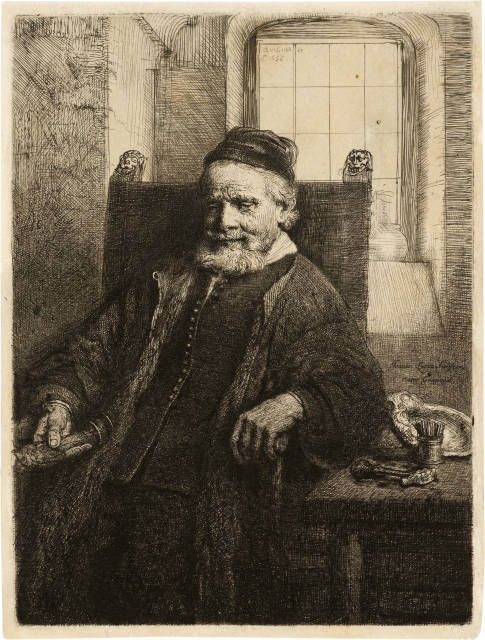







Leiden 1606 - 1669 Amsterdam


1656
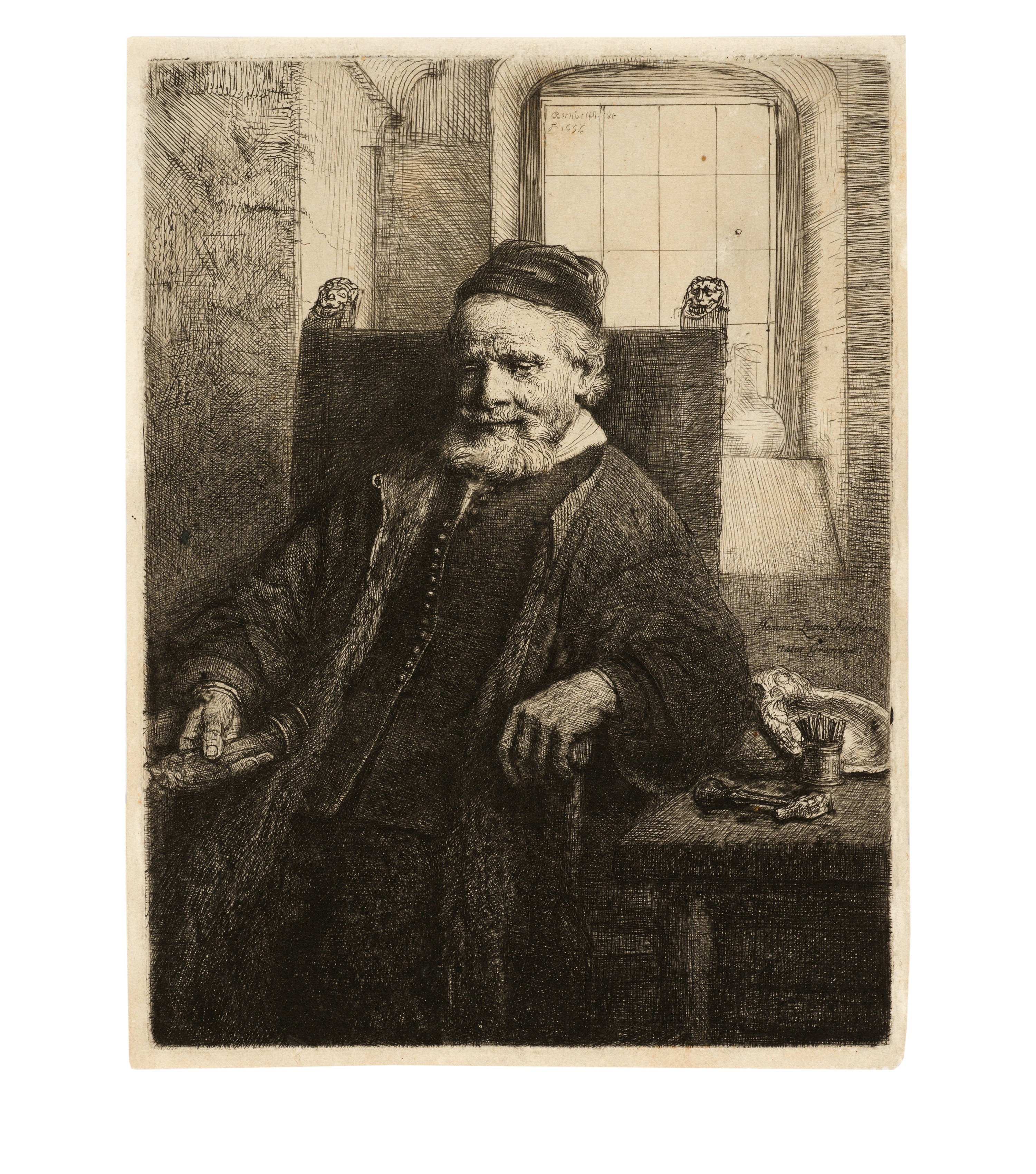
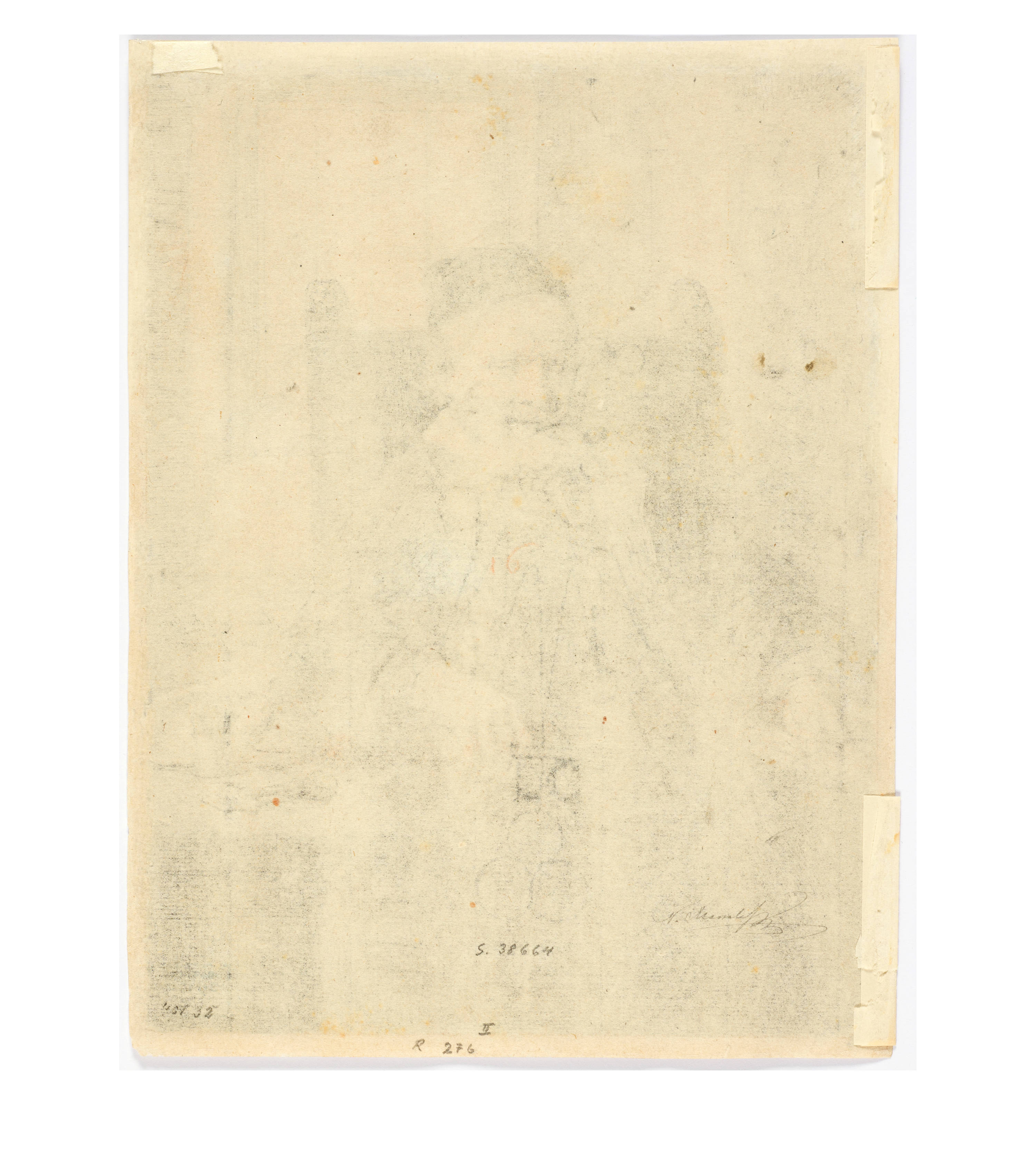
Etching, burin and drypoint on laid paper with watermark "Schellenkappe with fünf Schellen über drei Kugeln" (Hinterding Watermarks, Foolscap, Variant N, III, p. 237, There dated 1656)
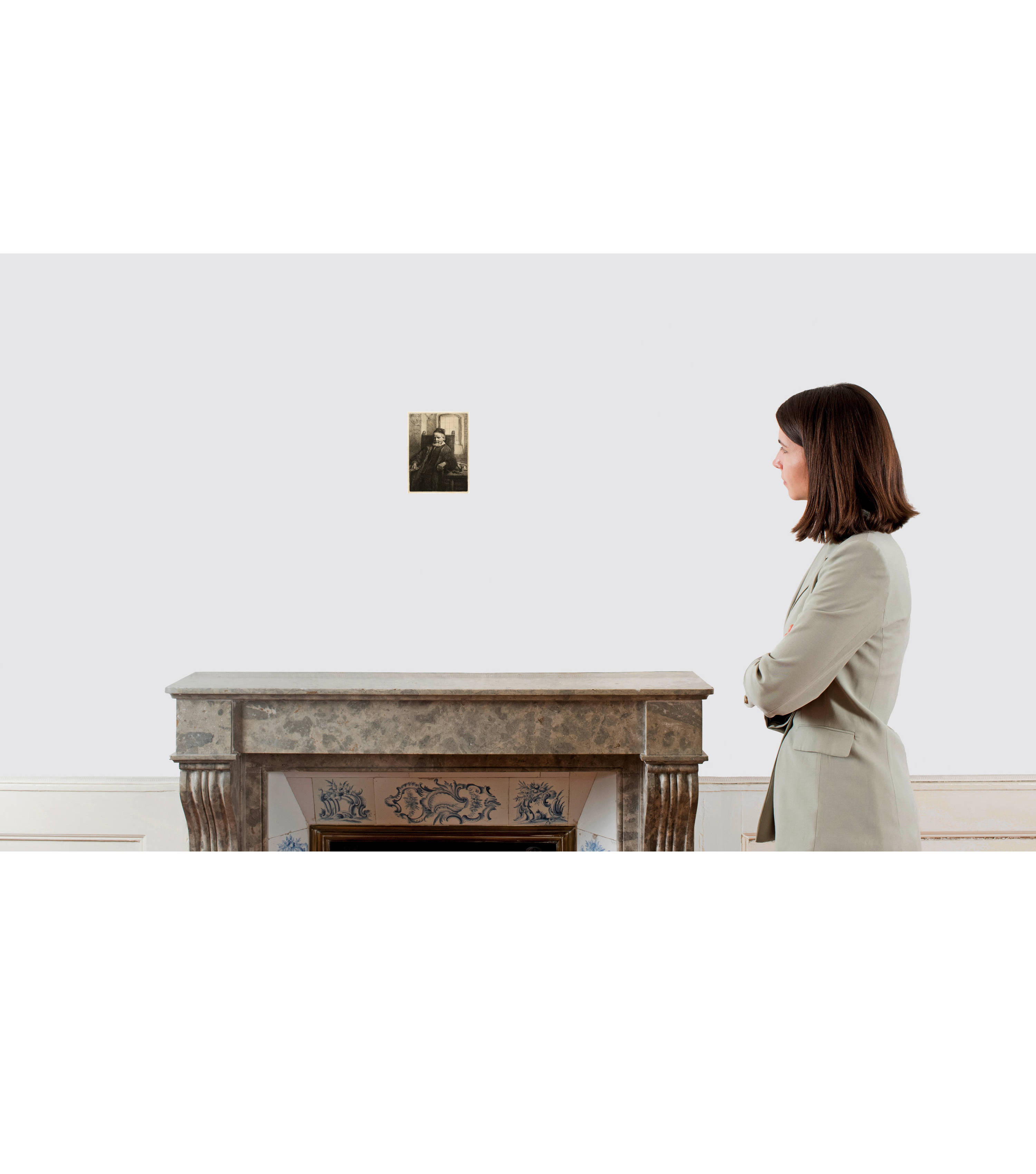
20.7x15.7 cm, sheet size
The New Hollstein (Hinterding/Rutgers) 293/II (of VI)
White/Boon 276/II (of III)
Collection Nikolai Semyonovich Mosolov (1847–1914), Moscow, Lugt 1802
Auction Gutekunst & Klipstein, Bern, 27/28 November 1947, lot 574
Very good impression, with a slight tone in the lighter areas. The margin is reinforced in places (mainly at the top on the reverse), but the plate mark is visible all around at the front. Only occasional pale brown spots, but overall still very fine
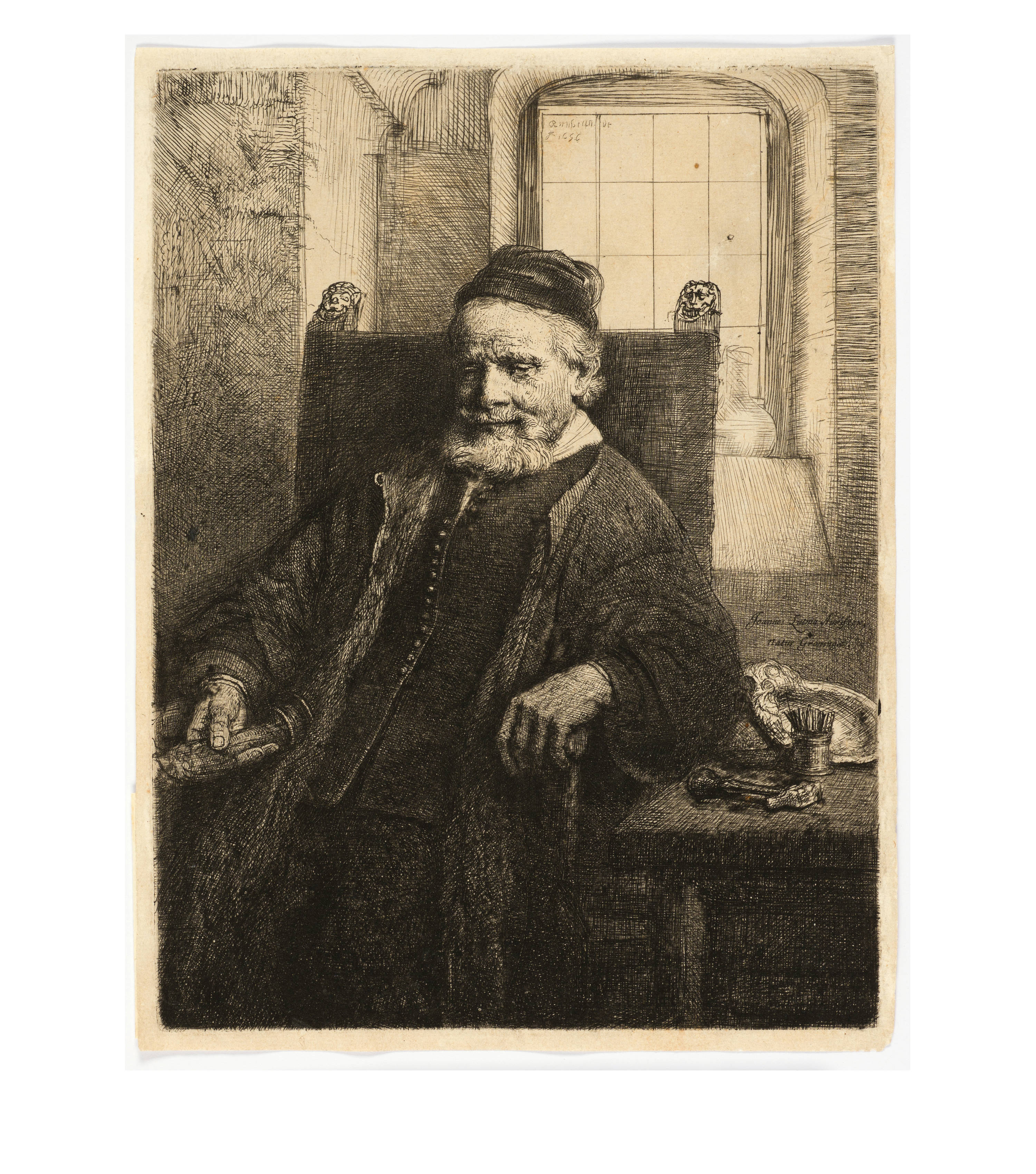
Rembrandt portrayed the goldswithh Jan Lutma (ca. 1584–1669) Seated and holding one of his works, possibly the shaft of a candlestick. On a small table beside him, in addition to a drinking bowl, are also tools of his trade: a hammer and punches. Lutma’s half-closed eyes suggest a decline in his eyesight, which eventually led to blindness.
While in the first state the background is largely unworked, in the second state Rembrandt added a window with a bottle on the windowsill to the composition. The sheet is considered one of his most impressive graphic portraits.
1656
Radierung, Stichel und Kaltnadel auf Bütten mit Wasserzeichen "Schellenkappe mit fünf Schellen über drei Kugeln" (Hinterding Watermarks, Foolscap, Variante N, III,
20,7x15,7 cm, Blattgrösse
The New Hollstein (Hinterding/Rutgers) 293/II (v. VI)
White/Boon 276/II (v. III)
Slg. Nikolai Semyonovich Mosolov (1847-1914), Moskau, Lugt 1802
Auktion Gutekunst & Klipstein, Bern, 27./28. November 1947, Los 574
Sehr guter Druck, in den hellen Partien mit leichtem Ton. Der Rand teilweise (vor allem oben rückseitig) verstärkt, die Plattenkante vorne jedoch umlaufend sichtbar. Ganz vereinzelt blass braunfleckig, im Gesamteindruck aber noch sehr schön
Rembrandt porträtierte den Goldschmied Jan Lutma (ca. 1584-1669) sitzend und eine seiner Arbeiten haltend, womöglich den Schaft eines Kerzenständers. Auf einem kleinen Tischchen neben ihm sind neben einer Trinkschale auch Werkzeuge seiner Arbeit zu sehen: ein Hammer und Punzen. Lutmas halb geschlossene Augen deuten auf die Abnahme seiner Sehkraft hin, die schliesslich in Blindheit mündete.
Während im I. Zustand der Hintergrund weitestgehend unbearbeitet ist, fügte Rembrandt im II. Zustand ein Fenster mit einer Flasche auf dem Fensterbrett in die Komposition ein. Das Blatt gilt als eines seiner eindrucksvollsten graphischen Bildnisse.
| Switzerland | CHF | 130 |
| Europe | CHF | 200 |
| USA | CHF | 250 |
| Overseas | CHF | 255 |