- EN


 Log in
-
- Live Auctions
- Past auctions
- More
- Kornfeld today
- The Story of Kornfeld
- Information









Løten 1863 - 1944 Oslo


1918-1920
Woodcut on wove paper
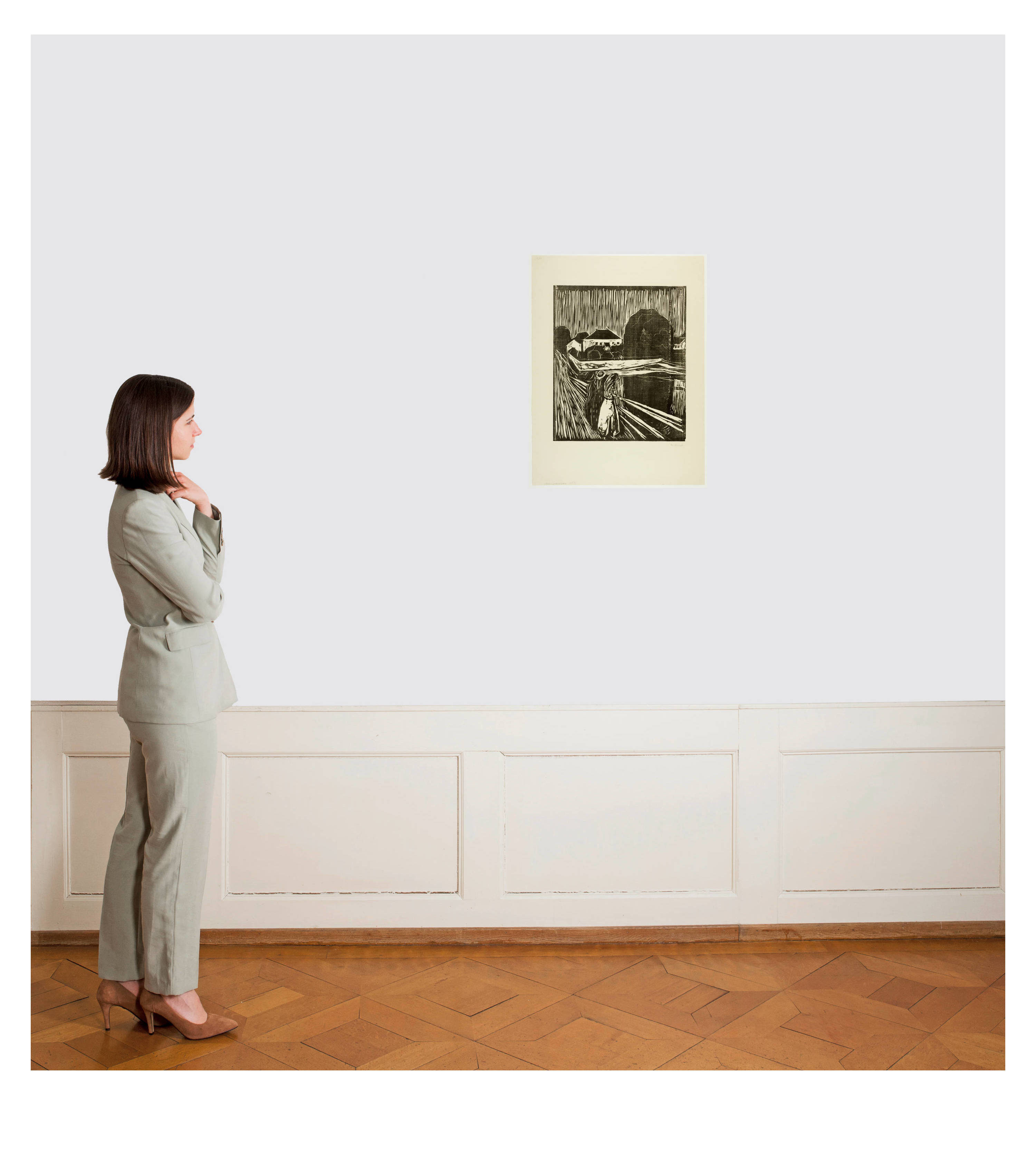
50x42.7 cm, wood-block; 73.9x55.7 cm, sheet size
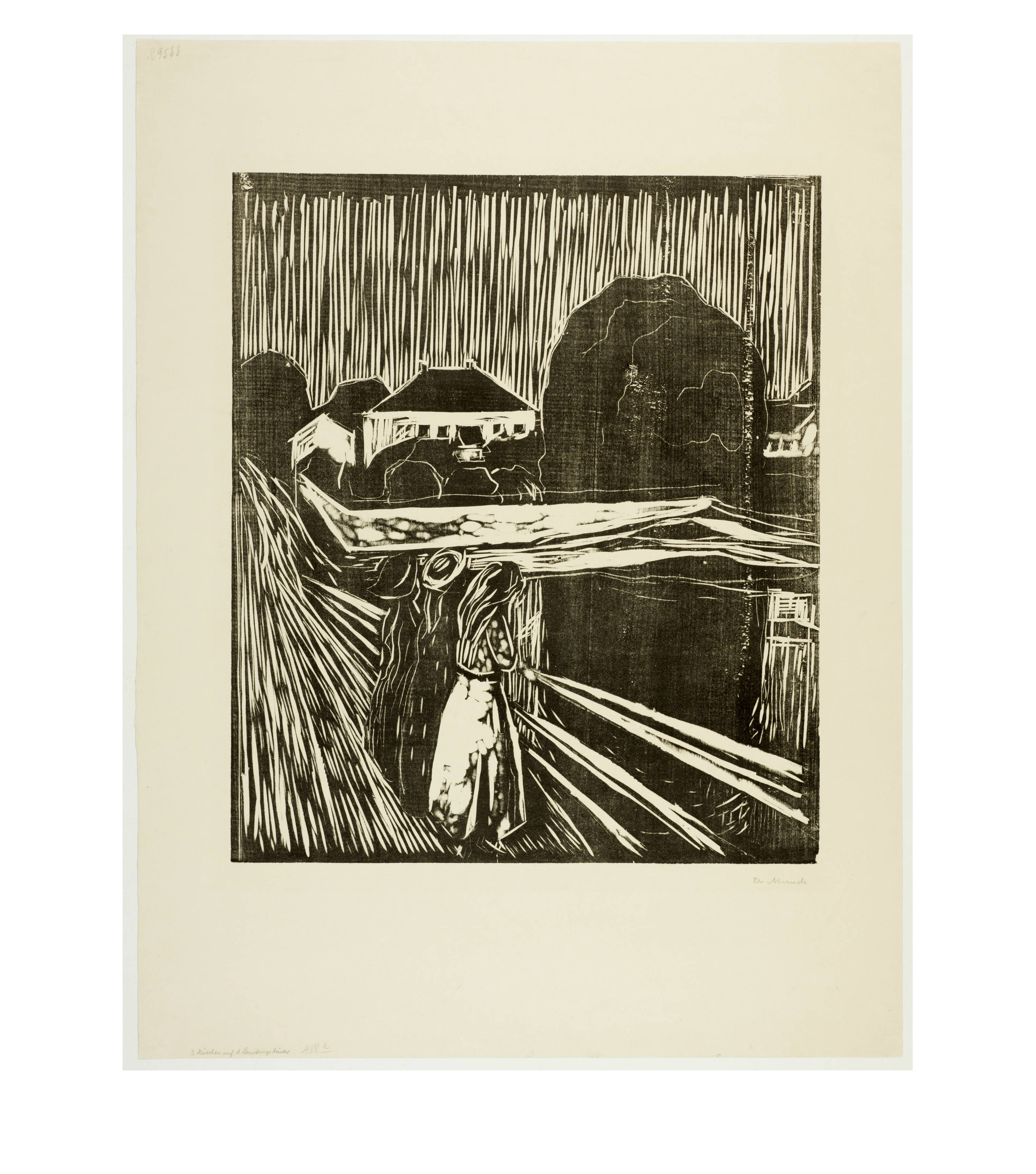
Beneath the block, right, signed by the artist in pencil 'Edv Munch'
Gerd Woll, Edvard Munch, The Complete Graphic Works, Oslo 2012, no. 628/1/2 (Vol. III)
Galerie Alfred Flechtheim, Berlin, 18 April-12 May 1931, Edvard Munch, cat. no. 83, Probably acquired there by
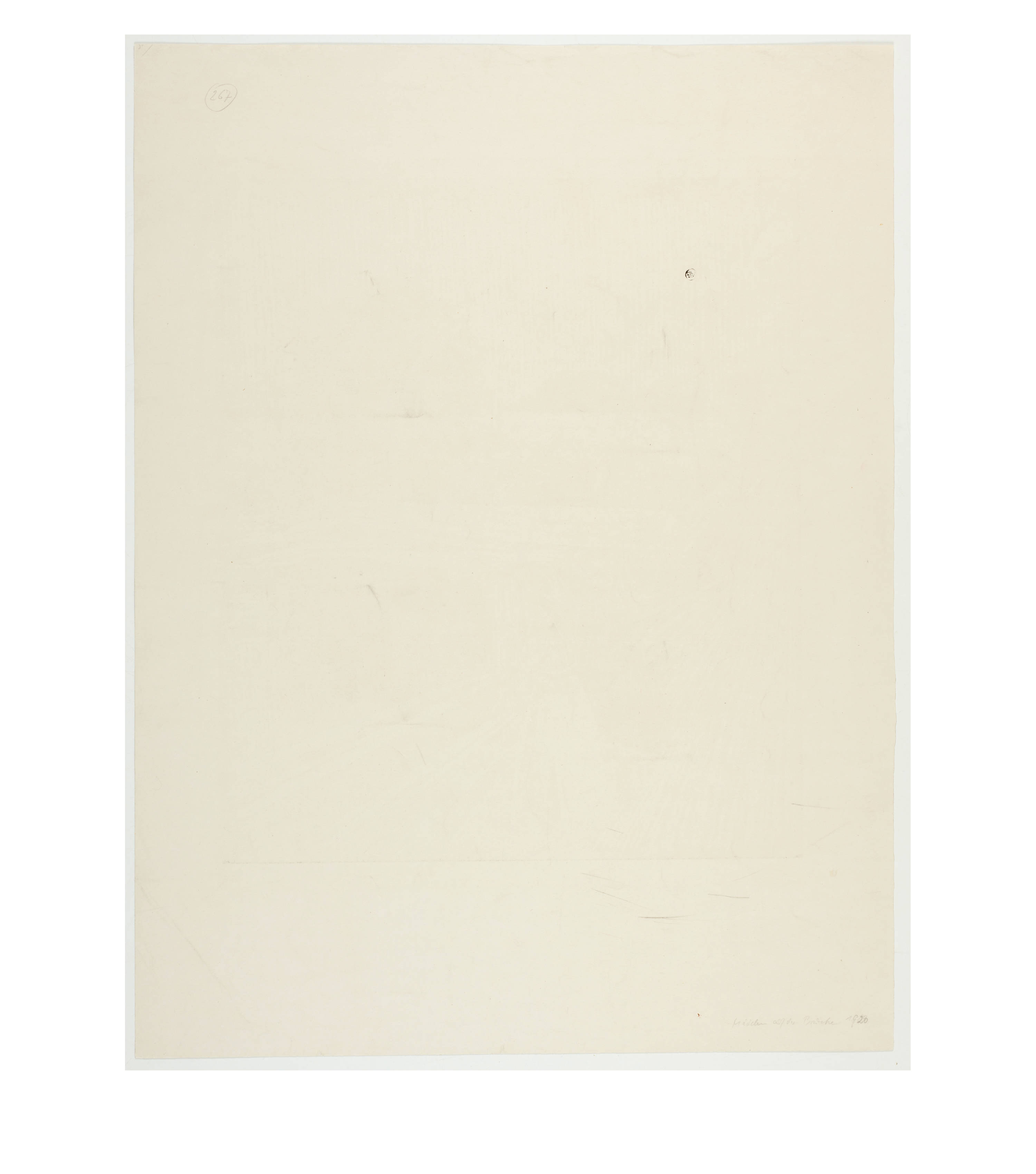
Collection Arnold Budczies, Berlin, with the collector's stamp on the back
Bremen 1970, Kunsthalle, Edvard Munch, Druckgraphik, Auswahl aus einer bremischen Privatsammlung, cat. no. 139
Hardly any signs of wear. On the upper edge on the reverse slight traces of old mounting. Fine condition
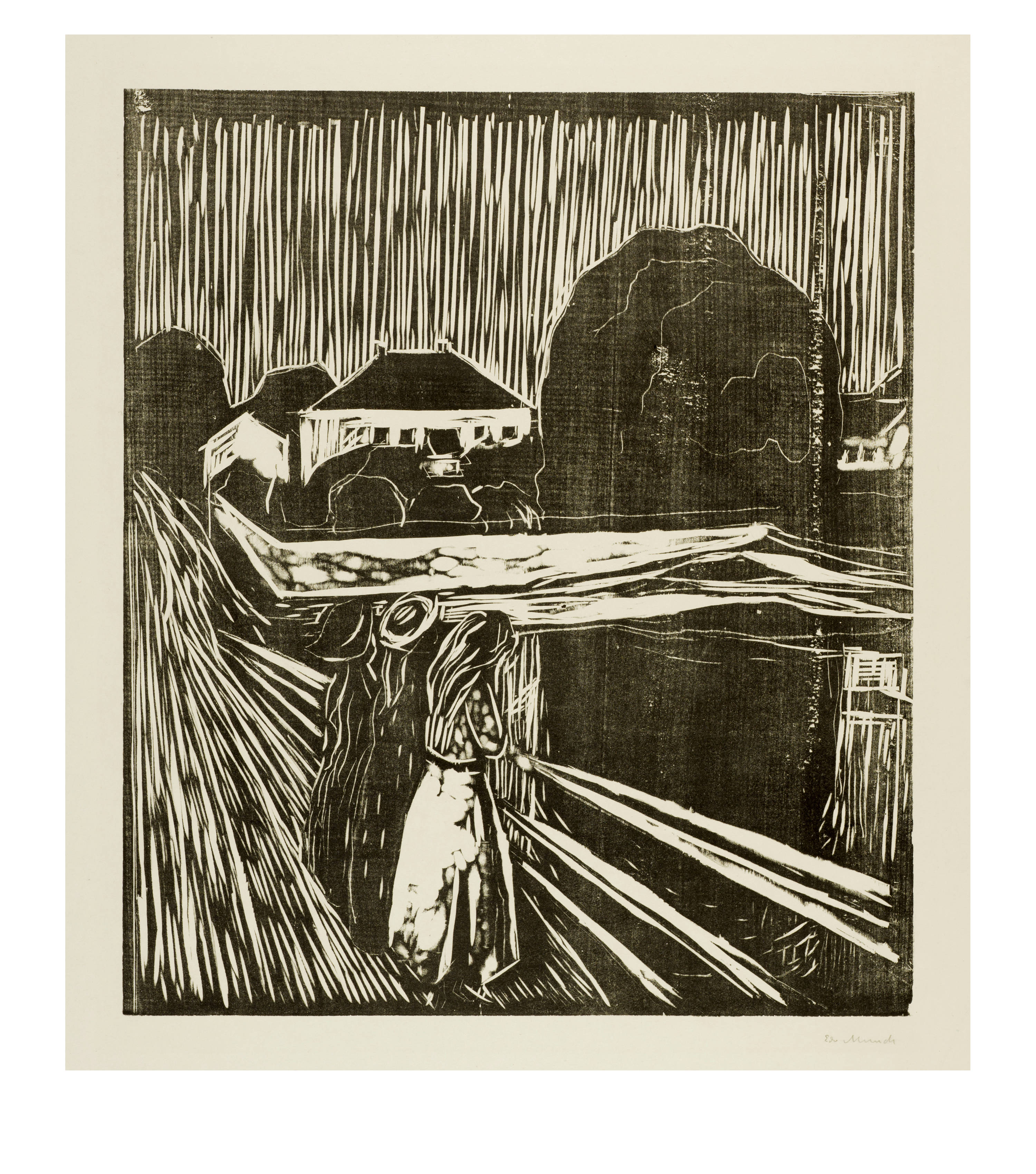
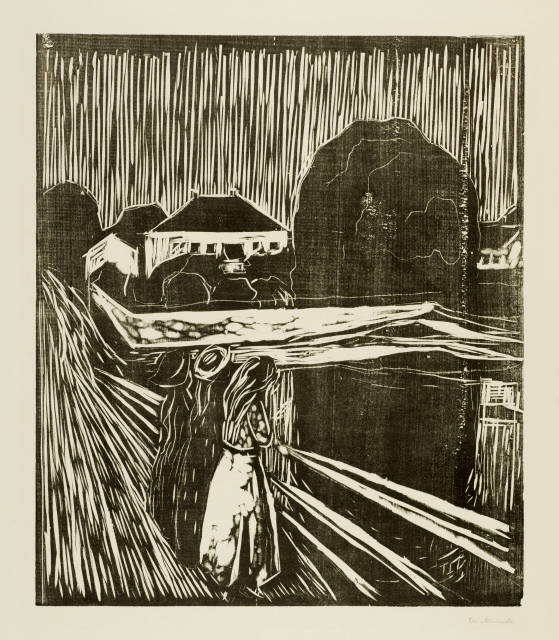
From 1901 onwards, Edvard Munch explored the theme of 'girls on a bridge'. By 1940, he had created twelve paintings and five prints. They depict three girls or women standing at the railing of the pier in Åsgårdstrand at the end of the Oslofjord. The estate Kjøsterudgården, which still exists today and is notable for its large lime trees, also appears in other works by Munch.
The bridge or pier functions as a symbolic space of transition and ambivalence between past and future, inner and outer worlds, as well as consciousness and the unconscious. The girls seem to linger in a moment of reflection, which enhances the mood of isolation and inner contemplation. Unlike the paintings, the view in the woodcut is shown in reverse.
In the present sheet, created in 1918, Munch consciously integrated the texture of the wood and the printing process into his composition, giving the surface a lively structure and authenticity. The work combines technical mastery with a deep emotional resonance. 'Mädchen auf der Brücke' is an impressive example of Munch's ability to capture and convey existential moods in a timeless way through the combination of line and symbolism. It is a work that unites both traditional visual language and innovative use of printmaking, thus occupying an important place in the oeuvre of Edvard Munch; see also lot 64 from the catalogue 'Passion for Paper - Ausgewählte Arbeiten auf Papier aus der Sammlung Eberhard W. Kornfeld'.
Printed in monochrome black by Anton Peder Nielsen in Kristiania (now Oslo) from a printing block cut in pearwood.
1918-1920
Holzschnitt auf Velin
50x42,7 cm, Druckstock; 73,9x55,7 cm, Blattgrösse
Unter dem Druckstock rechts vom Künstler in Bleistift signiert "Edv Munch"
Gerd Woll, Edvard Munch, The Complete Graphic Works, Oslo 2012,
Galerie Alfred Flechtheim, Berlin, 18. April-12. Mai 1931, Edvard Munch,
Slg. Arnold Budczies, Berlin, rückseitig mit dem Sammlerstempel
Bremen 1970, Kunsthalle, Edvard Munch, Druckgraphik, Auswahl aus einer bremischen Privatsammlung,
Kaum Gebrauchsspuren. An der Oberkante rückseitig leichte Spuren einer alten Montierung. Sehr schöne Erhaltung
Edvard Munch befasste sich ab 1901 mit dem Thema "Mädchen auf der Brücke". Bis 1940 entstehen zwölf Gemälde und fünf Graphiken. Darauf sind drei Mädchen oder junge Frauen zu sehen, die am Geländer des Piers in Åsgårdstrand, am Ende des Oslofjordes, stehen. Das noch heute existierende Anwesen Kjøsterudgården mit den grossen Linden kommt auch in anderen Werken Munchs vor.
Die Brücke bzw. der Pier fungiert als symbolischer Raum des Übergangs und der Zwiespältigkeit zwischen Vergangenheit und Zukunft, Innen- und Aussenwelt sowie Bewusstsein und Unbewusstem. Die Mädchen scheinen in einem Moment der Reflexion zu verharren, was die Stimmung der Isolation und des inneren Nachdenkens verstärkt. Anders als bei den Gemälden ist die Ansicht auf dem Holzschnitt seitenverkehrt dargestellt.
Im vorliegenden, 1918 entstandenen Blatt, hat Munch die Textur des Holzes und den Druckprozess bewusst in seine Bildgestaltung integriert, was der Oberfläche eine lebendige Struktur und Authentizität verleiht. Das Werk verbindet technische Meisterschaft mit einer tiefen emotionalen Resonanz. "Mädchen auf der Brücke" ist ein beeindruckendes Beispiel für Munchs Fähigkeit, durch die Kombination Linie und Symbolik existenzielle Stimmungen einzufangen und zeitlos zu vermitteln. Es ist eine Arbeit, die sowohl die traditionelle Bildsprache als auch die innovative Nutzung der Drucktechnik vereint und so einen wichtigen Platz im Œuvre Edvard Munchs einnimmt, vgl. auch Los 64 aus dem Katalog "Passion for Paper - Ausgewählte Arbeiten auf Papier aus der Sammlung Eberhard W. Kornfeld".
Von Anton Peder Nielsen in Kristiania (heute Oslo) monochrom schwarz vom in Birnenholz geschnittenen Druckstock gedruckt.
| Switzerland | CHF | 170 |
| Europe | CHF | 270 |
| USA | CHF | 360 |
| Overseas | CHF | 380 |