- EN


 Log in
-
- Live Auctions
- Past auctions
- More
- Kornfeld today
- The Story of Kornfeld
- Information


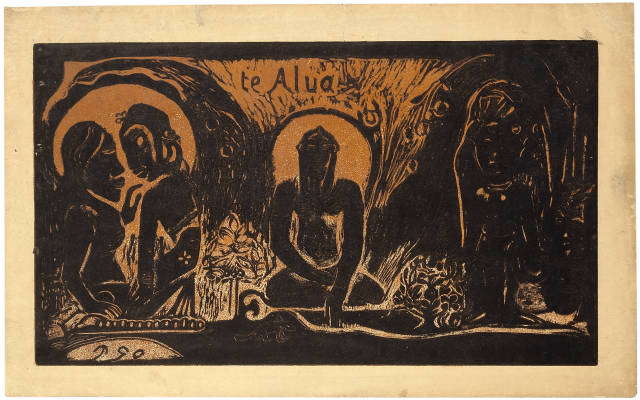







Paris 1848 - 1903 Hiva-Hoa (Marquesas)



Paris, winter 1893/1894
Colour woodcut on strong Japan paper
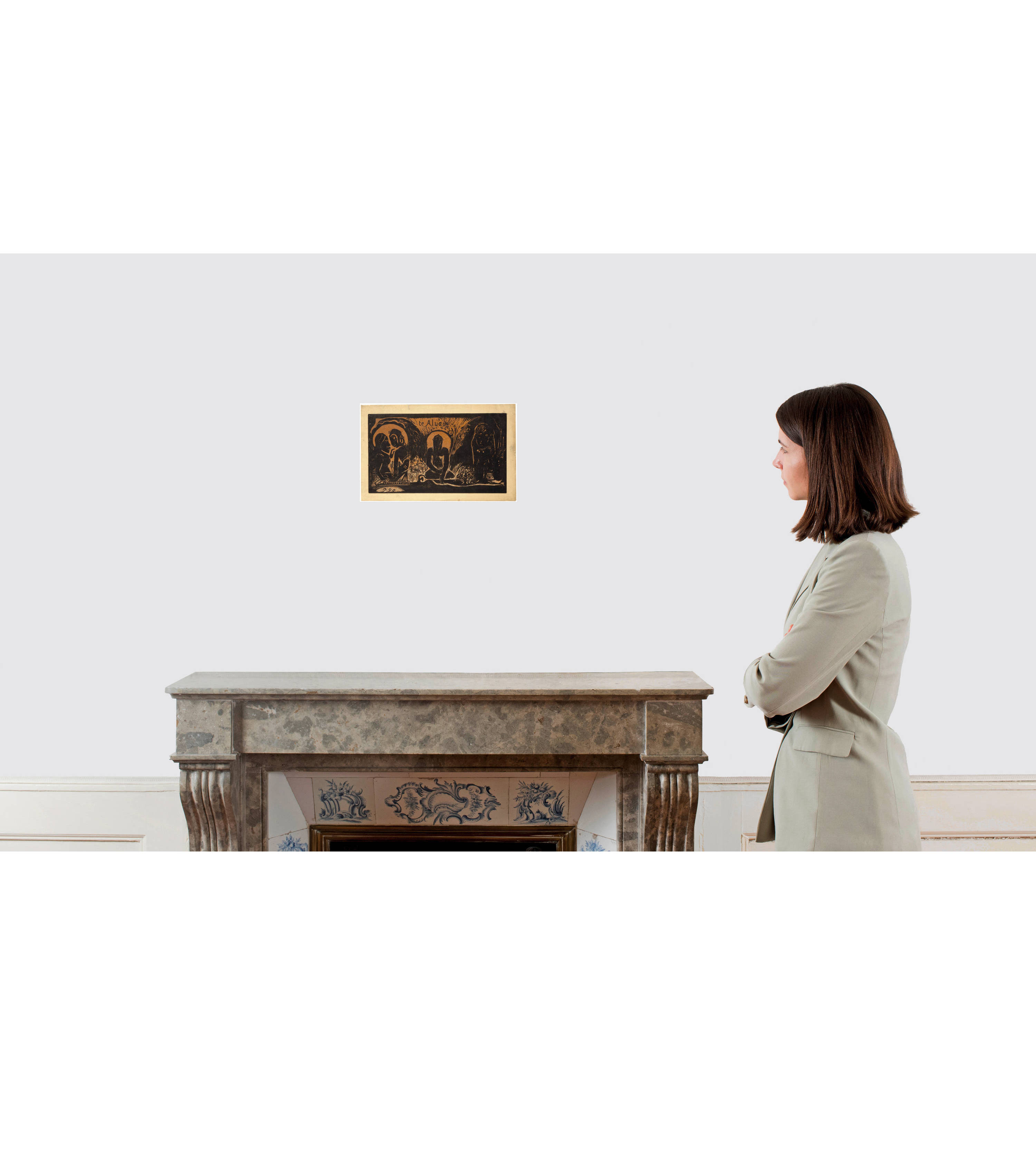
20.4x35.5 cm, printing block; 24.8x39.9 cm, sheet size
Mongan/Kornfeld/Joachim 17/III/C (of D)
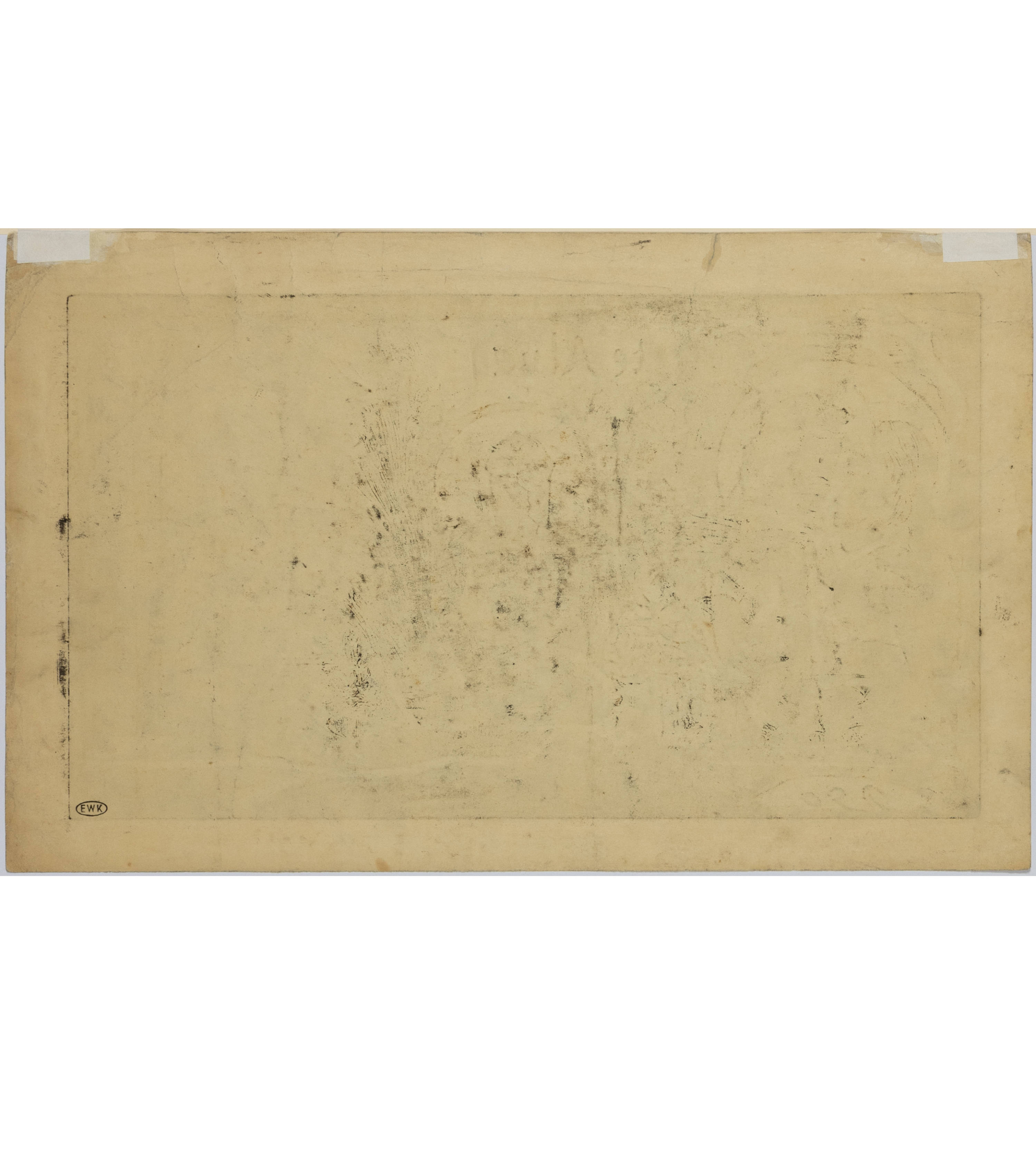
The Eberhard W. Kornfeld Collection, Bern, with the collector's stamp on the reverse , Lugt 913b
Basel/Hovikodden 1975/1977, Kunstmuseum/Henie-Onstad Kunstsenter, Meisterwerke der Graphik von 1800 bis zur Gegenwart, cat. no. 96
Salzburg/Winterthur 1984/1985, Rupertinum/Kunstmuseum, Von Goya bis Warhol, Meisterwerke der Graphik des 19. und 20. Jahrhunderts aus einer Schweizer Privatsammlung [The Eberhard W. Kornfeld Collection], cat. no. 94
Ingelheim 1997, Altes Rathaus, Ursprung und Vision - Paul Gauguin, Emil Nolde und die Kunst der Südsee, cat. no. 8
Martigny 1998, Fondation Pierre Gianadda, Gauguin, cat. no. 99
Cologne 1999/2000, Museum Ludwig, Kunstwelten im Dialog, Von Gauguin zur globalen Gegenwart, cat. no. 142
Brescia 2005/2006, Museo di Santa Giulia, Gauguin/Van Gogh, L'avventura del colore nuovo, cat. no. 133
Rome 2007/2008, Complesso del Vittoriano, Paul Gauguin, Artist of Myth and Dream, cat. no. 83
The paper with studio traces and minimal rubbing at the edges, a supported tear at the upper sheet edge, a stain at the lower edge. Overall in good printing quality and condition
In August 1893, Paul Gauguin returned to Paris from his first trip to Tahiti and planned to record his experiences in a book. In a letter to his wife from October 1893, he wrote: "Je prépare en outre un livre sur Tahiti et qui sera très utile pour faire comprendre ma peinture. Que de travail." In exchange with the writer Charles Morice, he worked during the winter of 1893/1894 on the texts that were to appear under the title "Noa Noa", and for this purpose he created a series of ten woodcuts in which he artistically captured his impressions, all created in the same format. From this series, which was planned as a special edition, Gauguin himself pulled individual trial proofs, but entrusted the printing of the edition, which was originally limited to 25 to 30 copies, to his artist friend Louis Roy. The planned book was never realized in this form; however, the manuscript "Noa Noa. Voyage de Tahiti" is known, which is now in the Louvre in Paris.
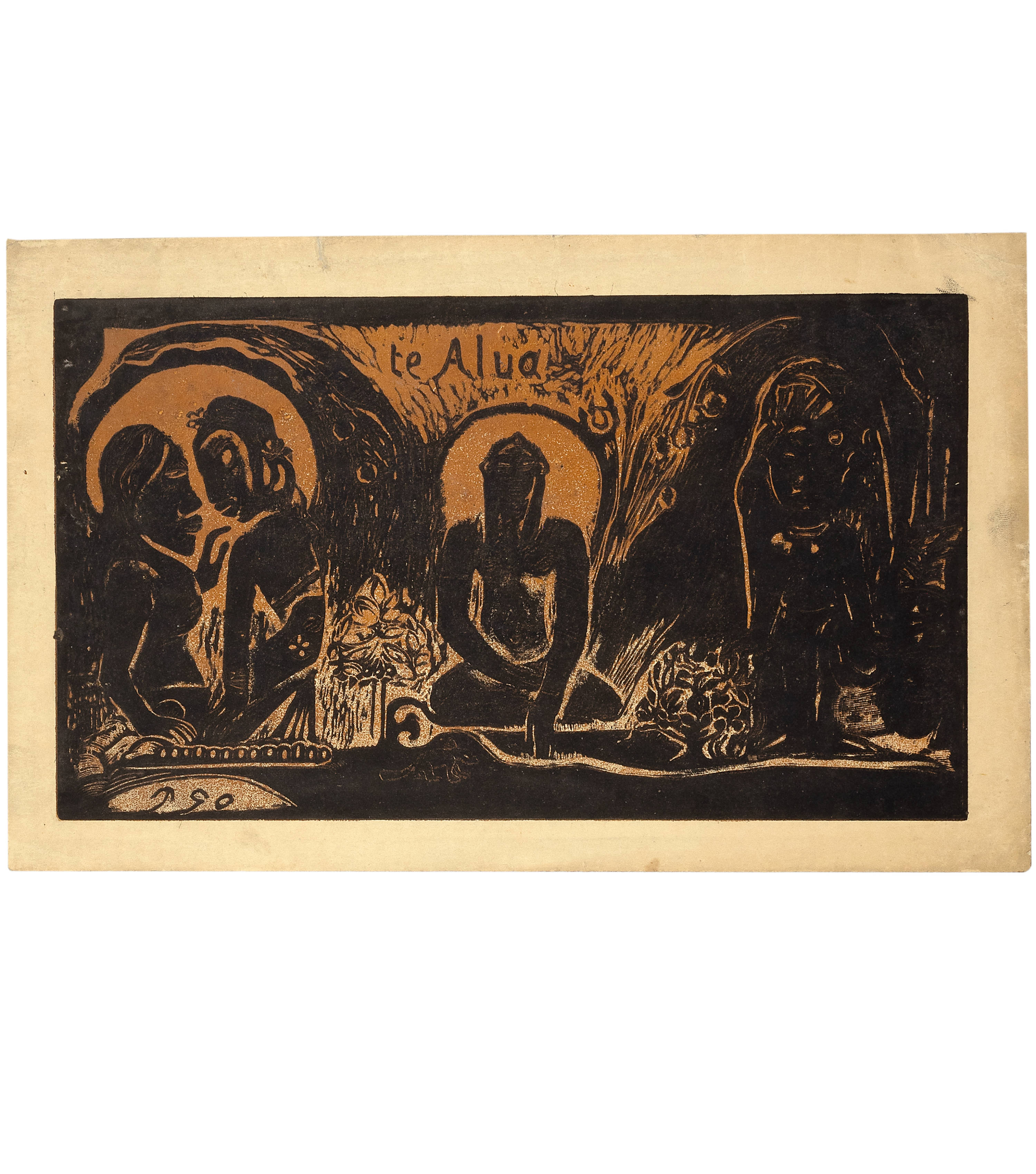
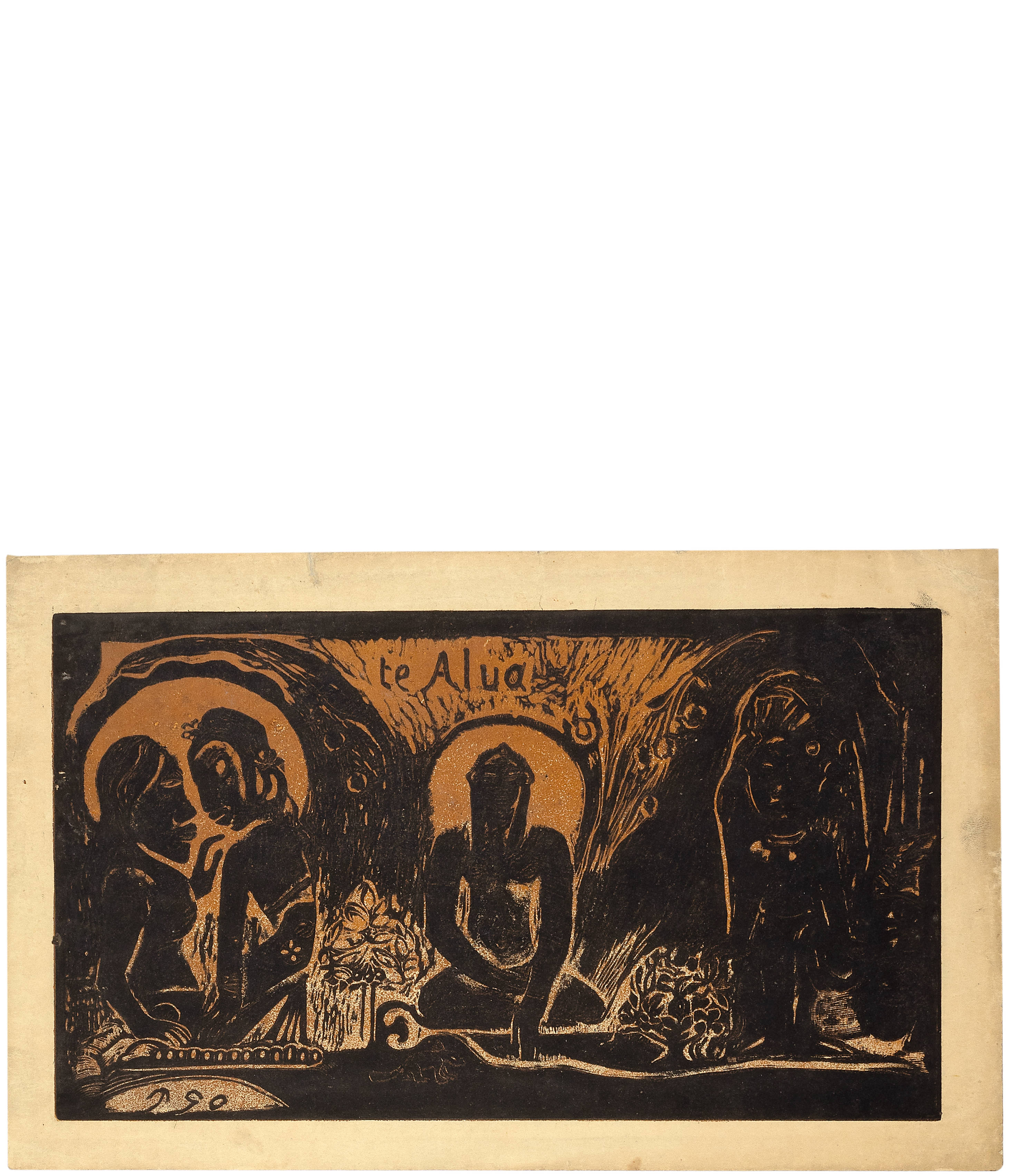
"Te Atua" is one of three sheets in the series that were created in landscape format. According to the authors of the catalogue raisonné, the present sheet was probably printed by Louis Roy and Paul Gauguin, with a color plate in rich ochre and a plate placed over it in black, which makes the figure in the center appear illuminated from behind. In an essay from 2010, Calvin Brown explains that the depicted gods probably go back to several sculptures by Gauguin. The central figure recalls a traditional Buddha statue and is based on Gauguin's "Idole à la perle" from 1892 (Gray 94), the figures on the left are derived from idols of the moon goddess "Hina and Te Fatu" (Gray 96). On the far right, another Hina figure with two companions can be seen, which in turn goes back to another sculpture by Gauguin from 1892. In this depiction, Gauguin brings together a selection of the supernatural powers of Polynesia.
Paris, Winter 1893/1894
Farbholzschnitt auf festem Japan
20,4x35,5 cm, Druckstock; 24,8x39,9 cm, Blattgrösse
Mongan/Kornfeld/Joachim 17/III/C (v. D)
Slg. Eberhard W. Kornfeld, Bern, rückseitig mit dem Sammlerstempel, Lugt 913b
Basel/Hovikodden 1975/1977, Kunstmuseum/Henie-Onstad Kunstsenter, Meisterwerke der Graphik von 1800 bis zur Gegenwart,
Salzburg/Winterthur 1984/1985, Rupertinum/Kunstmuseum, Von Goya bis Warhol, Meisterwerke der Graphik des 19. und 20. Jahrhunderts aus einer Schweizer Privatsammlung [Slg. Eberhard W. Kornfeld],
Ingelheim 1997, Altes Rathaus, Ursprung und Vision - Paul Gauguin, Emil Nolde und die Kunst der Südsee,
Martigny 1998, Fondation Pierre Gianadda, Gauguin,
Köln 1999/2000, Museum Ludwig, Kunstwelten im Dialog, Von Gauguin zur globalen Gegenwart,
Brescia 2005/2006, Museo di Santa Giulia, Gauguin/Van Gogh, L'avventura del colore nuovo,
Rom 2007/2008, Complesso del Vittoriano, Paul Gauguin, Artist of Myth and Dream,
Das Papier mit Atelierspuren und minimen Abreibungen an den Rändern, ein hinterlegter Einriss an der oberen Blattkante, ein Fleck an der Unterkante. In insgesamt guter Druckqualität und Erhaltung
Im August 1893 kam Paul Gauguin von seiner ersten Tahiti-Reise nach Paris zurück und plante seine Erlebnisse in einem Buch festzuhalten. In einem Brief an seine Frau vom Oktober 1893 schrieb er: "Je prépare en outre un livre sur Tahiti et qui sera très utile pour faire comprendre ma peinture. Que de travail." Im Austausch mit dem Schriftsteller Charles Morice arbeitete er im Winter 1893/1894 an den Texten, die unter dem Titel "Noa Noa" erscheinen sollten, dazu schuf er eine Reihe von zehn Holzschnitten, in denen er seine Eindrücke künstlerisch festhielt, alle im gleichen Format geschaffen. Von dieser Reihe, die als Vorzugsausgabe geplant war, zog Gauguin einzelne Probedrucke selbst ab, übergab den Druck der Auflage, die ursprünglich auf 25 bis 30 Exemplare limitiert war, jedoch seinem Künstlerfreund Louis Roy. Das geplante Buch wurde in dieser Form nie realisiert, bekannt ist jedoch das Manuskript "Noa Noa. Voyage de Tahiti", das sich heute im Louvre in Paris befindet.
"Te Atua" ist eines von drei Blättern der Folge, die im Querformat geschaffen worden sind. Gedruckt wurde das vorliegende Blatt laut den Autoren des Werkverzeichnisses vermutlich von Louis Roy und Paul Gauguin, mit einer Farbplatte in sattem Ocker und einer darüber platzierten Platte in Schwarz, die die Figur in der Mitte wie von hinten erleuchtet erscheinen lassen. Calvin Brown legt in einem Aufsatz von 2010 dar, dass die dargestellten Götter wohl auf mehrere Skulpturen von Gauguin zurückgehen. Die zentrale Figur erinnert an eine traditionelle Buddha-Statue und basiert auf Gauguins "Idole à la perle" von 1892 (Gray 94), die Figuren links sind abgeleitet von Idolen der Mondgöttin "Hina and Te Fatu" (Gray 96). Ganz rechts ist noch eine weitere Hina-Figur mit zwei Begleitern zu erkennen, die ihrerseits auf eine weitere Skulptur Gauguins aus dem Jahre 1892 zurückgeht. Gauguin versammelt in dieser Darstellung eine Auswahl der übernatürlichen Mächte Polynesiens.
| Switzerland | CHF | 130 |
| Europe | CHF | 200 |
| USA | CHF | 250 |
| Overseas | CHF | 255 |