- EN


 Log in
-
- Live Auctions
- Past auctions
- More
- Kornfeld today
- The Story of Kornfeld
- Information









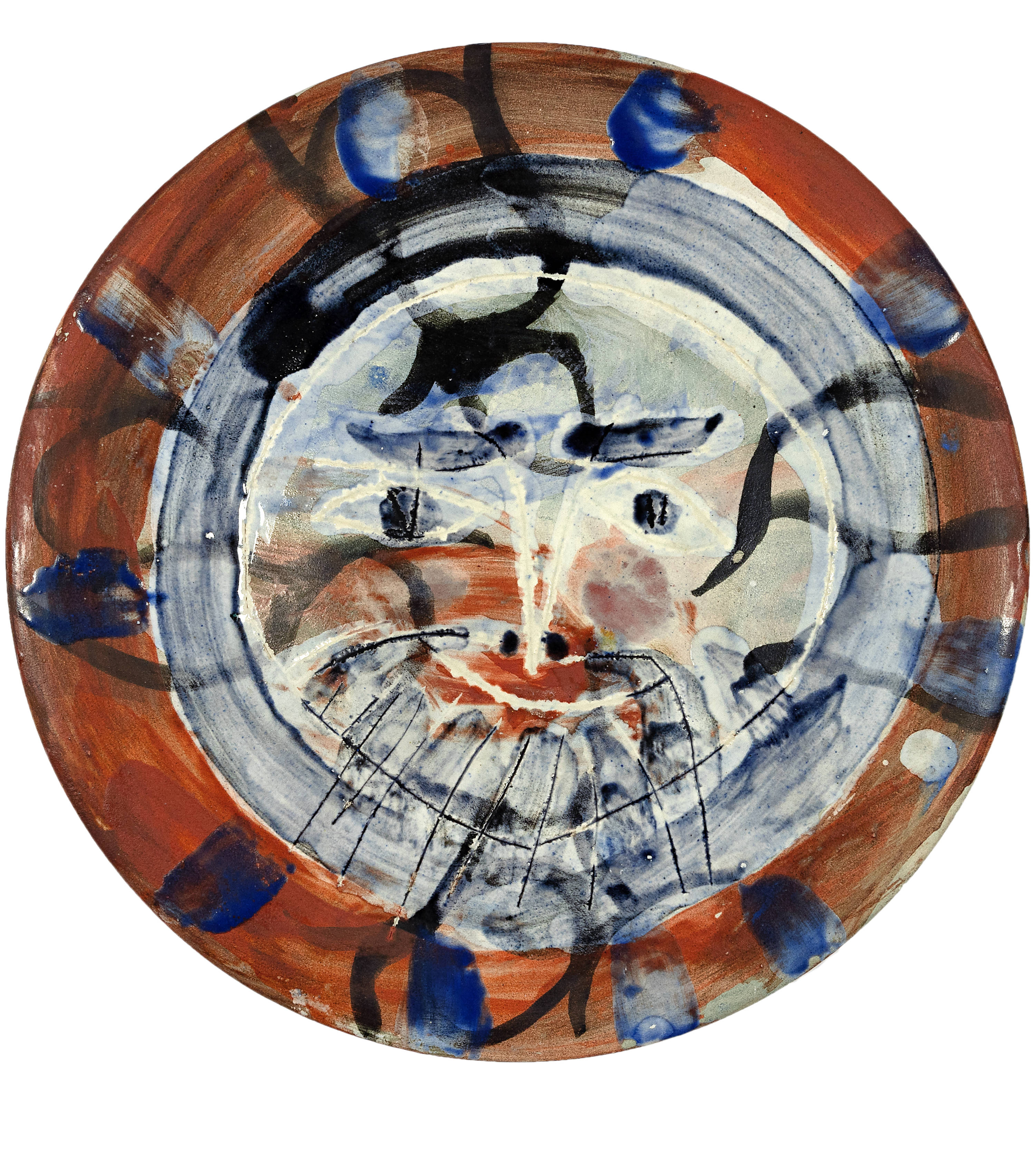
Málaga 1881 - 1973 Mougins


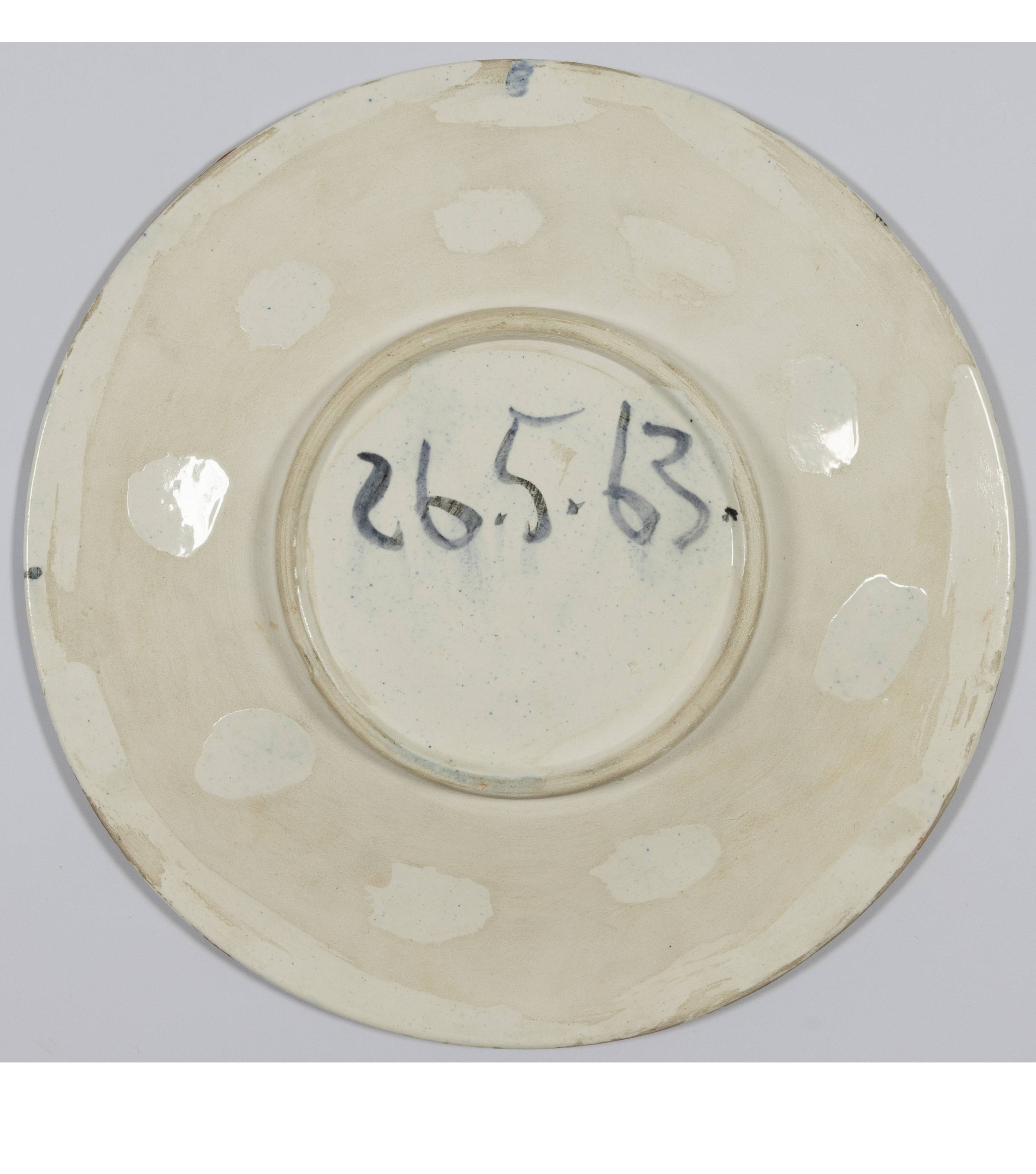
26 May 1963
Hand-painted and glazed ceramic
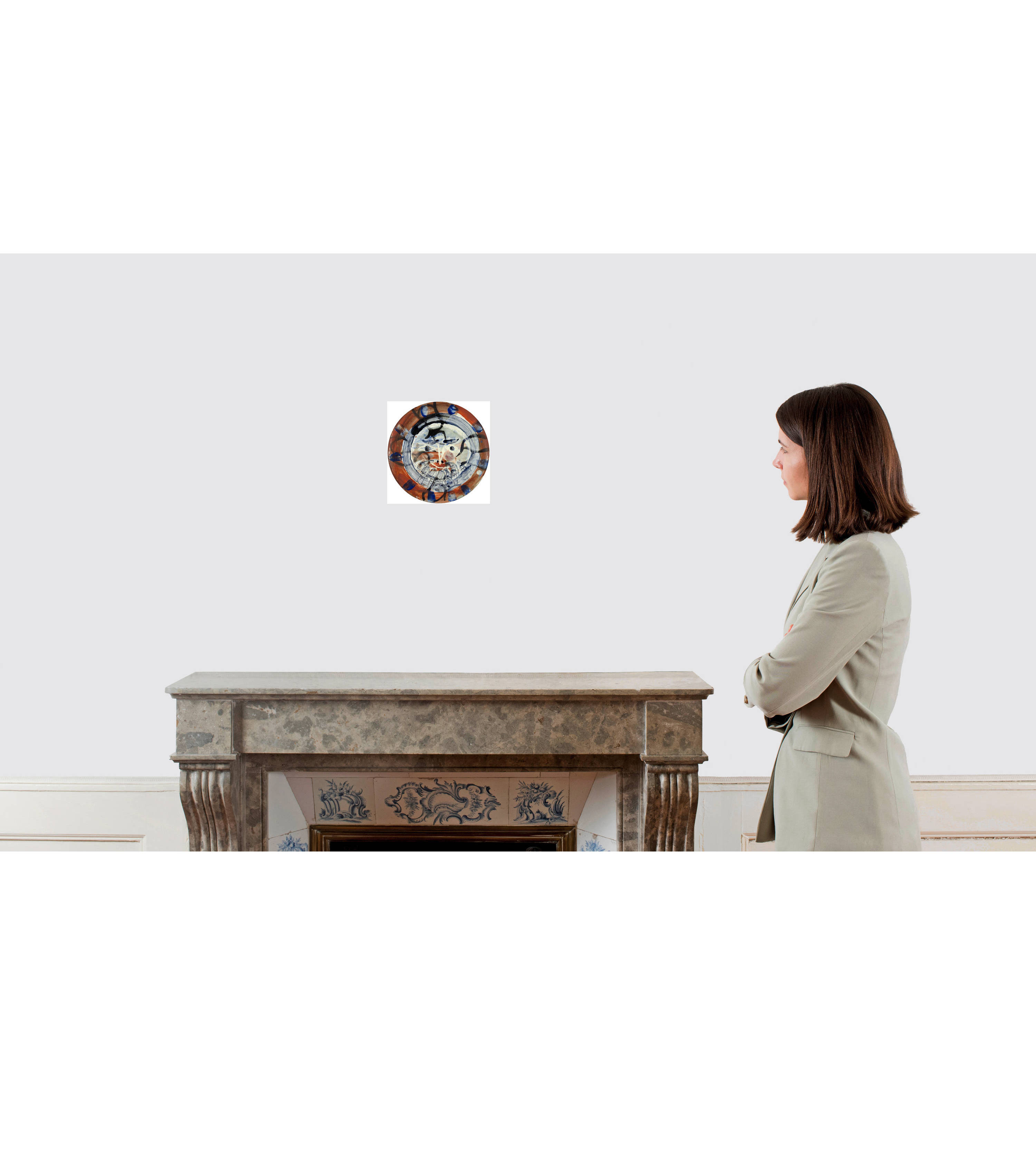
25 cm, diameter
Dated on the underside '26.5.63'
Certificate from Claude Ruiz-Picasso, dated 19 November 2013, is available. The work is listed in the estate inventory under the number 58956
Estate of the artist
Collection Christine Ruiz-Picasso, Paris
Private collection, Paris
Auction Sotheby's, Paris, 4 December 2013, lot 41, acquired there by
Private collection Germany
Berlin 2016, Galerie Bastian, Picasso at Madoura, without cat.
Berlin 2023, BASTIAN, Celebrating Picasso - Ceramics and Photographs, without cat.
Impeccable condition
In 1946, during a holiday in southern France, Picasso met Georges and Suzanne Ramié, who ran the Madoura pottery studio in the nearby town of Vallauris. The Ramiés invited Picasso to their studio, where he spontaneously created several ceramics. Although the artist had previously experimented with clay, working at the Madoura studio sparked his interest so much that he returned the following year with sketches full of ideas for ceramic works. Recognising a similar serial nature to that of printmaking in ceramic production, Picasso decided with the Ramiés to produce several copies of each piece, based on a design he had created. Between 1947 and 1971, the Madoura studio produced a total of 633 diverse ceramics, each in editions of 25 to 500 pieces, all of which were made and painted after Picasso's designs. At first, he created simple utilitarian objects, such as plates and bowls, and later moved on to more complex forms.
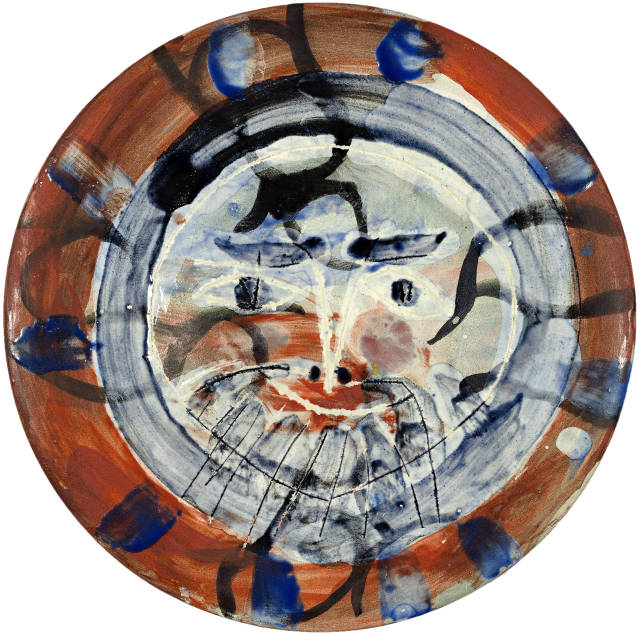
In addition to the edition ceramics, there were also unique pieces that Picasso did not intend as editions. These one-of-a-kind sculptures were painted and, in some cases, shaped by the artist himself, bearing witness to the master's incomparable creative drive. The plate offered here depicting the smiling face of a bearded man with a hat is a rare example of this type of work.
26. Mai 1963
Handbemalte und glasierte Keramik
25 cm, Durchmesser
Auf der Unterseite datiert "26.5.63"
Zertifikat von Claude Ruiz-Picasso, datiert vom 19. November 2013, liegt vor. Das Werk ist im Inventar des Nachlasses unter der Nummer 58956 aufgeführt
Nachlass des Künstlers
Slg. Christine Ruiz-Picasso, Paris
Privatsammlung, Paris
Auktion Sotheby’s, Paris, 4. Dezember 2013, Los 41, dort erworben von
Privatsammlung Deutschland
Berlin 2016, Galerie Bastian, Picasso at Madoura, ohne Kat.
Berlin 2023, BASTIAN, Celebrating Picasso - Ceramics and Photographs, ohne Kat.
Tadellos in der Erhaltung
Im Jahr 1946 lernte Picasso während eines Ferienaufenthalts in Südfrankreich Georges und Suzanne Ramié kennen, die im nahe gelegenen Vallauris das Töpferatelier Madoura betrieben. Das Ehepaar Ramié lud Picasso in ihr Atelier ein, wo spontan einige Keramiken entstanden. Der Künstler hatte zwar schon vorher mit Ton experimentiert, aber die Arbeit im Atelier Madoura weckte sein Interesse so sehr, dass er im Folgejahr mit Skizzen voller Ideen zu keramischen Arbeiten zurückkehrte. Picasso, der in der Keramikproduktion einen ähnlichen seriellen Charakter wie in der Druckgraphik erkannte, beschloss zusammen mit dem Ehepaar Ramié jeweils mehrere Exemplare nach einer von ihm entworfenen Vorlage herzustellen. So entstanden zwischen 1947 und 1971 insgesamt 633 unterschiedlichste Keramikarbeiten, die jeweils in einer Auflage von 25 bis 500 Stück vom Atelier Madoura hergestellt wurden, stets getöpfert und bemalt nach der Vorlage von Picasso. Zunächst schuf er einfache Gebrauchsgegenstände, wie Teller und Schalen, später auch komplexere Formen.
Neben den Auflagenkeramiken entstanden auch Einzelstücke, die von Picasso nicht als Edition vorgesehen waren. Diese Einzelstücke sind vom Künstler bemalte, zum Teil auch von ihm geformte einzigartige Plastiken und zeugen vom unvergleichlichen Schöpfungsdrang des Meisters. So ist denn auch der angebotene Teller mit dem lächelnden Gesicht eines bärtigen Mannes mit Hut ein seltenes Unikat.
| Switzerland | CHF | 150 |
| Europe | CHF | 250 |
| USA | CHF | 320 |
| Overseas | CHF | 325 |