- EN


 Log in
-
- Live Auctions
- Past auctions
- More
- Kornfeld today
- The Story of Kornfeld
- Information


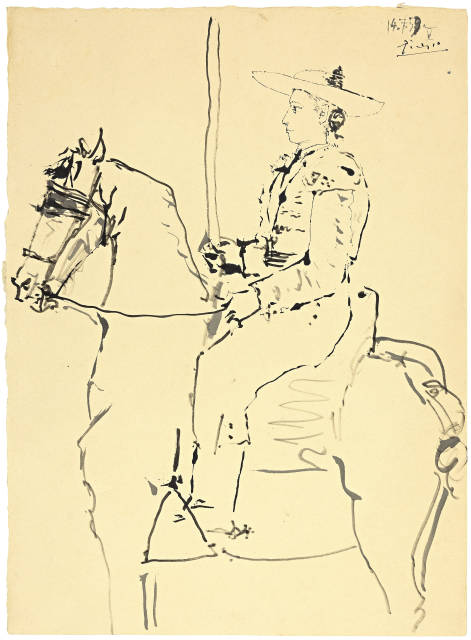







Málaga 1881 - 1973 Mougins



14 July 1959
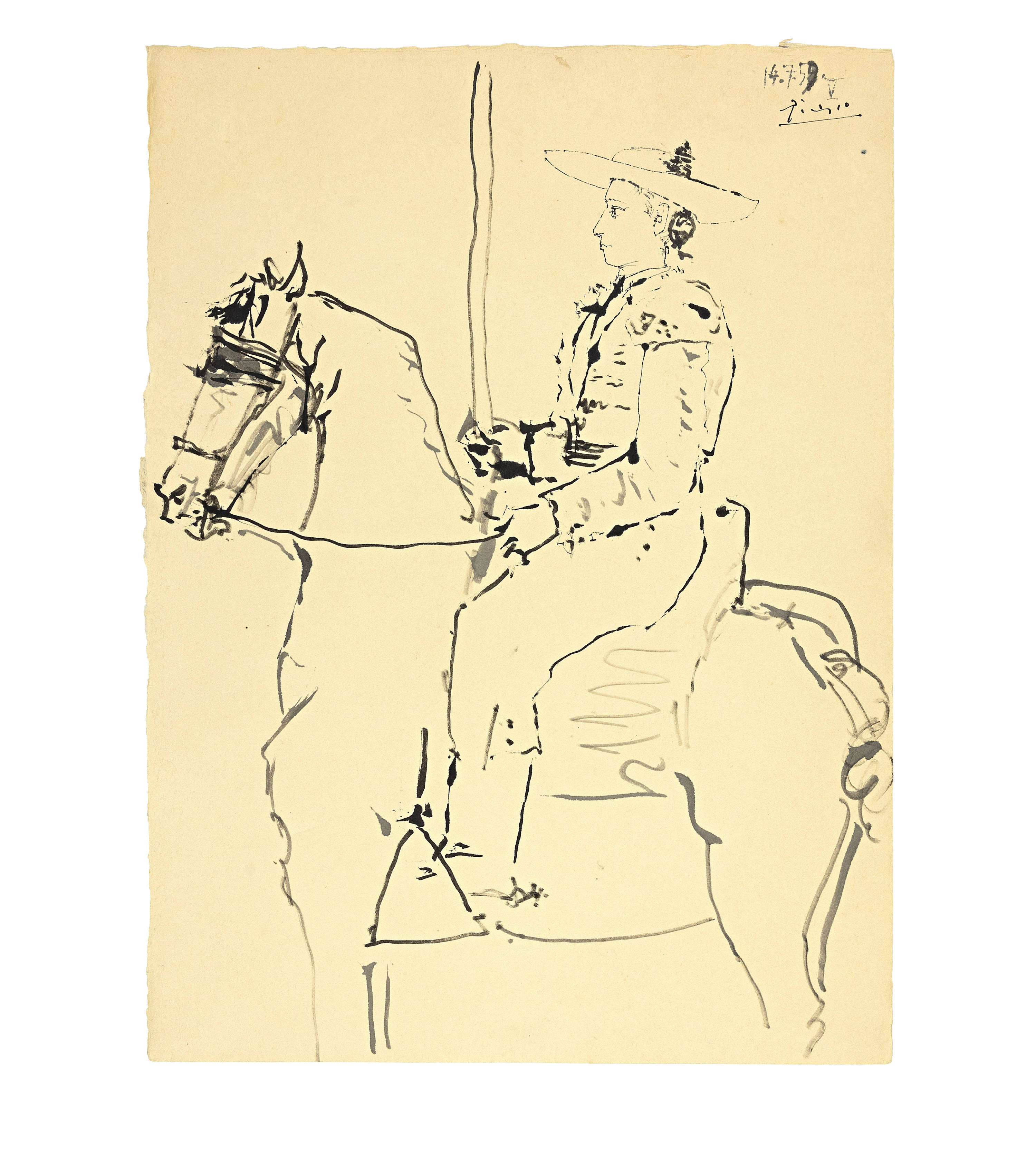
Brush in black Indian ink on Japan paper
43.7x32.3 cm
Upper right signed by the artist in ink 'Picasso', above dated '14.7.59' and inscribed 'V' for the fifth drawing on this day (all on the theme 'Picador')
Christian Zervos, Pablo Picasso, Œuvres de 1959 à 1961, Paris 1968, vol. 19, no. 5
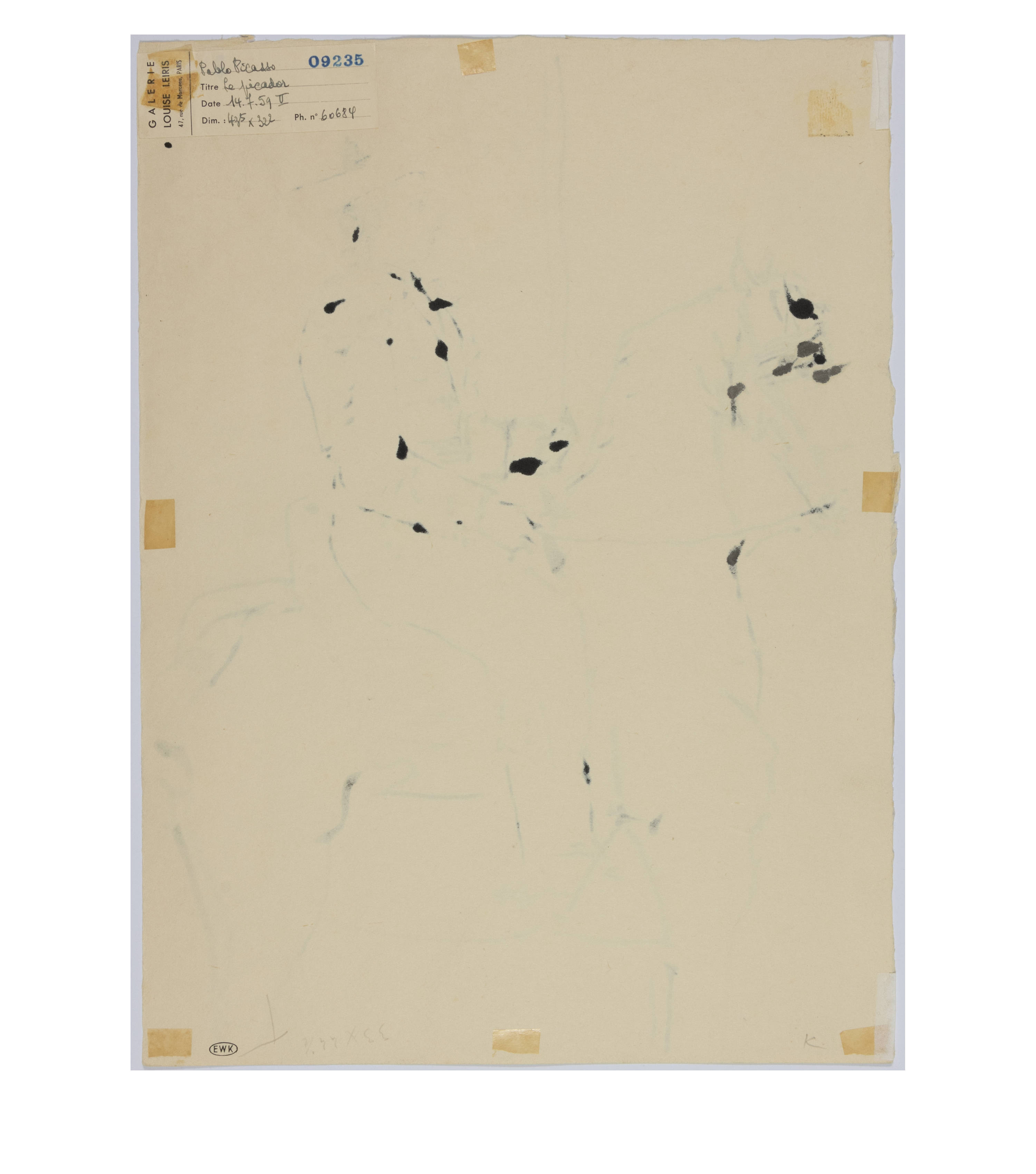
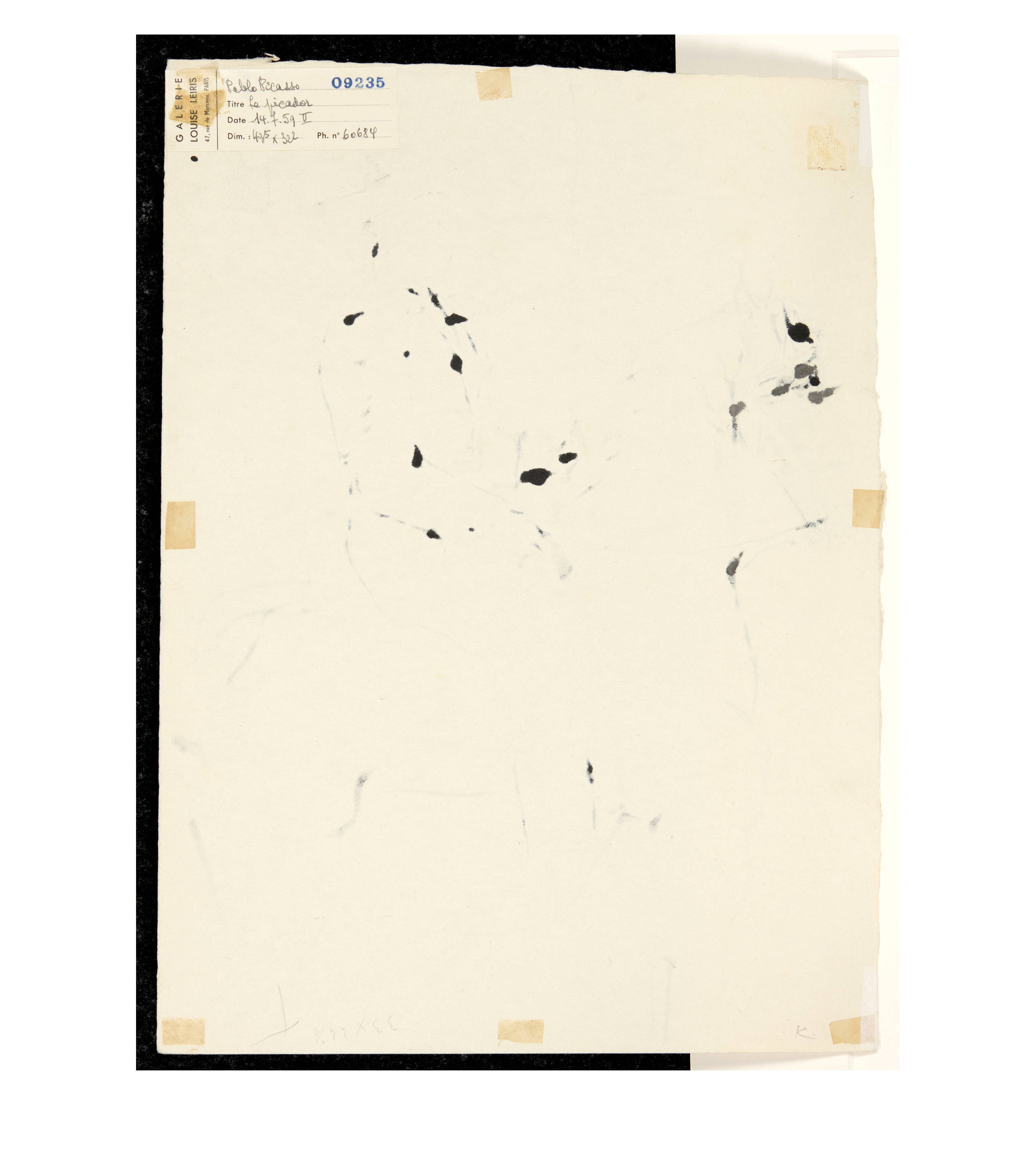
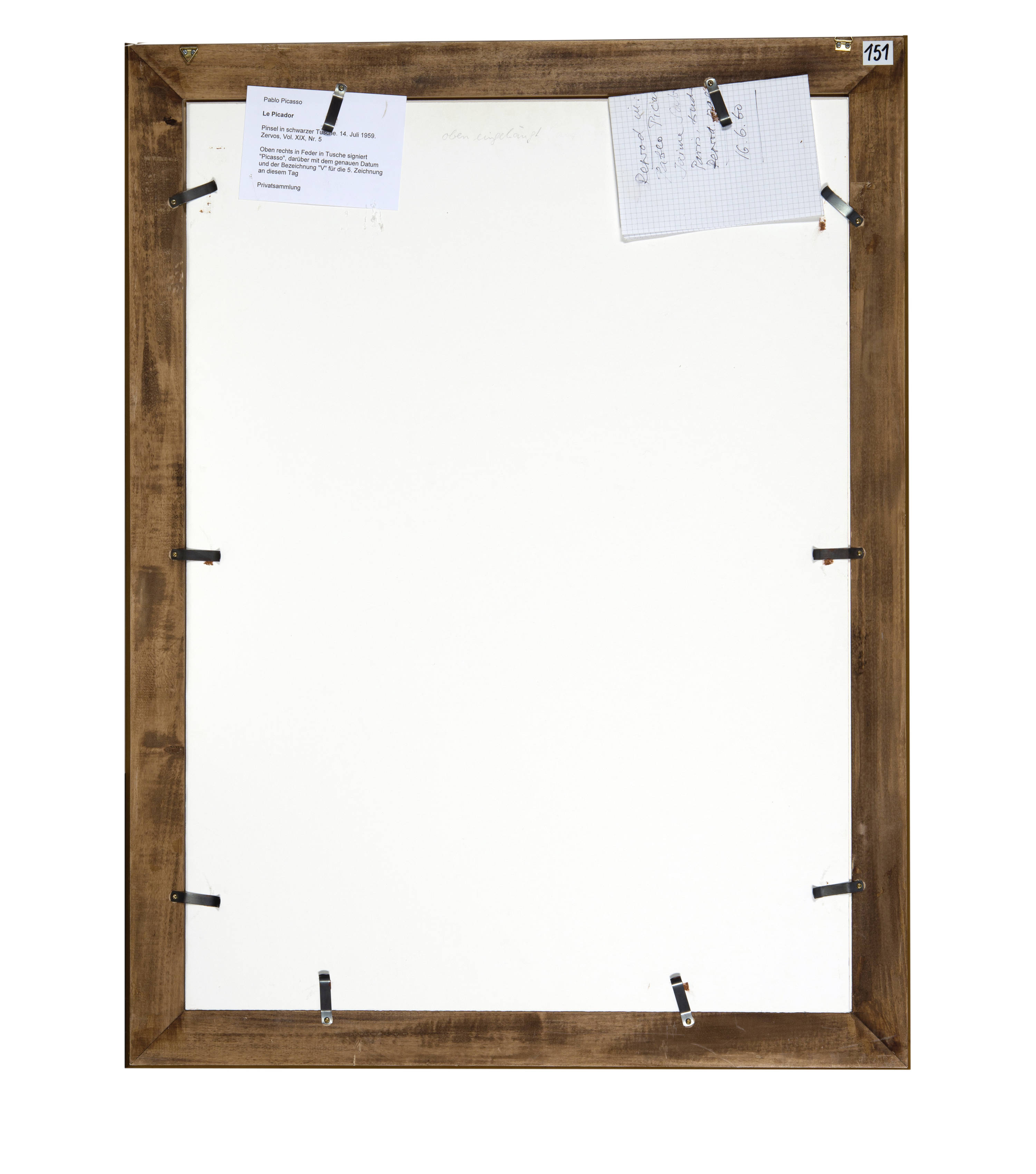
Galerie Louise Leiris (D.-H. Kahnweiler), Paris, with label on the reverse of the drawing, with inv. no. 09235 and photo no. 60684
Editorial Gustavo Gili, Barcelona
Auction Galerie Kornfeld, Bern, 17 June 2011, lot 151, acquired there by
The Eberhard W. Kornfeld Collection, Bern, with the collector's stamp on the back, Lugt 913b
Jaime Sabartés, A Los Toros avec Picasso, Monte Carlo 1961, cat. no. 6
The paper slightly browned. The reverse with traces of old mounting. Fine drawing in very good condition
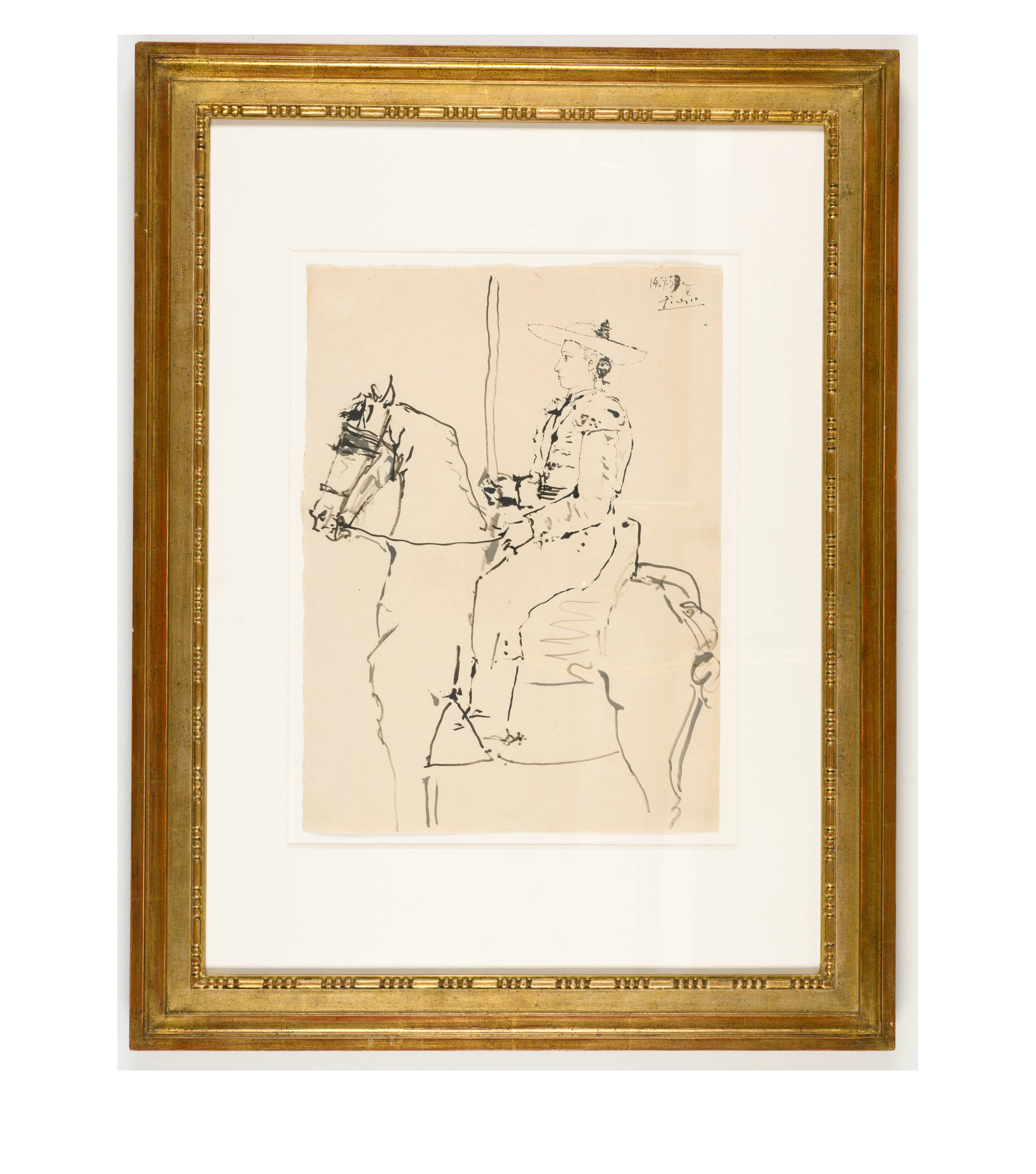
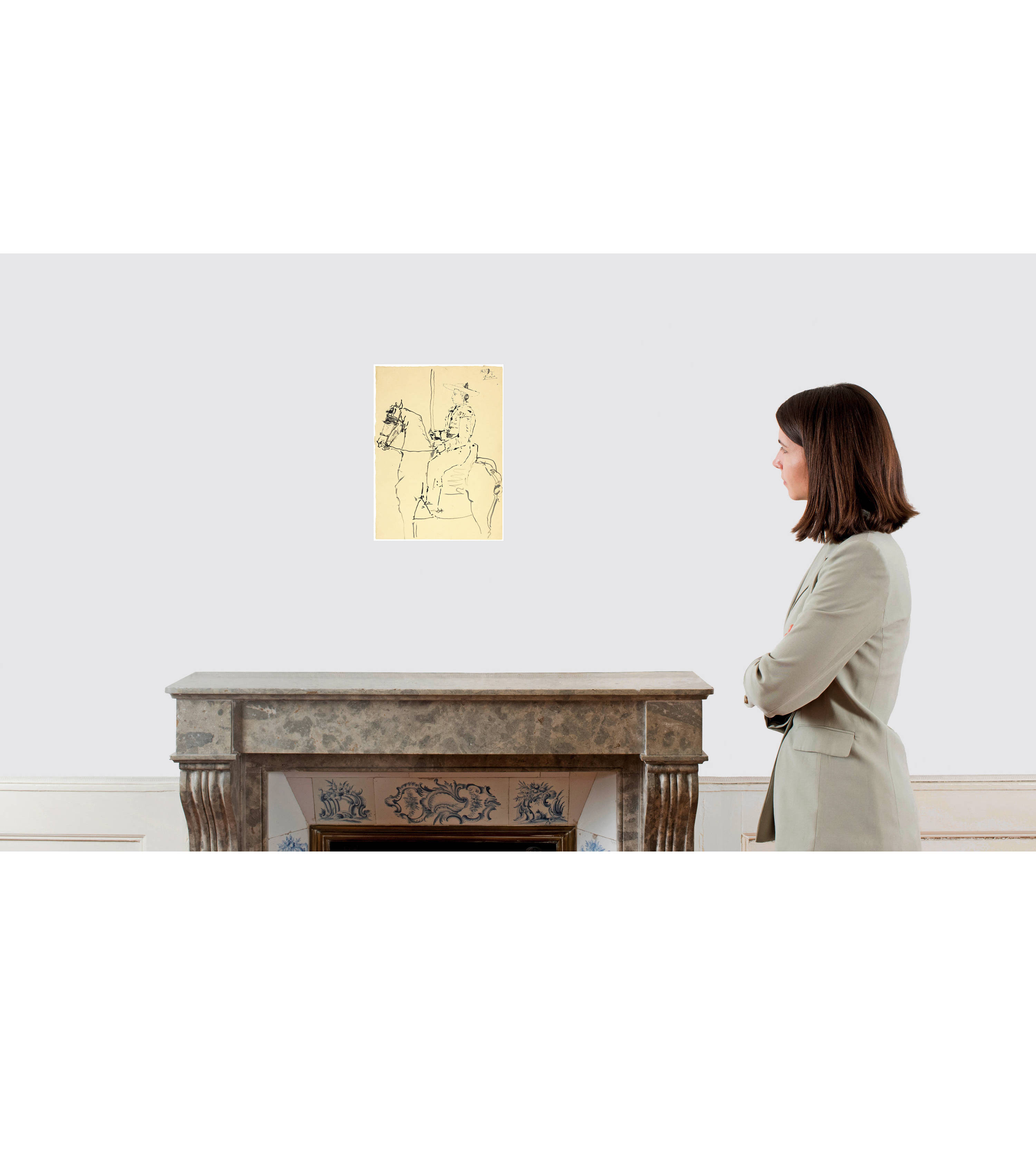
The present pen and ink drawing depicts a picador (lancer), a bullfighter on horseback, who attacks the bull in the arena with a lance (pique). His task is to tire the bull before the matador finally ends the bullfight. For Picasso, bullfighting was a symbol of struggle, life and death, and conveyed a connection between tradition and modern art concepts. Picasso's interest in bullfighting and its related themes reflects his own engagement with his nationality and his homeland Spain. The present drawing was created at a time when he was almost obsessed with bullfighting, also called corrida. In 1959, for example, he created illustrations for Pepe Illo's treatise on bullfighting 'La Tauromaquia o arte de torear', as well as for 'Toros y toreros', the text by his friend and famous torero Luis Miguel Dominguín.
Bullfighting represented Picasso's newly awakened interest in machismo - a key theme that would shape his late work. The matador or the picador, as depicted here, functioned as embodiments of masculinity and bravery and were something like the youthful alter ego of the aging artist.
14. Juli 1959
Pinsel in schwarzer Tusche auf Japan
43,7x32,3 cm
Oben rechts vom Künstler in Tusche signiert "Picasso", darüber datiert "14.7.59" und bezeichnet "V" für die fünfte Zeichnung an diesem Tag (alle zum Thema "Picador")
Christian Zervos, Pablo Picasso, Œuvres de 1959 à 1961, Paris 1968, Bd. 19,
Galerie Louise Leiris (D.-H. Kahnweiler), Paris, mit Etikett auf der Rückseite der Zeichnung, mit Inv.-Nr. 09235 und Photo-Nr. 60684
Editorial Gustavo Gili, Barcelona
Auktion Galerie Kornfeld, Bern, 17. Juni 2011, Los 151, dort erworben von
Slg. Eberhard W. Kornfeld, Bern, rückseitig mit dem Sammlerstempel, Lugt 913b
Jaime Sabartés, A Los Toros avec Picasso, Monte Carlo 1961,
Das Papier leicht gebräunt. Die Rückseite mit Spuren einer alten Montierung. Schöne Zeichnung in sehr guter Erhaltung
Die vorliegende Tuschzeichnung zeigt einen Picador (Stecher), einen Stierkämpfer zu Pferd, der den Stier in der Arena mit einer Lanze (Pique) angreift. Seine Aufgabe ist es, den Stier zu ermüden, bevor der Matador den Stierkampf schliesslich beendet. Der Stierkampf war für Picasso ein Symbol für Kampf, Leben und Tod und vermittelte eine Verbindung zwischen Tradition und modernen Kunstkonzepten. Picassos Interesse am Stierkampf und den damit zusammenhängenden Themen spiegelt seine eigene Auseinandersetzung mit seiner Nationalität und seiner Heimat Spanien wider. Die vorliegende Zeichnung entstand in einer Zeit, in der er geradezu besessen vom Stierkampf, auch Corrida genannt, war. So entstanden im Jahr 1959 etwa die Illustrationen für Pepe Illos Abhandlung über den Stierkampf "La Tauromaquia o arte de torear", oder jene für "Toros y toreros", den Text seines Freundes und berühmten Toreros Luis Miguel Dominguín.
Der Stierkampf repräsentierte Picassos neu erwachtes Interesse am Machismo - ein wichtiges Thema, das sein Spätwerk prägen sollte. Der Matador oder der Picador, wie er hier dargestellt ist, fungierten als Inbegriffe von Männlichkeit und Tapferkeit und waren so etwas wie das jugendliche Alter Ego des alternden Künstlers.
| Switzerland | CHF | 150 |
| Europe | CHF | 250 |
| USA | CHF | 320 |
| Overseas | CHF | 325 |