- EN


 Log in
-
- Live Auctions
- Past auctions
- More
- Kornfeld today
- The Story of Kornfeld
- Information




Münchenbuchsee bei Bern 1879 - 1940 Muralto



1904. Work number 1904.10 (January 1904)
Etching on copper on strong wove paper
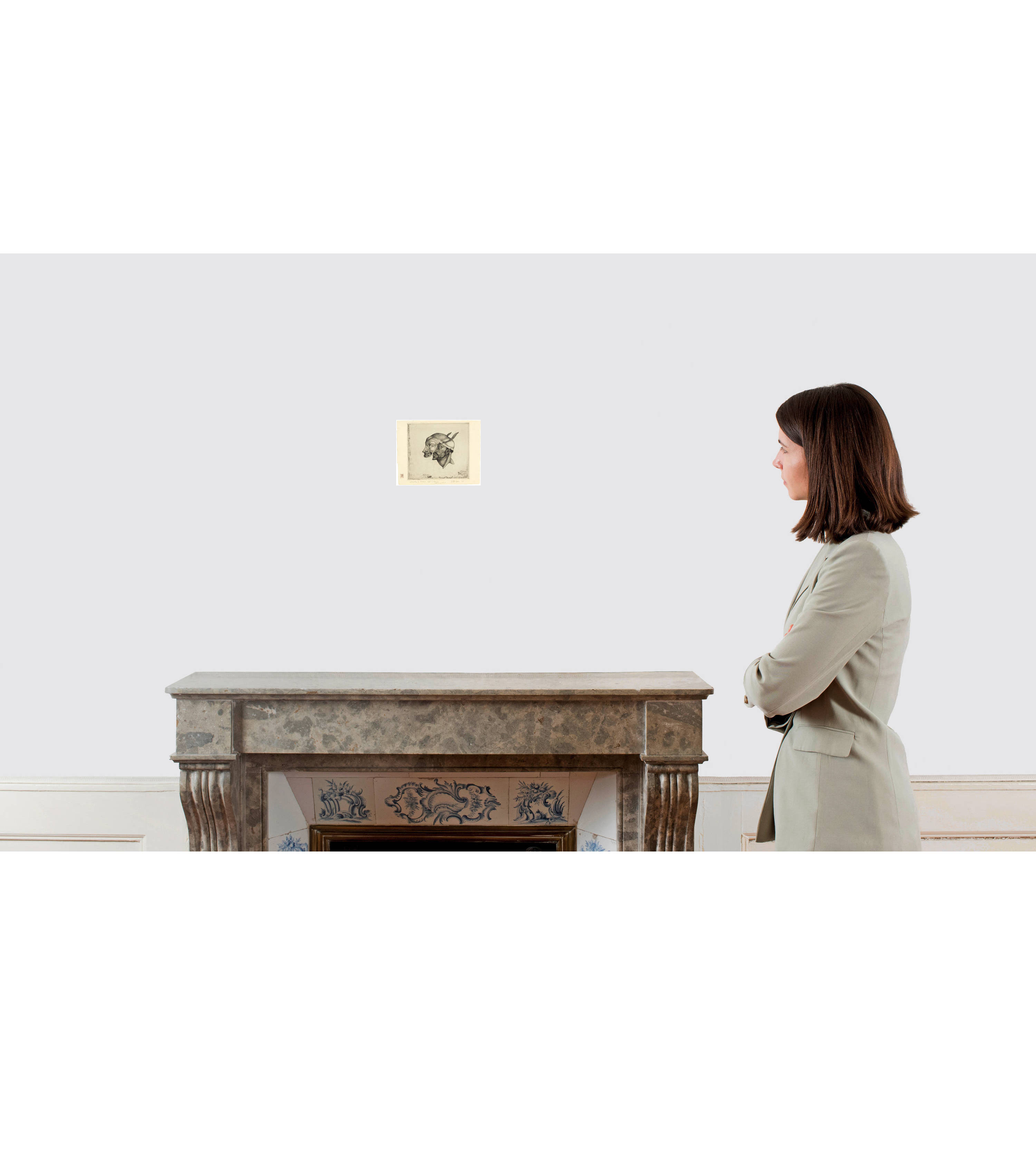
14.6x15.8 cm, faceted plate; 16.1x21 cm, sheet size
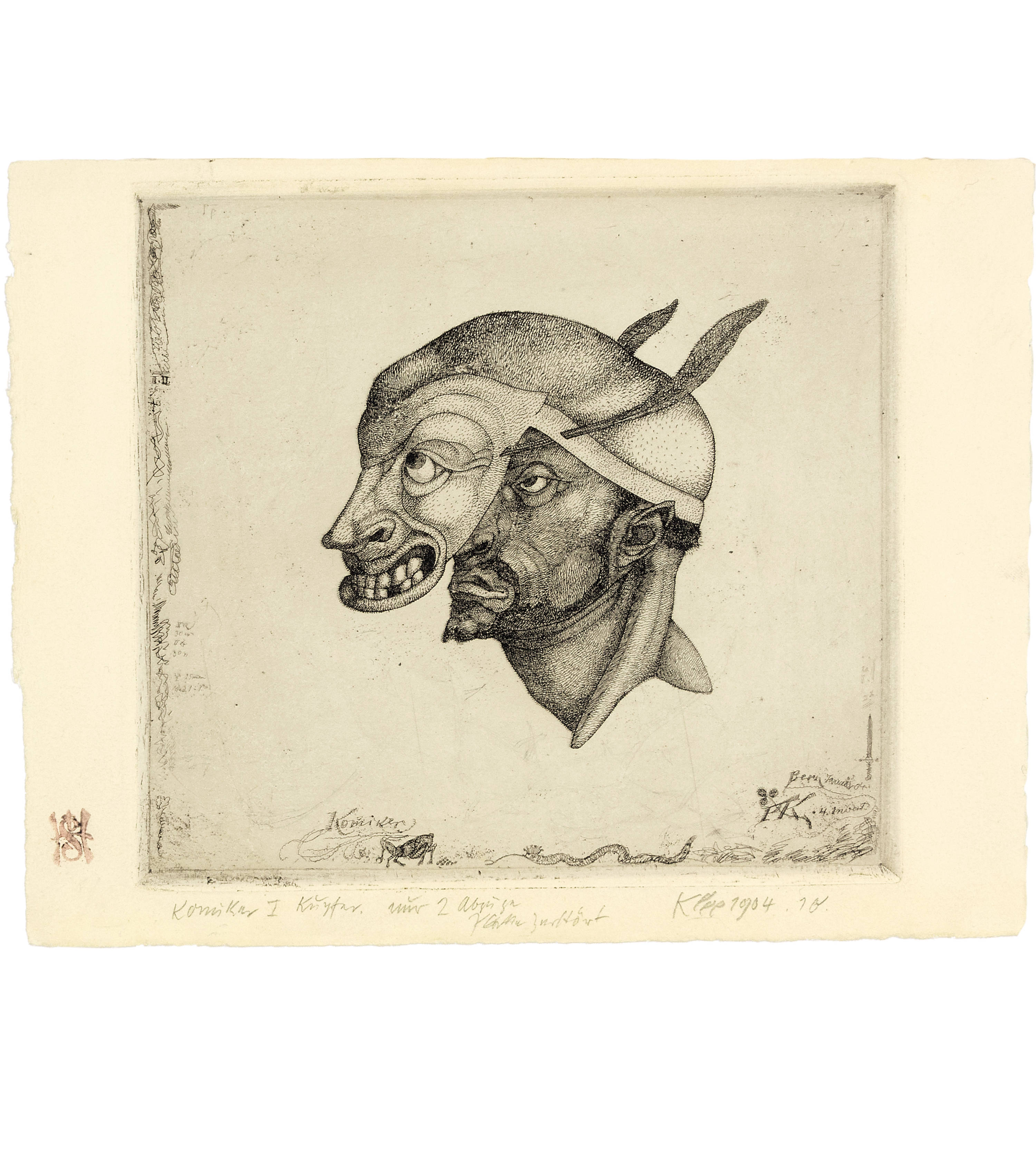
Lower right signed by the artist in pencil and with the work number 'Paul Klee 1904.10', Lower left inscribed 'Komiker I Kupfer. nur 2 Abzüge / Platte zerstört'
Eberhard W. Kornfeld, Verzeichnis des graphischen Werkes von Paul Klee, Bern 2005, no. 9
Collection Heinrich Stinnes 1867-1932, Lugt 4436
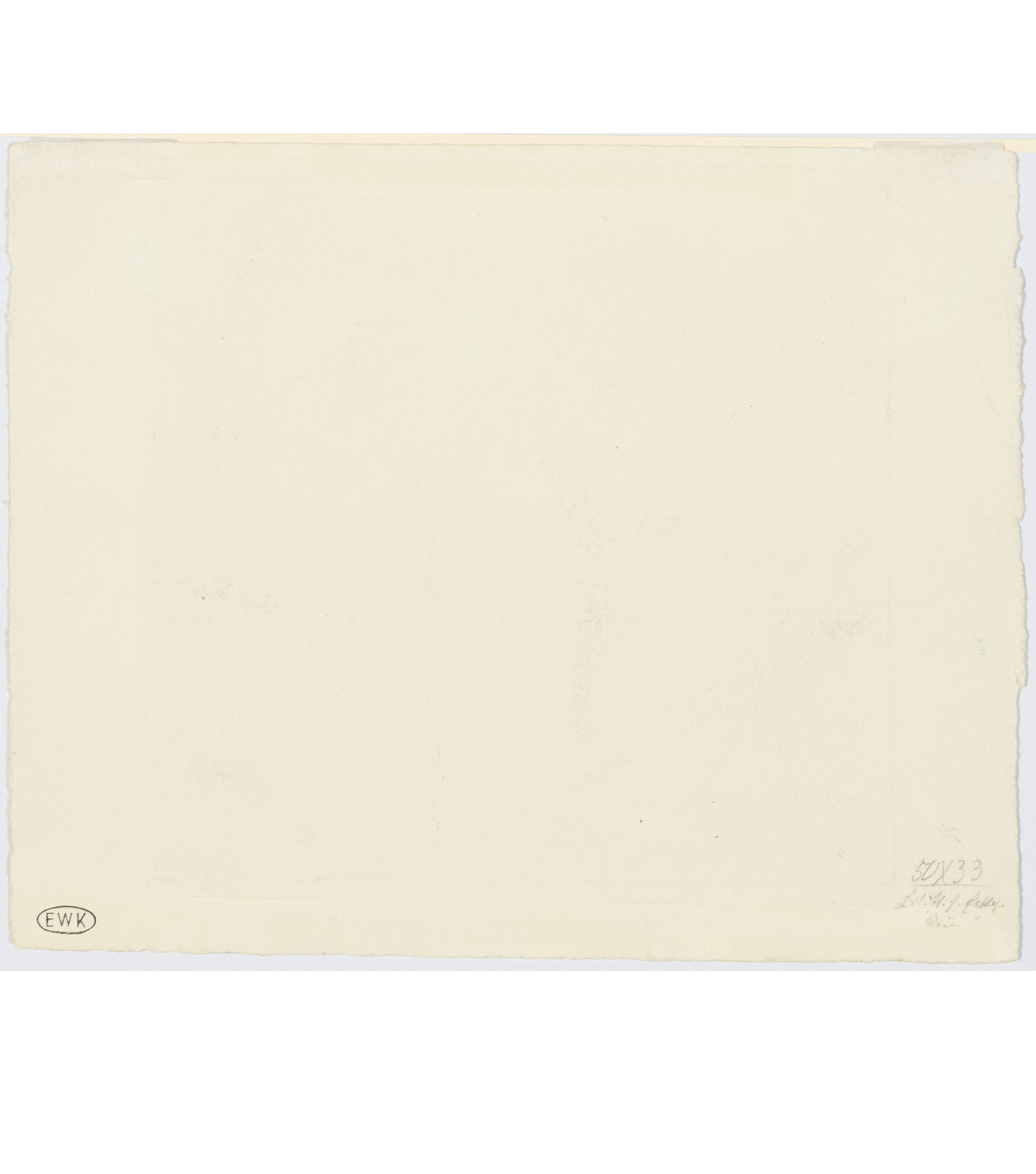
Collection Eberhard W. Kornfeld, Bern, with the collector's stamp on the back, Lugt 913b
Lugano 2013, Museo d'Arte, Paul Klee, Fausto Melotti, cat. no. 1
Bern 2015/2016, Zentrum Paul Klee, Klee in Bern 3, without cat. no.
With a very slightly browned lower margin. A very fine impression in good condition
Paul Klee's early etching 'Der Komiker' is among the graphic works in which his lifelong engagement with identity, masking and social roles is clearly revealed for the first time. The present sheet was created in 1904, when Klee was still at the beginning of his artistic path, but had already developed his characteristic style: a fine sense of irony, introspection and formal reduction. He was certainly inspired by visits to the Munich Print Room, where he studied works by William Blake or Francisco de Goya, among others.
The image presents a clown-like figure with exaggerated facial expressions. The figure wears a mask that seems almost fused with the head. With the mask, the comedian appears funny, but without it, he seems lost, perhaps even sad. This tension reflects Klee's interest in the human psyche and the role of the artist in society. For Klee, comedy was not just entertainment, but also a way to reveal truth - about oneself and the world.
'Der Komiker' can thus be read as an early indication of Klee's later understanding of art: as a constant play with appearance and meaning, and as an expression of the outer and the inner world. Beneath the apparent lightness of the depiction lies a quiet melancholy. The theme of the comedian seemed to fascinate him for a long time. In 1903 he created a first version (first Version 'A'), followed by the present first Version 'B' in 1904. Of this latter version, only three impressions are known to exist (even though Klee wrote in pencil 'nur 2 Abzüge / Platte zerstört'). Two prints are held in museums, the present sheet is the only one still in private hands. The sheet is considered one of the greatest rarities in the artist's graphic oeuvre. In the same year, he finally created 'Der Komiker' in the 2nd version, which was printed in a total edition of 100 impressions.
1904. Werknummer 1904.10 (Januar 1904)
Radierung auf Kupfer auf festem Velin
14,6x15,8 cm, facettierte Platte; 16,1x21 cm, Blattgrösse
Unten rechts vom Künstler in Bleistift signiert und mit der Werknummer "Paul Klee 1904.10", unten links bezeichnet "Komiker I Kupfer. nur 2 Abzüge / Platte zerstört"
Eberhard W. Kornfeld, Verzeichnis des graphischen Werkes von Paul Klee, Bern 2005,
Slg. Heinrich Stinnes 1867-1932, Lugt 4436
Slg. Eberhard W. Kornfeld, Bern, rückseitig mit dem Sammlerstempel, Lugt 913b
Lugano 2013, Museo d'Arte, Paul Klee, Fausto Melotti,
Bern 2015/2016, Zentrum Paul Klee, Klee in Bern 3, ohne Kat.
Mit ganz leicht gebräuntem unteren Rand. Ein sehr schöner Druck in gutem Erhaltungszustand
Paul Klees frühe Radierung "Der Komiker" gehört zu den graphischen Arbeiten, in denen sich seine lebenslange Auseinandersetzung mit Identität, Maskierung und gesellschaftlicher Rolle erstmals deutlich zeigt. Das hier angebotene Blatt entstand 1904, als Klee noch am Beginn seines künstlerischen Weges stand, aber bereits seine charakteristische Handschrift entwickelt hatte: ein feines Gespür für Ironie, Introspektion und formale Reduktion. Sicherlich inspirierten ihn dabei Besuche im Münchner Kupferstichkabinett, wo er etwa Werke von William Blake oder Francisco de Goya studierte.
In der Darstellung begegnet uns eine clowneske Figur mit übertriebener Mimik. Die Figur trägt eine Maske, die förmlich mit dem Kopf verbunden scheint. Mit Maske wirkt der Komiker lustig, ohne Maske jedoch verloren, vielleicht sogar traurig. Dieses Spannungsverhältnis spiegelt Klees Interesse an der menschlichen Psyche und der Rolle des Künstlers in der Gesellschaft wider. Klee selbst sah in der Komik nicht nur Unterhaltung, sondern auch eine Möglichkeit, Wahrheit zu offenbaren - über sich selbst und die Welt.
"Der Komiker" darf somit als früher Hinweis auf Klees späteres Verständnis der Kunst gelesen werden: als ein ständiges Spiel mit Erscheinung und Bedeutung sowie als Ausdruck des Äusseren und des Inneren. Hinter der vermeintlichen Leichtigkeit der Darstellung verbirgt sich eine leise Melancholie. Das Thema des Komikers schien ihn länger zu faszinieren. 1903 schuf er eine erste Version (I. Fassung "A"), 1904 folgte die hier angebotene I. Fassung "B". Von letzterer Fassung sind bloss drei Abzüge bekannt (auch, wenn Klee mit Bleistift schrieb "nur 2 Abzüge / Platte zerstört"). Zwei Drucke befinden sich in Museen, das hier vorliegende Blatt ist das einzige, das noch in Privatbesitz ist. Das Blatt gilt als eine der grössten Seltenheiten im graphischen Œuvre des Künstlers. Noch im selben Jahr schuf er schliesslich "Der Komiker" in der II. Fassung, die in einer Gesamtauflage von 100 Abzügen gedruckt wurde.
| Switzerland | CHF | 130 |
| Europe | CHF | 200 |
| USA | CHF | 250 |
| Overseas | CHF | 255 |