- EN


 Log in
-
- Live Auctions
- Past auctions
- More
- Kornfeld today
- The Story of Kornfeld
- Information


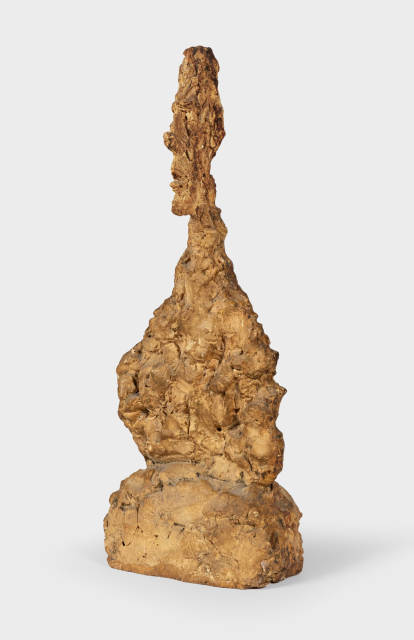







Borgonovo 1901 - 1966 Chur



Ca. 1957
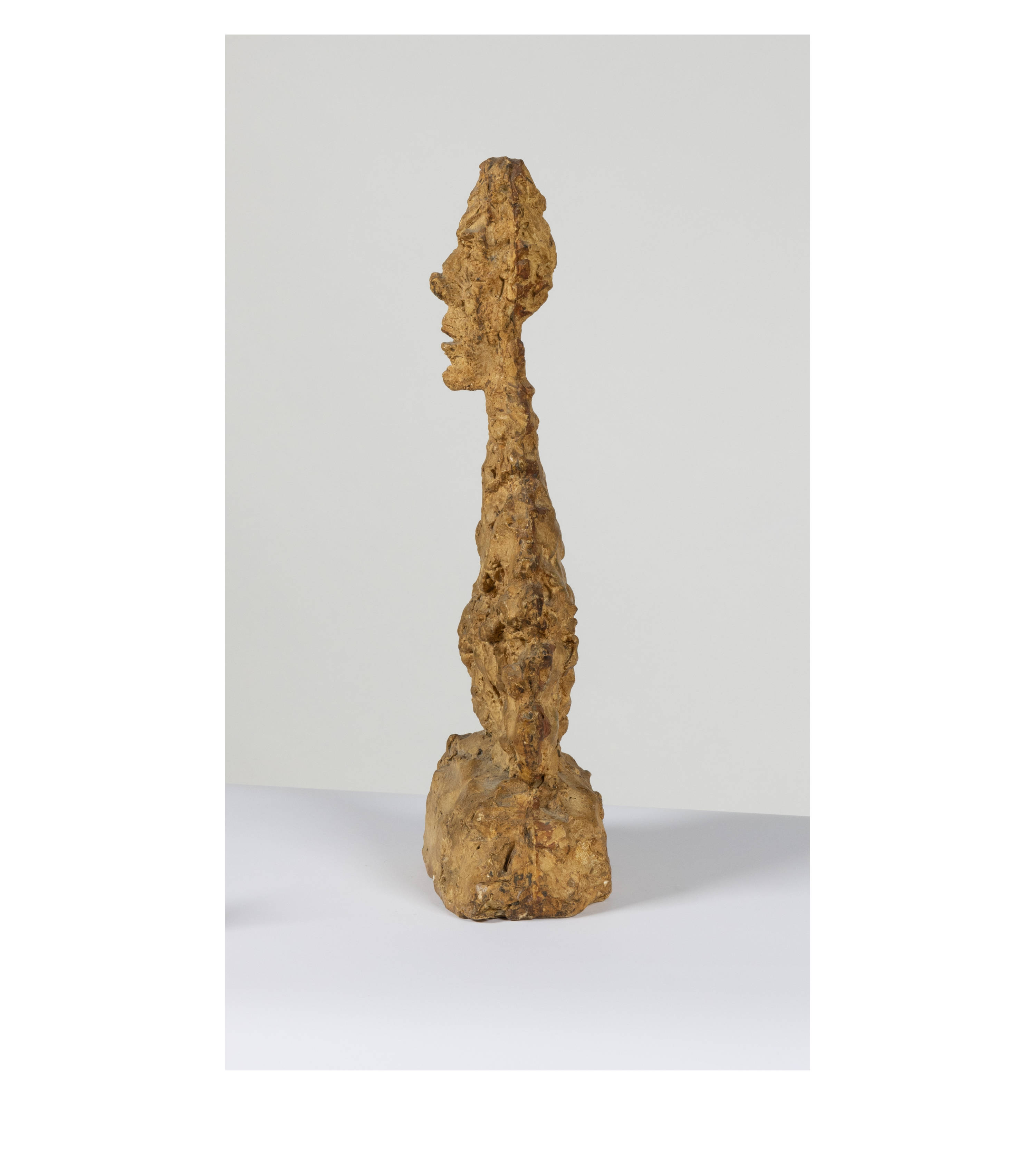
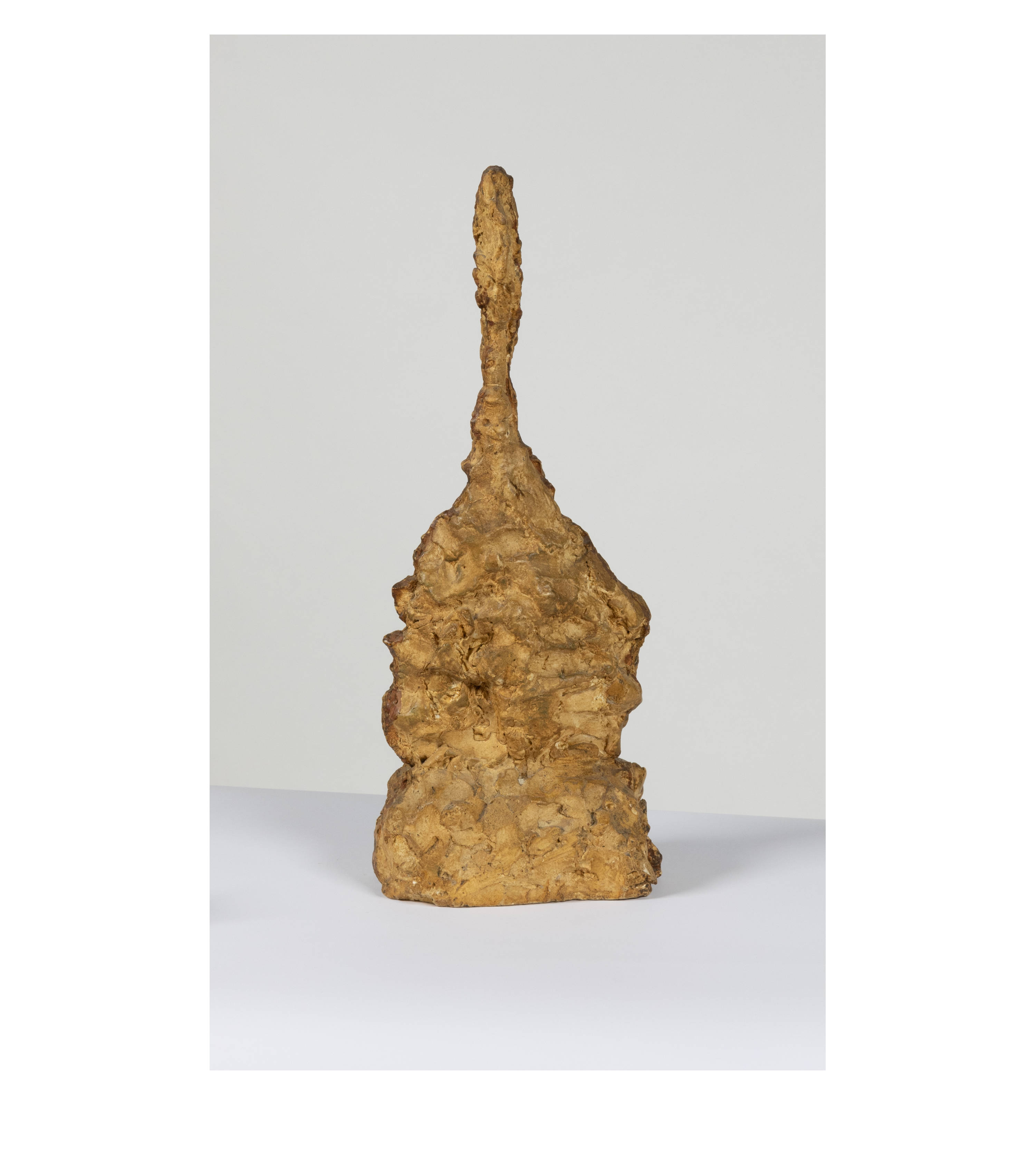
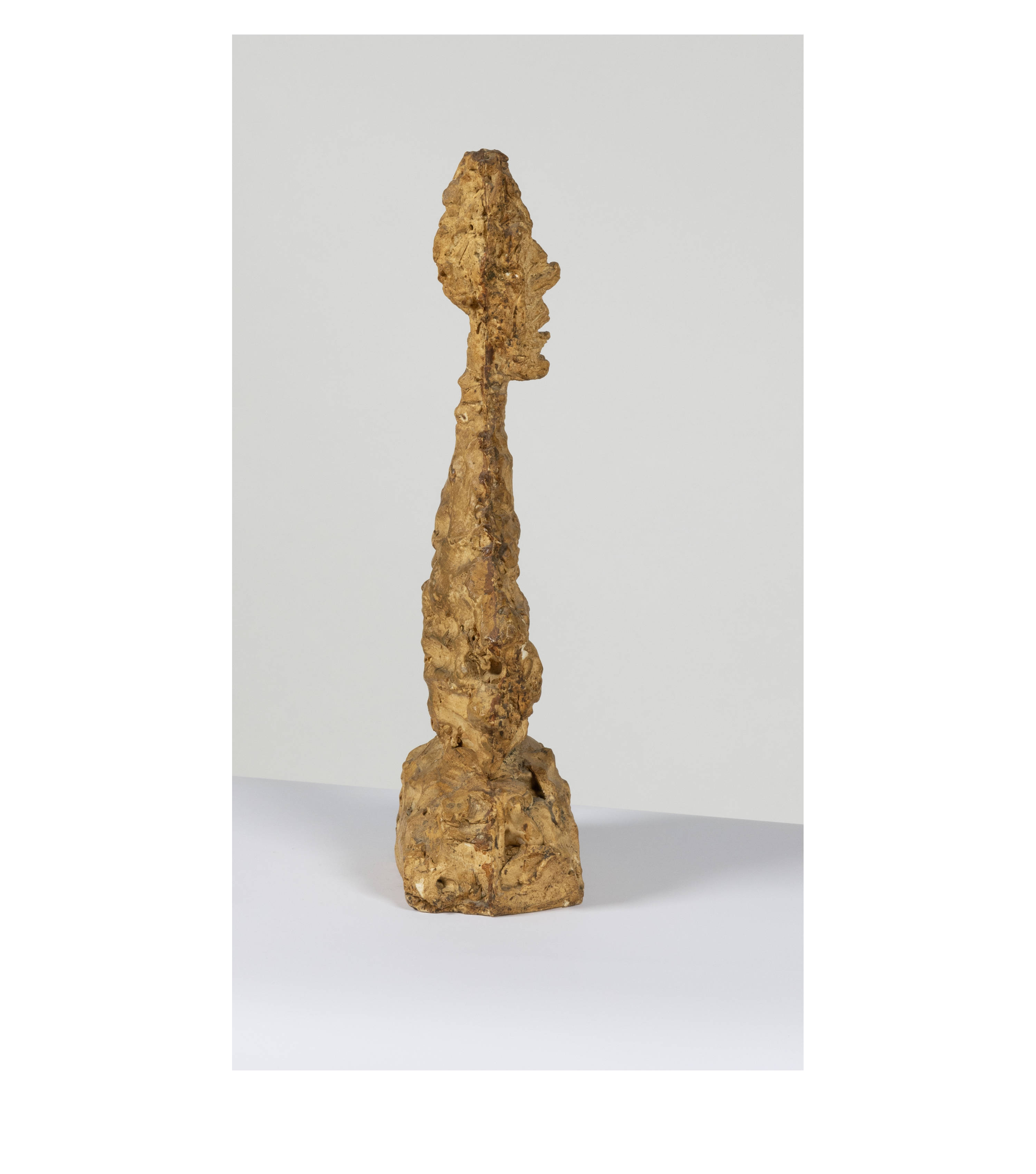
Plaster cast, coloured in ochre
40.5x16.1X9.8 cm
Confirmation of authenticity from the Comité Giacometti, Paris, dated October 2017, is available.
The plaster cast is registered in the online catalogue raisonné of the Fondation Alberto et Annette Giacometti under the number AGD 3797
Directly acquired from the artist by
The Eberhard W. Kornfeld Collection, Bern
Bern 1959, Klipstein & Kornfeld, Alberto Giacometti, cat. no. 3
Bern 2017, Galerie Kornfeld, Alberto Giacometti, no. 50
With studio traces by the artist, slightly chipped in the area of the lower margin. In very good overall condition
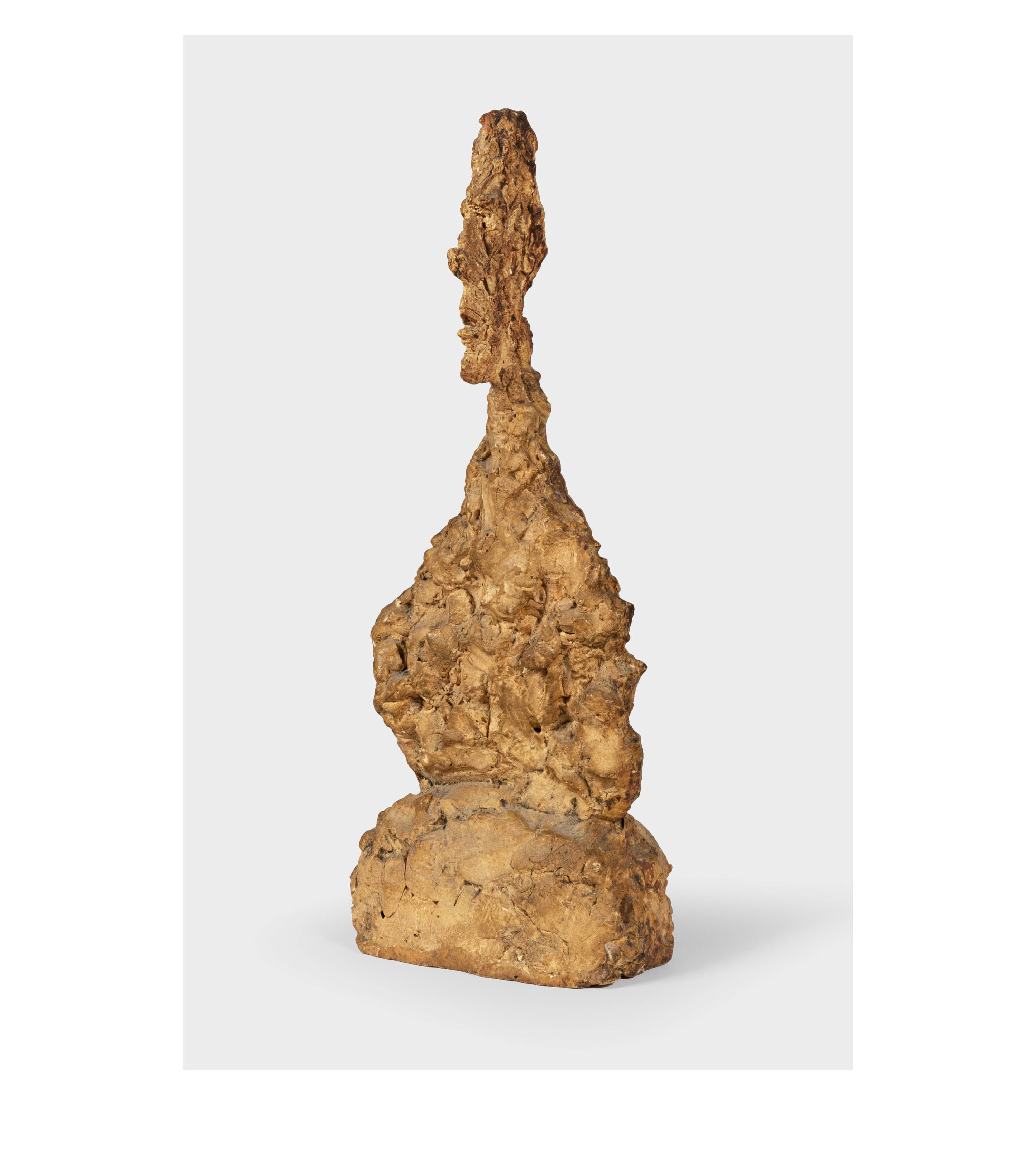
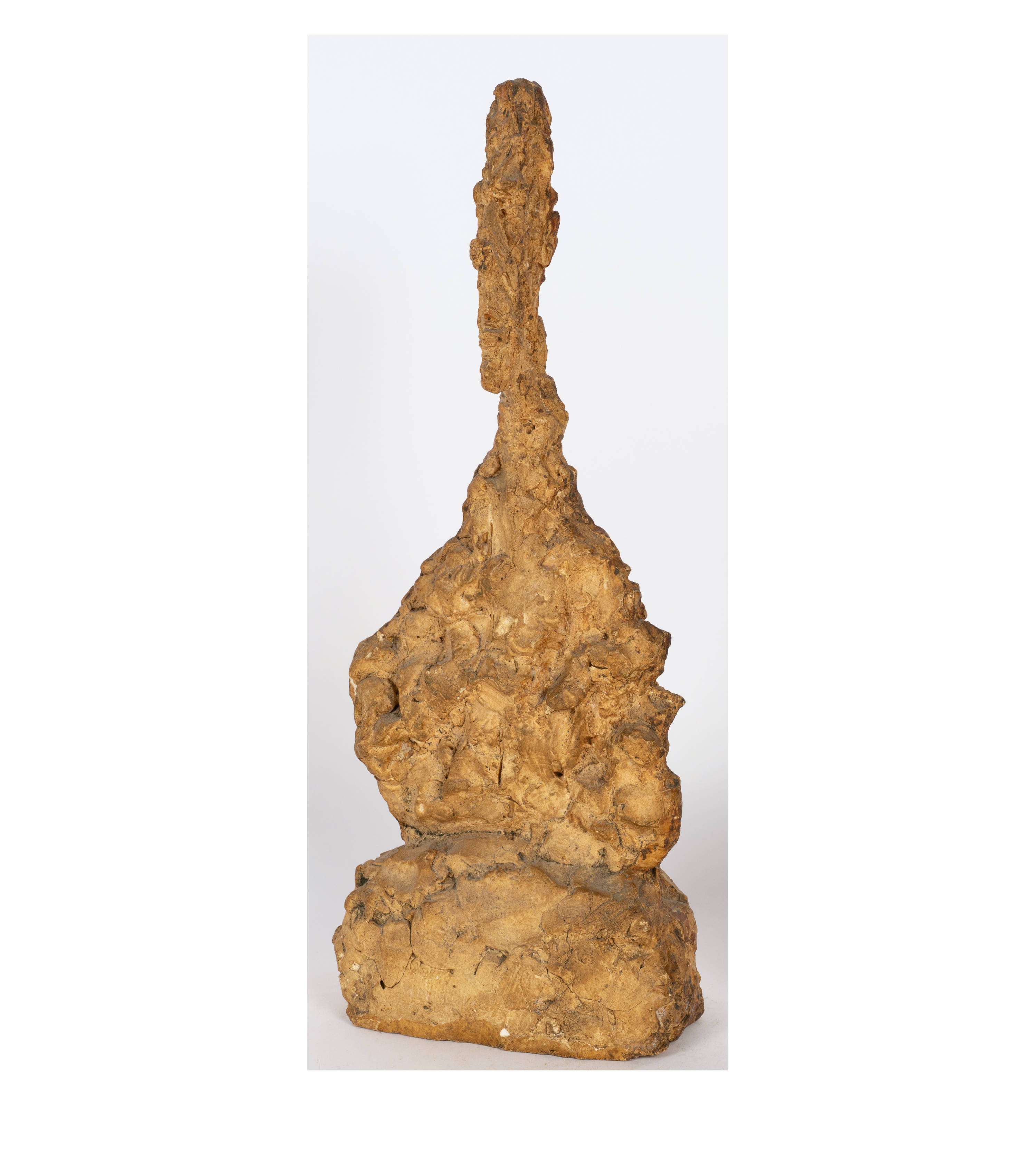
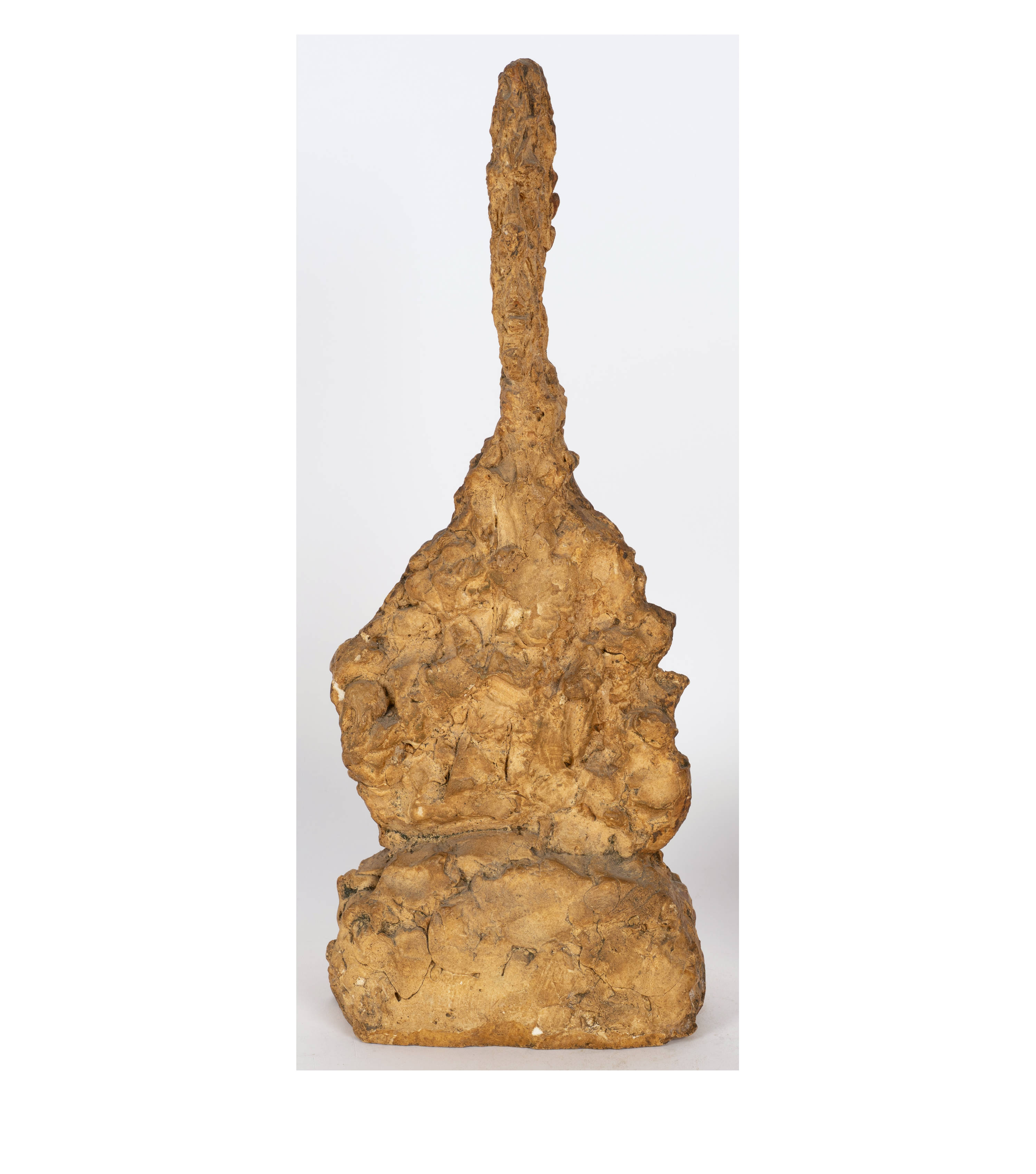
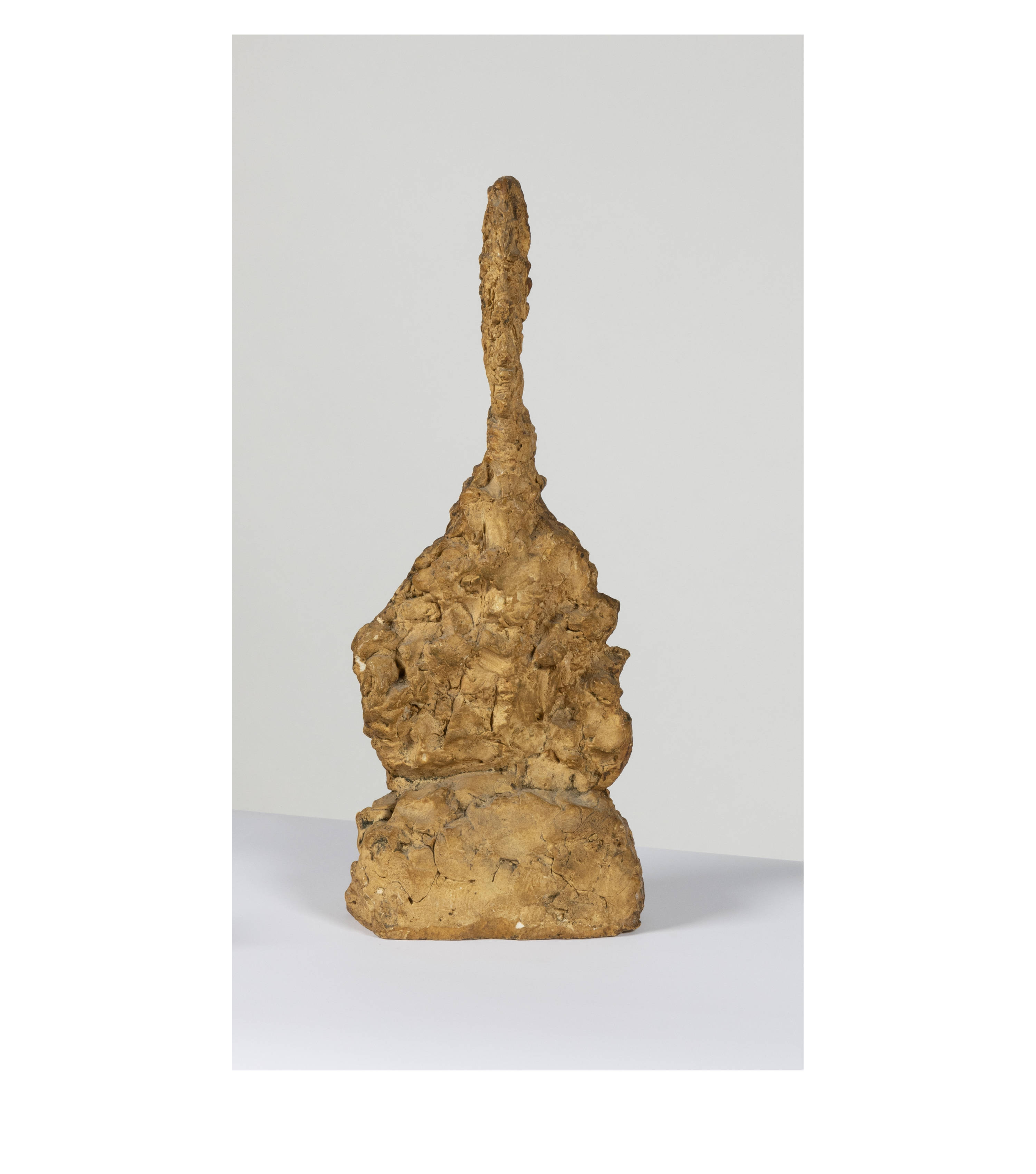
Buste sur socle' (1957) was one of the busts that Eberhard W. Kornfeld had cast in collaboration with Alberto Giacometti, following the highly acclaimed summer exhibition at Galerie Klipstein & Kornfeld in Bern in 1959. Unlike the busts from 1950/1951, Giacometti elongated the portrait vertically. The supposed base, which seems to merge with the body, giving it an unusual elevation, is also fascinating. This distortion changes the relationship between head and body. In this way, Giacometti questions the conventional process of perception: the gaze cannot rest on the torso but is automatically drawn to the head and the eyes. Although the narrowness of the head is emphasised and thus appears alien in the frontal view, the essential features of his brother Diego's identity are always present and easy to recognise: the powerful gaze of the wide-open eyes, the distinctive, slightly upturned nose, the full lips, the high forehead crowned by a ring of hair.
Due to the 'distances' within the face, from the chin and nose to the eyes to the crown, the viewer must constantly refocus their gaze. Since the frontal view is naturally more dominant, Giacometti gave the profile additional weight by flattening the head. Depending on whether the sculpture is viewed from the front or from the side, the artist manages to depict two different faces, or psychological states, of Diego. In this way, he achieves his aim of presenting a subject as holistically as possible also in sculpture. The sculpture was later cast in bronze by Pastori in Geneva; Eberhard Kornfeld kept the plaster for his private collection.
Um 1957
Gips, in Ocker gefasst
40,5x16,1x9,8 cm
Echtheitsbestätigung des Comité Giacometti, Paris, datiert vom Oktober 2017, liegt vor.
Der Gips ist im Online Werkverzeichnis der Fondation Alberto et Annette Giacometti unter der Nummer AGD 3797 registriert
Direkt beim Künstler erworben von
Slg. Eberhard W. Kornfeld, Bern
Bern 1959, Klipstein & Kornfeld, Alberto Giacometti,
Bern 2017, Galerie Kornfeld, Alberto Giacometti,
Mit Arbeitsspuren des Künstlers, minim bestossen im Bereich der Unterkante. In sehr guter Gesamterhaltung
Eine der Büsten, die Eberhard W. Kornfeld im Anschluss an die vielbeachtete Sommerausstellung der Galerie Klipstein & Kornfeld 1959 in Bern in Zusammenarbeit mit Alberto Giacometti giessen liess, war "Buste sur socle" aus dem Jahr 1957. Anders als bei den Büsten aus den Jahren 1950/1951 verzerrt Giacometti das Porträt nun in die Höhe. Spannend ist auch der vermeintliche Sockel, der mit dem Körper zu verschmelzen scheint und ihm dadurch eine eigenartige Überhöhung verleiht. Durch die Verzerrung verändert sich das Verhältnis von Kopf und Körper zueinander. Giacometti hinterfragt damit den gängigen Wahrnehmungsprozess: Der Blick kann sich nicht am Rumpf festhalten, sondern wird automatisch zum Kopf und zu den Augen geführt. Obwohl die Schmalheit des Kopfes in der Vorderansicht betont und somit verfremdet wird, sind die wesentlichen Merkmale der Identität seines Bruders Diego immer präsent und leicht zu erkennen: der kraftvolle Blick der weit geöffneten Augen, die markante, leicht nach oben gebogene Nase, die vollen Lippen, die hohe, von einem Haarkranz gekrönte Stirn.
Aufgrund der "Entfernungen" innerhalb des Gesichts, also vom Kinn und der Nase über die Augen bis hin zum Scheitel, muss der Betrachter seinen Blick ständig neu fokussieren. Da die Frontalansicht von Natur aus dominanter ist, verlieh Giacometti dem Profil zusätzlich mehr Gewicht, indem er den Kopf abflachte. Je nachdem, ob die Plastik frontal oder von der Seite betrachtet wird, schafft es der Künstler, faktisch zwei unterschiedliche Gesichter beziehungsweise psychologische Zustände Diegos zu zeigen. Damit erreicht er auch in der Plastik seinen Anspruch einer möglichst ganzheitlichen Darstellung eines Motivs. Die Plastik wurde später bei Pastori in Genf in Bronze gegossen, den Gips behielt Eberhard Kornfeld für seine Privatsammlung.
| Switzerland | CHF | Individual offer |
| Europe | CHF | Individual offer |
| USA | CHF | Individual offer |
| Overseas | CHF | Individual offer |