- EN


 Log in
-
- Live Auctions
- Past auctions
- More
- Kornfeld today
- The Story of Kornfeld
- Information









Málaga 1881 - 1973 Mougins


1956
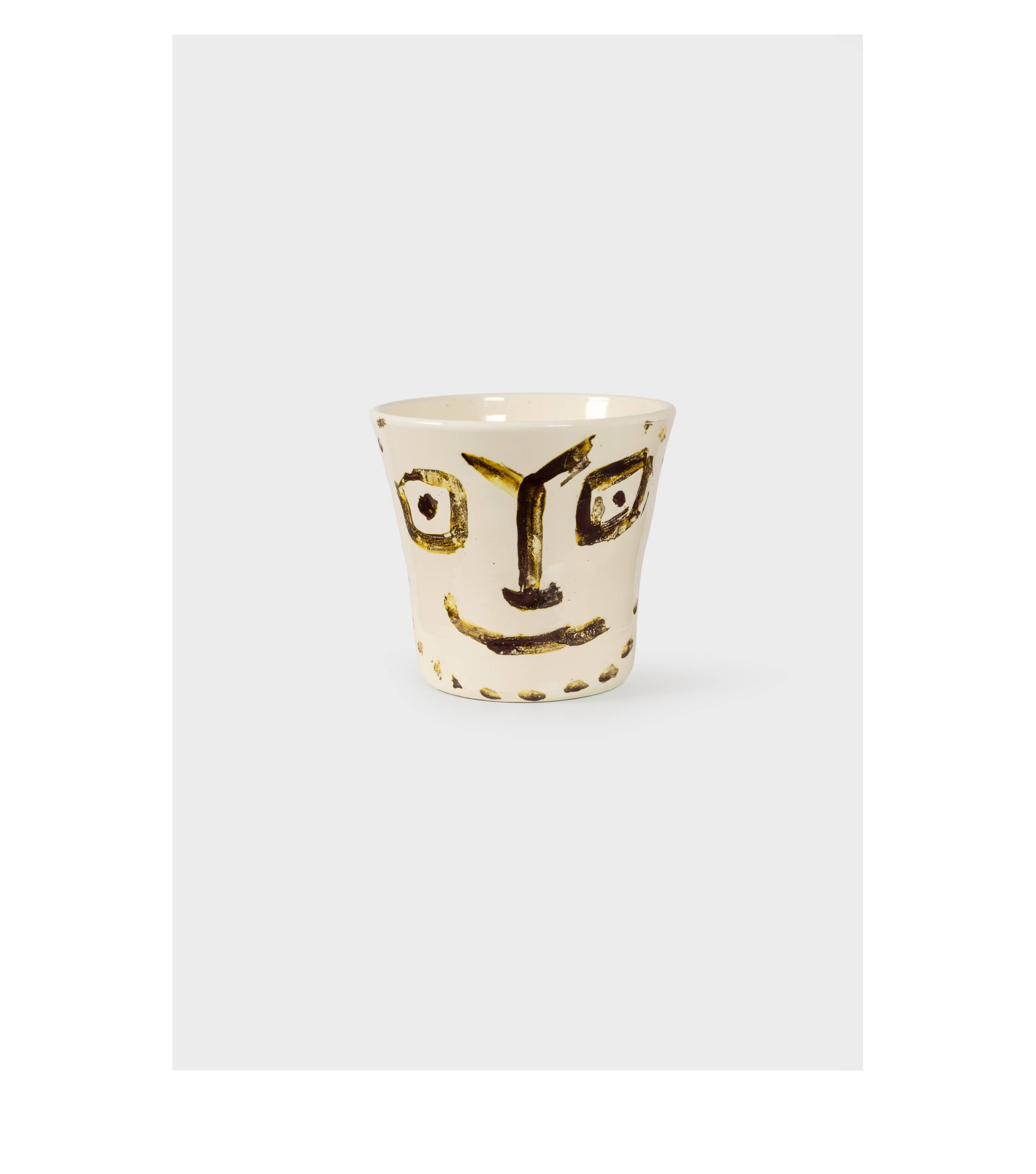
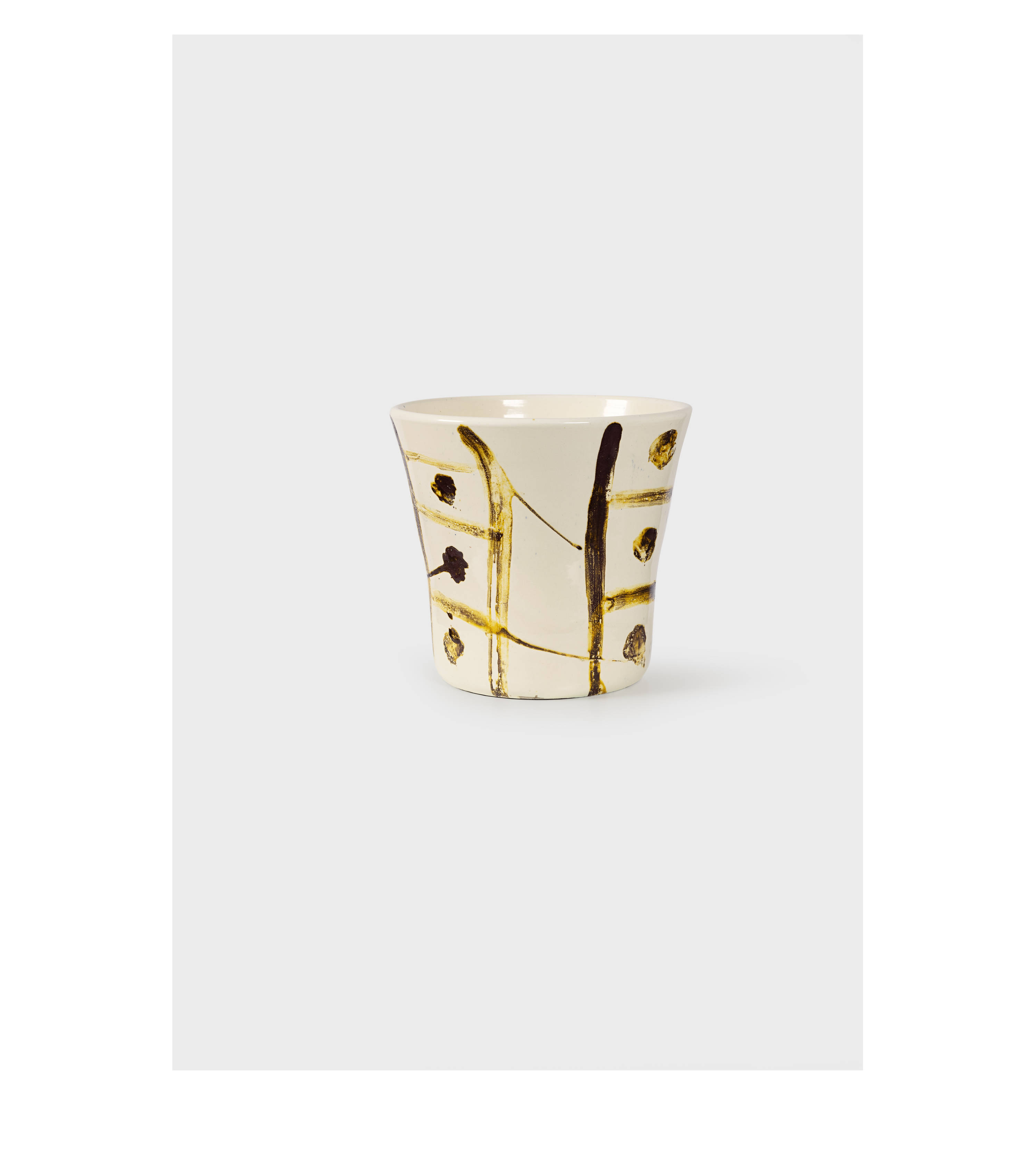
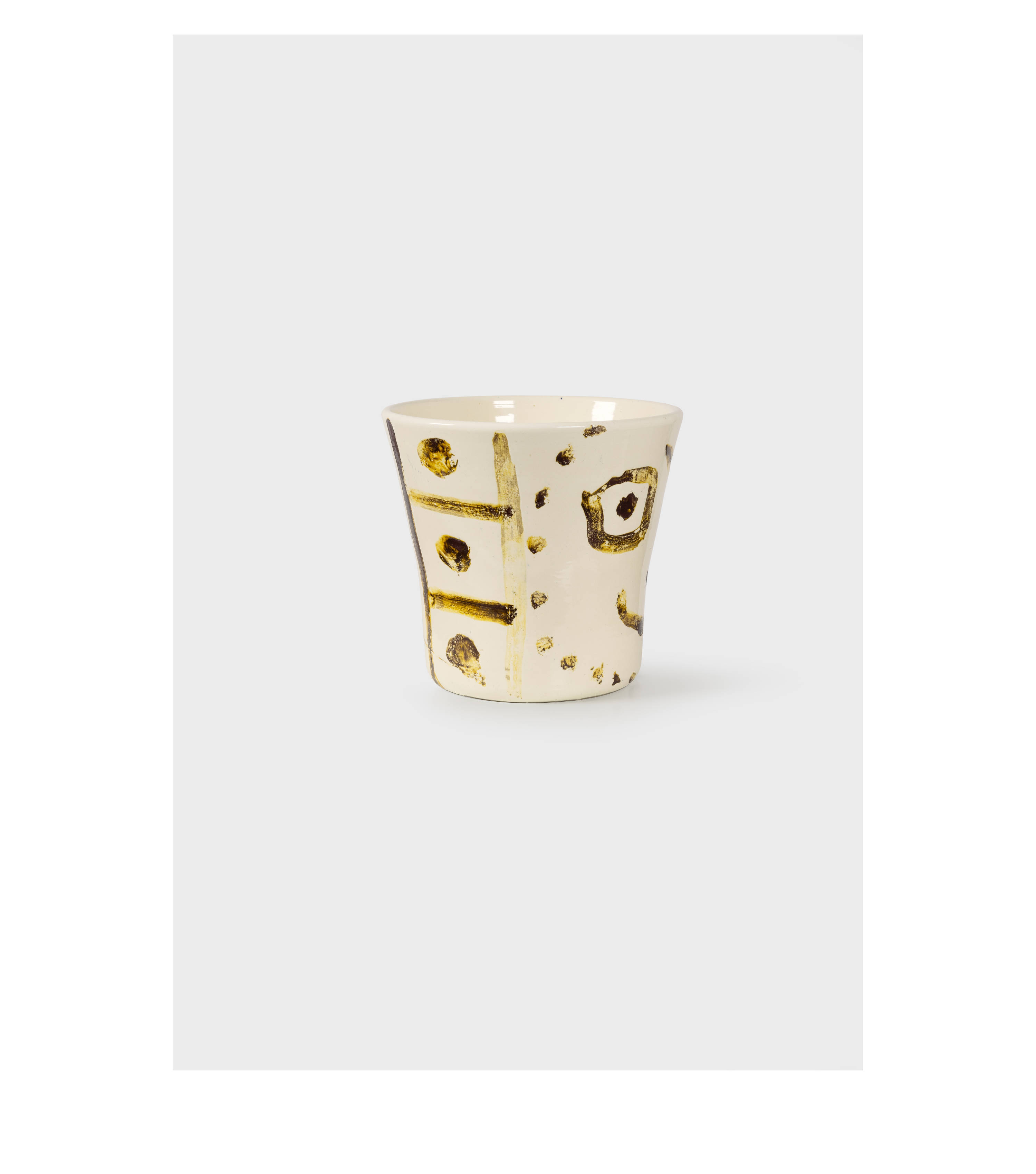
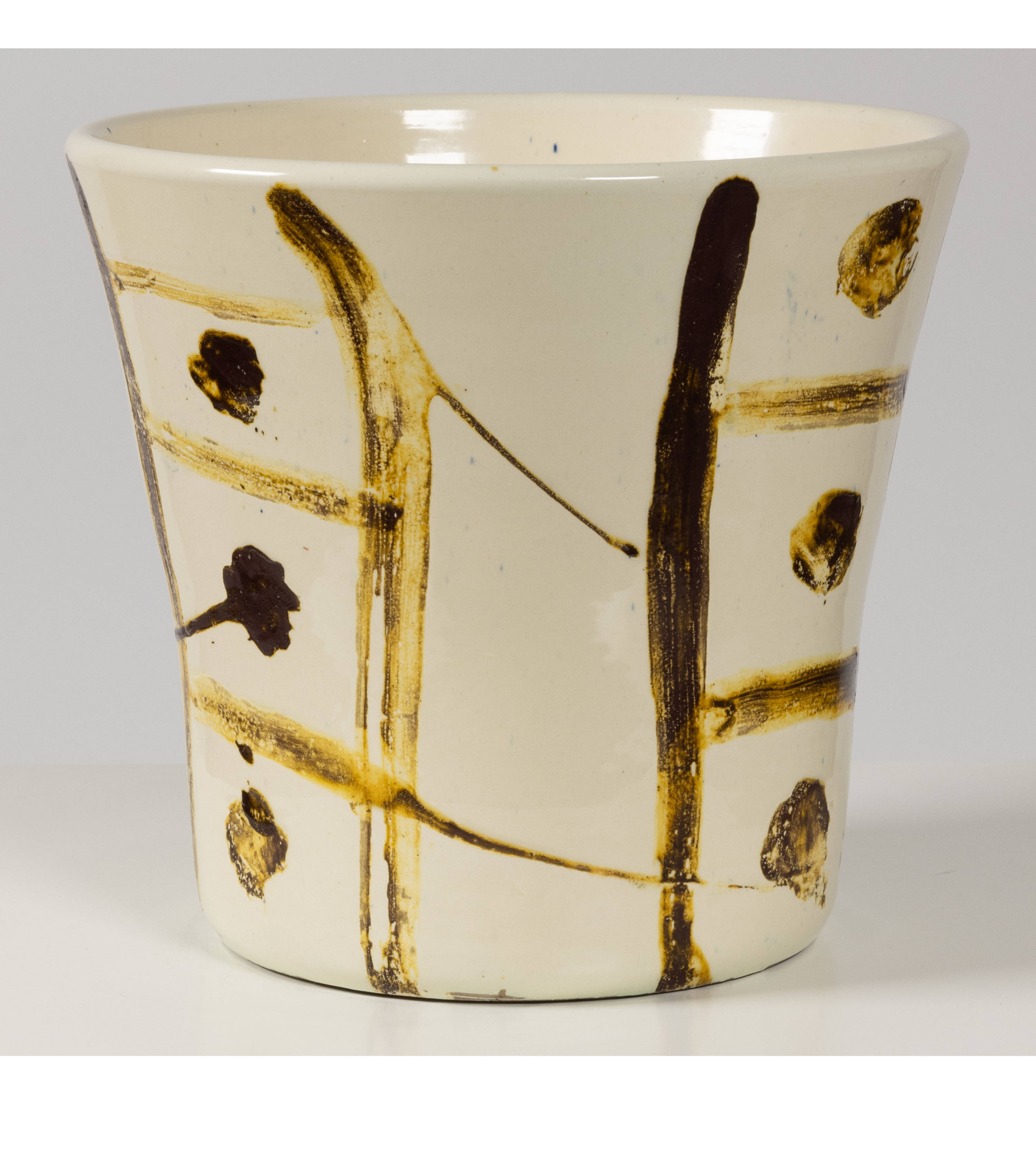
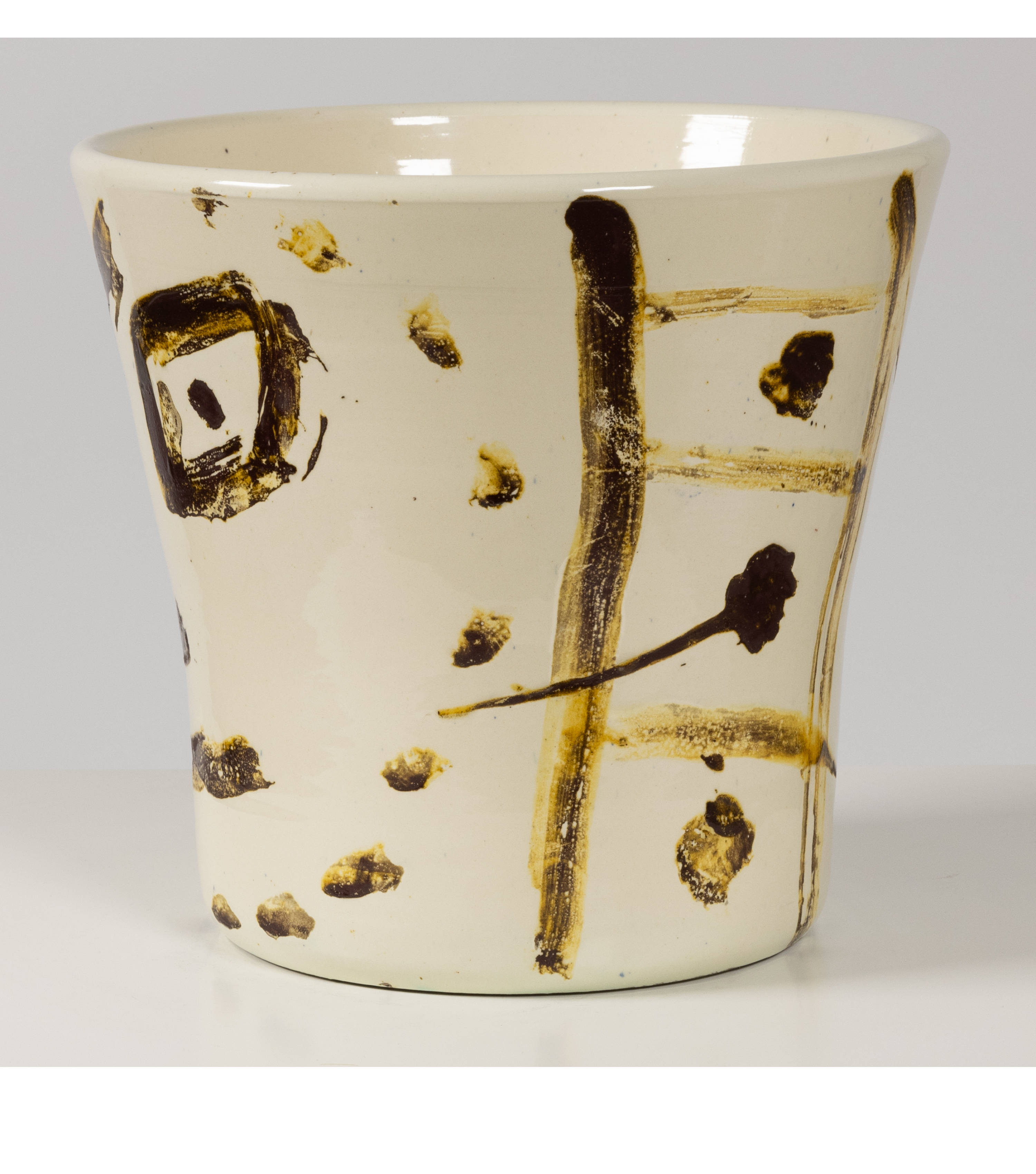
Ceramic, painted brown-yellow, the beige glaze partially speckled with blue pigment
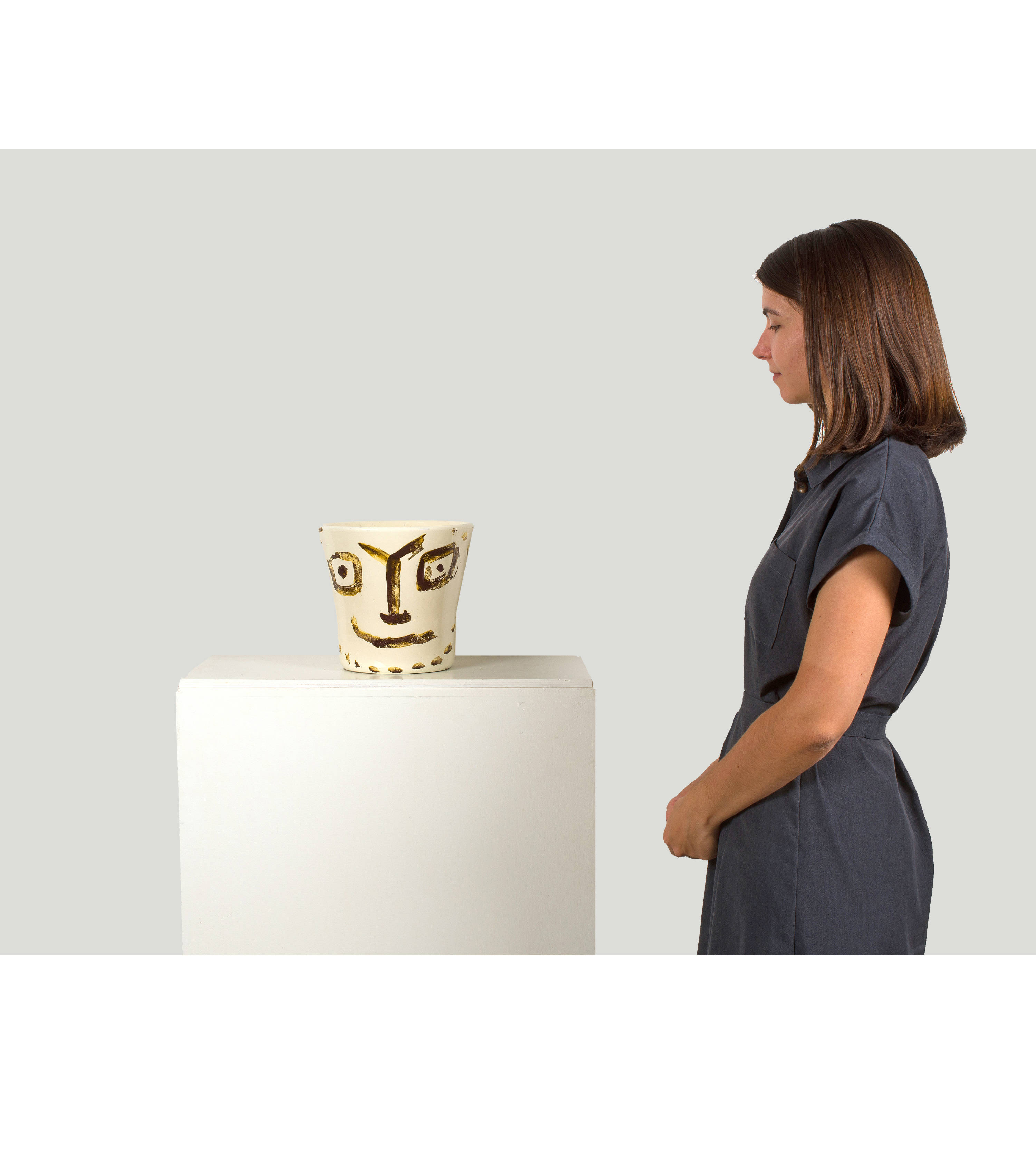
21.8 cm high; diameter top 23.7/23.5 cm
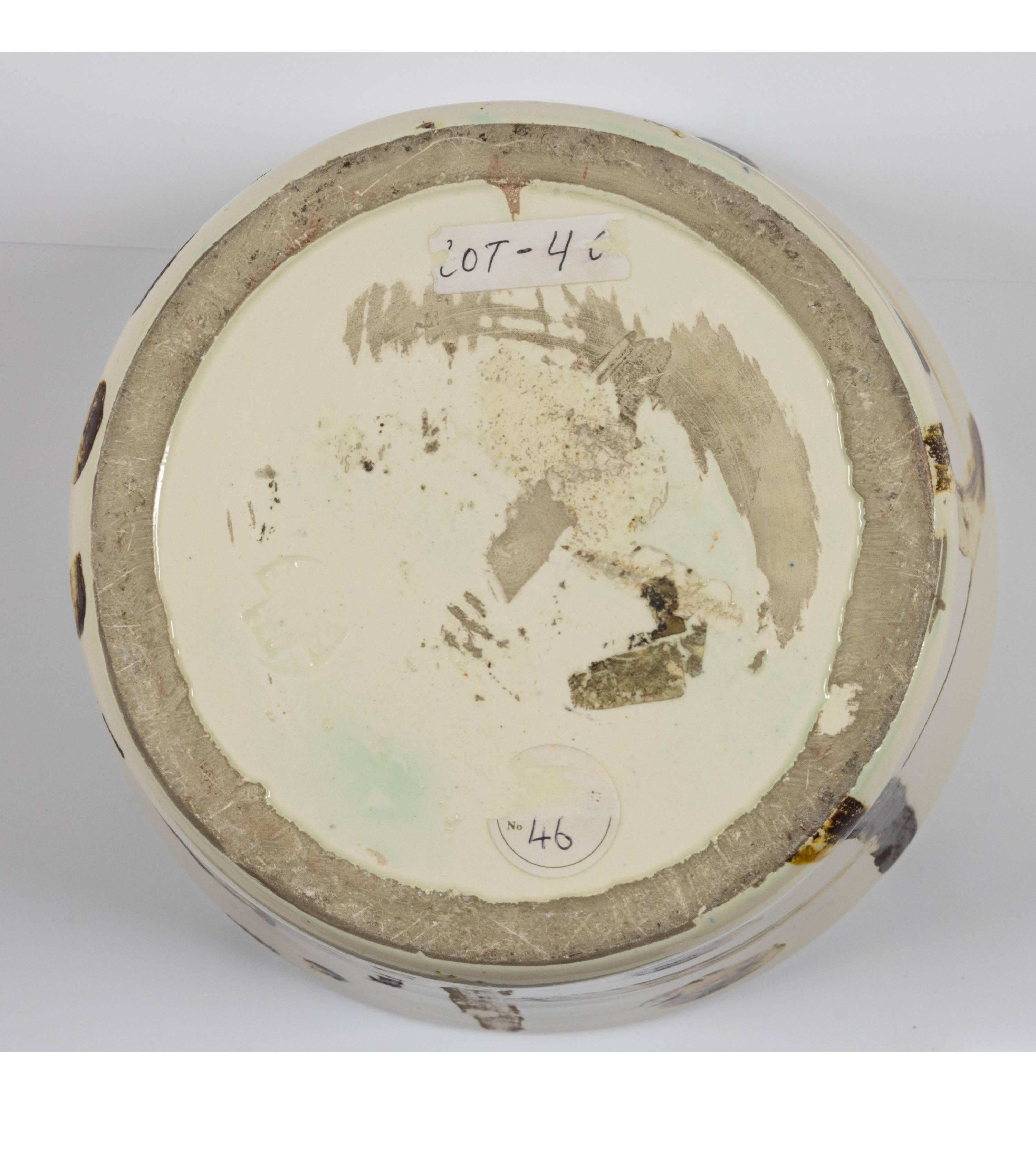
On the underside with the indistinct stamp "Madoura / Plein / Feu"
Confirmation of authenticity by Claude Ruiz Picasso on photo, dated 7 February 2017, is available in copy
Gallery 27, Paris
Collection Gayle Gordon, Arizona
Collection Pierre Le Tan, France
Private collection
Private collection, Berlin
Marilyn McCully/Michael Raeburn, Picasso Ceramics, The Attenborough
Collection, Leicester 2011, p. 45
Leicester 2007, New Walk Museum & Art Gallery, Picasso Ceramics, The Attenborough Collection
Berlin 2023, Galerie Bastian, Celebrating Picasso - Ceramics and Photographs
In impeccable condition
In 1946, while on holiday in the south of France, Picasso met Georges and Suzanne Ramié, who ran the Madoura pottery studio in nearby Vallauris. The Ramiés invited Picasso to their studio, where he spontaneously created a number of ceramics. The artist had already experimented with clay before, but his work in the Madoura studio so intrigued him that he returned to ceramic work the following year with sketches full of ideas. Recognising that ceramics had a similar serial character to printmaking, Picasso and the Ramié couple decided to produce several pieces at a time, based on a model he had designed. Between 1947 and 1971, the Madoura studio produced a total of 633 different ceramic works, each in an edition of 25 to 500 pieces, always potted and painted according to Picasso's design. He initially created simple utilitarian objects such as plates and bowls, later creating more complex forms, including anthropomorphic or zoomorphic jugs or vases.
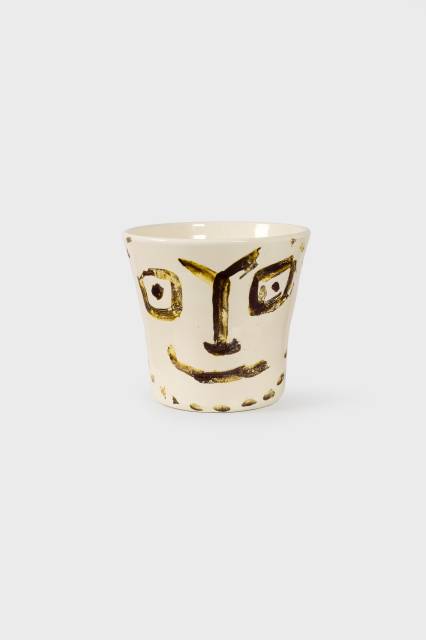
In addition to the edition ceramics, Picasso also created individual pieces that were not intended as editions. These individual pieces are unique sculptures painted and in some cases moulded by the artist and bear witness to the master's incomparable creative urge. Smiling faces are a recurring theme, as in the large vase offered here.
1956
Keramik, braun-gelb bemalt, die beige Glasur zum Teil mit blauem Pigment gesprenkelt
21,8 cm hoch; Durchmesser oben 23,7/23,5 cm
Auf der Unterseite mit dem Stempel undeutlich "Madoura / Plein / Feu"
Echtheitsbestätigung von Claude Ruiz Picasso auf Foto, datiert vom 7. Februar 2017, liegt vor
Galerie 27, Paris
Slg. Gayle Gordon, Arizona
Slg. Pierre Le Tan, Frankreich
Privatsammlung
Privatsammlung, Berlin
Marilyn McCully/Michael Raeburn, Picasso Ceramics, The Attenborough
Collection, Leicester 2011,
Leicester 2007, New Walk Museum & Art Gallery, Picasso Ceramics, The Attenborough Collection
Berlin 2023, Galerie Bastian, Celebrating Picasso – Ceramics and Photographs
In tadelloser Erhaltung
Im Jahr 1946 lernte Picasso während eines Ferienaufenthalts in Südfrankreich Georges und Suzanne Ramié kennen, die im nahe gelegenen Vallauris das Töpferatelier Madoura betrieben. Das Ehepaar Ramié lud Picasso in ihr Atelier ein, wo spontan einige Keramiken entstanden. Der Künstler hatte zwar schon vorher mit Ton experimentiert, aber die Arbeit im Atelier Madoura weckte sein Interesse so sehr, dass er im Folgejahr mit Skizzen voller Ideen zu keramischen Arbeiten zurückkehrte. Picasso, der in der Keramikproduktion einen ähnlichen seriellen Charakter wie in der Druckgraphik erkannte, beschloss zusammen mit dem Ehepaar Ramié jeweils mehrere Exemplare nach einer von ihm entworfenen Vorlage herzustellen. So entstanden zwischen 1947 und 1971 insgesamt 633 unterschiedlichste Keramikarbeiten, die jeweils in einer Auflage von 25 bis 500 Stück vom Atelier Madoura hergestellt wurden, stets getöpfert und bemalt nach der Vorlage von Picasso. Zunächst schuf er einfache Gebrauchsgegenstände wie Teller und Schalen, später entstanden komplexere Formen, darunter anthropomorphe oder zoomorphe Krüge oder Vasen.
Neben den Auflagenkeramiken entstanden auch Einzelstücke, die von Picasso nicht als Edition vorgesehen waren. Diese Einzelstücke sind vom Künstler bemalte, zum Teil auch von ihm geformte einzigartige Plastiken und zeugen vom unvergleichlichen Schöpfungsdrang des Meisters. Immer wieder finden sich lachende Gesichter, wie bei der hier angebotenen grossen Vase.
| Switzerland | CHF | Individual offer |
| Europe | CHF | Individual offer |
| USA | CHF | Individual offer |
| Overseas | CHF | Individual offer |