- EN


 Log in
-
- Live Auctions
- Past auctions
- More
- Kornfeld today
- The Story of Kornfeld
- Information


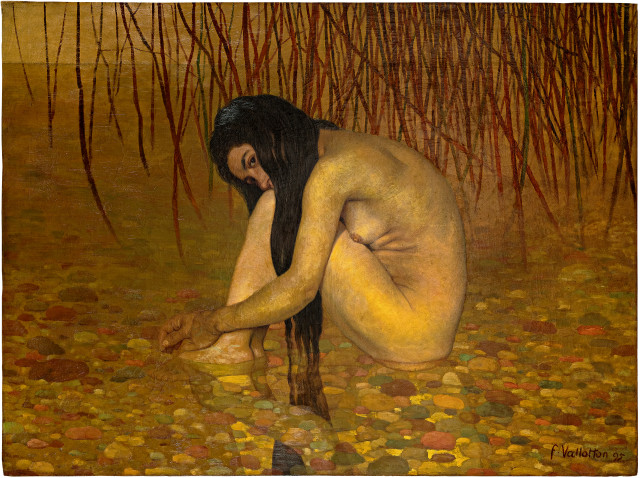







Lausanne 1865 - 1925 Paris


1895
Oil on canvas
97x131.5 cm
Signed and dated by the artist lower right "F. Vallotton 95"
Marina Ducrey, Félix Vallotton, L'œuvre peint, vol. II, Zurich/Lausanne 2005, no. 190
Livre de raison (Hedy Hahnloser-Bühler), no. 271 (Femme au bain peinture)
Galerie Paul Vallotton, Lausanne (before 1926)
Galerie Vallotton, Lausanne, no. 1130 (1927)
Collection Ferdinand Ruchonnet, Lausanne (1937)
Auction Bollag Galerie, Zurich, 8 December 1955, lot 70 reprod., bought there by
Private collection Zurich, by inheritance to
Private collection Switzerland
O. Td., Beaux-Arts. A la mémoire de Félix Vallotton, in: Journal de Genève, 20 September 1927.
Lucienne Florentin, Chronique artistique. L'œuvre de Félix Vallotton, in: La Suisse, 4 October 1927.
Ashley Saint James, Félix Vallotton. The Nabis Years, Thesis submitted for the Degree of PhD, Courtauld Institute of Art, University of London, 1982 (unpublished), pag. 121, 286, no. 128
Paris 1895-96, Hôtel Bing, Salon de L'Art nouveau, probably cat. no. 699 (there titled "Baigneuse")
Paris 1926, Grand Palais des Champs-Élysées, Trente ans d'art indépendant 1884-1914, Rétrospective de la Société des artistes indépendants, cat. no. 3256 (there titled "Baigneuse")
Lausanne/Bern 1927, Musée Arlaud/Kunsthalle, Félix Vallotton 1865-1925, cat. no. 9/10
Munich/Essen 1995-96, Kunsthalle der Hypo-Kulturstiftung/Folkwang Museum, Félix Vallotton, cat. no. 16 reprod. (there titled "Badende/Femme au bain")
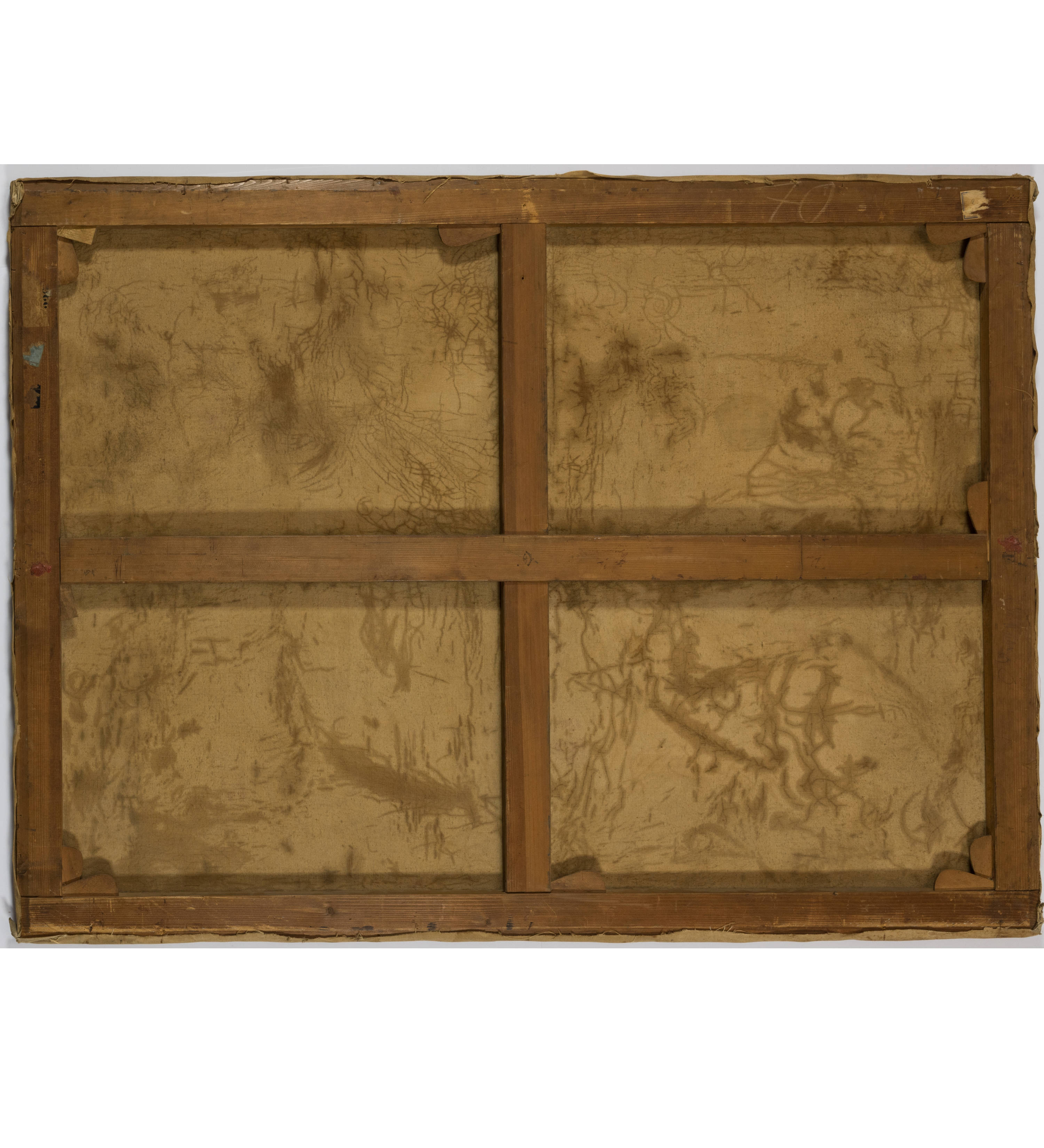
On the original stretcher, in the old nailing. With fine craquelure. Fresh in colour and in very good condition
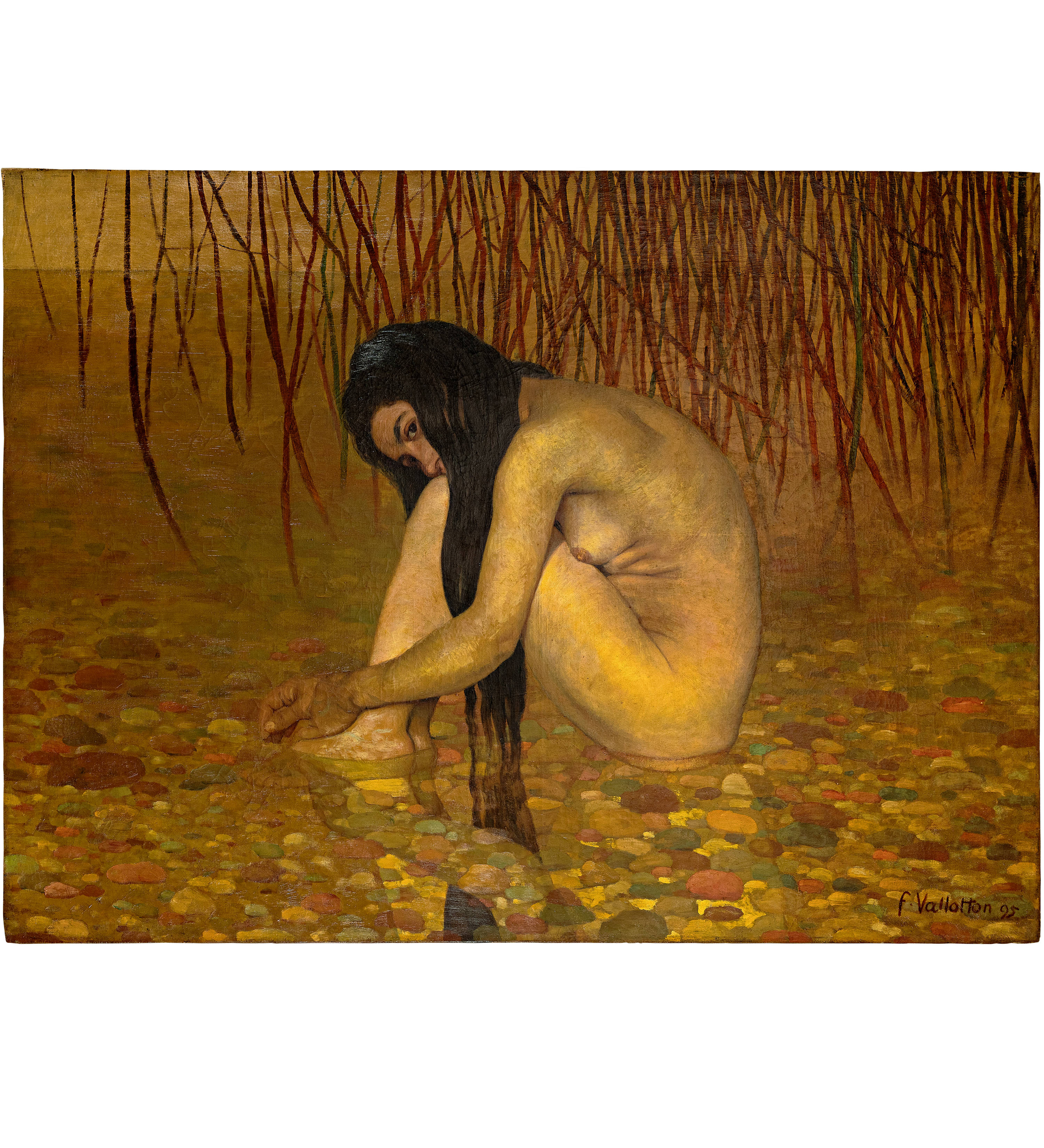
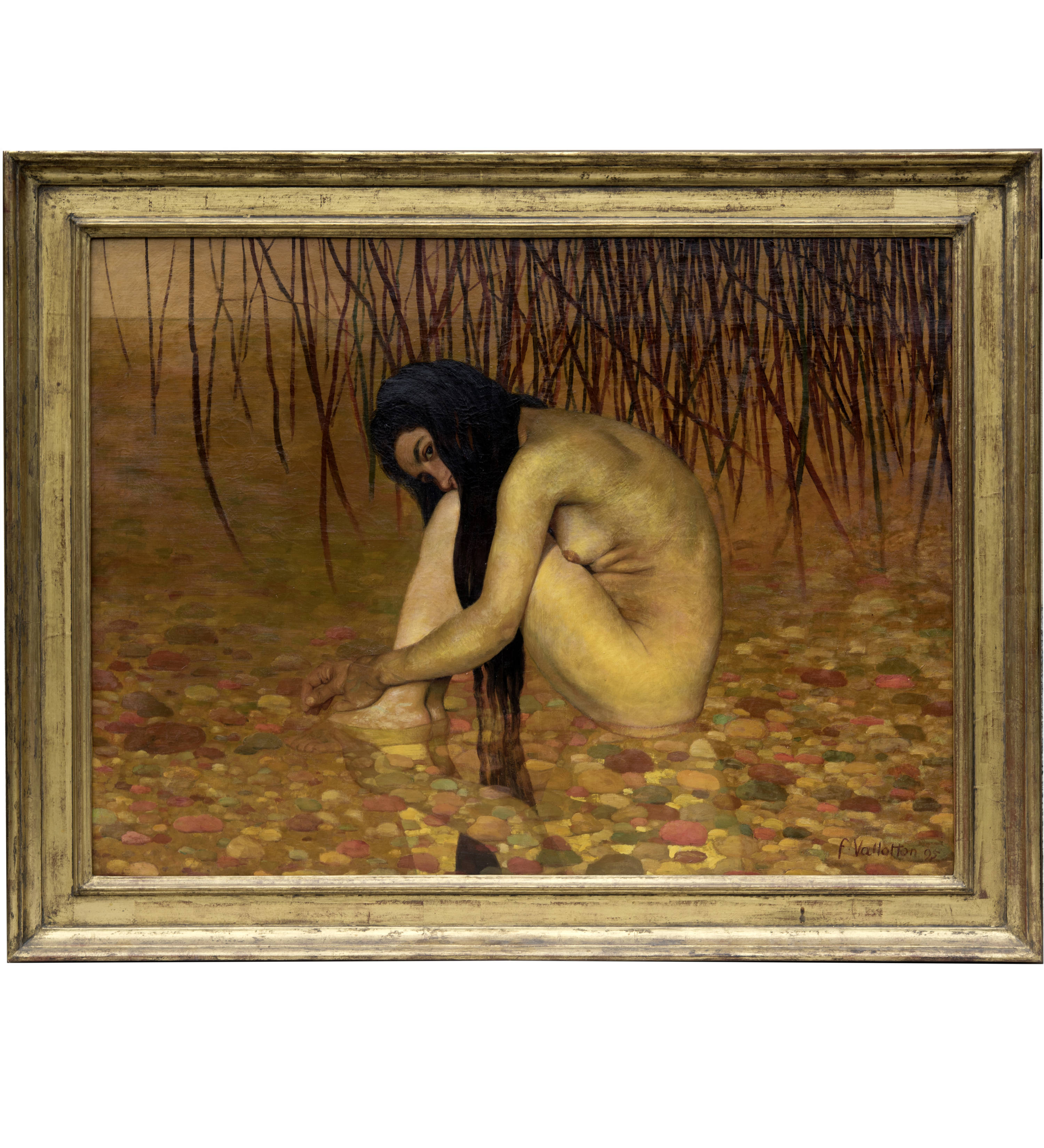
The young woman sitting in the water, surrounded by reeds, can be identified as Hélène Chatenay from a note on the back of a photograph kept in the archives of the Vallotton Gallery. She was Vallotton's girlfriend from 1889 until the mid-1890s. If we compare the sitter with the etching "Torse de femme nue" (Vallotton/Goerg 7), made in 1891, it does indeed seem that we can recognise the painter's companion by her slightly raised nose, petite body, small chest and hands accustomed to work.
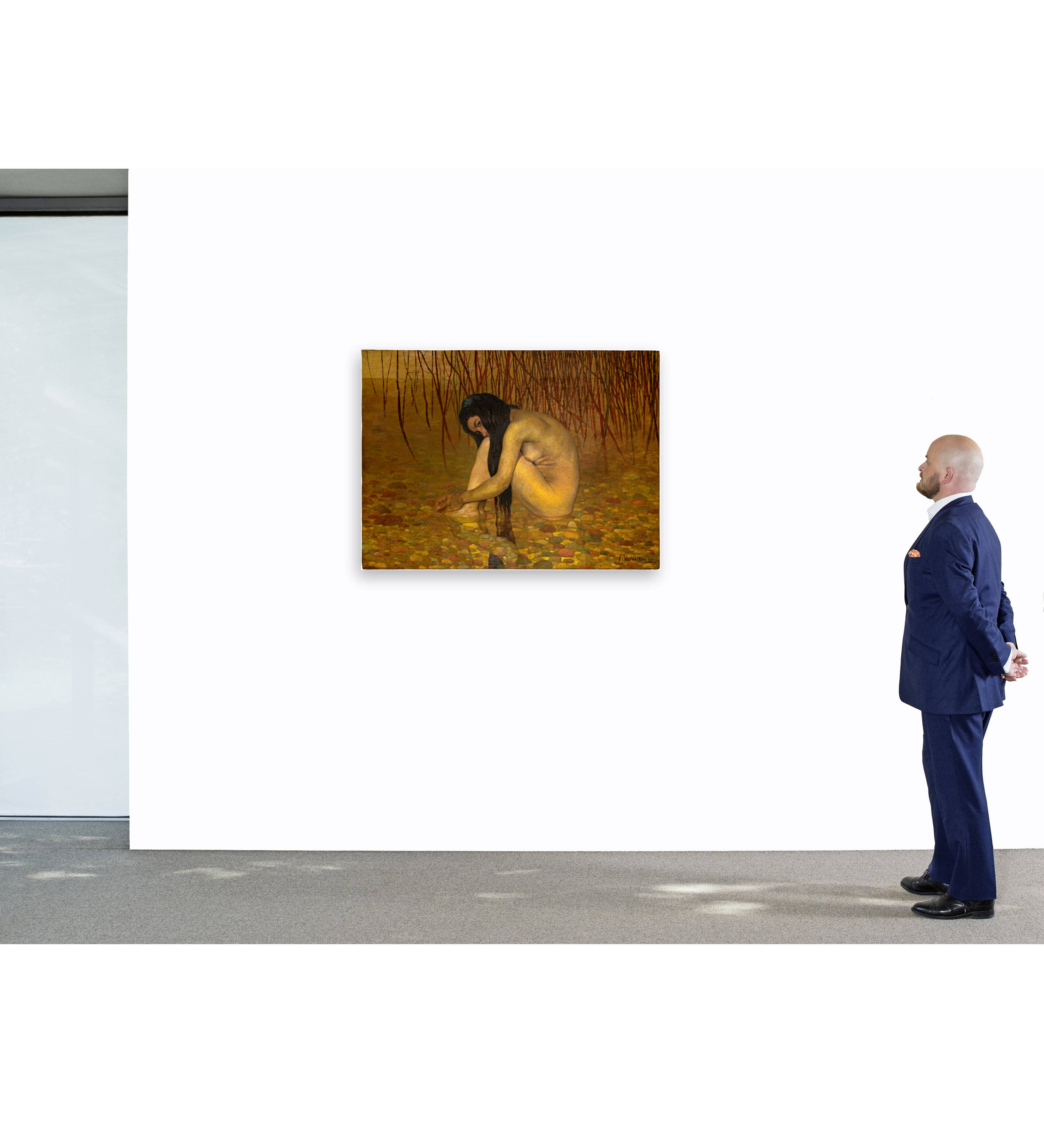
Among the works of the 1890s, this painting stands out for its large format, which is identical to Vallotton's best-known painting, Le bain au soir d'été, 1892-93 (Ducrey 140, now Kunsthaus Zürich), and which surpasses the work La malade, 1892, (Ducrey 118, now Kunsthaus Zürich). The fact that the present painting is signed and dated supports the assumption that it could have been exhibited at Siegfried Bing's "Salon de L'Art nouveau" in 1896. The symbiosis of woman and water as an expression of melancholy in connection with the end of the 19th century is one of the most popular themes of Symbolism and Art Nouveau, as in the painting "La source" from 1897 (Ducrey 234).
The realistic depiction of the young woman stands in stark contrast to the flat silhouettes of the figures in "Le bain au soir d'été" and other works with the subject of bathers or nudes that Vallotton painted in the last decade of the 19th century. The present work "Baigneuse aux roseaux" thus appears symptomatic of the artist's sporadic fluctuations between closeness to reality and the pursuit of ornamentality. It should be noted that the iridescent depiction of pebbles seen here found similar application later in the work "La baignade à Étretat" from 1899 (Ducrey 275). The graceful reed also enlivens several landscapes painted in Cagnes in the 1920s (cf. Ducrey 1446 and 1456)
The painting "Baigneuse aux roseaux" from 1895 can be seen as a masterpiece in Félix Vallotton's œuvre
1895
Öl auf Leinwand
97x131,5 cm
Unten rechts vom Künstler signiert und datiert "F. Vallotton 95"
Marina Ducrey, Félix Vallotton, L’œuvre peint, Band II, Zürich/Lausanne 2005,
Livre de raison (Hedy Hahnloser-Bühler),
Galerie Paul Vallotton, Lausanne (vor 1926)
Galerie Vallotton, Lausanne,
Slg. Ferdinand Ruchonnet, Lausanne (1937)
Auktion Galerie Bollag, Zürich, 8. Dezember 1955, Los 70 reprod., dort angekauft von
Privatsammlung Zürich, durch Erbschaft an
Privatsammlung Schweiz
O. Td., Beaux-Arts. A la mémoire de Félix Vallotton, in: Journal de Genève, 20. September 1927
Lucienne Florentin, Chronique artistique. L'œuvre de Félix Vallotton, in: La Suisse, 4. Oktober 1927
Ashley Saint James, Félix Vallotton. The Nabis Years, Thesis submitted for the Degree of PhD, Courtauld Institute of Art, University of London, 1982 (nicht publiziert), pag. 121, 286,
Paris 1895-96, Hôtel Bing, Salon de L'Art nouveau, wohl
Paris 1926, Grand Palais des Champs-Élysées, Trente ans d'art indépendant 1884-1914, Rétrospective de la Société des artistes indépendants,
Lausanne/Bern 1927, Musée Arlaud/Kunsthalle, Félix Vallotton 1865-1925,
München/Essen 1995-96, Kunsthalle der Hypo-Kulturstiftung/Folkwang Museum, Félix Vallotton,
Auf dem originalen Chassis, in der alten Nagelung. Mit feinen Krakelüren. In farbfrischer und sehr guter Erhaltung
Die junge, von Schilfrohr umgeben, im Wasser sitzende Frau kann anhand einer Notiz auf der Rückseite einer Fotografie, die in den Archiven der Galerie Vallotton aufbewahrt wird, als Hélène Chatenay identifiziert werden. Sie war ab 1889 bis Mitte der 1890er Jahre Vallottons Freundin. Wenn man die Dargestellte mit der 1891 angefertigte Radierung "Torse de femme nue" (Vallotton/Goerg 7) vergleicht, scheint es tatsächlich, dass man anhand der leicht erhöhten Nase, dem zierlichen Körper, der kleinen Brust und an Arbeit gewöhnten Hände die Lebensgefährtin des Malers erkennen kann
Unter den Werken der 1890er Jahre zeichnet sich dieses Gemälde durch sein grosses Format aus, das mit dem von Vallotton wohl bekanntesten Gemälde "Le bain au soir d’été“ von 1892-93 (Ducrey 140, heute Kunsthaus Zürich) identisch ist und das das Werk "La malade“, 1892, (Ducrey 118, heute Kunsthaus Zürich) übertrifft. Die Tatsache, dass das vorliegende Gemälde signiert und datiert ist, stützt die Annahme, dass es 1896 auf Siegfried Bings "Salon de L'Art nouveau" ausgestellt worden sein könnte. Die Symbiose von Frau und Wasser als Ausdruck der Melancholie in Verbindung mit dem ausgehenden 19. Jahrhunderts ist eines der beliebtesten Themen des Symbolismus und des Jugendstils, wie im Gemälde "La source" von 1897 (Ducrey 234)
Die realistische Darstellung der jungen Frau steht im starken Kontrast zu den flachen Silhouetten der Figuren in "Le bain au soir d’été“ und weiteren Werken mit dem Sujet von Badenden oder Akten, die Vallotton in den letzten zehn Jahren des 19. Jahrhunderts malte. Das vorliegende Werk "Baigneuse aux roseaux" erscheint somit als symptomatisch für die sporadischen Schwankungen des Künstlers zwischen Realitätsnähe und dem Streben nach Ornamentalität. Zu beachten ist, dass die hier zu sehende schillernde Darstellung von Kieselsteinen später im Werk "La baignade à Étretat" aus dem Jahr 1899 (Ducrey 275) ähnliche Anwendung fand. Auch das anmutige Schilfrohr belebt mehrere Landschaften, die in den 1920er Jahren in Cagnes entstanden (vgl. Ducrey 1446 und 1456)
Das Gemälde "Baigneuse aux roseaux“ von 1895 kann als Meisterwerk im Œuvre Félix Vallottons gesehen werden