- EN


 Log in
-
- Live Auctions
- Past auctions
- More
- Kornfeld today
- The Story of Kornfeld
- Information


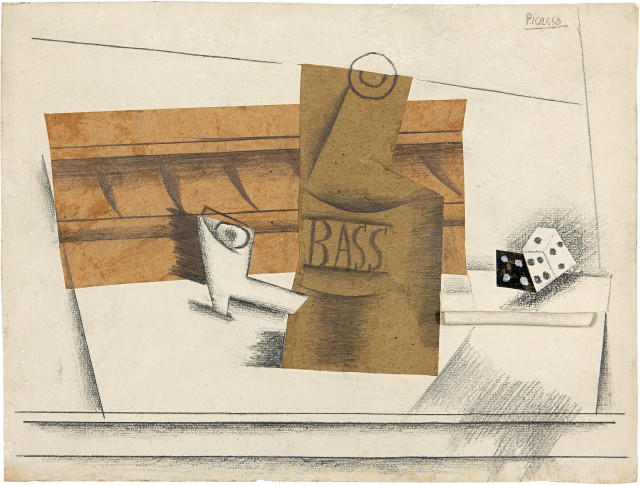







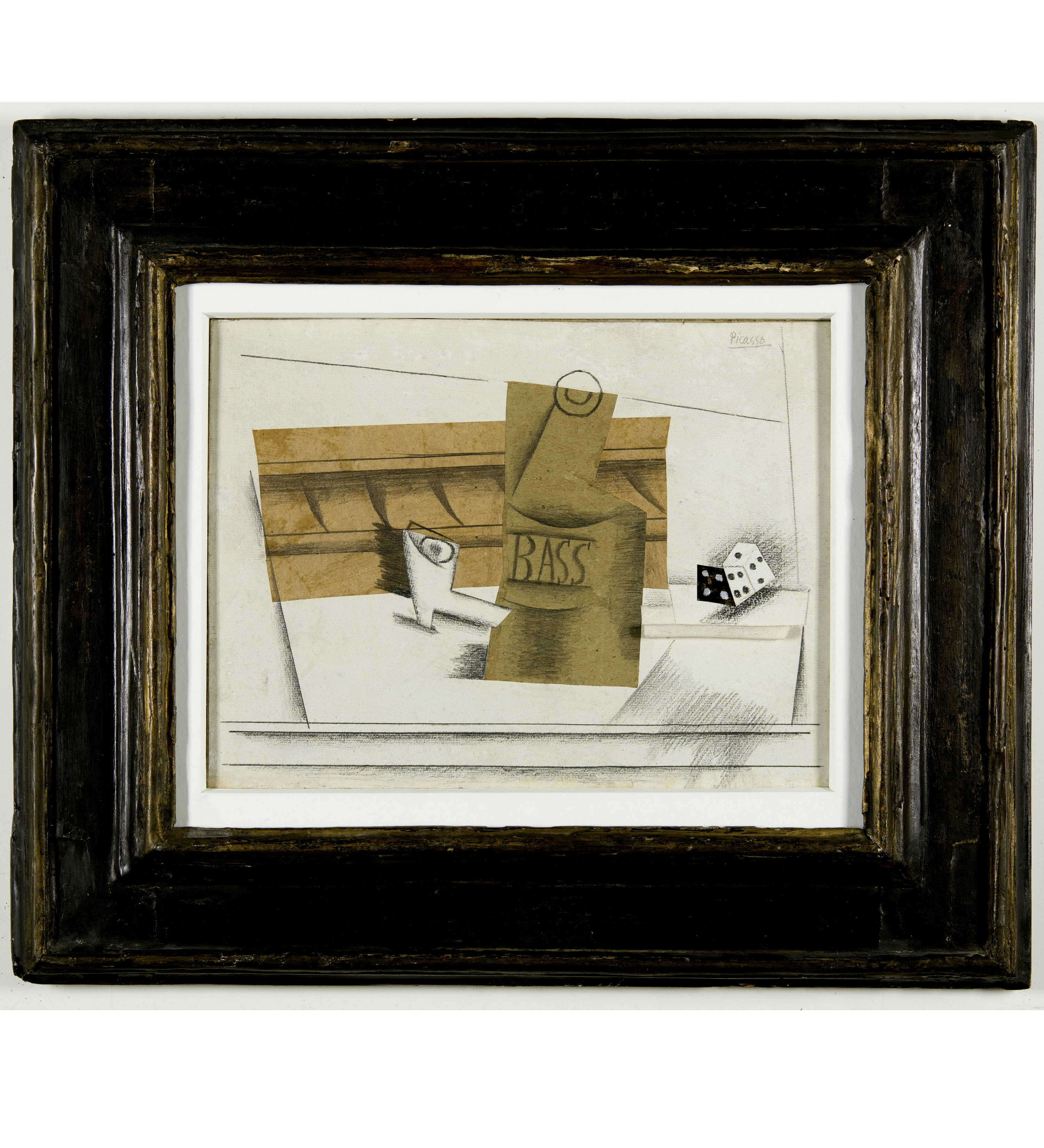
Málaga 1881 - 1973 Mougins


Beginning 1914
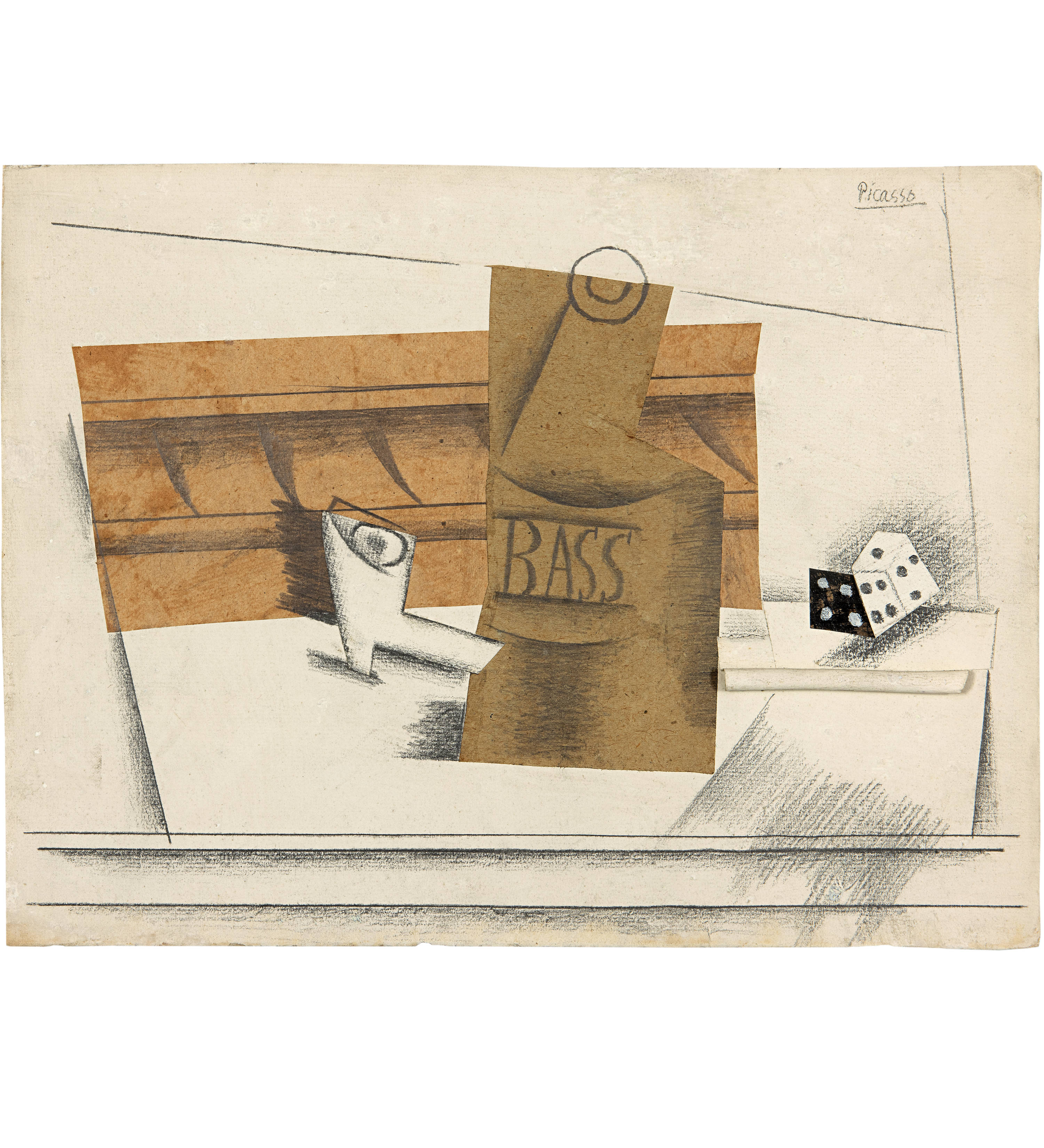
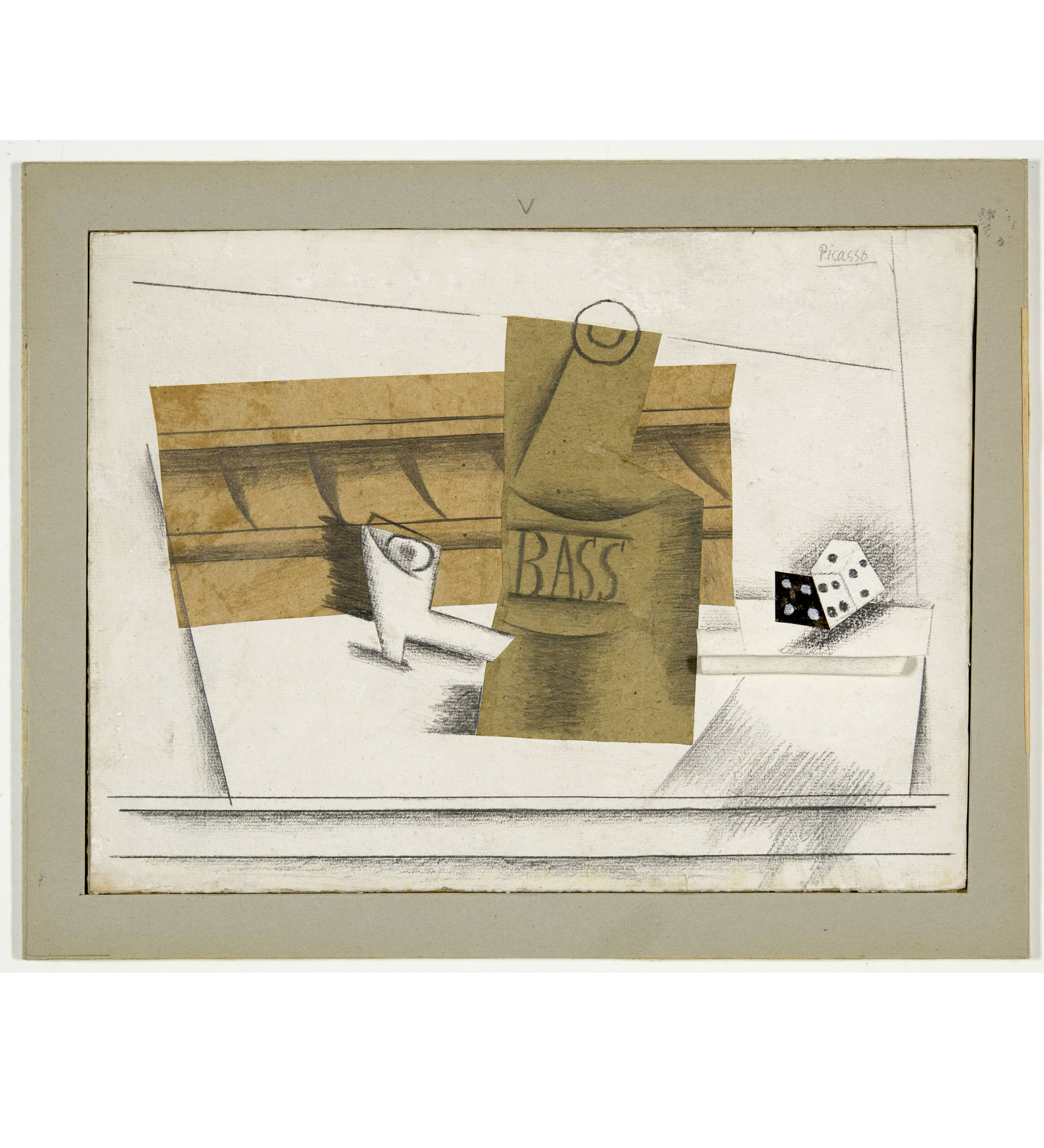
Pencil, Indian ink and paper collé
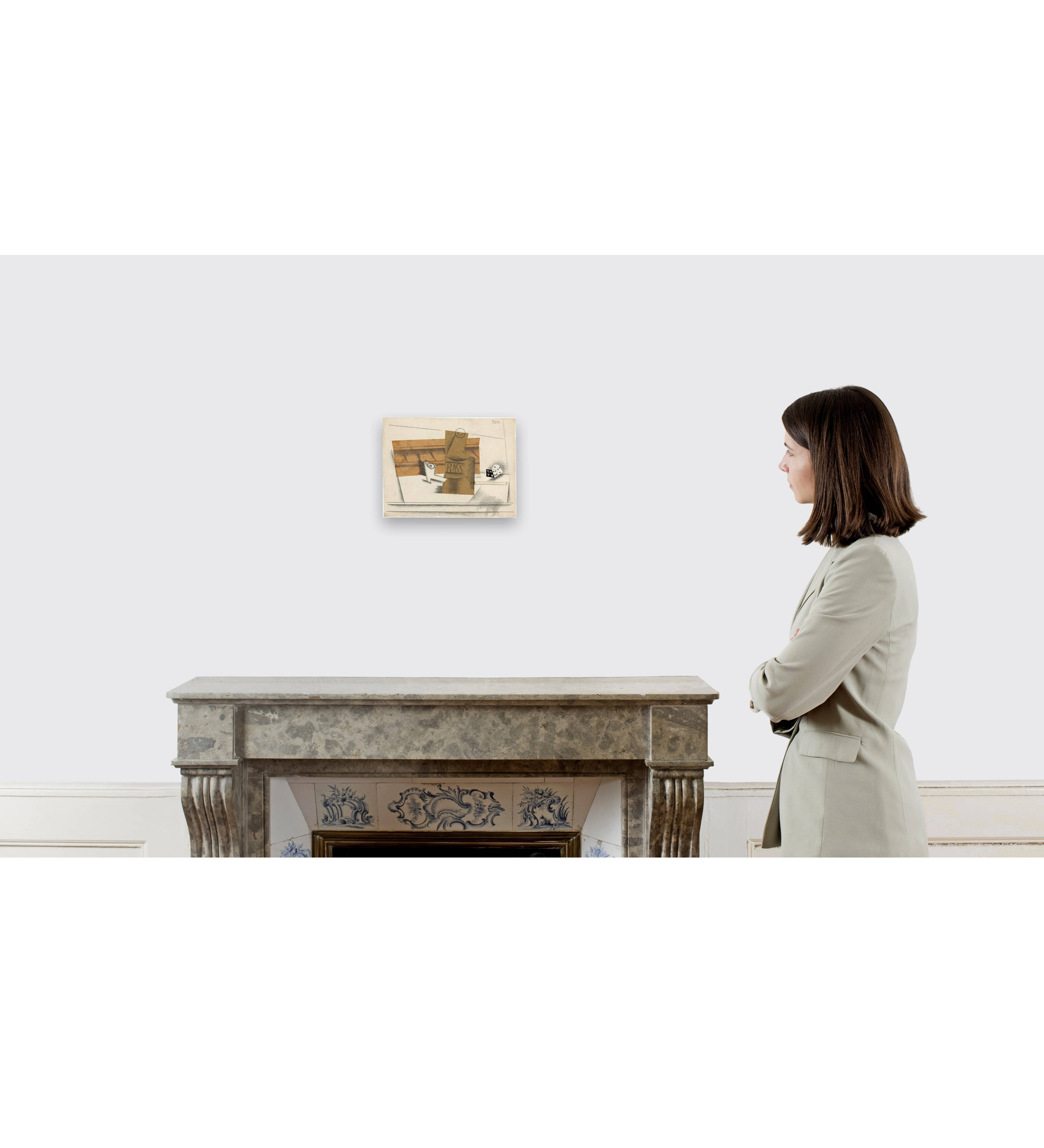
24x32 cm
Signed by the artist in pencil "Picasso" at the upper right
Christian Zervos, Pablo Picasso, 1912-1917, vol. 2, part 2, Paris 1942, no. 469
Pierre Daix/Joan Rosselet, Le cubisme de Picasso, Catalogue raisonné de l'œuvre peint 1907-1916, Neuchâtel 1979, no. 664, reprod. on the cover
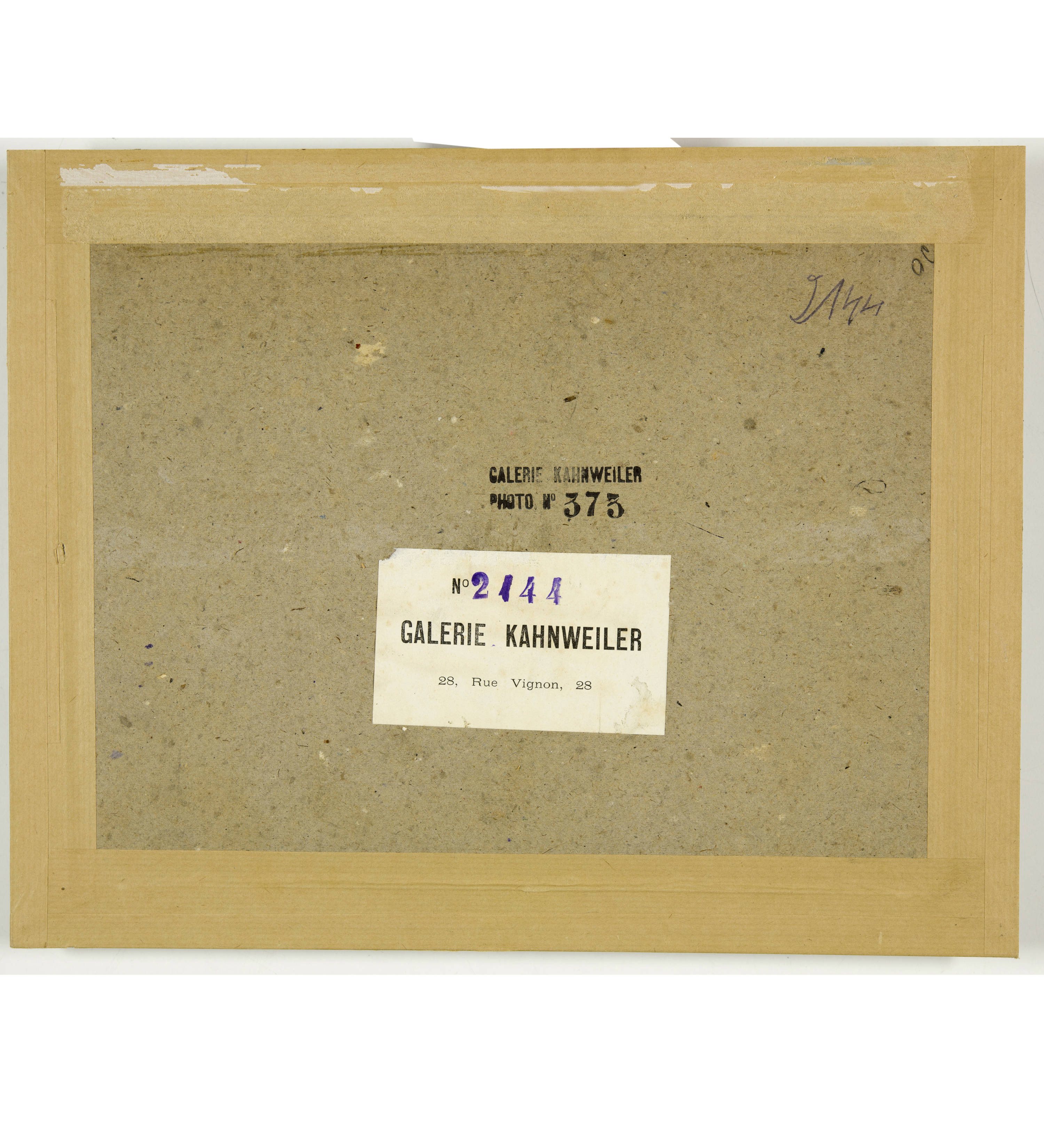
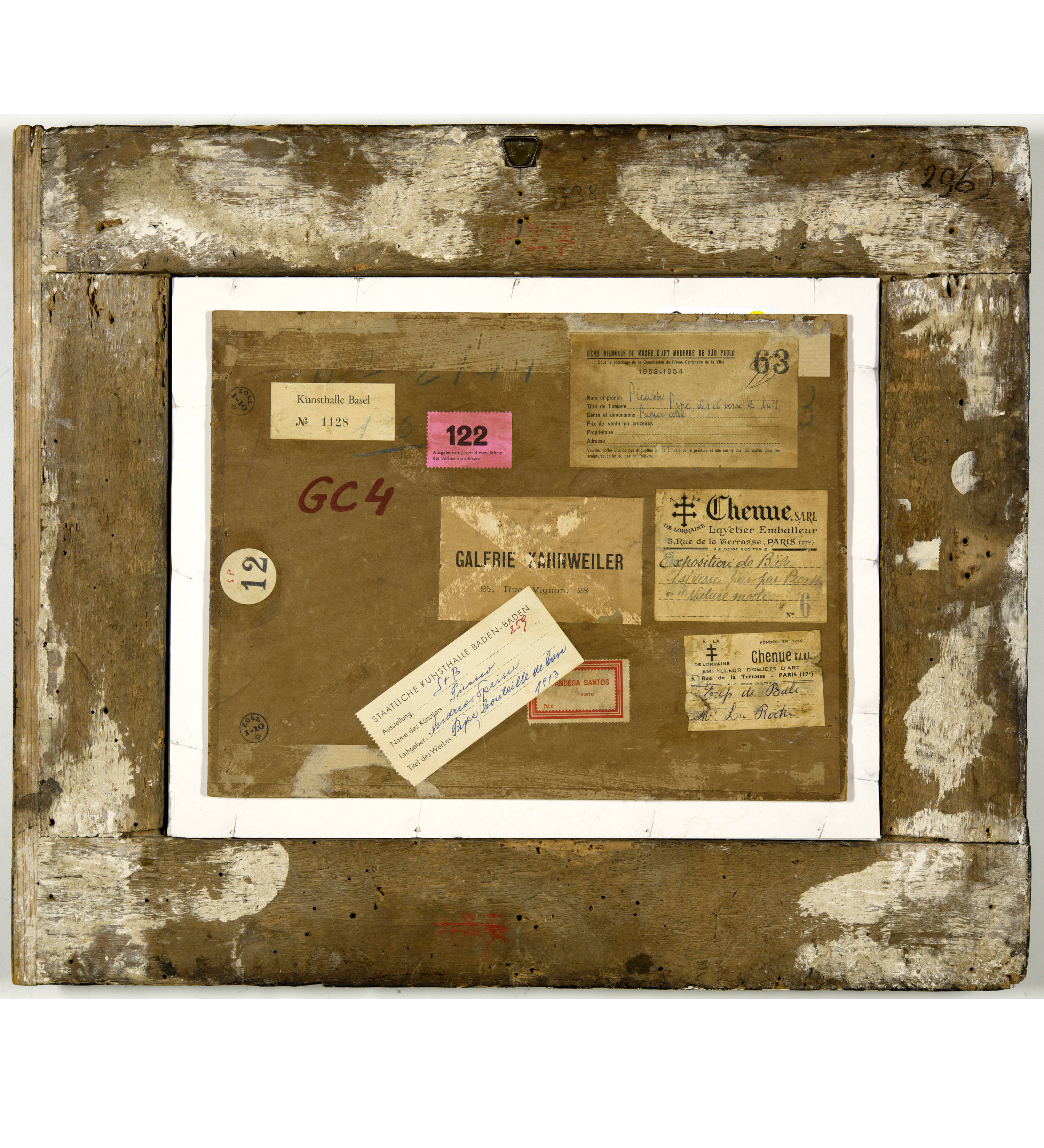
Galerie Kahnweiler, on the reverse with label and inventory number 2144, further with photo number 373, acquired there by
Collection Raoul La Roche, Paris, by inheritance to
Private collection Switzerland
Die Sammlung Raoul La Roche - Verzeichnis der Werke, in: Katharina Schmidt/Hartwig Fischer, Ein Haus für den Kubismus. Die Sammlung Raoul La Roche, exhibition catalogue, Ostfildern-Ruit 1998, cat. no. 157
São Paulo 1953/1954, IIème Biennale du Musée d'Art Moderne, cat. no. 63, label on the reverse
Basel 1948, Kunsthalle, Juan Gris, Georges Braque, Pablo Picasso, cat. no. 94, label on the reverse
Basel 1998, Kunstmuseum, Ein Haus für den Kubismus. Die Sammlung Raoul La Roche, cat. no. 96, reprod. pag. 40
On lightly (probably) plaster-ground laid paper, mounted on cardboard. Minimal discolourations at the lower margin. The grounding minimally rubbed in parts. Fresh in colour and in perfect overall condition
The groundbreaking "invention" of collage in 1912 by Georges Braque and Pablo Picasso marked the beginning of a radical change, literally a revolution, in the history of Western art, without which many subsequent movements would not have been possible. By gluing fragments of paper (newspapers, wallpaper and paper with wood grain) onto still life compositions, "real" materials and textures were introduced into art, which until then had been based on illusionistic representations of the same. Through this "invention", artists declared the "autonomy" of the painted or drawn artwork, thus detaching it from any attempt at pure representation
The collaged elements rarely followed the contours or silhouettes of the drawn motifs (glasses, bottles, musical instruments, dice or chessboards) and thus virtually counteracted the conventional means of modelling and depth perspective. The present work, created in Paris, is one of Picasso's particularly detailed works on paper from this period and was offered and sold by the most important dealer of the Cubists, Daniel-Henry Kahnweiler, which must have happened before the outbreak of the First World War. The design of the pipe is exciting: while the pipe bowl is a collaged representation shaded with pencil, the stem is a rolled and three-dimensional paper roll.
This impressive work came early into the collection of Raoul La Roche (1889-1965), one of the greatest patrons and collectors of the Cubists in Paris. His "Villa La Roche" in Paris, built by Le Corbusier in 1923-1926, offered ideal conditions for presenting the avant-garde works. In a photograph by Fred Boissonnas from 1926, the work offered here can be seen on the gallery gallery/ in the anteroom of the library (cf. catalogue "Ein Haus für den Kubismus. Die Sammlung Raoul La Roche", pag. 260).
To this day, the work is in the family through inheritance and now comes on the market for the first time in over a hundred years
Anfang 1914
Bleistift, Tusche und Papier collé
24x32 cm
Oben rechts vom Künstler in Bleistift signiert "Picasso"
Christian Zervos, Pablo Picasso, 1912-1917, Band 2, Teilband 2, Paris 1942,
Pierre Daix/Joan Rosselet, Le cubisme de Picasso, Catalogue raisonné de l'œuvre peint 1907-1916, Neuchâtel 1979,
Galerie Kahnweiler, rückseitig mit Etikett und der Inventarnummer 2144, weiter mit der Fotonummer 373, dort erworben von
Slg. Raoul La Roche, Paris, durch Erbschaft an
Privatsammlung Schweiz
Die Sammlung Raoul La Roche - Verzeichnis der Werke, in: Katharina Schmidt/Hartwig Fischer, Ein Haus für den Kubismus. Die Sammlung Raoul La Roche, Ausstellungskatalog, Ostfildern-Ruit 1998,
São Paulo 1953/1954, IIème Biennale du Musée d'Art Moderne,
Basel 1948, Kunsthalle, Juan Gris, Georges Braque, Pablo Picasso,
Baden-Baden XXX, Staatliche Kunsthalle, TITEL XXX,
Basel 1998, Kunstmuseum, Ein Haus für den Kubismus. Die Sammlung Raoul La Roche,
Auf leicht (wohl) gipsgrundiertem Bütten, montiert auf Karton. Am unteren Bildrand minimale Verfärbungen. Die Grundierung zum Teil minim berieben. Farbfrisch und in tadelloser Gesamterhaltung
Die bahnbrechende "Erfindung" der Collage im Jahr 1912 durch Georges Braque und Pablo Picasso markiert den Beginn eines radikalen Wandels, ja förmlich einer Revolution in der westlichen Kunstgeschichte, ohne die viele Folgeströmungen nicht möglich geworden wären. Durch das Aufkleben von Papierfragmenten (Zeitungen, Tapeten und Papier mit Holzmaserung) auf Stilllebenkompositionen wurden "reale" Materialien und Texturen in die Kunst eingeführt, die bis dato auf illusionistischen Darstellungen derselben basierten. Durch diese "Invention" erklärten die Künstler die "Autonomie" des gemalten oder gezeichneten Kunstwerks und lösten es so von jedem Versuch der reinen Repräsentation
Die collagierten Elemente folgten selten den Konturen oder Silhouetten der gezeichneten Motive (Gläser, Flaschen, Musikinstrumente, Würfel oder Schachbretter) und konterkarierten so quasi die konventionellen Mittel der Modellierung und Tiefenperspektive. Die vorliegende Arbeit, entstanden in Paris, gehört zu den besonders detailreich ausgearbeiteten Papierarbeiten von Picasso aus dieser Zeit und wurde vom wichtigsten Händler der Kubisten, Daniel-Henry Kahnweiler, angeboten und verkauft, was vor dem Ausbruch des Ersten Weltkrieges geschehen sein muss. Spannend ist die Gestaltung der Pfeife: Während der Pfeifenkopf als collagierte und mit Bleistift schattierte Darstellung gestaltet ist, ist der Stiel als gerolltes und dreidimensionales Papierröllchen umgesetzt
Das eindrückliche Werk kam früh in die Sammlung von Raoul La Roche (1889-1965), einem der grössten Förderer und Sammler der Kubisten in Paris. In seiner 1923-1926 von Le Corbusier erbauten "Villa La Roche" in Paris boten sich ideale Bedingungen, um die avantgardistischen Werke zu präsentieren. In einer Fotografie von Fred Boissonnas aus dem Jahr 1926 ist die hier angebotene Arbeit auf der Empore der Galerie/ im Vorraum der Bibliothek zu sehen (vgl. Katalog "Ein Haus für den Kubismus. Die Sammlung Raoul La Roche", pag. 260)
Bis heute befindet sich die Arbeit durch Erbschaft in Familienbesitz und kommt nun erstmals seit über hundert Jahren auf den Markt