- EN


 Log in
-
- Live Auctions
- Past auctions
- More
- Gallery
- Art Dealing
- Publishing
- Kornfeld today
- The Story of Kornfeld
- Information


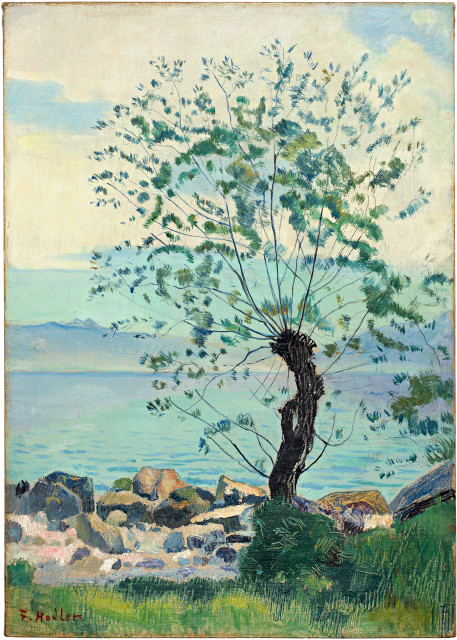







Bern 1853 - 1918 Genf


circa 1891
Oil on canvas
46x33 cm
Signed by the artist in oil paint at lower left "F. Hodler"
Oskar Bätschmann/Paul Müller, Ferdinand Hodler, Catalogue raisonné of Paintings, Volume 1, The Landscapes, sub-volume 1, Zurich 2008, no. 230
Gallery Moos, Geneva
Theodor Fischer, Lucerne (1921), (1941)
Private property (1943)
Dr. Fritz Nathan, St. Gallen (before 1946)
Dr. Fritz Nathan and Dr. Peter Nathan, Zurich (1967)
Max Schmidheiny Collection (1967-1991)
Thomas Schmidheiny Collection (1991-2008)
Private collection Switzerland (since 2008)
Gaspard Vallette, Exposition municipale, in: Gazette de Lausanne, 08.03.1893, pag. 2 (there titled "Bord du lac")
Émile Delphin, Exposition municipale II, in: Le Genevois, 14.03.1893, pag. 1, no. 61 (there titled "Paysage pris aux environs de Pully")
Loosli 1921-1924, general catalogue, no. 2261
Werner Y. Müller, Landscape catalogue, in: Werner Y. Müller, The Art of Ferdinand Hodler. Gesamtdarstellung. Vol. 2: Reife und Spätwerk 1895-1918, Zurich 1941, pag. 411, no. 187 (there titled and dated "Der Weidenbaum am See, 1891")
Dr. Fritz Nathan, Zehn Jahre Tätigkeit in St. Gallen 1936-1946, St. Gallen 1946, reprod.
Swiss Institute for Art Research (ed.), Ferdinand Hodler. Landschaften, Zurich 1987, pag. 17, pag. 68-69, no. 8 reprod. in colours (there titled and dated "Weide am See, 1890/92")
Swiss Institute for Art Research (ed.), Ferdinand Hodler. Collection Max Schmidheiny, Zurich 1989, pag. 62-63, no. 12
Exhibition Catalogue Kunsthaus Zurich, Ferdinand Hodler. Vom Frühwerk bis zur Jahrhundertwende. Zeichnungen aus der Graphischen Sammlung des Kunsthauses Zurich, pag. 43
Marcel Baumgartner, Ferdinand Hodler. Thomas Schmidheiny Collection, Zurich 1998, pag. 46-48
Paul Müller, Ferdinand Hodler, in: Die Sammlung Max Geldner im Kunstmuseum Basel. Vermächtnis und Ankäufe der Stiftung (ed.), Basel 2000, pag. 140, 142
Dieter Schwarz (ed.), Kunstmuseum Winterthur. Katalog der Gemälde und Skulpturen, Winterthur/Düsseldorf 2005, pag. 197-198 reprod.
Karoline Beltinger, Das Hilfsmittel "Pause", in: Kunsttechnologische Forschung zur Malerei von Ferdinand Hodler, Zurich 2007, pag. 124-125 reprod. in colour
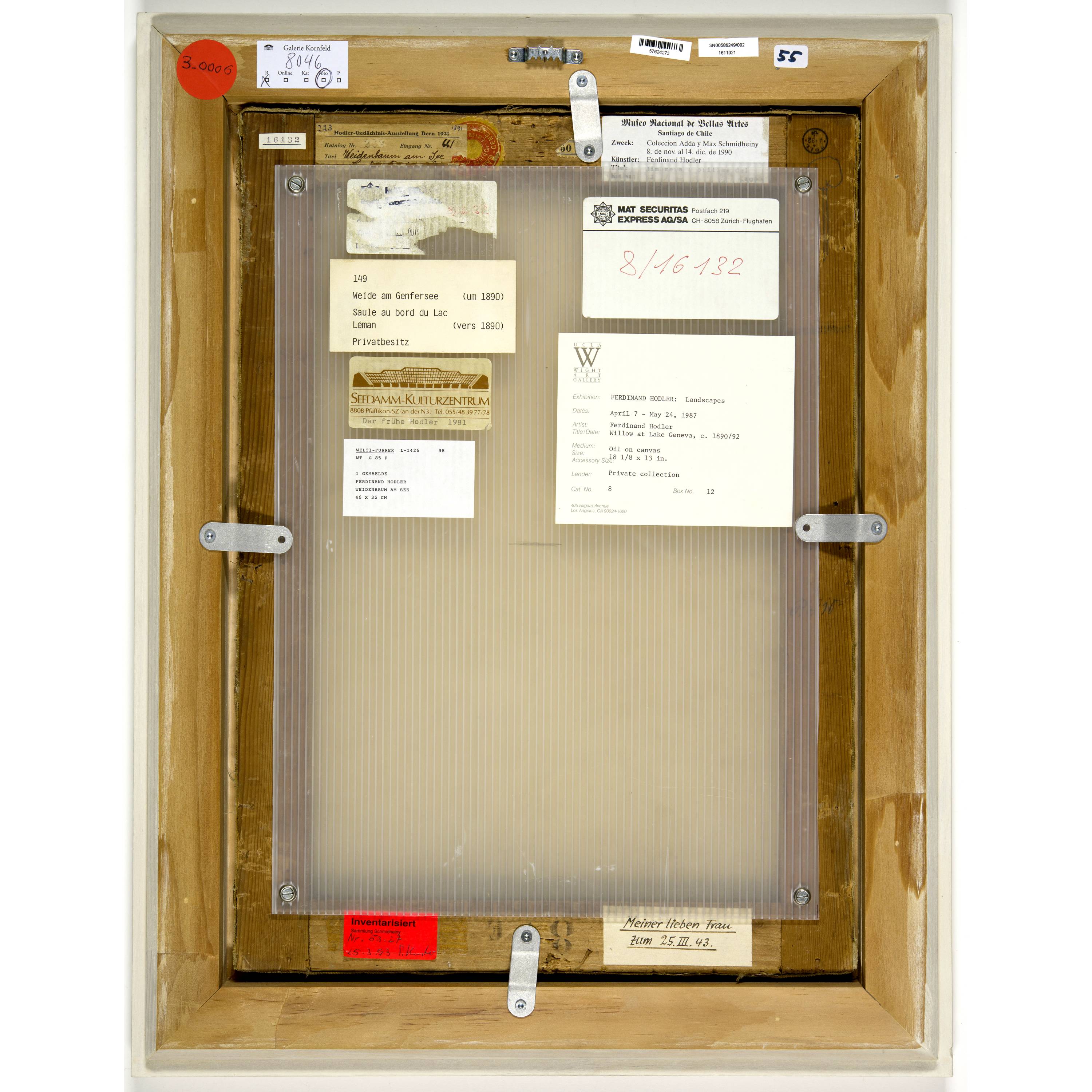
Geneva 1893, Musée Rath, Exposition municipale des Beaux-Arts, cat. no. 115 (there titled "Paysage")
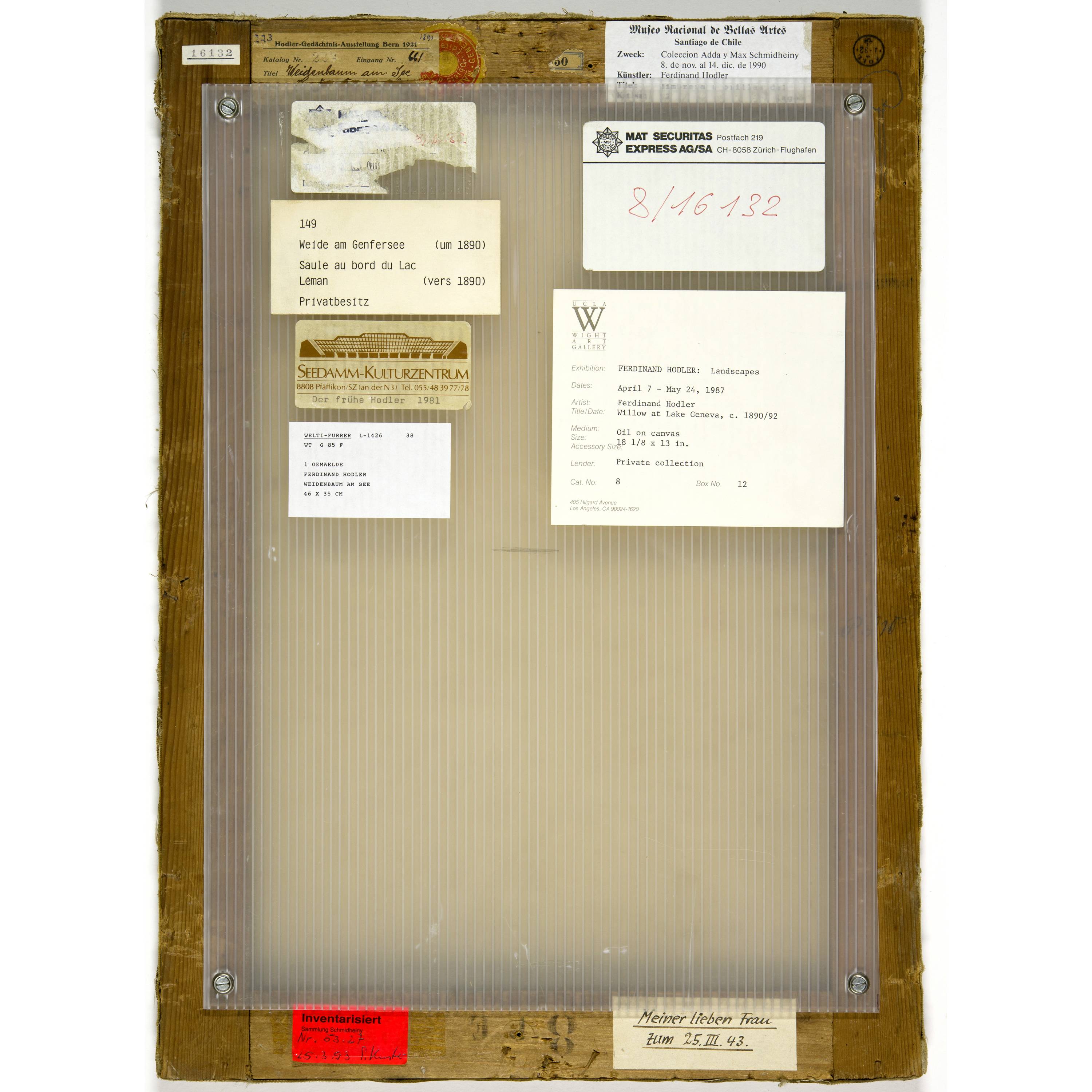
Bern 1921, Kunstmuseum, Hodler Gedächtnis-Ausstellung, cat. no. 223 (there titled and dated "Weidenbaum am See, 1891")
Pfäffikon 1981, Seedamm Cultural Centre, Der frühe Hodler. Das Werk 1870-1890, cat. no. 149
Los Angeles/Chicago/New York 1987, Wight Art Gallery/The Art Institute of Chicago/National Academy of Design, Ferdinand Hodler. Landscapes, cat. no. 8
Warth 1989, Art Museum of the Canton of Thurgau, Ferdinand Hodler. Sammlung Max Schmidheiny, cat. no. 12
Santiago de Chile 1990, Museo Nacional de Bellas Artes, Coleccion Adda y Max Schmidheiny, cat. no. 12
St. Gallen 1998, University of St. Gallen (HSG), Ferdinand Hodler. Sammlung Thomas Schmidheiny
Munich/Wuppertal 1999-2000, Kunsthalle der Hypo-Kulturstiftung/Von der Heydt-Museum, Ferdinand Hodler, cat. no. 32
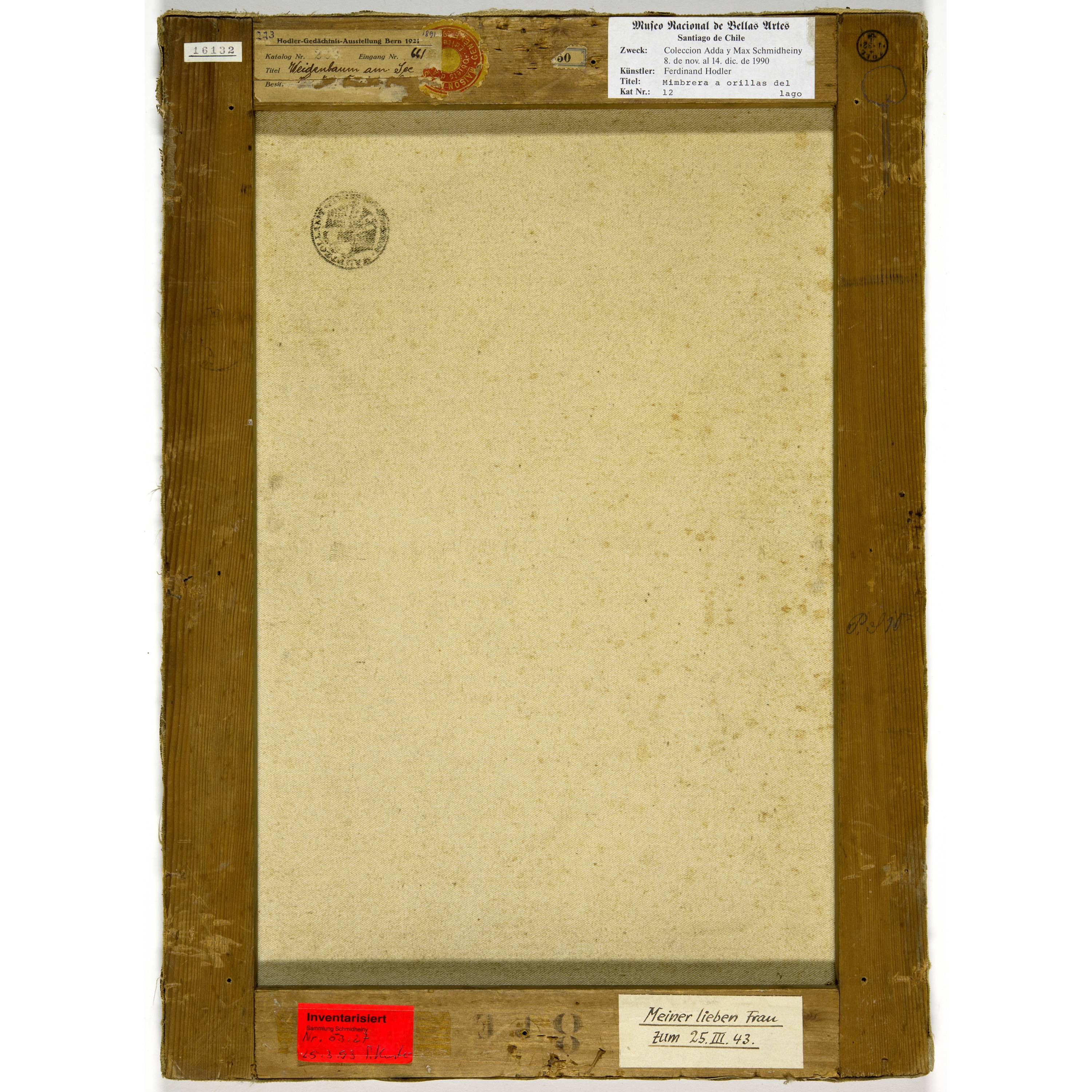
On the original stretcher, old mounted. In very good condition and fresh in colour
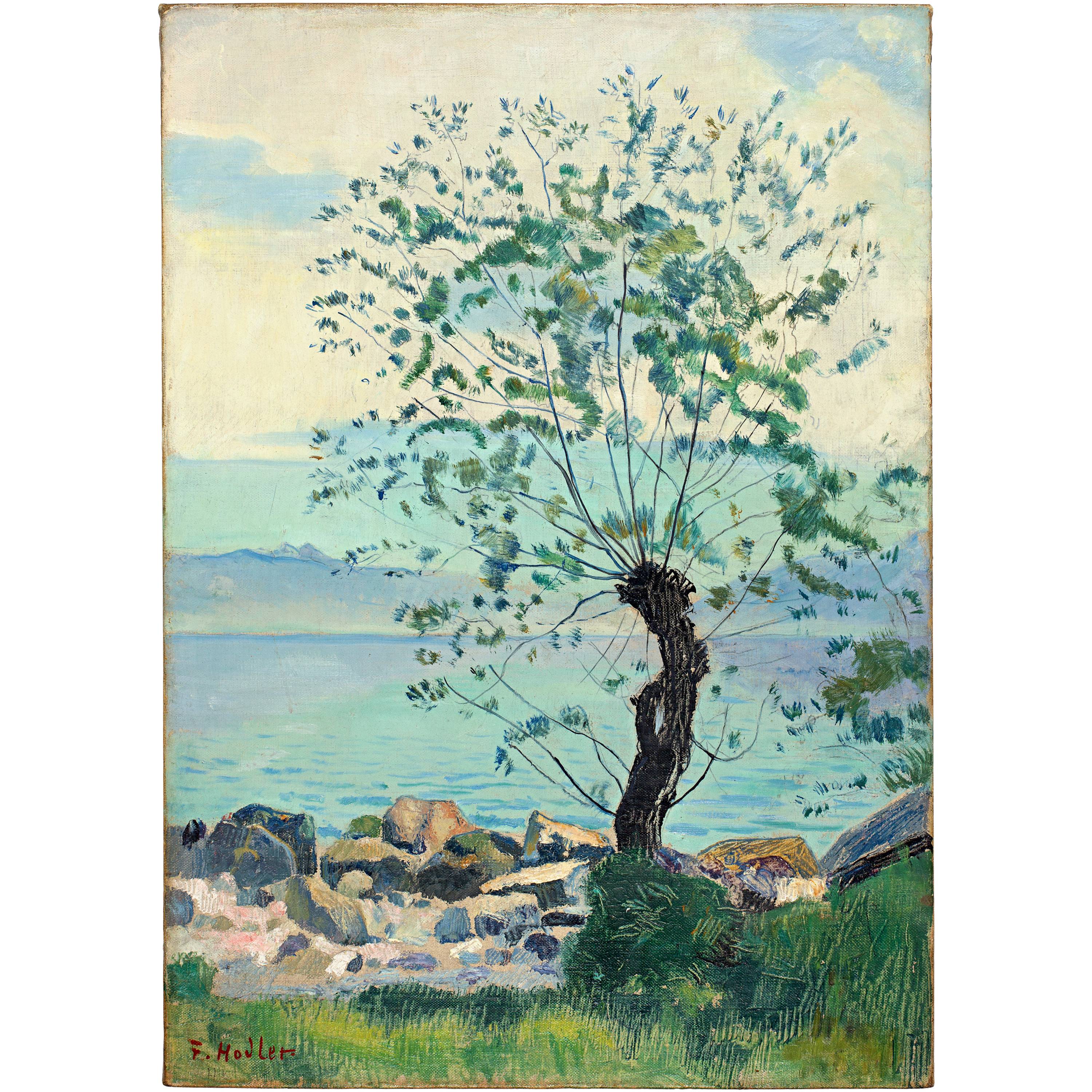
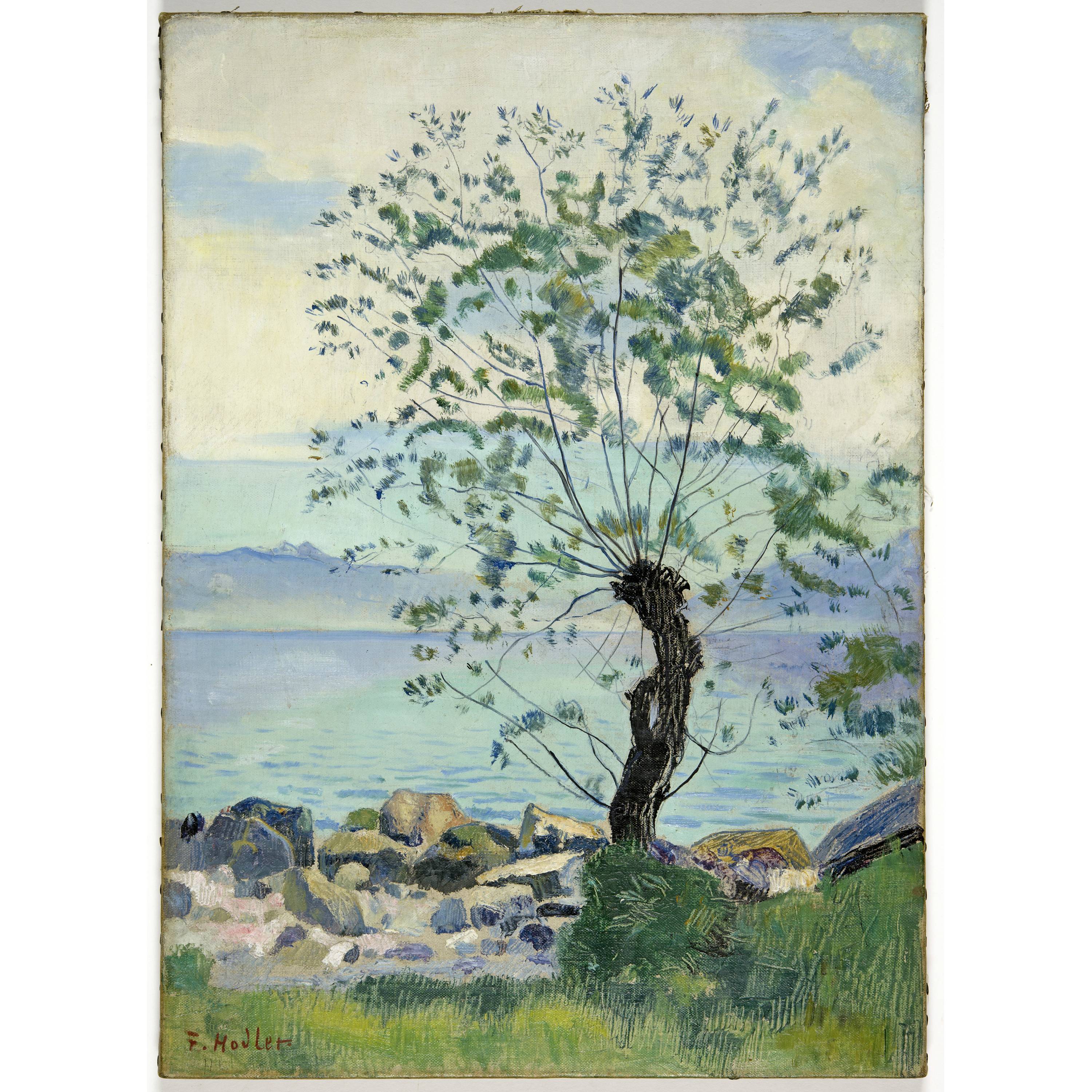
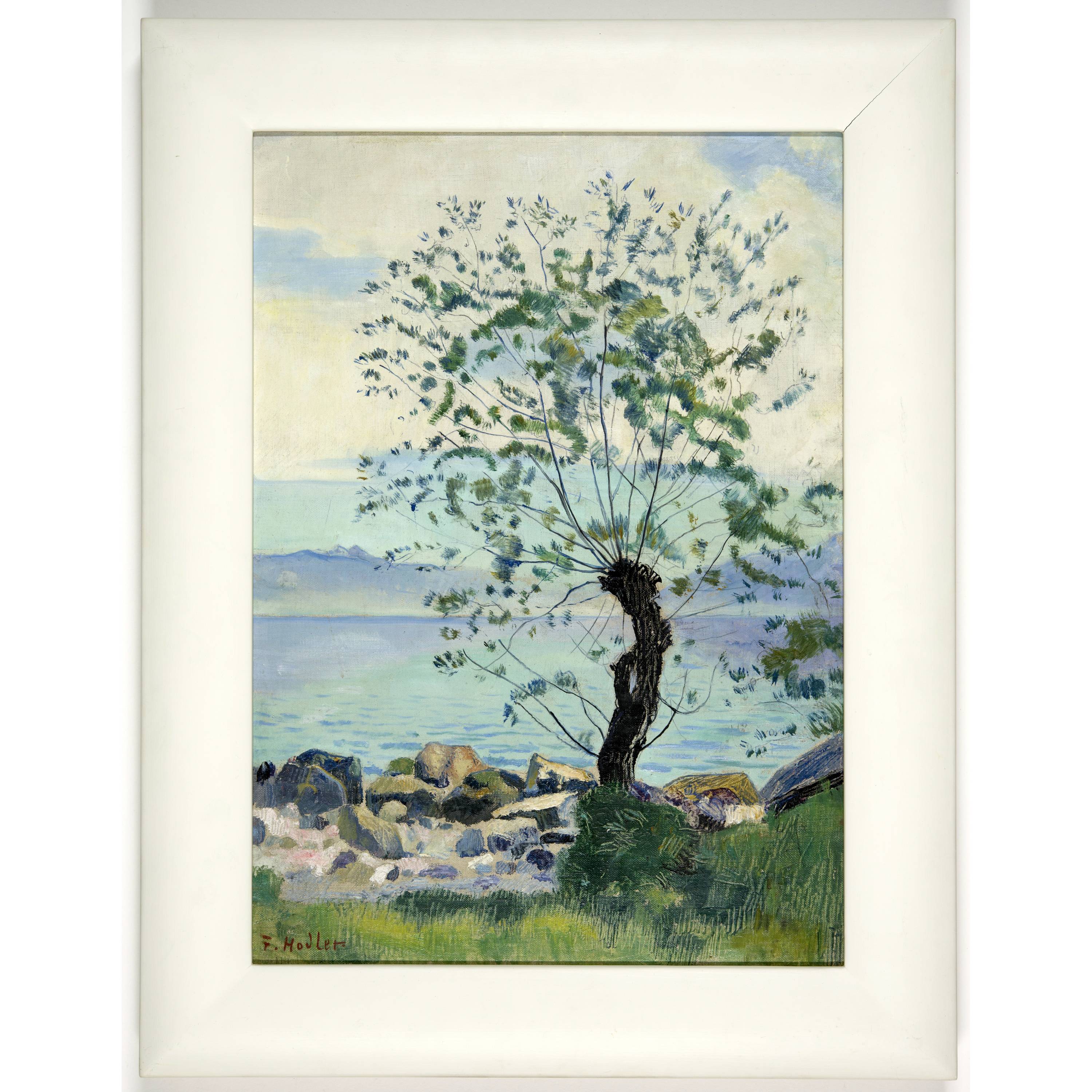
The motif of a single tree appears frequently in Ferdinand Hodler's work and has always interested the artist anew over the years. The present painting is a variant of the 1882 "Willow Tree on Lake Geneva" in the Kunstmuseum Winterthur (CR no. 115). In contrast to the earlier work, he deliberately omits the boy sitting on the stony shore. Hodler writes the following about the physiognomy of the landscape in a text based on a copy that C. A. Loosli is said to have made from one of Hodler's lost manuscripts: "If the painter wishes the picture to be touching and captivating, he will not use figures. [...] Figures or the anecdotal not only add nothing, but weaken the gripping and direct emotional effect." Thus the willow tree becomes the main subject in the painting. It shows the shore promenade in the surroundings of Pully with a view over Lake Geneva. On the left in the background, the shoulder of the "Malatraix", the peaks of the "Tour de Mayen" and the "Tour d'Aï" are visible; on the right, the flank of the "Croix de la Lé" can be seen. Here, too, in contrast to the earlier version "Willow Tree on Lake Geneva", Hodler has simplified the mountain ranges in favour of the composition and harmonised the colours
Um 1891
Öl auf Leinwand
46x33 cm
Unten links vom Künstler in Ölfarbe signiert "F. Hodler"
Oskar Bätschmann/Paul Müller, Ferdinand Hodler, Catalogue raisonné der Gemälde, Band 1, Die Landschaften, Teilband 1, Zürich 2008,
Galerie Moos, Genf
Theodor Fischer, Luzern (1921), (1941)
Privatbesitz (1943)
Dr. Fritz Nathan, St. Gallen (vor 1946)
Dr. Fritz Nathan und Dr. Peter Nathan, Zürich (1967)
Slg. Max Schmidheiny (1967-1991)
Slg. Thomas Schmidheiny (1991-2008)
Privatsammlung Schweiz (seit 2008)
Gaspard Vallette, Exposition municipale, in: Gazette de Lausanne, 08.03.1893, pag. 2 (dort betitelt "Bord du lac")
Émile Delphin, Exposition municipale II, in: Le Genevois, 14.03.1893, pag. 1,
Loosli 1921-1924, Generalkatalog,
Werner Y. Müller, Landschaftskatalog, in: Werner Y. Müller, Die Kunst Ferdinand Hodlers. Gesamtdarstellung. Bd. 2. Reife und Spätwerk 1895-1918, Zürich 1941, pag. 411,
Dr. Fritz Nathan, Zehn Jahre Tätigkeit in St. Gallen 1936-1946, St. Gallen 1946, reprod.
Schweizerisches Institut für Kunstwissenschaft (Hrsg.), Ferdinand Hodler. Landschaften, Zürich 1987, pag. 17, pag. 68-69,
Schweizerisches Institut für Kunstwissenschaft (Hrsg.), Ferdinand Hodler. Sammlung Max Schmidheiny, Zürich 1989, pag. 62-63,
Ausst. Kat. Kunsthaus Zürich, Ferdinand Hodler. Vom Frühwerk bis zur Jahrhundertwende. Zeichnungen aus der Graphischen Sammlung des Kunsthauses Zürich, pag. 43
Marcel Baumgartner, Ferdinand Hodler. Sammlung Thomas Schmidheiny, Zürich 1998, pag. 46-48
Paul Müller, Ferdinand Hodler, in: Die Sammlung Max Geldner im Kunstmuseum Basel. Vermächtnis und Ankäufe der Stiftung, Öffentliche Kunstsammlung Basel (Hrsg.), Basel 2000, pag. 140, 142
Dieter Schwarz (Hrsg.), Kunstmuseum Winterthur. Katalog der Gemälde und Skulpturen, Winterthur/Düsseldorf 2005, pag. 197-198 reprod.
Karoline Beltinger, Das Hilfsmittel "Pause", in: Kunsttechnologische Forschung zur Malerei von Ferdinand Hodler, Zürich 2007, pag. 124-125 reprod. in Farbe
Genf 1893, Musée Rath, Exposition municipale des Beaux-Arts,
Bern 1921, Kunstmuseum, Hodler Gedächtnis Ausstellung,
Pfäffikon 1981, Seedamm-Kulturzentrum, Der frühe Hodler. Das Werk 1870-1890,
Los Angeles/Chicago/New York 1987, Wight Art Gallery/The Art Institute of Chicago/National Academy of Design, Ferdinand Hodler. Landscapes,
Warth 1989, Kunstmuseum des Kantons Thurgau, Ferdinand Hodler. Sammlung Max Schmidheiny,
Santiago de Chile 1990, Museo Nacional de Bellas Artes, Coleccion Adda y Max Schmidheiny,
St. Gallen 1998, Universität St. Gallen (HSG), Ferdinand Hodler. Sammlung Thomas Schmidheiny
München/Wuppertal 1999-2000, Kunsthalle der Hypo-Kulturstiftung/Von der Heydt-Museum, Ferdinand Hodler,
Auf dem originalen Chassis, alt doubliert. In sehr guter und farbfrischer Erhaltung
Das Motiv eines einzelnen Baumes kommt im Werk Ferdinand Hodlers öfters vor und hat den Künstler über Jahre hinweg immer von neuem interessiert. Beim vorliegenden Gemälde handelt es sich um eine Variante des 1882 entstandenen "Weidenbaum am Genfersee" im Kunstmuseum Winterthur (WK Nr. 115). Im Gegensatz zum früher geschaffenen Werk lässt er ganz bewusst den am steinigen Ufer sitzenden Knaben weg. Hodler schreibt in einem auf einer Kopie, die C. A. Loosli nach einem verlorengegangenen Manuskript Hodlers erstellt haben soll, basierten Text folgendes zur Physiognomie der Landschaft: "Wenn der Maler wünscht, dass das Bild berührend und fesselnd sein soll, wird er keine Figuren verwenden. [...] Figuren oder Anekdotisches fügen nicht nur nichts hinzu, sondern schwächen die packende und direkte emotionale Wirkung." Somit wird der Weidenbaum zum Hauptgegenstand im Bild. Es zeigt die Uferpromenade in der Umgebung von Pully mit Blick über den Genfersee. Links im Hintergrund ist die Schulter des "Malatraix", die Spitzen der "Tour de Mayen" und der "Tour d'Aï" ersichtlich, rechts ist die Flanke des "Croix de la Lé" zu erkennen. Auch hier hat Hodler im Gegensatz zur früheren Fassung "Weidenbaum am Genfersee" die Bergketten zu Gunsten der Komposition vereinfacht und farblich harmonisiert