- FR


 S’inscrire
-
- Ventes Classiques
- Ventes passées
- Plus
- Acheter
- Vendre
- Plus
- Galerie
- Commerce d'art
- Maison d'Édition
- Kornfeld aujourd’hui
- L'histoire de la Maison
- Informations




Argentan 1881 - 1955 Gif-sur-Yvette


1922/1923
Gouache on heavy wove paper
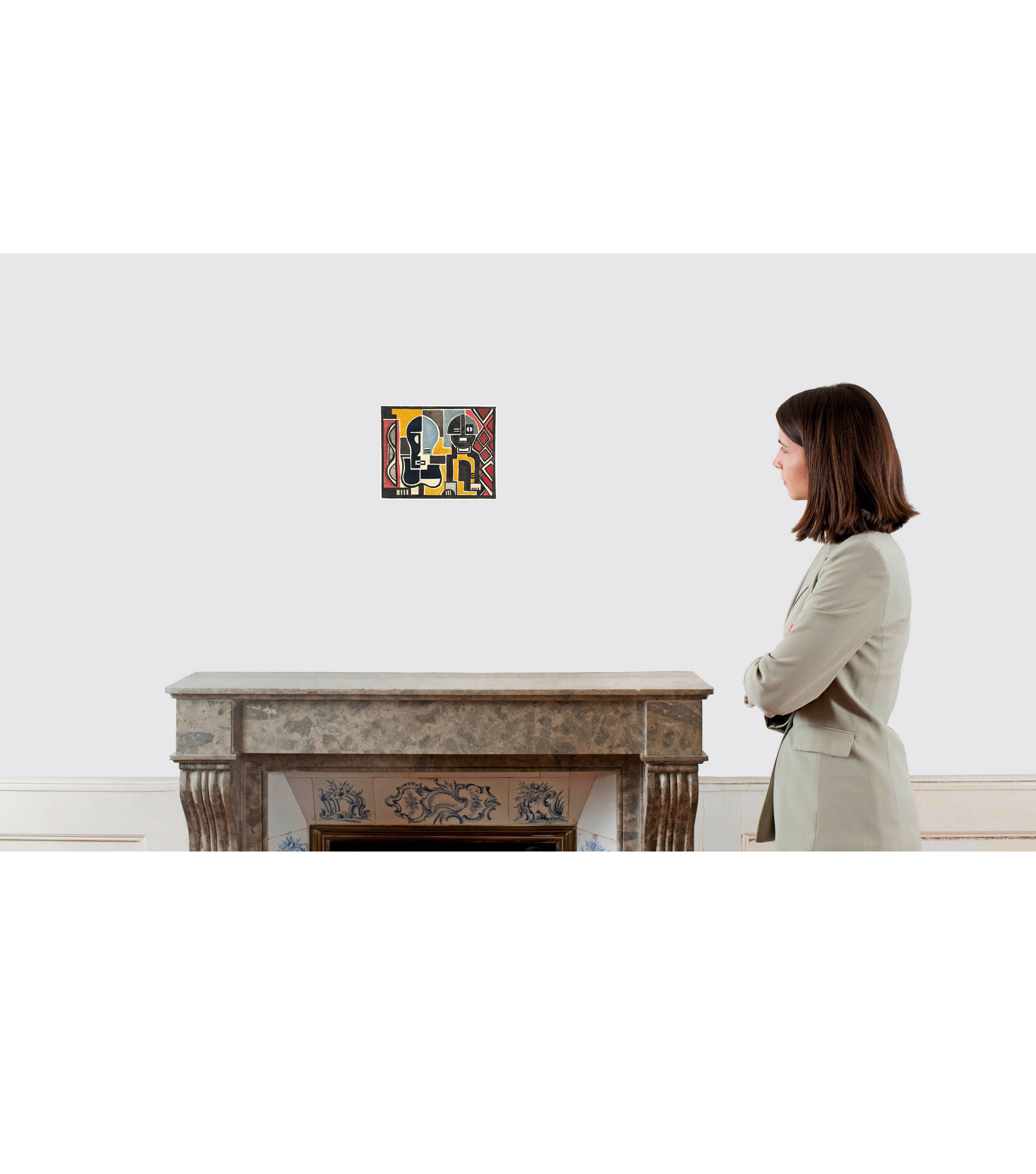
23.8x29.5 cm
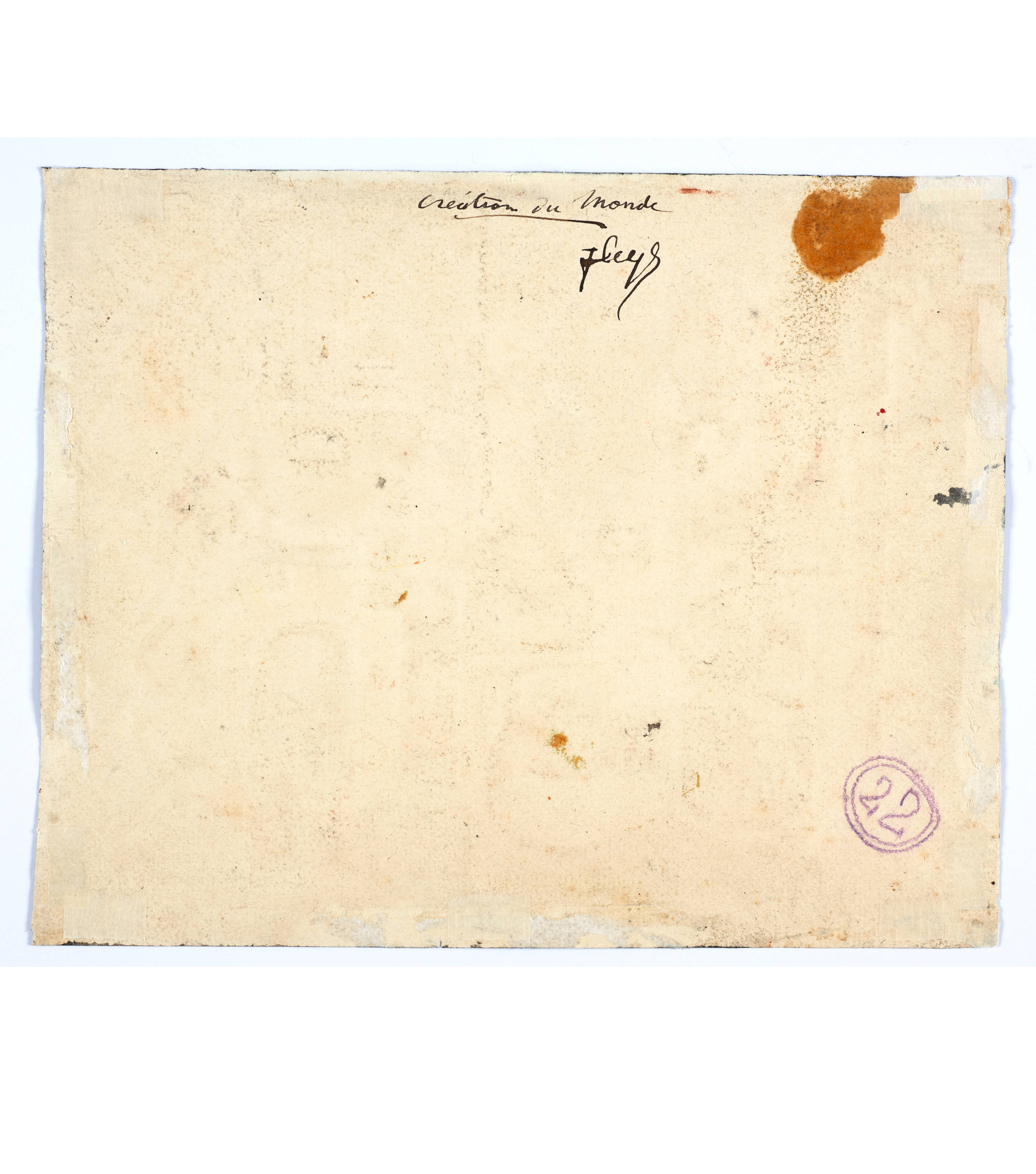
Verso signed in ink by the artist "F Léger" and above inscribed in his own hand "Création du Monde"
Intended for the "Répertoire des œuvres sur papier de Fernand Léger", in preparation by Irus Hansma. With confirmation on photograph, no. 680022020, dated 7 February 2020 in copy.
Collection Emile Othon Friesz, Paris
Private collection France
Private collection Switzerland, auctioned at
Auction Galerie Kornfeld, Bern, 18 September 2020, lot 109, there acquired by
Private collection USA
With slight signs of age in the margins. Verso with traces of mounting and studio traces. Fresh in colour and in fine condition
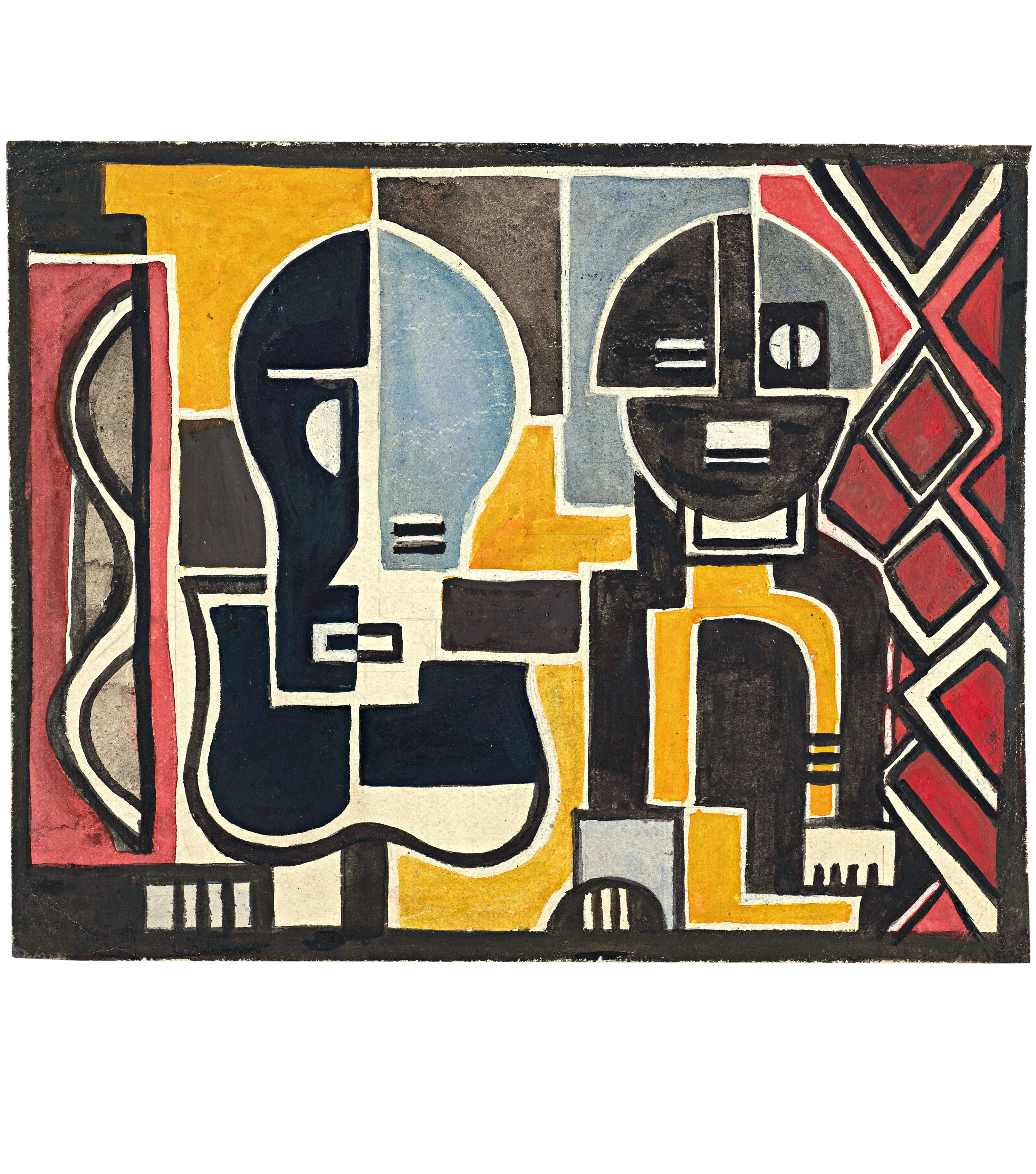
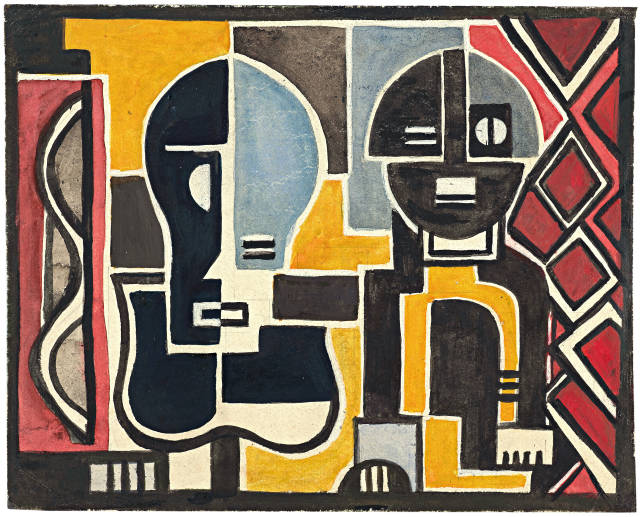
This exceptional gouache was created as a design study for the stage curtain of the ballet "La Création du monde", a key work of the Parisian avant-garde of the early 1920s. Commissioned by the "Ballets suédois", the work combined a libretto by Blaise Cendrars, music by Darius Milhaud, and stage design and costumes by Fernand Léger. The premiere took place on 25 October 1923 at the Théâtre des Champs-Élysées in Paris and is considered one of the most significant syntheses of painting, music, and dance in modernism.
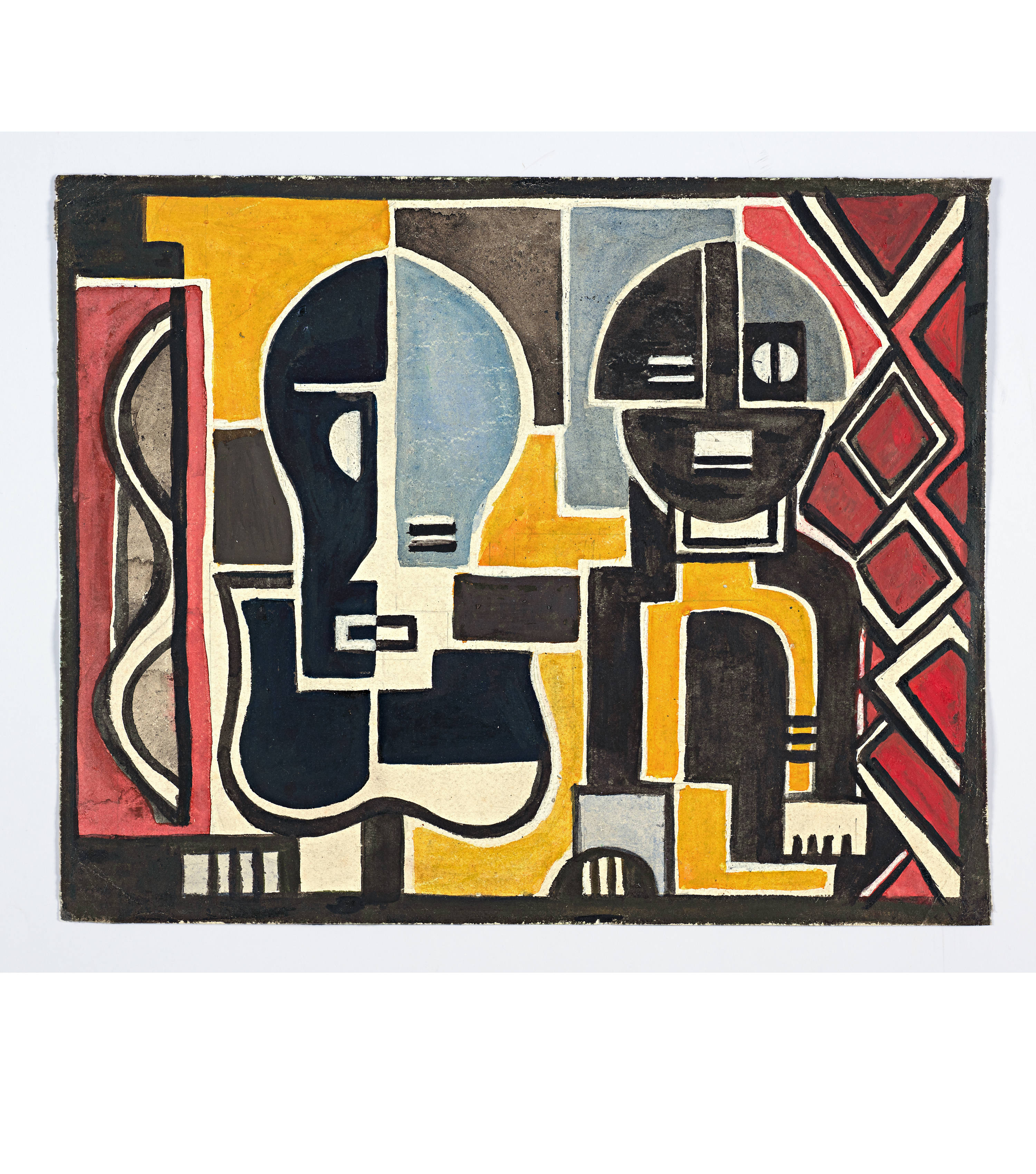
The composition unites two monumentalized figures composed of strongly simplified geometric forms. Circles, rectangles, and sweeping contours interlock like mechanical building blocks, giving the figures an appearance that is both archaic and modern. The clearly structured black contours enclose luminous areas of yellow, red, blue, white, and grey, creating a powerful rhythm that anticipates the dynamism of the stage design even in small format. On the right, an ornamental diamond pattern enlivens the pictorial space and refers to motifs of African art consciously adopted by Léger, which played a central creative role in the context of the so-called Ballet nègre.
The present work exemplifies Léger’s turn towards a monumental, clearly structured pictorial language in which Cubist principles of form are combined with the aesthetics of the machine age. At the same time, it illustrates his aim to dissolve the boundaries between fine art and applied stage art.
1922/1923
Gouache auf festem Velin
23,8x29,5 cm
Rückseitig vom Künstler in Tinte signiert "F Léger" und darüber eigenhändig betitelt "Création du Monde"
Vorgesehen für das "Répertoire des œuvres sur papier de Fernand Léger", in Vorbereitung durch Irus Hansma. Bestätigung auf Foto,
Slg. Emile Othon Friesz, Paris
Privatsammlung Frankreich
Privatsammlung Schweiz, versteigert bei
Auktion Galerie Kornfeld, Bern, 18. September 2020, Los 109, dort erworben von
Privatsammlung USA
Mit leichten Altersspuren in den Rändern. Rückseitig mit Montierungsspuren und Atelierspuren. Farbfrisch und in sehr schöner Erhaltung
Diese aussergewöhnliche Gouache entstand als Entwurfsstudie für den Bühnenvorhang des Balletts "La Création du monde", eines Schlüsselwerks der Pariser Avantgarde der frühen 1920er-Jahre. Das von den "Ballets suédois" in Auftrag gegebene Werk vereinte ein Libretto von Blaise Cendrars, die Musik von Darius Milhaud sowie die Bühnenausstattung und die Kostüme von Fernand Léger. Die Uraufführung fand am 25. Oktober 1923 im Théâtre des Champs-Élysées in Paris statt und zählt zu den bedeutendsten Synthesen von Malerei, Musik und Tanz der Moderne.
Die Komposition vereint zwei monumentalisierte Figuren, die sich aus stark vereinfachten geometrischen Formen zusammensetzen. Kreise, Rechtecke und geschwungene Konturen greifen wie mechanische Bausteine ineinander und verleihen den Figuren eine zugleich archaische und moderne Erscheinung. Die klar gegliederten schwarzen Konturen fassen leuchtende Flächen in Gelb, Rot, Blau, Weiss und Grau zusammen und erzeugen einen kraftvollen Rhythmus, der die Dynamik des Bühnenbildes bereits im kleinen Format vorwegnimmt. Rechts belebt ein ornamentales Rautenmuster den Bildraum und verweist auf die von Léger bewusst aufgegriffenen Motive afrikanischer Kunst, die im Kontext des sogenannten Ballet nègre eine zentrale gestalterische Rolle spielten.
Die vorliegende Arbeit dokumentiert exemplarisch Légers Hinwendung zu einer monumentalen, klar strukturierten Bildsprache, in der sich kubistische Formprinzipien mit der Ästhetik des Maschinenzeitalters verbinden. Gleichzeitig verdeutlicht sie sein Bestreben, die Grenzen zwischen freier Kunst und angewandter Bühnenkunst aufzuheben.
| Suisse | CHF | 150 |
| Europe | CHF | 250 |
| USA | CHF | 320 |
| Outre-mer | CHF | 325 |