- FR


 S’inscrire
-
- Ventes Classiques
- Ventes passées
- Plus
- Acheter
- Vendre
- Plus
- Galerie
- Commerce d'art
- Maison d'Édition
- Kornfeld aujourd’hui
- L'histoire de la Maison
- Informations









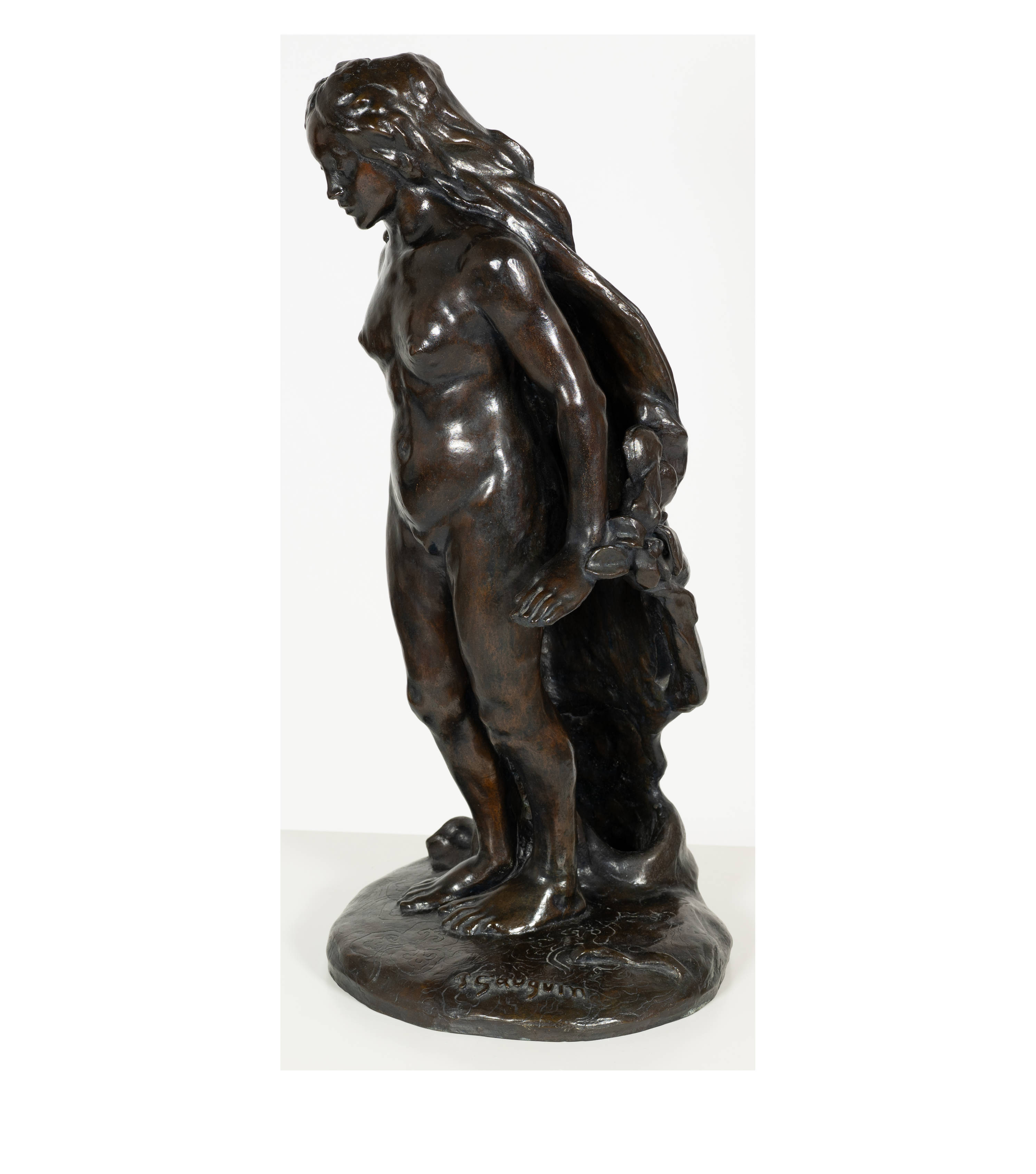
Paris 1848 - 1903 Hiva-Hoa (Marquesas)


1890/1891, Cast posthumously
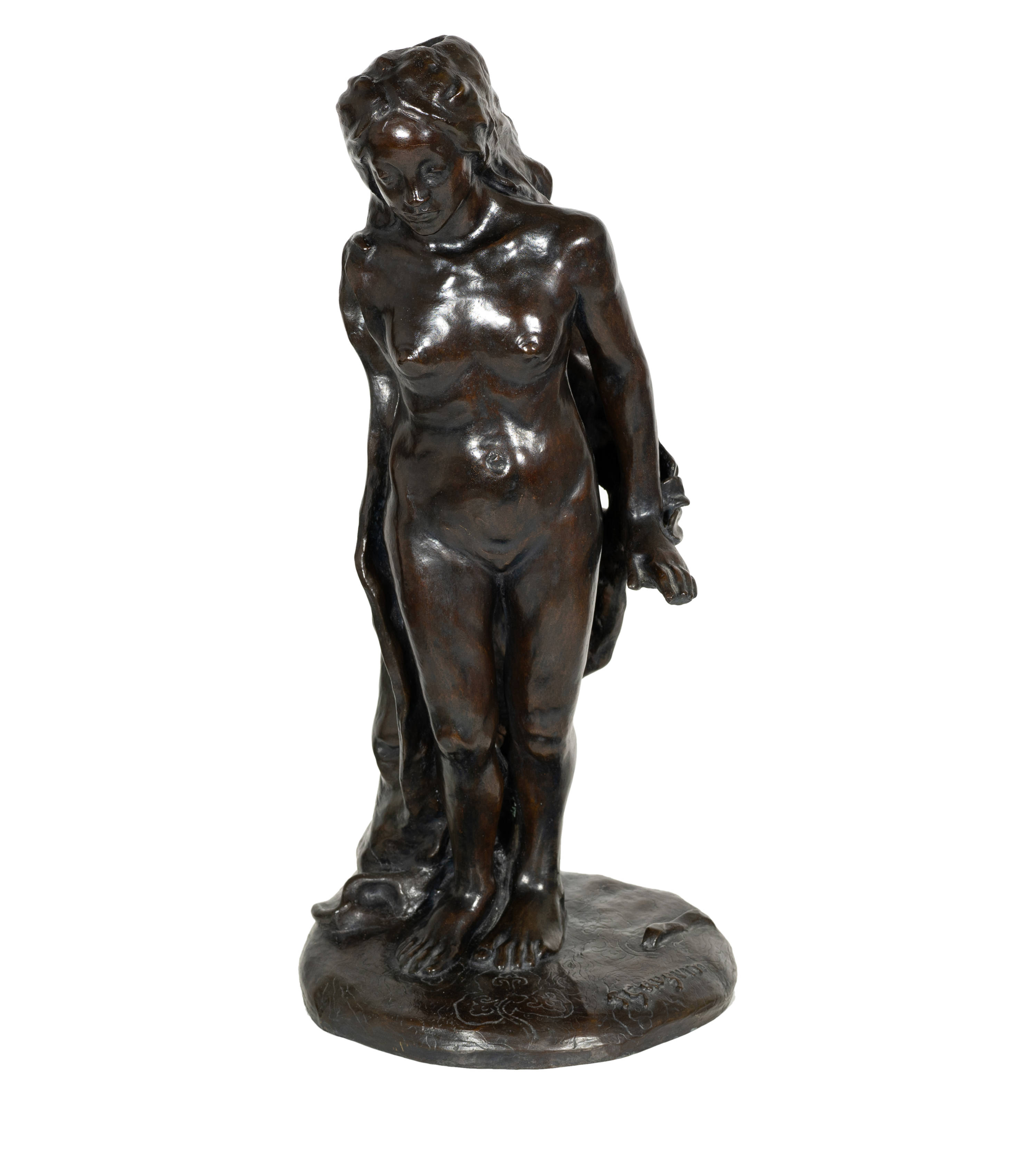
Bronze
59.5 cm, height
On the plinth with the raised inscription "P Gauguin", stamped numbered "7/10" and with the foundry mark "C. Valsuani Cire Perdue"
Galerie Beyeler, Basel, acquired there on 5 November 1987 by
Private collection Switzerland
John Rewald, Post-Impressionism, from Van Gogh to Gauguin, New York 1956 (the ceramic illustrated p. 442)
Mereta Bodelsen, Gauguin's Ceramics, London 1964, (the ceramic illustrated p. 139)
Christopher Gray, Sculpture and Ceramics of Paul Gauguin, Baltimore 1963, no. 92 (Ceramic)
Impeccable condition
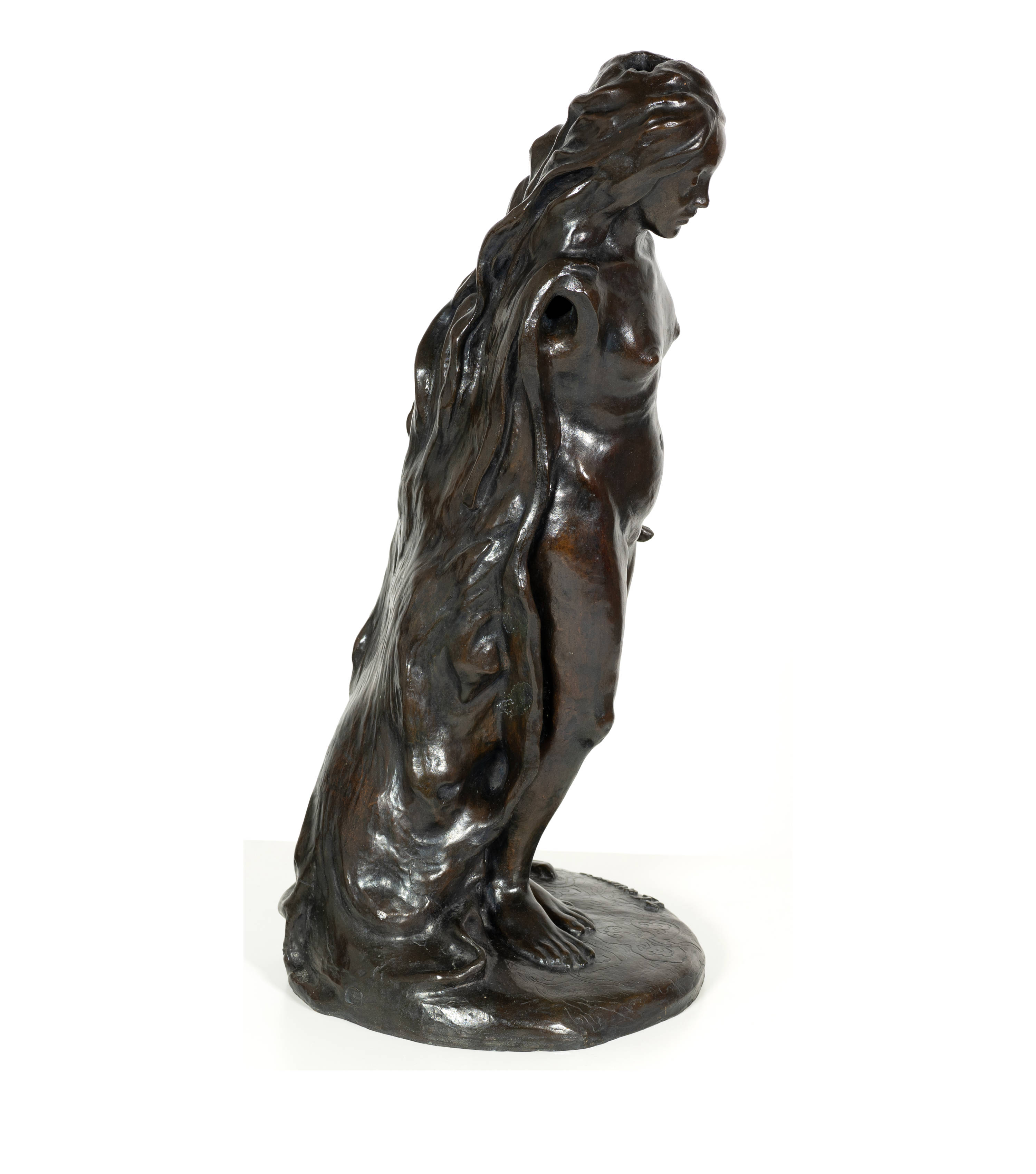
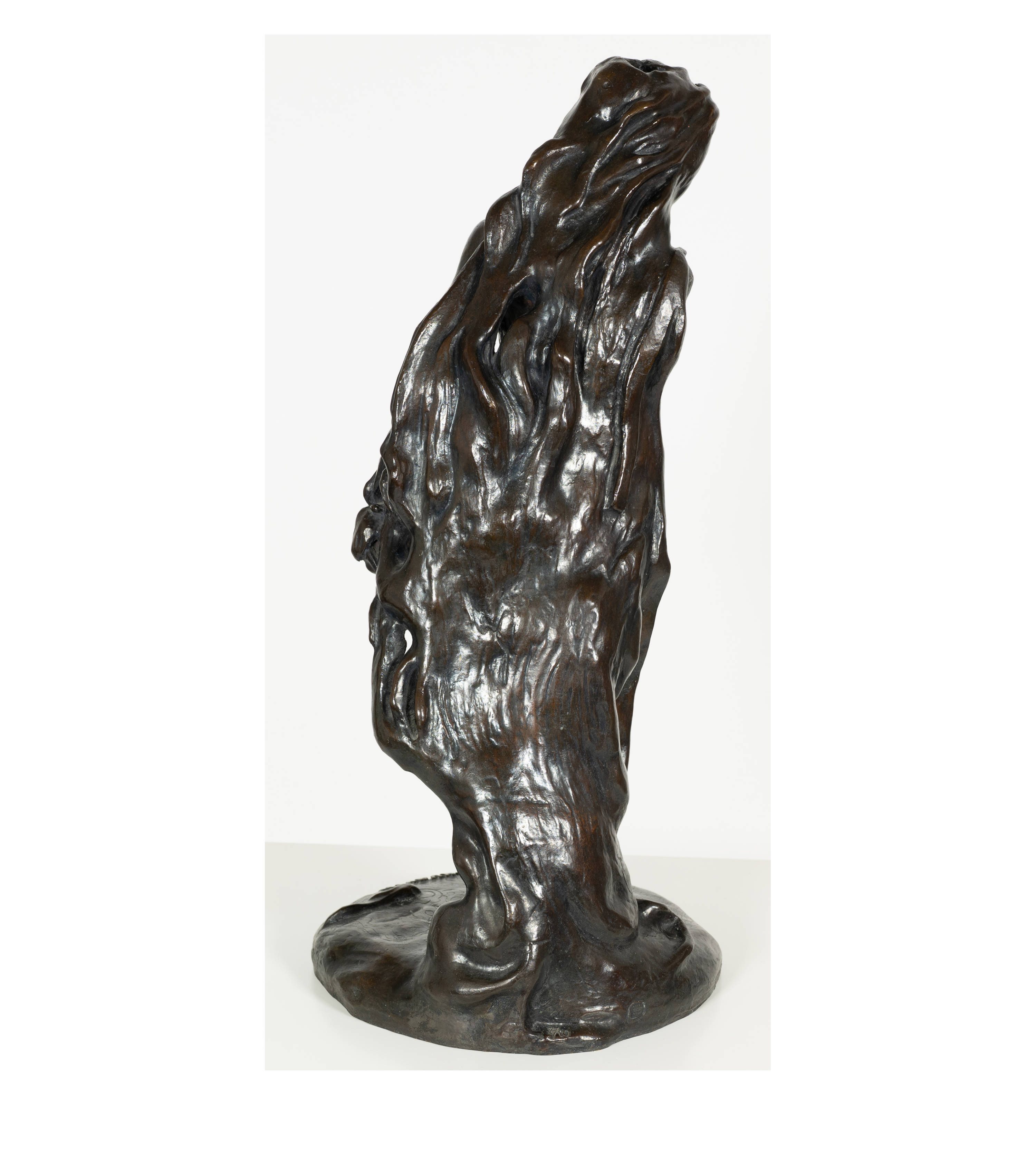
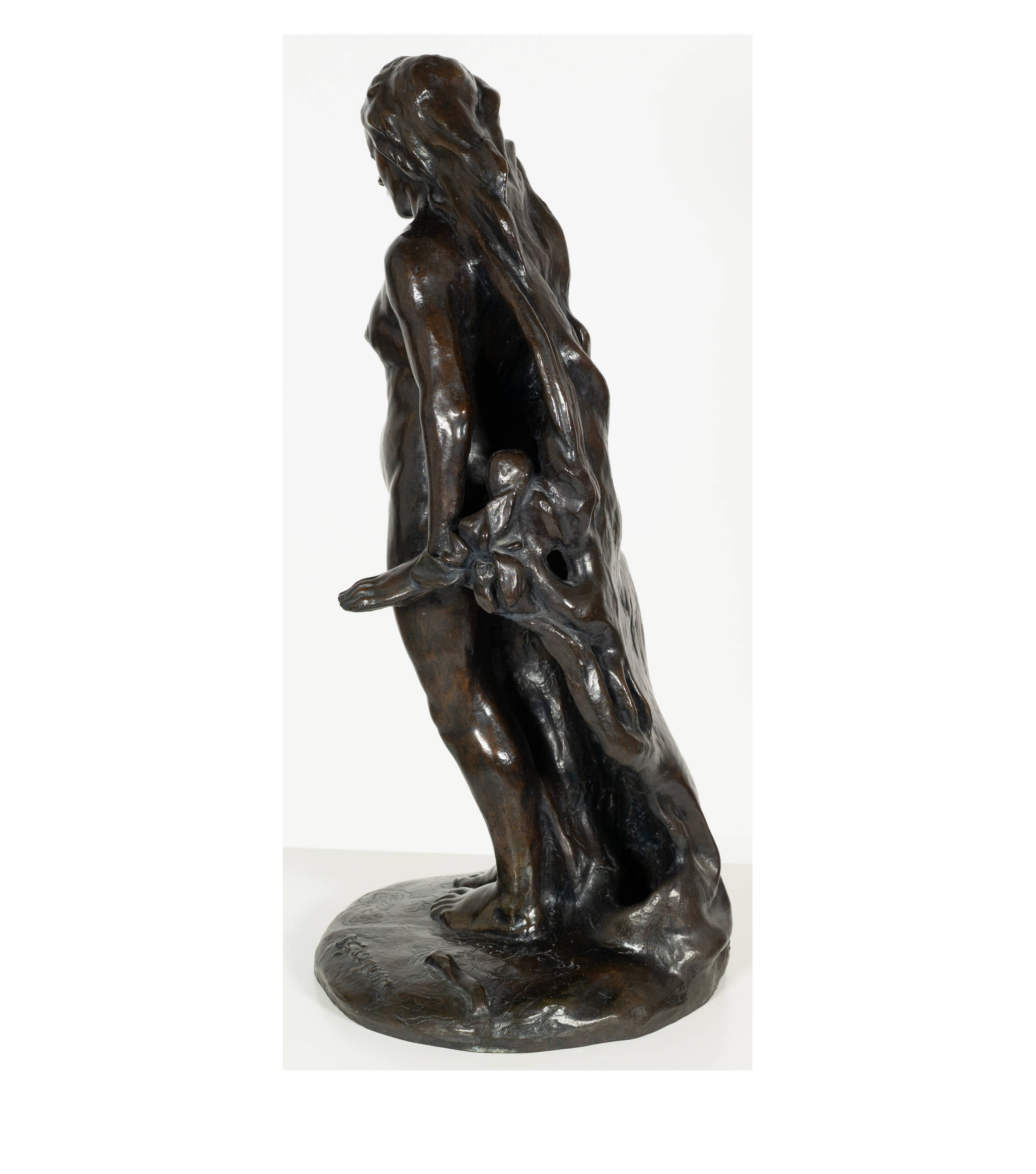
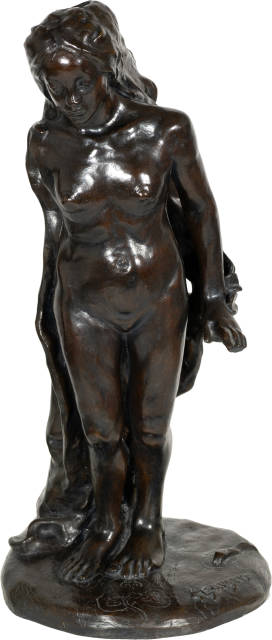
The bronze is one of the rare sculptural works by Paul Gauguin that, beyond his painterly oeuvre, offer a fascinating insight into his artistic thinking. Originally created as a ceramic, the figure survives today primarily through the posthumous bronze casts.
The standing, unclothed woman with a slightly forward-leaning upper body and schematically indicated anatomy appears archaic and otherworldly. Gauguin dispenses with naturalistic details in favor of a block-like formal language reminiscent of Oceanic and pre-Columbian sculpture.
The original ceramic was sold by Ernst Beyeler to the National Gallery in Washington DC in October 1970. The exact time when the casts were made is not known. However, since another cast has been in a private collection since 1971, it must have happened quite soon after the acquisition.
1890/1891, Guss posthum
Bronze
59,5 cm, Höhe
Auf der Plinthe mit dem gehobenen Schriftzug "P Gauguin", gestanzt nummeriert "7/10" und mit der Giessermarke "C. Valsuani Cire Perdue"
Galerie Beyeler, Basel, dort am 5. November 1987 erworben von
Privatbesitz Schweiz
John Rewald, Post-Impressionism, from Van Gogh to Gauguin, New York 1956 (die Keramik abgebildet S. 442)
Mereta Bodelsen, Gauguin's Ceramics, London 1964, (die Keramik abgebildet S. 139)
Christopher Gray, Sculpture and Ceramics of Paul Gauguin, Baltimore 1963,
Tadellose Erhaltung
Die Bronze gehört zu den raren plastischen Werken Paul Gauguins, die jenseits seines malerischen Œuvres einen faszinierenden Einblick in sein künstlerisches Denken eröffnen. Ursprünglich als Keramik geschaffen, überlebt die Figur heute vor allem durch die posthumen Bronzegüsse.
Die stehende, unbekleidete Frau mit leicht nach vorn geneigtem Oberkörper und schematisch angedeuteter Anatomie wirkt archaisch und entrückt. Gauguin verzichtet auf naturalistische Details zugunsten einer blockhaften Formensprache, die an ozeanische und präkolumbianische Skulptur erinnert.
Die Originalkeramik wurde von Ernst Beyeler im Oktober 1970 an die National Gallery in Washington DC verkauft. Der genaue Zeitpunkt, an dem die Abgüsse erstellt worden sind, ist nicht bekannt. Da sich jedoch bereits seit 1971 ein weiterer Abguss in einer Privatsammlung befindet, muss es ziemlich bald nach dem Ankauf geschehen sein.
| Suisse | CHF | Offre individuelle |
| Europe | CHF | Offre individuelle |
| USA | CHF | Offre individuelle |
| Outre-mer | CHF | Offre individuelle |