- EN


 Log in
-
- Live Auctions
- Past auctions
- More
- Kornfeld today
- The Story of Kornfeld
- Information


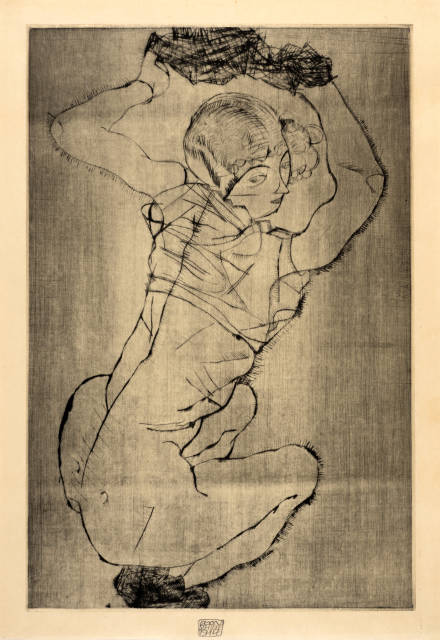








Tulln 1890 - 1918 Wien



Before 16 June 1914
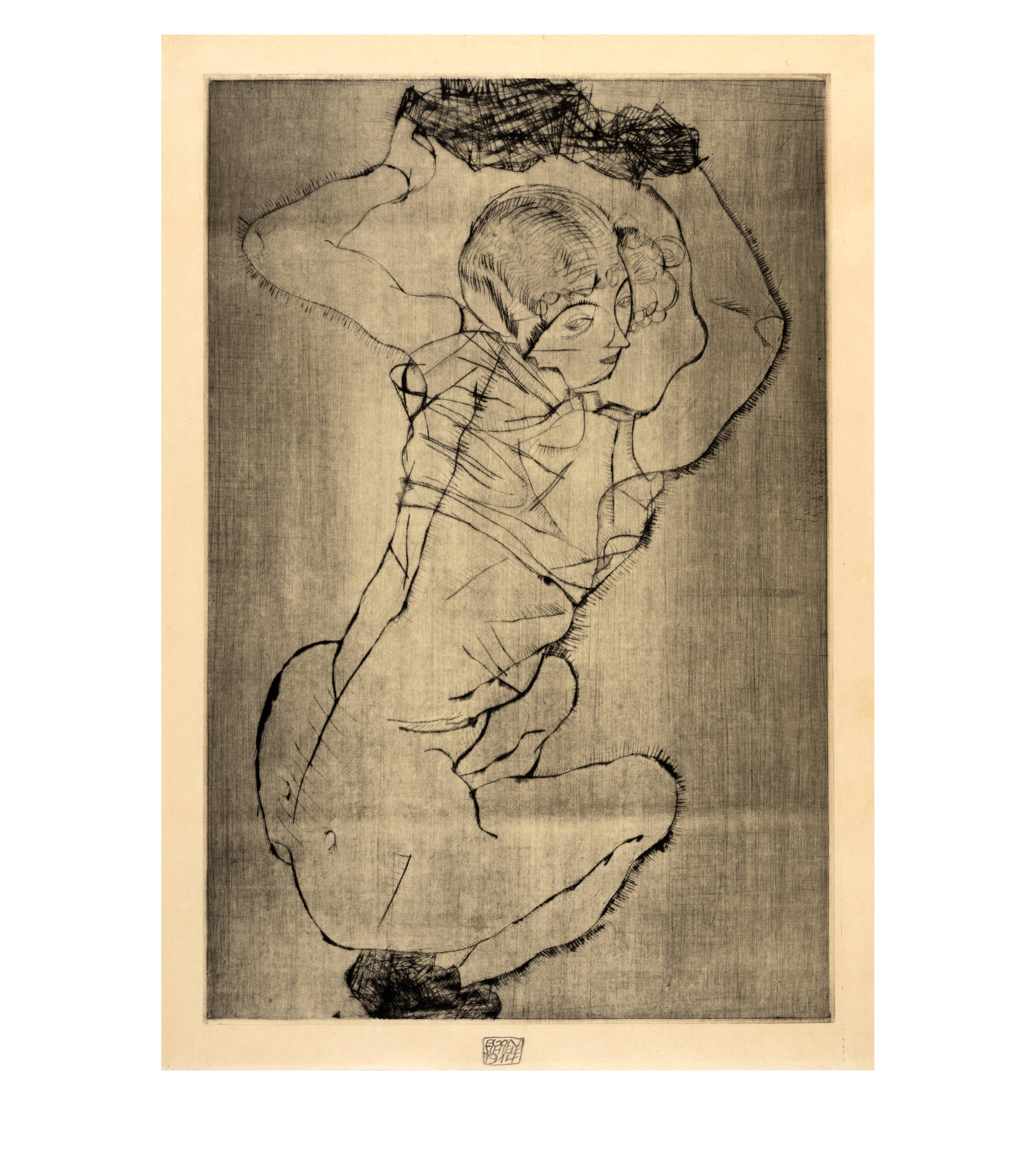
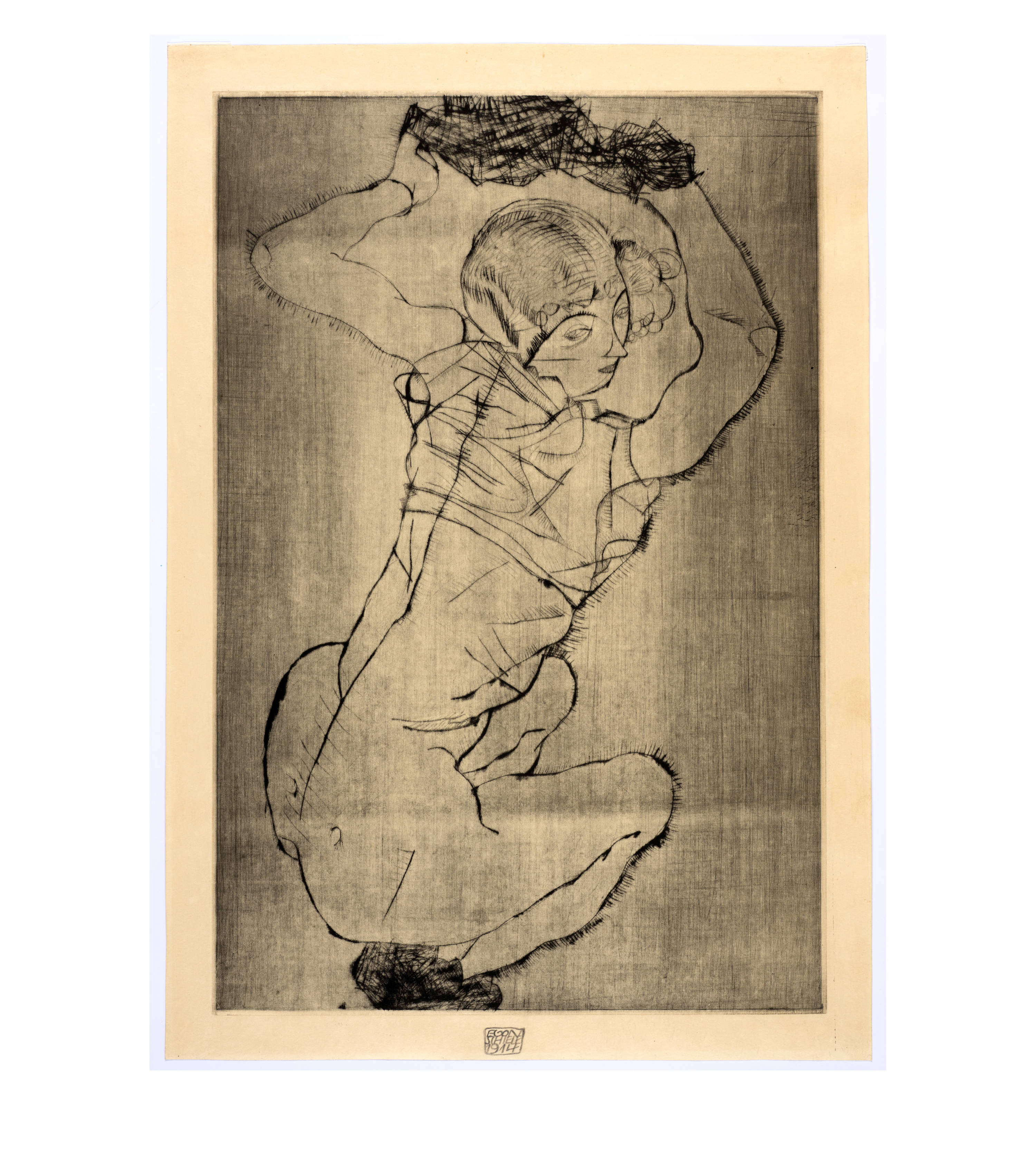
Drypoint on strong Japan paper
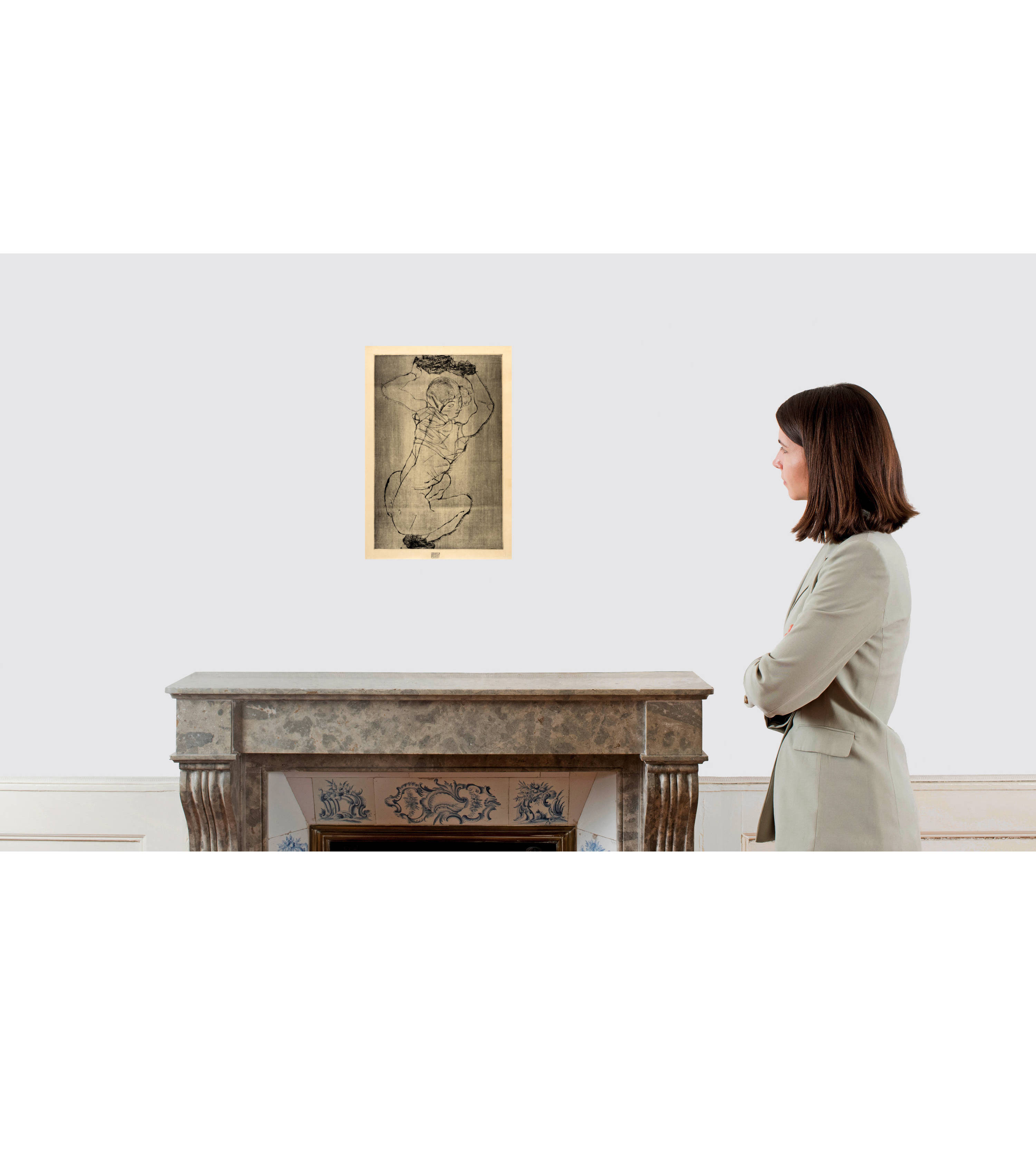
47.7x31.8 cm, plate mark; 52.6x36.5 cm, sheet size
Lower centre signed and dated by the artist in pencil "EGON / SCHIELE / 1914" in a rectangle
Kallir 6/a (of C)
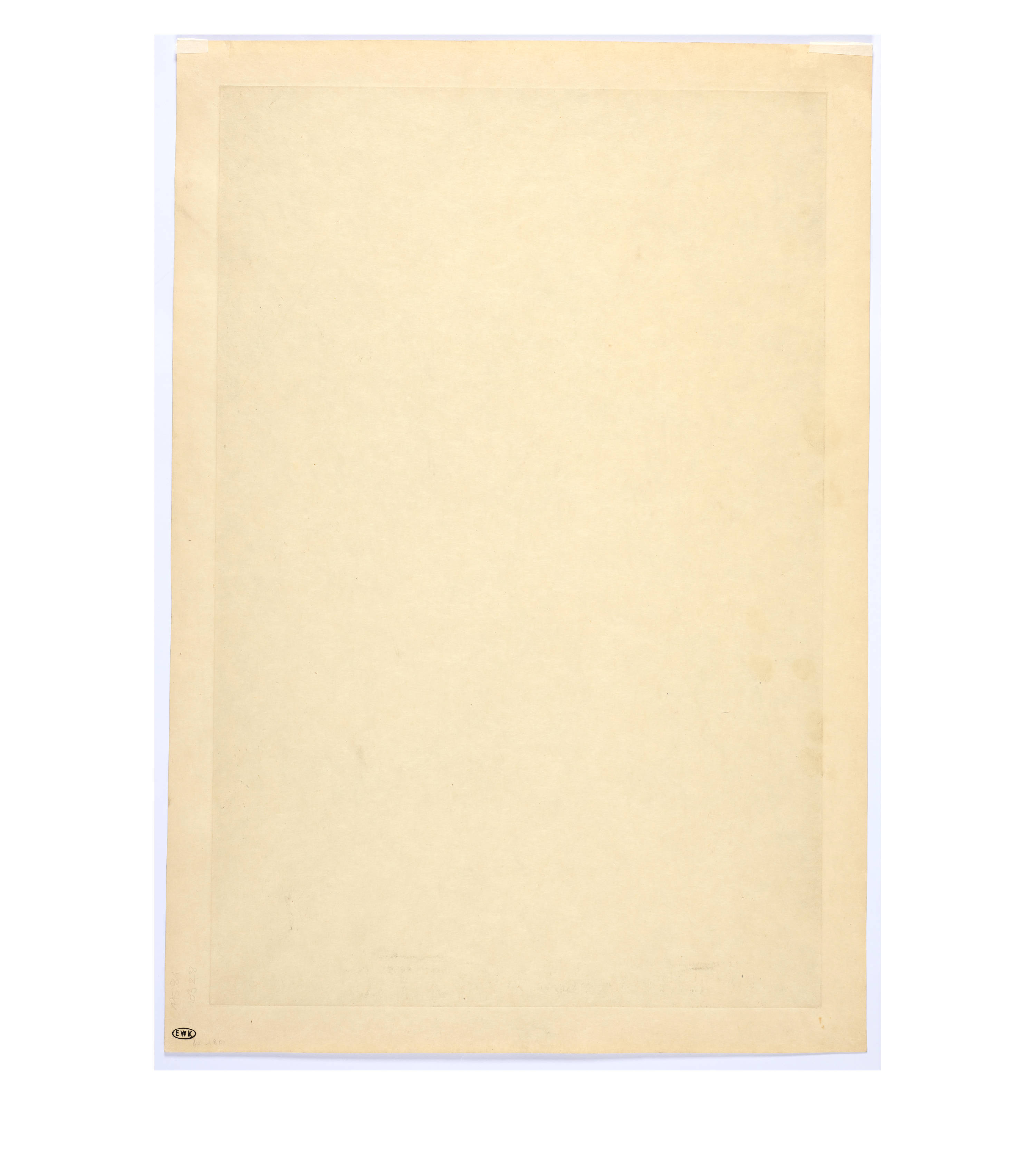
The Eberhard W. Kornfeld Collection, Bern, with the collector's stamp on the reverse, Lugt 913b
Verso with traces of old mounting. Impeccable condition
The "Kauernde" was created in 1914, the year in which Schiele—at the suggestion of his patron and critic Arthur Roessler—took up the technique of etching. Roessler provided him with the plates. Schiele worked on them in the same year, but none of the sheets were published during his lifetime. Schiele's small graphic oeuvre of a total of seventeen prints demonstrates his skill in this field as well. The "Kauernde" is considered his largest and most important etching, compositionally related to his mother depictions of those years, which play a central role in his work as symbols of artistic creation.
Rare impression with strong plate tone before the plate was steel-faced. Kallir mentions only three copies and speaks of very few additional impressions.
Vor dem 16. Juni 1914
Kaltnadel auf festem Japan
47,7x31,8 cm, Plattenkante; 52,6x36,5 cm, Blattgrösse
Unten in der Mitte vom Künstler in Bleistift signiert und datiert "EGON / SCHIELE / 1914" im Viereck
Kallir 6/a (v. c)
Slg. Eberhard W. Kornfeld, Bern, rückseitig mit dem Sammlerstempel, Lugt 913b
Rückseitig mit Montierungsresten. Tadellos in der Erhaltung
Die "Kauernde" entstand 1914, in dem Jahr, in dem Schiele - auf Anregung seines Förderers und Kritikers Arthur Roessler - die Technik der Radierung aufgriff. Roessler stellte ihm die Platten zur Verfügung. Schiele bearbeitete sie im selben Jahr, doch wurde keines der Blätter zu seinen Lebzeiten veröffentlicht. Das anzahlmässig kleine grafische Œuvre von insgesamt siebzehn Druckgrafiken weist Schiele als versierten Könner auch auf diesem Gebiet aus. Die "Kauernde" gilt dabei als seine grösste und bedeutendste Radierung, kompositorisch verwandt mit seinen Mutterdarstellungen jener Jahre, die im Werk als Sinnbilder künstlerischer Schöpfung eine zentrale Rolle einnehmen.
Seltener Abzug mit starkem Plattenton vor der Verstählung der Platte. Kallir nennt lediglich drei Exemplare und spricht von sehr wenigen zusätzlichen Abzügen.
| Switzerland | CHF | Individual offer |
| Europe | CHF | Individual offer |
| USA | CHF | Individual offer |
| Overseas | CHF | Individual offer |