- EN


 Log in
-
- Live Auctions
- Past auctions
- More
- Kornfeld today
- The Story of Kornfeld
- Information










Pistoia 1901 - 1980 Viareggio


1947/1948
Gouache and Indian ink on drawing paper, laid down on cardboard
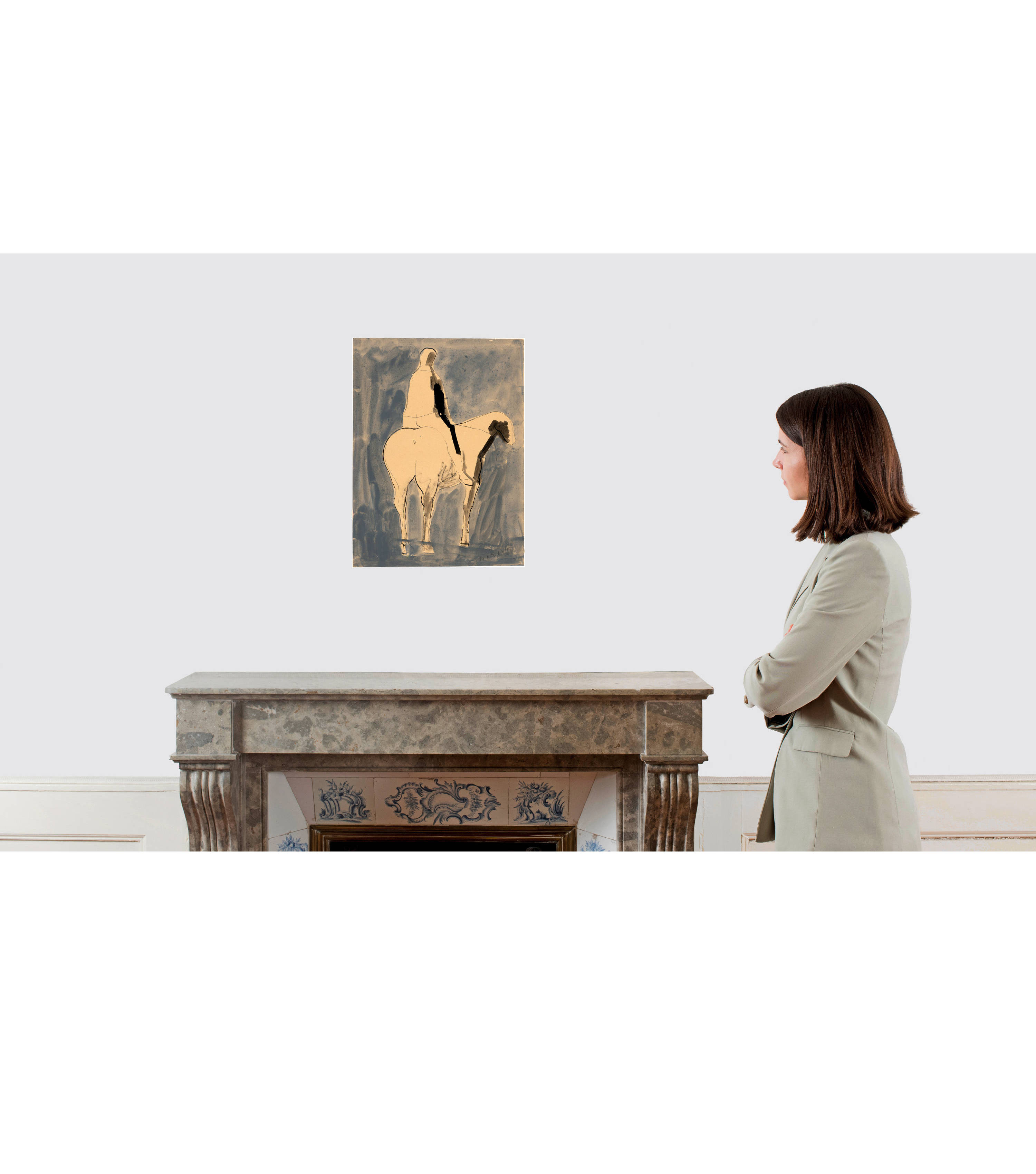
34.7x26.1 cm, sheet size; 56x40.5 cm, backing cardboard
Lower right signed by the artist in pencil "Marino"
Artist's studio, acquired there in 1949 by
The Museum of Modern Art, New York
New York 1949, The Museum of Modern Art, Twentieth-Century Italian Art
New York 1951, The Century Club, Modern Plastic Art
New York 1951/1955, The Museum of Modern Art, Forty-Five Drawings from the Collection of The Museum of Modern Art
San Francisco 1956, De Young Memorial Museum, Festival of Italian Art
Staten Island 1958/1959, Staten Island Museum, Italian Drawings and Sculpture from the Renaissance to the Present
Nashville 1961, Tennessee Fine Arts Center, People and Places, Watercolors and Drawings from The Museum of Modern Art
Tokyo/Yamagata 1978, The National Museum of Modern Art/Yamagata Museum of Art, Marino Marini
Notre Dame/Dayton/Maryland/San José 1982/1983, Snite Art Museum, University of Notre Dame/Dayton Art Institute/University of Maryland, Art Gallery/San José Museum of Art, Sculptors' Drawings, 1900-1980
Lower left corner with a superficial scratch, minimal paint loss at the upper right margin. In mount. In very good condition
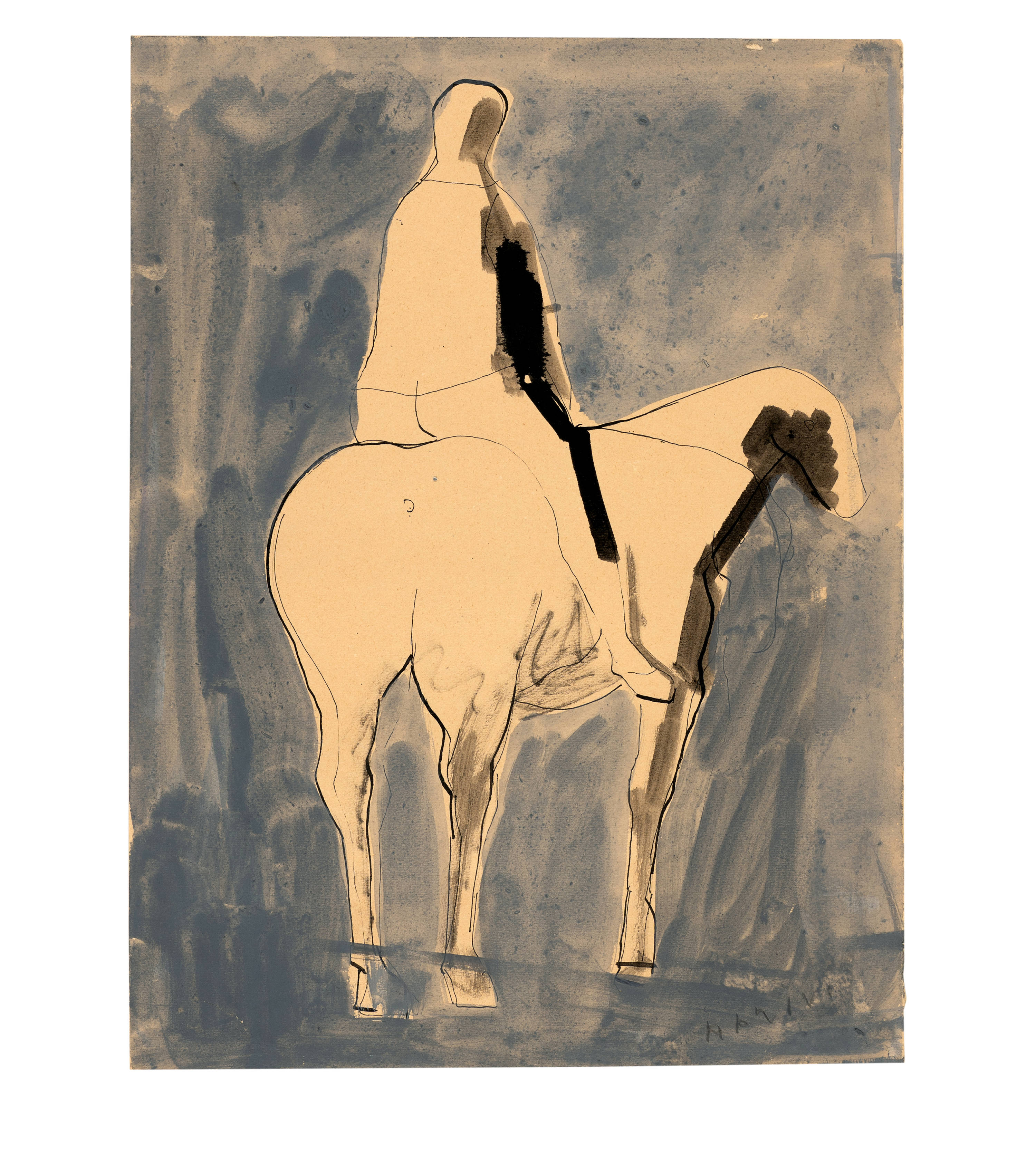
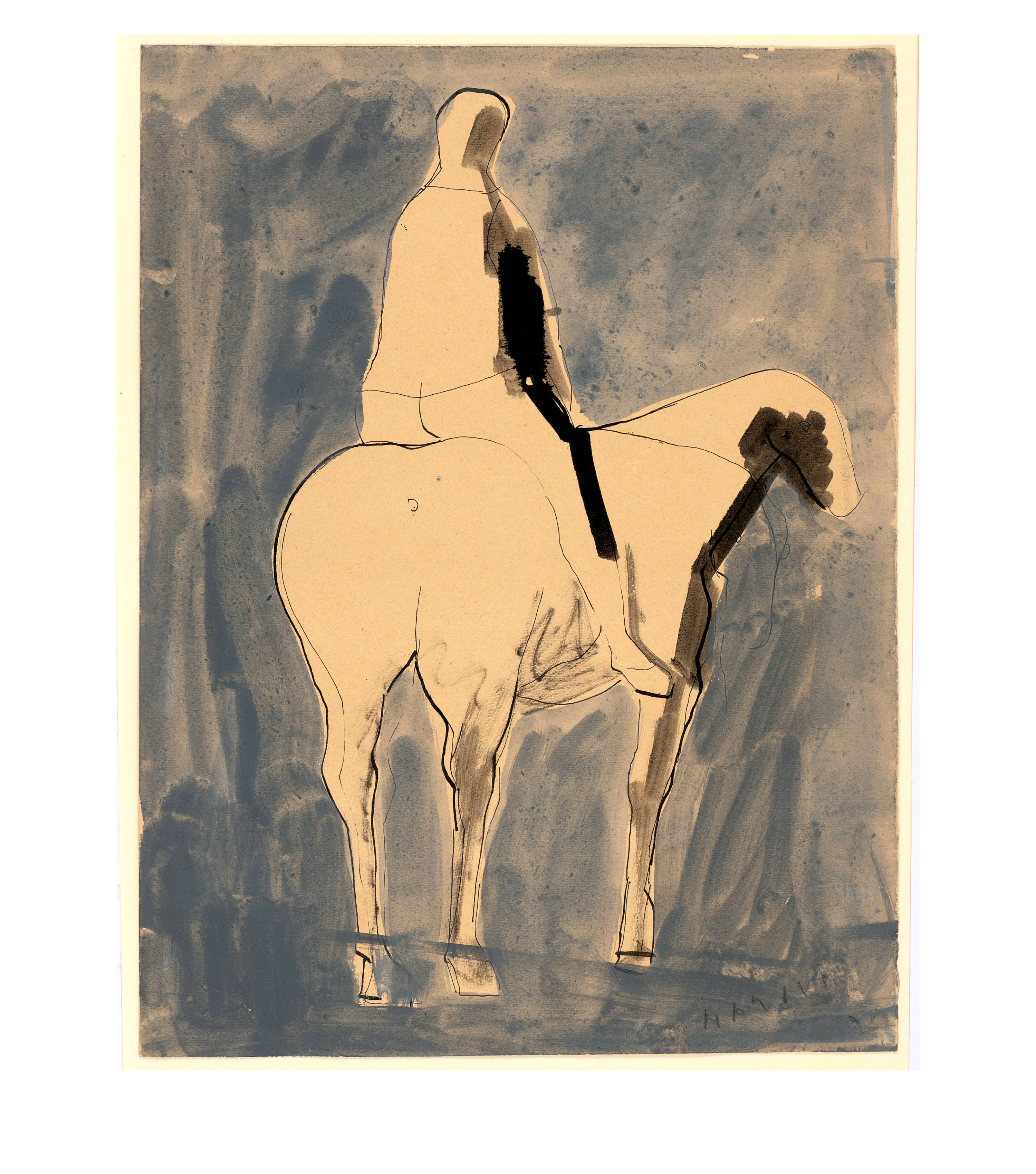
The gouaches by Marino Marini, like his famous sculptures, often revolve around the motif of the "Cavallo e Cavaliere" (Horse and Rider). With this central pictorial theme, the Italian artist engaged on the one hand with the tradition of the classical equestrian monument, and on the other hand used it to reflect on existential questions. His depictions of horse and rider therefore go far beyond the mere representation of an animal motif. They address the relationship between humans and nature as well as the existential upheavals of the 20th century. After the Second World War, Marini reinterpreted the traditional symbol of power and control. The present rear view of a rider on his horse conveys a sense of anonymity and loneliness, while also pointing to the ambivalence of the motif. On the one hand, it stands for the taming of the wild animal by humans; on the other hand, it reveals the fragility and uncertainty of this supposed mastery.
Property of The Museum of Modern Art, New York, Sold to Benefit the Acquisitions Program.
The present sheet comes from the holdings of the Museum of Modern Art, New York, and is being sold to benefit the museum’s acquisitions program.
1947/1948
Gouache und Tusche auf Zeichenpapier, auf Karton aufgezogen
34,7x26,1 cm, Blattgrösse; 56x40,5 cm, Unterlagekarton
Unten rechts vom Künstler in Bleistift signiert "Marino"
Atelier des Künstlers, dort 1949 erworben von
The Museum of Modern Art, New York
New York 1949, The Museum of Modern Art, Twentieth-Century Italian Art
New York 1951, The Century Club, Modern Plastic Art
New York 1951/1955, The Museum of Modern Art, Forty-Five Drawings from the Collection of The Museum of Modern Art
San Francisco 1956, De Young Memorial Museum, Festival of Italian Art
Staten Island 1958/1959, Staten Island Museum, Italian Drawings and Sculpture from the Renaissance to the Present
Nashville 1961, Tennesse Fine Arts Center, People and Places, Watercolors and Drawings from The Museum of Modern Art
Tokyo/Yamagata 1978, The National Museum of Modern Art/Yamagata Museum of Art, Marino Marini
Notre Dame/Dayton/Maryland/San José 1982/1983, Snite Art Museum, University of Notre Dame/Dayton Art Institute/University of Maryland, Art Gallery/San José Museum of Art, Sculptors' Drawings, 1900-1980
Untere linke Ecke mit oberflächlichem Kratzer, am oberen rechten Rand minimer Farbverlust. In Passepartout. In sehr guter Erhaltung
Die Gouachen von Marino Marini kreisen, ebenso wie seine berühmten Skulpturen, häufig um das Motiv des "Cavallo e Cavaliere" (Pferd und Reiter). Mit diesem zentralen Bildthema setzte sich der italienische Künstler einerseits mit der Tradition des klassischen Reiterdenkmals auseinander, andererseits nutzte er es zur Reflexion existenzieller Fragen. Seine Darstellungen von Pferd und Reiter gehen daher weit über die Wiedergabe eines Tiermotivs hinaus. Sie thematisieren das Verhältnis des Menschen zur Natur ebenso wie die existenziellen Erschütterungen des 20. Jahrhunderts. Nach dem Zweiten Weltkrieg deutete Marini das traditionsreiche Symbol von Herrschaft und Kontrolle neu. Die vorliegende Rückenansicht eines Reiters auf seinem Pferd vermittelt ein Gefühl von Anonymität und Einsamkeit und verweist zugleich auf die Ambivalenz des Motivs. Einerseits steht es für die Zähmung des wilden Tieres durch den Menschen, andererseits macht es die Fragilität und Unsicherheit dieser vermeintlichen Beherrschung sichtbar.
Property of The Museum of Modern Art, New York, Sold to Benefit the Acquisitions Program.
Das vorliegende Blatt stammt aus dem Eigenbestand des Museum of Modern Art, New York, und wird zugunsten des Ankaufsprogramms des Museums veräussert.
| Switzerland | CHF | 150 |
| Europe | CHF | 250 |
| USA | CHF | 320 |
| Overseas | CHF | 325 |