- EN


 Log in
-
- Live Auctions
- Past auctions
- More
- Kornfeld today
- The Story of Kornfeld
- Information




1859 Paris 1891



Circa 1885
Conté crayon on laid paper, laid down on wove paper
24x30.9 cm
César Mange de Hauke, Seurat et son œuvre, Paris 1961, no. 647
Erich Franz/Bernd Growe, Georges Seurat, Dessins, Paris 1984, no. 73
Collection de Frenne, Paris
Collection van Deventer, Arnhem
Collection Sydney J. Lamon, New York
Gallery M. Knoedler & Co., New York, inv. no. WCA-1942, photo no. 6058
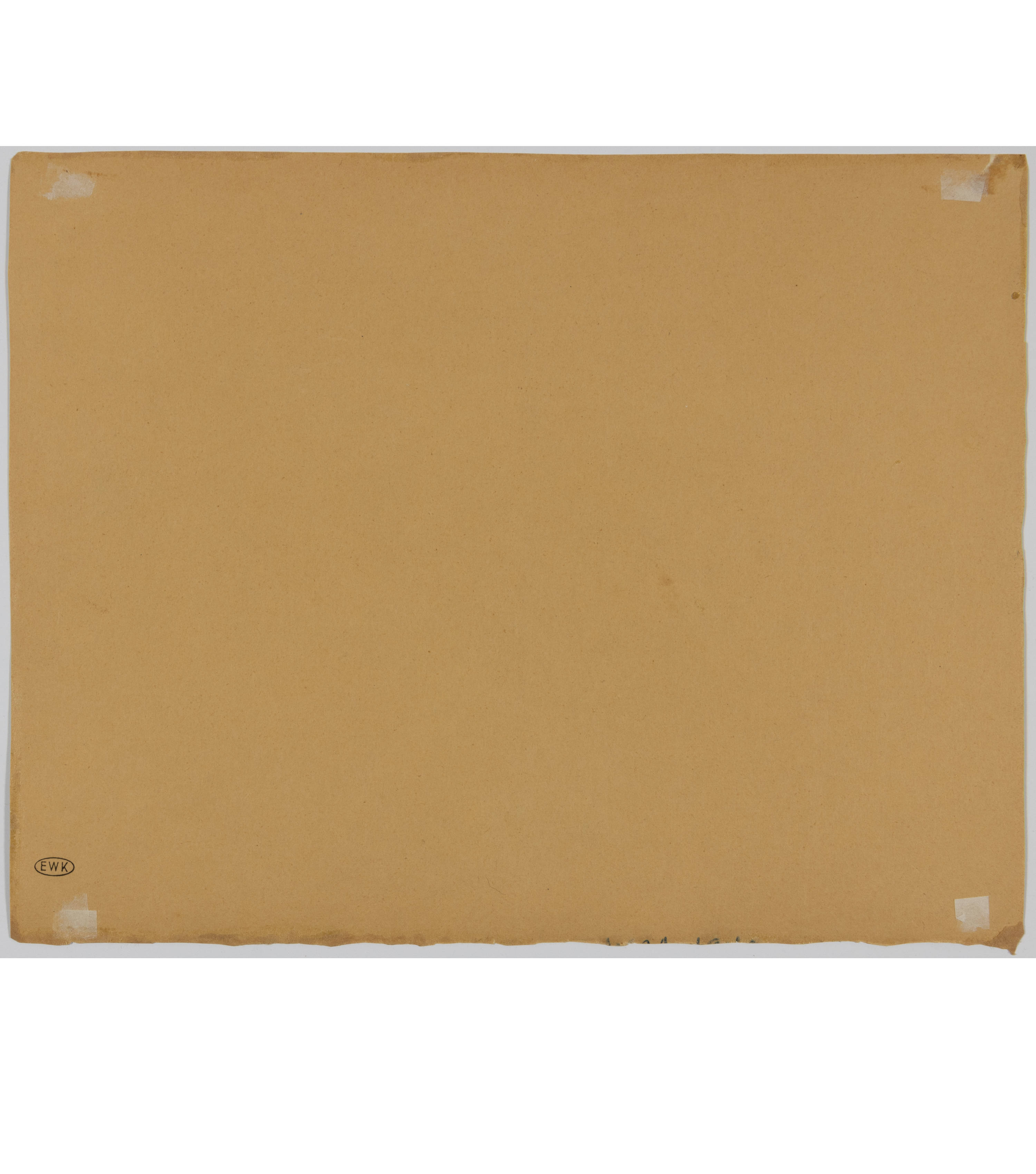
The Eberhard W. Kornfeld Collection, Bern, with the collector's stamp on the back, Lugt 913b
Umbro Apollonio, Disegni di Seurat, Venice 1945, fig. Plate XIX
Robert L. Herbert, Seurat's Drawings, New York 1962, p. 129, No. 111
John Russell, Seurat, London 1965, p. 94, No. 88
Richard Thomson, Seurat, Oxford 1985, p. 134, No. 137
Herbert Wotte, Georges Seurat, Dresden 1988, fig. plate 80
Rotterdam 1934/1935, Musée Boymans, Soixante-deux tableaux et dessins anciens et modernes des collections néerlandaises, cat. no. 54
Amsterdam 1936, Galerie Huinck et Scherjon, L'art français du XIXe siècle
Rotterdam 1936/1937, Musée Boymans, Les divisionnistes de Seurat à Jan Toorop, cat. no. 47
Chicago 1958, The Art Institute, Seurat, Paintings and Drawings, cat. no. 109
Bielefeld/Baden-Baden 1983/1984, Kunsthalle/Staatliche Kunsthalle, Georges Seurat, Zeichnungen, cat. no. 73
Bern 1989, Kunstmuseum Bern, Von Goya bis Tinguely, Aquarelle und Zeichnungen aus einer Privatsammlung [The Eberhard W. Kornfeld Collection], cat. no. 24
Bern/Hamburg 1996, Kunstmuseum/Kunsthalle, Zeichnen ist Sehen, Meisterwerke von Ingres bis Cézanne aus dem Museum der bildenden Künste Budapest und aus Schweizer Sammlungen, cat. no. 100
Davos 1998/1999, Kirchner Museum, Werke aus der Sammlung Eberhard W. Kornfeld, cat. no. 13
Madrid 2003, Fundación Juan March, Espíritu de modernidad, de Goya a Giacometti, Obra sobre papel de la colección Kornfeld, cat. no. 10
Vienna 2008/2009, Albertina, Wege der Moderne, Aus der Sammlung Eberhard W. Kornfeld, cat. no. 16
Zurich/Frankfurt am Main 2009/2010, Kunsthaus/Schirn Kunsthalle, Georges Seurat, cat. no. 71
With light margins, the paper somewhat browned. Lower right with a restored small tear. In fine condition
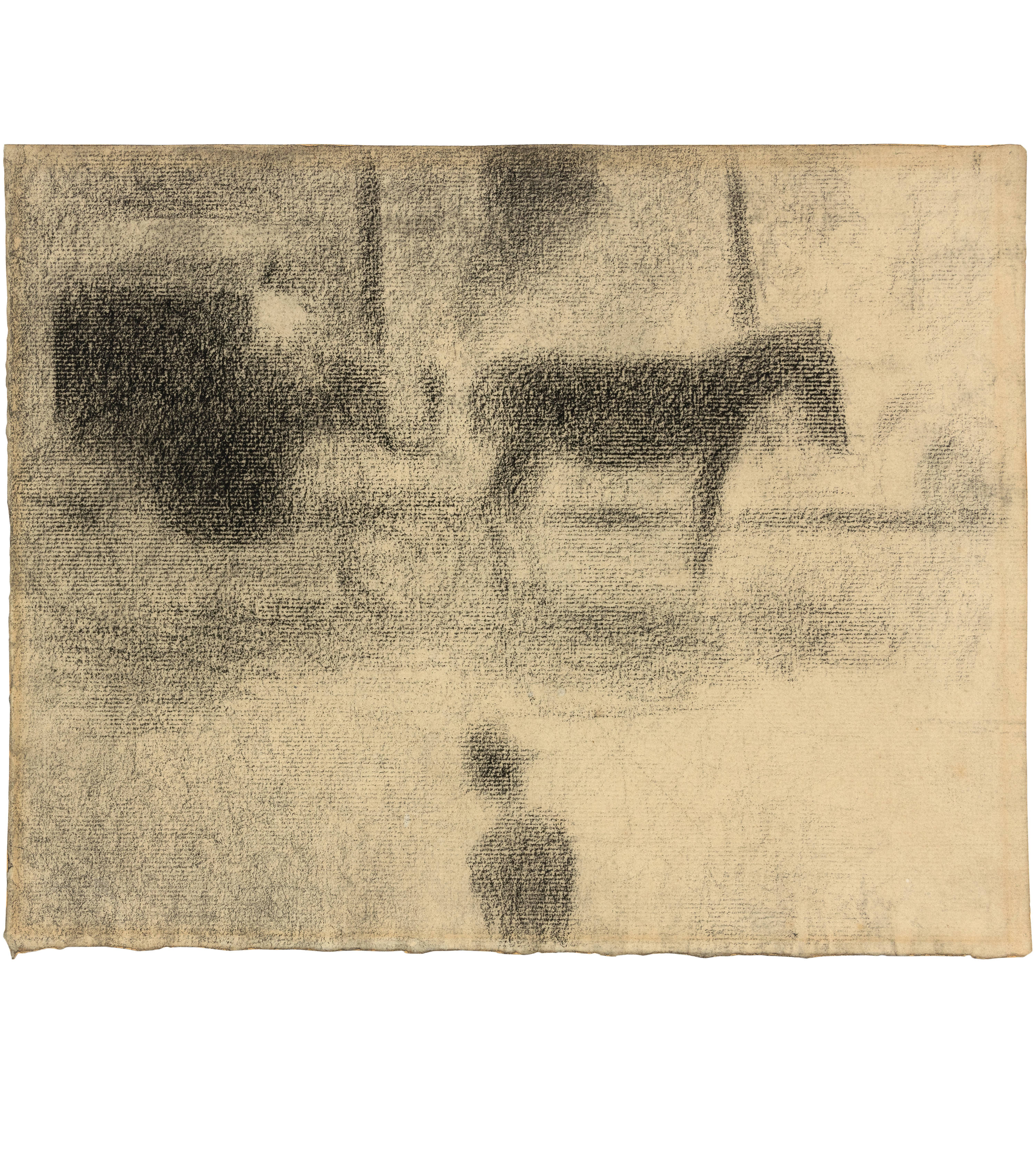
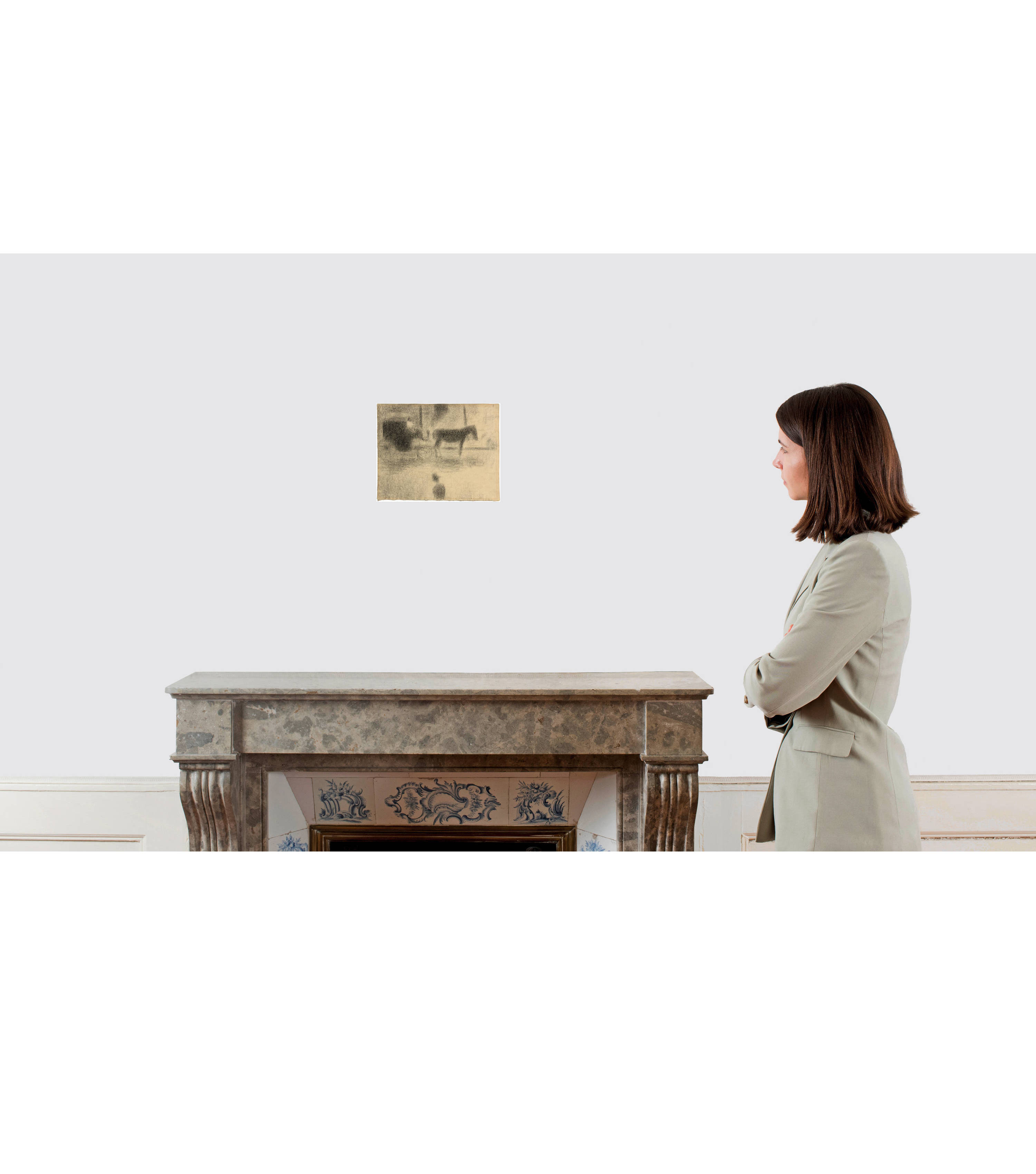
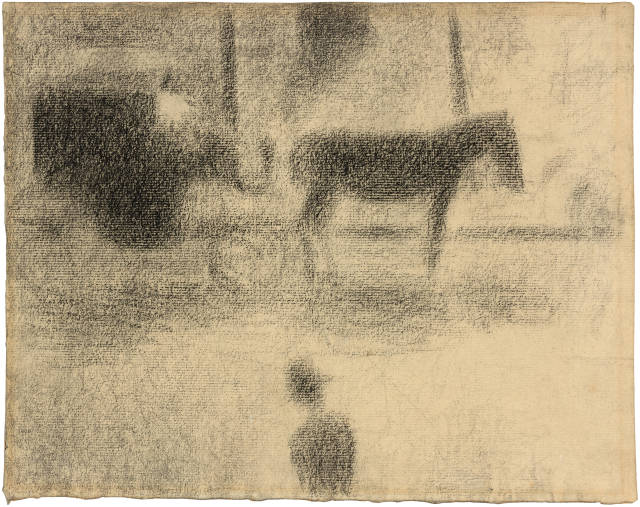
Through the application of his unique drawing technique, Georges Seurat achieved outstanding contrasts of light and dark, which led contemporary critics to describe him as a worthy successor to Rembrandt, the "clair-obscuriste par excellence".
The further the viewer moves away from the work, the clearer the image becomes, so that previously unrecognizable details (such as the carriage in the present case) suddenly come to light. This phenomenon recalls the optical principles of Michel-Eugène Chevreul and Ogden Rood, which formed the basis of Neo-Impressionism. Seurat tried to integrate these ideas not only into his paintings but also into his drawings. He replaced colours with an infinite variety and nuance in the tonality of the contrast between black and white.
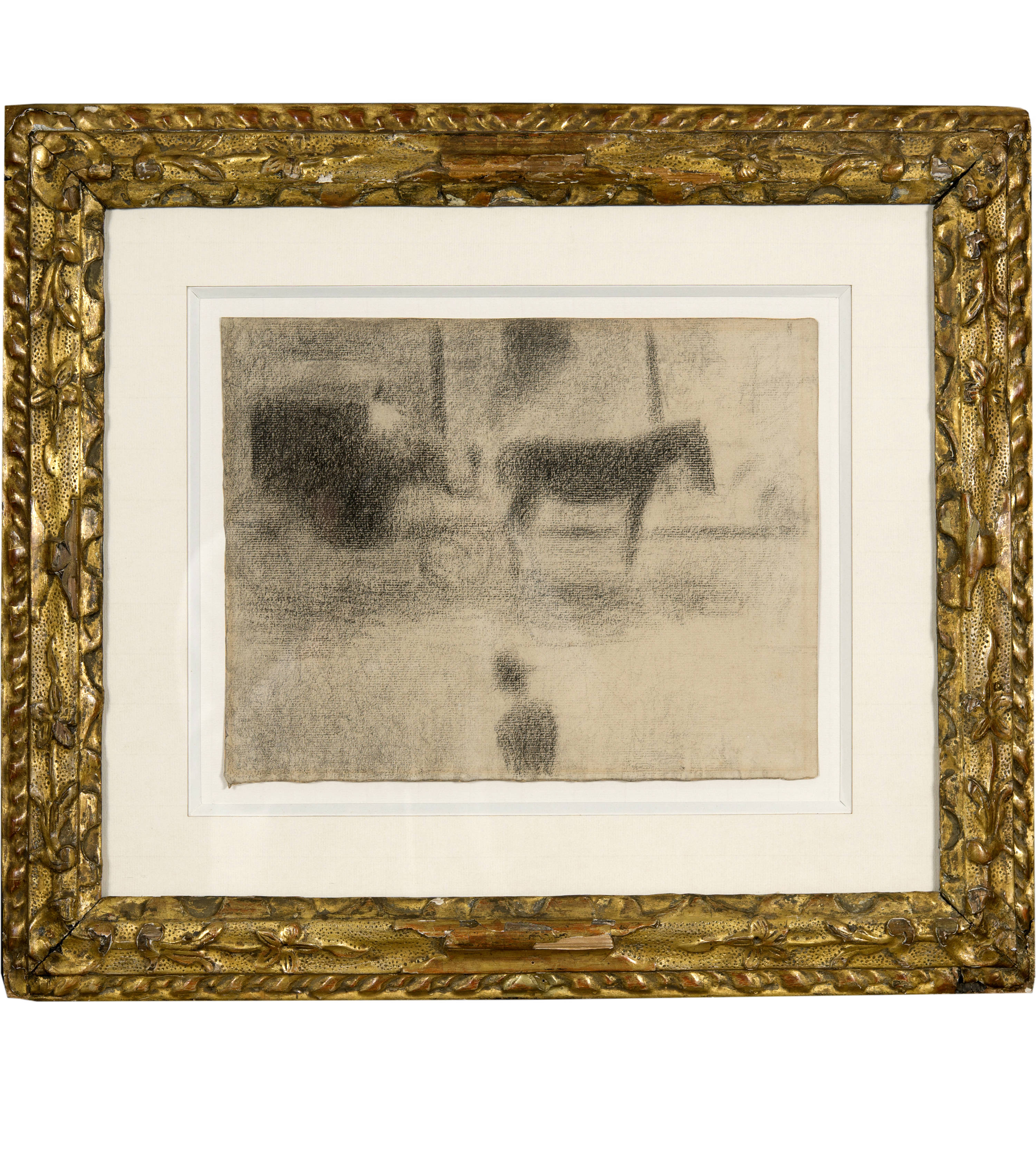
At the time the present sheet was created, Seurat was working on his great masterpiece "Un dimanche après-midi à l'Île de la Grande Jatte", which is now in the Art Institute of Chicago. The "Fiacres" were the taxis of the time, and so Seurat too would have used the services of the carriage drivers to travel to the Seine and observe the Parisian population enjoying their Sunday leisure. Vaguely, horse and carriage stand on a tree-lined road waiting for customers; perhaps it is the gallant gentleman at the lower edge of the image. The scene probably takes place in the evening, the lantern of the carriage appearing as a striking white spot. With masterful skill, Seurat thus accentuates the composition, which otherwise appears rather light. In doing so, he removes the depiction from the axis of time and almost elevates it to a metaphysical dimension.
Um 1885
Crayon conté auf Bütten, aufgezogen auf Velin
24x30,9 cm
César Mange de Hauke, Seurat et son œuvre, Paris 1961,
Erich Franz/Bernd Growe, Georges Seurat, Dessins, Paris 1984,
Slg. de Frenne, Paris
Slg. van Deventer, Arnheim
Slg. Sydney J. Lamon, New York
Gallery M. Knoedler & Co., New York, Inv.-Nr. WCA-1942, Foto-Nr. 6058
Slg. Eberhard W. Kornfeld, Bern, rückseitig mit dem Sammlerstempel, Lugt 913b
Umbro Apollonio, Disegni di Seurat, Venezia 1945,
Robert L. Herbert, Seurat's Drawings, New York 1962,
John Russell, Seurat, London 1965,
Richard Thomson, Seurat, Oxford 1985,
Herbert Wotte, Georges Seurat, Dresden 1988,
Rotterdam 1934/1935, Musée Boymans, Soixante-deux tableaux et dessins anciens et modernes des collections néerlandaises,
Amsterdam 1936, Galerie Huinck et Scherjon, L'art français du XIXe siècle
Rotterdam 1936/1937, Musée Boymans, Les divisionnistes de Seurat à Jan Toorop,
Chicago 1958, The Art Institute, Seurat, Paintings and Drawings,
Bielefeld/Baden-Baden 1983/1984, Kunsthalle/Staatliche Kunsthalle, Georges Seurat, Zeichnungen,
Bern 1989, Kunstmuseum Bern, Von Goya bis Tinguely, Aquarelle und Zeichnungen aus einer Privatsammlung [Slg. Eberhard W. Kornfeld],
Bern/Hamburg 1996, Kunstmuseum/Kunsthalle, Zeichnen ist Sehen, Meisterwerke von Ingres bis Cézanne aus dem Museum der bildenden Künste Budapest und aus Schweizer Sammlungen,
Davos 1998/1999, Kirchner Museum, Werke aus der Sammlung Eberhard W. Kornfeld,
Madrid 2003, Fundación Juan March, Espíritu de modernidad, de Goya a Giacometti, Obra sobre papel de la colección Kornfeld,
Wien 2008/2009, Albertina, Wege der Moderne, Aus der Sammlung Eberhard W. Kornfeld,
Zürich/Frankfurt am Main 2009/2010, Kunsthaus/Schirn Kunsthalle, Georges Seurat,
Mit Lichtrand und im Papier etwas gebräunt. Unten rechts mit restauriertem kleinen Einriss. In schöner Erhaltung
Durch die Anwendung seiner einzigartigen Zeichentechnik erreichte Georges Seurat hervorragende Hell-Dunkel-Kontraste, was die zeitgenössischen Kritiker dazu veranlasste, ihn als würdigen Nachfolger von Rembrandt, dem "clair-obscuriste par excellence", zu bezeichnen.
Je weiter sich die Betrachtenden vom Werk entfernen, desto klarer wird das Bild, sodass zuvor nicht erkennbare Details (wie im vorliegenden Fall etwa die Kutsche) unvermittelt zum Vorschein treten. Dieses Phänomen erinnert an die optischen Prinzipien von Michel-Eugène Chevreul und Ogden Rood, die die Grundlage des Neoimpressionismus bildeten. Seurat versuchte, diese Ideen nicht nur in seine Gemälde, sondern auch in seine Zeichnungen zu integrieren. Die Farben ersetzte er durch eine unendliche Vielfalt und Nuancierung in der Tonalität des Kontrastes von Schwarz und Weiss.
In der Zeit, als das vorliegende Blatt entstand, arbeitete Seurat an seinem grossen Meisterwerk "Un dimanche après-midi à l'Île de la Grande Jatte", das sich heute im Art Institute of Chicago befindet. Die "Fiacres" waren die Taxis der Zeit, und so wird auch Seurat die Dienste der Kutschenfahrer in Anspruch genommen haben, um an die Seine zu fahren und dort die Pariser Bevölkerung beim Sonntagsvergnügen zu beobachten. Schemenhaft stehen Pferd und Kutsche an einer baumgesäumten Strasse und warten auf Kunden; vielleicht ist es der galante Herr am unteren Bildrand. Die Szene spielt wohl gegen Abend, die Laterne der Kutsche erscheint als auffälliger weisser Fleck. Meisterhaft akzentuiert Seurat damit die Komposition, die in der Anlage eher hell erscheint. Er entreisst die Darstellung damit der Zeitachse und hebt sie fast in eine metaphysische Dimension.
| Switzerland | CHF | Individual offer |
| Europe | CHF | Individual offer |
| USA | CHF | Individual offer |
| Overseas | CHF | Individual offer |