- EN


 Log in
-
- Live Auctions
- Past auctions
- More
- Kornfeld today
- The Story of Kornfeld
- Information


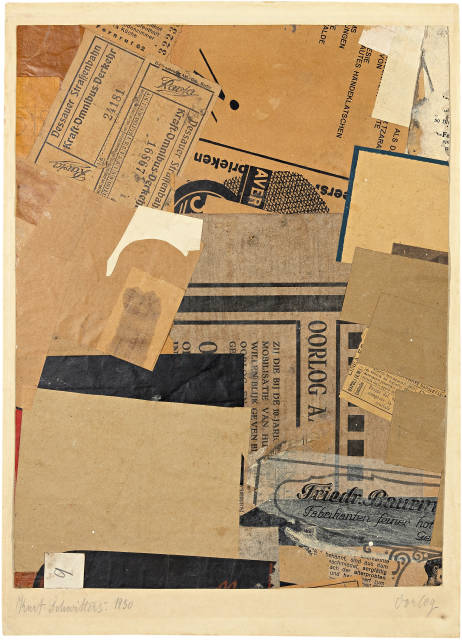








Hannover 1887 - 1948 Ambleside


1930
Collage, laid down on support, mounted on cardboard
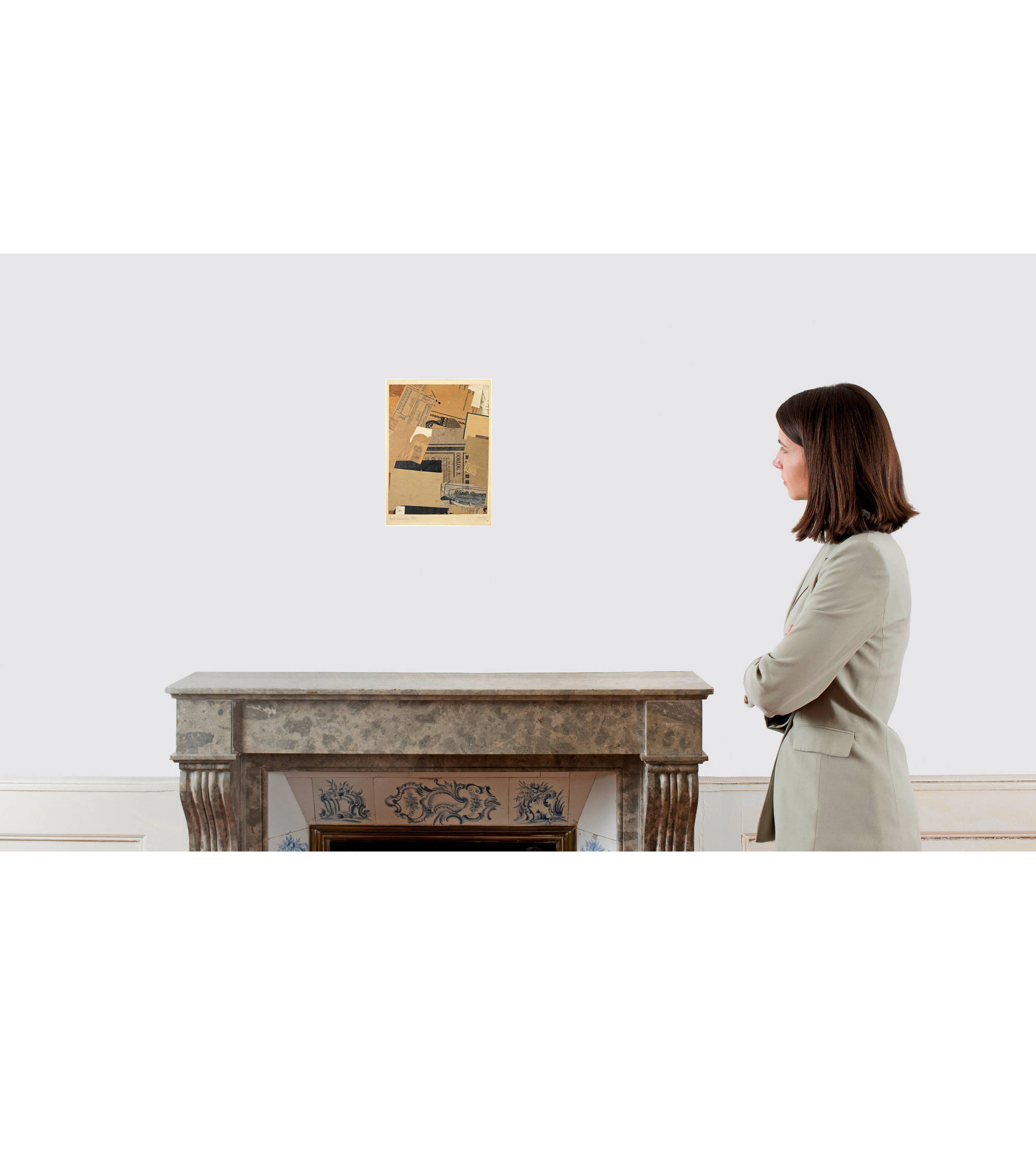
30.6x23.6 cm, collage; 34.6x25.1 cm, support; 36.6x26.8 cm, cardboard
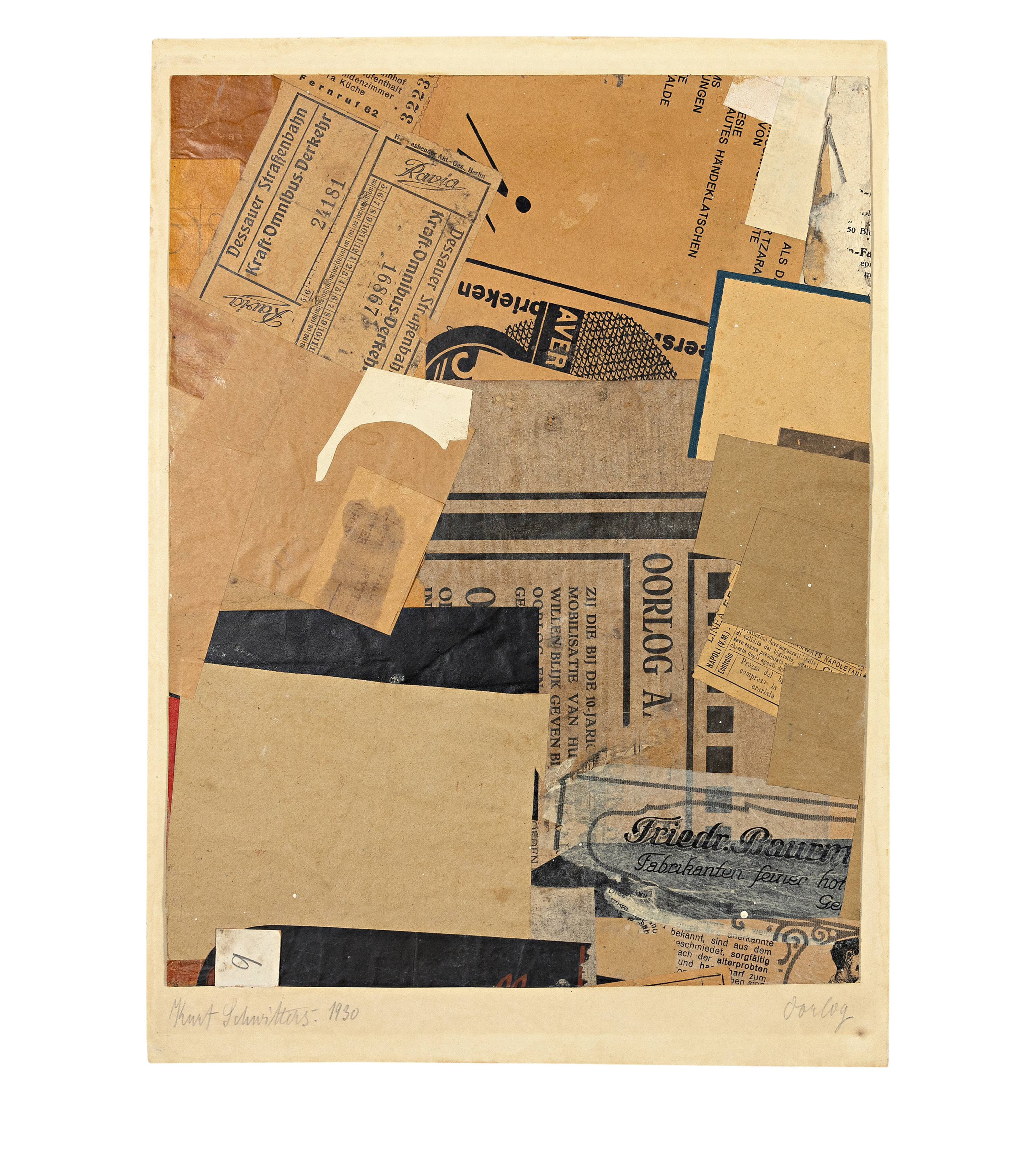
Lower left on the mount signed and dated by the artist in pencil "Kurt Schwitters. 1930", right titled "Oorlog"
Karin Orchard/Isabel Schulz, Kurt Schwitters, Catalogue raisonné, vol. 2, 1923-1936, Hanover 2003, no. 1720
Estate of the artist, by inheritance to
Ernst Schwitters, Lysaker, there acquired in 1956 from
Galerie Hans Brockstedt, Hanover, there acquired in 1956 from
Sidney Janis Gallery, New York, there acquired in 1969 from
Galerie Brusberg, Hanover, in 1980/1981 to
Ernst Schwitters, Lysaker, on consignment to
Galerie Gmurzynska, Cologne, there acquired in 1984 from
The Donald B. Marron Collection, New York, there acquired in 2020 from
Private collection USA
Andrea El-Danasouri, Kunststoff und Müll, Das Material bei Naum Gabo und Kurt Schwitters (Beiträge zur Kunstwissenschaft), Munich 1992, p. 189-194
New York 1956, Sidney Janis Gallery, Kurt Schwitters, 57 Collages, cat. no. 36
Washington 1957, Phillips Gallery, Collages by Kurt Schwitters, cat. no. 14
New York 1959, Sidney Janis Gallery, 75 Collages by Schwitters, cat. no. 40
New York 1962, Sidney Janis Gallery, 50 Collages by Schwitters, cat. no. 24
San Antonio/Pasadena/Manchester/Washington, D.C./Minneapolis/Louisville 1962, Marion Koogler McNay Art Museum/Art Museum/The Currier Gallery of Art/The Phillips Collection/University of Minnesota/J.B. Speed Art Museum, Kurt Schwitters, cat. no. 47
New York 1964, Sidney Janis Gallery, A Selection of 20th Century Art of 3 Generations, no. 18
New York 1967, Sidney Janis Gallery, Picasso to Pollock, Selected Works from 2 Generations of European and American Artists, no. 24
New York 1969, Sidney Janis Gallery, Selected Works by XXth Century European Artists, cat. no. 40
Hanover 1969, Galerie Brusberg, Kunst in Hannover, die 20er und die 60er Jahre
Düsseldorf/Berlin/Stuttgart/Basel/Hamburg 1971, Städtische Kunsthalle/Akademie der Künste/Staatsgalerie/Kunsthalle/Kunstverein, Kurt Schwitters, cat. no. 186
Hanover 1979, Galerie Brusberg, Jenseits der Malerei, Das Prinzip Collage, Teil: Dada, Surrealismus und die Folgen, Hommage à Kurt Schwitters und Max Ernst
Bonn 1979, Galerie Brusberg und Parlamentarische Gesellschaft, 8 Maler aus Hannover
Cologne 1981, Galerie Gmurzynska, Klassische Moderne, The Classical Moderns, cat. no. 161
Karuizawa/Tokyo/Otsu 1983/1984, Museum of Modern Art/The Seibu Museum of Art/Store, Kurt Schwitters, cat. no. 88
New York/London/Hanover 1985/1986, The Museum of Modern Art/Tate Gallery/Sprengel Museum, Kurt Schwitters, cat. no. 22
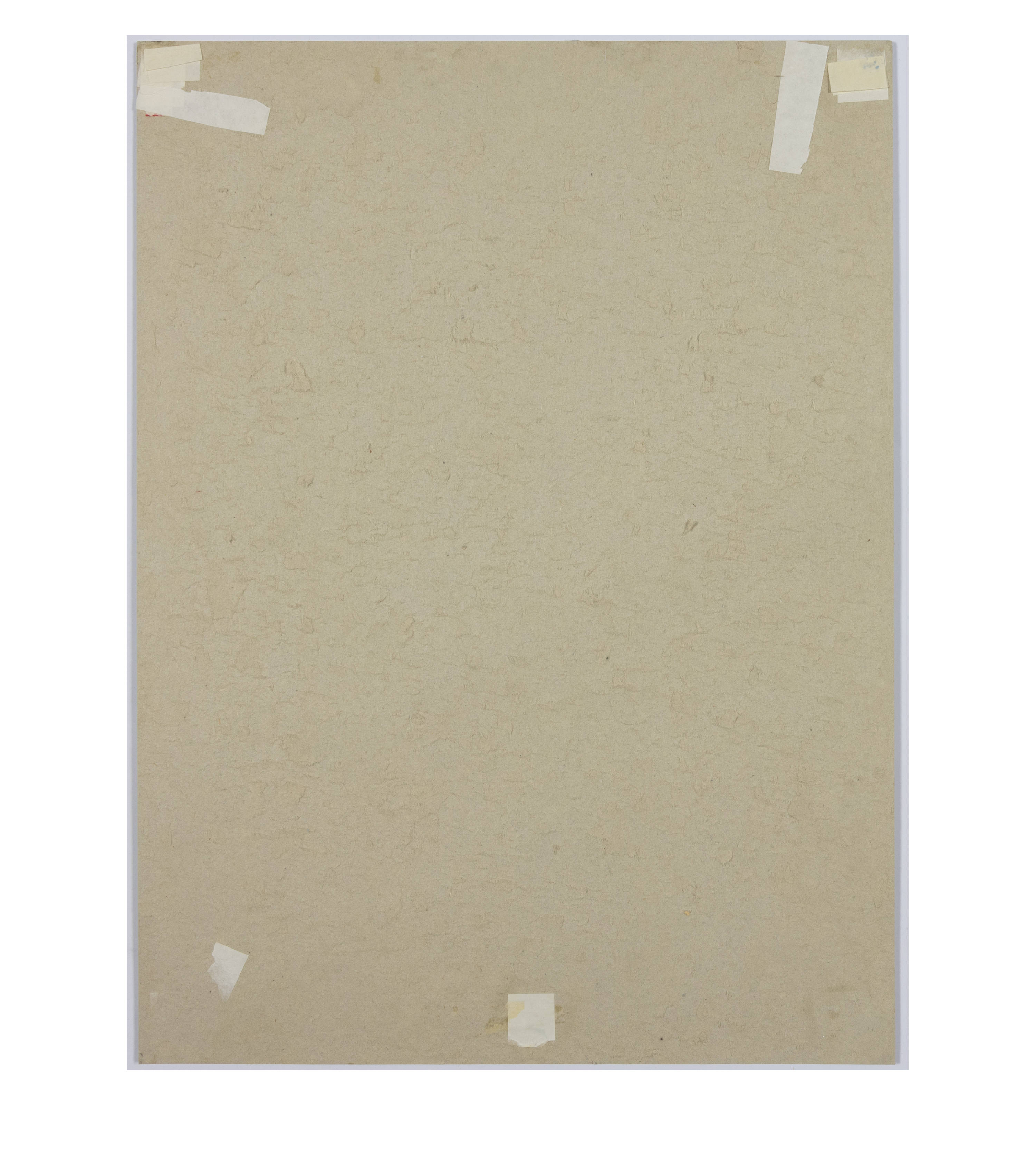
The collage with typical traces of the production process, the support with a slight light margins area and a small spot in the lower right corner. In fine condition
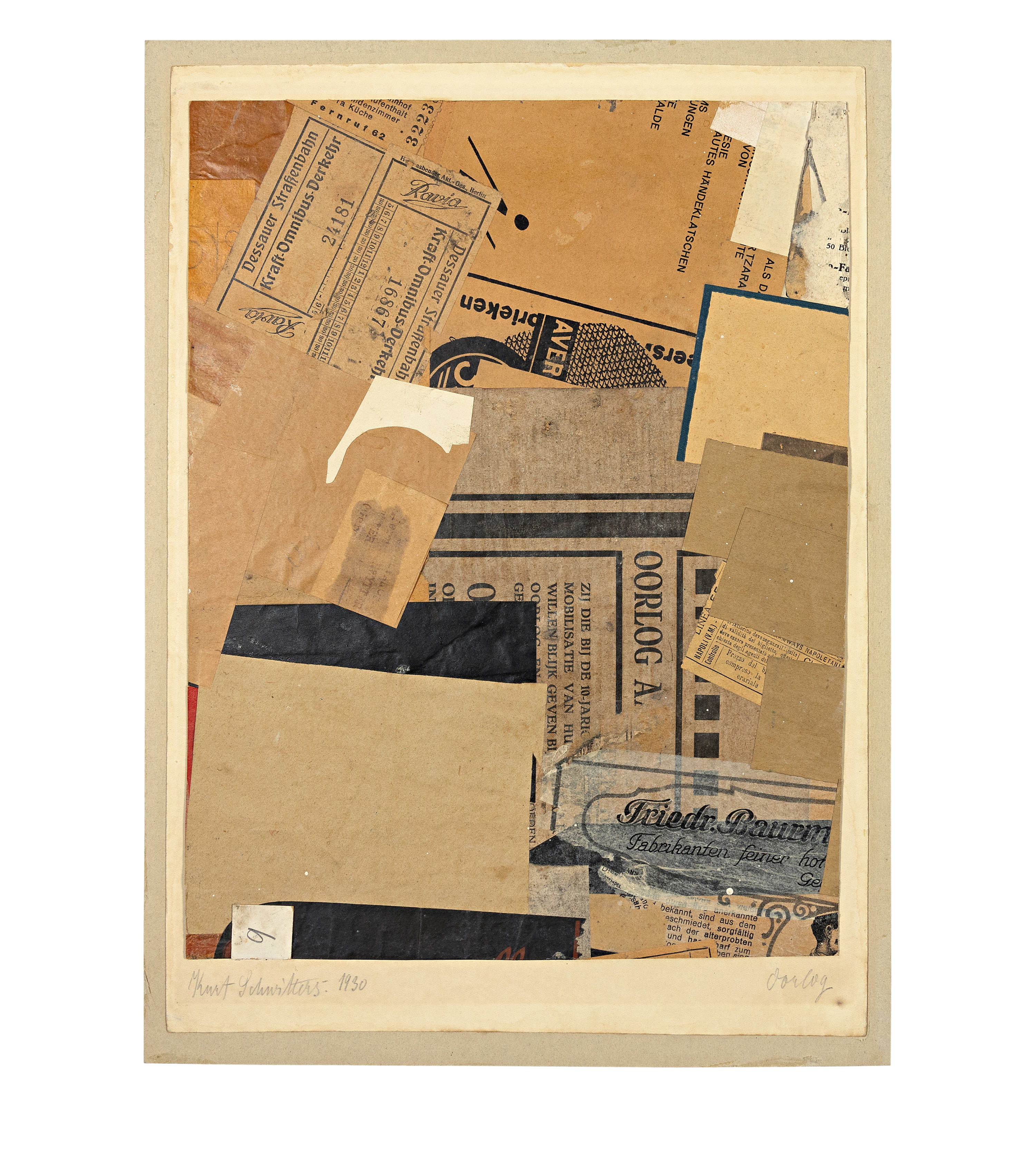
In his collage "Oorlog" (the Dutch word for "War"), Kurt Schwitters addresses the theme of war not illustratively, but in material and linguistic terms. Created in 1930, during a time of growing political tensions, he incorporates found objects from everyday life such as newspaper clippings, typographic fragments, or scraps of paper. Typical of Schwitters' Merz principle, the fragment becomes the central form of expression. Language becomes image and script becomes compositional structure. "Oorlog" is exemplary of Schwitters' collage art. He collected remnants of everyday life and assembled them into a poetic and at the same time powerful image. A very beautifully structured and large-format Merz collage.
1930
Collage, auf Unterlage aufgezogen, auf Karton montiert
30,6x23,6 cm, Collage; 34,6x25,1 cm, Unterlage; 36,6x26,8 cm, Karton
Unten links auf der Unterlage vom Künstler in Bleistift signiert und datiert "Kurt Schwitters. 1930", rechts betitelt "Oorlog"
Karin Orchard/Isabel Schulz, Kurt Schwitters, Catalogue raisonné, Bd. 2, 1923-1936, Hannover 2003,
Nachlass des Künstlers, durch Erbschaft an
Ernst Schwitters, Lysaker, dort 1956 erworben von
Galerie Hans Brockstedt, Hannover, dort 1956 erworben von
Sidney Janis Gallery, New York, dort 1969 erworben von
Galerie Brusberg, Hannover, dort 1980/1981 an
Ernst Schwitters, Lysaker, in Kommission an
Galerie Gmurzynska, Köln, dort 1984 erworben von
Slg. Donald B. Marron, New York, dort 2020 erworben von
Privatsammlung USA
Andrea El-Danasouri, Kunststoff und Müll, Das Material bei Naum Gabo und Kurt Schwitters (Beiträge zur Kunstwissenschaft), München 1992, S. 189-194
New York 1956, Sidney Janis Gallery, Kurt Schwitters, 57 Collages,
Washington 1957, Phillips Gallery, Collages by Kurt Schwitters,
New York 1959, Sidney Janis Gallery, 75 Collages by Schwitters,
New York 1962, Sidney Janis Gallery, 50 Collages by Schwitters,
San Antonio/Pasadena/Manchester/Washington, D.C./Minneapolis/Louisville 1962, Marion Koogler McNay Art Museum/Art Museum/The Currier Gallery of Art/The Phillips Collection/University of Minnesota/J.B. Speed Art Museum, Kurt Schwitters,
New York 1964, Sidney Janis Gallery, A Selection of 20th Century Art of 3 Generations,
New York 1967, Sidney Janis Gallery, Picasso to Pollock, Selected Works from 2 Generations of European and American Artists,
New York 1969, Sidney Janis Gallery, Selected Works by XXth Century European Artists,
Hannover 1969, Galerie Brusberg, Kunst in Hannover, die 20er und die 60er Jahre
Düsseldorf/Berlin/Stuttgart/Basel/Hamburg 1971, Städtische Kunsthalle/Akademie der Künste/Staatsgalerie/Kunsthalle/Kunstverein, Kurt Schwitters,
Hannover 1979, Galerie Brusberg, Jenseits der Malerei, Das Prinzip Collage, Teil: Dada, Surrealismus und die Folgen, Hommage à Kurt Schwitters und Max Ernst
Bonn 1979, Galerie Brusberg und Parlamentarische Gesellschaft, 8 Maler aus Hannover
Köln 1981, Galerie Gmurzynska, Klassische Moderne, The Classical Moderns,
Karuizawa/Tokio/Otsu 1983/1984, Museum of Modern Art/The Seibu Museum of Art/Store, Kurt Schwitters,
New York/London/Hannover 1985/1986, The Museum of Modern Art/Tate Gallery/Sprengel Museum, Kurt Schwitters,
Die Collage mit typischen Spuren des Herstellungsprozesses, die Unterlage mit leichtem Lichtrand und einem kleinen Fleck in der rechten unteren Ecke. In sehr schöner Erhaltung
In seiner Collage "Oorlog" (das niederländische Wort für "Krieg") setzt Kurt Schwitters das Thema Krieg nicht illustrativ, sondern materiell und sprachlich um. Entstanden 1930, in einer Zeit wachsender politischer Spannungen, verarbeitet er darin Fundstücke aus dem Alltag wie Zeitungsausschnitte, Typofragmente oder Papierfetzen. Typisch für Schwitters' Merzprinzip wird das Fragment zur zentralen Ausdrucksform. Sprache wird zum Bild und Schrift zur kompositorischen Struktur. "Oorlog" steht exemplarisch für Schwitters' Collagekunst. Er sammelte Reste des Alltags und setzte sie zu einem poetischen und zugleich kraftvollen Bild zusammen. Eine sehr schön strukturierte und grossformatige Merz-Collage.
| Switzerland | CHF | 150 |
| Europe | CHF | 250 |
| USA | CHF | 320 |
| Overseas | CHF | 325 |