- EN


 Log in
-
- Live Auctions
- Past auctions
- More
- Kornfeld today
- The Story of Kornfeld
- Information










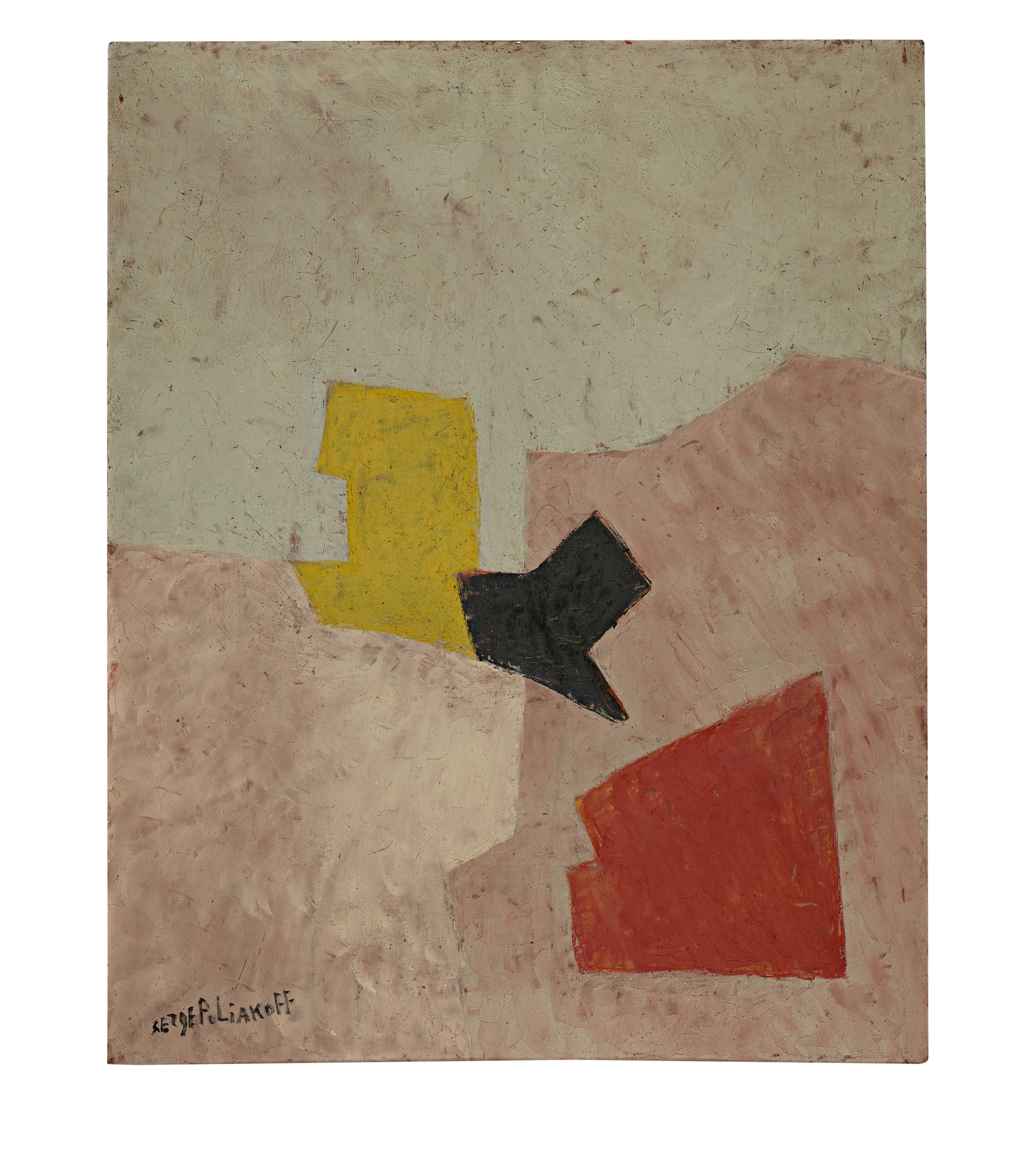
Moskau 1906 - 1969 Paris


Circa 1957
Oil on plywood
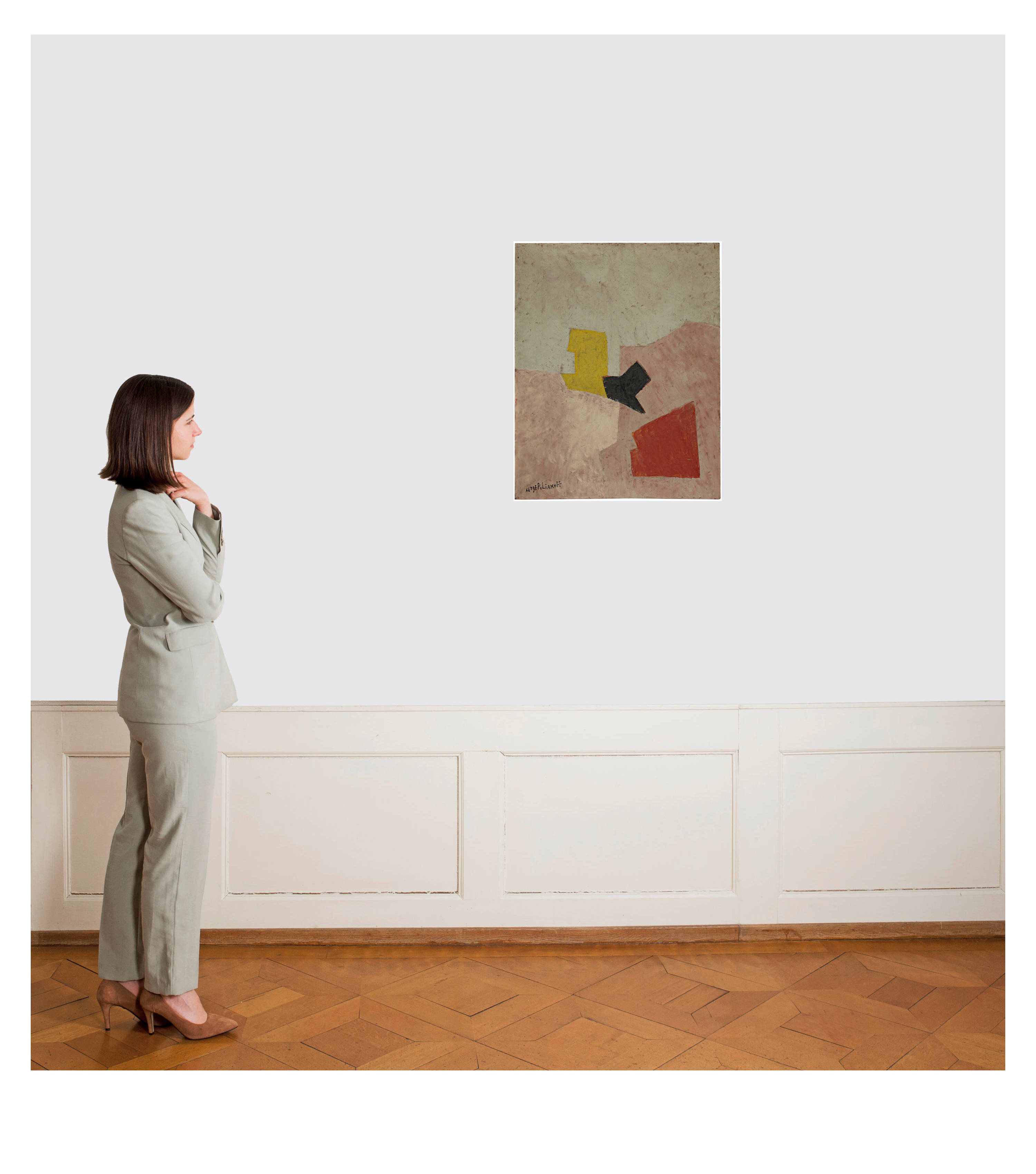
81x65 cm
Lower left signed by the artist "Serge Poliakoff"
Alexis Poliakoff, Serge Poliakoff, Catalogue raisonné, vol. II, 1955-1958, Munich 2010, cat. no. 57-122
Collection Franz Meyer Sr., Zurich, by inheritance to
Private collection Switzerland
Hamburg 1958, Kunstverein, Serge Poliakoff, cat. no. 76, where dated "1957", with label
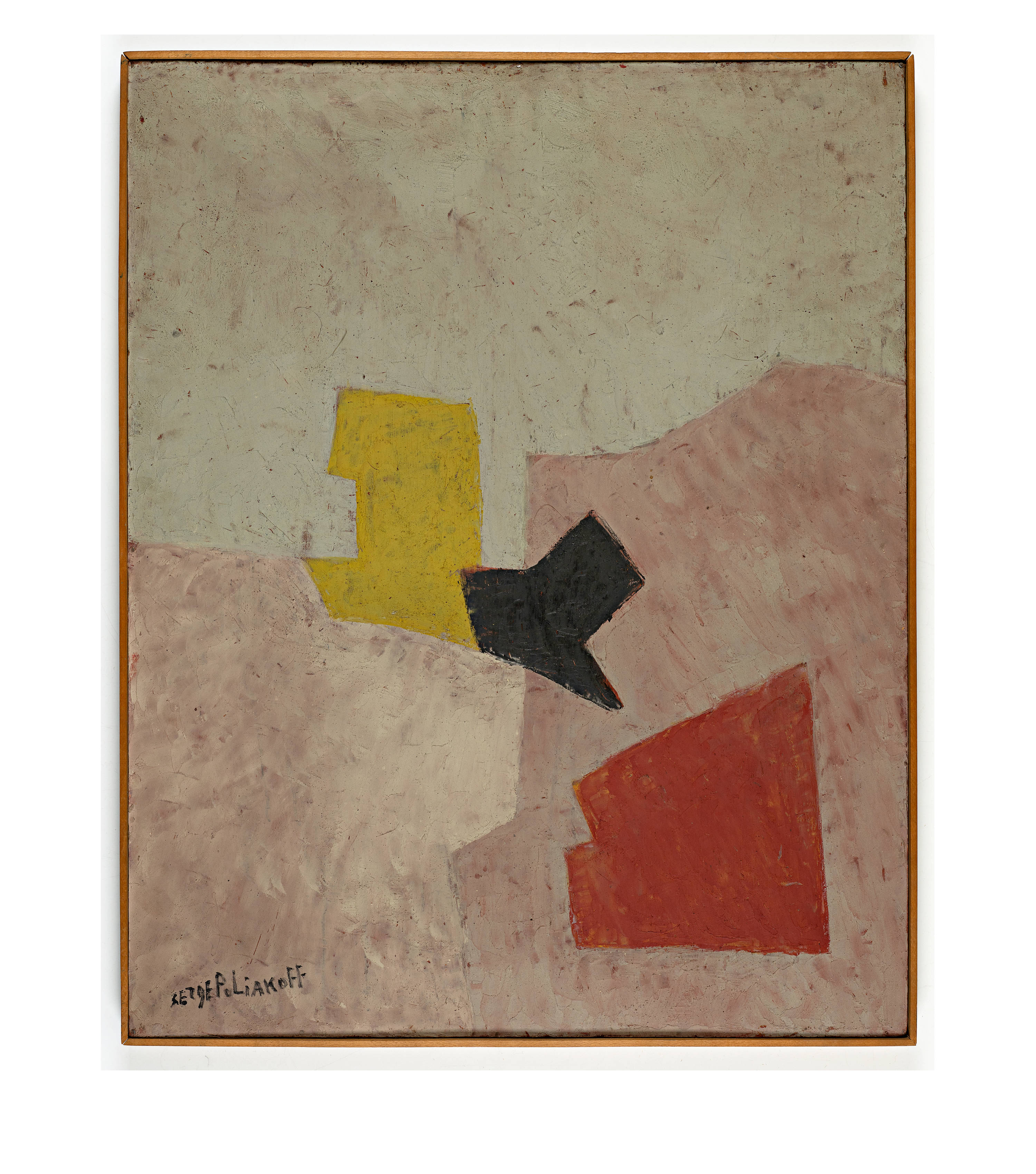
Mounted along the edges with small nails in the original wooden chassis, some of which are painted. Overall in very good condition
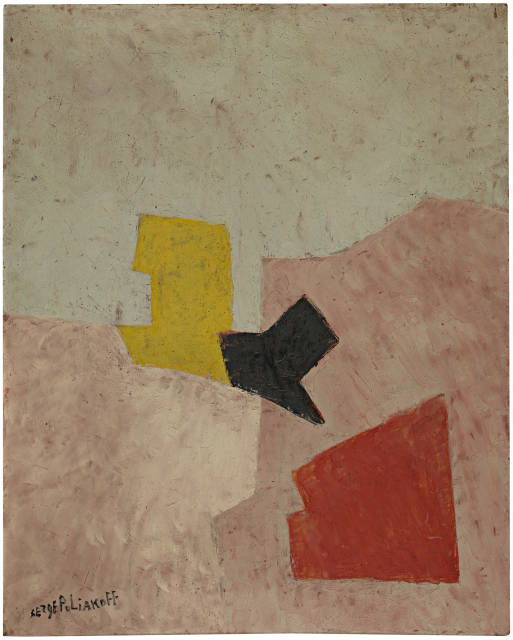
Serge Poliakoff is regarded as one of the most important representatives of abstract European painting of the postwar period. His extensive oeuvre consists of over 3,500 paintings and gouaches, which were already being shown in major galleries and museums worldwide in the 1950s and 1960s. The present work thus falls into the artistic high point of his career and is a prime example of the so-called "Lyrische Abstraktion", also known as "Abstraction lyrique". It is clear that Poliakoff does not choose the forms at random. Like puzzle pieces, they interlock—he called this the "Architecture of the Image". Furthermore, colour is not to be understood as a decorative element, but as a building material for his composition. In contrast to the wild, gestural abstraction that characterizes the contemporaneous style of Informel, the artist focuses on a geometric-organic abstraction with stable forms. Typical of this creative phase is the abandonment of hard lines in favour of soft edges, as well as the layering of several coats of paint, which are applied with both brush and palette knife. Fascinating painting in earthy tones in oil on panel, animated by the tension between the individual colour fields.
Um 1957
Öl auf Sperrholz
81x65 cm
Unten links vom Künstler signiert "Serge Poliakoff"
Alexis Poliakoff, Serge Poliakoff, Catalogue raisonné, Vol. II, 1955-1958, München 2010, Kat. Nr. 57-122
Slg. Franz Meyer sen., Zürich, durch Erbschaft an
Privatsammlung Schweiz
Hamburg 1958, Kunstverein, Serge Poliakoff,
An den Rändern entlang mit kleinen Nägeln in originalem Holzchassis montiert, diese teilweise mit Farbe bemalt. Insgesamt in sehr gutem Erhaltungszustand
Serge Poliakoff gilt als einer der wichtigsten Vertreter der abstrakten europäischen Malerei der Nachkriegszeit. Sein umfangreiches Œuvre besteht aus über 3500 Gemälden und Gouachen, die bereits in den 1950er- und 1960er-Jahren in bedeutenden Galerien und Museen weltweit gezeigt wurden. Das vorliegende Werk fällt somit in die künstlerische Hochphase seines Schaffens und ist ein Paradebeispiel für die sogenannte "Lyrische Abstraktion", auch "Abstraction lyrique" genannt. Deutlich wird, dass Poliakoff die Formen nicht zufällig wählt. Wie Puzzleteile greifen sie ineinander - er nannte dies die "Architektur des Bildes". Die Farbe ist zudem nicht als dekoratives Element zu verstehen, sondern als Baustoff seiner Komposition. Im Gegensatz zur wilden, gestischen Abstraktion, die die zeitgleiche Stilrichtung des Informel prägt, fokussiert sich der Künstler auf eine geometrisch-organische Abstraktion mit stabilen Formen. Typisch für diese Schaffensphase sind die Abkehr von harten Linien zugunsten von weichen Kanten sowie das Übereinanderlegen mehrerer Farbschichten, die sowohl mit Pinsel als auch mit Spachtel aufgetragen werden. Faszinierendes Gemälde in erdigen Tönen in Öl auf Holz, das von der Spannung der einzelnen Farbfelder zueinander lebt.
| Switzerland | CHF | 200 |
| Europe | CHF | 300 |
| USA | CHF | 390 |
| Overseas | CHF | 430 |