- EN


 Log in
-
- Live Auctions
- Past auctions
- More
- Kornfeld today
- The Story of Kornfeld
- Information


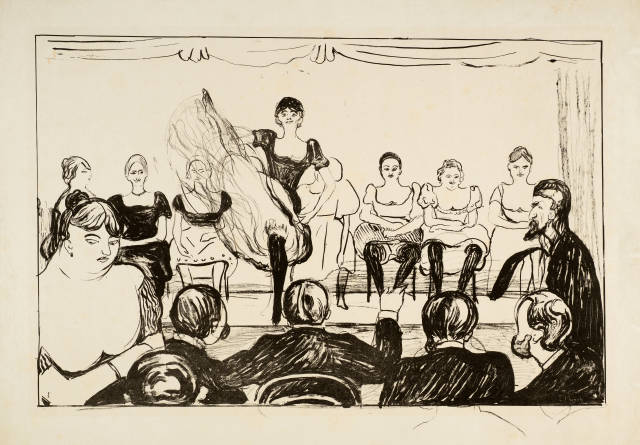








Løten 1863 - 1944 Oslo


1895
Chalk lithograph on strong, greyish wove paper
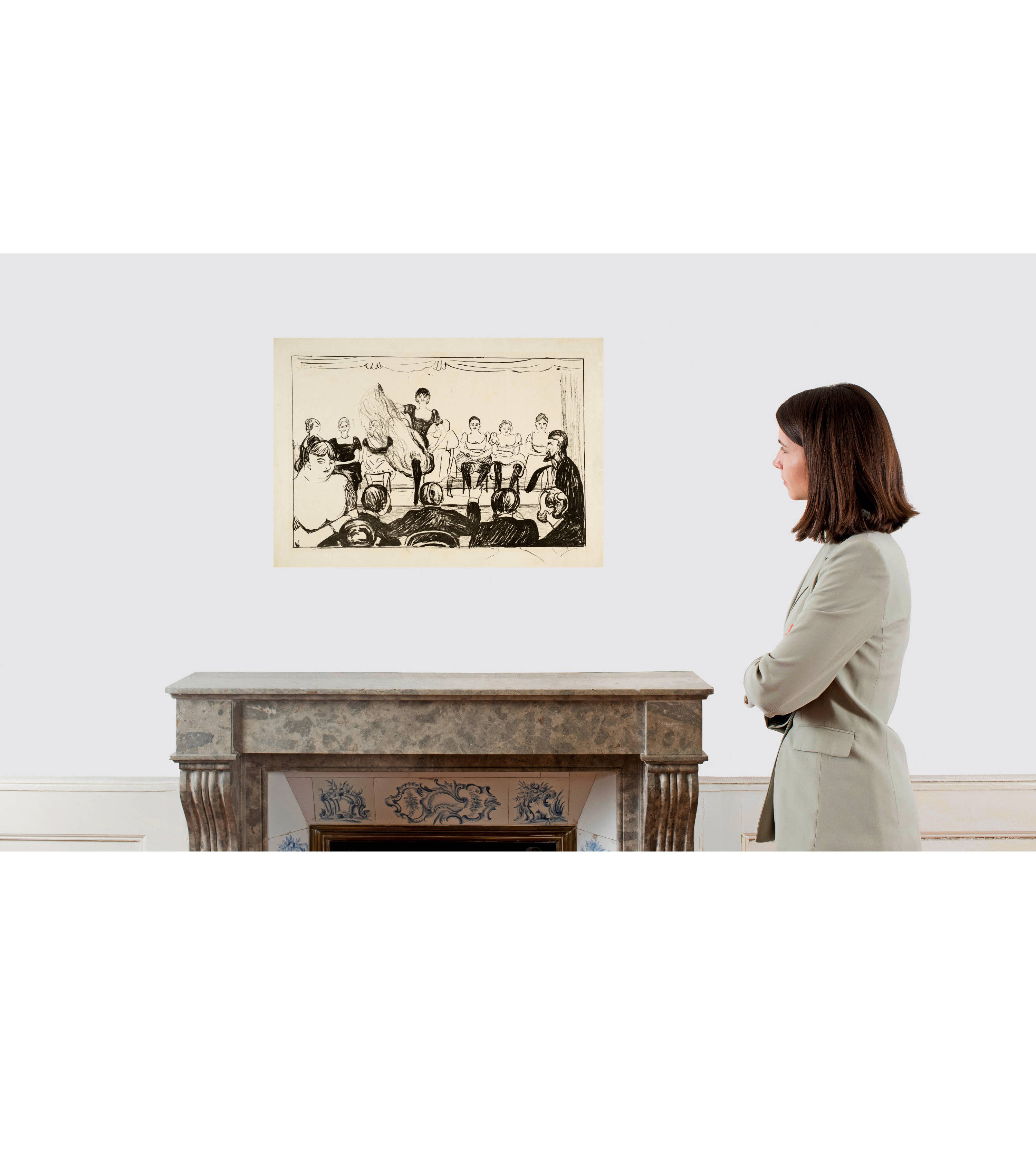
44x62.6 cm, image; 56.5x71.6 cm, sheet size
Woll 44
Collection William Cohn (1880-1961), Berlin, there acquired in 1936 by
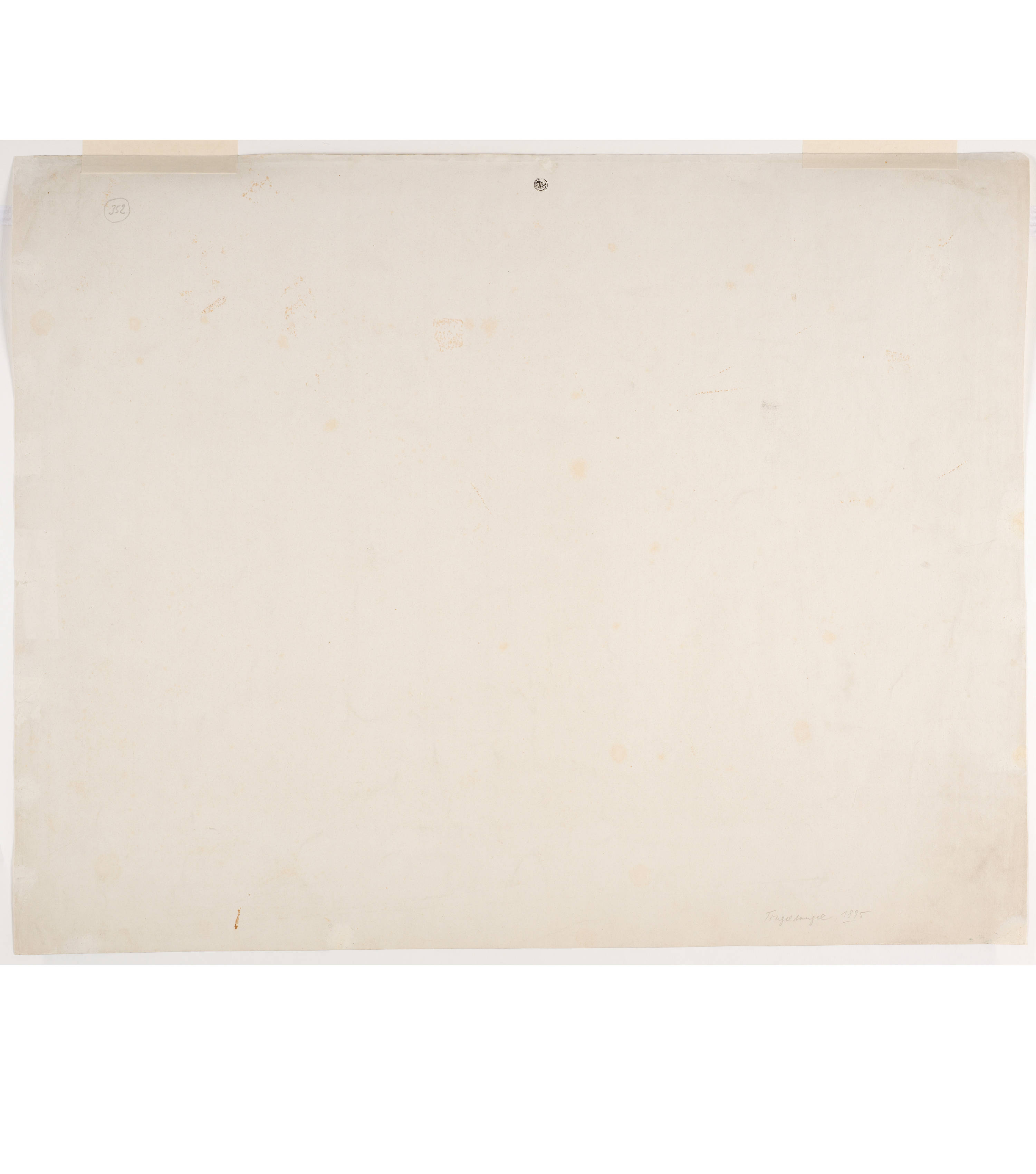
Collection Arnold Budczies, Berlin, with the collector's stamp on the back, Lugt 6335, by inheritance to
Private collection Germany
Frankfurt am Main 1952, Städelsches Kunstinstitut, Edvard Munch, Graphik, cat. no. 21
Florence 1964, Palazzo Strozzi, L'Espressionismo, pittura, scultura, architettura, cat. no. 20
Bremen 1970, Kunsthalle, Edvard Munch, Druckgraphik, Auswahl aus einer bremischen Privatsammlung, cat. no. 27
Lower left corner supplemented. Several supported tears at the sheet edges. Slight discolouration in the paper, especially at the sheet edges. In good condition
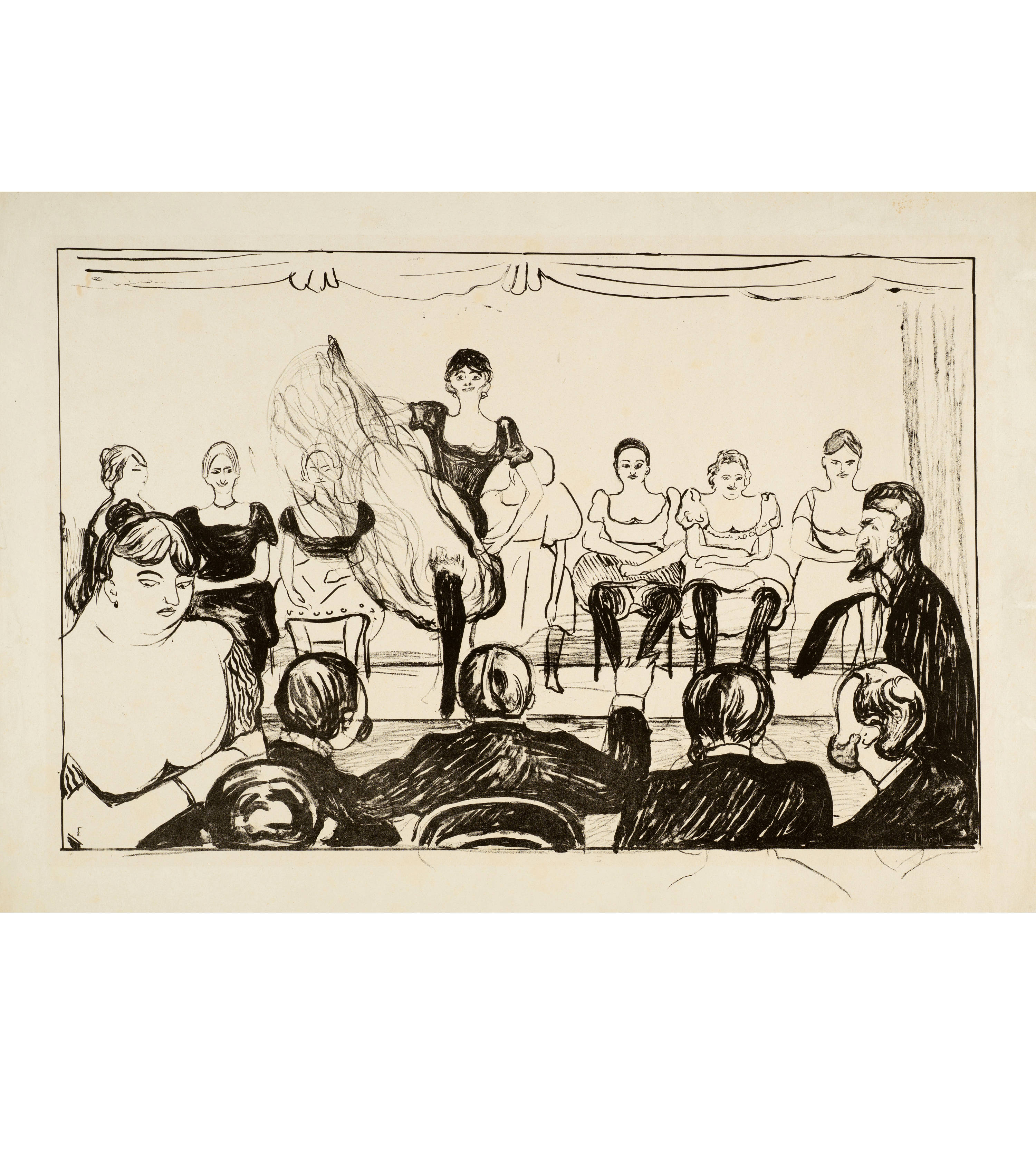
The lithograph "Tingletangle" was created in 1895 in Berlin, during Edvard Munch's formative years in the German capital, which were of central importance for his development as a printmaker. At this time, Munch was deeply involved in Berlin's avant-garde art and theater scene, especially through contacts with the Freie Bühne, symbolists, writers, and bohemians. The title "Tingeltangle", a colloquial expression for a simple, often disreputable entertainment or variety theater, refers not only to the location of the scene but also to its social and psychological connotations.
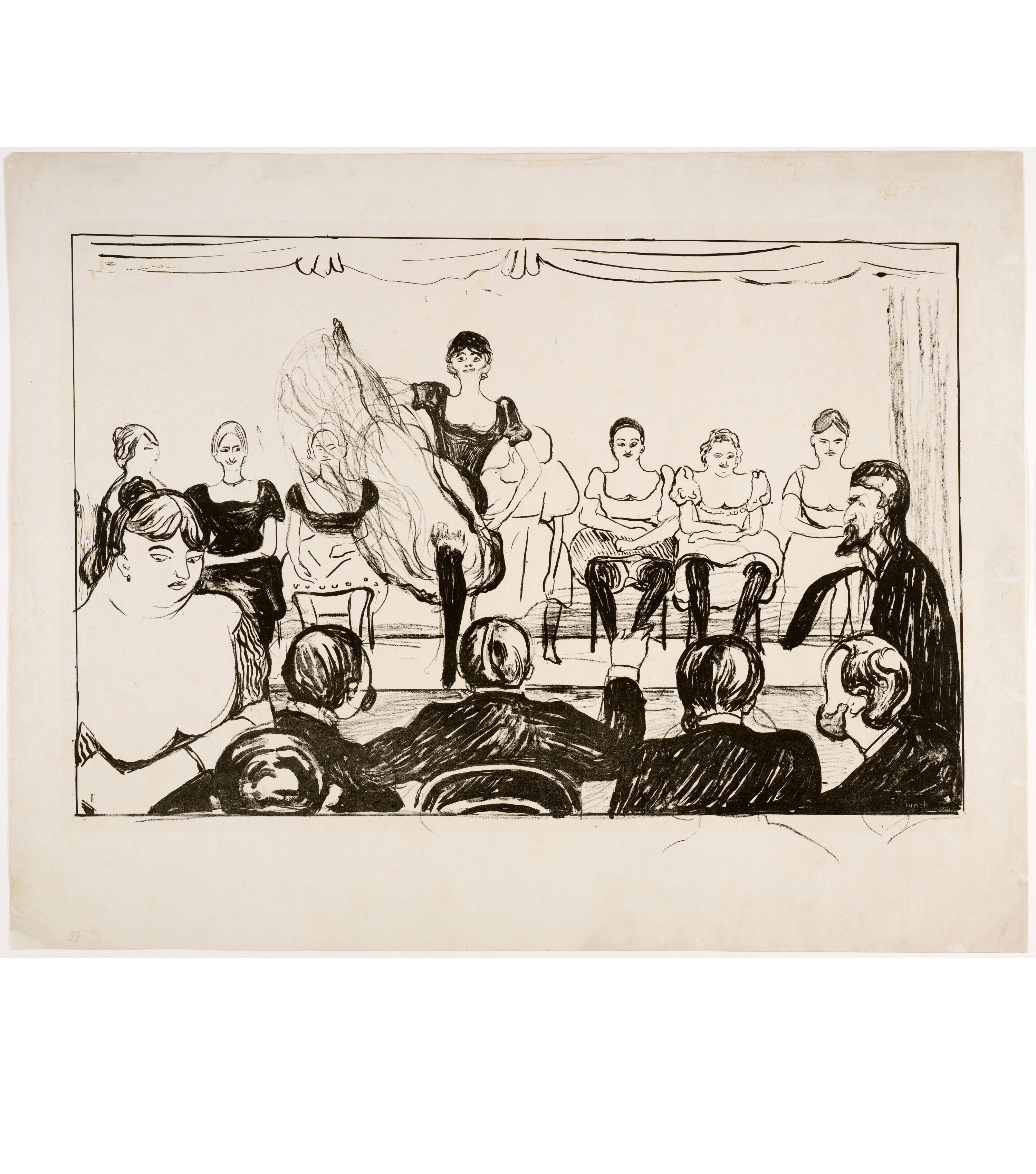
At the center, a woman with a raised leg can be seen dancing a cancan. In the background, other female dancers are seated, looking mischievously into the room. The movement of the dancing lady is suggested by the upwardly developing contours of her right leg. The men in the front rows, shown from behind or in profile, appear distant and at the same time attentively follow the action on stage. Here, Munch deliberately uses the formal possibilities of lithography. The soft chalk technique allows him to shift between linear contours and flat light-dark gradations. The scene appears like a lively snapshot or a caricature.
"Tingeltangle" can be read as a commentary on Munch's recurring theme of woman as a stage for male desire, fears, and projections of power. The theater space thus becomes a symbolic space of inner tensions.
Probably printed in 1896 at Lassally in Berlin.
1895
Kreidelithografie auf festem, gräulichem Velin
44x62,6 cm, Darstellung; 56,5x71,6 cm, Blattgrösse
Woll 44
Slg. William Cohn (1880-1961), Berlin, dort 1936 erworben von
Slg. Arnold Budczies, Berlin, rückseitig mit dem Sammlerstempel, Lugt 6335, durch Erbschaft an
Privatsammlung Deutschland
Frankfurt am Main 1952, Städelsches Kunstinstitut, Edvard Munch, Graphik,
Florenz 1964, Palazzo Strozzi, L'Espressionismo, pittura, scultura, architettura,
Bremen 1970, Kunsthalle, Edvard Munch, Druckgraphik, Auswahl aus einer bremischen Privatsammlung,
Untere linke Ecke ergänzt. An den Blatträndern mehrere hinterlegte Einrisse. Im Papier leichte Verfärbungen, vor allem an den Blatträndern. In guter Erhaltung
Die Lithografie "Tingeltangel“ entstand 1895 in Berlin, während Edvard Munchs prägender Jahre in der deutschen Hauptstadt, die für seine Entwicklung als Druckgrafiker von zentraler Bedeutung waren. In dieser Zeit war Munch tief in die avantgardistische Kunst- und Theaterszene Berlins eingebunden, insbesondere über Kontakte zur Freien Bühne, zu Symbolisten, Literaten und Bohemiens. Der Titel "Tingeltangel", ein umgangssprachlicher Ausdruck für ein einfaches, oft als anrüchig empfundenes Unterhaltungs- oder Varietétheater, verweist dabei nicht nur auf den Ort der Szene, sondern auch auf ihre soziale und psychologische Konnotation.
Im Zentrum ist eine Frau mit erhobenem Bein zu sehen, die einen Cancan tanzt. Im Hintergrund sitzen andere Tänzerinnen und schauen verschmitzt in den Raum. Die Bewegung der tanzenden Dame wird durch sich nach oben entwickelnde Konturen des rechten Beins angedeutet. Die Männer in den vorderen Reihen, die von hinten oder im Profil gezeigt werden, wirken distanziert und verfolgen gleichzeitig aufmerksam das Treiben auf der Bühne. Munch nutzt hier die formalen Möglichkeiten der Lithografie ganz gezielt. Die weiche Kreidetechnik erlaubt ihm, zwischen linearen Konturen und flächigen Hell-Dunkel-Verläufen zu changieren. Die Szene wirkt wie eine lebendige Momentaufnahme oder eine Karikatur.
"Tingeltangel" kann als Kommentar zu Munchs wiederkehrendem Thema der Frau als Bühne männlicher Begehren, Ängste und Machtprojektionen gelesen werden. Der Theaterraum wird dabei zum symbolischen Raum innerer Spannungen.
Wohl 1896 bei Lassally in Berlin gedruckt.
| Switzerland | CHF | 200 |
| Europe | CHF | 300 |
| USA | CHF | 390 |
| Overseas | CHF | 430 |