- EN


 Log in
-
- Live Auctions
- Past auctions
- More
- Kornfeld today
- The Story of Kornfeld
- Information


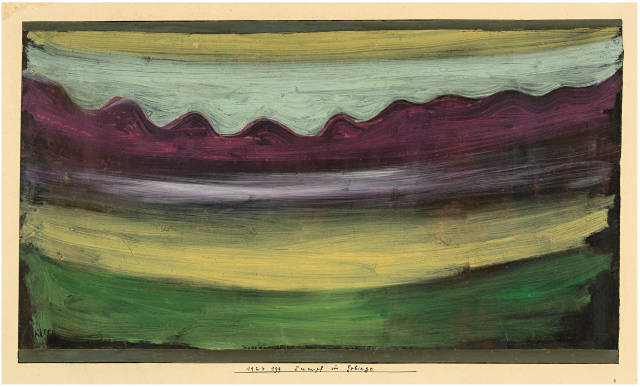


Münchenbuchsee bei Bern 1879 - 1940 Muralto


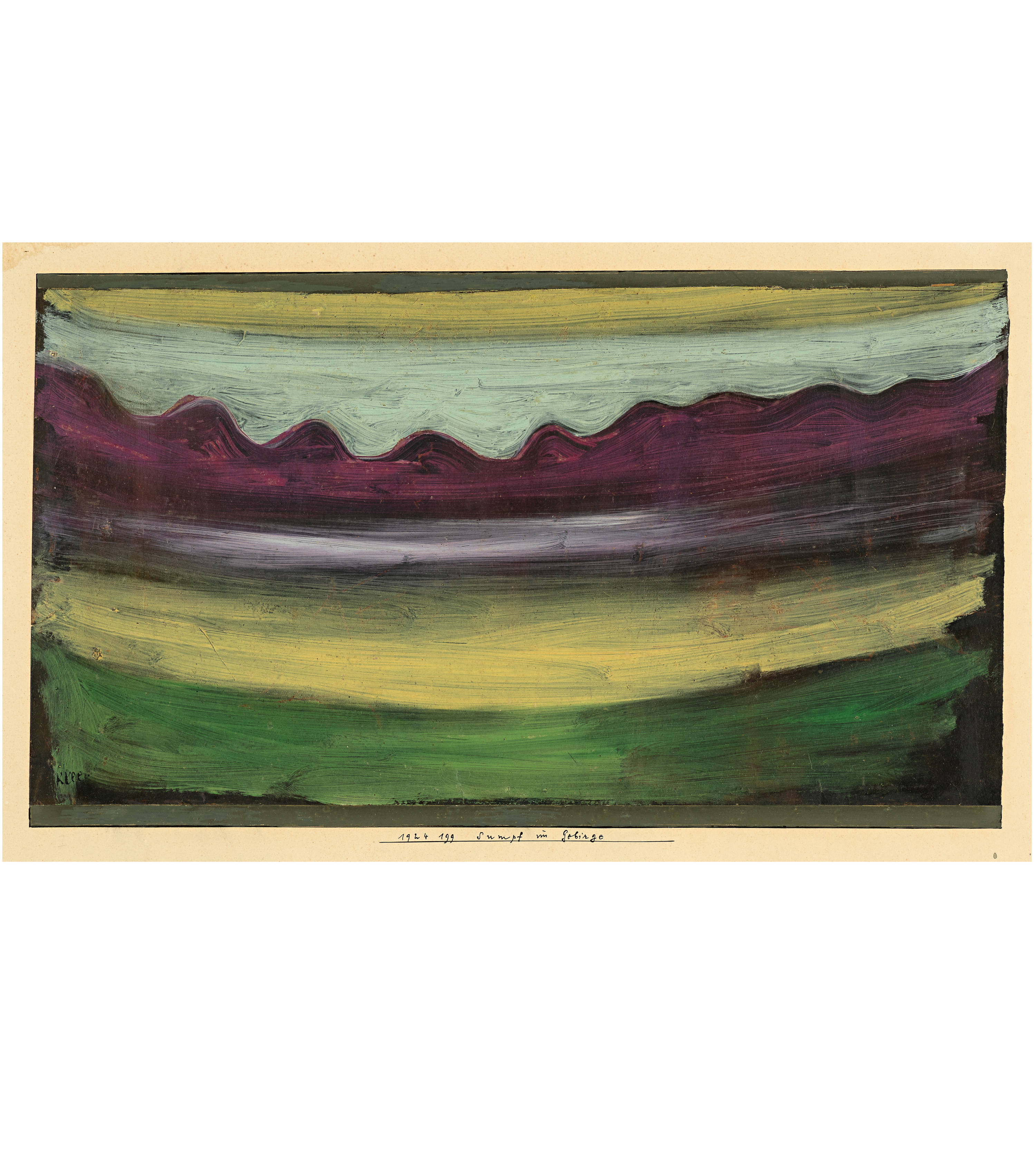
1924 – Work number 1924.199
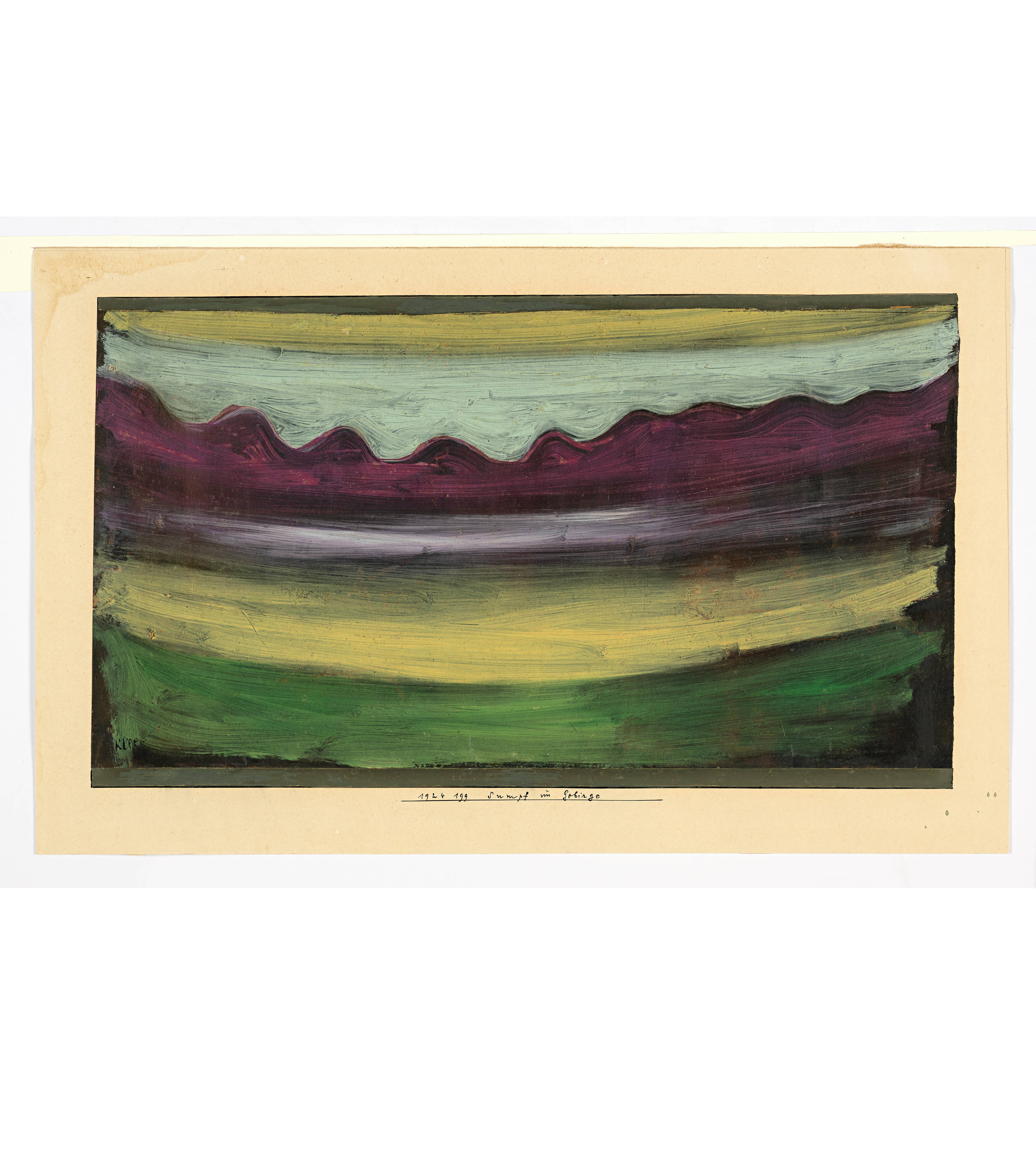
Oil paint on black priming on paper on cardboard, border strips in ink and gouache
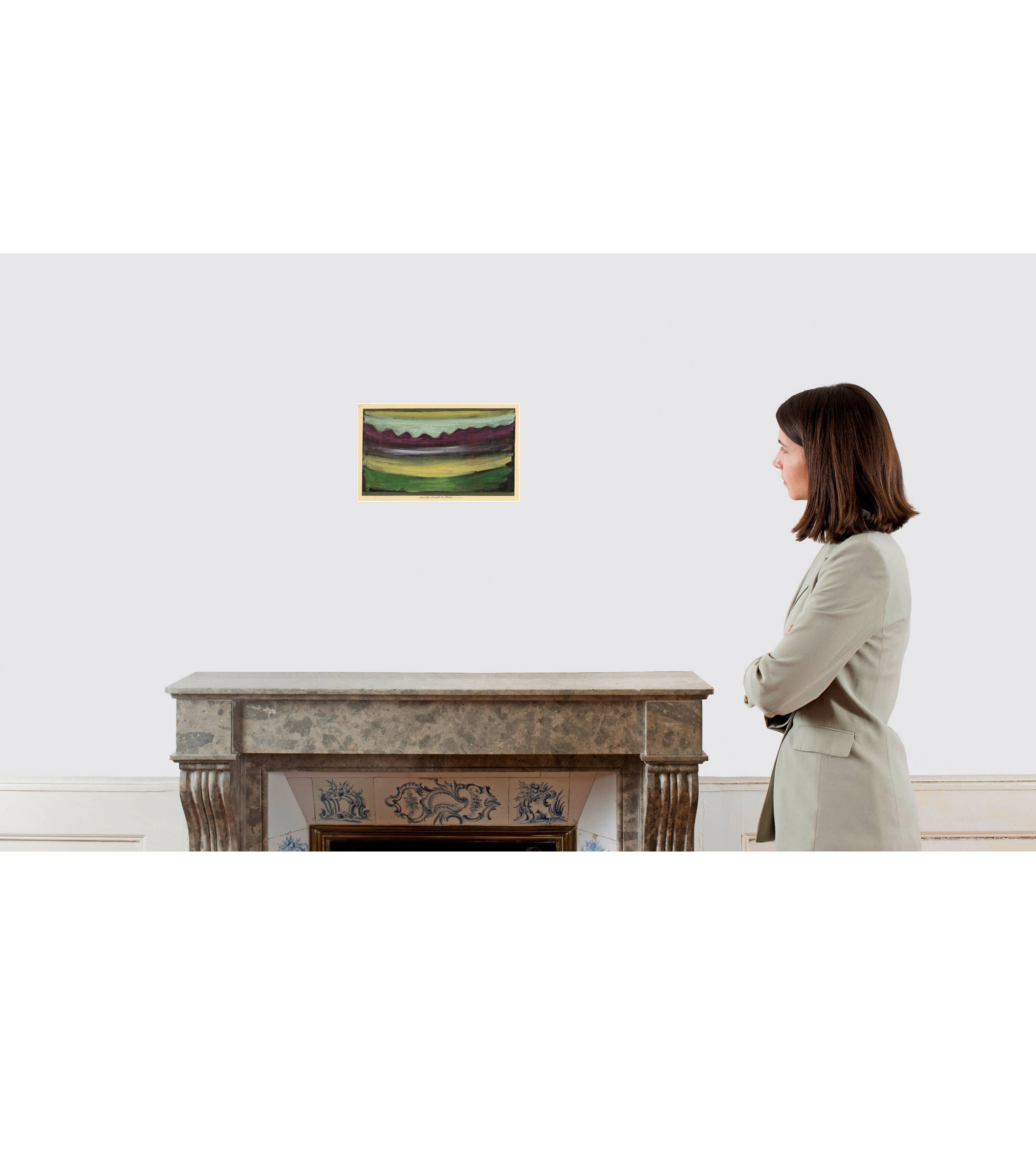
20.2x35.2 cm, image; 24.7x39.7 cm, support
Lower left signed by the artist in ink "Klee", below the image with the work number and the title "1924 199 Sumpf im Gebirge"
Paul Klee Stiftung, Catalogue raisonné, vol. 4, Werke 1923-1926, Bern 2000, no. 3571
Estate of the artist
Collection Lily Klee, Bern (1940-1946), there acquired by
Klee Society, Bern (1946-1952)
Collection Felix Klee, Bern (1953-1990), by inheritance to
Private collection Switzerland
Teiichi Hijikata, Paul Klee, Nagoya 1970, no. 69
Basel 1955, Galerie d'art moderne, Marie-Suzanne Feigel, Paul Klee, Werke aus dem Nachlass, cat. no. 16
Montreux 1957, Galerie de l'ancien Montreux, Exposition Paul Klee, cat. no. 14
Malmö/Göteborg/Stockholm 1965, Malmö Museum/Konstmuseum/Konstsalongen Samlaren, Paul Klee, Målningar, teckningar, cat. no. 6
Kamakura/Nagoya/Kurume/Osaka/Takamatsu/Nagasaki 1969, The Museum of Modern Art/Aichi Prefectural Art Gallery/Ishibashi Museum of Art/Municipal Museum of Art/Kagawa Cultural Center/Prefectural Museum of Art, Paul Klee (1879-1940), cat. no. 21
Buenos Aires/Montevideo 1970, Museo Nacional de Bellas Artes/Museo Nacional de Artes Plásticas, Paul Klee, cat. no. 4
Lugano 1972, Museo civico di belle arti, Villa Ciani, Paul Klee, Collezione di Felix Paul Klee, Bern, cat. no. 15
Martigny 1985, Fondation Pierre Gianadda, Klee, cat. no. 164
Tokyo/Osaka/Shimonoseki/Okayama/Hakone 1989/1990, Isetan Museum of Art/Navio Museum/City Art Museum/Takashimaya/The Hakone Open-Air Museum, Paul Klee, Das Frühwerk, cat. no. 130
Kamakura/Morioka/Tsu/Matsumoto 2002, The Museum of Modern Art/Iwate Museum of Art/Mie Prefectural Art Museum/City Museum of Art, Paul Klee and His Travels, cat. no. 129
Kochel 2018, Franz Marc Museum, Paul Klee, Landschaften, Eine kleine Reise ins Land der besseren Erkenntnis, p. 80
Milan 2018, Mudec, Paul Klee, Alle origini dell'arte, cat. no. 81
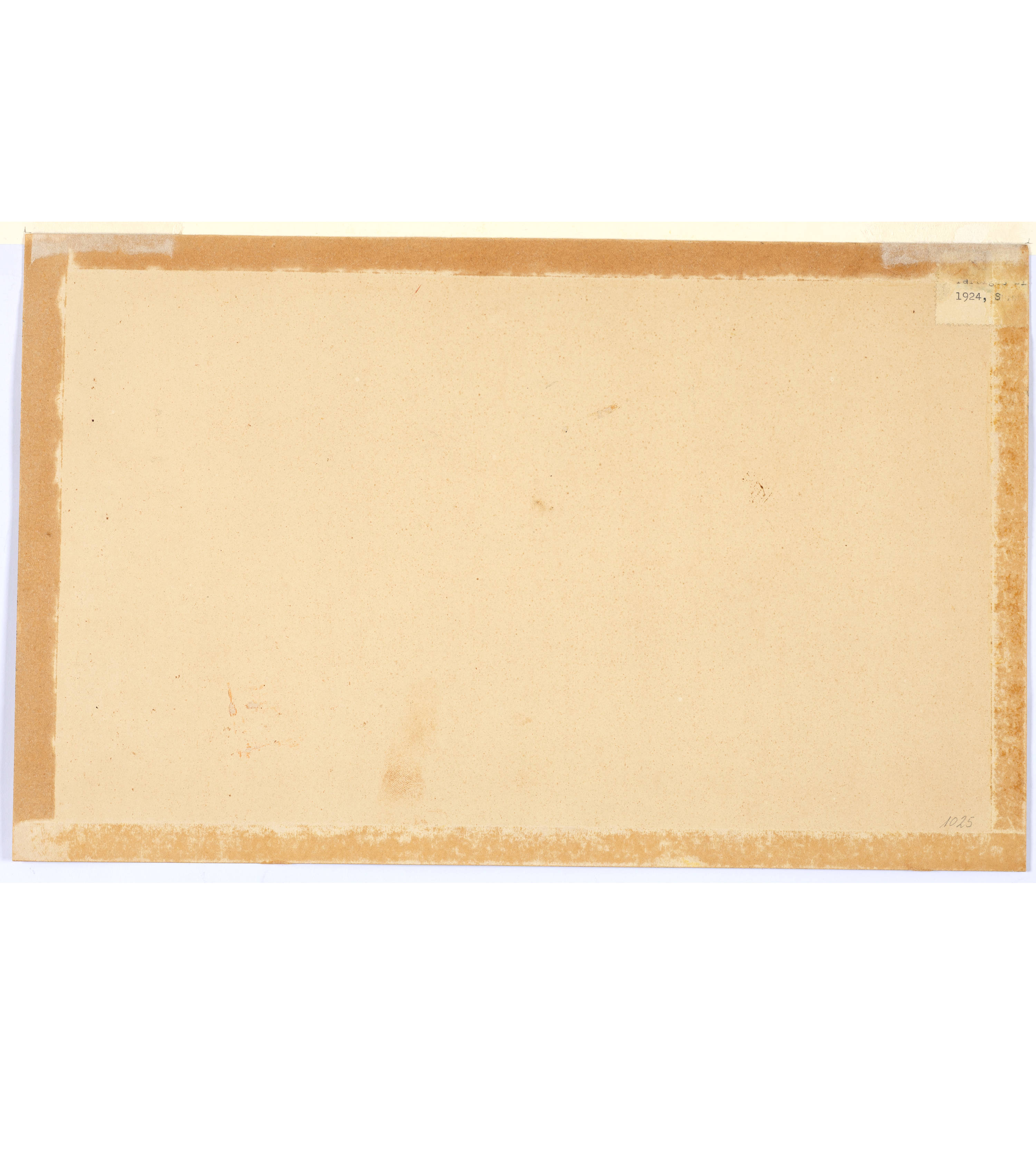
The cardboard minimally browned, occasional small spots. Upper left corner of the cardboard slightly discoloured. Fresh in colour and in very good condition
With "Sumpf im Gebirge", Paul Klee created a work at the height of his Weimar Bauhaus period. As a master at the Bauhaus, Klee combined his intensive teaching activity with an undiminished productivity in the studio. His theoretical considerations on the emergence of form, the relationship between nature and construction, and the laws of pictorial composition found their direct artistic expression in the works of these years.
The title refers to two contrasting areas of nature. While the mountains stand for solidity, order, and permanence, the swamp embodies the changeable, organic, and unstable. Such polarities are among the fundamental themes of Klee’s thinking. His landscapes are never topographical depictions of a specific place, but poetic pictorial spaces in which observation of nature and inner imagination merge.
The composition thrives on a finely balanced interplay between constructive structure and organic growth. Rhythmically guided lines, subtly graded color fields, and a subtle spatial layering give the sheet a floating balance, framed by an upper and lower border strip.
The present sheet unites analytical clarity and imaginative freedom in an exemplary manner and, as an oil painting on paper, is among the characteristic creations from this important phase of the artist’s work.
1924 - Werknummer 1924.199
Ölfarbe auf schwarzer Grundierung auf Papier auf Karton, Randstreifen in Tusche und Gouache
20,2x35,2 cm, Darstellung; 24,7x39,7 cm, Unterlage
Unten links vom Künstler in Tusche signiert "Klee", unterhalb der Darstellung mit der Werknummer und dem Titel "1924 199 Sumpf im Gebirge"
Paul Klee Stiftung, Catalogue raisonné, Band 4, Werke 1923-1926, Bern 2000,
Nachlass des Künstlers
Slg. Lily Klee, Bern (1940-1946), dort erworben von
Klee-Gesellschaft, Bern (1946-1952)
Slg. Felix Klee, Bern (1953-1990), durch Erbschaft an
Privatsammlung Schweiz
Teiichi Hijikata, Paul Klee, Nagoya 1970,
Basel 1955, Galerie d'art moderne, Marie-Suzanne Feigel, Paul Klee, Werke aus dem Nachlass,
Montreux 1957, Galerie de l'ancien Montreux, Exposition Paul Klee,
Malmö/Göteborg/Stockholm 1965, Malmö Museum/Konstmuseum/Konstsalongen Samlaren, Paul Klee, Målningar, teckningar,
Kamakura/Nagoya/Kurume/Osaka/Takamatsu/Nagasaki 1969, The Museum of Modern Art/Aichi Prefectural Art Gallery/Ishibashi Museum of Art/Municipal Museum of Art/Kagawa Cultural Center/Prefectural Museum of Art, Paul Klee (1879-1940),
Buenos Aires/Montevideo 1970, Museo Nacional de Bellas Artes/Museo Nacional de Artes Plásticas, Paul Klee,
Lugano 1972, Museo civico di belle arti, Villa Ciani, Paul Klee, Collezione di Felix Paul Klee, Berna,
Martigny 1985, Fondation Pierre Gianadda, Klee,
Tokyo/Osaka/Shimonoseki/Okayama/Hakone 1989/1990, Isetan Museum of Art/Navio Museum/City Art Museum/Takashimaya/The Hakone Open-Air Museum, Paul Klee, Das Frühwerk,
Kamakura/Morioka/Tsu/Matsumoto 2002, The Museum of Modern Art/Iwate Museum of Art/Mie Prefectural Art Museum/City Museum of Art, Paul Klee and His Travels,
Kochel 2018, Franz Marc Museum, Paul Klee, Landschaften, Eine kleine Reise ins Land der besseren Erkenntnis,
Mailand 2018, Mudec, Paul Klee, Alle origini dell'arte,
Der Karton minim gebräunt, vereinzelte Fleckchen. Linke obere Kartonecke leicht verfärbt. Farbfrisch und in sehr guter Erhaltung
Mit "Sumpf im Gebirge" schuf Paul Klee ein Werk auf dem Höhepunkt seiner Weimarer Bauhauszeit. Als Meister am Bauhaus verband Klee seine intensive Lehrtätigkeit mit einer unvermindert produktiven Arbeit im Atelier. Seine theoretischen Überlegungen zur Entstehung der Form, zum Verhältnis von Natur und Konstruktion sowie zu den Gesetzmässigkeiten des Bildaufbaus fanden in den Werken dieser Jahre ihren unmittelbaren künstlerischen Ausdruck.
Der Titel verweist auf zwei gegensätzliche Naturbereiche. Während das Gebirge für Festigkeit, Ordnung und Dauer steht, verkörpert der Sumpf das Veränderliche, Organische und Unbeständige. Solche Polaritäten gehören zu den Grundthemen von Klees Denken. Seine Landschaften sind niemals topografische Wiedergaben eines bestimmten Ortes, sondern poetische Bildräume, in denen Naturbeobachtung und innere Vorstellungskraft miteinander verschmelzen.
Die Komposition lebt von einem fein austarierten Wechselspiel zwischen konstruktiver Gliederung und organischem Wachstum. Rhythmisch geführte Linien, differenziert abgestufte Farbflächen und eine subtile räumliche Staffelung verleihen dem Blatt eine schwebende Balance, eingefasst von einem oberen und unteren Randstreifen.
Das vorliegende Blatt vereint analytische Klarheit und imaginative Freiheit auf beispielhafte Weise und zählt als Ölgemälde auf Papier zu den charakteristischen Schöpfungen aus der wichtigen Werkphase des Künstlers.
| Switzerland | CHF | 150 |
| Europe | CHF | 250 |
| USA | CHF | 320 |
| Overseas | CHF | 325 |