- EN


 Log in
-
- Live Auctions
- Past auctions
- More
- Kornfeld today
- The Story of Kornfeld
- Information










Fuendetodos 1746 - 1828 Bordeaux


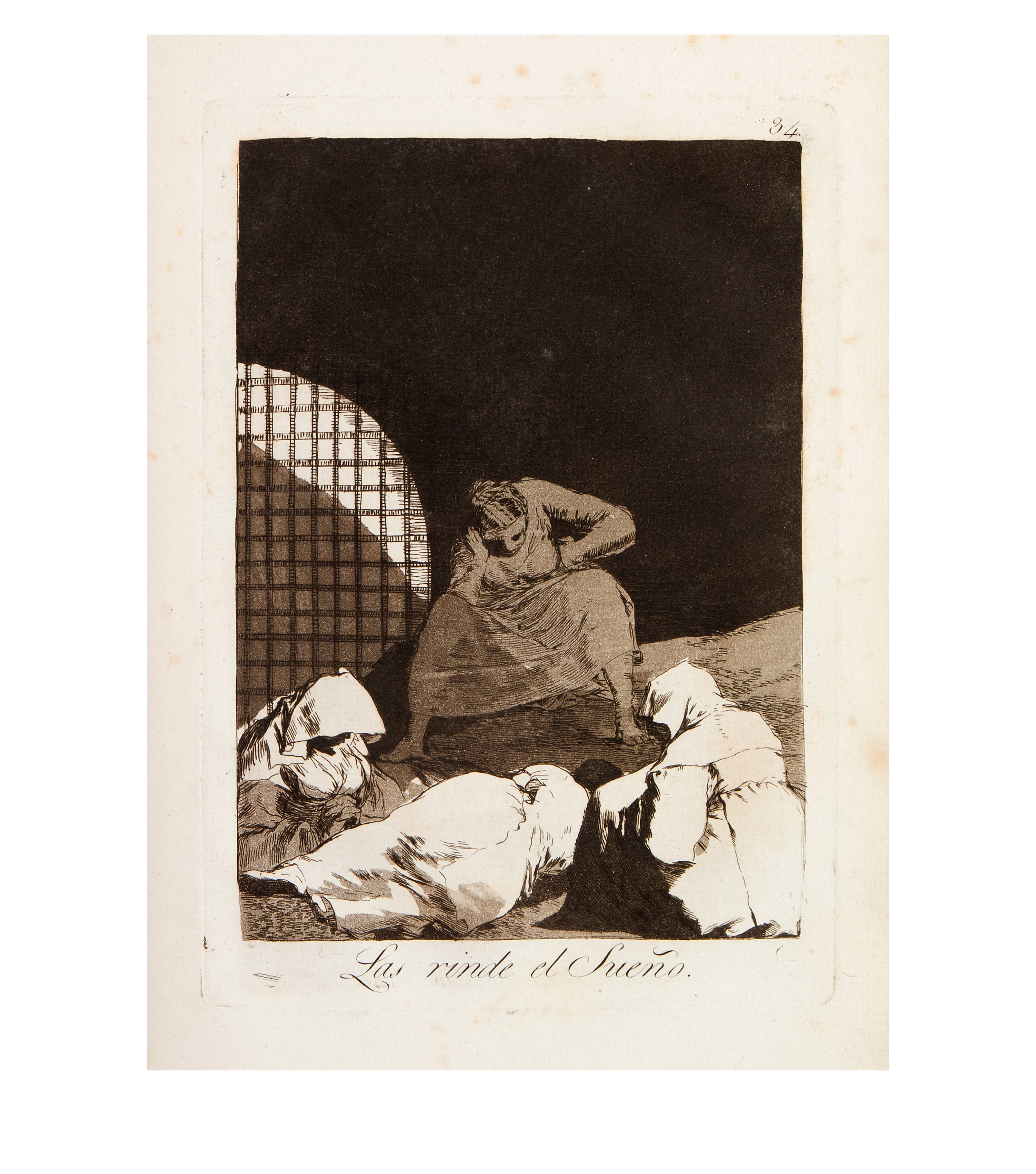
1796-1798, first edition 1799
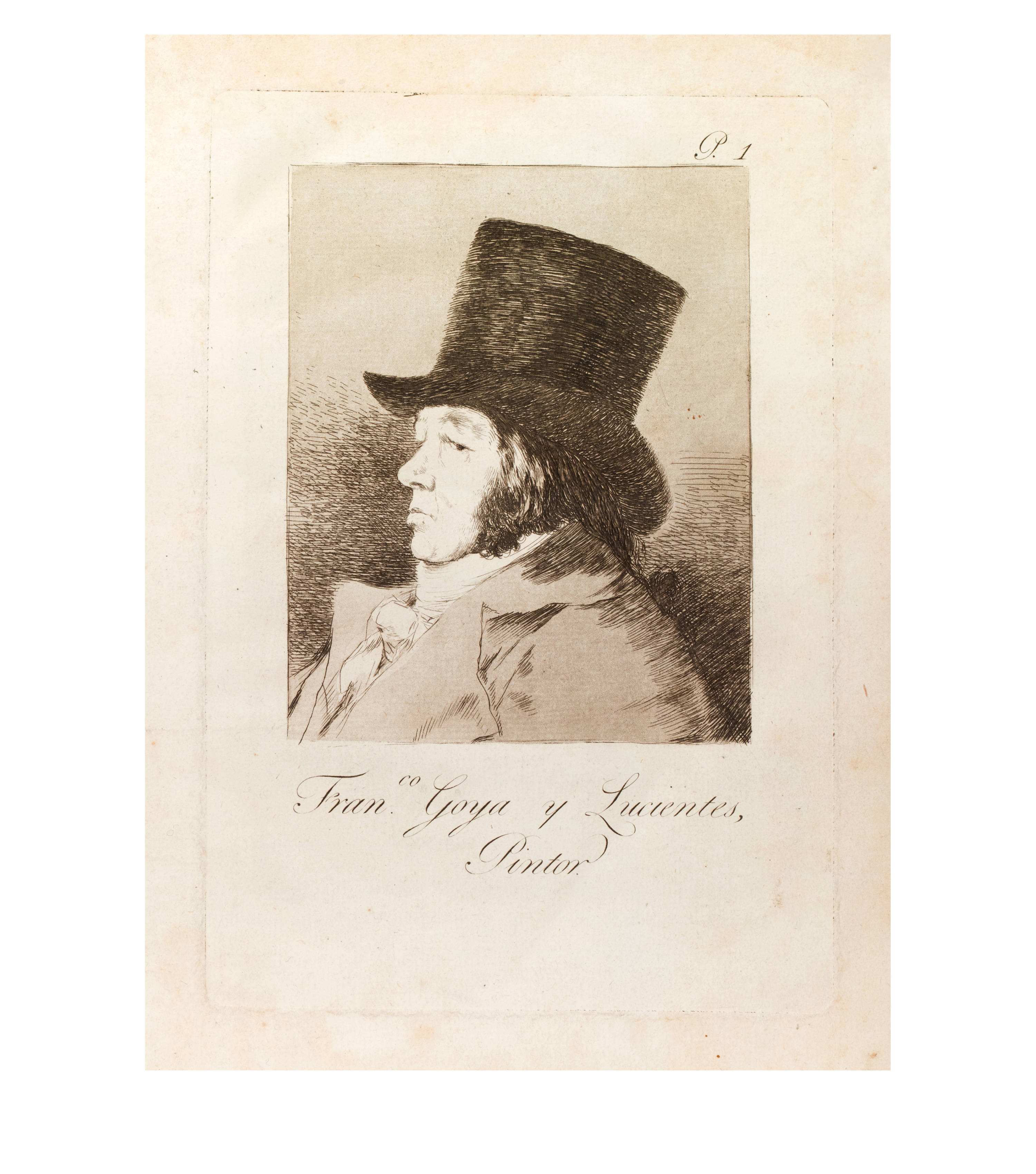
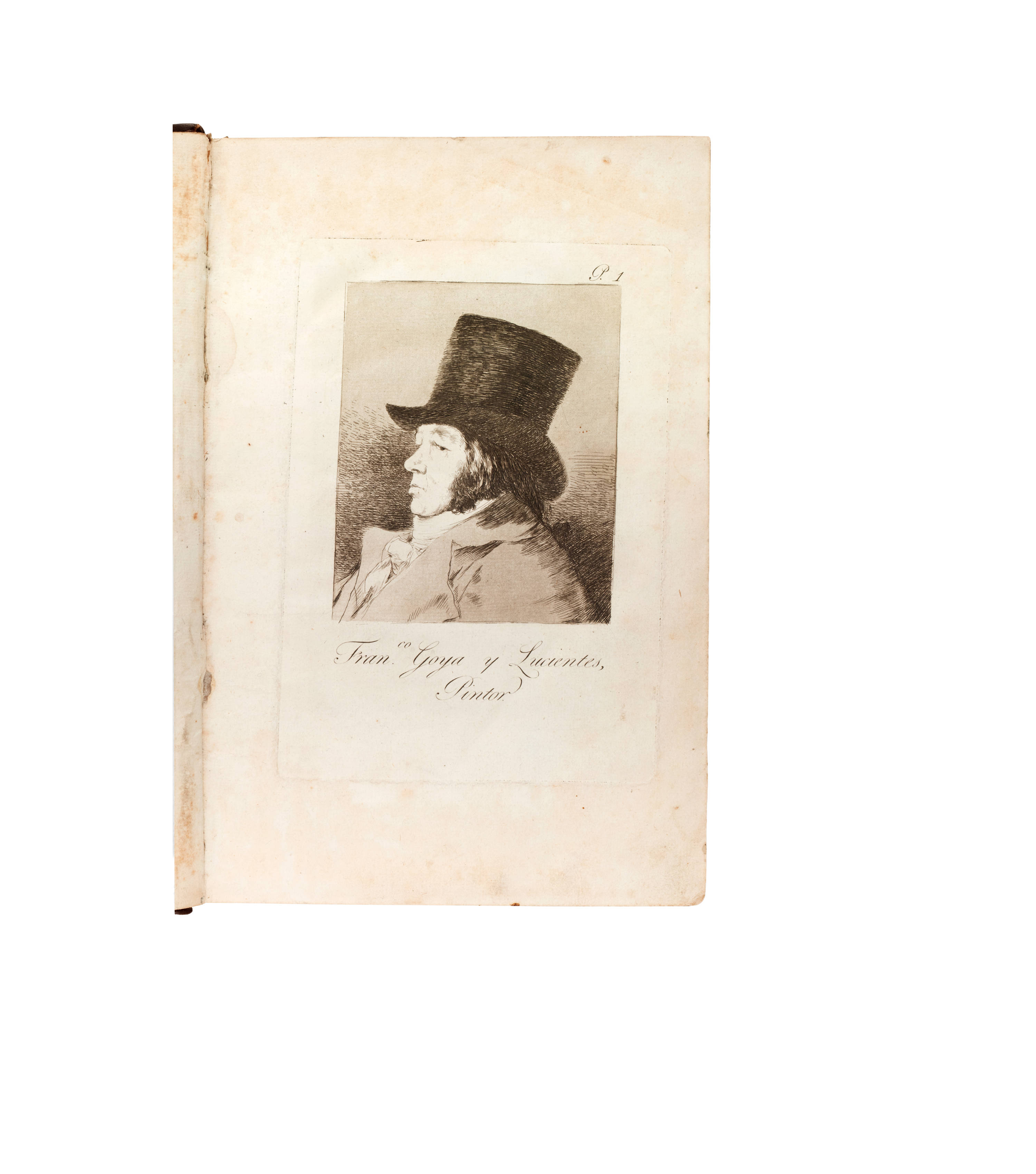
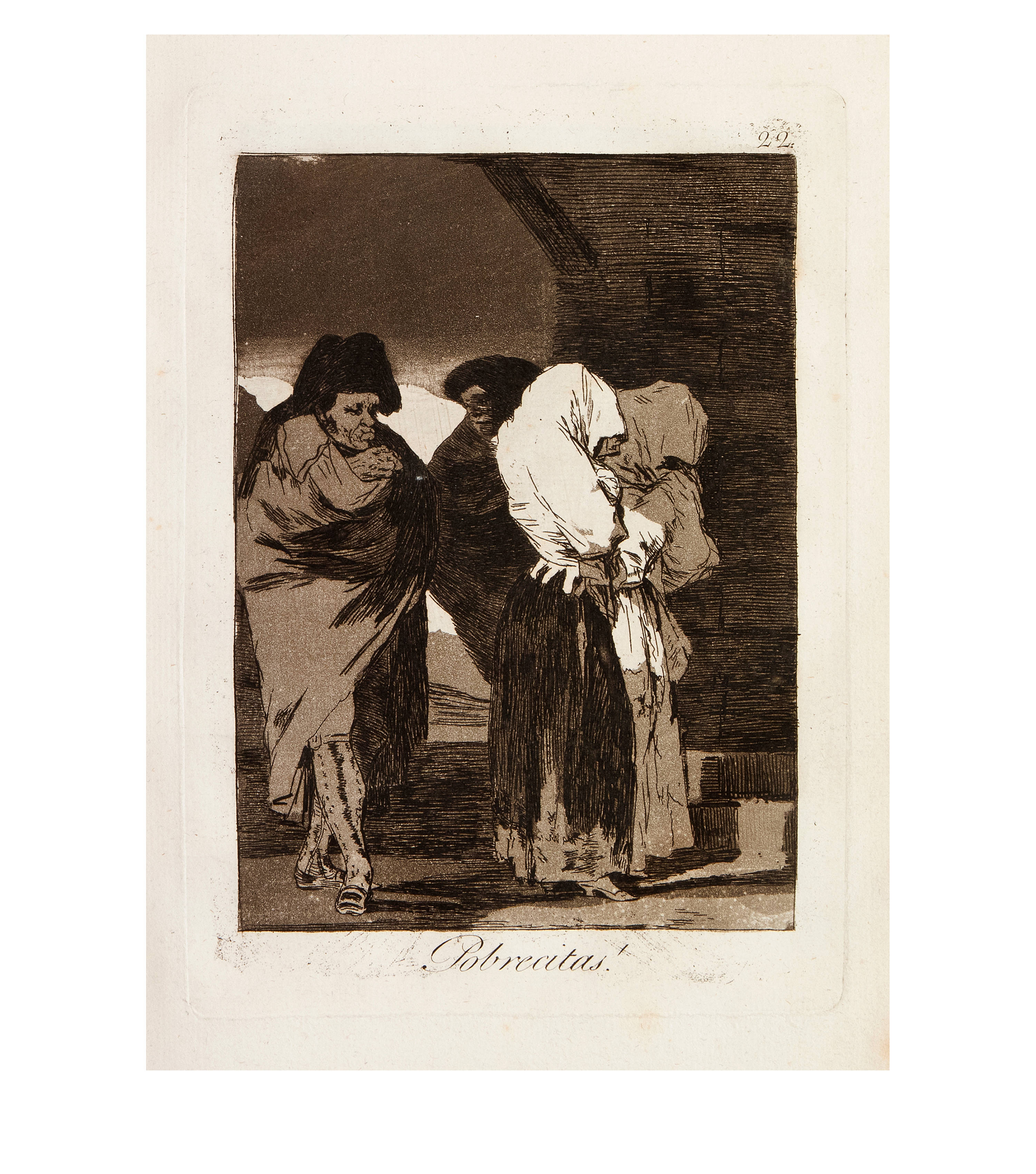
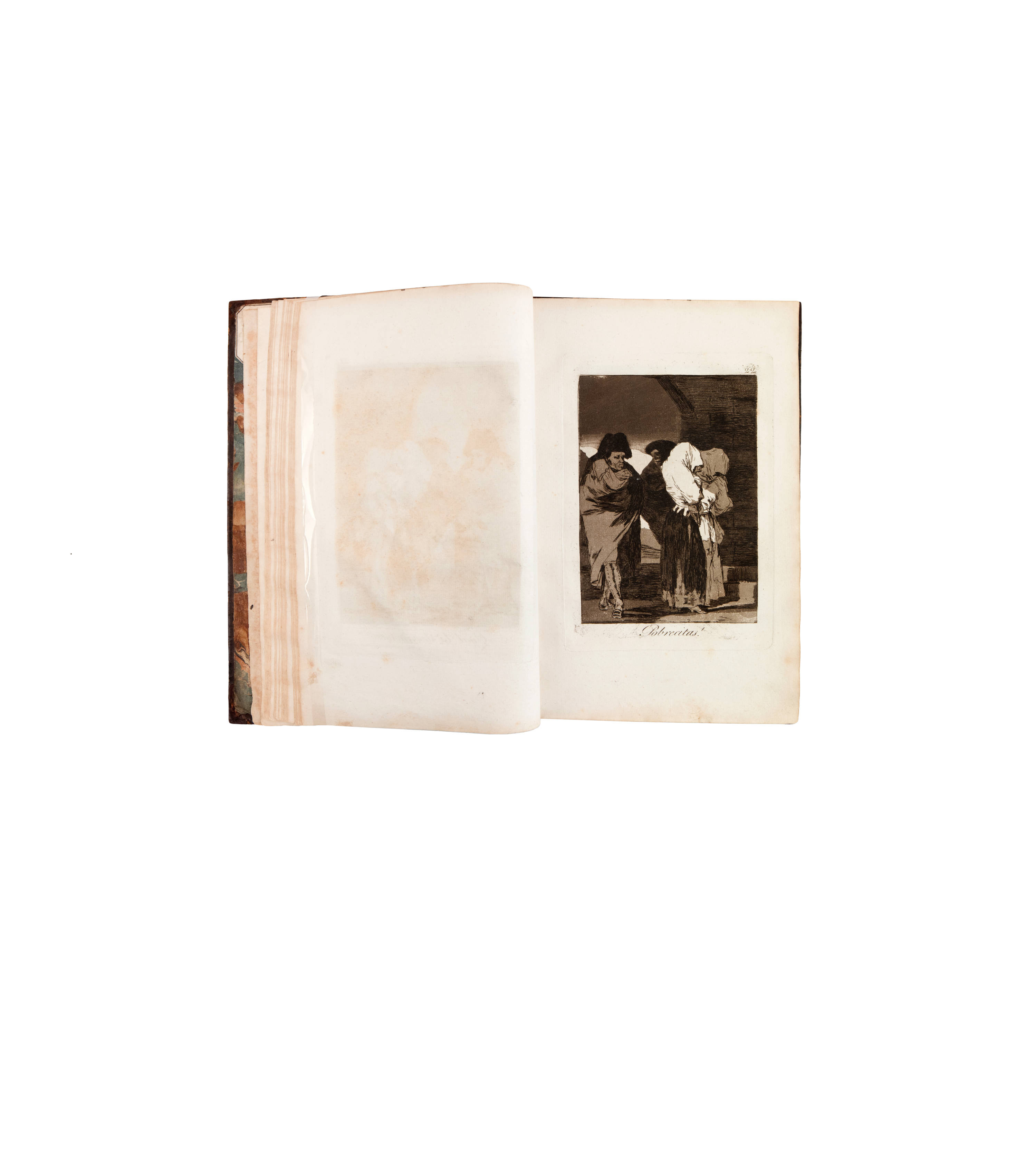
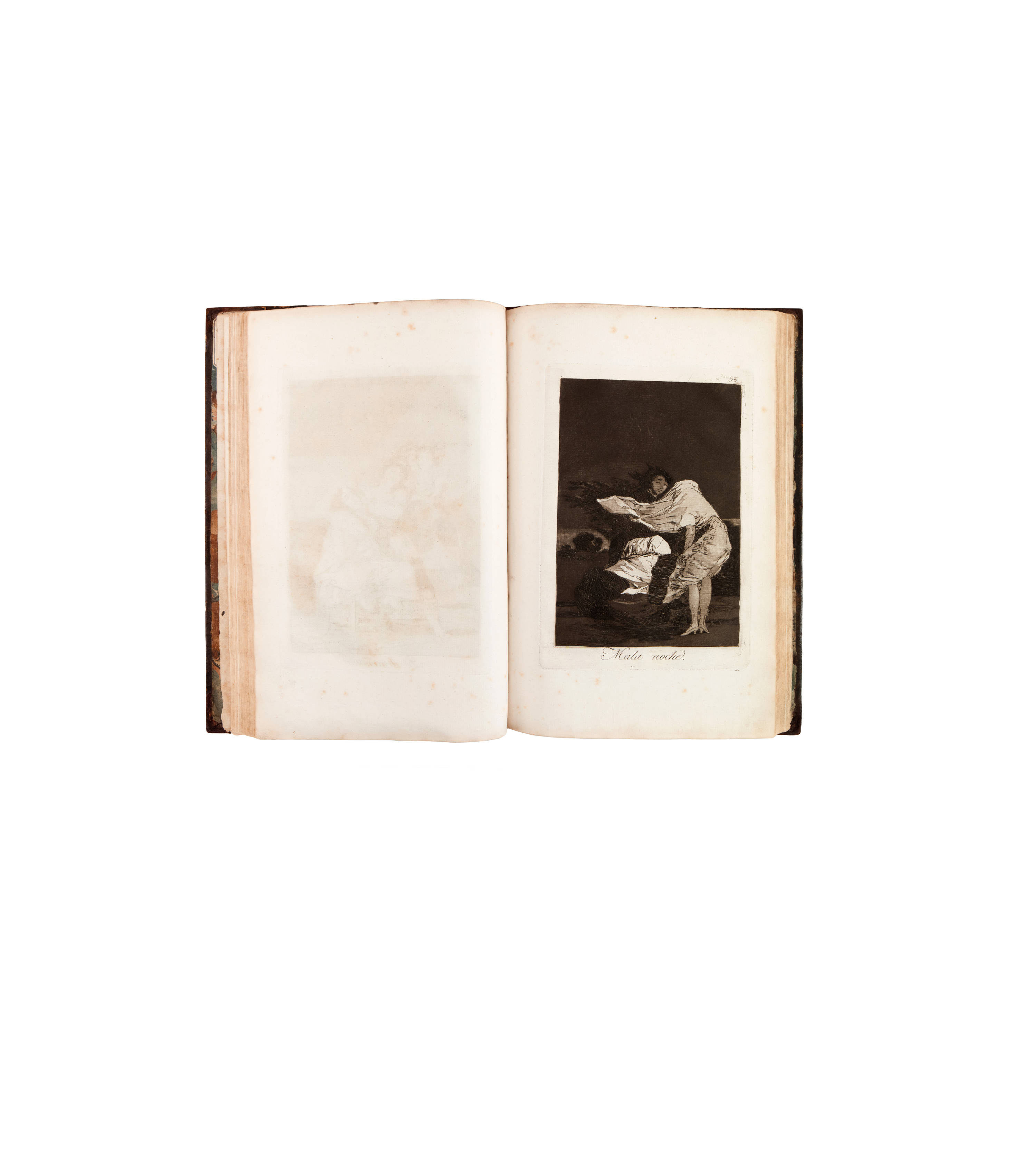
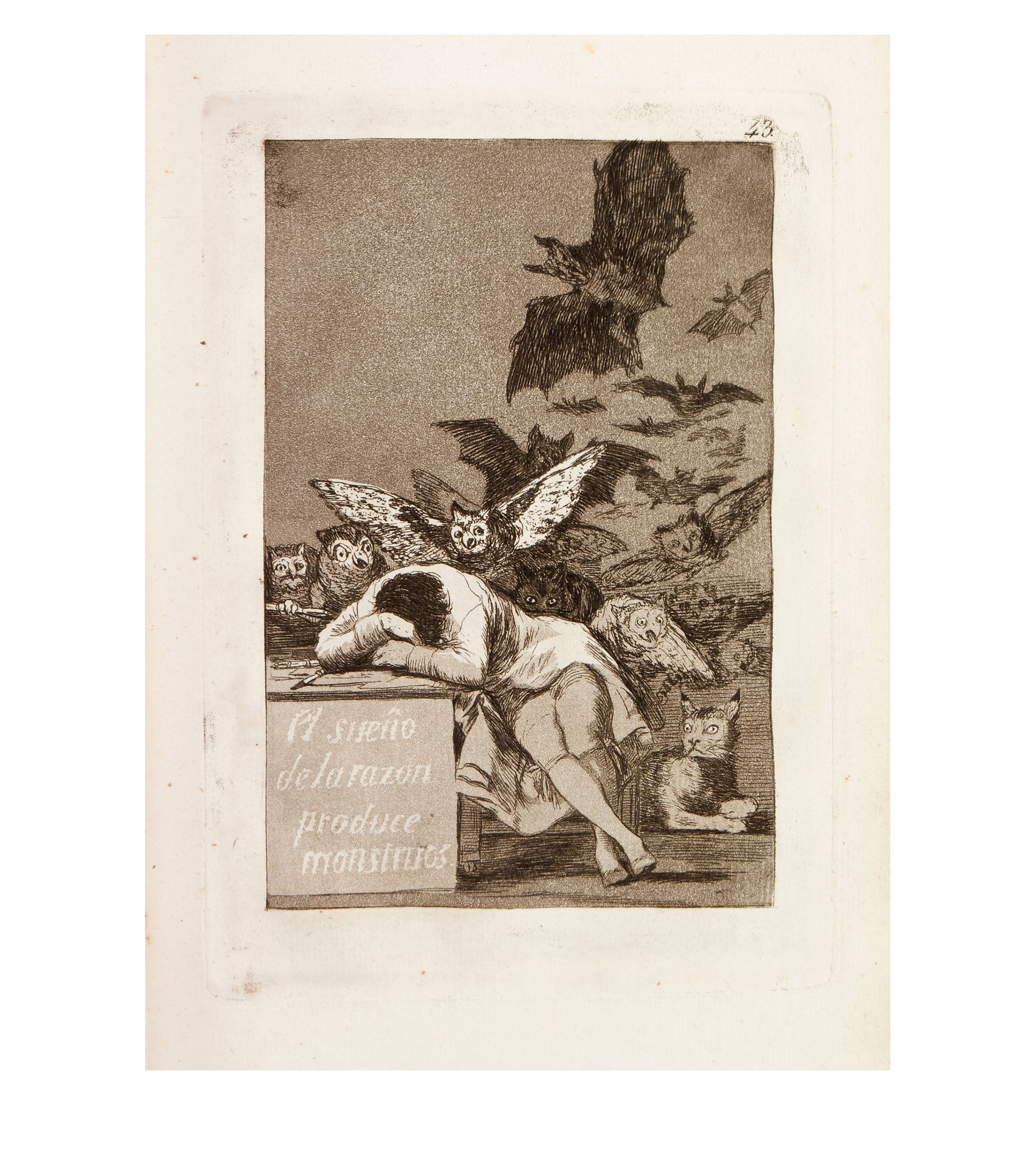
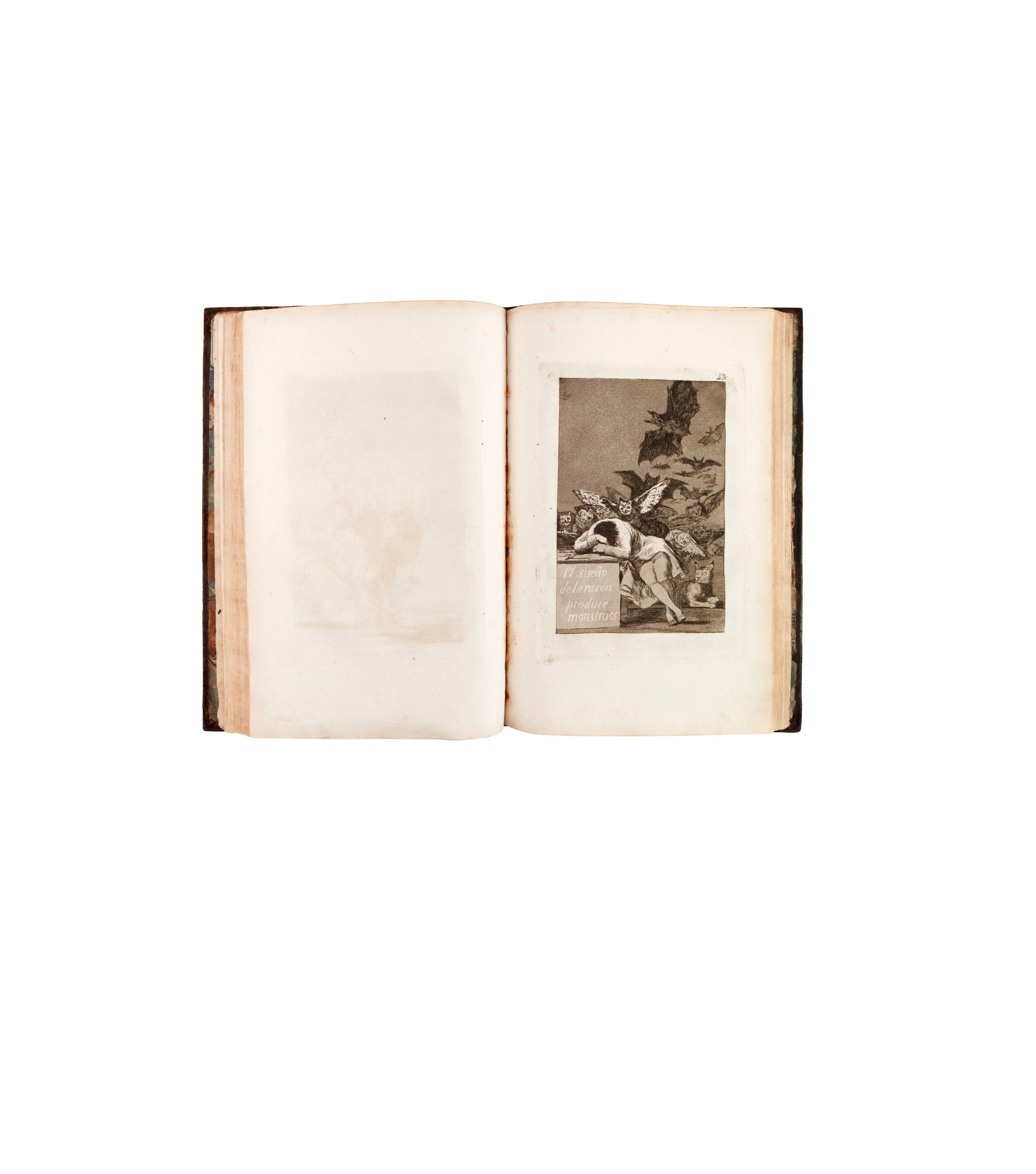
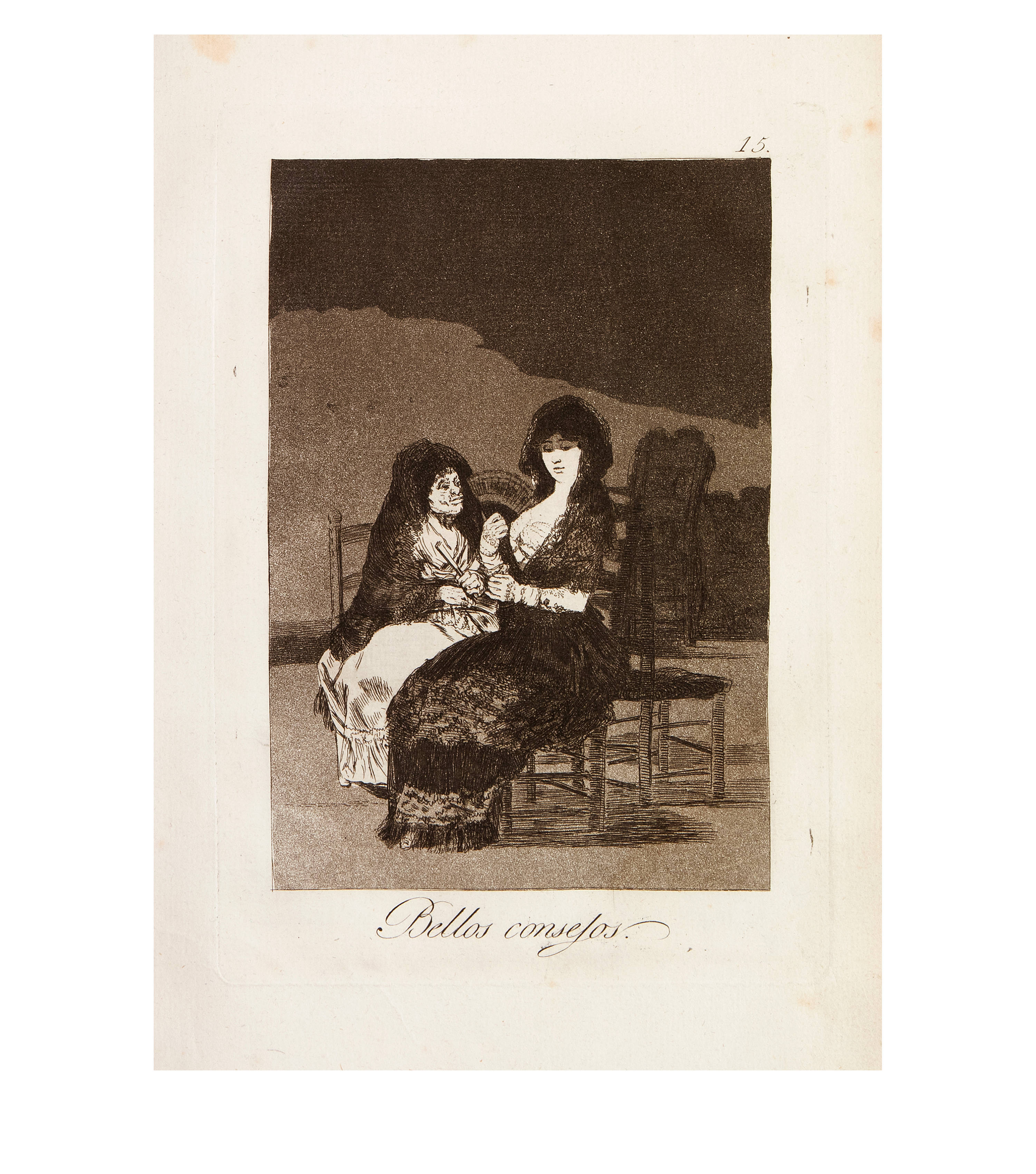
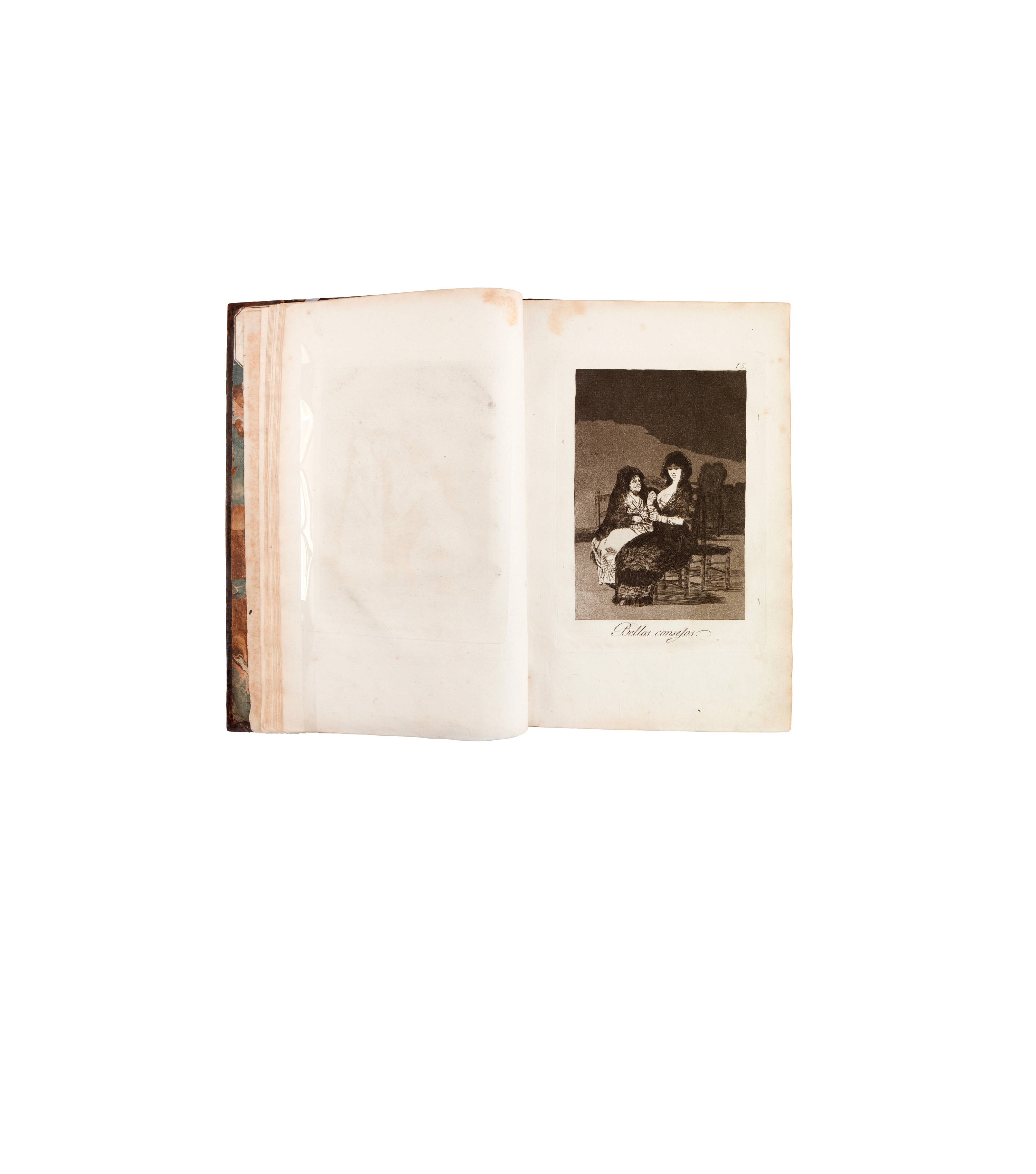
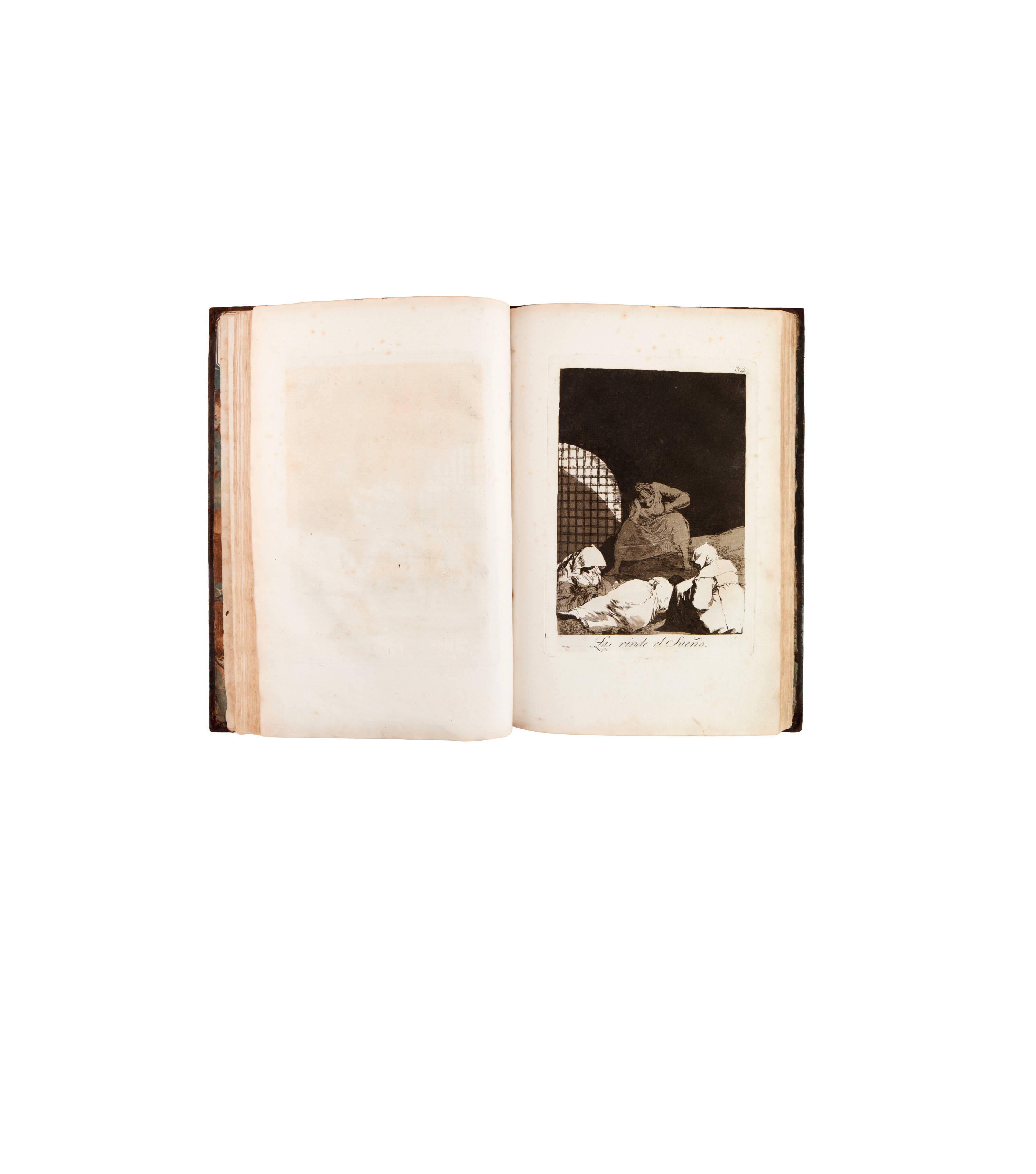
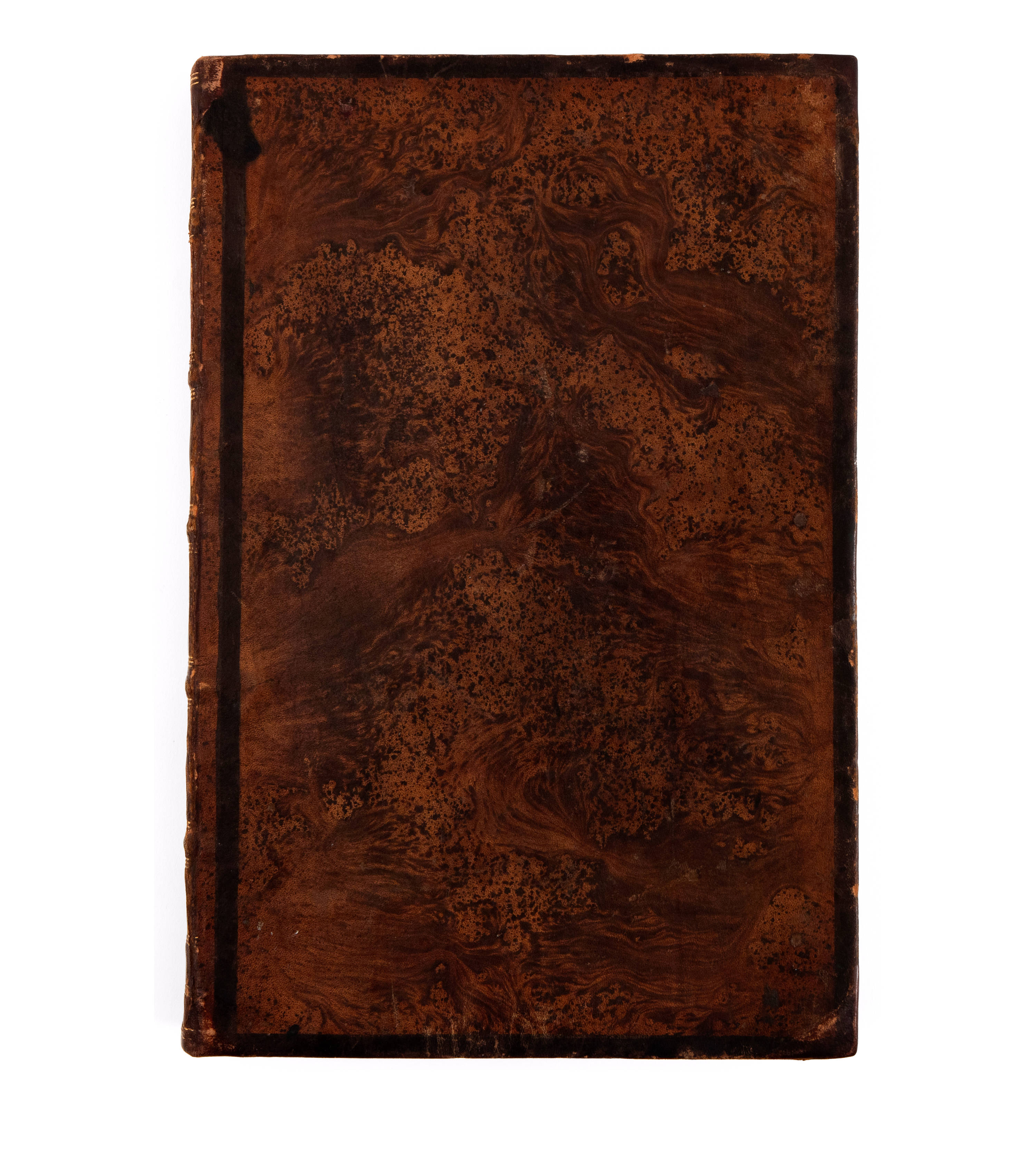
Series of 80 etchings. In the old, brown-green marbled calf leather binding of the period, with gold-embossed ornamental fillets and the red label with the inscription "CAPRICHOS / DE / GOYA"
30.7x21.5 cm, book format
Tomás Harris, Goya, Engravings and Lithographs, Catalogue raisonné, vol. II, 36-115, each III/1 (of 12), all sheets in the 1st edition of 1799
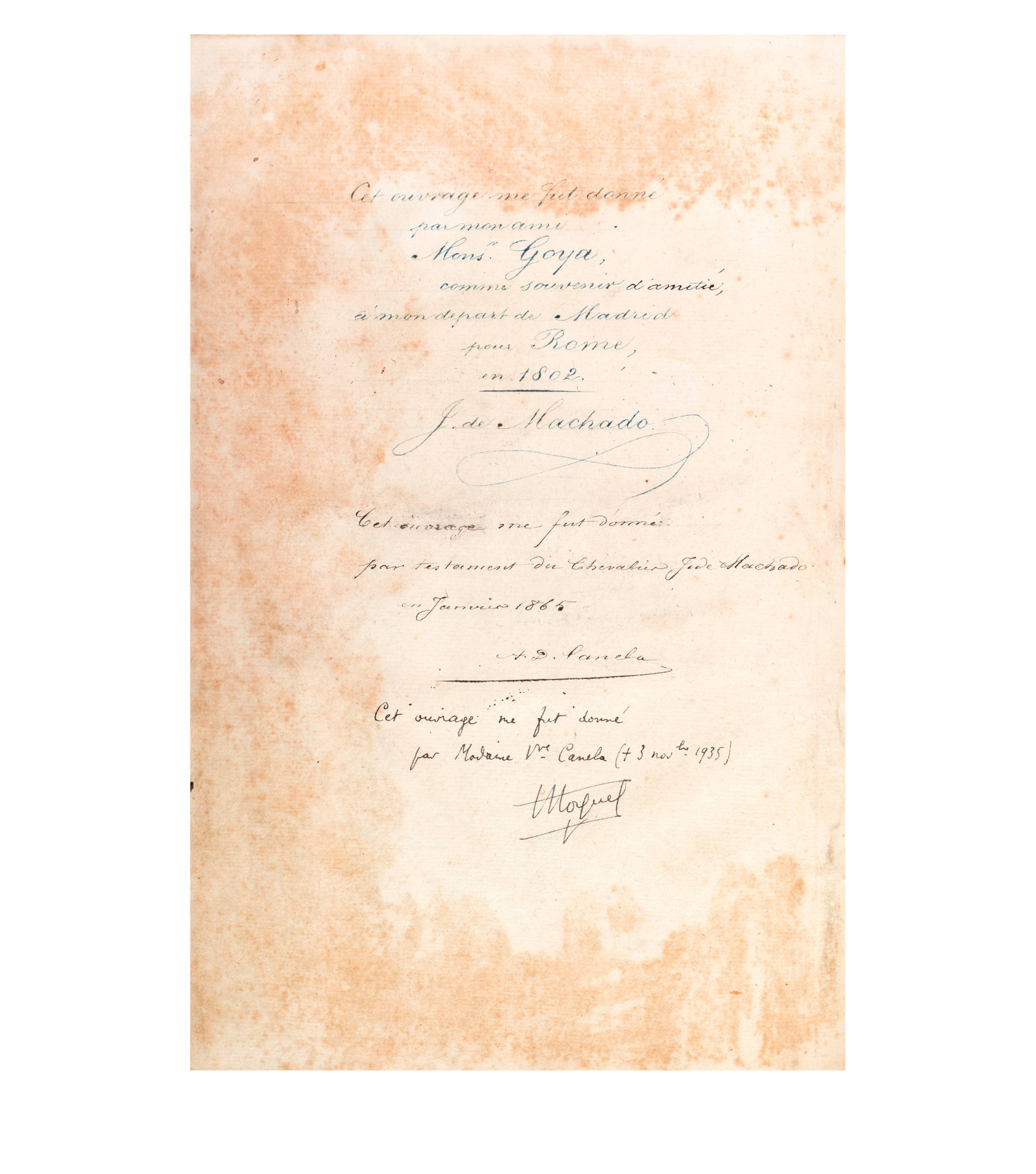
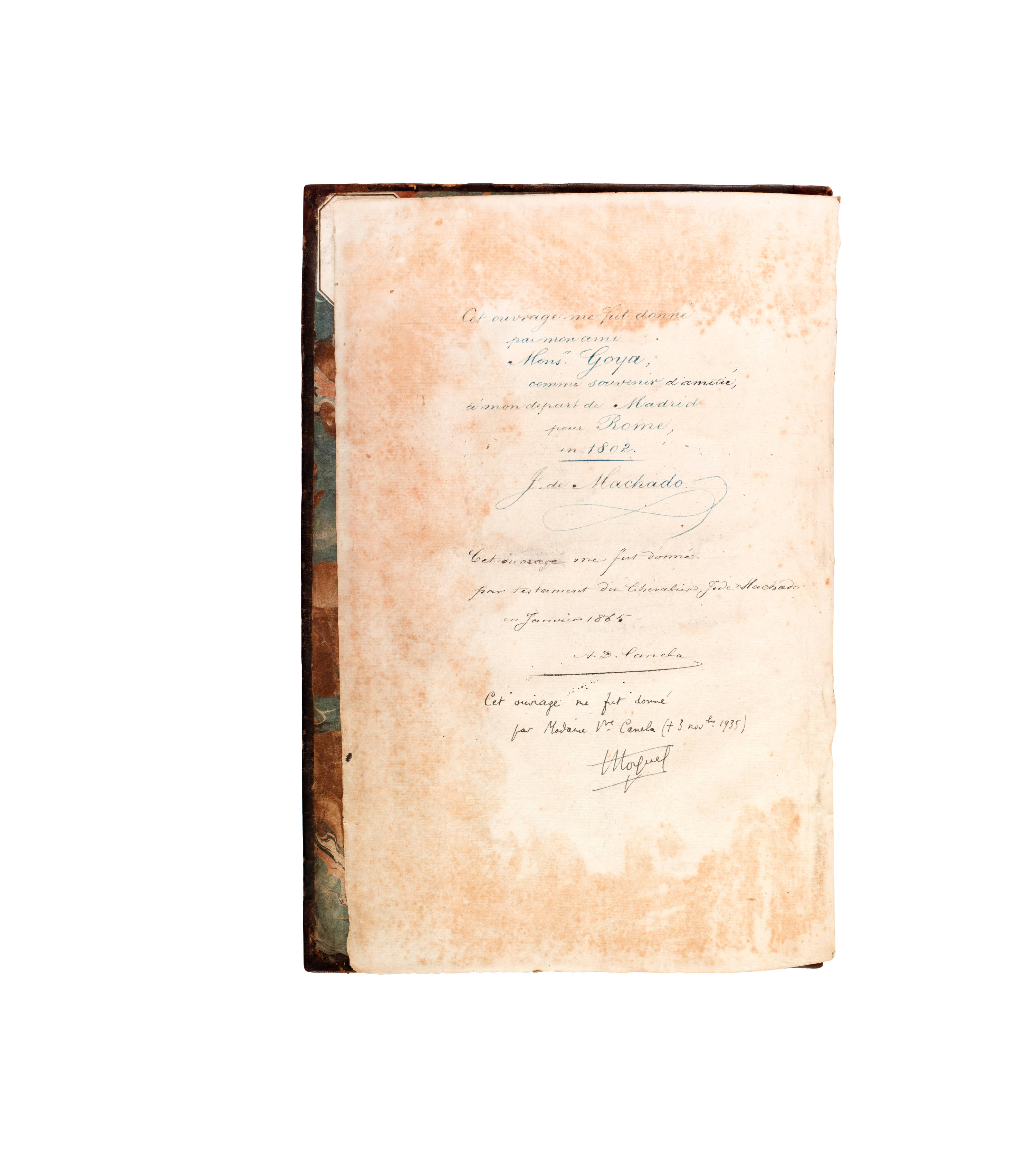
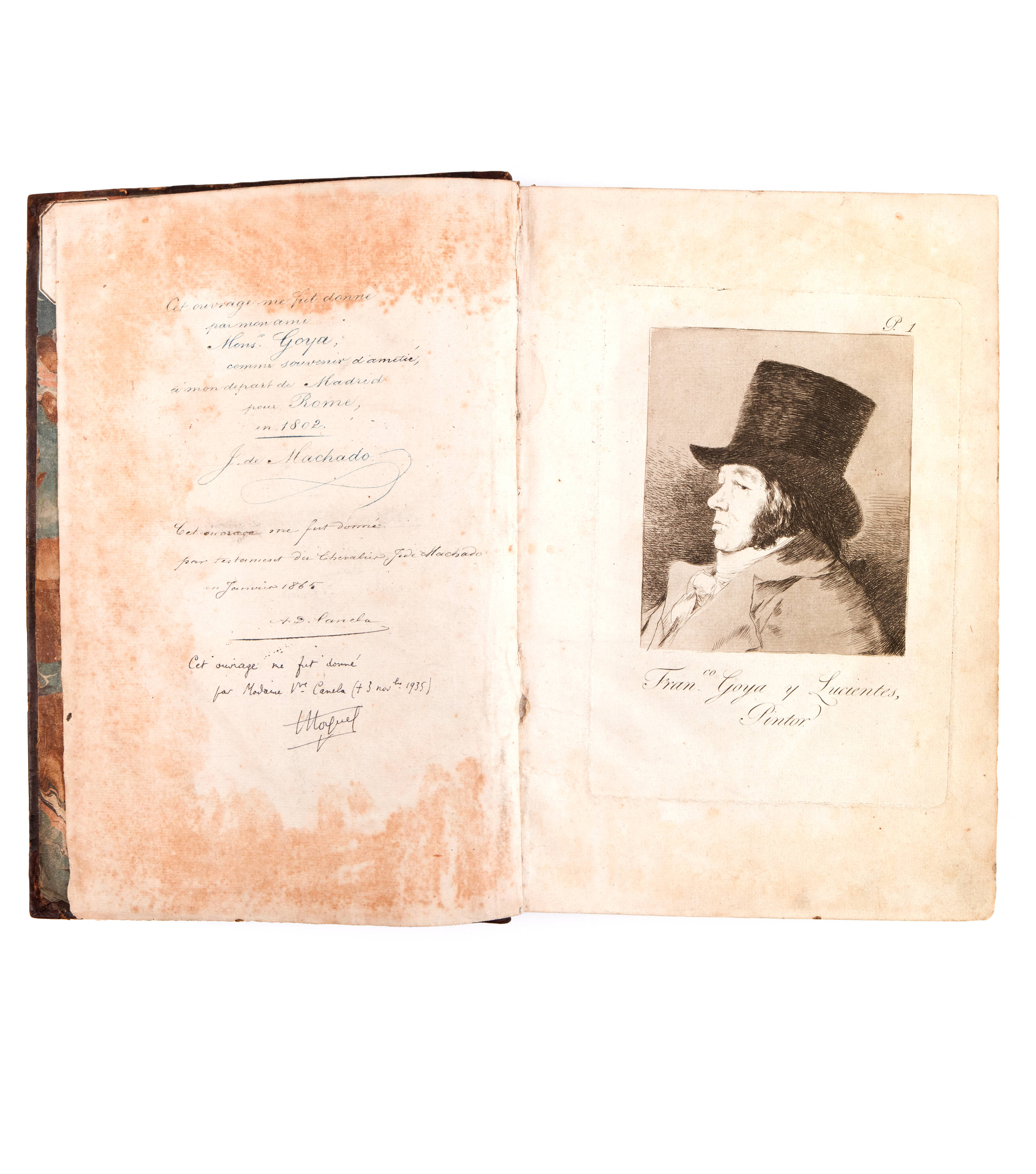
Francisco de Goya, Madrid, 1802 as a gift to
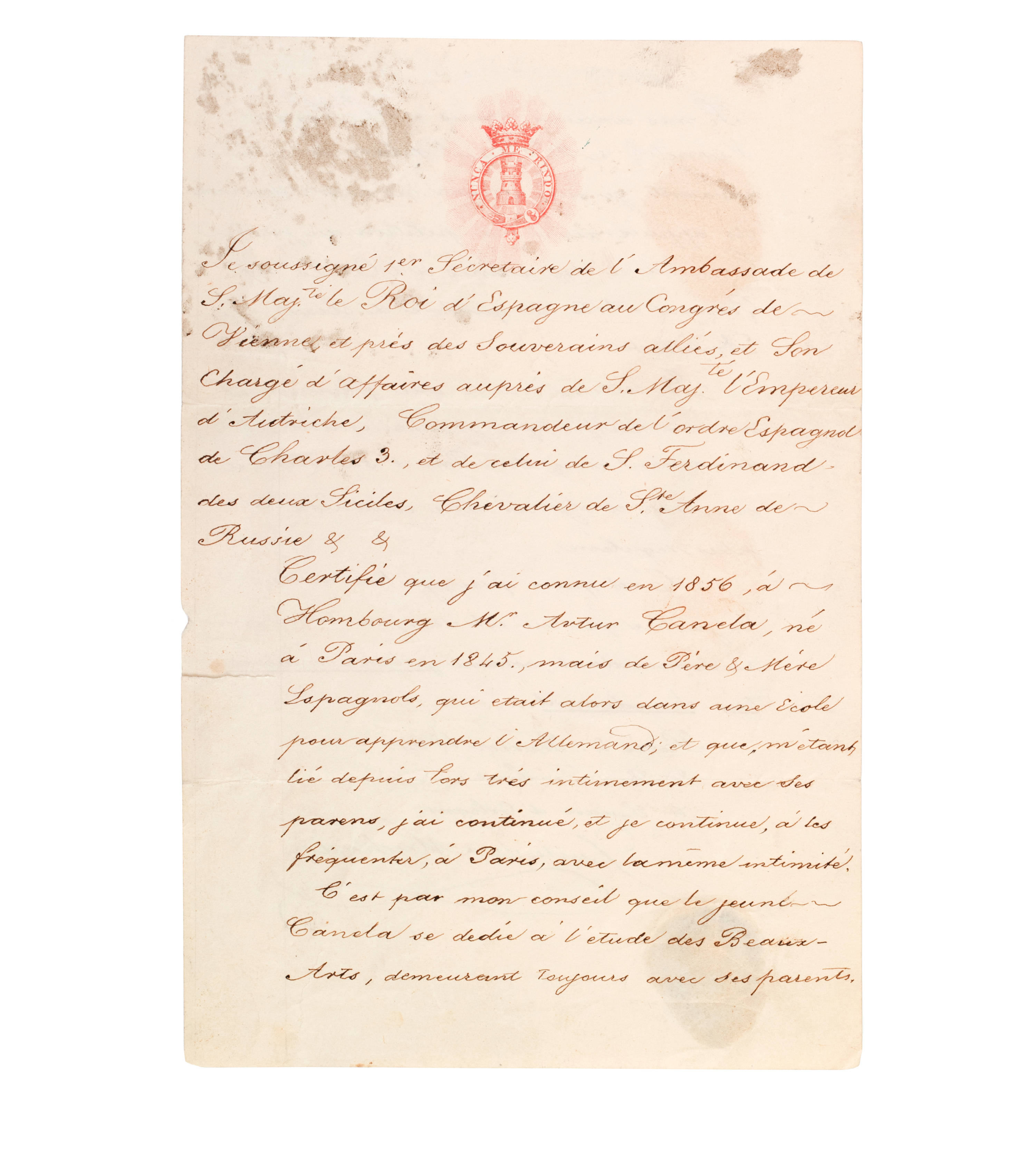
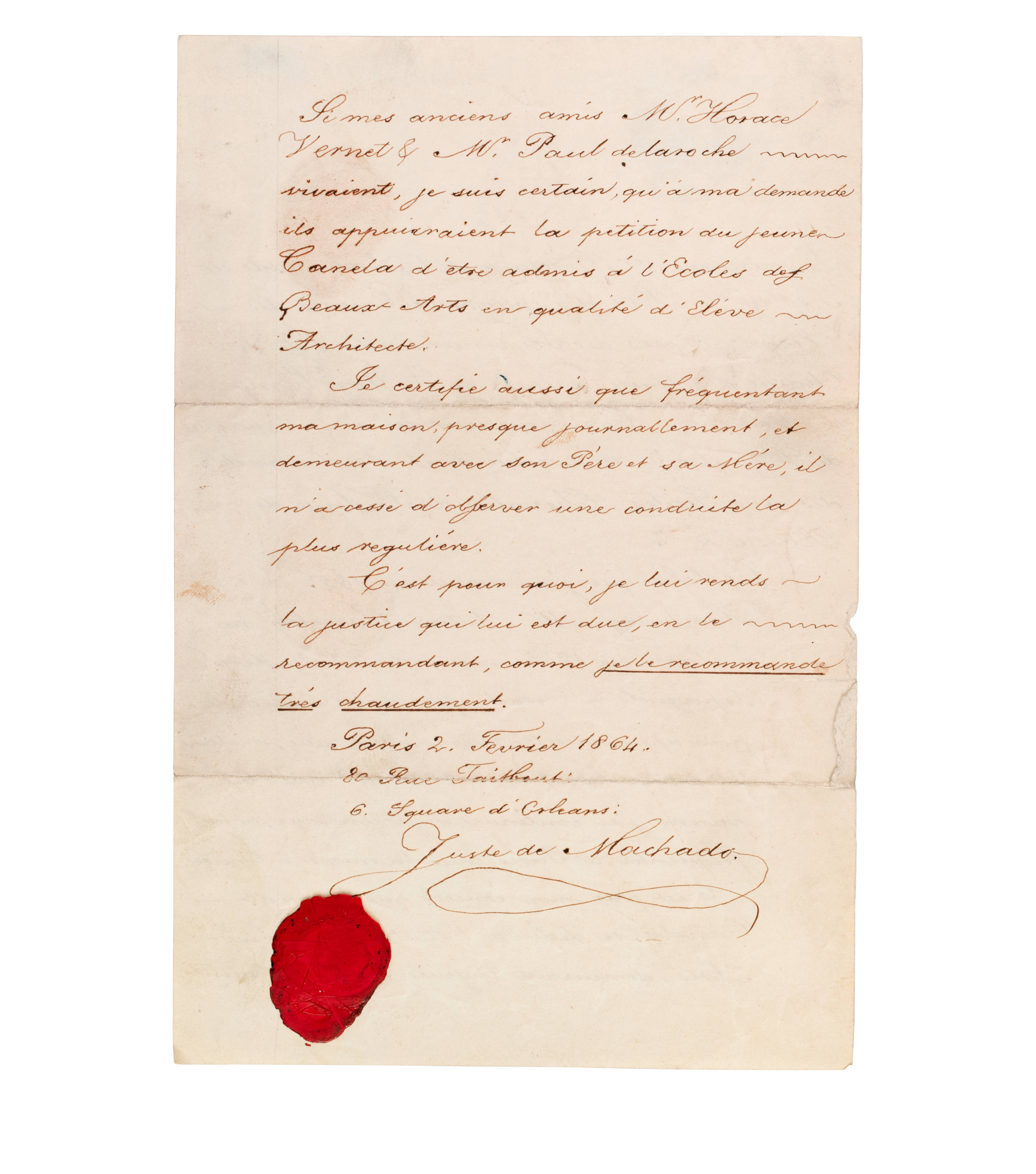
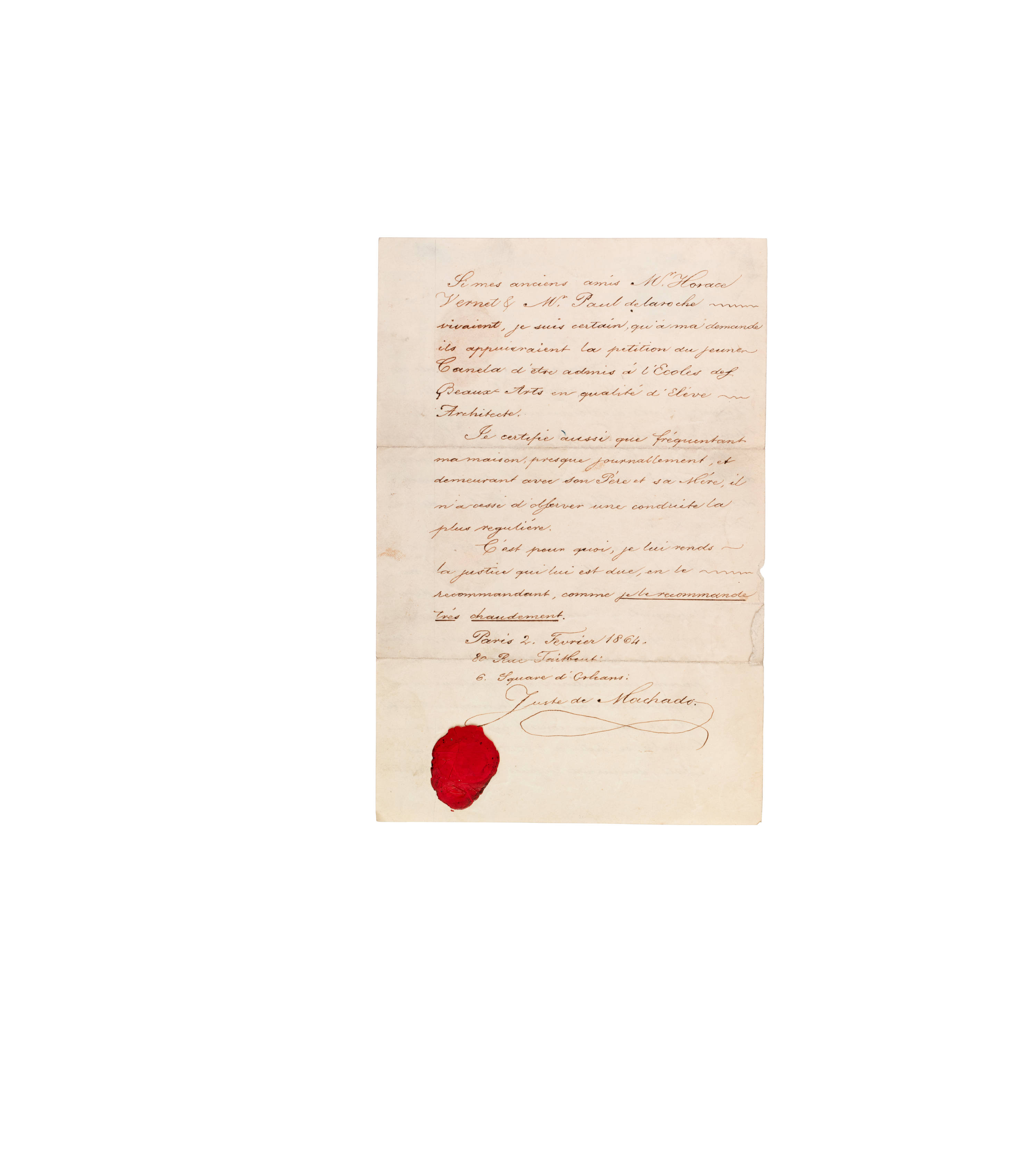
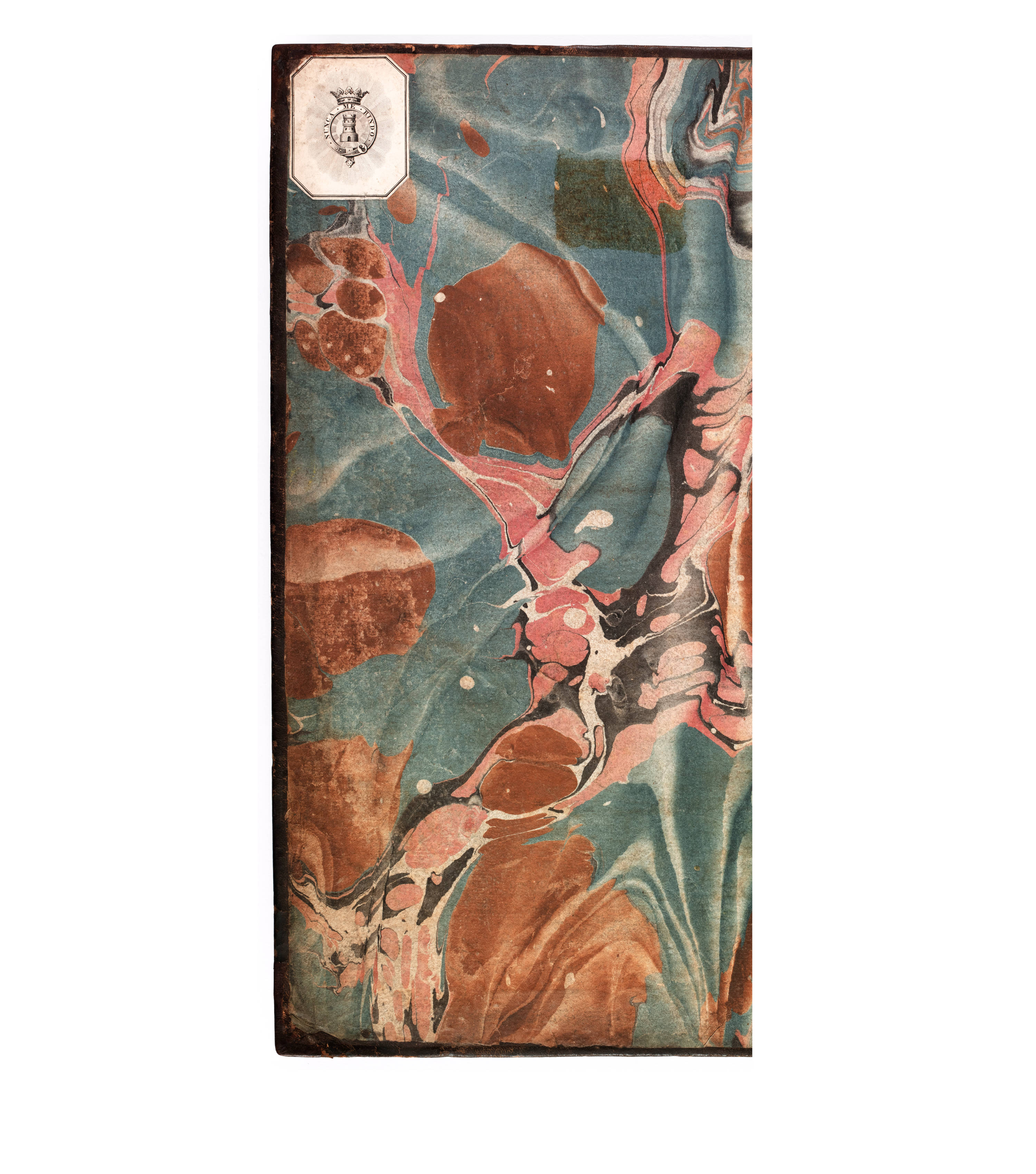
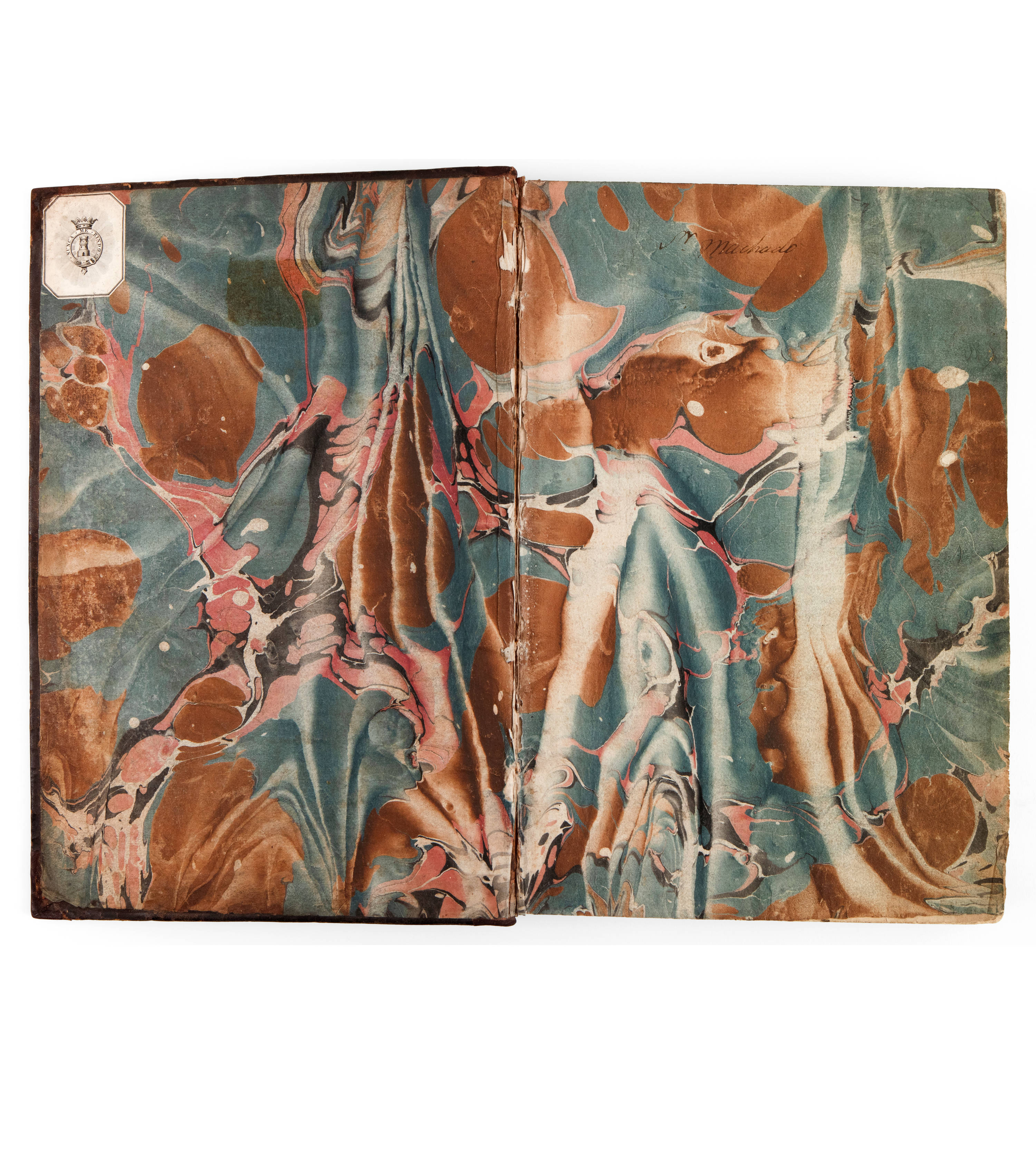
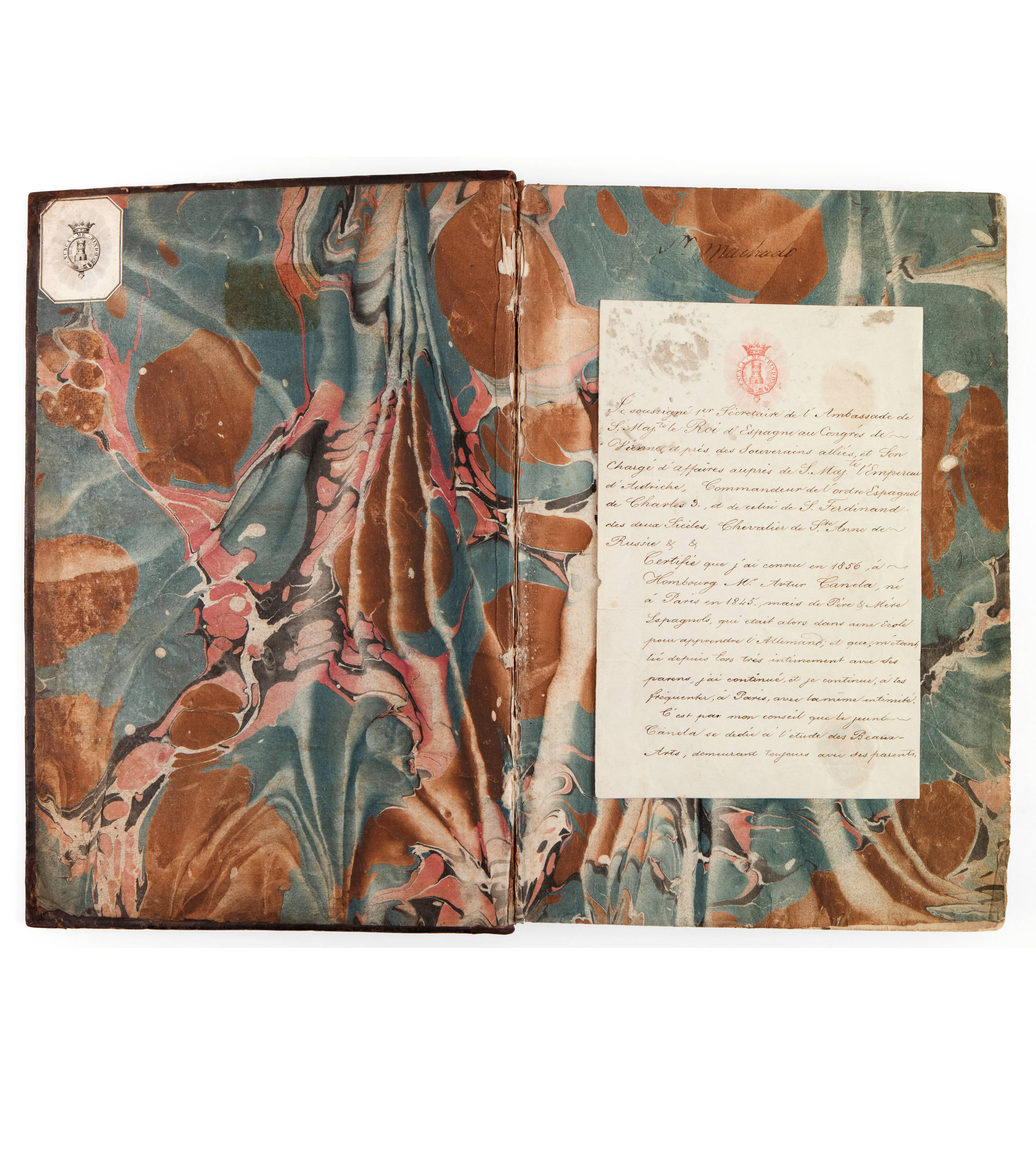
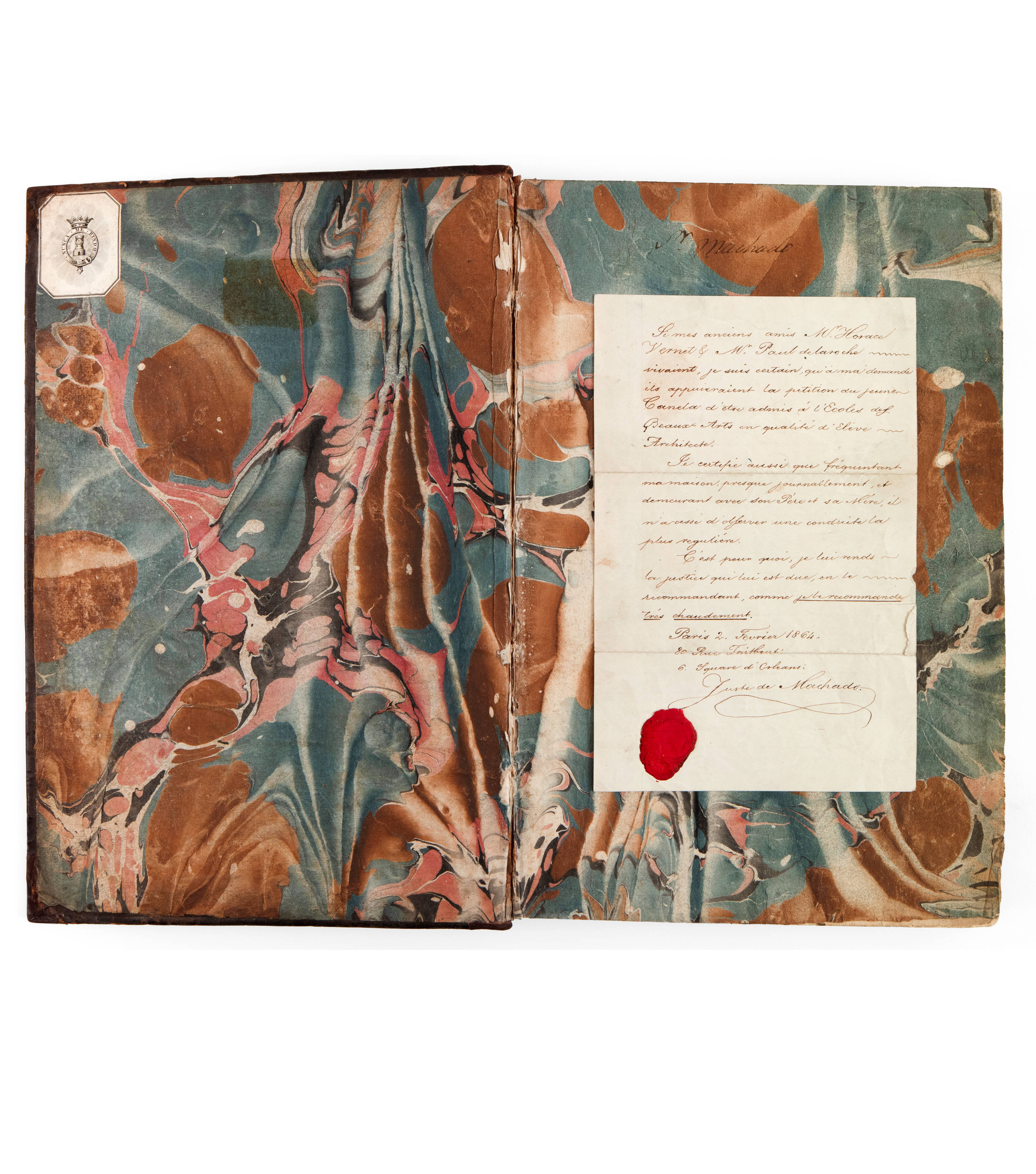
Collection Juste de Machado, Madrid, according to old tradition, in Goya's hand on the "page de garde" the inscription "Sr. Machado", on the inside of the binding with his ex libris, 1865 by testamentary disposition (cf. The included letter from Juste de Machado, dated 2 February 1864) to
Collection Arthur D. Canela, Paris, by testamentary disposition of the widow Arthur D. Canela (died 3 November 1935) to
Collection Moquel, Paris
Antiquariat Nicolas Rauch, Geneva, catalogue "Les Peintres et le Livre", Geneva 1957, cat. no. 1, there acquired by
Collection Raphael Esmerian, Paris, auctioned at
Auction Palais Galliéra, Paris, 11 December 1973, lot 52, there acquired by
Private collection France, auctioned at
Auction Galerie Kornfeld, Bern, 22 June 1990, lot 37, there acquired by
Private collection France
Very good impressions, in very fine original condition, sheet 66 with a small torn printing crease. Some pages with small spots and signs of use such as grip marks. Overall in very good condition
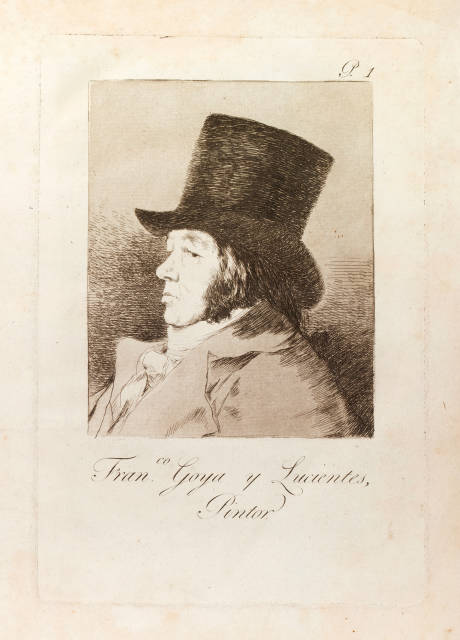
The series "Los Caprichos", consisting of 80 sheets and beginning with a self-portrait of the artist, was created between 1797 and 1798, with initial drafts already made in 1796. In this series, Goya combines social satire, sharp criticism of the times, personal reflection, and the depiction of human weaknesses in a pictorial language that was unprecedented up to that point.
The series was first published in book form in 1799 and officially announced in the "Diario de Madrid" on 6 February of the same year. Despite its extraordinary artistic quality, commercial success remained limited. The often cryptic, yet unmistakably critical depictions of superstition, social grievances, human folly, and ecclesiastical hypocrisy met with only a muted response from contemporary audiences and were sometimes met with skepticism.
In October 1803, Goya decided to hand over all the copper plates as well as the remaining 240 copies of the series to the administration of the royal household under King Carlos IV. In return, his son Francisco Javier received a lifelong pension of 12,000 reales per year.
Since in 1803 there were still 240 copies in the possession of the artist or the royal administration, and an unknown number had already been sold, given away, or otherwise distributed, the size of the first edition of 1799 is now estimated at about 275 to 300 copies. Thus, the first edition is among the rarest and most sought-after print publications of the late 18th century.
Of the originally printed copies, only a comparatively small number have survived. Over the course of more than two centuries, numerous series have been lost or separated. In particular, the political upheavals and military conflicts in Spain led to significant losses.
What is special about the present edition is its unbroken provenance. The artist himself gave it in 1802 to Juste de Machado, a diplomat in the service of the Spanish King Carlos IV. Juste de Machado was transferred to Rome in the same year and, in 1814, was delegated as First Secretary of the Ambassador of the new King Fernando VII to the Congress of Vienna.
In the original, brown marbled calf leather binding of the bound part of the first edition of 1799, with gold-embossed ornaments on the spine and the red label with the title "Caprichos / de / Goya". The binding corresponds exactly to the descriptions Harris gives for particularly fine copies of the part of the 1799 edition intended for Goya: "A number of copies were bound for Goya in Spanish mottled calf with the titel and the author's name on the spine in gold letters on red or green. They are often before the scratch on plate 45 [as in the present copy] and are invariably particularly fine" (Harris, vol. 2, P. 63). With this important group of works, Francisco de Goya created one of the most significant print series in European art history.
1796-1798, erste Ausgabe 1799
Folge von 80 Blatt Radierungen. Im alten, braungrün marmorierten Kalbslederband der Zeit, mit den in Gold geprägten Ornamentfileten und dem roten Schild mit dem Aufdruck "CAPRICHOS / DE / GOYA"
30,7x21,5 cm, Buchformat
Tomás Harris, Goya, Engravings and Lithographs, Catalogue raisonné, Bd. II, 36-115, jeweils III/1 (v. 12), alle Blätter in der 1. Ausgabe von 1799
Francisco de Goya, Madrid, 1802 als Geschenk an
Slg. Juste de Machado, Madrid, nach alter Tradition von Goyas Hand auf der "page de garde" der Namenszug "Sr. Machado", auf der Innenseite des Einbandes mit dessen Ex Libris, 1865 durch testamentarische Verfügung (vgl. den enthaltenen Brief von Juste de Machado, datiert vom 2. Februar 1864) an
Slg. Arthur D. Canela, Paris, durch testamentarische Verfügung der Witwe Arthur D. Canela (gestorben am 3. November 1935) an
Slg. Moquel, Paris
Antiquariat Nicolas Rauch, Genf, Katalog "Les Peintres et le Livre", Genf 1957,
Slg. Raphael Esmerian, Paris, versteigert bei
Auktion Palais Galliéra, Paris, 11. Dezember 1973, Los 52, dort erworben von
Privatsammlung Frankreich, versteigert bei
Auktion Galerie Kornfeld, Bern, 22. Juni 1990, Los 37, dort erworben von
Privatsammlung Frankreich
Sehr gute Abzüge, in sehr schönem, altem Zustand, das Blatt 66 mit kleiner eingerissener Druckfalte. Die Seiten z.T. mit Fleckchen und Gebrauchsspuren wie Griffknicken. Insgesamt in sehr guter Erhaltung
Die aus 80 Blättern bestehende Folge "Los Caprichos", die mit einem Selbstbildnis des Künstlers beginnt, entstand in den Jahren 1797 bis 1798, wobei erste Entwürfe bereits 1796 angefertigt wurden. In ihr vereint Goya gesellschaftliche Satire, scharfe Zeitkritik, persönliche Reflexion und die Darstellung menschlicher Schwächen in einer bis dahin beispiellosen bildnerischen Sprache.
Die Folge wurde 1799 erstmals in Buchform veröffentlicht und am 6. Februar desselben Jahres im "Diario de Madrid" offiziell angekündigt. Trotz ihrer ausserordentlichen künstlerischen Qualität blieb der kommerzielle Erfolg begrenzt. Die oft verschlüsselten, gleichwohl unmissverständlich kritischen Darstellungen von Aberglauben, gesellschaftlichen Missständen, menschlicher Torheit und kirchlicher Heuchelei fanden beim zeitgenössischen Publikum nur verhaltene Resonanz und stiessen teilweise auch auf Skepsis.
Im Oktober 1803 entschloss sich Goya, sämtliche Kupferplatten sowie die noch vorhandenen 240 Exemplare der Folge an die Verwaltung des königlichen Haushalts unter König Carlos IV. zu übergeben. Im Gegenzug erhielt sein Sohn Francisco Javier eine lebenslange Pension von jährlich 12'000 Reales.
Da sich im Jahr 1803 noch 240 Exemplare im Besitz des Künstlers beziehungsweise der königlichen Verwaltung befanden und zusätzlich eine unbekannte Anzahl bereits verkauft, verschenkt oder anderweitig verteilt worden war, wird die Höhe der ersten Auflage von 1799 heute auf etwa 275 bis 300 Exemplare geschätzt. Damit gehört die Erstausgabe zu den seltensten und begehrtesten druckgrafischen Publikationen des ausgehenden 18. Jahrhunderts.
Von den ursprünglich gedruckten Exemplaren hat sich nur ein vergleichsweise kleiner Teil erhalten. Im Verlauf von mehr als zwei Jahrhunderten gingen zahlreiche Folgen verloren oder wurden getrennt. Besonders die politischen Umwälzungen und kriegerischen Konflikte in Spanien führten zu erheblichen Verlusten.
Besonders an der vorliegenden Ausgabe ist die lückenlose Provenienz. Der Künstler selbst hat sie 1802 an Juste de Machado, Diplomat in Diensten des spanischen Königs Carlos IV., verschenkt. Juste de Machado wurde im selben Jahr nach Rom versetzt und 1814 als Erster Sekretär des Botschafters des neuen Königs Fernando VII. an den Wiener Kongress delegiert.
Im ursprünglichen, braun marmorierten Kalbslederband des gebundenen Teils der ersten Ausgabe von 1799 mit in Gold geprägten Ornamenten auf dem Buchrücken und dem roten Schild mit dem Titel "Caprichos / de / Goya". Der Einband entspricht genau den Beschreibungen, die Harris für besonders schöne Exemplare des für Goya bestimmten Teils der Auflage von 1799 angibt: "A number of copies were bound for Goya in Spanish mottled calf with the titel and the author's name on the spine in gold letters on red or green. They are often before the scratch on plate 45 [wie im vorliegenden Exemplar] and are invariably particularly fine" (Harris, Band 2, S. 63). Mit dieser bedeutenden Werkgruppe schuf Francisco de Goya eine der wichtigsten druckgrafischen Folgen der europäischen Kunstgeschichte.
| Switzerland | CHF | Individual offer |
| Europe | CHF | Individual offer |
| USA | CHF | Individual offer |
| Overseas | CHF | Individual offer |