- EN


 Log in
-
- Live Auctions
- Past auctions
- More
- Kornfeld today
- The Story of Kornfeld
- Information










Paris 1885 - 1941 Montpellier


1934
Oil on canvas
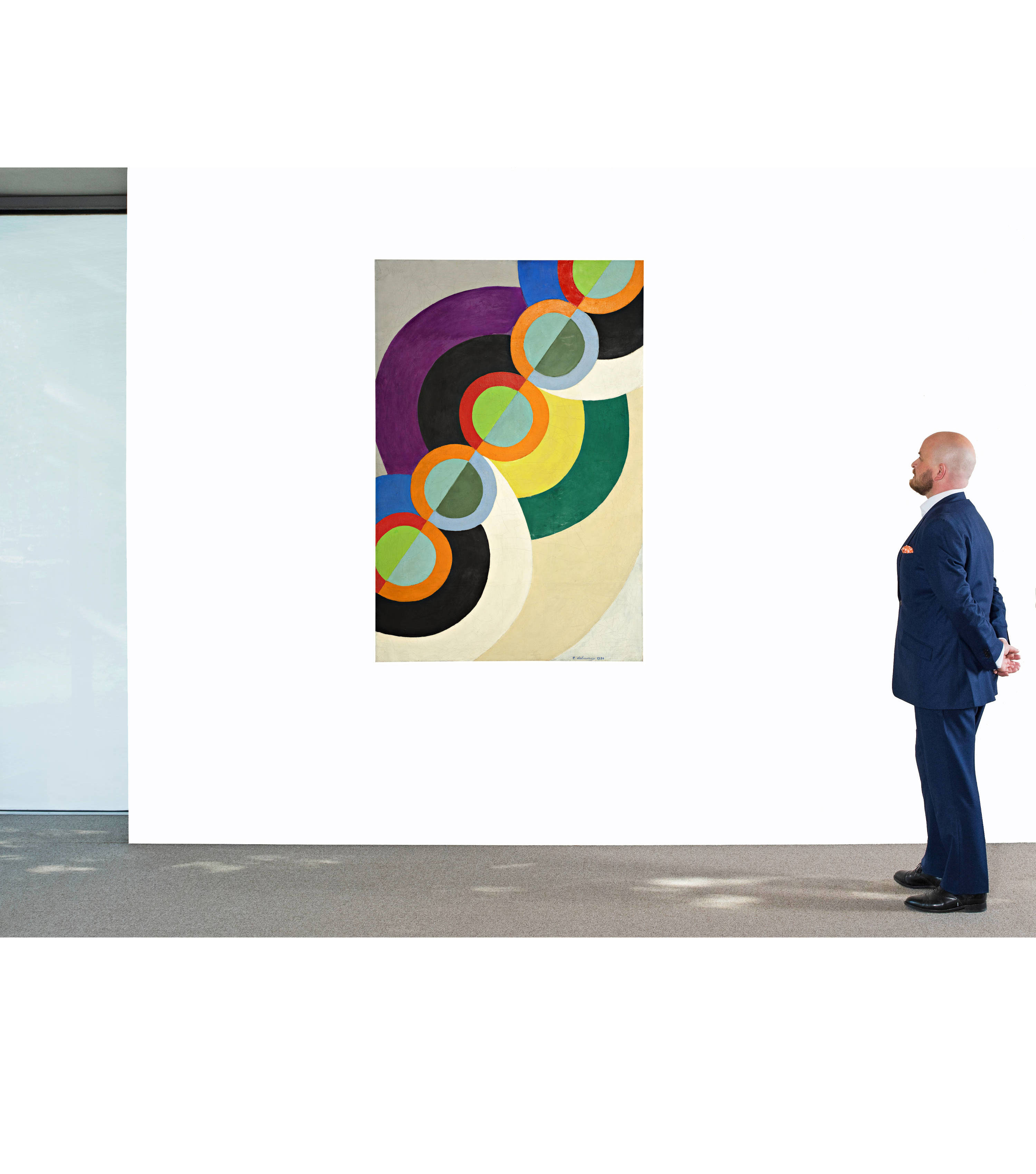
196x130 cm
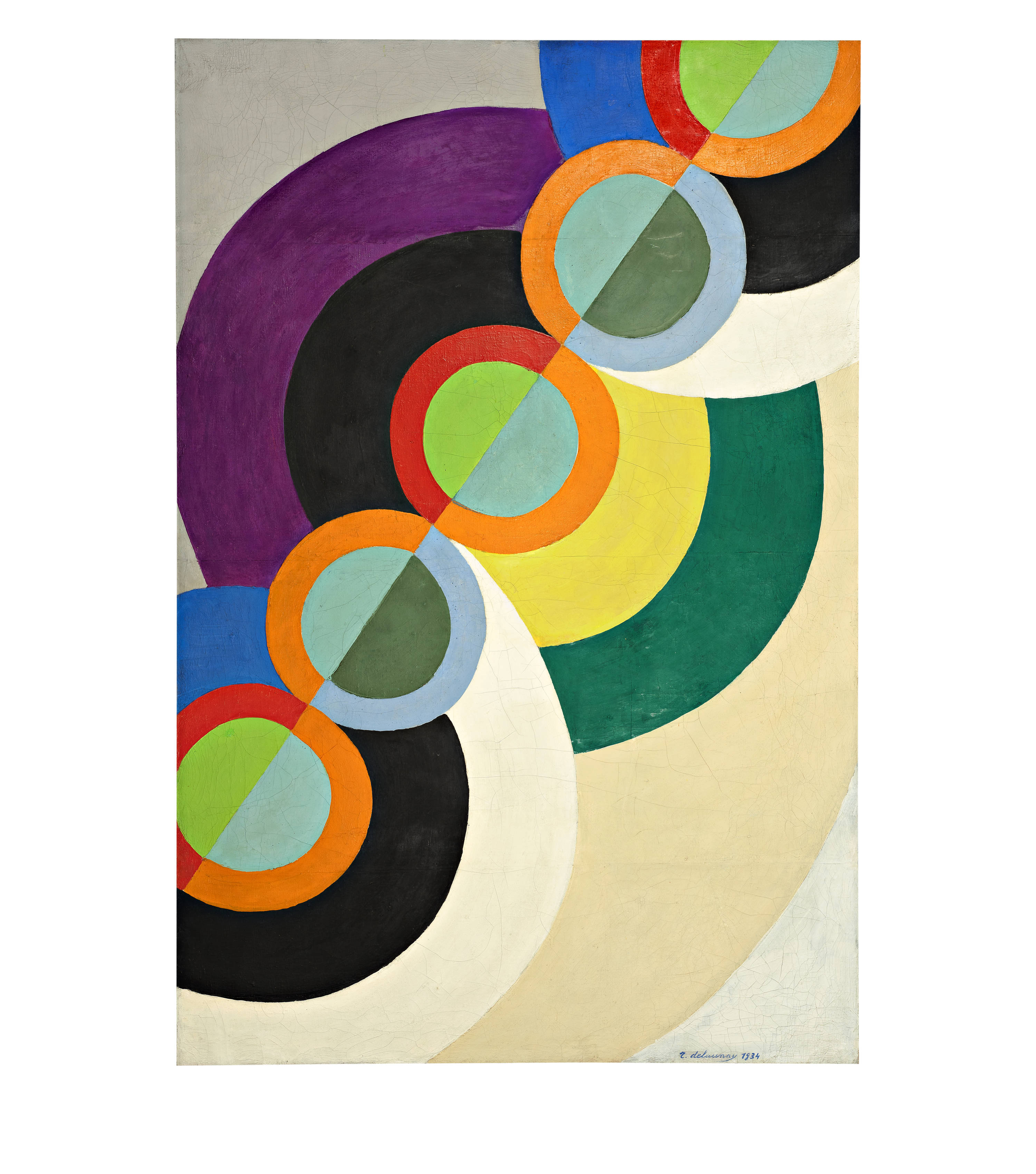
Lower right signed and dated by the artist "r. delaunay 1934"
Pierre Francastel/Guy Habasque, Robert Delaunay, Du cubisme à l'art abstrait, Suivis d'un catalogue de l'œuvre de R. Delaunay, Paris 1957, no. 302
Certificate of authenticity from Pracusa Artisticas S.A., Richard Riss, dated 28 July 2026, is available
Galerie Bing, Paris
Collection Dr. Franz Meyer Sr., Zurich, by inheritance to
Private collection Switzerland
Francis Jourdain/Léon Degand, Art réaliste, Art abstrait, in: Le Point no. XLIX, Souillac-Mulhouse, 1954
Bern 1951, Kunsthalle, Robert Delaunay, cat. no. 58, There titled "Le grand disque"
Tokyo 1979, Musée National d'Art Moderne, Robert/Sonia Delaunay, cat. no. 34
Zurich 2018, Kunsthaus, Robert Delaunay und Paris, cat. no. 77
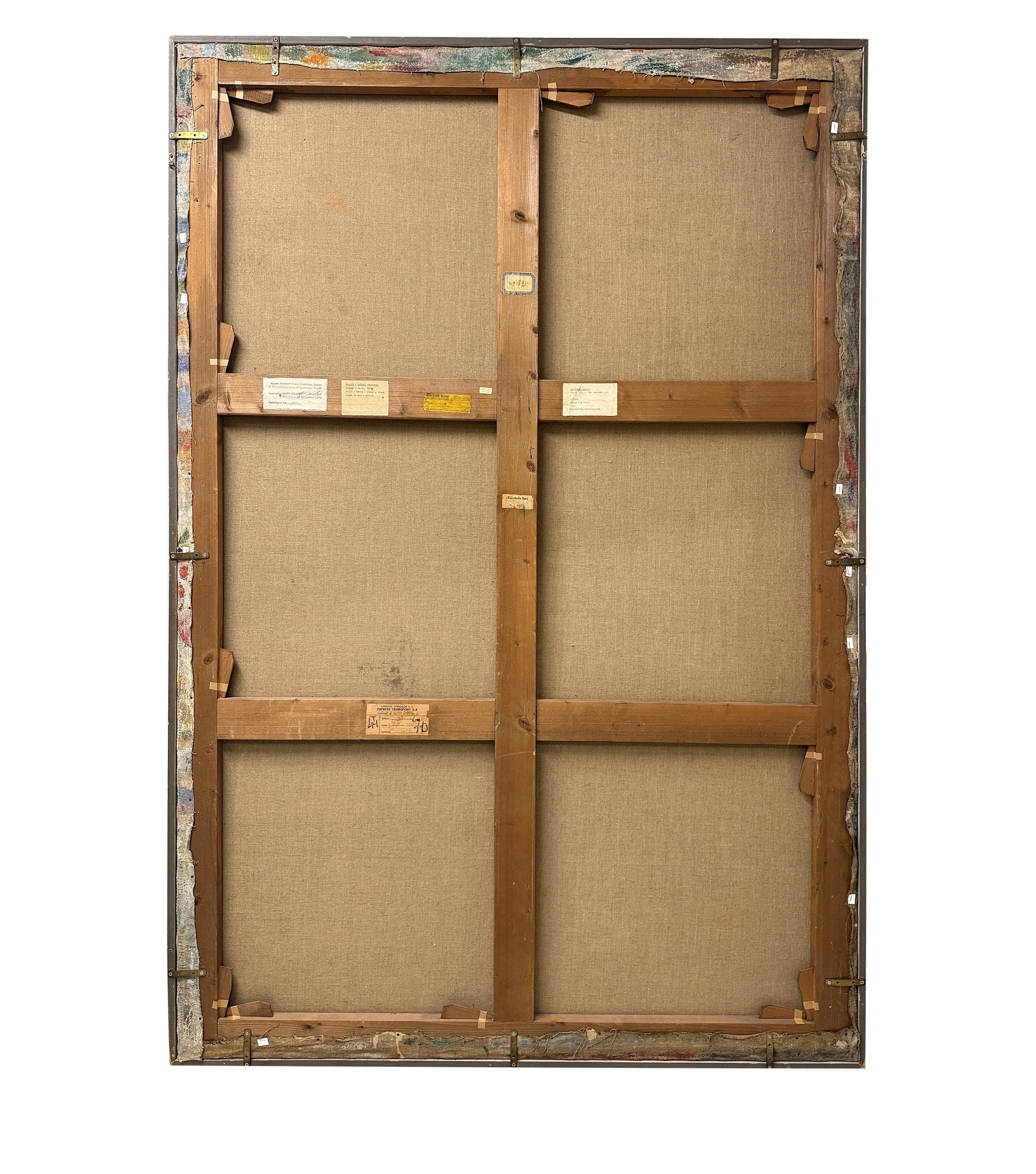
The canvas was reinforced at the sides in places with staples. The support consists of four horizontally sewn strips of canvas and was laid down on a second canvas for additional stabilisation. The impasto paint layer shows craquelures as well as minor overpainting. Overall in very good condition
"As long as art remains tied to the object, it remains mere description, mere literature; it debases itself through the use of inadequate means of expression and condemns itself to the slavery of imitation." With this clear statement, Robert Delaunay formulated his understanding of modern painting (quoted from the exhibition catalogue Galerie Beyeler 1977). Together with Wassily Kandinsky, František Kupka, and Piet Mondrian, Delaunay is among the central pioneers of non-objective painting.
For Delaunay, painting was not a purely personal activity or one confined to the private sphere. Rather, he saw art as an active contribution to shaping urban modernity. For this reason, he also turned to applied art and designed advertising posters. In doing so, he was able to connect his characteristic circular forms and disc motifs directly with the urban environment. At the same time, he sought to integrate his art into architecture. For example, he designed the railway and aviation pavilions for the 1937 World's Fair.
At the center of his work was the search for a vivid expression of visual mobility. The early Cubist phase of Pablo Picasso had a significant influence on Delaunay's path toward abstraction. However, he did not use the Cubist fragmentation of objects for analysis, but rather for the development of a new pictorial synthesis. An early example of this is the painting of the interior of the Parisian church of Saint-Séverin. The depicted church interior with its Gothic vault still impresses today with its disorienting and dynamic visual experience.
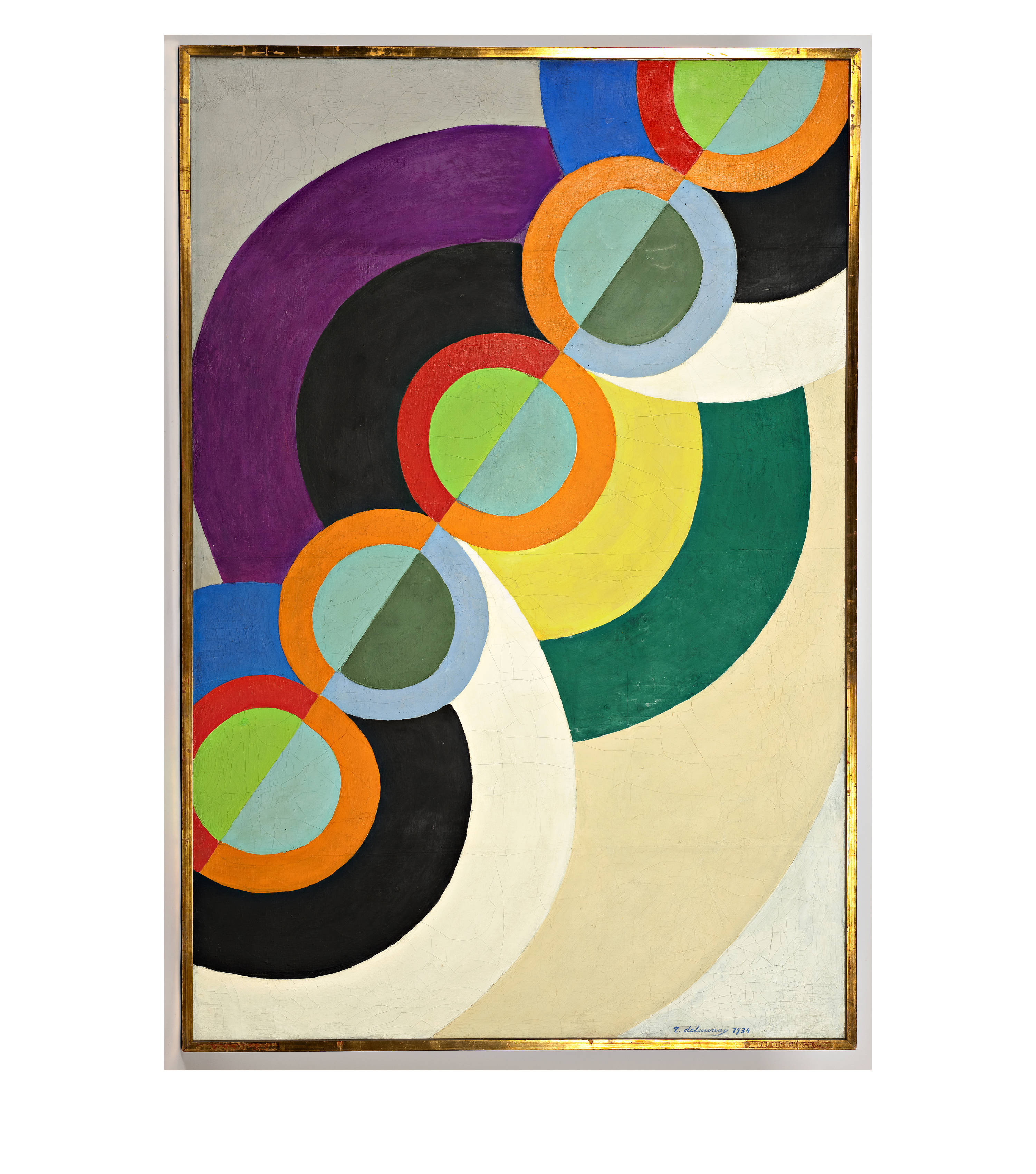
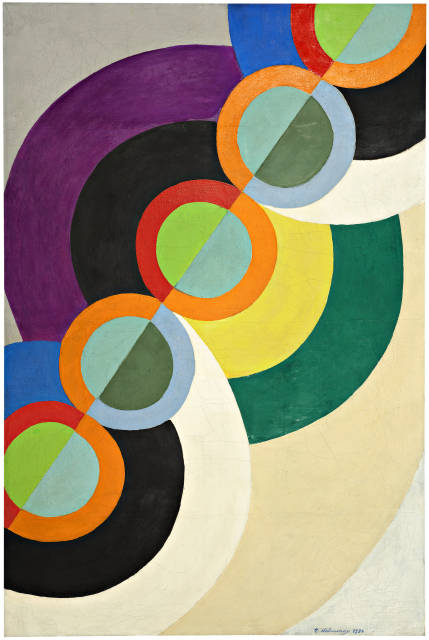
A decisive turning point in Robert Delaunay's work came in 1930. At that time, Delaunay gave up figurative painting for good, especially the portraits of his friends that he had painted since his return to France in 1921. Instead, he returned to the circular forms with luminous colours that he had developed before the First World War. "Rythme" from 1934 is exemplary of this and attests to the artist's far-reaching interest in exploring harmonious relationships between colour and form.
For Delaunay, modernity was characterized by visual abundance. The urban innovations of his time—the gigantism of the Eiffel Tower, the impact of large-format billboards, the electrification of street lighting, or the rise of aviation—appeared to him as an overwhelming optical stimulus. Inspired by astral theories, by the movements of rotating propellers and the halos of electric lamps, he attempted to artistically transcend the boundaries set by the rectangular format of the canvas. He achieved this through his dynamically charged compositions. For Delaunay, the circle became the symbol of a racing and endless movement embodied and expressed in colour, which ultimately also takes over the actual pictorial action. In our painting, Delaunay's pursuit of "peinture pure" is exemplified, in which light sets colour in motion and painting operates from its own means.
1934
Öl auf Leinwand
196x130 cm
Unten rechts vom Künstler signiert und datiert "r. delaunay 1934"
Pierre Francastel/Guy Habasque, Robert Delaunay, Du cubisme à l'art abstrait, Suivis d'un catalogue de l'œuvre de R. Delaunay, Paris 1957,
Echtheitszertifikat von Pracusa Artisticas S.A., Richard Riss, datiert vom 28. Juli 2026, liegt vor
Galerie Bing, Paris
Slg. Dr. Franz Meyer sen., Zürich, durch Erbschaft an
Privatsammlung Schweiz
Francis Jourdain/Léon Degand, Art réaliste, Art abstrait, in: Le Point no. XLIX, Souillac-Mulhouse, 1954
Bern 1951, Kunsthalle, Robert Delaunay,
Tokyo 1979, Musée National d'Art Moderne, Robert/Sonia Delaunay,
Zürich 2018, Kunsthaus, Robert Delaunay und Paris,
Die Leinwand wurde seitlich stellenweise mit Heftklammern verstärkt. Der Bildträger besteht aus vier horizontal zusammengenähten Leinwandbahnen und wurde zur zusätzlichen Stabilisierung auf eine zweite Leinwand aufgezogen. Der pastose Farbauftrag weist Krakelüren sowie geringfügige Übermalungen auf. Insgesamt in sehr guter Erhaltung
"Solange die Kunst vom Gegenstand nicht loskommt, bleibt sie Beschreibung, Literatur; sie erniedrigt sich durch die Verwendung mangelhafter Ausdrucksmittel und verdammt sich zur Sklaverei der Imitation." Mit dieser deutlichen Aussage formulierte Robert Delaunay sein Verständnis moderner Malerei (zitiert aus Ausstellungskatalog Galerie Beyeler 1977). Gemeinsam mit Wassily Kandinsky, František Kupka und Piet Mondrian zählt Delaunay zu den zentralen Wegbereitern der gegenstandslosen Malerei.
Für Delaunay war Malerei keine rein persönliche oder auf den privaten Raum beschränkte Tätigkeit. Vielmehr verstand er Kunst als aktiven Beitrag zur Gestaltung der urbanen Moderne. Deshalb wandte er sich nicht zuletzt der angewandten Kunst zu und entwarf Werbeplakate. Dadurch konnte er seine charakteristischen kreisförmigen Formen und Scheibenmotive unmittelbar mit dem städtischen Umfeld verbinden. Zugleich suchte er die Integration seiner Kunst in die Architektur. So gestaltete er unter anderem die Pavillons der Eisenbahn und der Luftfahrt für die Weltausstellung von 1937.
Im Zentrum seines Schaffens stand die Suche nach einem anschaulichen Ausdruck visueller Mobilität. Die frühe kubistische Phase von Pablo Picasso beeinflusste Delaunay auf seinem Weg zur Abstraktion massgeblich. Die kubistische Zergliederung der Gegenstände nutzte er jedoch nicht zur Analyse, sondern zur Entwicklung einer neuen bildnerischen Synthese. Ein frühes Beispiel dafür ist das Gemälde mit dem Innenraum der Pariser Kirche Saint-Séverin. Der dargestellte Kirchenraum mit dem gotischen Gewölbe wirkt bis heute durch seine irritierende und dynamische Seherfahrung.
Einen entscheidenden Wendepunkt im Schaffen von Robert Delaunay markiert das Jahr 1930. Delaunay gab damals die figurative Malerei endgültig auf, insbesondere die Porträts seiner Freunde, die er seit seiner Rückkehr nach Frankreich im Jahr 1921 gemalt hatte. Stattdessen griff er auf die bereits vor dem Ersten Weltkrieg entwickelten kreisförmigen Formen mit leuchtenden Farben zurück. "Rythme" von 1934 ist dafür exemplarisch und bezeugt das weitreichende Interesse des Künstlers an der Erforschung harmonischer Farb- und Formbeziehungen.
Für Delaunay war die Moderne durch visuelle Überfülle geprägt. Die urbanen Neuerungen seiner Zeit - der Gigantismus des Eiffelturms, die Wirkung grossformatiger Plakatwände, die Elektrifizierung der Strassenbeleuchtung oder der Aufstieg der Luftfahrt - erschienen ihm als ein überwältigender optischer Reiz. Inspiriert von astralen Theorien, von den Bewegungen rotierender Propeller und den Lichtkränzen elektrischer Lampen, versuchte er, die durch das rechteckige Format der Leinwand gesetzten Grenzen künstlerisch zu überwinden. Dies erreichte er durch seine dynamisch aufgeladenen Kompositionen. Der Kreis wurde für Delaunay zum Symbol einer rasenden und endlosen Bewegung, die sich in der Farbe verkörpert und ausdrückt, und diese übernimmt schliesslich auch die eigentliche Bildhandlung. Bei unserem Gemälde zeigt sich mustergültig Delaunays Streben nach einer "reinen Malerei", in der das Licht die Farbe in Bewegung setzt und die Malerei aus ihren eigenen Mitteln heraus wirkt.
| Switzerland | CHF | Individual offer |
| Europe | CHF | Individual offer |
| USA | CHF | Individual offer |
| Overseas | CHF | Individual offer |