- EN


 Log in
-
- Live Auctions
- Past auctions
- More
- Kornfeld today
- The Story of Kornfeld
- Information










Witebsk 1887 - 1985 Saint-Paul-de-Vence



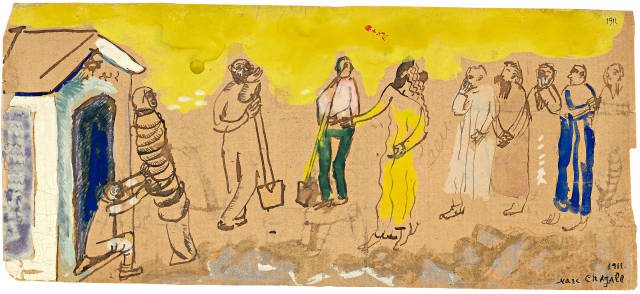
1911
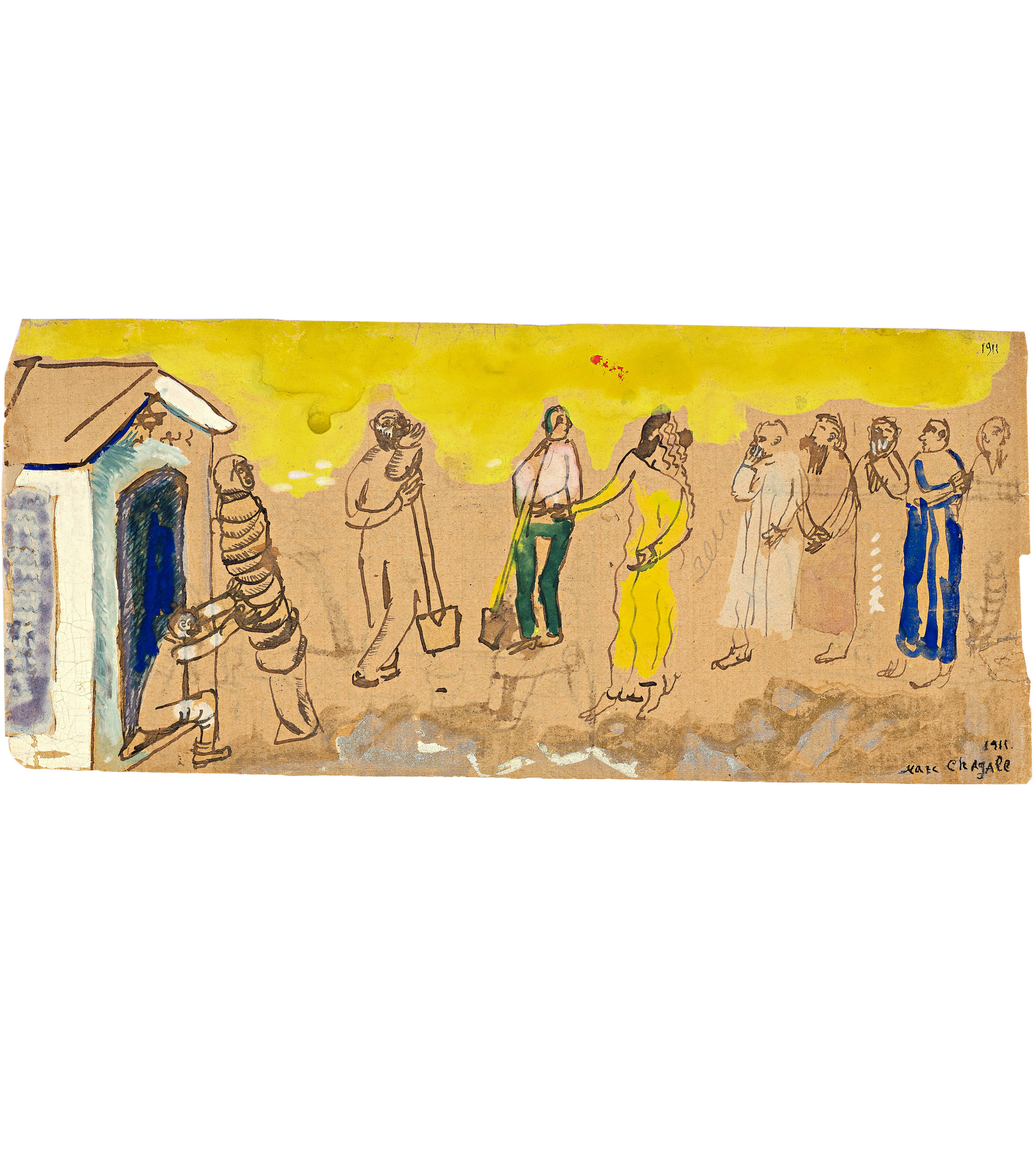
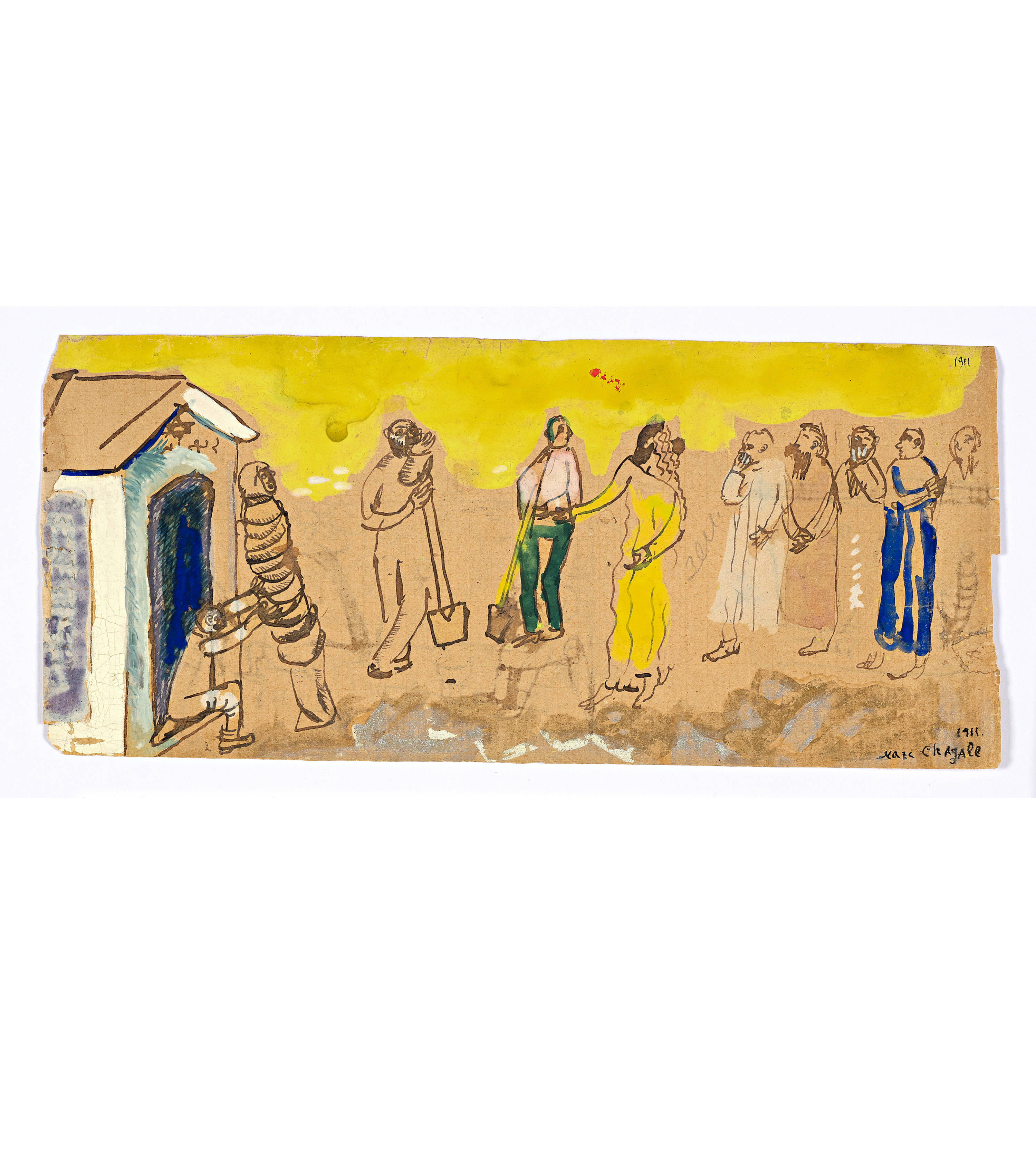
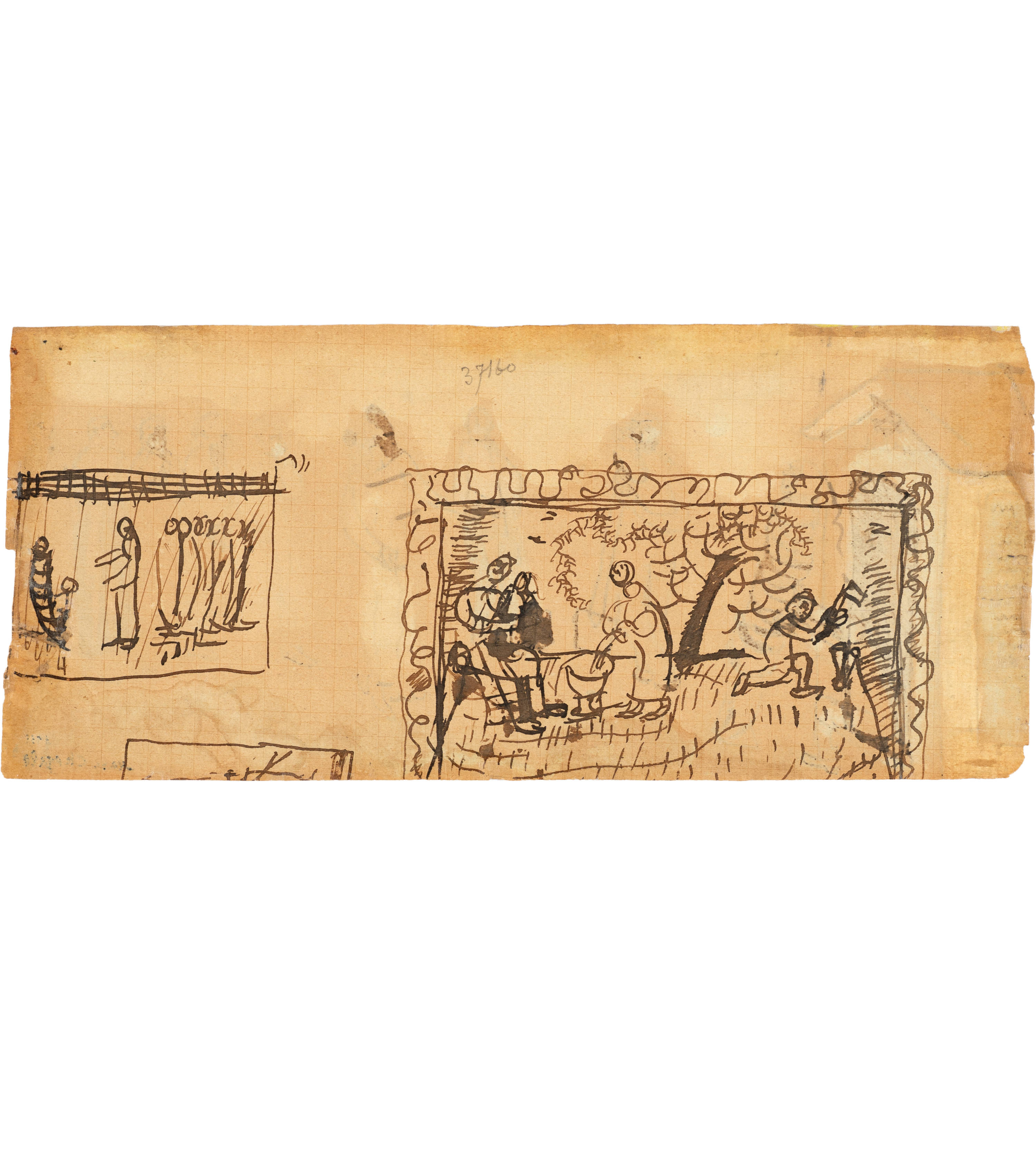
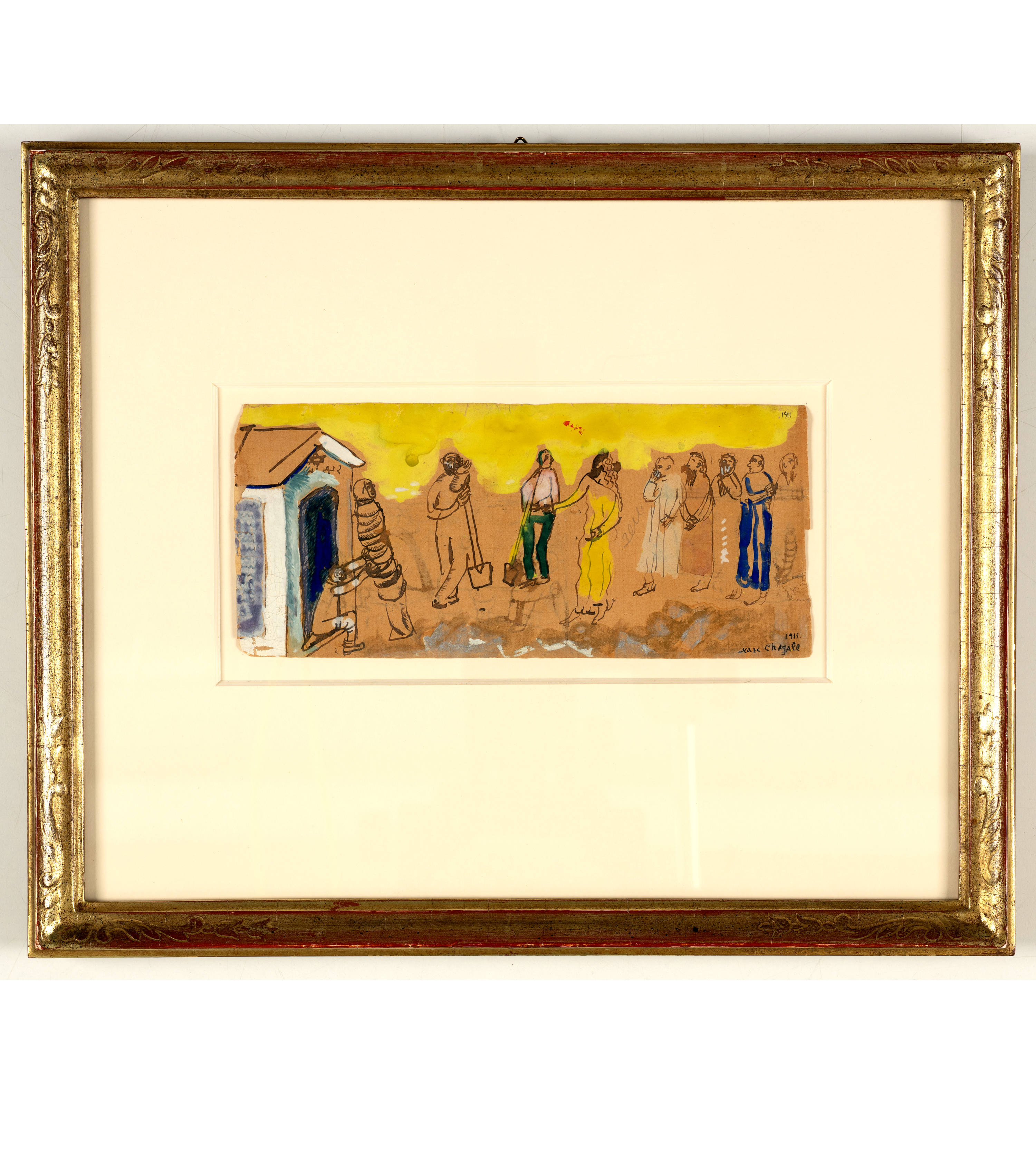
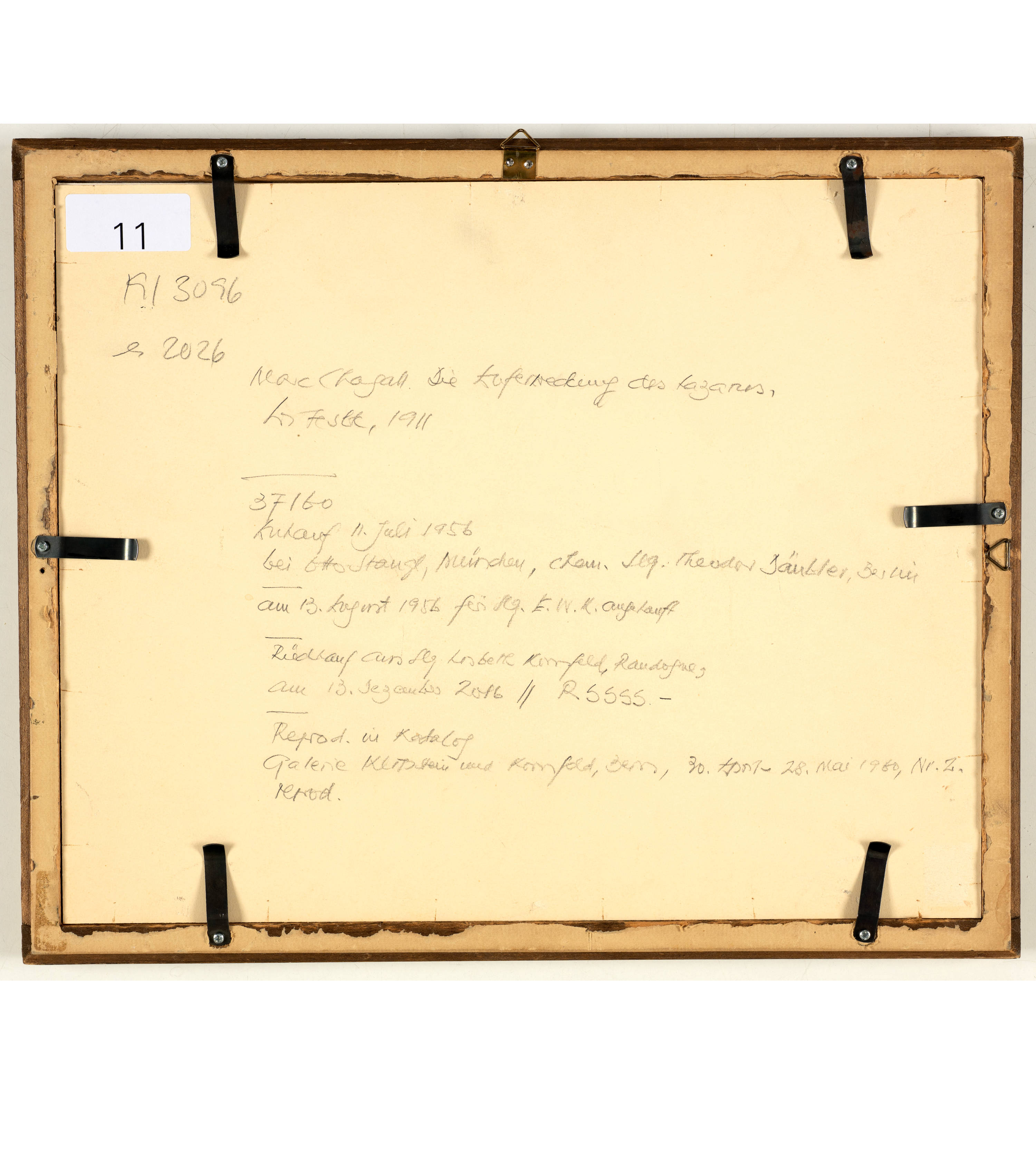
Gouache and sepia, heightened with gold and silver, on squared, thin paper, verso with two sepia sketches "Deux scènes: Esquisses pour la résurrection de Lazare et Le bain de l'enfant à la campagne"
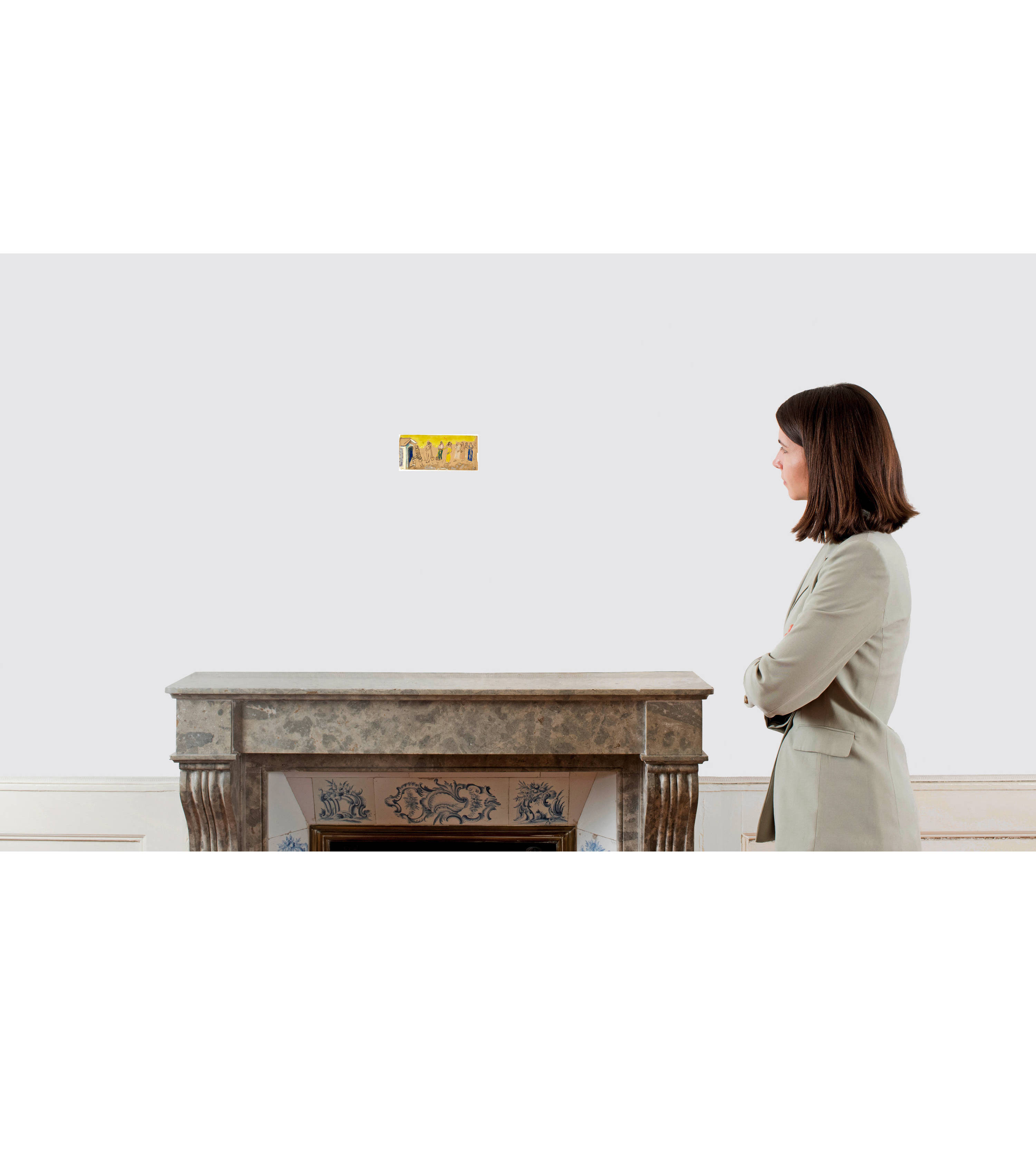
9.7x22 cm
Lower right dated and signed by the artist in ink "1911 / Marc Chagall", upper right dated again "1911". Date and signature added later, probably in the 1950s
With confirmation of authenticity (no. 2026031) from the Comité Marc Chagall, Paris, dated 29 April 2026
Collection Theodor Däubler (1876-1934), Berlin
Otto Stangl, Munich, there acquired in 1956 by
Klipstein & Kornfeld, there acquired in 1956 by
The Eberhard W. Kornfeld Collection, Bern
Franz Meyer, Marc Chagall, Leben und Werk, Cologne 1961, no. 131
Bern 1960, Klipstein & Kornfeld, Marc Chagall, cat. no. 2
The paper browned, with lightstruck area. Individual paint losses in the white, traces of old mounting. In good overall condition
After his years of training in Saint Petersburg, Marc Chagall longed to further develop his art in Paris and to seek new sources of inspiration in the rich museum collections, the important galleries, and through encounters with the avant-garde artists. With the proceeds from the sale of two paintings and a small scholarship from his patron Maxim Winawer, he was finally able to travel via Berlin to France in 1911. He took up his first studio in the Impasse du Maine (today Rue Antoine Bourdelle), near the Gare Montparnasse. It was there that the present sheet was created. "La résurrection de Lazare" represents an early engagement with biblical themes that would shape Chagall’s oeuvre throughout his life. The sheet combines influences of Cubism and Fauvism with a deeply personal, symbolic visual language. The depiction of the Raising of Lazarus moves away from a purely narrative reading, unfolding instead as a visionary composition. Iconographically, Chagall adopts the motif of resurrection as a symbol of transformation and hope, already demonstrating here his ability to merge religious content with individual memories and cultural influences. The scene appears less like a historical event and more like an inner vision, nourished by Chagall’s origins and his engagement with modern art in Paris.
This beautiful, early sheet once belonged to the Austrian-German writer and art critic Theodor Däubler. He was one of Chagall’s first great admirers and wrote the famous words in 1916: "Ein kosmisches Kind lebt unter uns. Marc Chagall. Der Märchenprinz mit absoluter Farbe." In 1922, he published the important early monograph "Marc Chagall" in the series "Valori plastici".
1911
Gouache und Sepia, mit Gold- und Silberhöhungen, auf quadriertem, dünnem Papier, rückseitig mit zwei Sepia-Skizzen "Deux scènes: Esquisses pour la résurrection de Lazare et Le bain de l'enfant à la campagne"
9,7x22 cm
Unten rechts vom Künstler in Tinte datiert und signiert "1911 / Marc Chagall", oben rechts erneut datiert "1911". Datum und Signatur wurden jedoch nachträglich angebracht, vermutlich in den 1950er-Jahren
Echtheitsbestätigung (Nr. 2026031) des Comité Marc Chagall, Paris, datiert vom 29. April 2026, liegt vor
Slg. Theodor Däubler (1876-1934), Berlin
Otto Stangl, München, dort 1956 angekauft von
Klipstein & Kornfeld, dort 1956 angekauft von
Slg. Eberhard W. Kornfeld, Bern
Franz Meyer, Marc Chagall, Leben und Werk, Köln 1961,
Bern 1960, Klipstein & Kornfeld, Marc Chagall,
Das Papier gebräunt, mit Lichtrand. Einzelne Farbverluste im Weiss, Spuren alter Montierungen. In guter Gesamterhaltung
Nach seinen Ausbildungsjahren in Sankt Petersburg sehnte sich Marc Chagall danach, seine Kunst in Paris weiterzuentwickeln und neue Inspirationsquellen in den reichhaltigen Museumssammlungen, den bedeutenden Galerien und in der Konfrontation mit den Avantgardekünstlern zu suchen. Mit dem Erlös aus dem Verkauf zweier Bilder und einem kleinen Stipendium seines Gönners Maxim Winawer konnte er schliesslich 1911 über Berlin nach Frankreich reisen. Er bezog sein erstes Atelier in der Impasse du Maine (heute Rue Antoine Bourdelle), nahe der Gare Montparnasse. Dort entstand auch das vorliegende Blatt. "La résurrection de Lazare" stellt eine frühe Auseinandersetzung mit biblischen Themen dar, die Chagalls Œuvre zeitlebens prägen sollten. Das Blatt verbindet Einflüsse des Kubismus und Fauvismus mit einer zutiefst persönlichen, symbolischen Bildsprache. Die Darstellung der Auferweckung des Lazarus löst sich von einer rein narrativen Lesart und entfaltet sich damit als visionäre Komposition. Ikonografisch greift Chagall das Motiv der Auferweckung als Sinnbild für Transformation und Hoffnung auf, wobei sich bereits hier seine Fähigkeit zeigt, religiöse Inhalte mit individuellen Erinnerungen und kulturellen Einflüssen zu verschmelzen. Die Szene wirkt weniger wie ein historisches Ereignis als vielmehr wie eine innere Vision, gespeist aus Chagalls Herkunft und seiner Auseinandersetzung mit moderner Kunst in Paris.
Das schöne, frühe Blatt gehörte einmal dem österreichisch-deutschen Schriftsteller und Kunstkritiker Theodor Däubler. Er war einer der ersten grossen Bewunderer Chagalls und schrieb 1916 die berühmten Worte: "Ein kosmisches Kind lebt unter uns. Marc Chagall. Der Märchenprinz mit absoluter Farbe." Im Jahr 1922 veröffentlichte er die wichtige, frühe Monografie "Marc Chagall" in der Reihe "Valori plastici".
| Switzerland | CHF | Individual offer |
| Europe | CHF | Individual offer |
| USA | CHF | Individual offer |
| Overseas | CHF | Individual offer |