- EN


 Log in
-
- Live Auctions
- Past auctions
- More
- Kornfeld today
- The Story of Kornfeld
- Information










Málaga 1881 - 1973 Mougins



1948-1954
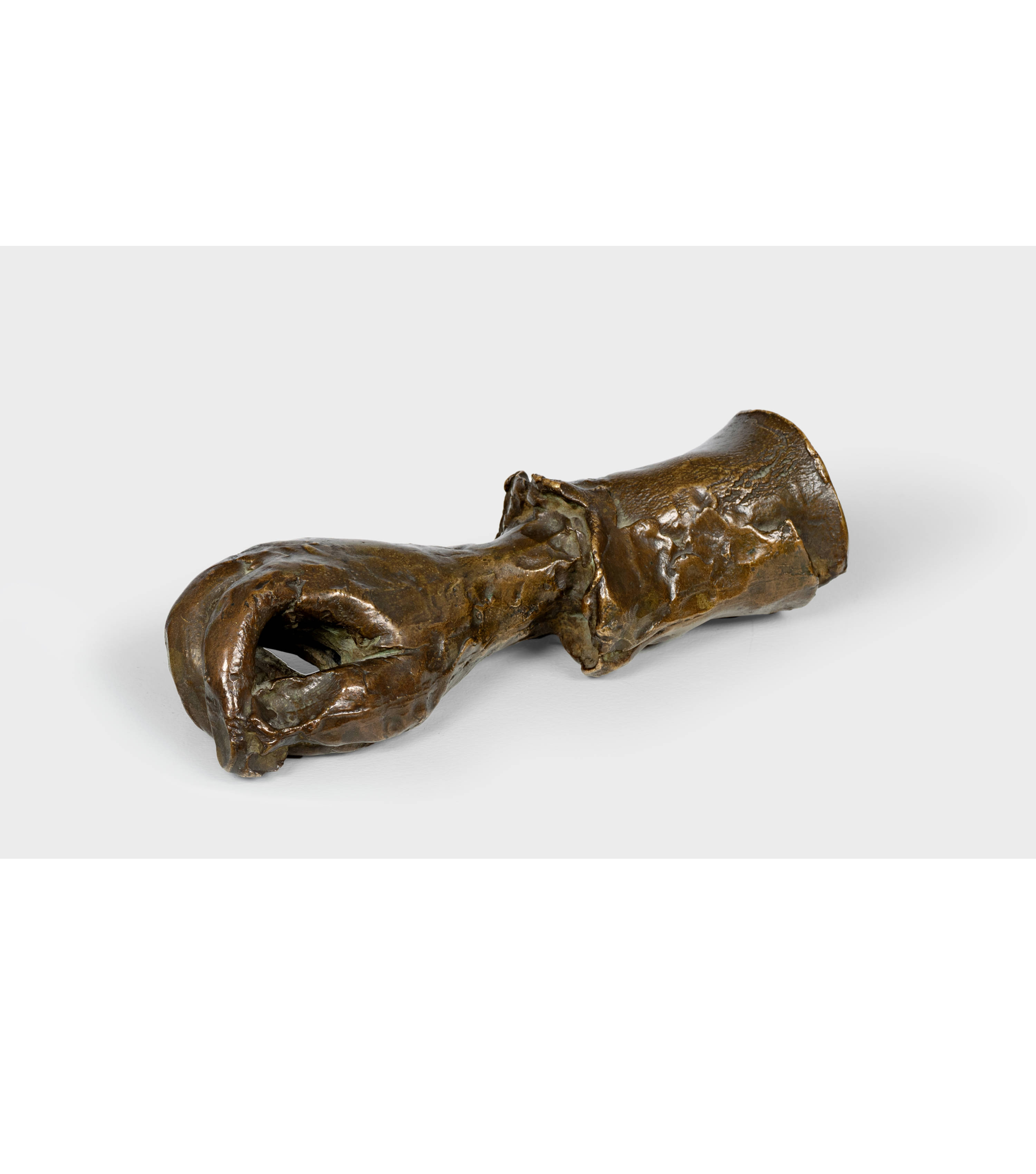
Bronze
6.7x24x10.7 cm
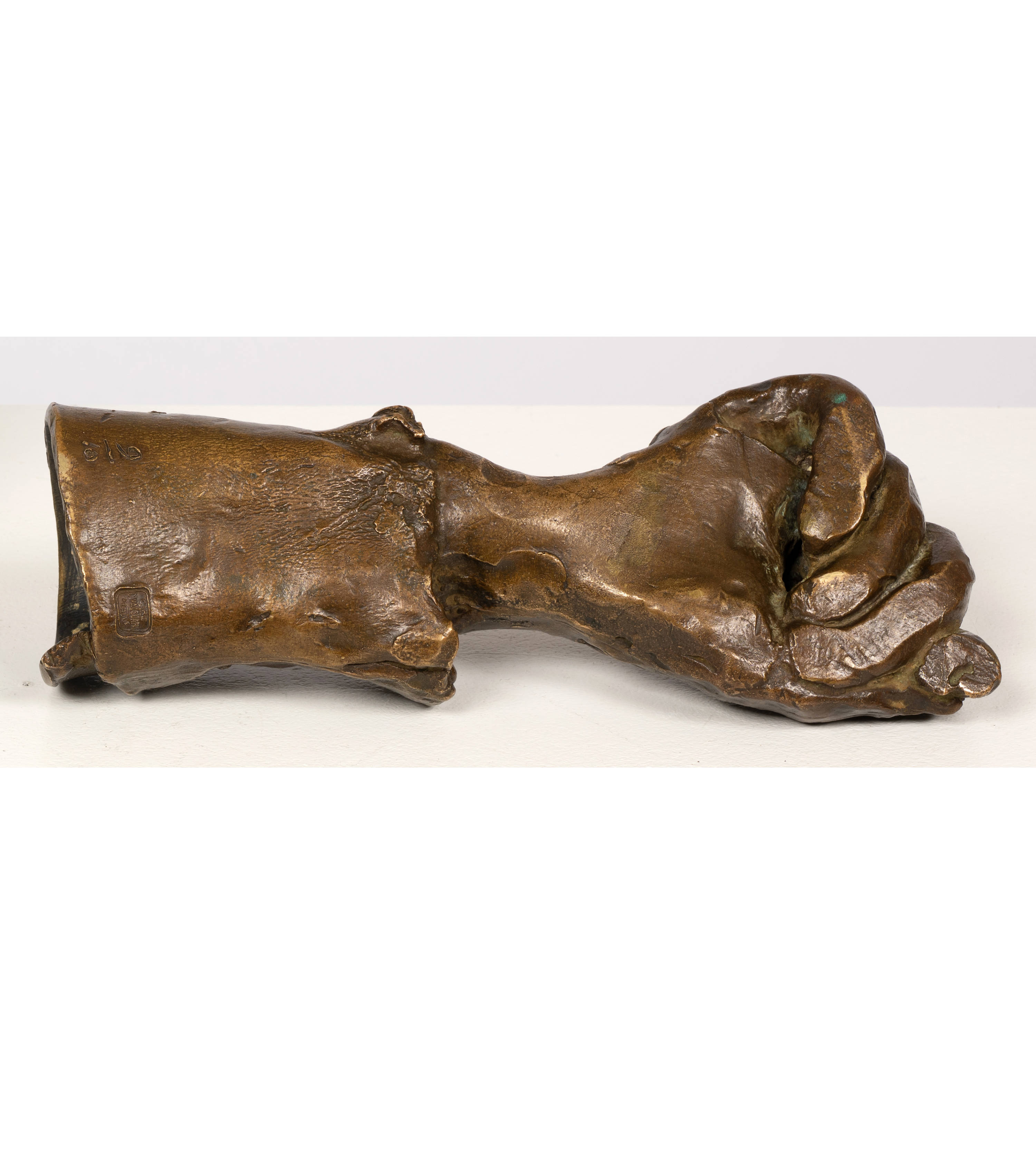
Numbered "9/10" at the base and with the foundry mark "Cire perdue C. Valsuani"
Werner Spies/Christine Piot, Picasso, Das plastische Werk, Stuttgart 1983, no. 338/II
Galerie Louise Leiris, Paris, label with inv. no. 031459, photo no. 52005
Galerie Berggruen, Paris, there acquired on 15 October 1961 by
Galerie Klipstein & Kornfeld, Bern, there acquired on 10 October 1968 by
The Eberhard W. Kornfeld Collection, Bern
Pully 1994, FAE Musée d'art contemporain, Picasso contemporain, p. 127
Davos 1998/1999, Kirchner Museum, Werke aus der Sammlung Eberhard W. Kornfeld, cat. no. 52
Impeccable condition
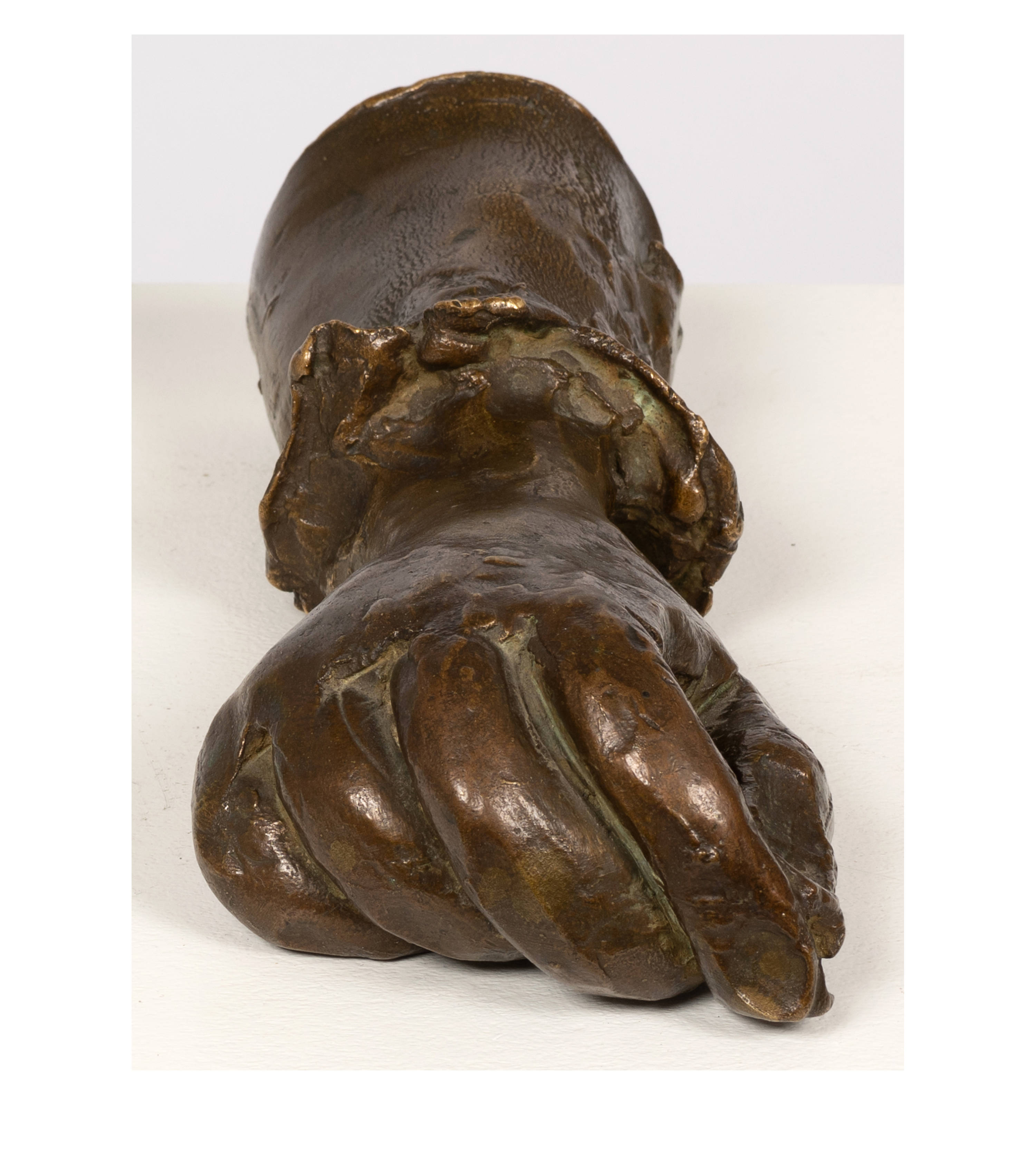
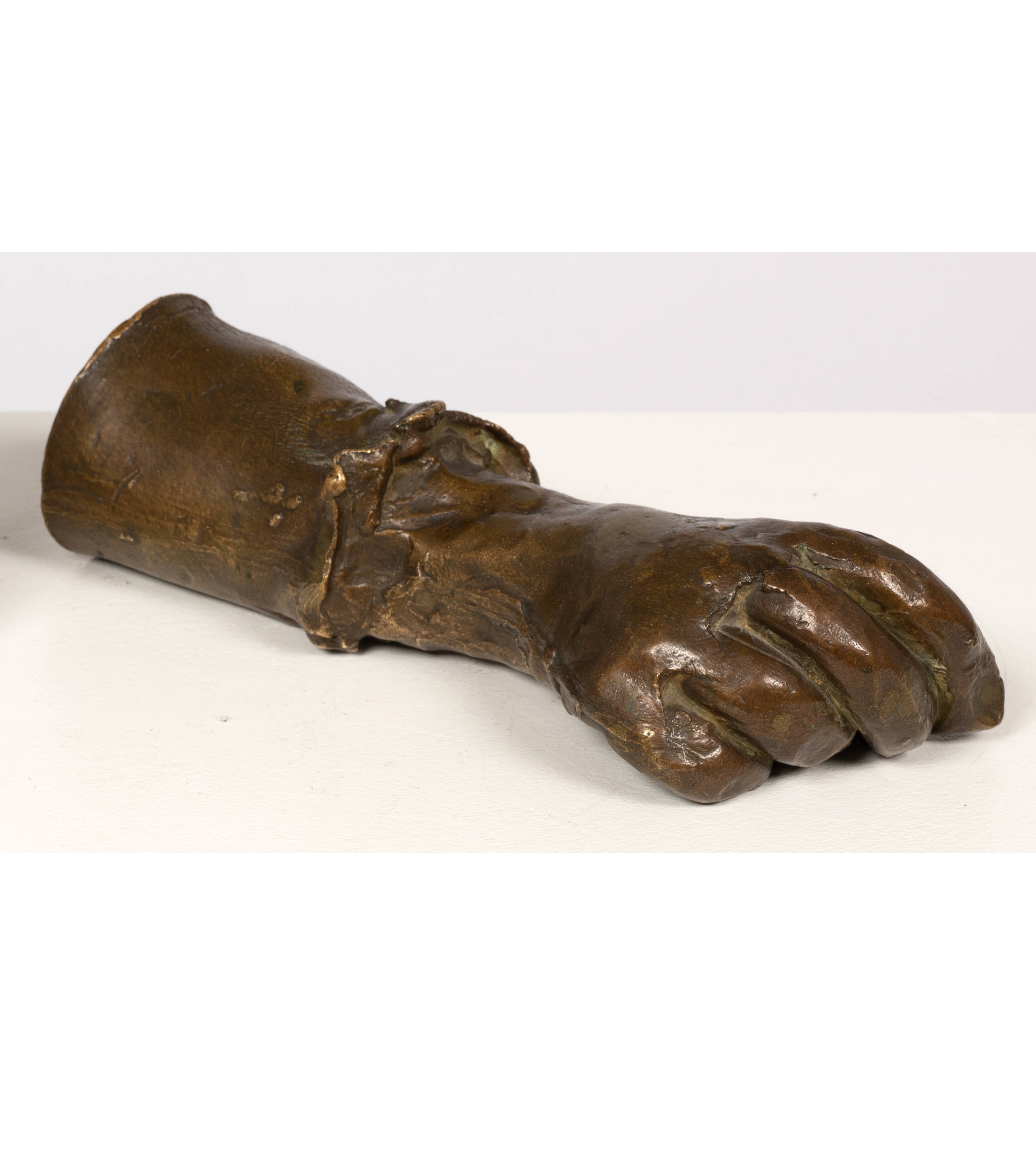
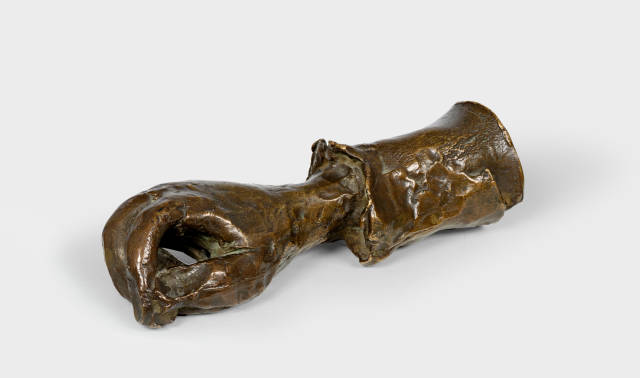
The composition consists of a stylized hand with an attached sleeve. A decorative cuff forms the transition between these two elements. According to oral testimony, it is believed to depict the artist’s right hand.
This work was created during a period in which Picasso was intensely experimenting with found objects and assemblage techniques. He frequently combined mundane objects and textiles into sculptural compositions, which were then cast in bronze. For example, an iconic bull’s skull could be created from a bicycle handlebar and a saddle. The transformation of everyday materials into enduring works of art reflects Picasso’s ongoing exploration of new artistic possibilities and his ability to imbue the ordinary with poetic meaning.
Based on a plaster from 1947, an edition of 10 examples and one additional unnumbered cast were produced at Valsuani.
1948-1954
Bronze
6,7x24x10,7 cm
Am Handansatz nummeriert "9/10" und mit dem Giesserstempel "Cire perdue C. Valsuani"
Werner Spies/Christine Piot, Picasso, Das plastische Werk, Stuttgart 1983,
Galerie Louise Leiris, Paris, Etikett mit Inv.-Nr. 031459, Foto-Nr. 52005
Galerie Berggruen, Paris, dort am 15. Oktober 1961 erworben von
Galerie Klipstein & Kornfeld, Bern, dort am 10. Oktober 1968 erworben von
Slg. Eberhard W. Kornfeld, Bern
Pully 1994, FAE Musée d'art contemporain, Picasso contemporain,
Davos 1998/1999, Kirchner Museum, Werke aus der Sammlung Eberhard W. Kornfeld,
Tadellos in der Erhaltung
Die Komposition besteht aus einer stilisierten Hand mit angelegtem Ärmel. Eine dekorative Manschette bildet den Übergang zwischen diesen beiden Elementen. Dargestellt dürfte nach alter Überlieferung die rechte Hand des Künstlers sein.
Diese Arbeit entstand in einer Phase, in der Picasso intensiv mit gefundenen Objekten und Assemblage-Techniken experimentierte. Er kombinierte häufig banale Gegenstände und Textilien zu skulpturalen Kompositionen, die anschliessend in Bronze gegossen wurden. So konnte beispielsweise aus einem Fahrradlenker und einem Sattel ein ikonischer Stierschädel entstehen. Die Transformation alltäglicher Materialien in dauerhafte Kunstwerke reflektiert Picassos kontinuierliche Erforschung neuer künstlerischer Möglichkeiten und seine Fähigkeit, dem Gewöhnlichen poetische Bedeutung zu verleihen.
Nach einem Gips von 1947 wurde bei Valsuani eine Auflage von 10 Exemplaren und ein zusätzlicher unnummerierter Guss hergestellt.
| Switzerland | CHF | Individual offer |
| Europe | CHF | Individual offer |
| USA | CHF | Individual offer |
| Overseas | CHF | Individual offer |