- EN


 Log in
-
- Live Auctions
- Past auctions
- More
- Kornfeld today
- The Story of Kornfeld
- Information


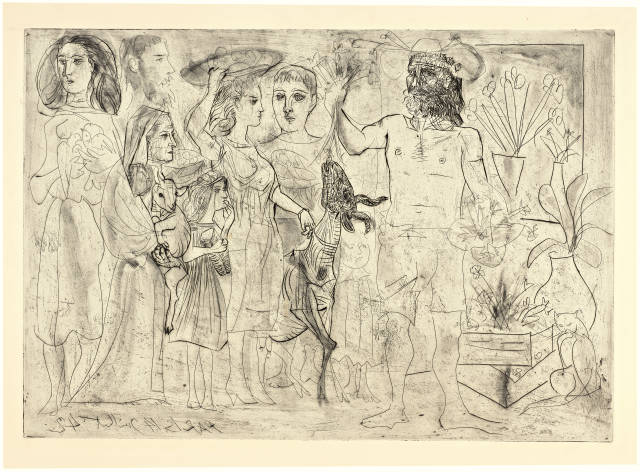








Málaga 1881 - 1973 Mougins



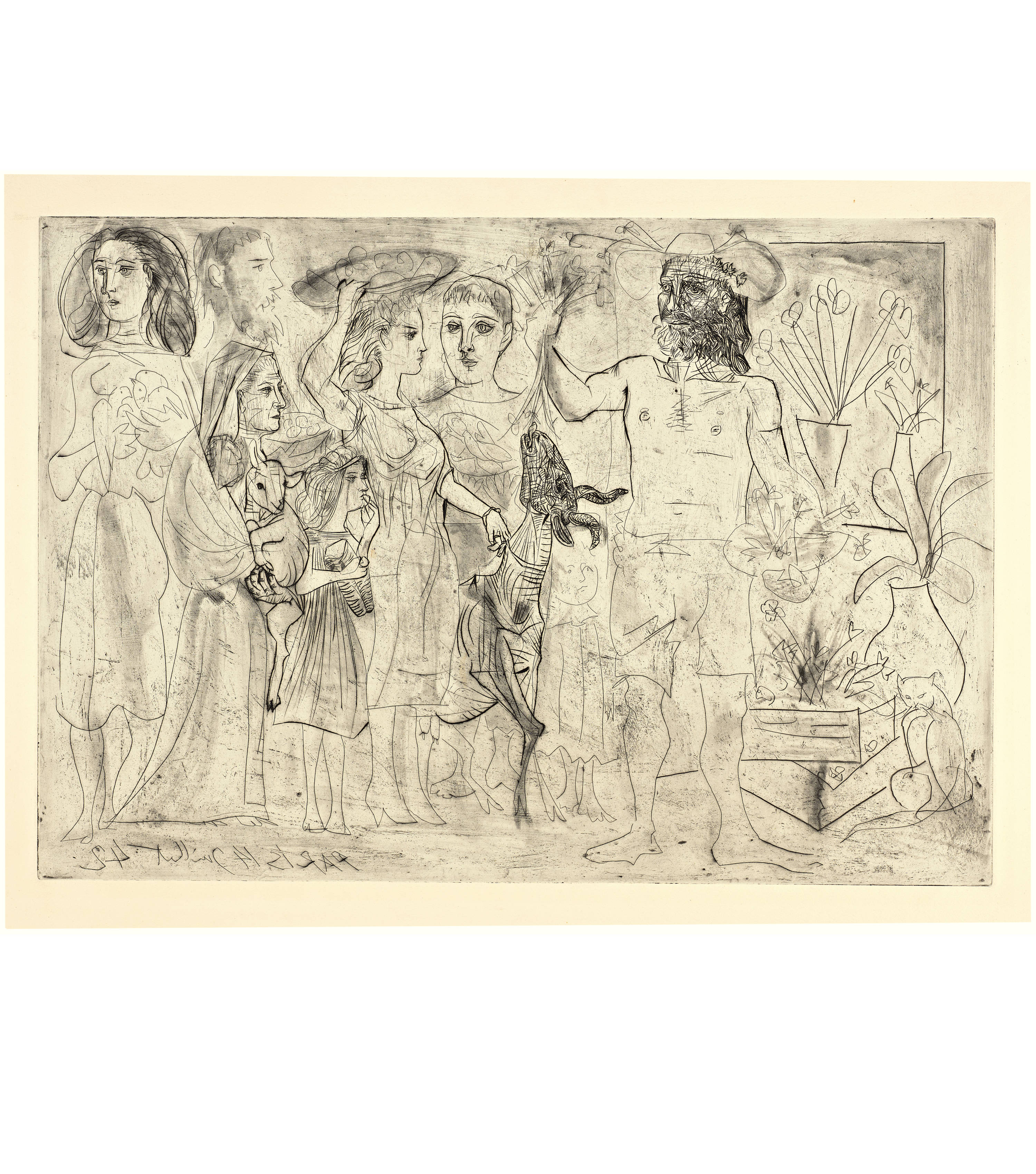
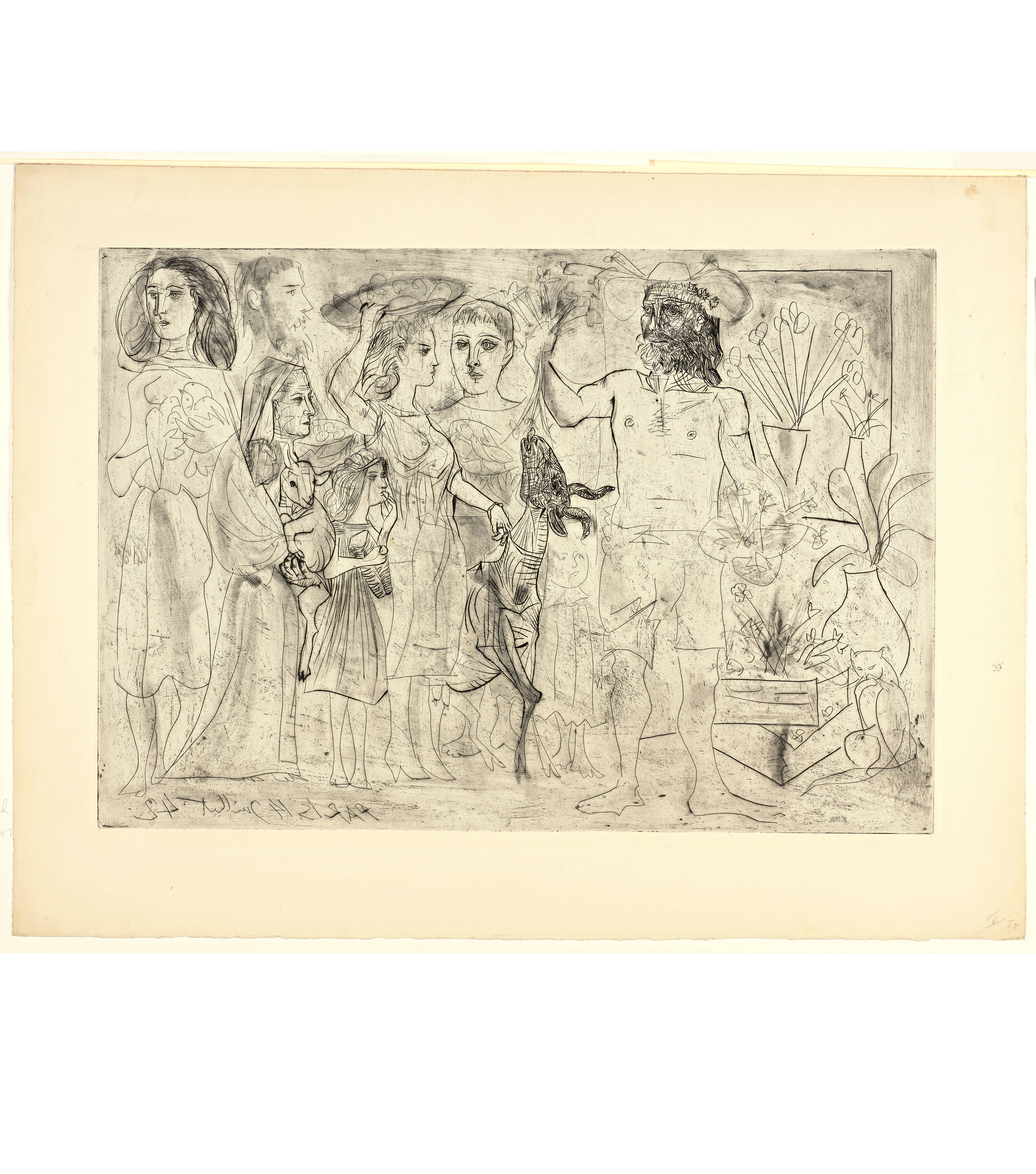
Paris, 14 July 1942
Etching, direct etching, scraper and burin on zinc, on heavy wove paper
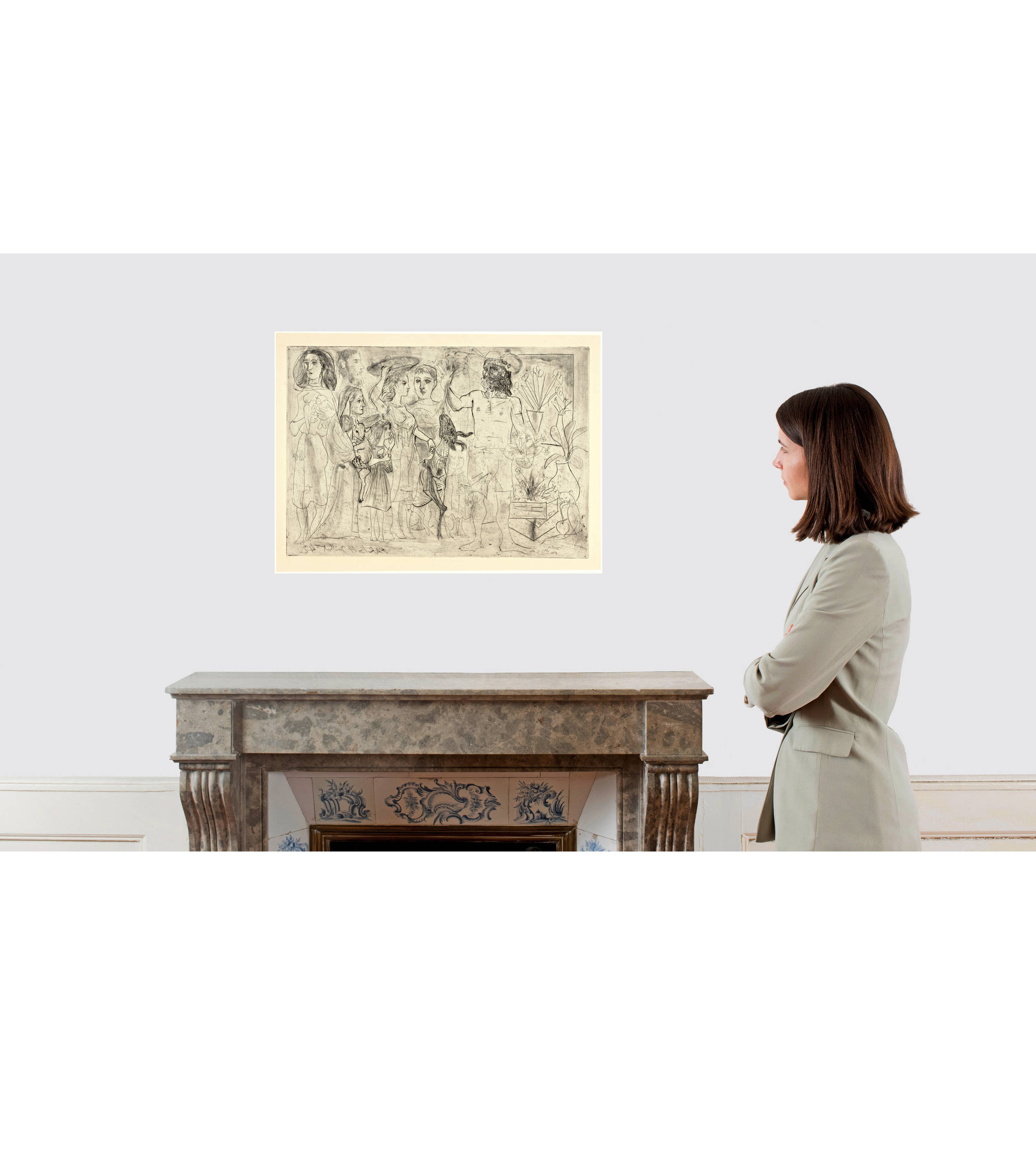
44.8x64.2 cm, plate mark; 59x77.6 cm, sheet size
Lower right inscribed in pencil "V"
Baer 682/V/B/a (of. b), positiv (copy mentioned there)
Atelier Lacourière, Paris
The Madeleine Lacourière Collection, Paris
The Eberhard W. Kornfeld Collection, Bern, with the collector's stamp on the reverse, Lugt 913b
Andreas Bühler, Picassos Lithographie "Paris 14. Juli 1942" und die Ara Pacis Augustae, in: Heiner Hachmeister, Picasso, Paraphrasen und Variationen, Münster 2004, p. 18 Ff.
Bern 1982, Galerie Kornfeld, Pablo Picasso, Graphische Werke 1904-1972, cat. no. 231
Salzburg/Winterthur 1984/1985, Rupertinum/Kunstmuseum, Von Goya bis Warhol, Meisterwerke der Graphik des 19. und 20. Jahrhunderts aus einer Schweizer Privatsammlung [The Eberhard W. Kornfeld Collection], cat. no. 200
Cologne 1988, Museum Ludwig, Picasso im Zweiten Weltkrieg
Freiburg 1994, Musée d'art et d'histoire, Pablo Picasso, Gravures et lithographies 1904-1972, cat. no. 177
San Francisco/New York 1998/1999, California Palace of the Legion of Honor/Guggenheim Museum SoHo, Picasso and the War
Bern 2001/2002, Kunstmuseum, Picasso und die Schweiz, cat. no. 133A
Barcelona 2004, Museu Picasso, Picasso, War and Peace, cat. no. 63
A few foxing spots outside the plate mark. Minimal lightstruck area and slight grip marks. Excellent impression with wide margins
The sheet was created in July 1942 during one of the darkest phases of the German occupation of Paris. During this period, Picasso produced very few prints.
According to recent research by Andreas Bühler, Picasso is believed to have turned to the theme of peace on the French national holiday—the day of the storming of the Bastille—by paraphrasing the offering of Aeneas from the relief of the Ara Pacis Augustae in Rome. According to Bühler, the male figure on the right corresponds to Aeneas. However, he does not hold a sacrificial bowl, but is recognizable as the artist himself with a painter's palette and bouquet of flowers. This figure is also considered the first draft for the sculpture "Homme au mouton" developed shortly thereafter, which is among the artist's most important sculptures of that decade. From the left, figures approach, all bringing offerings in the form of fruit or animals.
Picasso never received formal training as a printmaker, but in the second half of the 1930s he experimented extensively with the various possibilities of etching in the workshop of Roger Lacourière (1892-1966). The collaboration between Picasso and Lacourière proved to be exceptionally fruitful.
The present, extremely rare graphic sheet impresses with its richness of detail and great precision.
A total of five states of reworking are known, each printed in only a few individual impressions. No signed prints are known.
Paris, 14. Juli 1942
Radierung, direkte Ätzung, Schabeisen und Stichel auf Zink, auf festem Velin
44,8x64,2 cm, Plattenkante; 59x77,6 cm, Blattgrösse
Unten rechts in Bleistift bezeichnet "V"
Baer 682/V/B/a (v. b), positiv (dort erwähntes Exemplar)
Atelier Lacourière, Paris
Slg. Madeleine Lacourière, Paris
Slg. Eberhard W. Kornfeld, Bern, auf der Rückseite mit dem Sammlerstempel, Lugt 913b
Andreas Bühler, Picassos Lithographie "Paris 14. Juli 1942" und die Ara Pacis Augustae, in: Heiner Hachmeister, Picasso, Paraphrasen und Variationen, Münster 2004,
Bern 1982, Galerie Kornfeld, Pablo Picasso, Graphische Werke 1904-1972,
Salzburg/Winterthur 1984/1985, Rupertinum/Kunstmuseum, Von Goya bis Warhol, Meisterwerke der Graphik des 19. und 20. Jahrhunderts aus einer Schweizer Privatsammlung [Slg. Eberhard W. Kornfeld],
Köln 1988, Museum Ludwig, Picasso im Zweiten Weltkrieg
Freiburg 1994, Musée d'art et d'histoire, Pablo Picasso, Gravures et lithographies 1904-1972,
San Francisco/New York 1998/1999, California Palace of the Legion of Honor/Guggenheim Museum SoHo, Picasso and the War
Bern 2001/2002, Kunstmuseum, Picasso und die Schweiz,
Barcelona 2004, Museu Picasso, Picasso, War and Peace,
Wenige Flecken ausserhalb der Plattenkante. Minimer Lichtrand und leichte Griffknicke. Ausgezeichneter Druck mit breitem Rand. In sehr guter Erhaltung
Das Blatt entstand im Juli 1942 während einer der dunkelsten Phasen der deutschen Besatzungszeit von Paris. In dieser Zeit schuf Picasso nur sehr wenige Druckgrafiken.
Nach neuerer Forschung von Andreas Bühler dürfte sich Picasso am französischen Nationalfeiertag - dem Tag der Erstürmung der Bastille - dem Thema des Friedens zugewandt haben, indem er die Opfergabe des Aeneas vom Relief des Friedensaltars Ara Pacis Augustae in Rom paraphrasierte. Laut Bühler entspreche die männliche Figur auf der rechten Seite dem Aeneas. Diese halte jedoch keine Opferschale, sondern sei mit Malerpalette und Blumenstrauss als Künstler selbst erkennbar. Diese Figur gilt ebenfalls als erster Entwurf für die wenig später daraus entwickelte Skulptur "Homme au mouton", die zu den bedeutendsten Skulpturen des Künstlers in diesem Jahrzehnt zählt. Von links nähern sich der Figur Gestalten, die alle eine Opfergabe in Form von Früchten oder Tieren darbringen.
Picasso hatte nie eine formale Ausbildung als Druckgrafiker erhalten, doch in der zweiten Hälfte der 1930er-Jahre experimentierte er ausgiebig mit den verschiedenen Möglichkeiten der Radierung in der Werkstatt von Roger Lacourière (1892-1966). Die Zusammenarbeit zwischen Picasso und Lacourière erwies sich als ausserordentlich fruchtbar.
Das vorliegende, äusserst seltene grafische Blatt besticht durch seinen Detailreichtum und seine grosse Präzision.
Es sind gesamthaft fünf Überarbeitungszustände überliefert, die alle lediglich in einzelnen Exemplaren abgezogen wurden. Signierte Drucke sind nicht bekannt geworden.
| Switzerland | CHF | Individual offer |
| Europe | CHF | Individual offer |
| USA | CHF | Individual offer |
| Overseas | CHF | Individual offer |