- EN


 Log in
-
- Live Auctions
- Past auctions
- More
- Kornfeld today
- The Story of Kornfeld
- Information


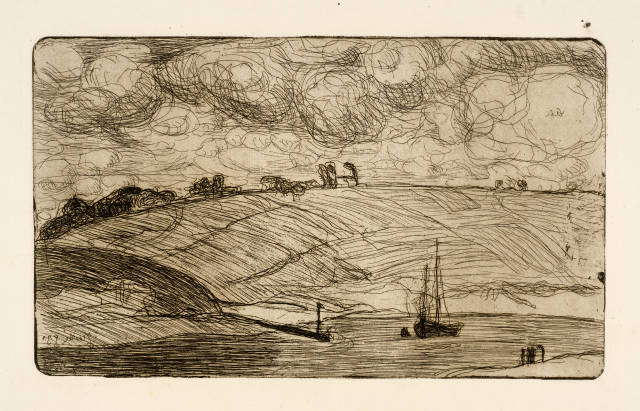







Paris 1869 - 1903 Châteauneuf-du-Faou



1893
Etching on Arches laid paper with watermark
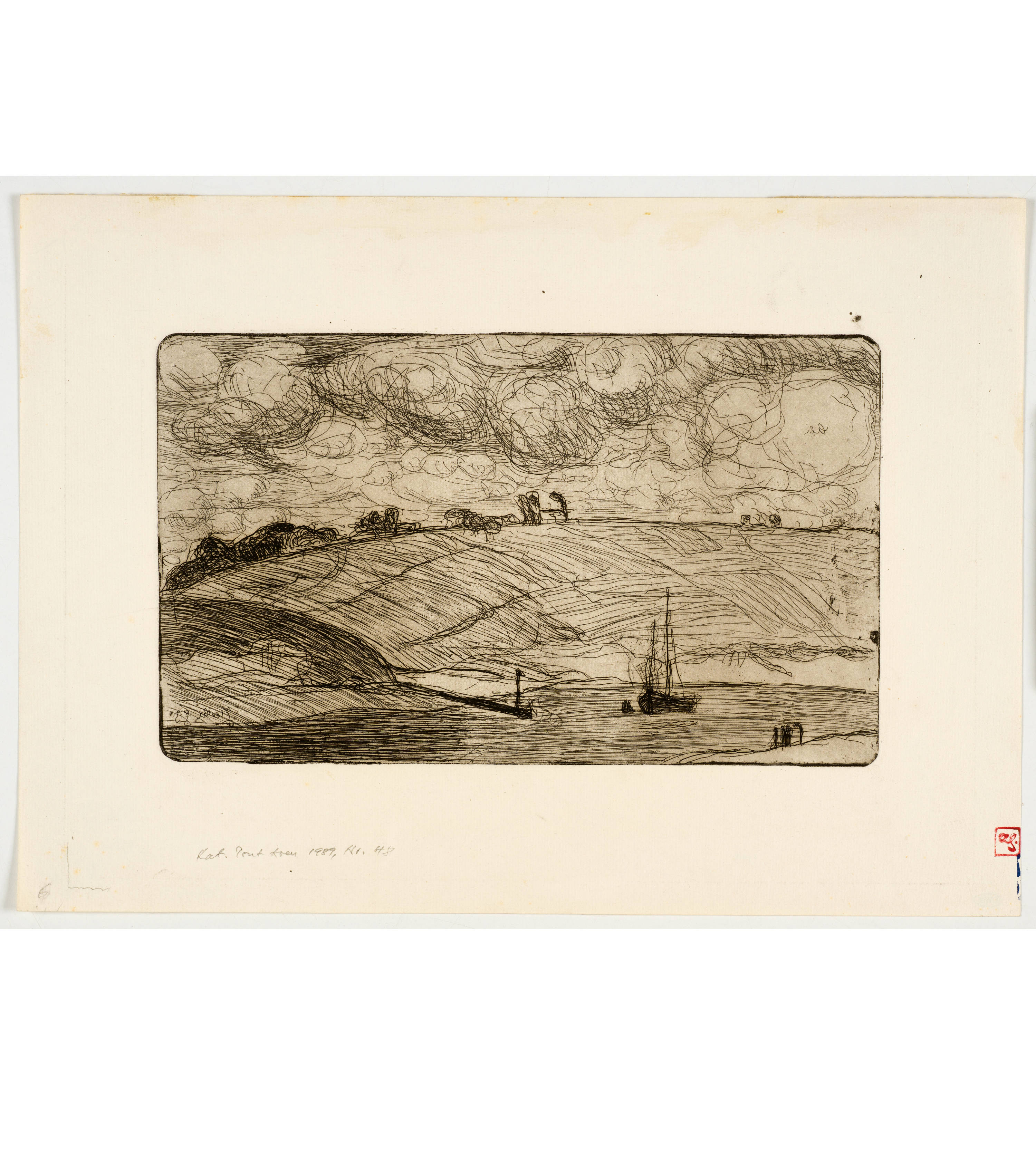
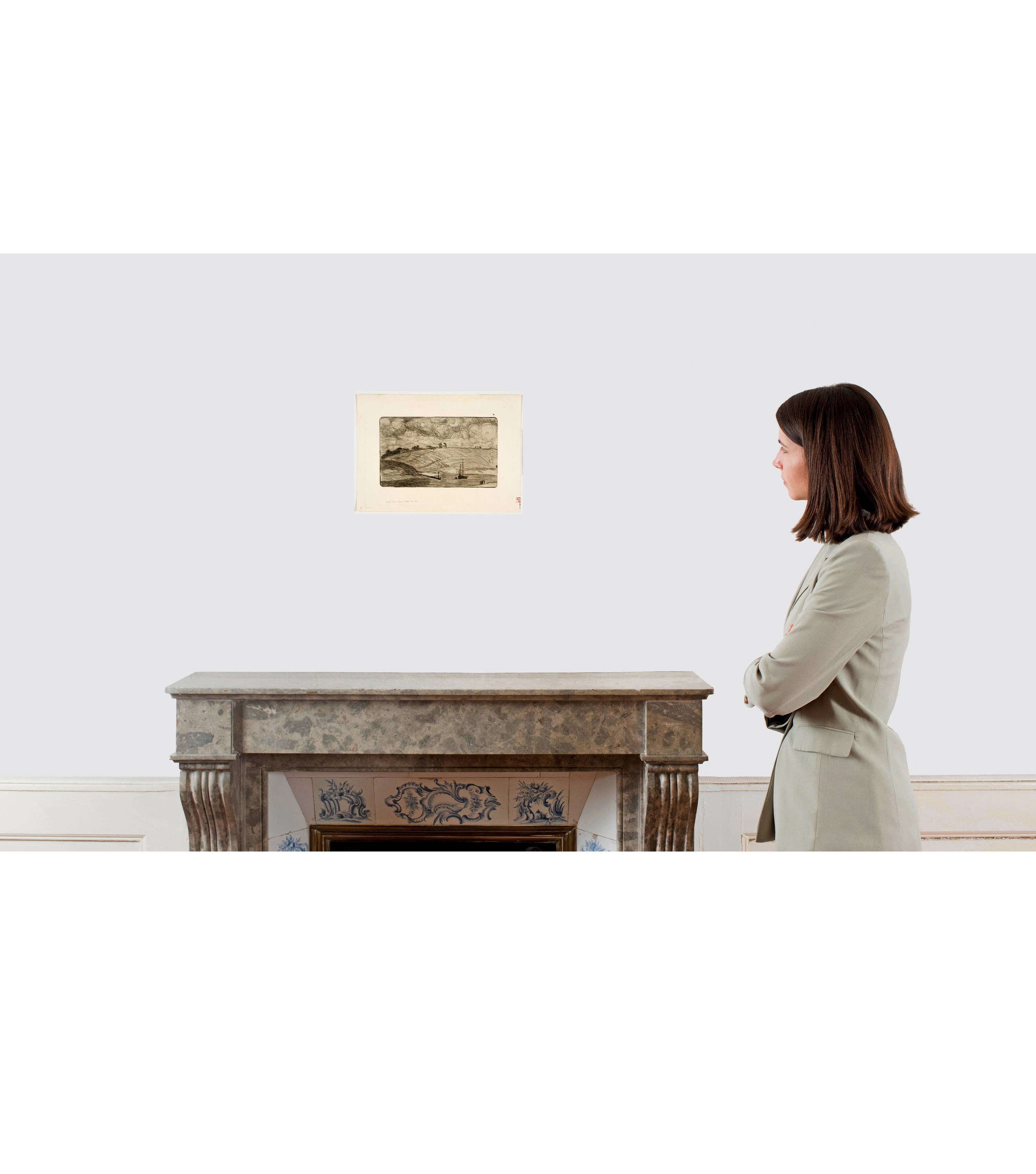
18.1x30.3 cm, Plate mark; 30x42 cm, Sheet size
Lower right with the artist's red monogram stamp "AS"
Field/Strauss/Wagstaff 30 C, the copy mentioned there
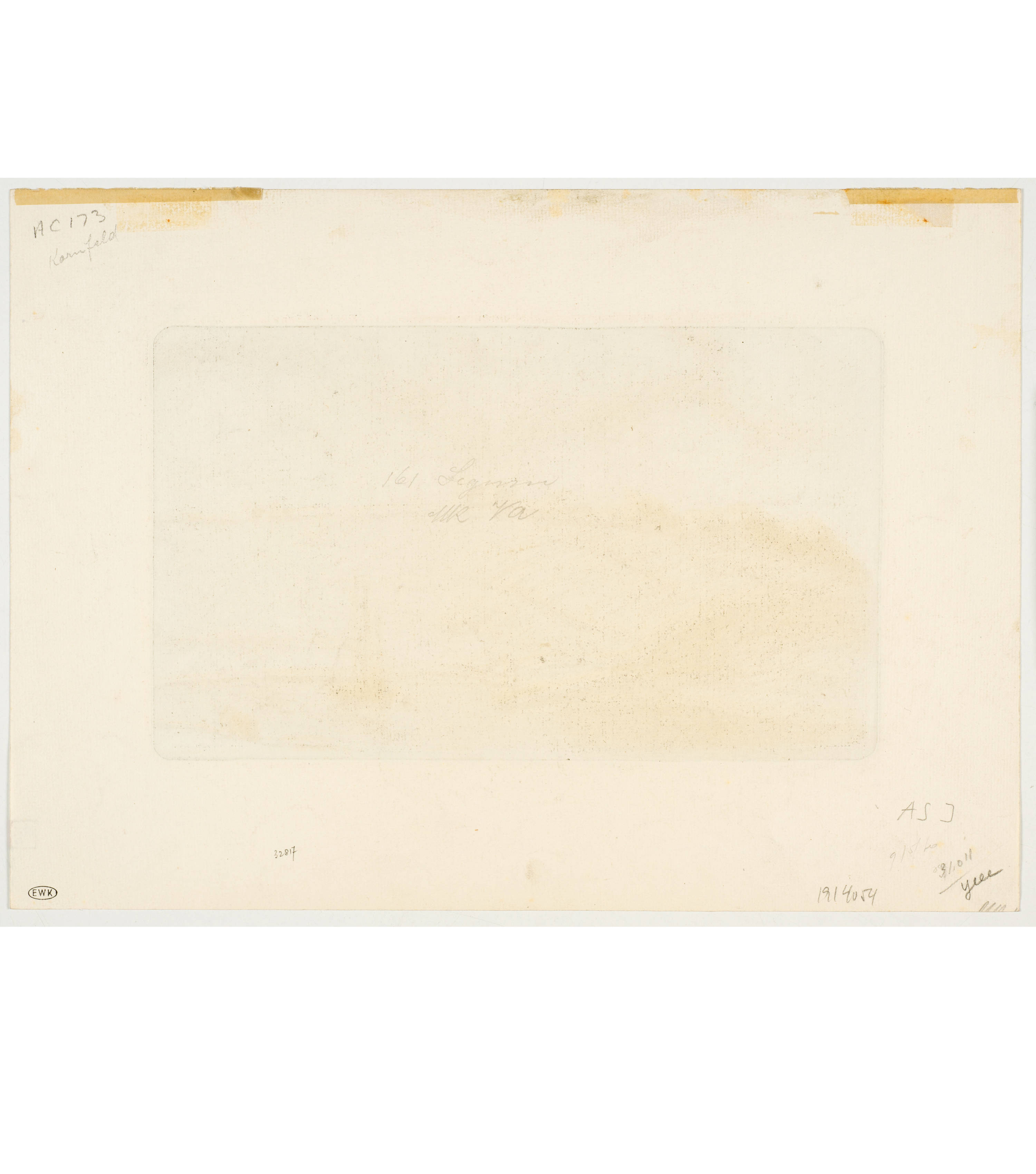
The Eberhard W. Kornfeld Collection, Bern, with the collector's stamp on the back, Lugt 913b, acquired circa 1965
Pont-Aven 1989, Musée de Pont-Aven, Armand Seguin 1869-1903, cat. no. 48 (L'entrée de la Laïta)
Sheet slightly foxed, with studio and grip marks. Traces of old mounting on the reverse. In very good condition
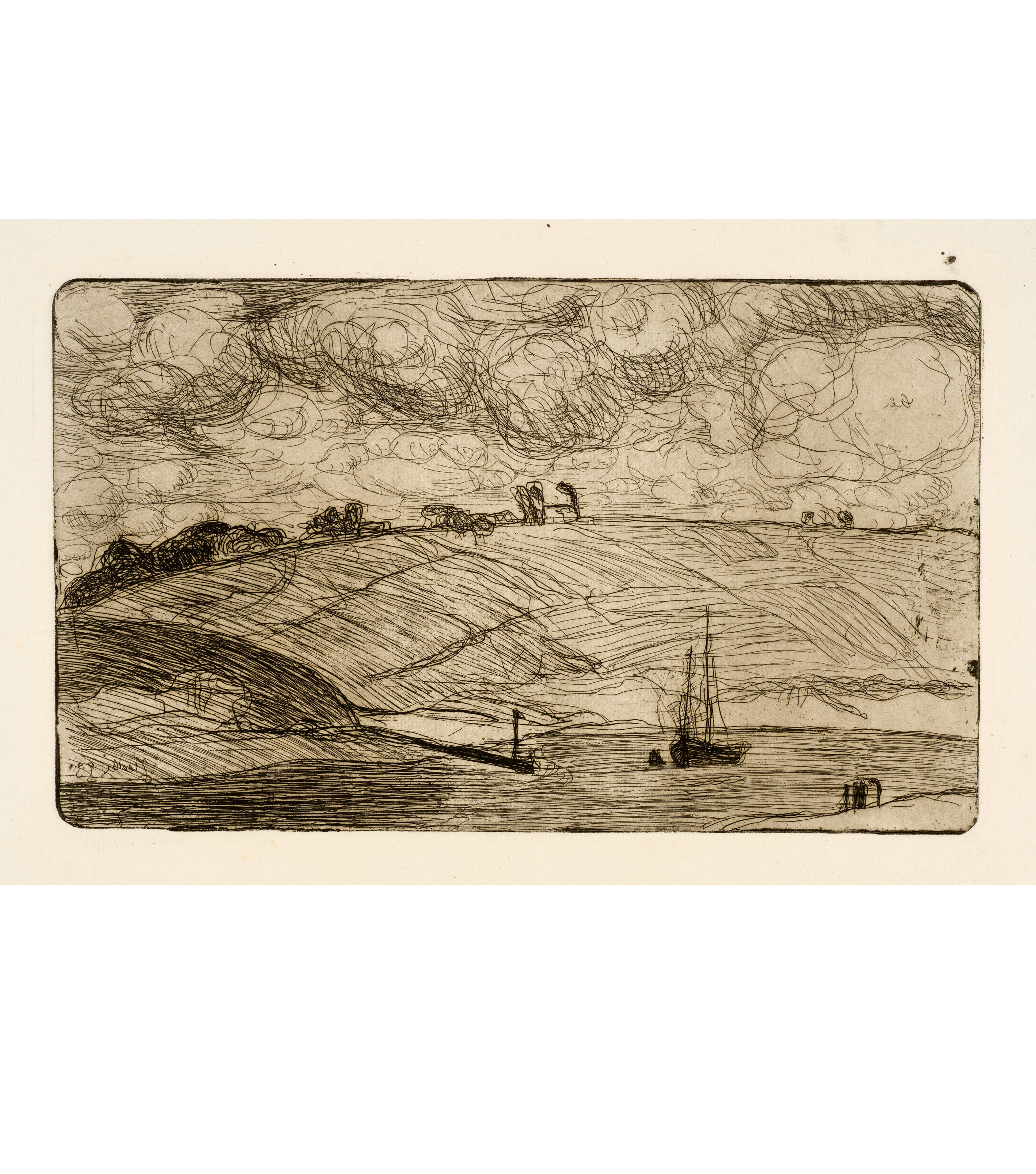
Depicted is a two-master at the mouth of the Laïta river into the Atlantic. The Laïta is an approximately seventeen-kilometre-long river in Brittany, which originates at the confluence of the Isole and Ellé in the centre of the medieval town of Quimperlé. This region inspired not only Armand Séguin, but also painters such as the Gauguin pupil Paul Sérusier.
1893
Radierung auf Arches-Bütten mit Wasserzeichen
18,1x30,3 cm, Plattenkante; 30x42 cm, Blattgrösse
Unten rechts mit dem roten Monogrammstempel des Künstlers "AS"
Field/Strauss/Wagstaff 30 C, dort erwähntes Exemplar
Slg. Eberhard W. Kornfeld, Bern, rückseitig mit dem Sammlerstempel, Lugt 913b, erworben um 1965
Pont-Aven 1989, Musée de Pont-Aven, Armand Seguin 1869-1903,
Blatt leicht stockfleckig, mit Atelier- und Griffspuren. Rückseitig Montierungsreste. In sehr guter Erhaltung
Dargestellt ist ein Zweimaster an der Flussmündung der Laïta in den Atlantik. Die Laïta ist ein rund siebzehn Kilometer langer Fluss in der Bretagne, der am Zusammenfluss von Isole und Ellé im Zentrum des mittelalterlichen Städtchen Quimperlé entspringt. Diese Gegend inspirierte nicht nur Armand Séguin, sondern auch Maler wie den Gaugin-Schüler Paul Sérusier.
| Switzerland | CHF | 150 |
| Europe | CHF | 250 |
| USA | CHF | 320 |
| Overseas | CHF | 325 |