- EN


 Log in
-
- Live Auctions
- Past auctions
- More
- Kornfeld today
- The Story of Kornfeld
- Information


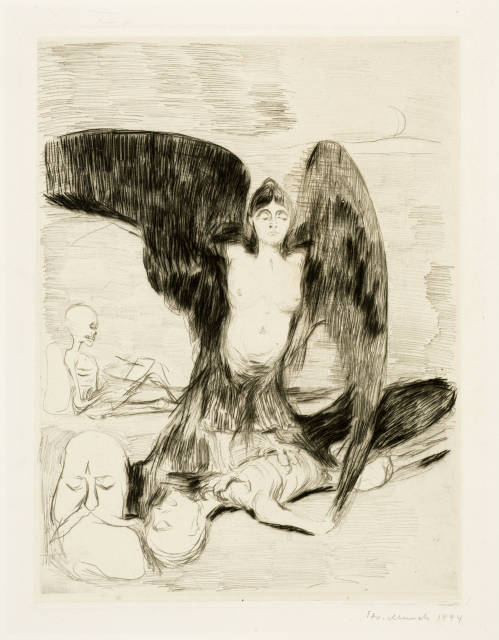







Løten 1863 - 1944 Oslo


1894
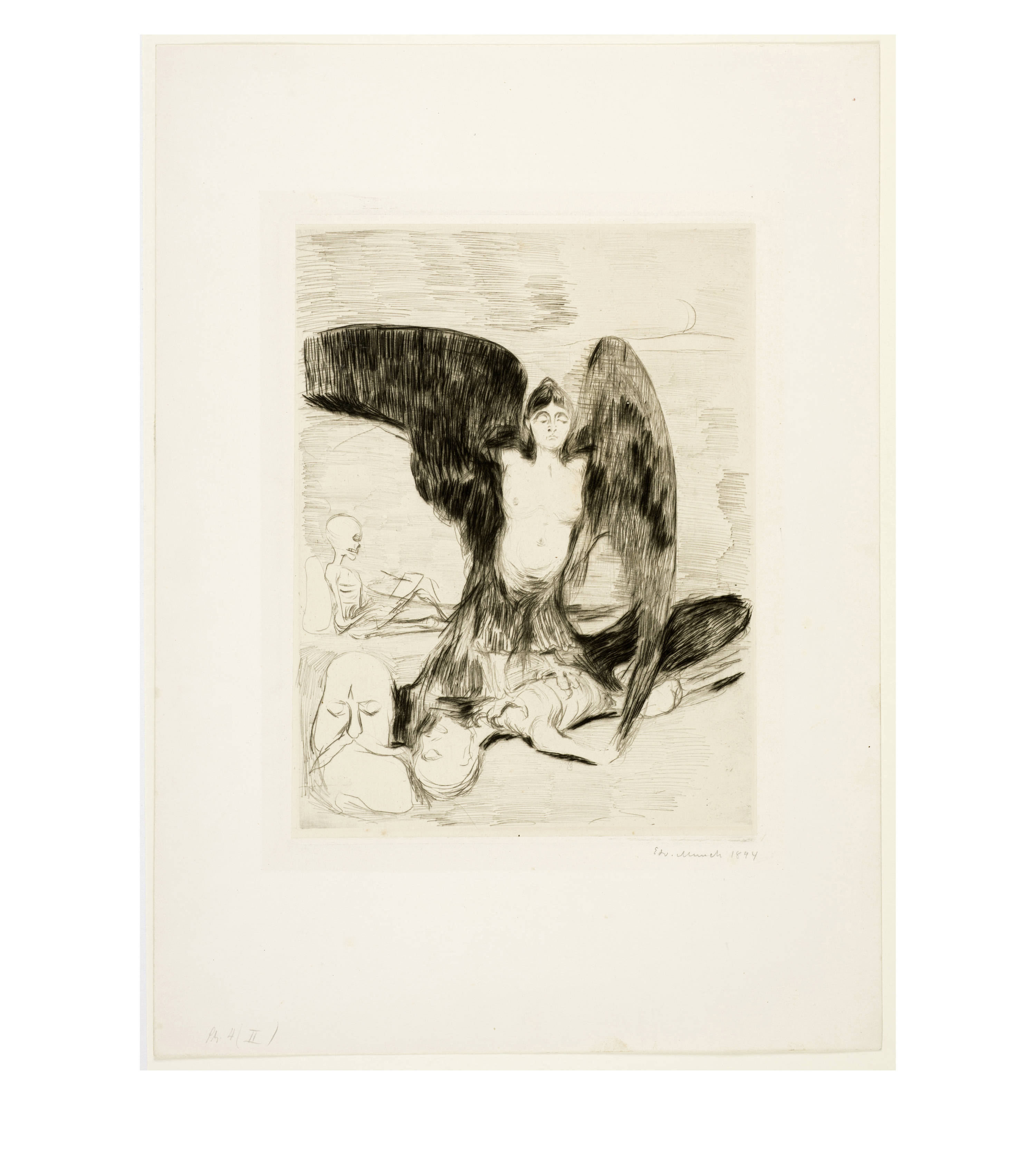
Drypoint on chine collé on heavy wove paper
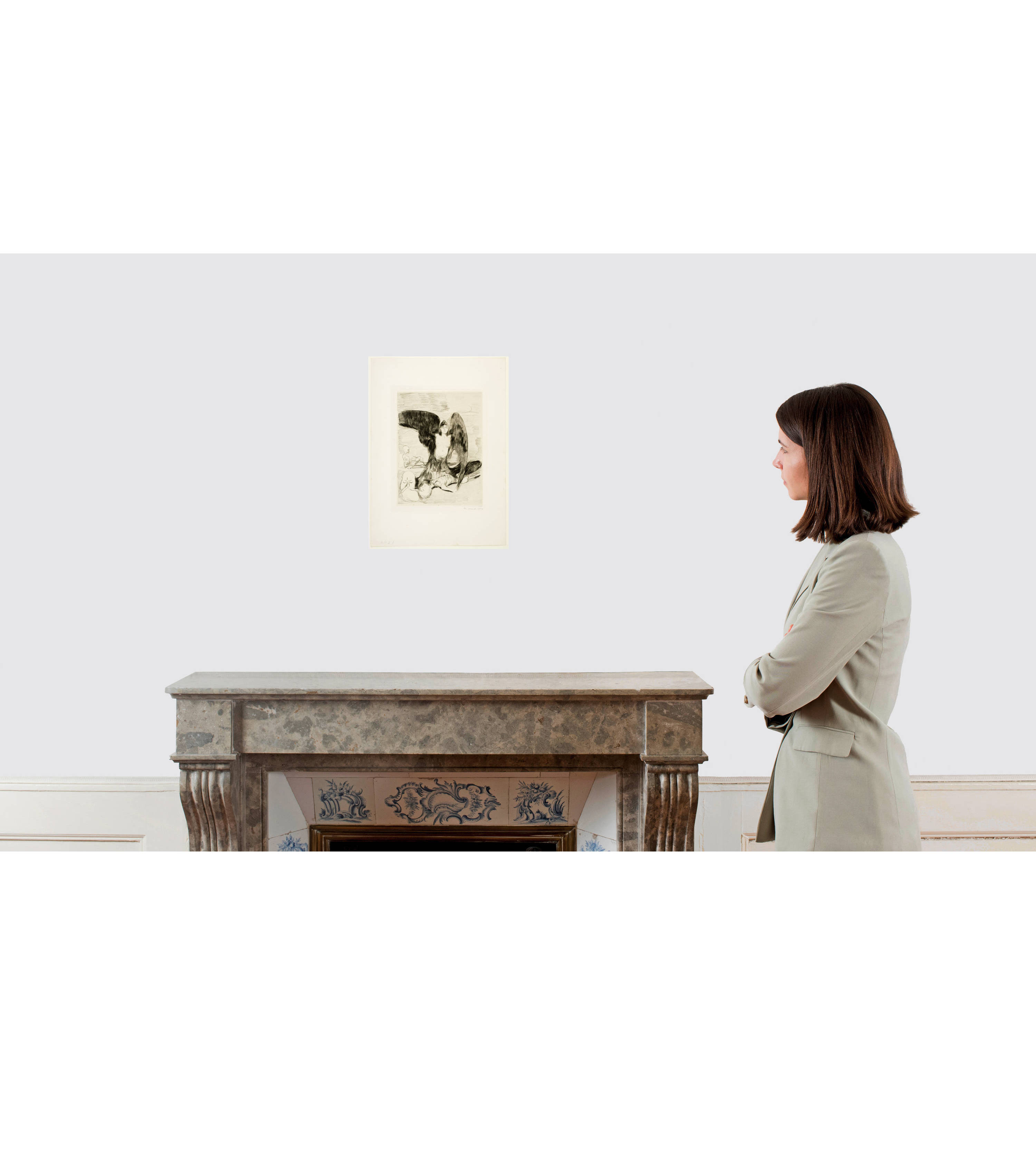
29x22 cm, chine collé; 29.8x22.8 cm, platemark; 47.7x34.5 cm, sheet size
Below the platemark signed and dated by the artist in pencil 'Edv. Munch 1894'
Gerd Woll, Edvard Munch, The Complete Graphic Works, Oslo 2012, no. 4/A/II (v. IV), one of the copies mentioned there
Collection Harry Graf Kessler (1868-1937)
Antiquariat Emil Hirsch, Munich, probably acquired there in 1934 by
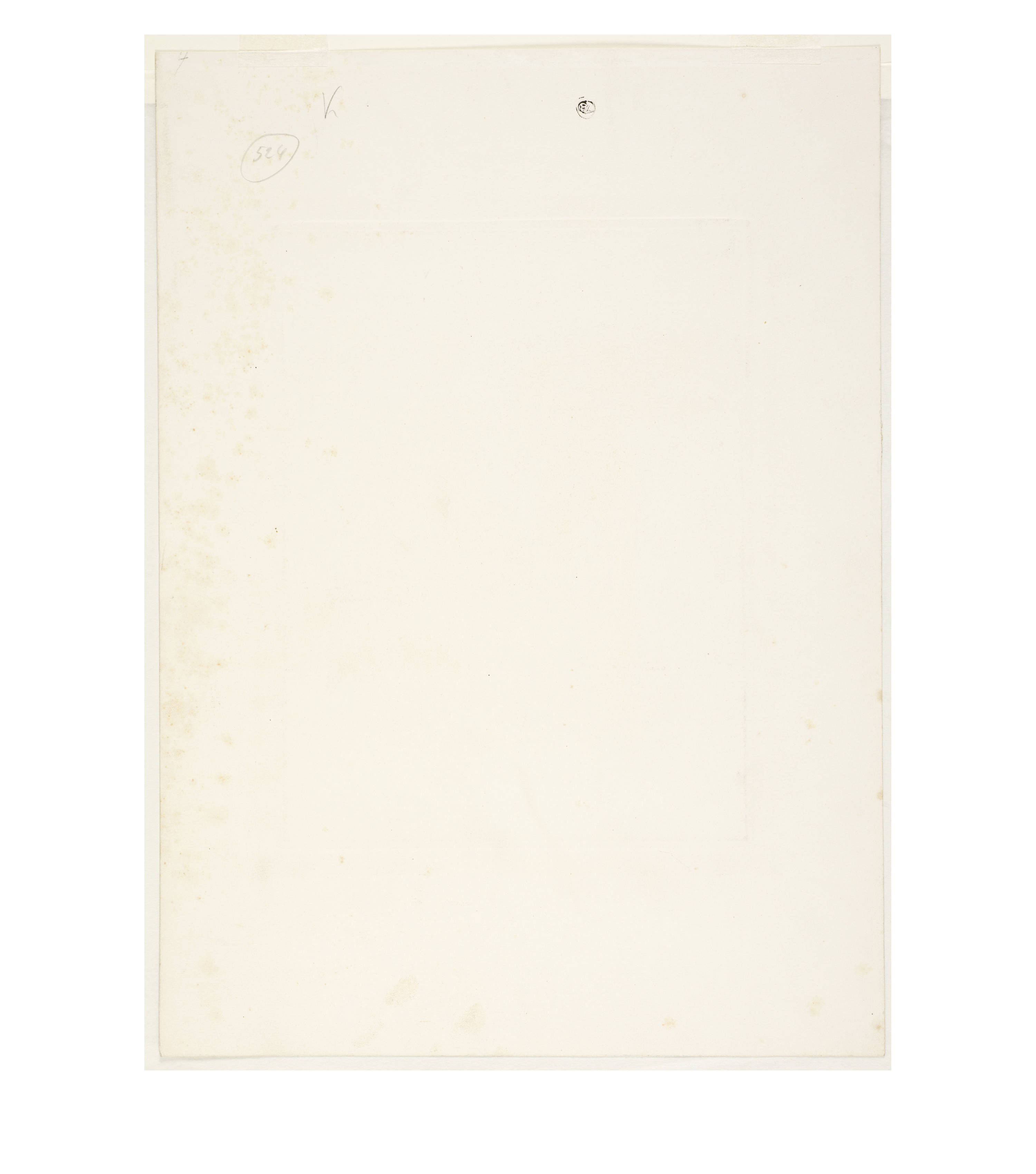
Collection Arnold Budczies, Berlin, with the collector's stamp on the back
Bremen 1970, Kunsthalle, Edvard Munch, Druckgraphik, Auswahl aus einer bremischen Privatsammlung, cat. no. 4
Slight studio traces and minimal foxing
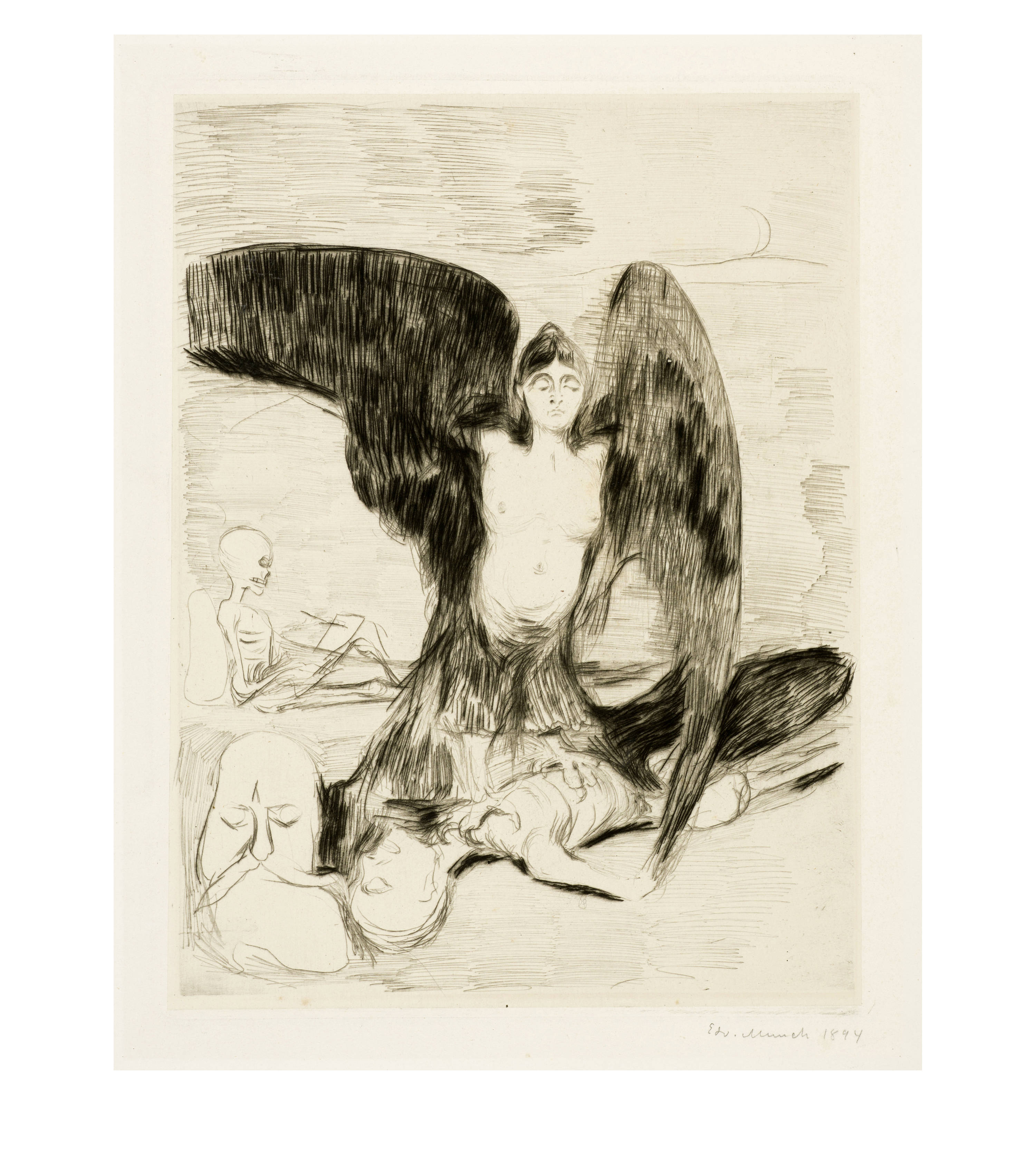
The etching 'Harpyie' is one of Edvard Munch's most impressive symbolist works in the medium of drypoint. The sheet shows a female figure with outstretched winged arms, whose body dissolves into organic, partly animalistic lines. The head is human, the expression serious or averted. The figure seems half human, half mythical creature. In ancient mythology, harpies were embodiments of female vengeance, messengers of death or seductive monsters.
Here, Munch takes up a motif that frequently appeared in the symbolist art of his time: woman as an overpowering, threatening force of nature. Both harpy and vampire become ciphers of the unfathomable feminine in his work and reflect male inner conflict. The creature sinks its claws into a male body, behind which a skeleton with notepaper can be seen. 'Harpyie' is therefore more than a mythological representation. It is an inner image, a projection of fear, desire and loss of control. Like many of Munch's works around 1894, it revolves around the relationship between man and woman, body and psyche, desire and guilt. See also lot 834.
Schiefler wrote about the present sheet:'One, printed on yellowish Chinese paper mounted on thicker white paper, signed "Edv. Munch 1894" (owned by Count Kessler) [...] appears to be the first print, judging by the clarity of the print.'
A wonderful early impression.
1894
Kaltnadel auf "Chine collé" auf festem Velin
29x22 cm, Chine collé; 29,8x22,8 cm, Plattenkante; 47,7x34,5 cm, Blattgrösse
Unter der Plattenkante vom Künstler in Bleistift signiert und datiert "Edv. Munch 1894"
Gerd Woll, Edvard Munch, The Complete Graphic Works, Oslo 2012,
Slg. Harry Graf Kessler (1868-1937)
Antiquariat Emil Hirsch, München, wohl dort 1934 erworben von
Slg. Arnold Budczies, Berlin, rückseitig mit dem Sammlerstempel
Bremen 1970, Kunsthalle, Edvard Munch, Druckgraphik, Auswahl aus einer bremischen Privatsammlung,
Leichte Atelierspuren und minime Stockflecken
Die Radierung "Harpyie" zählt zu Edvard Munchs eindrucksvollsten symbolistischen Arbeiten im Medium der Kaltnadel. Das Blatt zeigt eine weibliche Figur mit ausgebreiteten Flügelarmen, deren Körper sich in organischen, teils tierhaften Linien auflöst. Der Kopf ist menschlich, der Ausdruck ernst oder abgewandt. Die Figur scheint halb Mensch, halb mythisches Wesen zu sein. Harpyien waren in der antiken Mythologie eine Verkörperung weiblicher Rache, Todesbotinnen oder verführerische Ungeheuer.
Munch greift hier ein Motiv auf, das in der symbolistischen Kunst seiner Zeit häufig auftauchte: die Frau als übermächtige, bedrohliche Naturkraft. Sowohl Harpyie als auch Vampir werden bei ihm zu Chiffren des weiblichen Unergründlichen und spiegeln männliche Zerrissenheit wider. Das Wesen steckt seine Krallen in einen männlichen Körper, dahinter ist ein Skelett mit Notizpapier zu sehen. "Harpyie" ist damit mehr als eine mythologische Darstellung. Es ist ein inneres Bild, eine Projektion von Angst, Begehren und Kontrollverlust. Wie viele Werke Munchs um 1894 kreist es um das Verhältnis von Mann und Frau, Körper und Psyche, Lust und Schuld. Vgl. auch Los 834.
Schiefler schrieb zum vorliegenden Blatt: "Eines, auf gelbliches chinesisches Papier, das auf dickeres weisses Papier aufgezogen ist, gedruckt, gez. "Edv. Munch 1894" (Besitzer Graf Kessler) [...] scheint nach der Klarheit des Abzuges der erste Druck zu sein."
Ein wunderbarer Frühdruck.
| Switzerland | CHF | 130 |
| Europe | CHF | 200 |
| USA | CHF | 250 |
| Overseas | CHF | 255 |