- EN


 Log in
-
- Live Auctions
- Past auctions
- More
- Kornfeld today
- The Story of Kornfeld
- Information


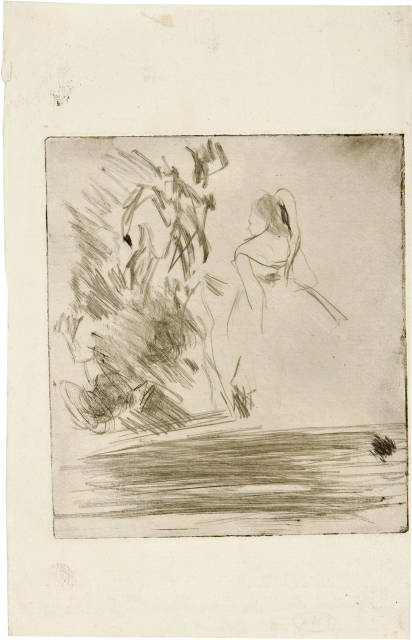







1834 Paris 1917



1879/1880
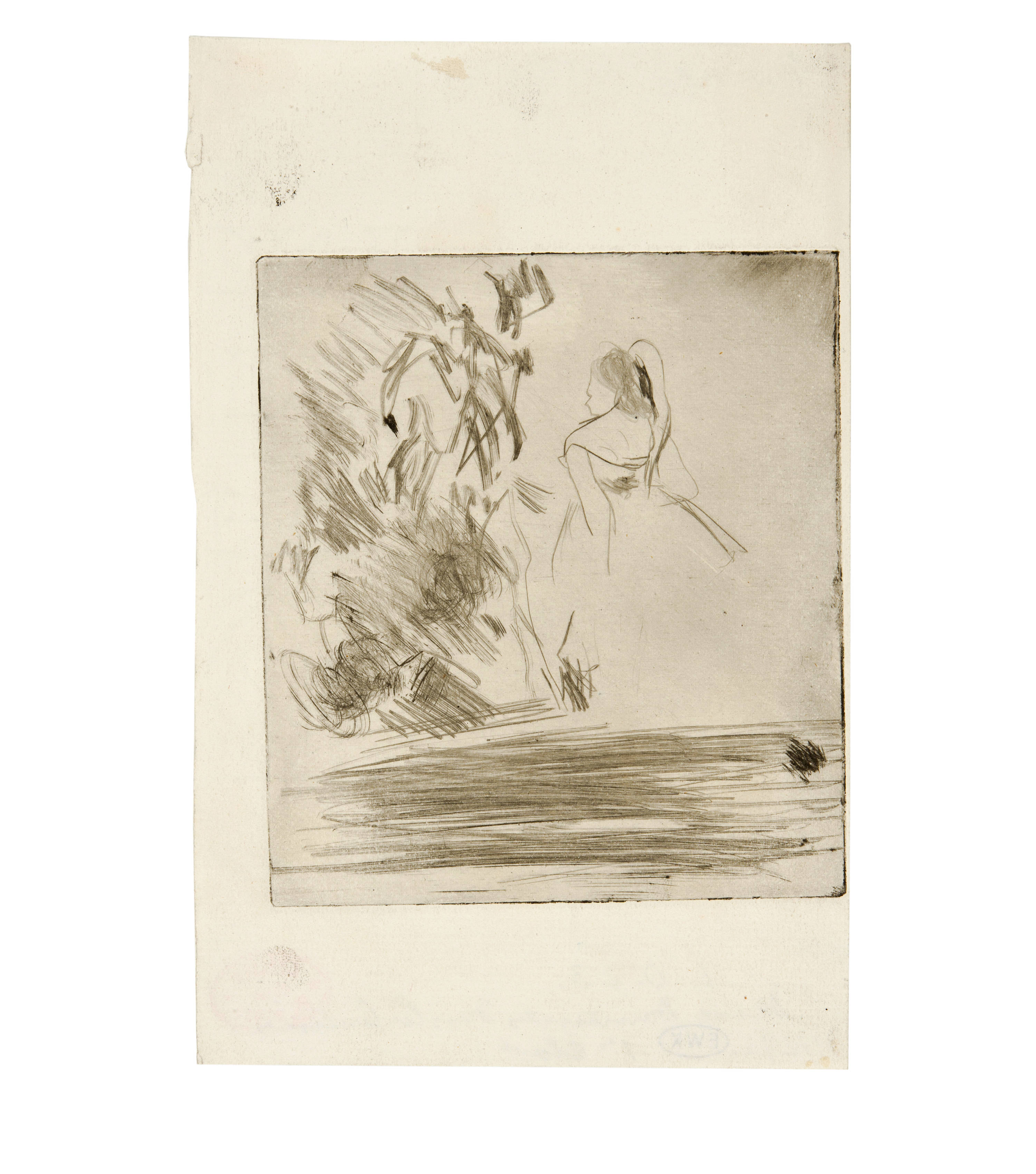
Drypoint on laid paper with watermark "Bekröntes Schild mit Löwe" and parts of the inscription "ORIGINAL / BASTED MILL / KENT", see Reed/Shapiro, Table of Watermarks, no. 11
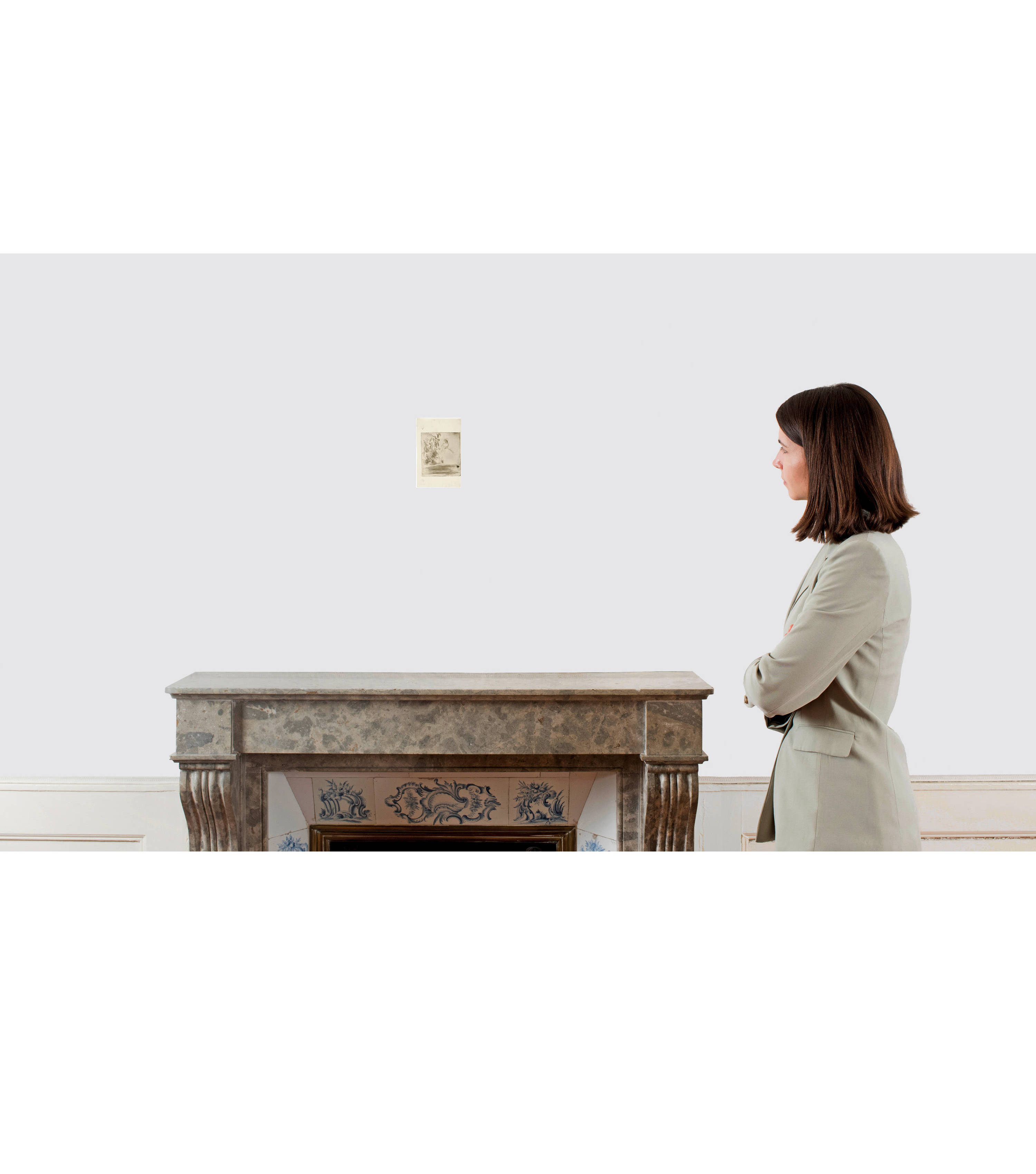
11.2x10 cm, plate mark; 17.8x11.5 cm, sheet size
Reed/Shapiro 39/I (of II)
Delteil 23
Adhémar/Cachin 36
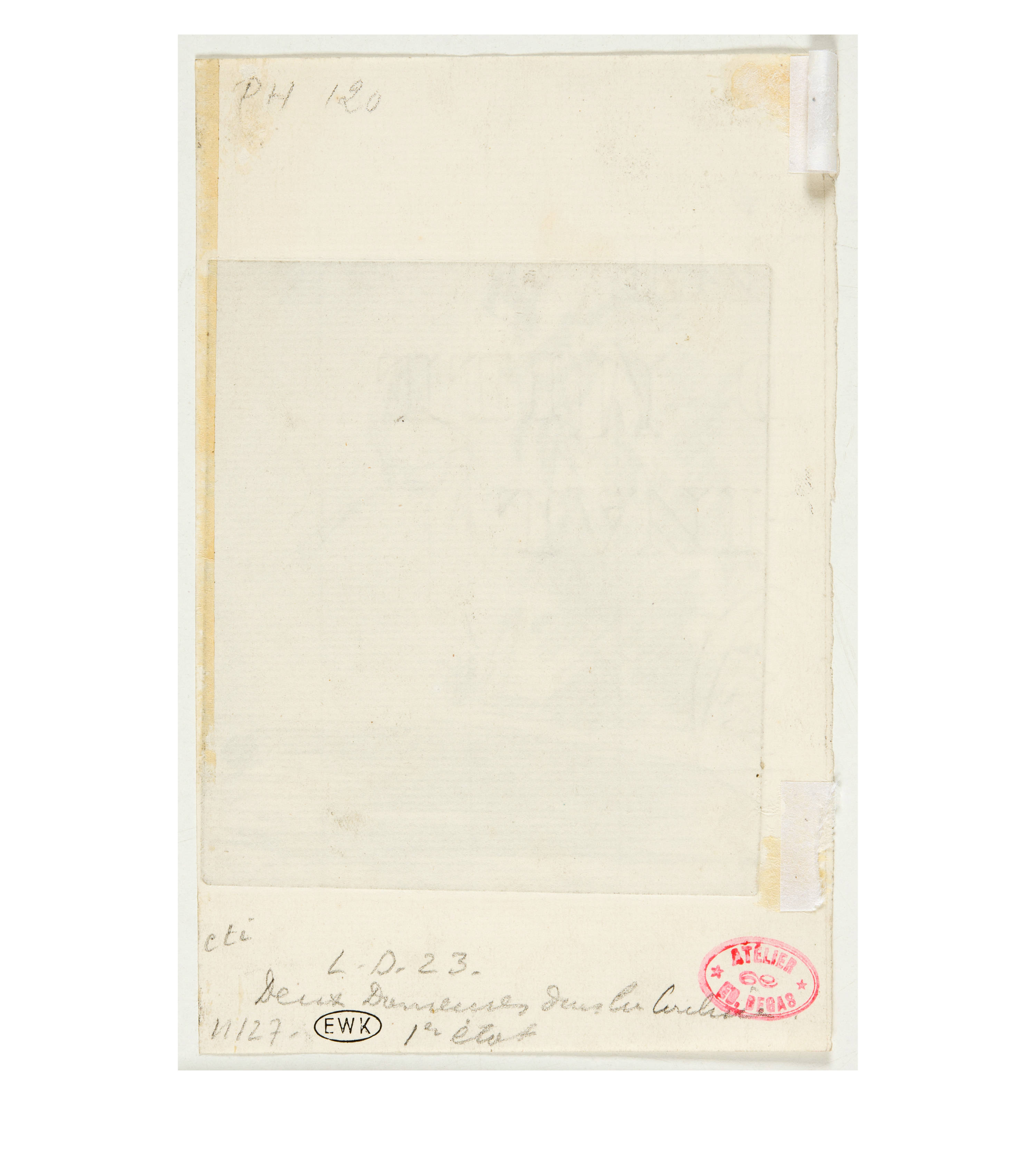
Auction Galerie Manzi-Joyant, Paris, 22-23 November 1918, Estampes par Edgar Degas, from lots 81-83, with the Vente Degas stamp on the reverse , Lugt 657
The Eberhard W. Kornfeld Collection, Bern, with the collector's stamp on the reverse , Lugt 913b
Boston/Philadelphia/London 1984/1985, Museum of Fine Arts/Museum of Art/Arts Council of Great Britain - Hayward Gallery, Edgar Degas: The Painter as Printmaker, cat. no. 39
Vevey 1998, Musée Jenisch, Degas et Pissarro, Alchimie d'une rencontre, cat. no. 59
With slight studio traces, a small supported paper area at the left edge, small spots at the upper and lower margin, verso with traces of old mounting. In very fine print quality and condition
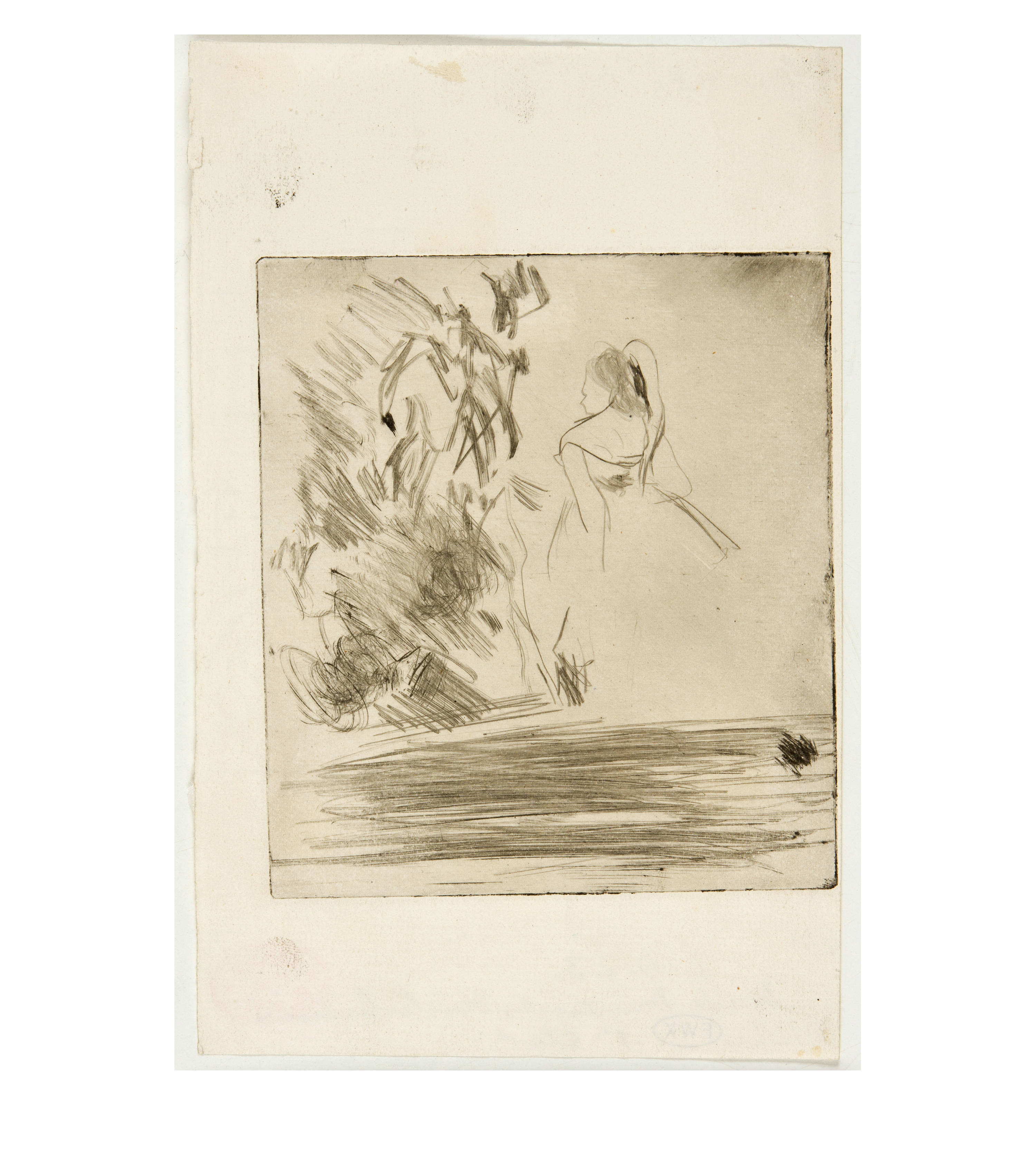
In the years 1879/1880, the artist experimented with innovative techniques in the field of printmaking. Instead of the conventional drypoint, he also used gas carbon rods, which were used in the electrical industry and in arc lamps (also called "crayon éléctrique"), or emery sticks to work the plate. His aim was to depict the dancer's movement in a striking way. The present sheet is a unique piece: it is the only known impression in the first state. According to Reed/Shapiro, only five impressions of the second state are known. Thematically, the composition is related to Degas' famous depictions of dancers, which he also realized in a lithograph (Reed/Shapiro 38) and an aquatint (Reed/Shapiro 47), as well as the fan pictures created during this period.
1879/1880
Kaltnadel auf Bütten mit Wasserzeichen "Bekröntes Schild mit Löwe" und Teilen des Schriftzugs "ORIGINAL / BASTED MILL / KENT", siehe Reed/Shapiro, Table of Watermarks,
11,2x10 cm, Plattenkante; 17,8x11,5 cm, Blattgrösse
Reed/Shapiro 39/I (v. II)
Delteil 23
Adhémar/Cachin 36
Auktion Galerie Manzi-Joyant, Paris, 22.-23. November 1918, Estampes par Edgar Degas, aus Los 81-83, rückseitig mit dem Stempel der Vente Degas, Lugt 657
Slg. Eberhard W. Kornfeld, Bern, rückseitig mit dem Sammlerstempel, Lugt 913b
Boston/Philadelphia/London 1984/1985, Museum of Fine Arts/Museum of Art/Arts Council of Great Britain - Hayward Gallery, Edgar Degas: The Painter as Printmaker,
Vevey 1998, Musée Jenisch, Degas et Pissarro, Alchimie d'une rencontre,
Mit leichten Atelierspuren, an der linken Kante eine kleine hinterlegte Papierstelle, am oberen und unteren Rand kleine Flecken, rückseitig mit Spuren einer alten Montierung. In sehr schöner Druckqualität und Erhaltung
In den Jahren 1879/1880 experimentierte der Künstler mit innovativen Techniken im Bereich der Druckgraphik. So verwendete er anstelle der herkömmlichen Kaltnadel auch Gas-Kohle-Stäbe, die in der Elektroindustrie und in Bogenlampen verwendet wurden (auch "crayon éléctrique" genannt), oder Schmirgelstifte, um die Platte zu bearbeiten. Sein Ziel war es, die Bewegung der Tänzerin effektvoll darzustellen. Beim vorliegenden Blatt handelt es sich um ein Unikat: Es ist das einzige bekannte Exemplar im I. Zustand. Im II. Zustand sind laut Reed/Shapiro lediglich fünf Exemplare nachweisbar. Thematisch schliesst sich die Komposition an Degas' berühmte Darstellungen von Tänzerinnen an, die er auch in einer Lithographie (Reed/Shapiro 38) und einer Aquatinta (Reed/Shapiro 47) realisiert, aber auch an die in dieser Zeit entstehenden Fächerbilder.
| Switzerland | CHF | 130 |
| Europe | CHF | 200 |
| USA | CHF | 250 |
| Overseas | CHF | 255 |