- EN


 Log in
-
- Live Auctions
- Past auctions
- More
- Kornfeld today
- The Story of Kornfeld
- Information









Bordeaux 1840 - 1916 Paris


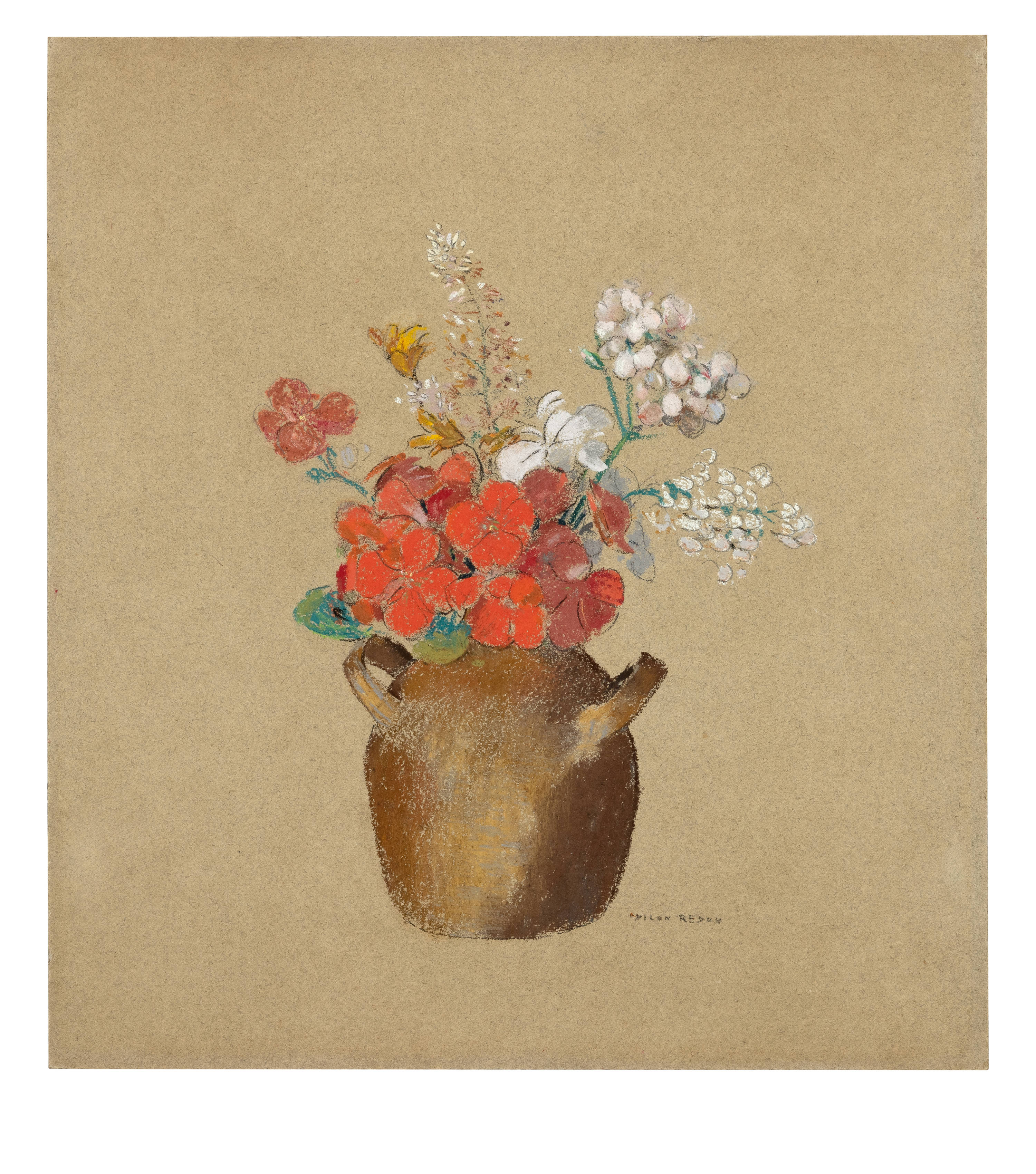
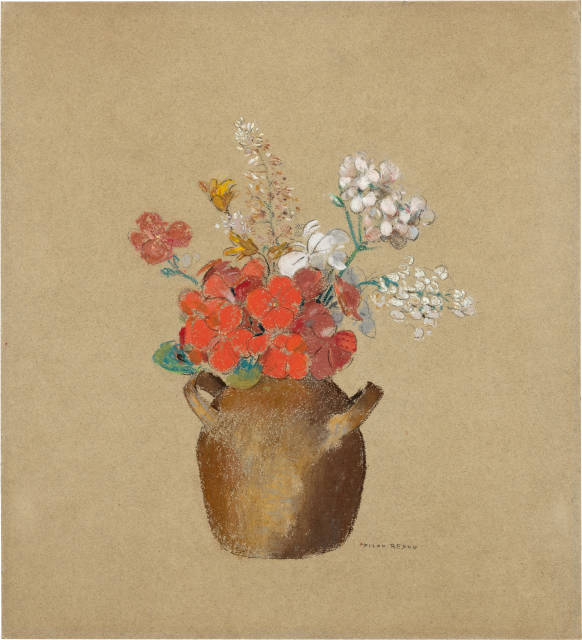
Circa 1905
Pastel, coloured chalk and pencil on coloured paper, mounted on cardboard
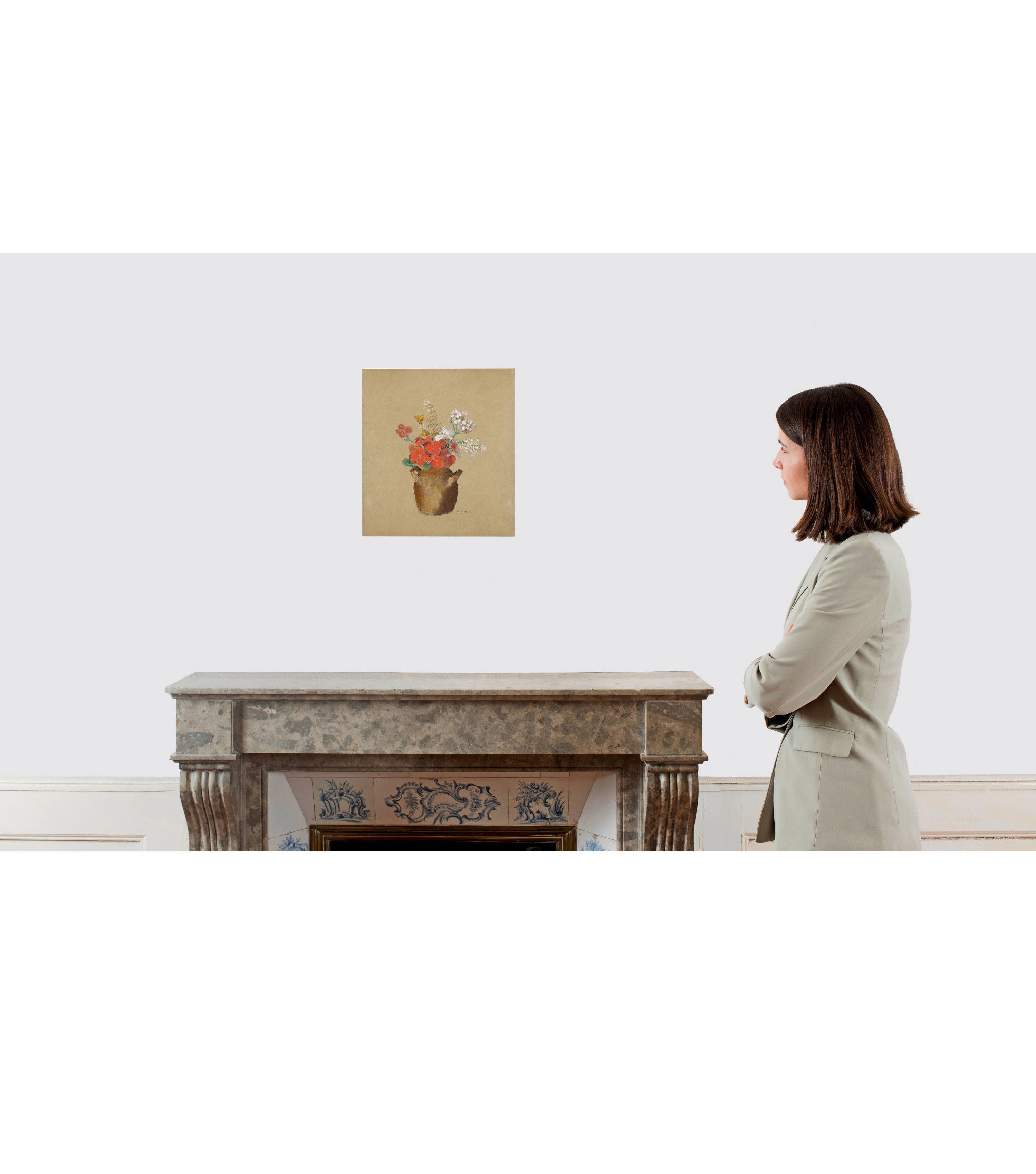
41.5x37.5 cm
Signed "ODILON REDON" by the artist lower right
Alec Wildenstein, Odilon Redon, Catalogue raisonné de l'œuvre peint et dessiné, vol. 3, Paris 1996, no. 1421
Étienne Bignou, Paris
Probably Alex Reid & Lefevre Ltd, London, ca. 1938
Collection Sir Alfred Chester Beatty, London
Collection J.R. Bridgemann, London
Collection I.S. Lindzon, Toronto
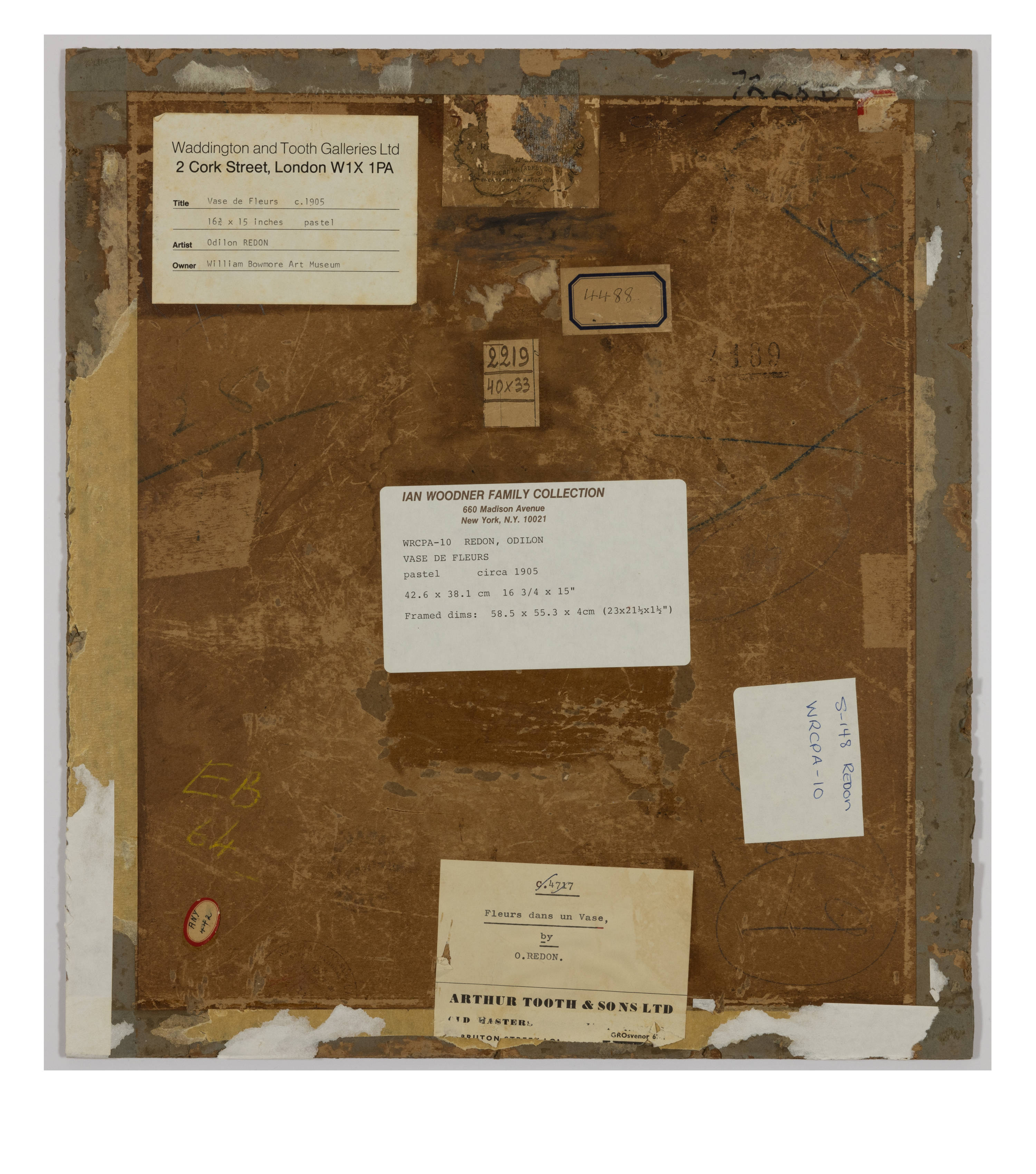
Arthur Tooth & Sons, London, labelled on the reverse, acquired there in 1978 from
Waddington Galleries, London, labelled on the reverse, acquired there by
Collection Willilam Bowmore, Brisbane
Auction Sotheby's, London, 30 June 1987, lot 33, purchased there by
The Ian Woodner Family Collection, New York, from there in 2000 as a gift to
gift to
The Museum of Modern Art, New York
London 1972, Arthur Tooth and Sons, cat. no. 9
Washington 1988, The Phillips Collection, Odilon Redon: The Woodner Collection, cat. no. 27
Tokyo/Kobe/Nagoya 1989, The National Museum of Modern Art/The Hyogo Prefectural Museum of Modern Art/Aichi Prefectural Art Gallery, Odilon Redon, cat. no. 220
Barcelona 1989-1990, Museu Picasso, Odilon Redon, La colleción Ian Woodner, cat. no. 35
Madrid 1990, Fundación Juan March, Odilon Redon, La colección Ian Woodner, cat. no. 43
Memphis 1990, The Dixon Gallery and Gardens, Odilon Redon, The Ian Woodner Family Collection, cat. no. 147
Lausanne/Paris 1992-1993, Fondation de l'Hermitage/Musée Marmottan, Odilon Redon: La Collection Woodner, cat. no. 51
In overall very fine condition and fresh in colour
The 1890s saw a dramatic change in Odilon Redon's art: he reintroduced colour. Even though Redon now turned to the bright colours of nature, he retained his preference for the fantastic. After 1900, he began his large series of flower paintings in oil and pastel. Armand Clavaud, a botanist and long-time friend and mentor, encouraged Redon's interest in flowers and natural history. The artist and his wife kept an extensive garden on the grounds of their country estate in Bièvres, where he found his inspiration and selected flowers to arrange and depict in his compositions. One of his most important influences was probably Eugène Delacroix, whose flower still lifes exhibited at the Salon of 1849 inspired Redon and his contemporaries, such as Gustave Courbet, Édouard Manet and Henri Fantin-Latour, to create their own flower paintings. From the very beginning, however, Redon's floral still lifes were characterised by a distinctive, idiosyncratic style that also crossed the boundaries between the real and the imaginary.
The lot on offer is an impressive example of this approach, which includes both careful observation and invented elements. Redon lacks any sense of place or context, instead placing his vase against a diffuse, atmospheric background. Although the forms of the flowers are carefully rendered, the composition as a whole appears artificial, a quasi-impossibly colourful arrangement that clearly prioritises pure sensation over realism.
In Redon's flower paintings, his interest in the unreal is often expressed both subtly and directly: he shows flowers from different seasons, now blooming simultaneously, realised with meticulous attention to detail. The use of mysteriously shimmering pastel enabled him to create a fine, almost dissolving pictorial structure. This is why the flower still lifes in this technique are particularly impressive.
Property of the Museum of Modern Art, New York
Um 1905
Pastell, Farbkreide und Bleistift auf farbigem Papier, auf Karton aufgezogen
41,5x37,5 cm
Unten rechts vom Künstler signiert "ODILON REDON"
Alec Wildenstein, Odilon Redon, Catalogue raisonné de l'œuvre peint et dessiné, Band 3, Paris 1996,
Étienne Bignou, Paris
Wohl Alex Reid & Lefevre Ltd., London, ca. 1938
Slg. Sir Alfred Chester Beatty, London
Slg. J.R. Bridgemann, London
Slg. I.S. Lindzon, Toronto
Arthur Tooth & Sons, London, rückseitig mit Etikett, dort 1978 erworben von
Waddington Galleries, London, rückseitig mit Etikett, dort erworben von
Slg. Willilam Bowmore, Brisbane
Auktion Sotheby's, London, 30. Juni 1987, Los 33, dort angekauft von
Slg. The Ian Woodner Familiy Collection, New York, von dort 2000 als
Geschenk an
The Museum of Modern Art, New York
London 1972, Arthur Tooth and Sons,
Washington 1988, The Phillips Collection, Odilon Redon: The Woodner Collection,
Tokyo/Kobe/Nagoya 1989, The National Museum of Modern Art/The Hyogo Prefectural Museum of Modern Art/Aichi Prefectural Art Gallery, Odilon Redon,
Barcelona 1989-1990, Museu Picasso, Odilon Redon, La colleción Ian Woodner,
Madrid 1990, Fundación Juan March, Odilon Redon, La colección Ian Woodner,
Memphis 1990, The Dixon Gallery and Gardens, Odilon Redon, The Ian Woodner Family Collection,
Lausanne/Paris 1992-1993, Fondation de l’Hermitage/Musée Marmottan, Odilon Redon: La Collection Woodner,
Farbfrisch und in sehr schöner Gesamterhaltung
In den 1890er-Jahren vollzog sich ein dramatischer Wandel in der Kunst Odilon Redons: Er führte die Farbe wieder ein. Auch wenn sich Redon nun den leuchtenden Farben der Natur zuwandte, behielt er seine Vorliebe für das Phantastische bei. Nach 1900 begann er seine grosse Serie von Blumenbildern in Öl und Pastell. Armand Clavaud, ein Botaniker und langjähriger Freund und Mentor, förderte Redons Interesse an Blumen und Naturgeschichte. Der Künstler und seine Frau unterhielten auf dem Grundstück ihres Landsitzes in Bièvres einen weitläufigen Garten, in dem er seine Inspiration fand und Blumen auswählte, die er in seinen Kompositionen arrangierte und darstellte. Einer seiner wichtigsten Einflüsse war wohl Eugène Delacroix, dessen auf dem Salon von 1849 ausgestellte Blumenstillleben Redon und seine Zeitgenossen, wie Gustave Courbet, Édouard Manet oder Henri Fantin-Latour, zu ihren eigenen Blumenbildern anregten. Redons Blumenstillleben zeichneten sich aber von Anfang an durch einen ausgeprägten, eigenwilligen Stil aus, der auch die Grenzen zwischen dem Realen und dem Imaginären überschritt.
Das angebotene Los ist ein eindrucksvolles Beispiel für diesen Ansatz, der sowohl sorgfältige Beobachtung als auch erfundene Elemente beinhaltet. Redon lässt dabei jeglichen Sinn für den Ort oder den Kontext vermissen und stellt seine Vase stattdessen vor einen diffusen, atmosphärischen Hintergrund. Obwohl die Formen der Blumen sorgfältig wiedergegeben werden, wirkt die Komposition als Ganzes künstlich, ein quasi unmöglich farbenfrohes Arrangement, das der reinen Empfindung klar Vorrang vor dem Realismus einräumt.
In Redons Blumenbildern kommt sein Interesse am Irrealen oft sowohl subtil als auch direkt zum Ausdruck: Er zeigt Blumen aus verschiedenen Jahreszeiten, die nun gleichzeitig blühen, in akribischer Liebe zum Detail umgesetzt. Die Verwendung des geheimnisvoll schimmernden Pastells ermöglichte es ihm eine feine, sich fast auflösende Bildstruktur zu schaffen. Deshalb sind gerade die Blumenstillleben in dieser Technik besonders eindrucksvoll.
Eigentum des Museum of Modern Art, New York
Property from The Museum of Modern Art, New York
| Switzerland | CHF | Individual offer |
| Europe | CHF | Individual offer |
| USA | CHF | Individual offer |
| Overseas | CHF | Individual offer |