- EN


 Log in
-
- Live Auctions
- Past auctions
- More
- Kornfeld today
- The Story of Kornfeld
- Information









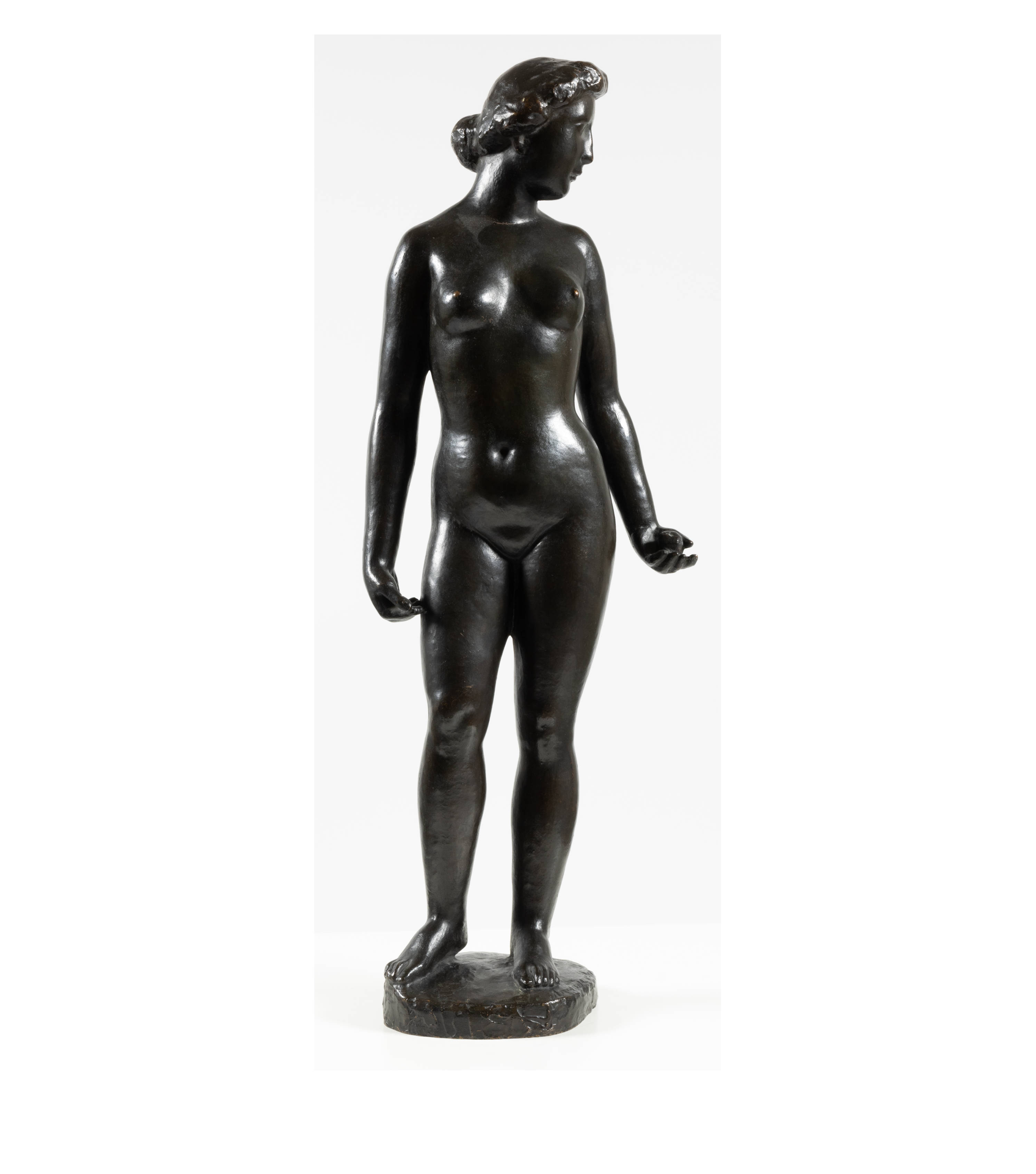
1861 Banyuls-sur-Mer 1944


1899, cast posthumously
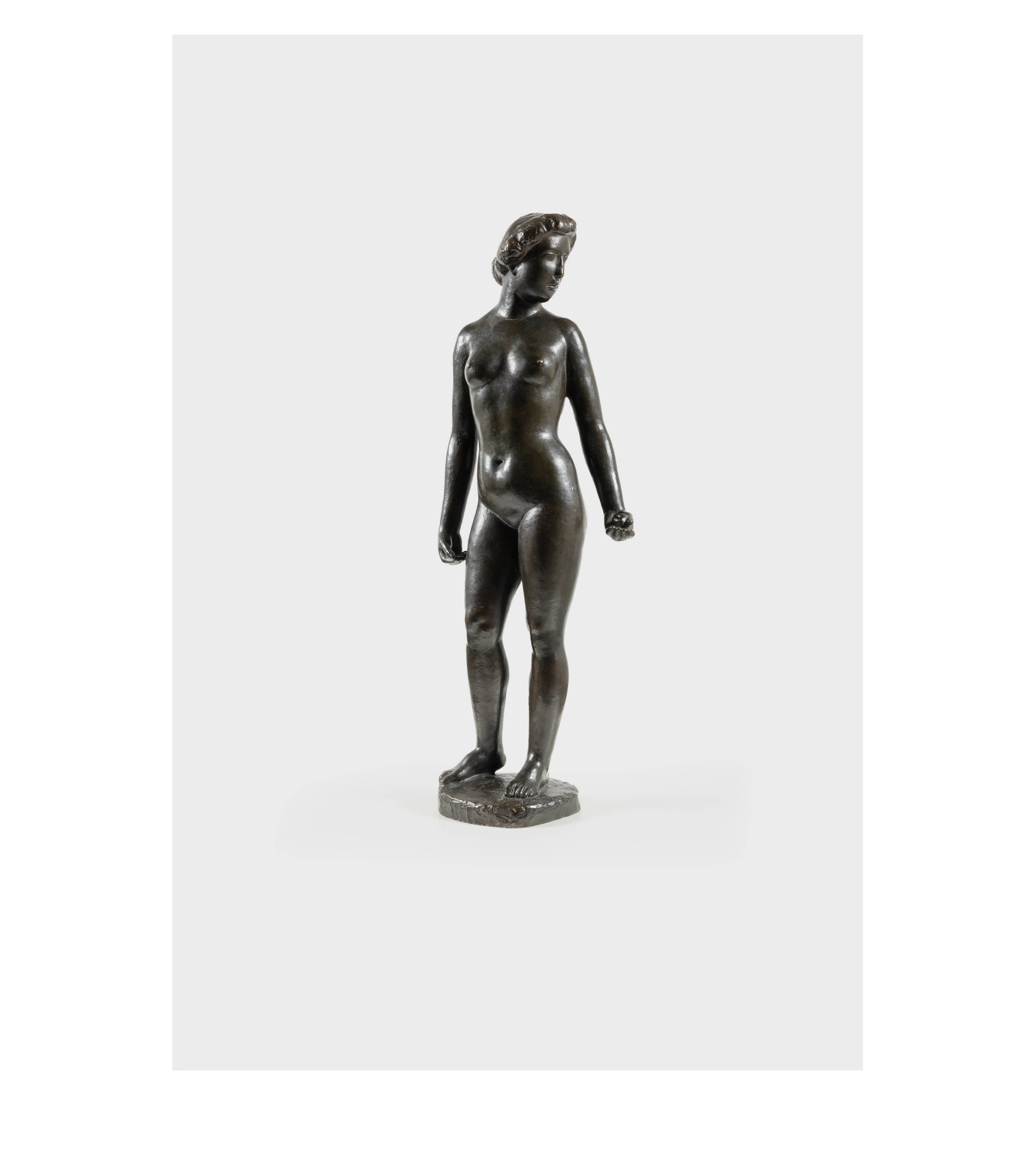
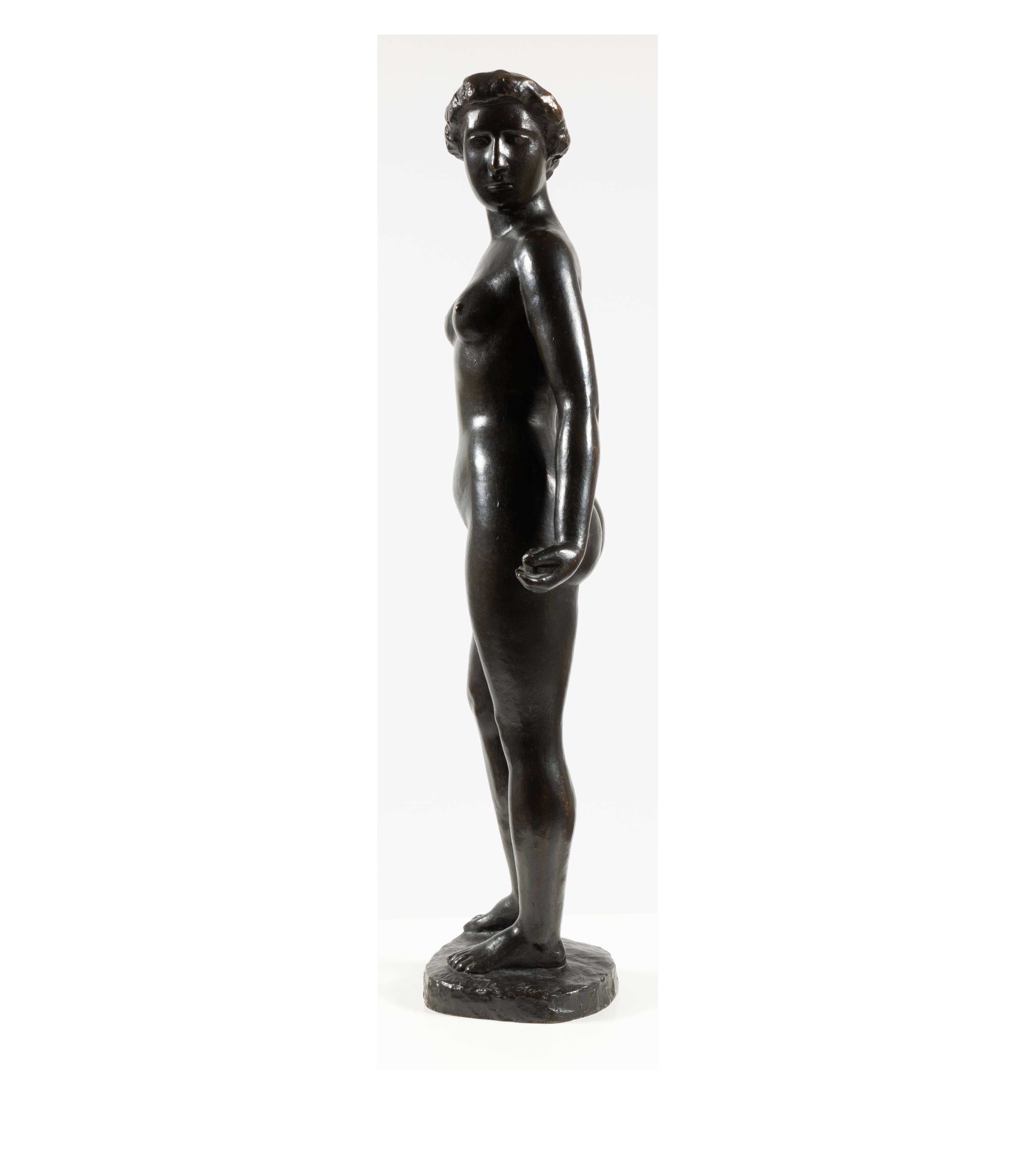
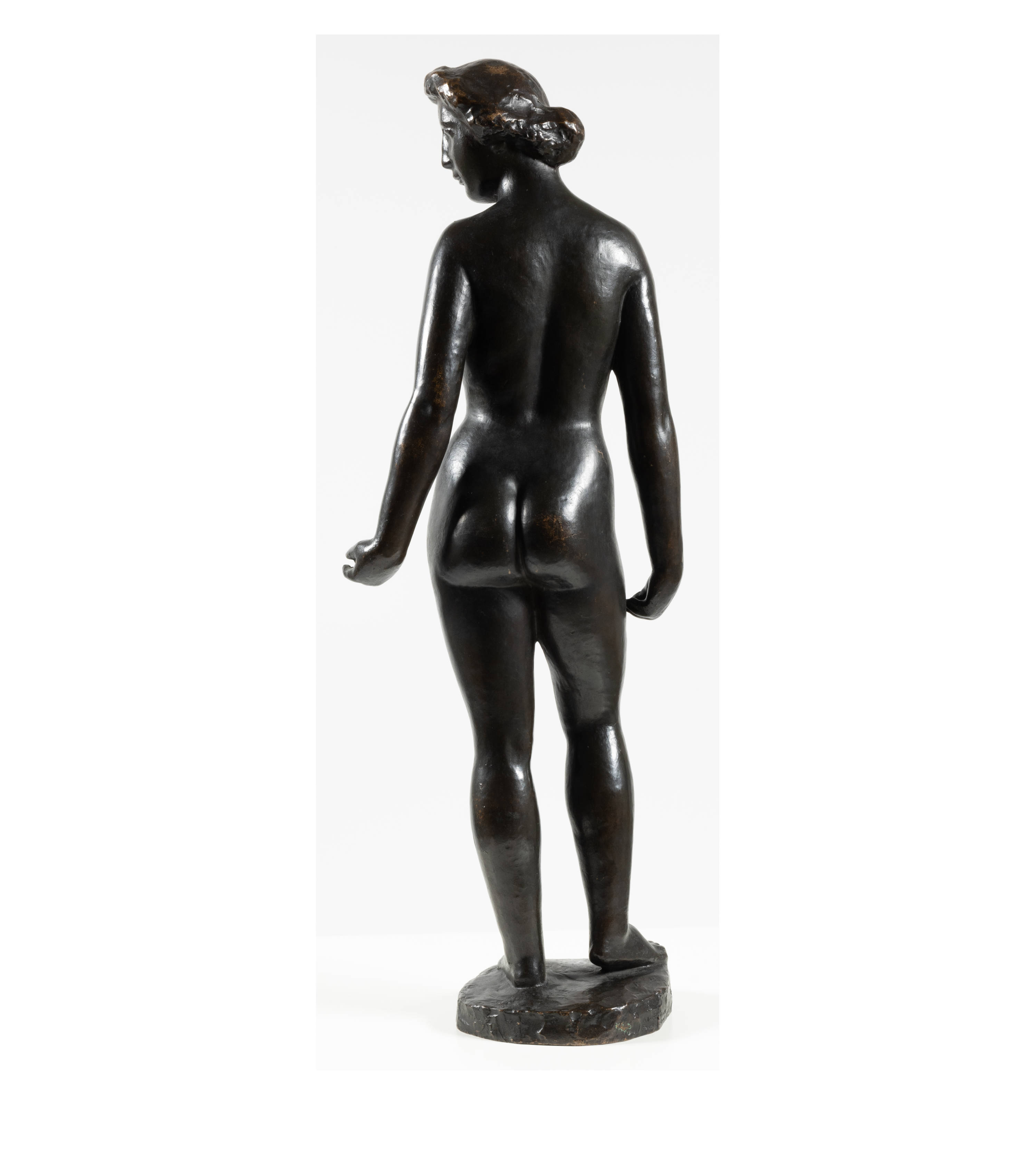
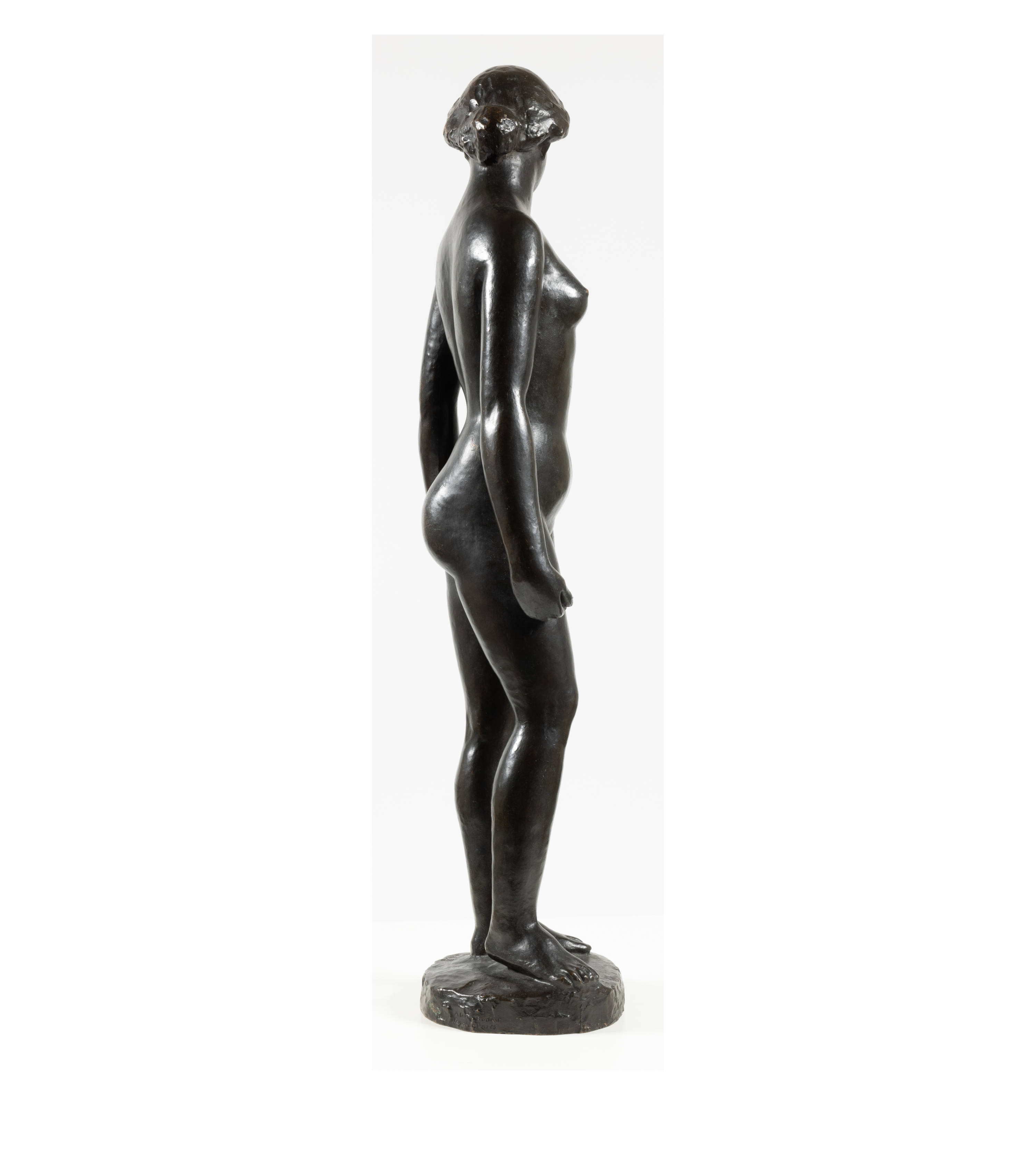
Bronze
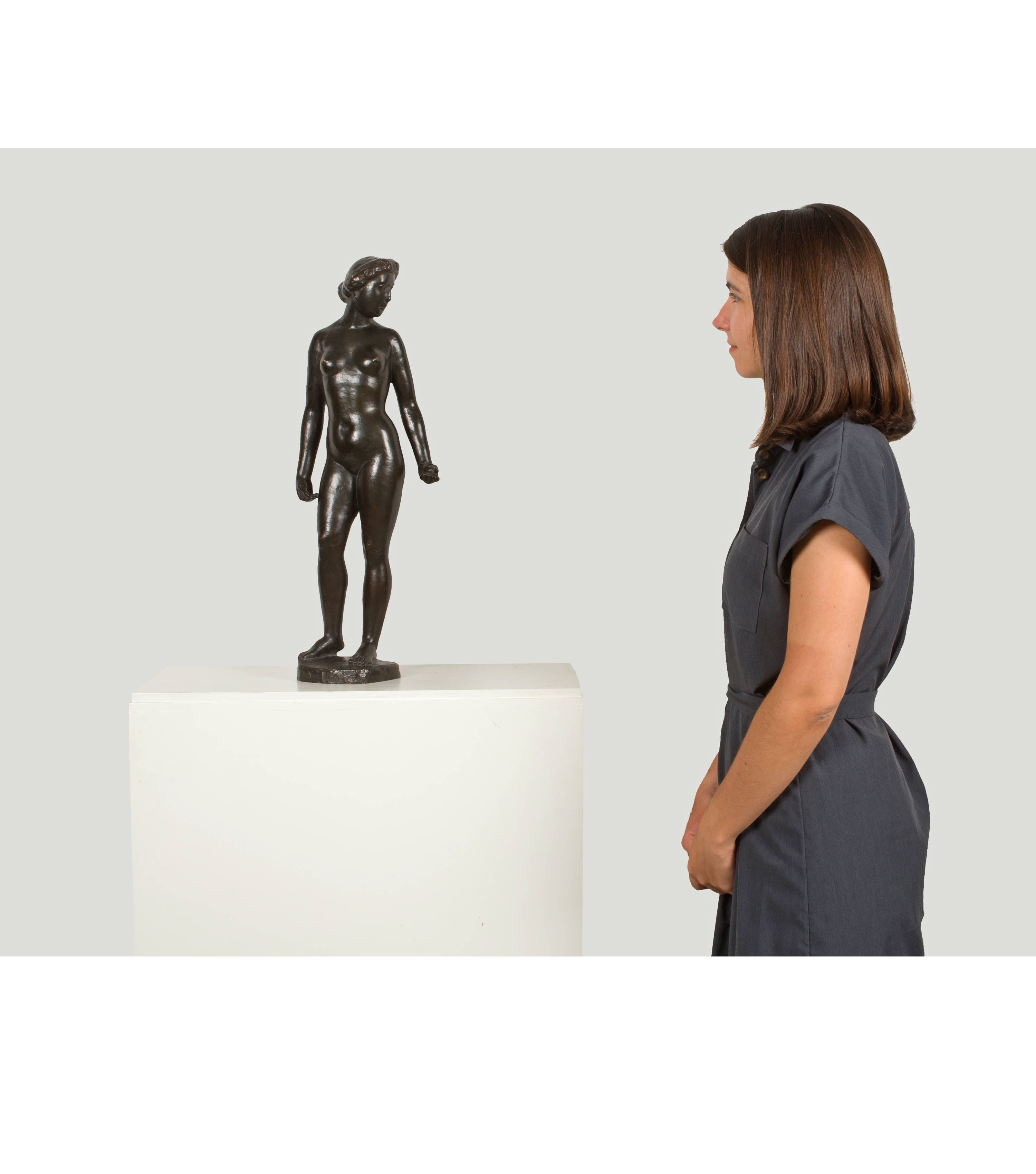
58 cm, height, 5.8 kg
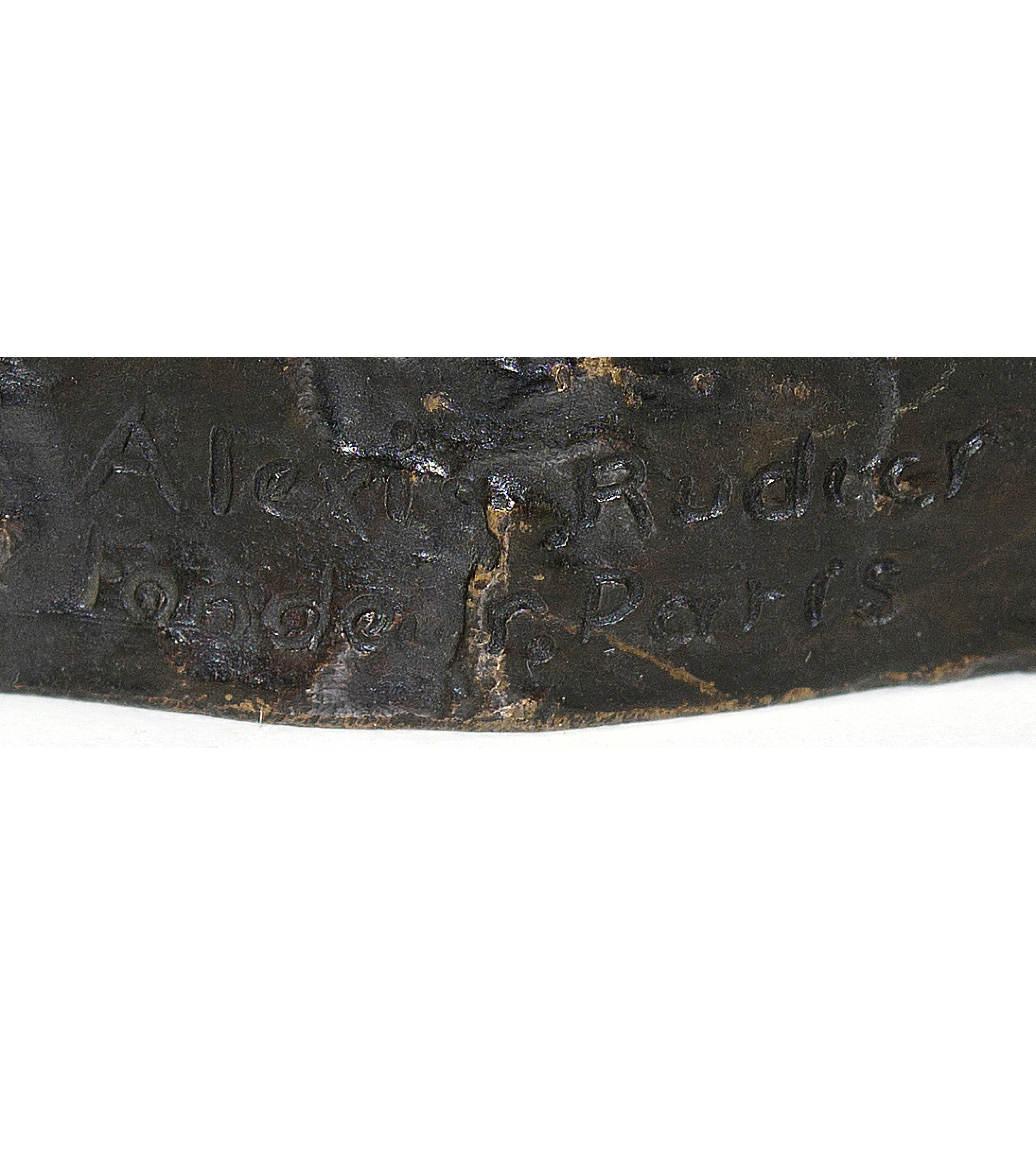
With the incised signature "Aristide Maillol" and the number "0/6" as well as the incised foundry name "Alexis Rudier / Fondeurs Paris"
Auction Christie's, Versailles, 3 March 1974, lot 17, acquired there by
Private collection USA
John Rewald, Maillol, London/Paris/New York 1939, p. 76 (different cast)
Beautiful dark brown patina. In very good condition
Around 1895, Aristide Maillol, who had initially worked in painting and ceramics, took up sculpture. It is clear from his first works that he wanted to go in a different direction from Auguste Rodin, the forefather of modern sculpture. Maillol's figures were characterised by uniform surfaces and a more classical formal language. His friend Maurice Denis said of him: "C'est un primitif classique" (a primitive classic).
Maillol favoured the female nude, as in this sculpture. Created around 1899, Eve with the Apple is one of a series of works that he created in parallel to his "Bathers". These were created before 1900 and mark the beginning of his career as a sculptor. With "Eve", Maillol turned to translating his models into bronze for the first time. At the suggestion of Ambroise Vollard, he had a series of figures cast in bronze after 1900; the artist sold the casting rights to his Parisian dealer. An first series of six casts was commissioned by "Bingen et Costenoble", later the figures were cast by the studio "Alexis Rudier". Ursel Berger considers the number 0/6 as a late Rudier cast, as it skilfully extended the edition of six by one without the intended edition size ("6").
For Maillol, "Eve" was not a pure biblical allegory: the apple is barely visible, the focus is clearly on the figure and her posture. The bronze exemplifies Maillol's pure style, which characterises his oeuvre.
1899, Guss posthum
Bronze
58 cm, Höhe, 5,8 kg
Mit der geritzten Signatur "Aristide Maillol" und der Nummer "0/6" sowie der geritzten Giesserbezeichnung "Alexis Rudier / Fondeurs Paris"
Auktion Christie’s, Versailles, 3. März 1974, Los 17, dort erworben von
Privatsammlung USA
John Rewald, Maillol, London/Paris/New York 1939,
Schöne dunkelbraune Patina. In sehr schöner Erhaltung
Um 1895 begann Aristide Maillol, der sich zunächst mit Malerei und Keramik beschäftigt hatte, mit der Bildhauerei. Schon in seinen ersten Werken wird deutlich, dass er einen anderen Weg gehen wollte als Auguste Rodin, der Übervater der modernen Plastik. Maillols Figuren zeichneten sich durch gleichmässige Oberflächen und eine klassischere Formensprache aus. Sein Freund Maurice Denis sagte denn auch über ihn: "C’est un Primitif classique" (ein primitiver Klassiker).
Maillol bevorzugte den weiblichen Akt, so auch in der hier angebotenen Plastik. Die um 1899 entstandene Eva mit dem Apfel gehört zu einer Reihe von Werken, die er parallel zu seinen "Badenden" schuf. Diese entstanden vor 1900 und markieren den Beginn seiner Karriere als Bildhauer. Mit "Eve" wandte sich Maillol zum ersten Mal der Übersetzung seiner Modelle in Bronze zu. Auf Anregung von Ambroise Vollard liess er nach 1900 eine Reihe von Figuren in Bronze giessen, die Gussrechte verkaufte der Künstler an seinen Pariser Händler. Eine erste Serie von sechs Güssen wurde bei "Bingen et Costenoble" in Auftrag gegeben, später giesst das Atelier "Alexis Rudier" die Figuren. Ursel Berger sieht in der Nummerierung 0/6 einen späten Rudier-Guss, wurde doch damit die Auflage von sechs geschickt und ohne die angedachte Auflagengrösse ("6") um ein Exemplar erweitert.
"Eve" war für Maillol keine reine biblische Allegorie: Der Apfel ist kaum sichtbar, der Fokus liegt eindeutig auf der Figur und ihrer Haltung. Die Bronze zeigt exemplarisch Maillols reinen Stil, der sein Œuvre charakterisiert.
| Switzerland | CHF | Individual offer |
| Europe | CHF | Individual offer |
| USA | CHF | Individual offer |
| Overseas | CHF | Individual offer |