- EN


 Log in
-
- Live Auctions
- Past auctions
- More
- Kornfeld today
- The Story of Kornfeld
- Information









Königsberg 1867 - 1945 Moritzburg


1906
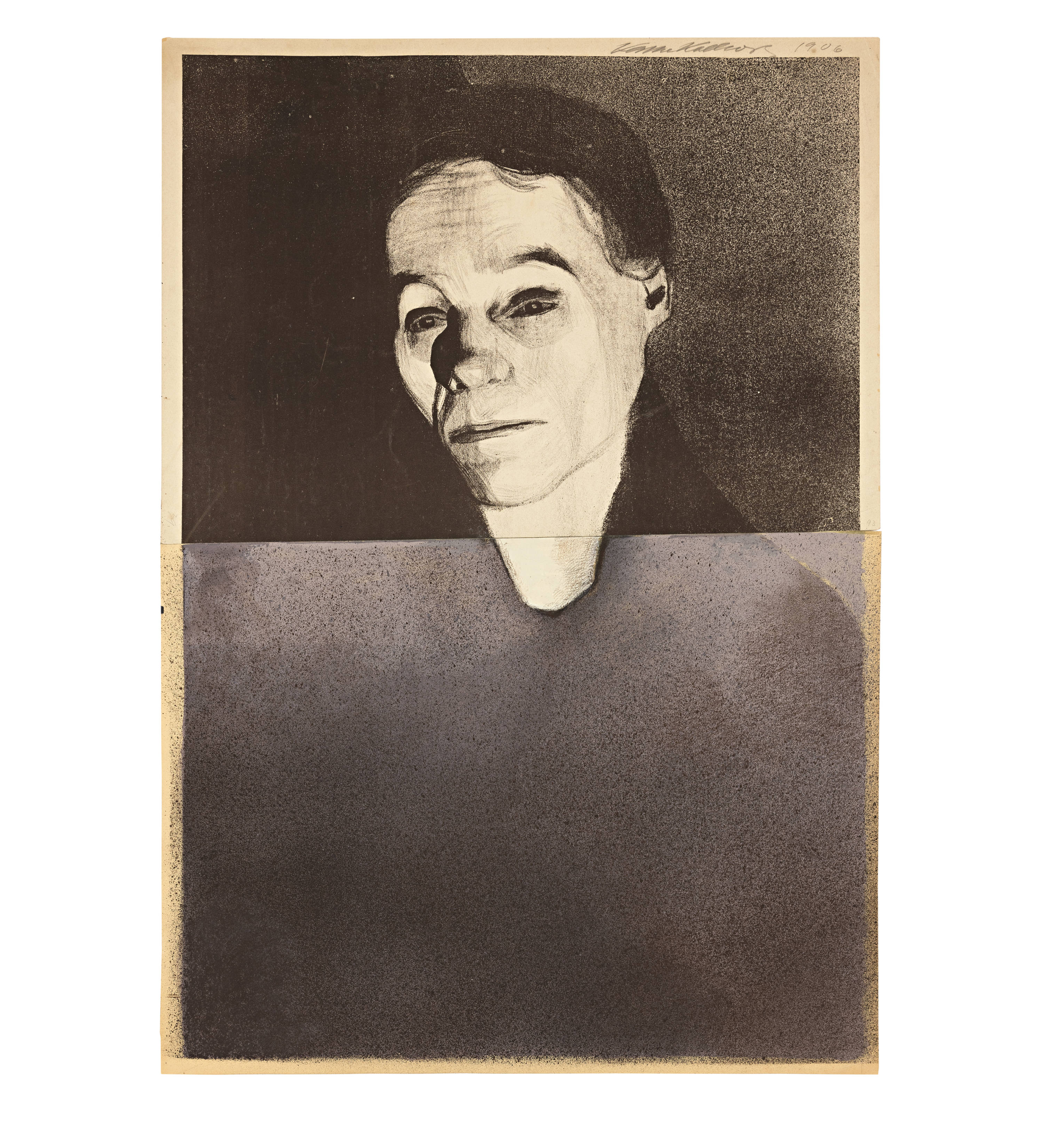
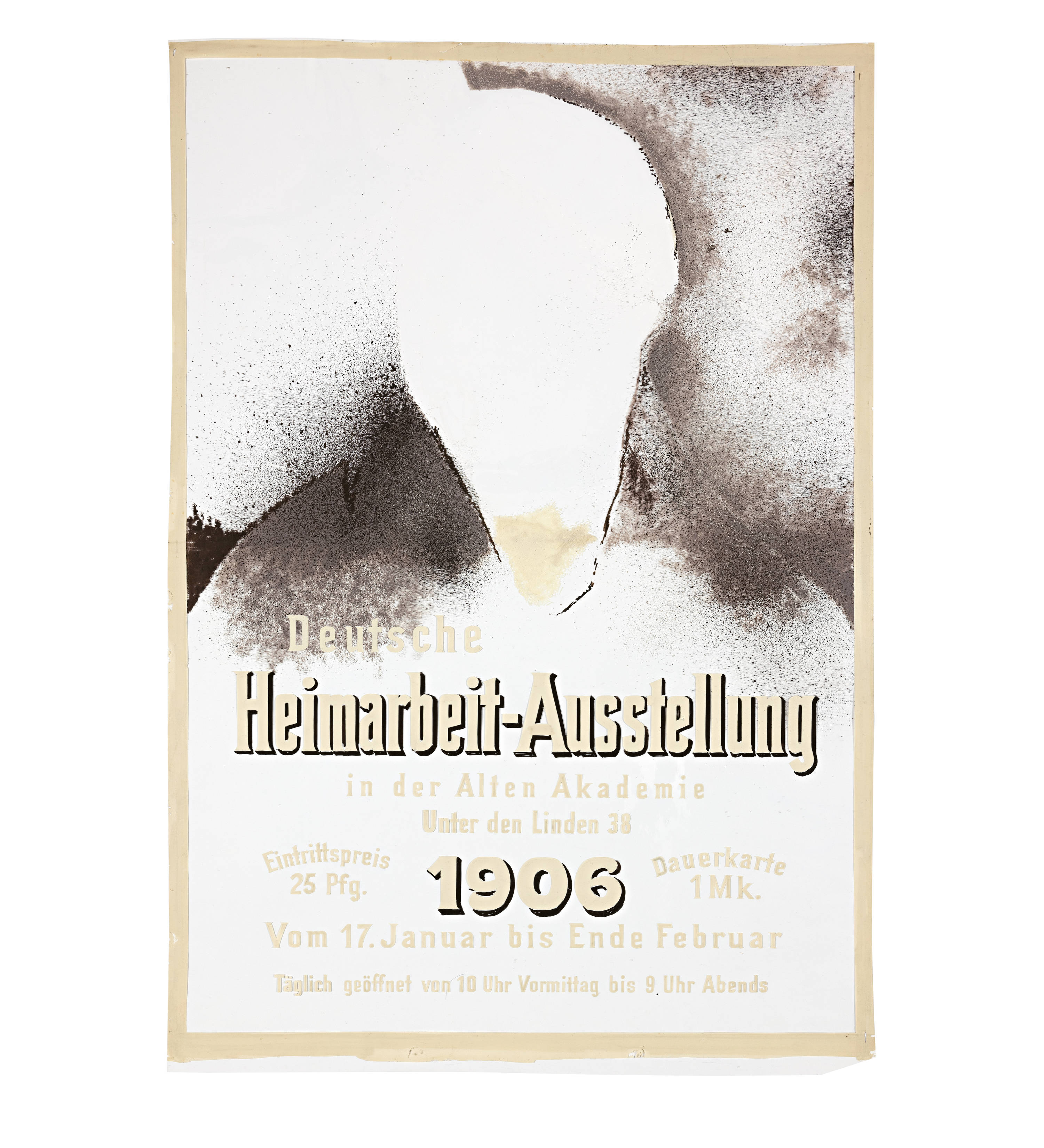
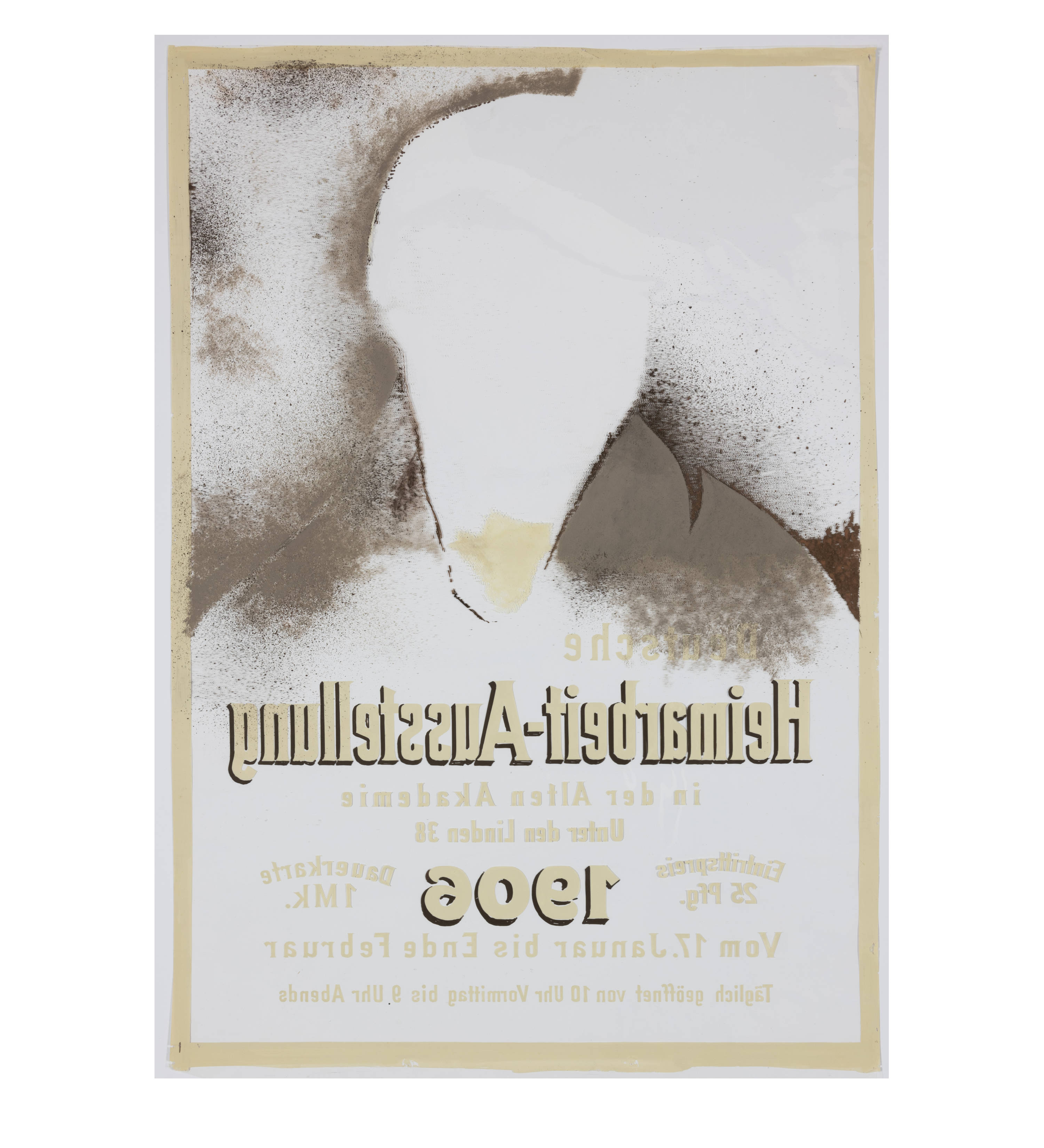
Chalk and brush lithograph with spray technique and scraper on two connected thick, brownish, smooth cardboards with gouache and corrections in spray technique. In addition the matching celluloid foil with stencil writing, partially sprayed and white border
75.3x51.5 cm, sheet size
Signed "Käthe Kollwitz" by the artist in pencil at the top right of the upper part, dated "1906" next to it. Inscribed on the reverse by Hans Kollwitz "KL 93" and "S[ievers] 93"
The poster design offered here is known to Hannelore Fischer, Cologne.
Preliminary work for Knesebeck 95
From the artist's estate acquired by
Private collection Germany
Cf. Franz Marcus, Die Entstehung eines Kunstwerkes: Käthe Kollwitz' Plakat 1906, in: Philobiblon XXIV, Heft 2, pag. 120 ff, Stuttgart 1985
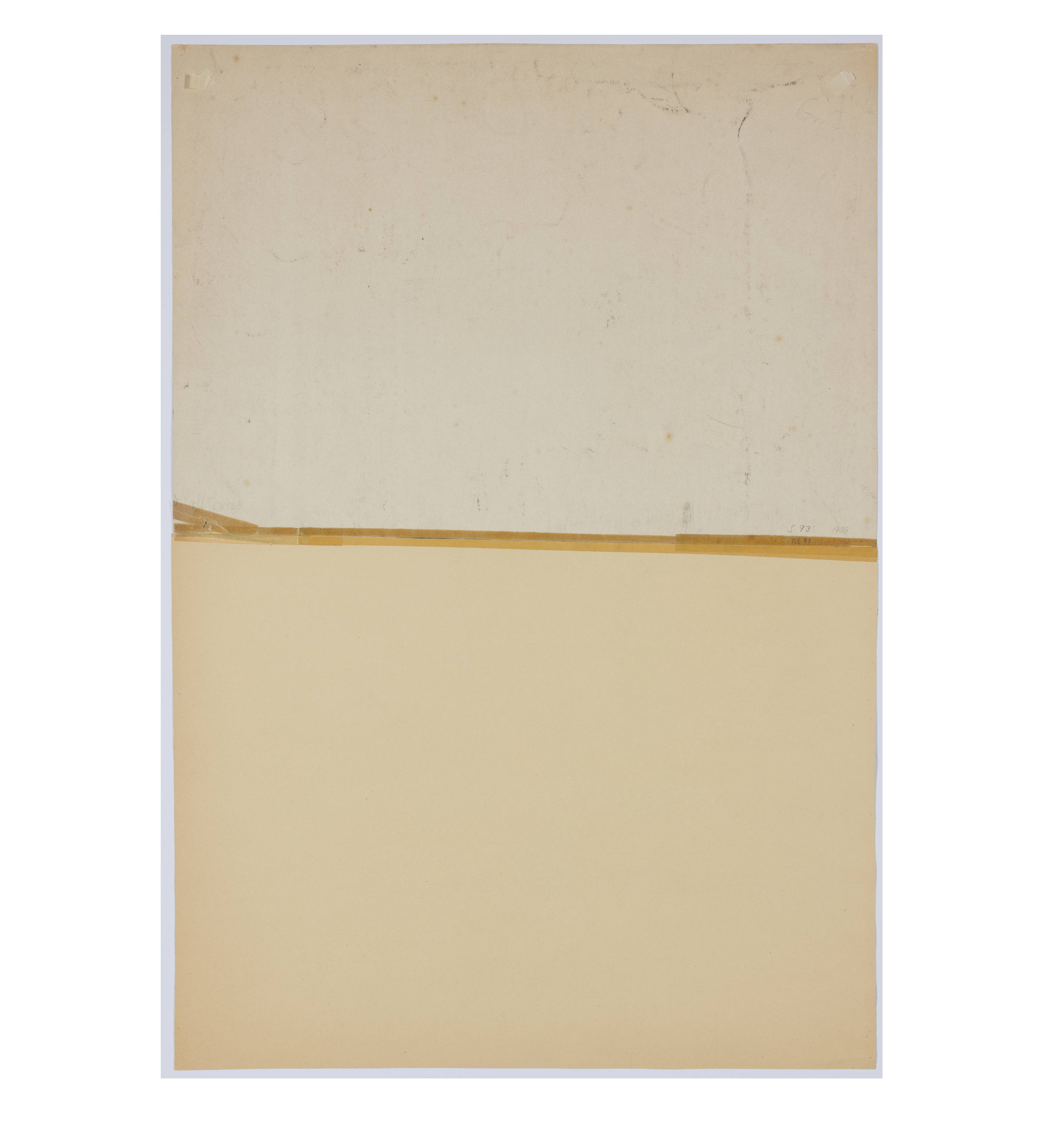
The backing of two different cardboards connected by old adhesive tape (damaged in one place). With traces of studio work and mounting residues on the reverse. Celluloid film minimally rubbed in places. According to the age in very good condition
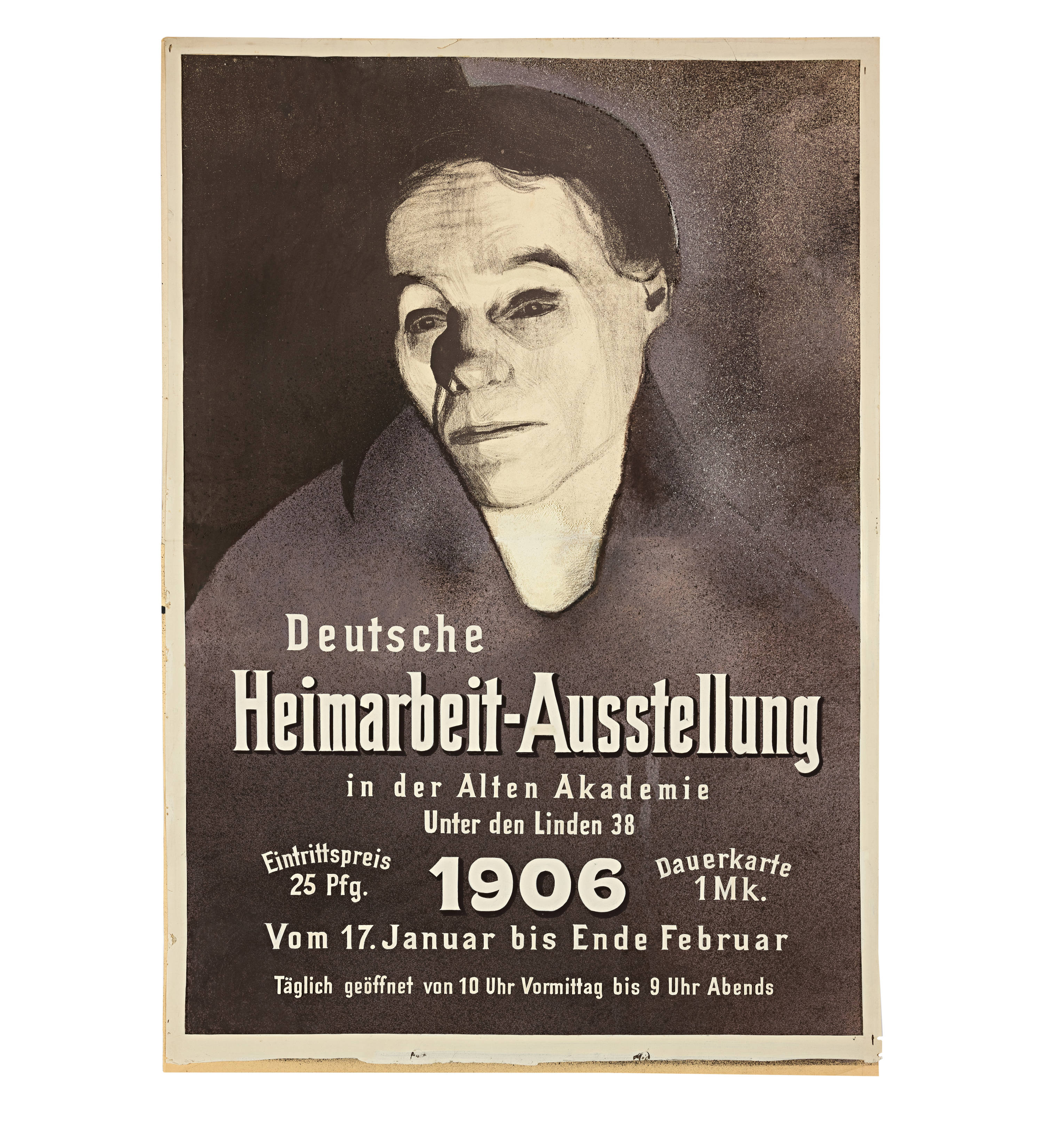
Käthe Kollwitz had already agreed with the exhibition committee in 1905 to design a poster for the German Home Work Exhibition taking place in Berlin from 17 January to the end of February 1906. But it was not until the beginning of 1906 that she set to work on the preliminary drawing "Arbeiterfrau" (Nagel/Timm 406) and went to the Graetz print shop at Auguststrasse 26 in the Spandauer Vorstadt to begin the print implementation. She told a member of the exhibition committee, Franz Marcus, that "the thing would have come out so badly and horribly raw in the printing that it would not have been possible at all. Kollwitz continued to work in the print shop because apparently the "intermediate tones" had not come out well, so that the whole thing appeared "crasser and harsher".
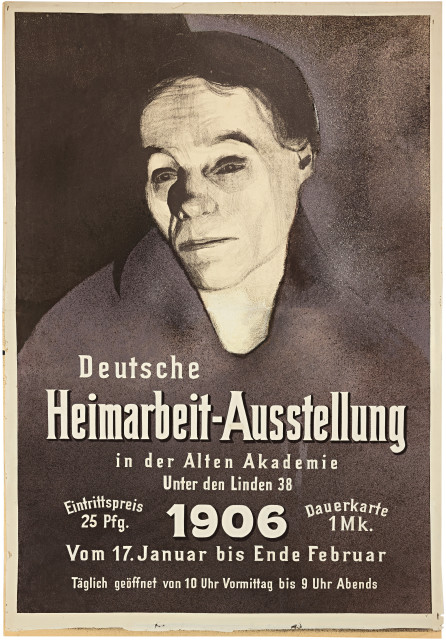
The original draft offered here, unknown to Knesebeck, becomes the "missing link" between the first state of printing and the definitive poster. It consists of a "drawing sheet" composed of two parts (above using a lithograph, below a completely freely reworked, light cardboard) and a celluloid sheet. While in the I. and II. state (poster without details of the exhibition, published in 300 copies) the woman's body is almost completely lost in black, in the poster printed in a large edition (3500 copies) (III. state) it is completely reworked and lightened. Kollwitz will have cut up a print of the I. state in the print shop and completely redesigned it at the bottom on a cardboard. In order to achieve the desired effect, she additionally intervened with the lettering on the celluloid film and directly specified contours or the shading there as well. Together, the result is an atmospheric whole that was finally used as a poster for the exhibition. Only one copy of the first state, which is wider than the other two states, is known.
The hitherto unknown unique copy is an important document that impressively demonstrates Kollwitz's working process and sense of printmaking detail.
Group lot
1906
Kreide- und Pinsellithographie mit Spritztechnik und Schabeisen auf zwei verbundenen dicken, bräunlichen, glatten Kartons mit Gouache und Korrekturen in Spritztechnik. Dazu die passende Zelluloidfolie mit Schablonenschrift, partiell gespritzter und weisser Umrandung
75,3x51,5 cm, Blattgrösse
Oben rechts des oberen Teils von der Künstlerin in Bleistift signiert "Käthe Kollwitz", daneben datiert "1906". Rückseitig von Hans Kollwitz bezeichnet "KL 93" und "S[ievers] 93"
Der hier angebotene Plakatentwurf ist Hannelore Fischer, Köln, bekannt
Vorarbeit zu Knesebeck 95
Aus dem Nachlass der Künstlerin erworben von
Privatsammlung Deutschland
Vgl. Franz Marcus, Die Entstehung eines Kunstwerkes: Käthe Kollwitz' Plakat 1906, in: Philobiblon XXIV, Heft 2, pag. 120 ff., Stuttgart 1985
Die Unterlage aus zwei unterschiedlichen Kartons durch alten Klebestreifen (an einer Stelle beschädigt) verbunden. Rückseitig mit Atelierspuren und Montierungsresten. Zelluloidfolie teilweise minim berieben. Dem Alter entsprechend in sehr gutem Zustand
Käthe Kollwitz hatte bereits 1905 dem Ausstellungskomitee zugesagt, ein Plakat für die vom 17. Januar bis Ende Februar 1906 in Berlin stattfindende Deutsche Heimarbeit-Ausstellung zu gestalten. Doch erst Anfang 1906 machte sie sich an die Vorzeichnung "Arbeiterfrau" (Nagel/Timm 406) und ging in die Druckerei Graetz an der Auguststrasse 26 in der Spandauer Vorstadt, um mit der druckgraphischen Umsetzung zu beginnen. Einem Mitglied des Ausstellungskomitees, Franz Marcus, teilte sie mit, dass "die Sache beim Druck so schlecht und entsetzlich roh herausgekommen [wäre], dass es so gar nicht ginge." Kollwitz arbeitete in der Druckerei weiter, weil scheinbar die "Zwischentöne" nicht gut herausgekommen seien, so dass das Ganze "krasser und härter" wirkte
Der hier angebotene, Knesebeck unbekannt gebliebene Originalentwurf wird zum "Missing Link" zwischen dem ersten Druckzustand und dem definitiven Plakat. Es besteht aus einem aus zwei Teilen zusammengesetzten "Zeichnungsblatt" (oben unter Verwendung einer Lithographie, unten ein vollkommen frei überarbeiteter, leichter Karton) sowie einer Zelluloid-Folie. Während beim I. und II. Zustand (Plakat ohne Details zur Ausstellung, in 300 Exemplaren erschienen) der Körper der Frau quasi völlig im Schwarz untergeht, ist er beim in grosser Auflage (3500 Exemplare) gedruckten Plakat (III. Zustand) völlig überarbeitet und aufgehellt. Kollwitz wird in der Druckerei einen Abzug des I. Zustandes zerschnitten und unten auf einem Karton komplett neu gestaltet haben. Um den gewünschten Effekt zu erreichen, hat sie zusätzlich auf der Zelluloid-Folie mit der Schrift interveniert und auch dort direkt Konturen oder die Schattierungen präzisiert. Zusammen ergibt sich ein stimmungsvolles Ganzes, das schliesslich als Plakat für die Ausstellung Verwendung fand. Vom I. Zustand, der breiter ist als die beiden weiteren Zustände, ist nur ein einziges Exemplar bekannt
Das bislang unbekannte Unikat ist ein wichtiges Dokument, das Kollwitz’ Arbeitsprozess und Sinn für das druckgraphische Detail eindrücklich aufzeigt
Konvolut