- EN


 Log in
-
- Live Auctions
- Past auctions
- More
- Kornfeld today
- The Story of Kornfeld
- Information









Solothurn 1868 - 1961 Oschwand


1907
Oil on canvas
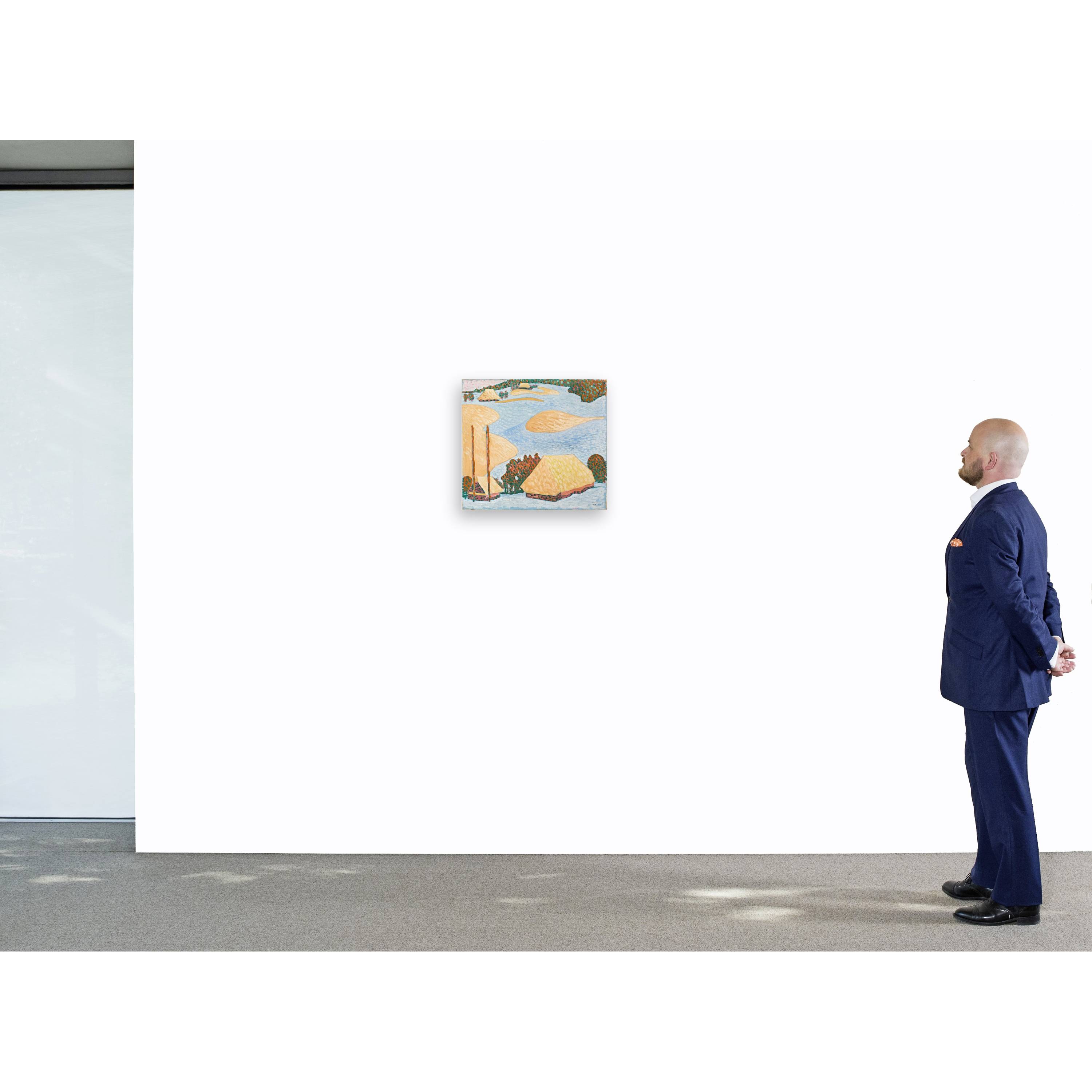
55x61 cm
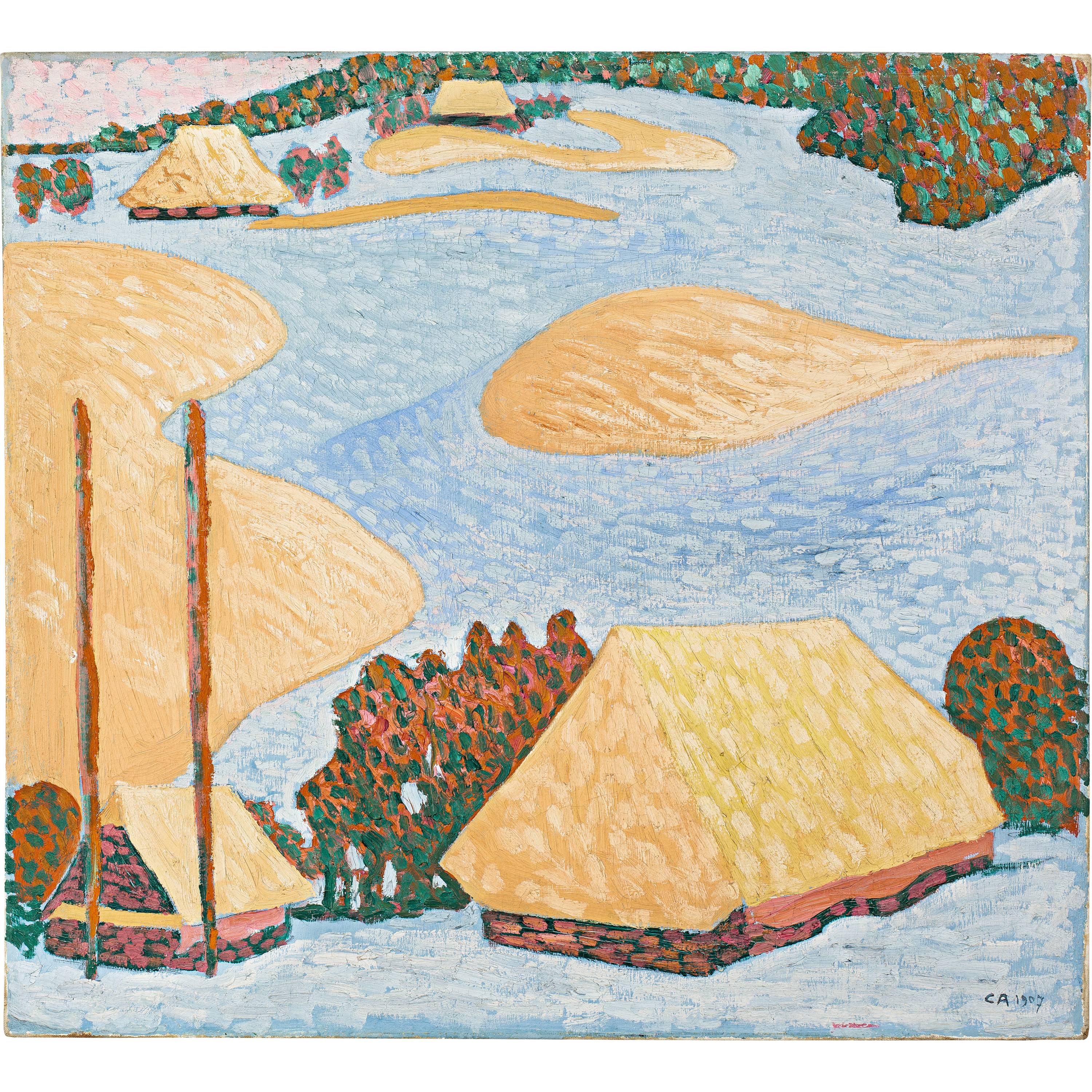
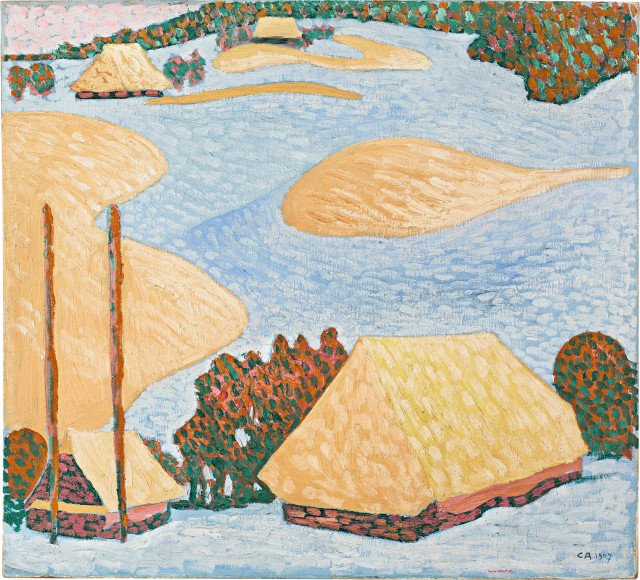
Monogrammed and dated by the artist in oil paint at lower right "CA 1907"
Franz Müller/Viola Radlach, Cuno Amiet, Die Gemälde 1883-1919, sub-volume 1, Zurich 2014, no. 1907.36
Private collection Switzerland
Viola Radlach, ed., Cuno Amiet - Giovanni Giacometti. Briefwechsel, Zurich 2000, letter no. 65
Karoline Beltinger, Maltechnische Untersuchungen zu den Gemälden von Cuno Amiet, 1883-1914, Zurich 2014
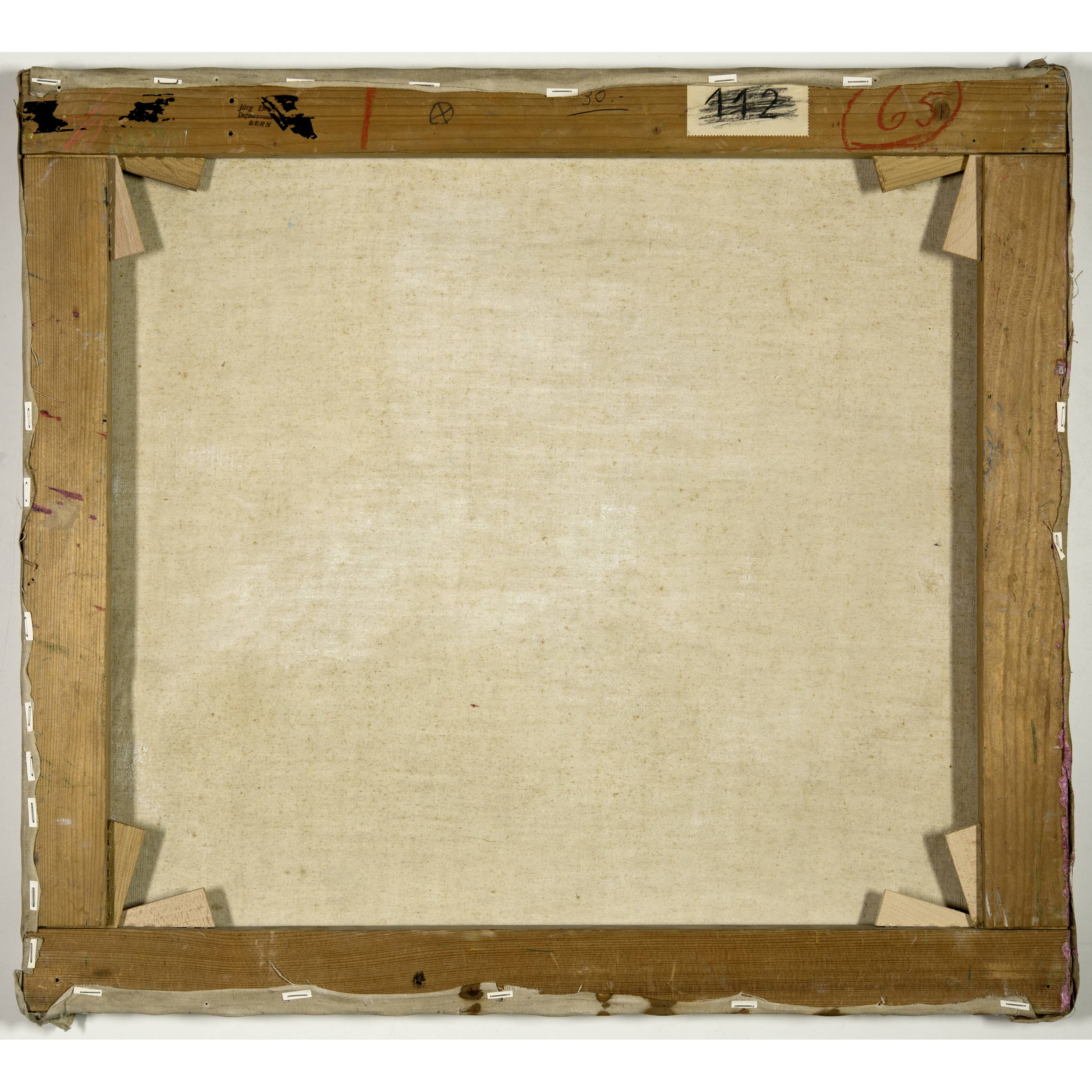
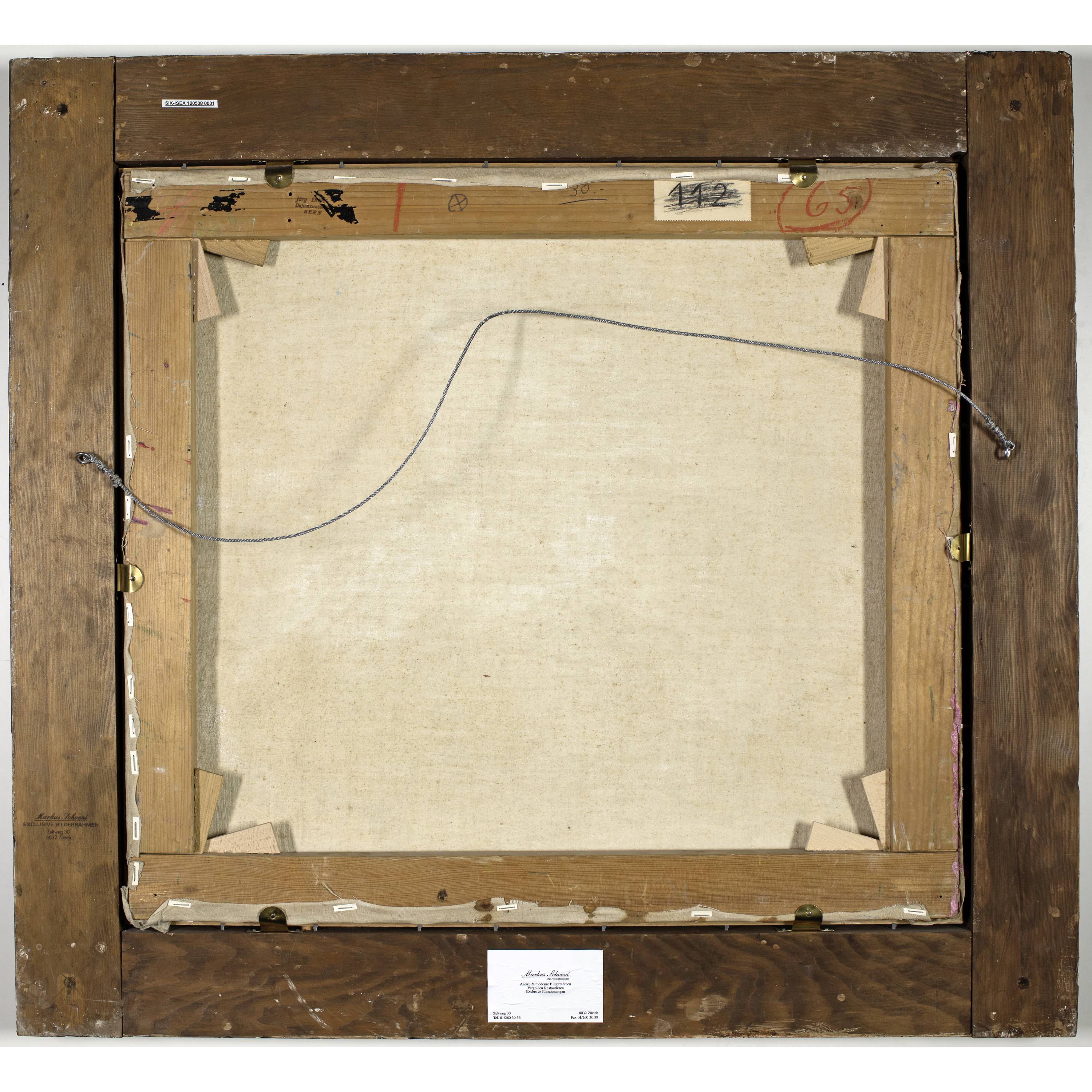
On the original stretcher, in the old nailing, additionally fastened with staples. In places with fine craquelure. In very good condition and fresh in colour
The snowy landscape is a pictorial theme that occupied Cuno Amiet throughout his life. The first landscape "Hellsau im Winter" was painted at the end of 1894 (CR no. 1894.28). Already in a letter of 17 February 1894 Amiet wrote to Giovanni Giacometti:
"My poor Giovannin! You are complaining that the sun is not there. To complain about the smallest obstacles is our weakness; but nevertheless, if one were strong, one could still profit from one's obstacles. Is it not a very special magic to see this valley white or rather blue with snow, with the individual patches of tiny houses and trees in the infinity of snow. It would be sublime to depict these cold but rich tones and these simple and soft lines to express the melancholy sleep of a whole landscape. What beauty! I have been dreaming of it since the beginning of winter, but I can make as many studies and sketches as I like, the snow does not come to our country, and I cannot go and make notes for the dreamed picture. Profit, then! Lucky youhigh who you are!"
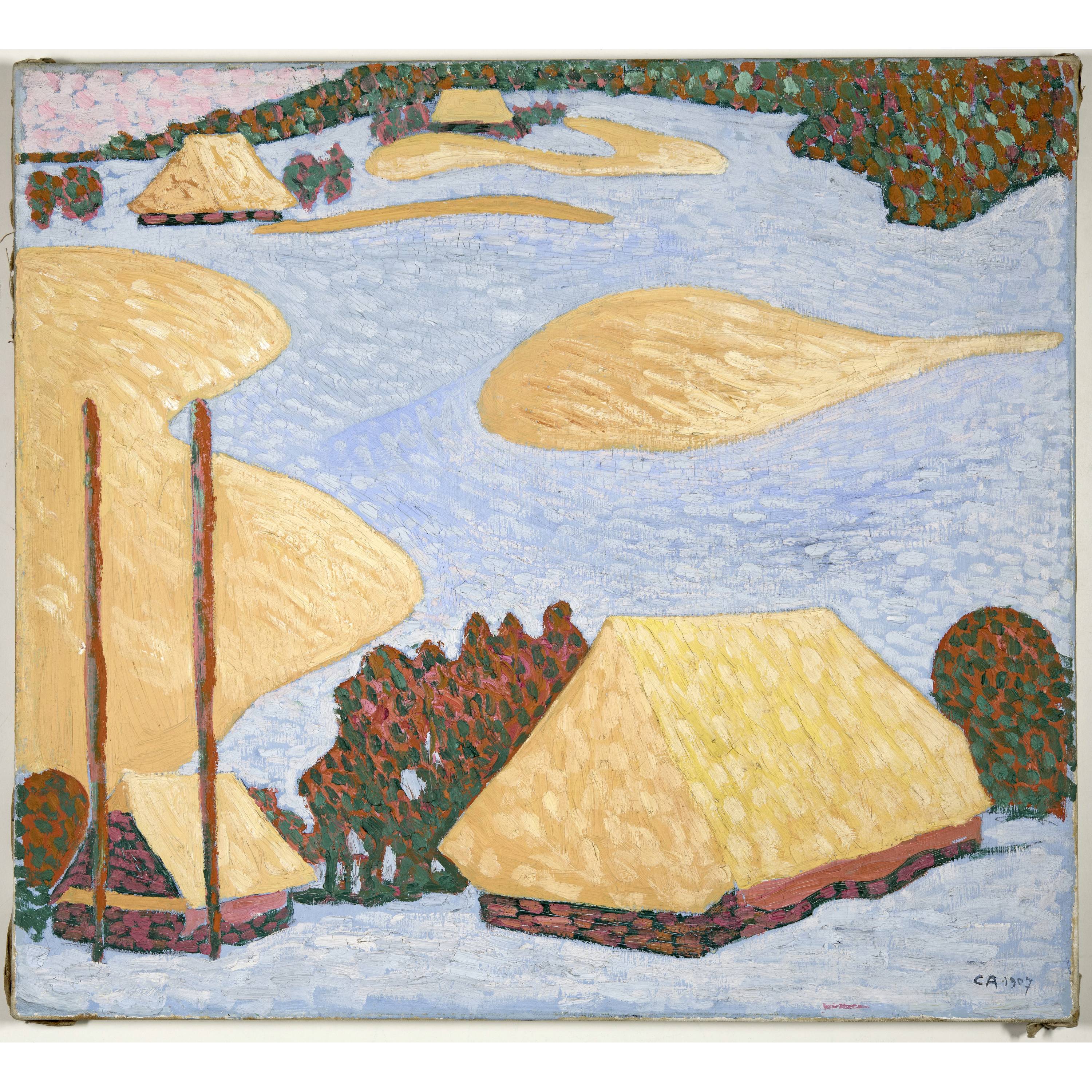
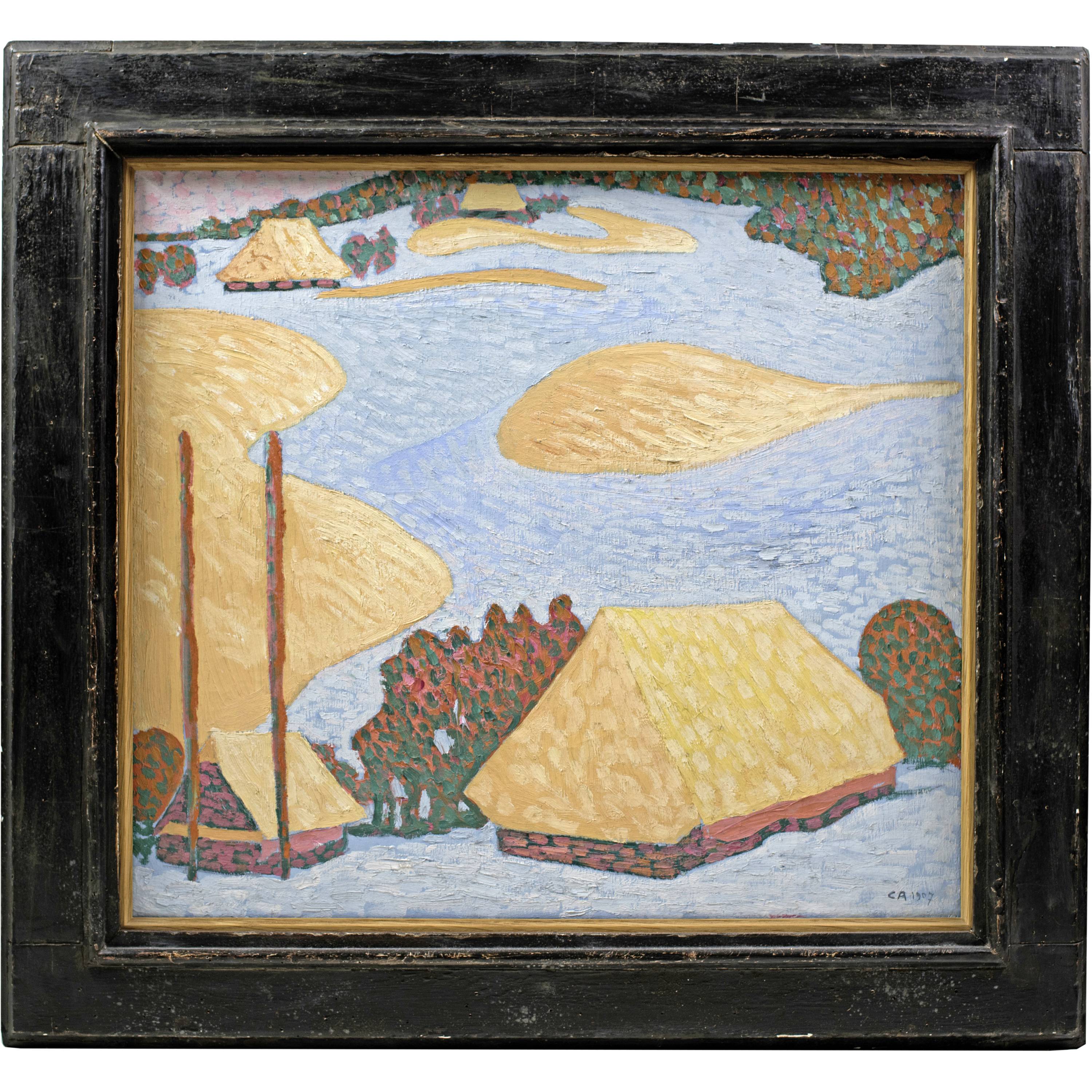
Amiet painted the subject of the present painting, a group of farmhouses with the two slender, towering popules, several times from different angles and at different times of the year: in summer (CR no. 1902.26), in winter (CR nos. 1902.22, 1905.17, 1907.35-37). In our snowy landscape, the sunlit parts are concentrated in a few exposed places, like the snow on the roofs or on the hilltops. The evening atmosphere offered Amiet the opportunity to depict organically silhouetted, strongly contrasting surface forms. He skilfully modelled the topography through the colours. Compared with the first version of the same year, the execution thus appears somewhat more abstract. The canvas is underpainted with light blue over the primer, which atmospherically reproduces the magic mentioned in the letter to Giacometti. As in most of his winter paintings from 1907, the palette is more colourful and underlines the evening mood of the sunset with the high-contrast colouring
1907
Öl auf Leinwand
55x61 cm
Unten rechts vom Künstler in Ölfarbe monogrammiert und datiert "CA 1907"
Franz Müller/Viola Radlach, Cuno Amiet, Die Gemälde 1883-1919, Teilband 1, Zürich 2014, Nr. 1907.36
Privatsammlung Schweiz
Viola Radlach, Hrsg., Cuno Amiet - Giovanni Giacometti. Briefwechsel, Zürich 2000, Brief
Karoline Beltinger, Maltechnische Untersuchungen zu den Gemälden von Cuno Amiet, 1883-1914, Zürich 2014
Auf dem originalen Chassis, in der alten Nagelung, zusätzlich mit Heftklammern befestigt. Stellenweise mit feinen Krakelüren. In sehr guter und farbfrischer Erhaltung
Die Schneelandschaft ist ein Bildthema, das Cuno Amiet ein Leben lang beschäftigte. Die erste Landschaft "Hellsau im Winter" entstand Ende des Jahres 1894 (WK Nr. 1894.28). Bereits in einem Brief vom 17. Februar 1894 schrieb Amiet an Giovanni Giacometti:
"Mein armer Giovannin! Du beklagst Dich noch darüber, dass die Sonne nicht da ist. Sich über die kleinsten Hindernisse zu beklagen, ist unsere Schwäche; aber dennoch, wenn man stark wäre, könnte man doch noch aus seinen Hindernissen Nutzen ziehen. Ist es etwa nicht ein ganz besonderer Zauber, dieses Tal weiss oder eher blau von Schnee zu sehen, mit den einzelnen Flecken der winzigen Häuser und Bäume in der Unendlichkeit des Schnees. Es wäre sublim, diese kalten aber reichen Töne und diese einfachen und weichen Linien darzustellen, um damit den schwermütigen Schlaf einer ganzen Landschaft zum Ausdruck zu bringen. Was für eine Schönheit! Seit dem Anfang des Winters träume ich davon, aber ich kann so viel Studien und Skizzen machen wie ich will, der Schnee kommt nicht in unser Land, und ich kann nicht hingehen und Notizen machen für das erträumte Bild. Profitiere also! Glücklicher, der Du bist!"
Amiet malte das Thema des vorliegenden Gemäldes, eine Gruppe von Bauernhäusern mit den zwei schlanken, hoch aufragenden Pappeln, mehrmals aus unterschiedlichen Blickwinkeln und zu verschiedenen Jahreszeiten: im Sommer (WK Nr. 1902.26), im Winter (WK Nrn. 1902.22, 1905.17, 1907.35-37). Bei unserer Schneelandschaft sind die besonnten Teile auf wenige exponierte Stellen konzentriert, wie der Schnee auf den Dächern oder auf den Hügelkuppen. Die Abendstimmung bot Amiet Gelegenheit zur Darstellung organisch silhouettierter, stark kontrastierender Flächenformen. Die Topografie modellierte er gekonnt durch die Farben. Die Ausführung wirkt gegenüber der ersten Fassung des gleichen Jahres so noch etwas abstrakter. Die Leinwand ist über der Grundierung flächendeckend hellblau untermalt, was den im Brief an Giacometti erwähnten Zauber stimmungsvoll wiedergibt. Die Palette ist wie in den meisten seiner Winterbilder von 1907 bunter und unterstreicht mit dem kontrastreichen Kolorit die abendliche Stimmung des Sonnenuntergangs