- EN


 Log in
-
- Live Auctions
- Past auctions
- More
- Kornfeld today
- The Story of Kornfeld
- Information




Witebsk 1887 - 1985 Saint-Paul-de-Vence


1971
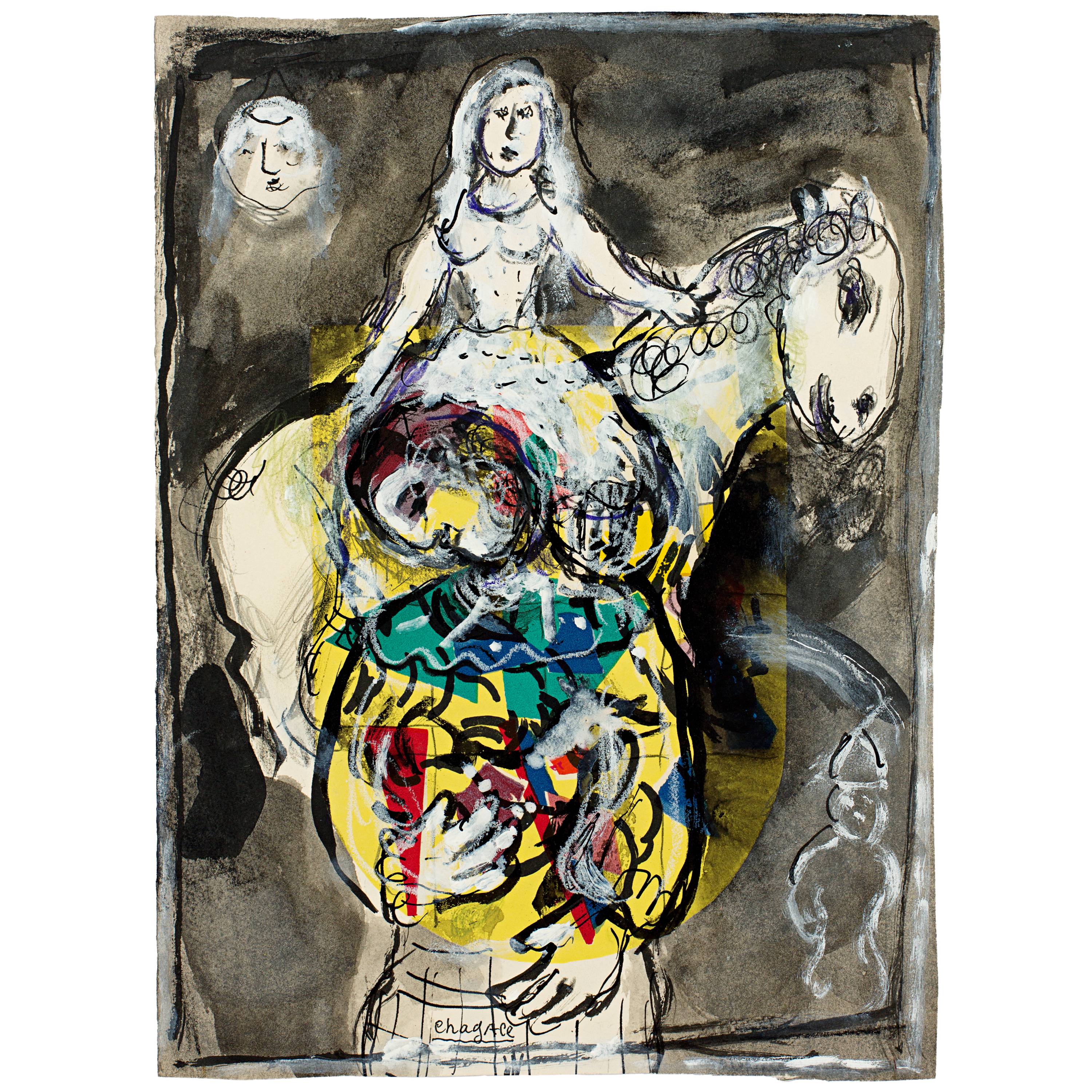
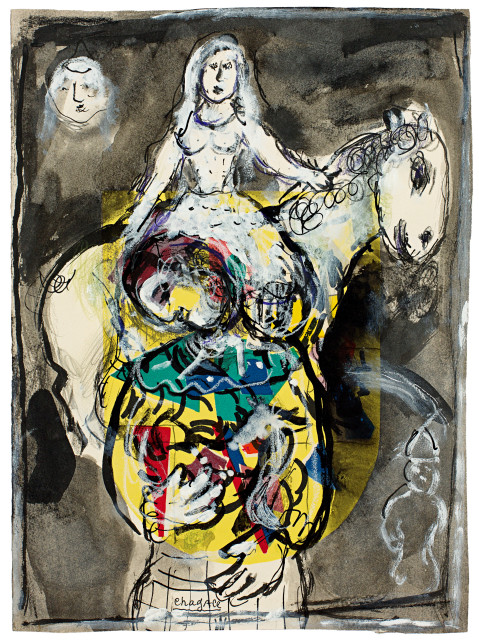
Indian ink, gouache, coloured pencil, pastel, graphite pencil and pencil
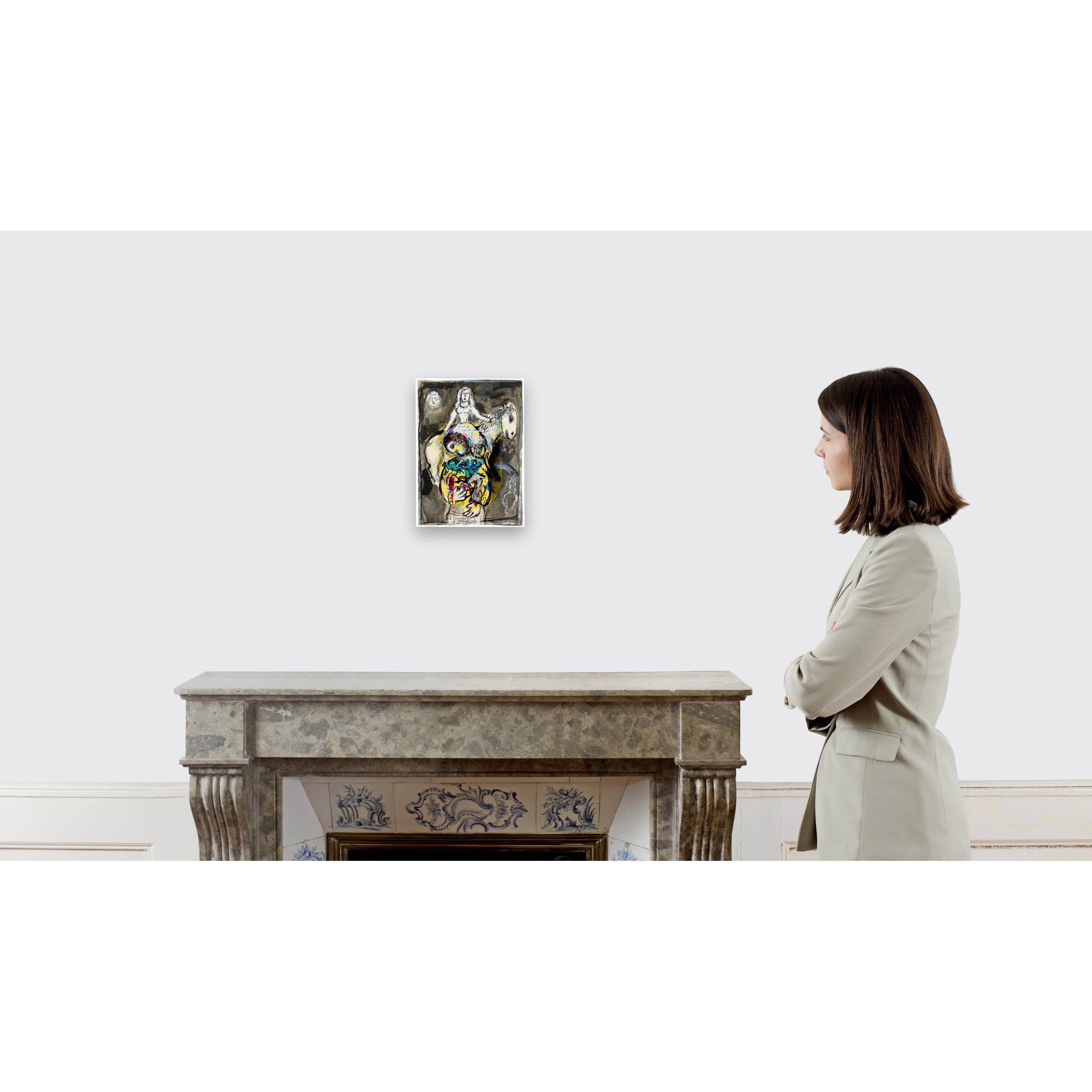
34,1×25 cm
Signed "Chagall" lower centre in pen and Indian ink
Confirmation of authenticity (no. 2021046) from the Comité Marc Chagall, Paris, dated 7 July 2021
Estate of the artist
On firm, cream-coloured wove paper, with slightly irregular edges, worked on a painted, upside-down reproduction from 1962 of the fourth preparatory maquette for La Tribu de Nephtali, 1960–1962, reproduced in the book Marc Chagall: Vitraux pour Jérusalem, Paris, André Sauret, 1962, p. 142. Fresh in colours and in immaculate overall condition
Here Chagall presents a clown dressed in colourful clothes and an écuyère, a pair of beautiful lovers at night. Since the 1920s, the artist had been fascinated by the circus, making many metaphorical links between it and events in his own life. You can feel the familiarity and love between the two; other figures are vaguely outlined perhaps adversaries or fellow travellers. In this work, the artist used a turned reproduction of a preliminary study using collage techniques for a stained-glass window featuring biblical subjects, playfully reworking it into a circus scene
1971
Tusche, Gouache, Farbstift, Pastell, Graphitstift und Bleistift
34,1x25 cm
Unten in der Mitte vom Künstler in Feder in Tusche signiert "Chagall"
Echtheitsbestätigung (Nr. 2021046) des Comité Marc Chagall, Paris, datiert vom 7. Juli 2021, liegt vor
Nachlass des Künstlers
Auf festem, cremefarbenem Velin, mit leicht unregelmässigen Rändern, gearbeitet auf farbiger, kopfstehender Reproduktion von 1962 der vierten vorbereitenden Maquette für "La Tribu de Nephtali", 1960-1962, reprod. im Buch "Marc Chagall, Vitraux pour Jérusalem", Paris, André Sauret, 1962, pag. 142. Farbfrisch und in tadelloser Gesamterhaltung
Ein in buntem Gewand gekleideter Clown und eine weiss gewandete "Écuyère", ein schönes Liebespaar zu nächtlicher Stunde. Seit den 1920er Jahren ist der Künstler vom Zirkus fasziniert und überträgt auf ihn metaphorisch auf viele seiner eigenen Lebenssituationen. Man spürt die Vertrautheit und Verliebtheit der beiden, schemenhaft sind weitere Personen angedeutet, allenfalls Widersacher oder Weggefährten. Für die angebotene Arbeit verwendete der Künstler eine gedrehte, farbige Reproduktion einer Vorstudie mit Collagetechnik für ein Glasfenster mit biblischer Ikonografie und überarbeitete sie spielerisch hin zu einer Zirkusszene