- EN


 Log in
-
- Live Auctions
- Past auctions
- More
- Kornfeld today
- The Story of Kornfeld
- Information


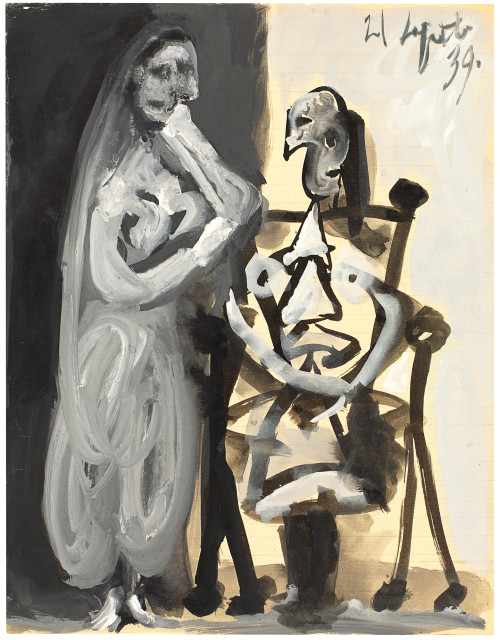







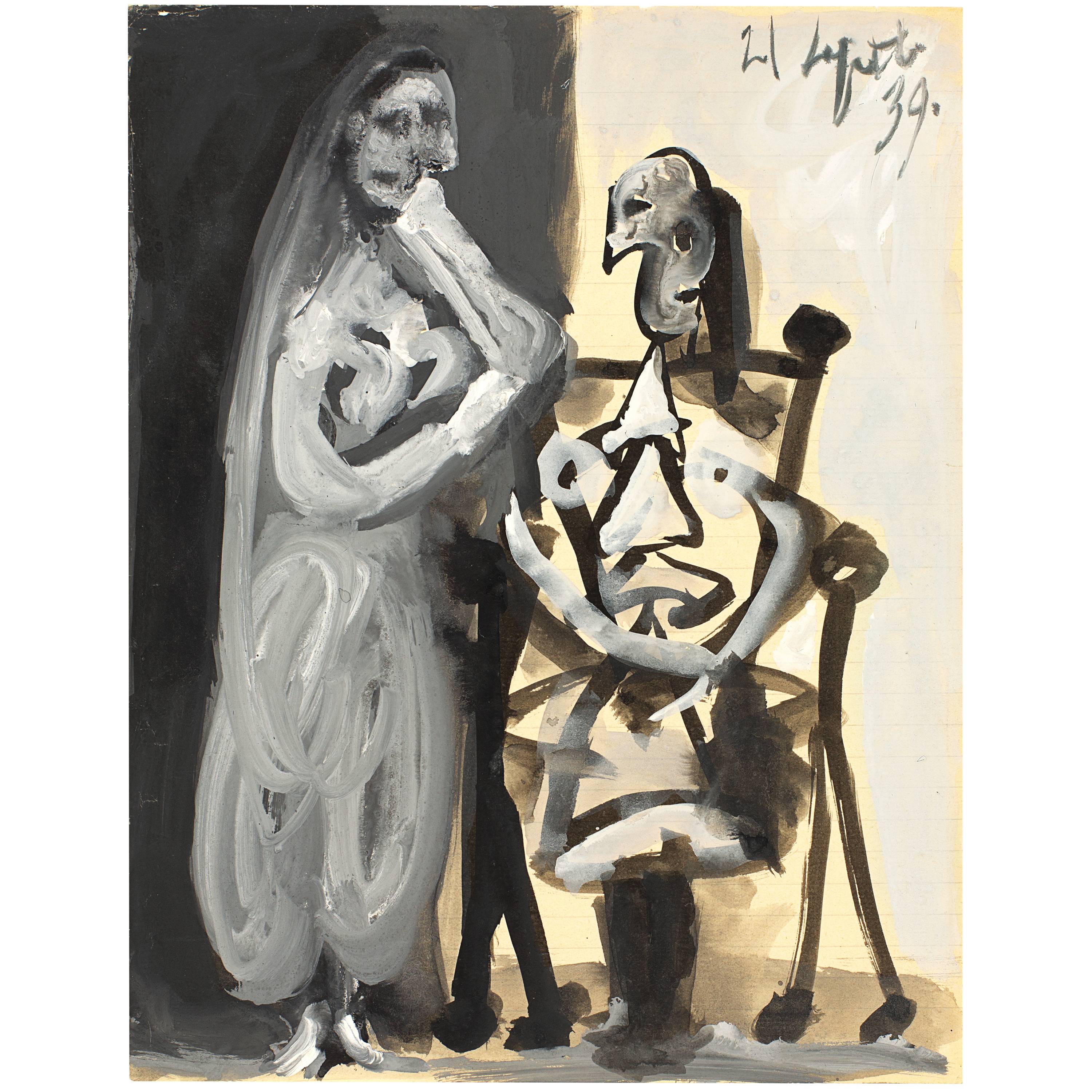
Málaga 1881 - 1973 Mougins


1939
Gouache and ink
26,9x21 cm
Dated upper right "21 Sept 39."
Christian Zervos, Pablo Picasso, vol. 9, Paris 1958, no. 337
Estate of the artist
Marina Picasso Collection, acquired there from
Gallery Jan Krugier, Geneva
Christie's auction, 5.11.2013, cat. no. 169; acquired there for
Private collection Europe
The Picasso Project, ed. Picasso's Paintings, Watercolors, Drawings and Sculpture: Europe at War, 1939-1940, San Francisco 1998, pag. 9, nos. 39-167
Paris 1966-1967, Petit Palais, Hommage à Pablo Picasso, cat. no. 108, reprod.
Shanghai 2015-2016, Global Harbour Museum, The Legend of Art: Picasso, cat. no. 6, pag. 45, reprod. in colours
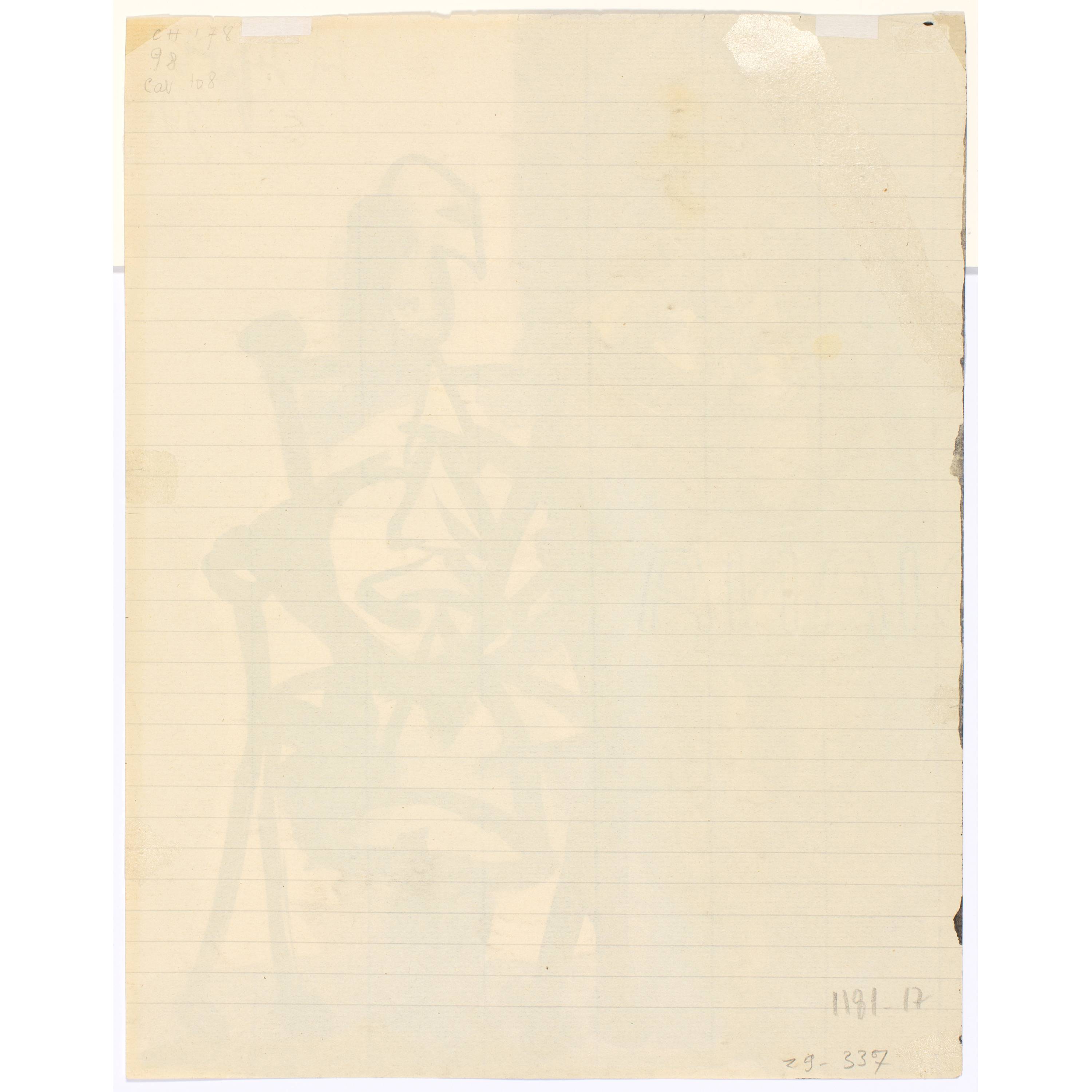
On crosswise lined handmade paper. Small hole at upper left, upper margin slightly irregular. With single neatly backed tears and a neatly restored crease in upper left corner. Colour fresh and in good overall condition
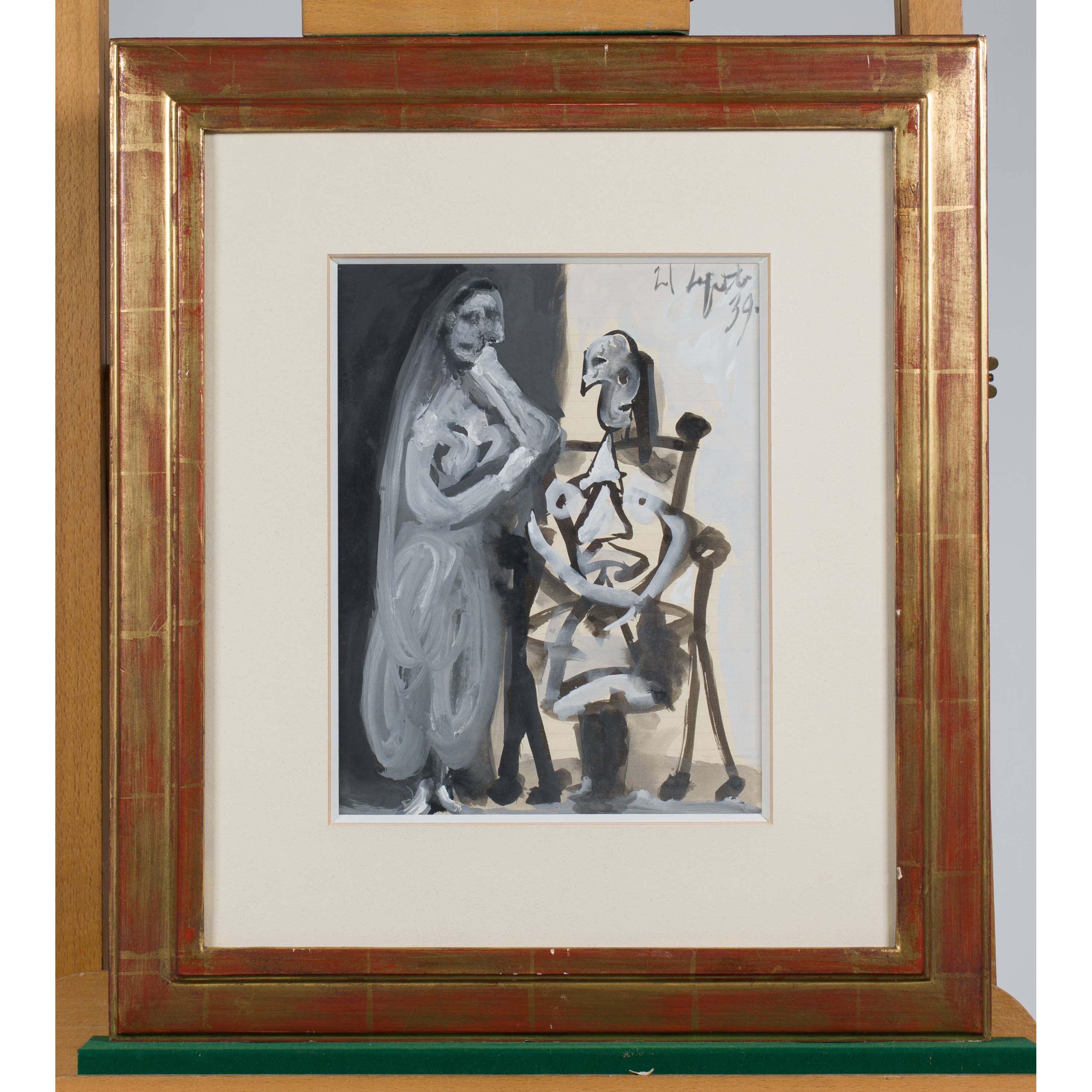
From 1936, Picasso worked in his home and studio on the Rue des Grands-Augustins in Paris, where his monumental work Guernica, a painting critical of and protesting against the Spanish Civil War, was painted in 1937. This period also saw the rivalry of two of the artist's simultaneous lovers, on the one hand Marie-Thérèse Walter, with whom he had been involved since 1927 and raised their daughter Maya, and Dora Maar, who entered his life from 1937. Both women were portrayed many times. In September 1939, directly after the outbreak of the Second World War, he created several paintings and gouaches in "grisaille painting" showing two women: One seated, one standing. Some of these works are richly detailed, others tend more towards simplification of the subject. In some versions, the seated woman can be recognised as Marie-Thérèse Walter, the standing one as Dora Maar. These are therefore very personal, biographical works that also show the artist's inner, emotional conflict in a personally and politically difficult time
1939
Gouache und Tusche
26,9x21 cm
Oben rechts datiert "21 Sept 39."
Christian Zervos, Pablo Picasso, Bd. 9, Paris 1958,
Nachlass des Künstlers
Slg. Marina Picasso, dort erworben von
Galerie Jan Krugier, Genf
Auktion Christie's, 5.11.2013,
Privatsammlung Europa
The Picasso Project, ed. Picasso's Paintings, Watercolors, Drawings and Sculpture: Europe at War, 1939-1940, San Francisco 1998, pag. 9, Nrn. 39-167
Paris 1966-1967, Petit Palais, Hommage à Pablo Picasso,
Shanghai 2015-2016, Global Harbour Museum, The Legend of Art: Picasso,
Auf querliniertem Bütten. Kleines Löchlein oben links, der obere Rand leicht unregelmässig. Mit einzelnen sauber hinterlegten Einrissen und einer sauber restaurierten Knickfalte in der oberen linken Ecke. Farbfrisch und in guter Gesamterhaltung
Ab 1936 arbeitete Picasso in seinem Wohn- und Atelierhaus an der Rue des Grands-Augustins in Paris, wo 1937 auch sein Monumentalwerk "Guernica", ein Kritik- und Protestgemälde am Spanischen Bürgerkrieg, entstanden ist. In diese Zeit fiel auch die Rivalität von zwei gleichzeitigen Geliebten des Künstlers, einerseits Marie-Thérèse Walter, mit welcher er seit 1927 liiert war und die gemeinsame Tochter Maya aufzog, und Dora Maar, die ab 1937 in sein Leben getreten ist. Beide Frauen wurden vielfach dargestellt. Im September 1939, also direkt nach Ausbruch des Zweiten Weltkrieges, entstanden mehrere Gemälde und Gouachen in "Grisaille-Malerei", die zwei Frauen zeigen: Eine sitzend, eine stehend. Manche dieser Arbeiten sind detailreich ausgearbeitet, andere tendieren eher in Richtung Vereinfachung des Sujets. Auf einigen Versionen kann man die sitzende Frau als Marie-Thérèse Walter, die stehende als Dora Maar wiedererkennen. Es handelt sich also um sehr persönliche, biographische Werke, die auch die innere, emotionale Zerrissenheit des Künstlers in einer persönlich und politisch schwierigen Zeit gut aufzeigen