- EN


 Log in
-
- Live Auctions
- Past auctions
- More
- Kornfeld today
- The Story of Kornfeld
- Information









Moskau 1866 - 1944 Neuilly-sur-Seine


1929
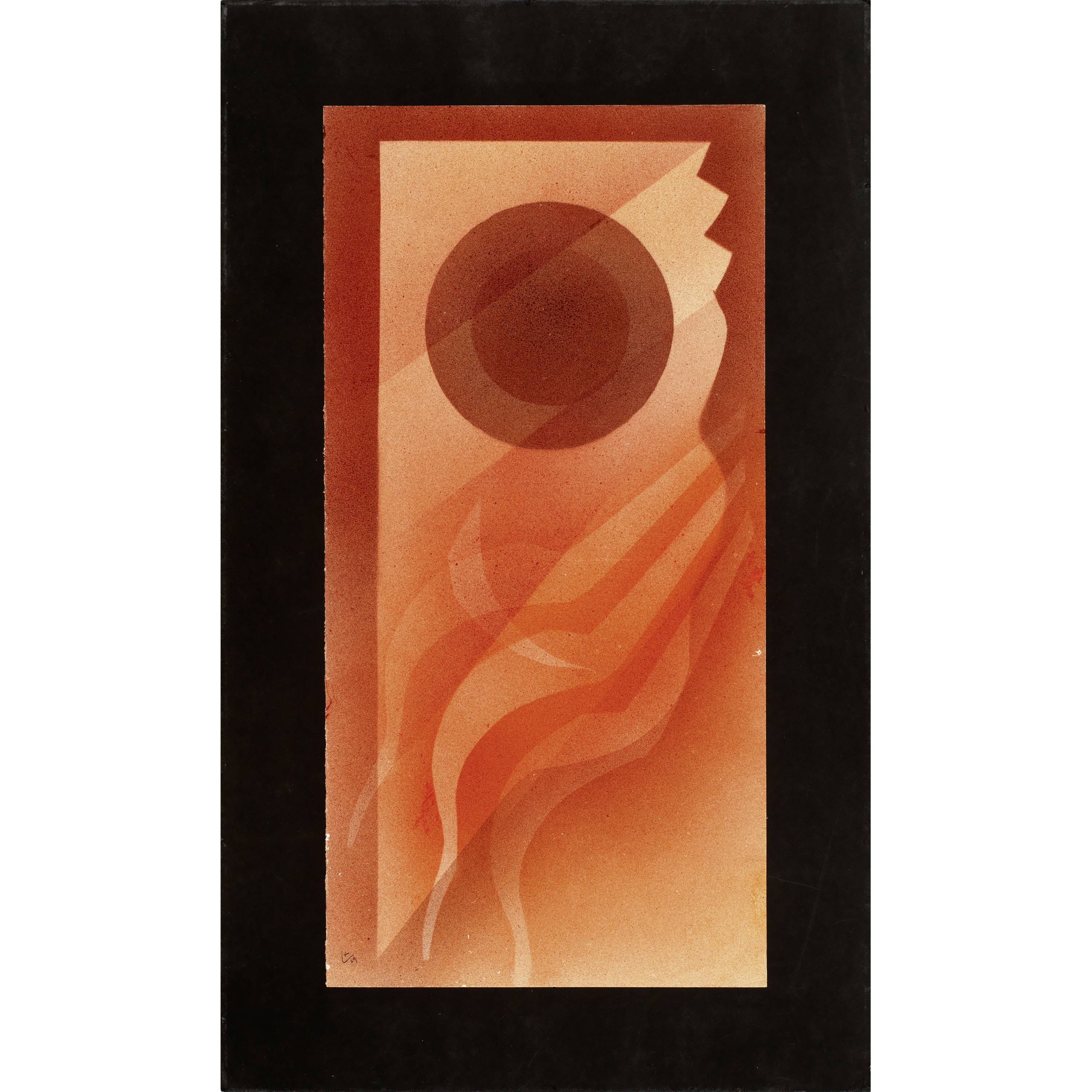
Gouache, watercolour and ink
50,1x25 cm, watercolour - 61,8 x37,1 cm, cardboard mount
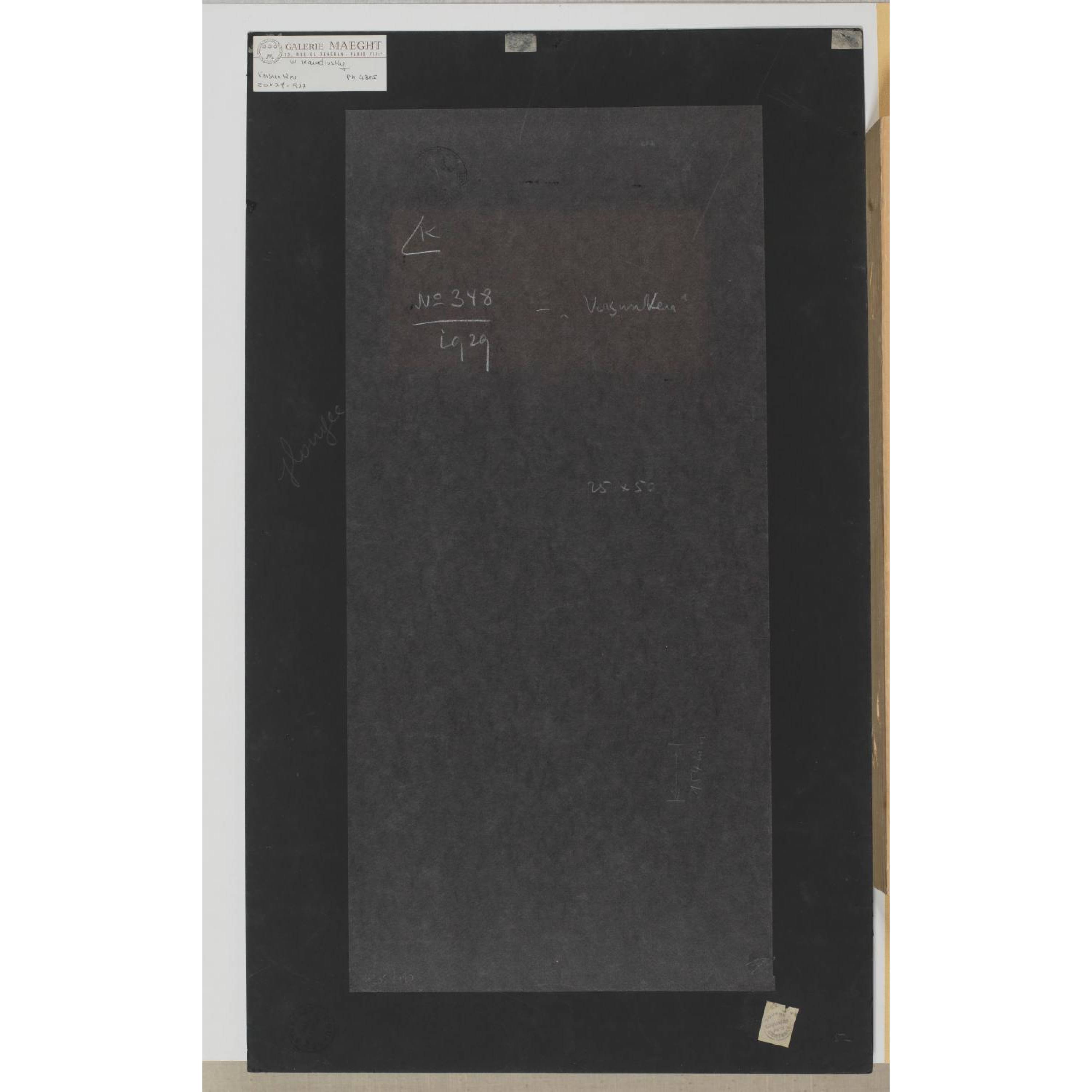
Lower left monogrammed and dated in pen by the artist "VK / 29", verso monogrammed, inscribed, titled and dated in white "VK / N ° 348 - Versunken / 1929"
Vivian Endicott Barnett, Kandinsky, Werkverzeichnis der Aquarelle, vol.2, 1922-1944, Ithaca 1994, no. 939
Hand list: Aquarelle 'iv 1929, no. 348 (Versunken)
Nina Kandinsky, Paris
Galerie Maeght, Paris (acquired 1974), verso with label und photo number 4305
Col. Adrien Maeght, Paris
Private collection, Paris
Auction Loudmer Scp., Paris, 13.6.1994, cat. no. 68; purchased there for
International private collection
Selection:
Saarbrücken 1930, Staatliches Museum, Kollektiv-Ausstellung Wassily Kandinsky, cat. no. 34
Luzern 1953, Galerie Rosengart, Kandinsky, Gemälde, Aquarelle, Zeichnungen, no. 8 (no catalogue Katalog; but colour illustration on the invitation card)
Madrid/Sevilla 1979, Fundación Juan March/Museo Contemporaneo, Kandinsky, 1923-1944, cat. no. 44
Paris 1987, Musée d'Art Moderne de la Ville de Paris, Domela, cat. no. 260
New York 2004, Helly Nahmad Gallery, Kandinsky, Sounds of Colours, p. 92
Mailand 2012, Fondazione Antonio Mazzotta, Wassily Kandinsky e l'arte astratta tra Italia e Francia, cat. no. 11, ill.
Mounted on black cardboard, minimal studio marks. Fresh colors and in very good overall condition
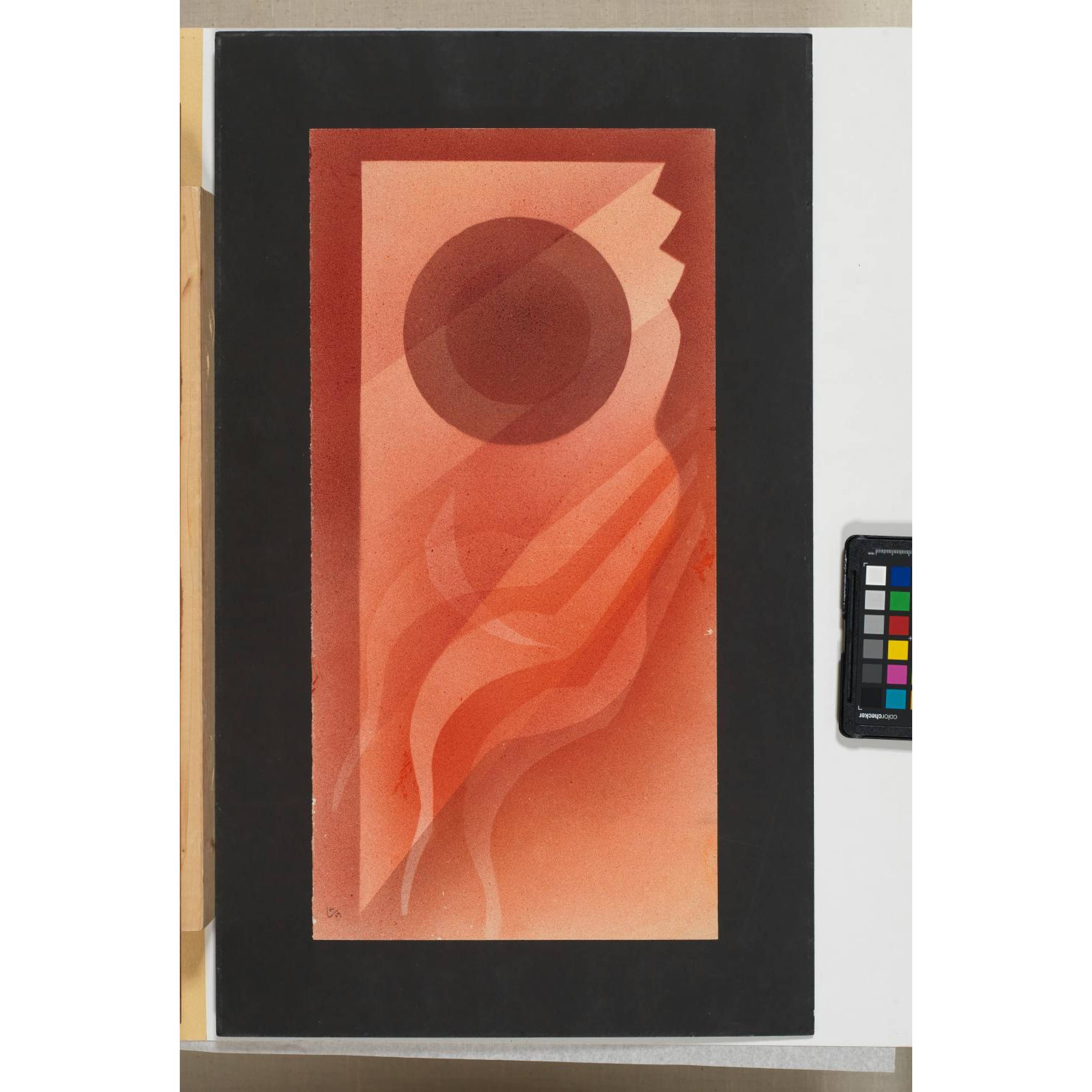
The present sheet was created during Kandinsky's teaching activity at the Bauhaus in Dessau. Although his writing “Punkt und Linie zu Fläche. Contribution to the analysis of the painterly elements” was at the center of his work at the Bauhaus, he began again at the end of the 1920s to be increasingly interested for his 1911 published themes in “ Über das Geistige in der Kunst. Insbesondere in der Malerei". He postulated, for example, that every color has its own symbolic sound and meaning, and that shape and color are linked. He viewed "red" as a particularly strong color, giving the various nuances different meanings, "timbres", which are also intended to evoke musical associations. The “circle” occupies a special position in the oeuvre; he dominates the composition like a sun. At the Bauhaus, Kandinsky experimented with a spray process of watercolors that made fine color gradients and, using stencils, different “densities” in the application of paint possible, which can be clearly seen in the work offered here. A very poetic work in different shades of red
1929
Gouache, Aquarell und Tusche
50,1x25 cm, Aquarell - 61,8 x37,1 cm, Unterlagekarton
Unten links vom Künstler in Feder in Tusche monogrammiert und datiert "VK / 29", rückseitig in Weiss monogrammiert, bezeichnet, betitelt und datiert "VK / N° 348 - Versunken / 1929"
Vivian Endicott Barnett, Kandinsky, Werkverzeichnis der Aquarelle, 2. Band, 1922-1944, Ithaca 1994,
Handliste: Aquarelle 'iv 1929,
Nina Kandinsky, Paris
Galerie Maeght, Paris (erworben 1974), rückseitig mit dem Etikett und der Fotonummer 4305
Slg. Adrien Maeght, Paris
Privatsammlung, Paris
Auktion Loudmer Scp., Paris, 13.6.1994,
Internationale Privatsammlung
Auswahl:
Saarbrücken 1930, Staatliches Museum, Kollektiv-Ausstellung Wassily Kandinsky,
Luzern 1953, Galerie Rosengart, Kandinsky, Gemälde, Aquarelle, Zeichnungen,
Madrid/Sevilla 1979, Fundación Juan March/Museo Contemporaneo, Kandinsky, 1923-1944,
Paris 1987, Musée d'Art Moderne de la Ville de Paris, Domela,
New York 2004, Helly Nahmad Gallery, Kandinsky, Sounds of Colours, pag. 92
Mailand 2012, Fondazione Antonio Mazzotta, Wassily Kandinsky e l'arte astratta tra Italia e Francia,
Montiert auf schwarzen Unterlagekarton, minime Atelierspuren. Farbfrisch und in sehr guter Gesamterhaltung
Das vorliegende Blatt entstand während Kandinskys Lehrtätigkeit am Bauhaus in Dessau. Obwohl seine 1926 herausgegebene Schrift “Punkt und Linie zu Fläche. Beitrag zur Analyse der malerischen Elemente” im Zentrum seines Schaffens am Bauhaus stand, begann er sich Ende der 1920er Jahre wieder vermehrt für seine 1911 in “Über das Geistige in der Kunst. Insbesondere in der Malerei” publizierten Thesen zur Kunst zu interessieren. So postulierte er etwa, dass jede Farbe ihren eigenen symbolischen Klang und ihre eigene Bedeutung habe, und dass Form und Farbe miteinander verbunden seien. “Rot” betrachtete er als besonders kräftige Farbe, gab den verschiedenen Nuancierungen verschiedene Bedeutungen, “Klangfarben”, die auch musikalische Assoziationen wecken sollen. Der “Kreis” nimmt im Œuvre eine besondere Stellung ein; er dominiert wie eine Sonne die Komposition. Am Bauhaus experimentierte Kandinsky mit einem Spritzverfahren von Aquarellfarbe, das feine Farbverläufe und mittels Schablonnen auch unterschiedliche “Dichten” im Farbauftrag möglich macht, was sich eindrücklich an der hier angebotenen Arbeit ablesen lässt. Eine sehr poetische Arbeit in verschiedenen Rottönen