- FR


 S’inscrire
-
- Ventes Classiques
- Ventes passées
- Plus
- Acheter
- Vendre
- Plus
- Galerie
- Commerce d'art
- Maison d'Édition
- Kornfeld aujourd’hui
- L'histoire de la Maison
- Informations


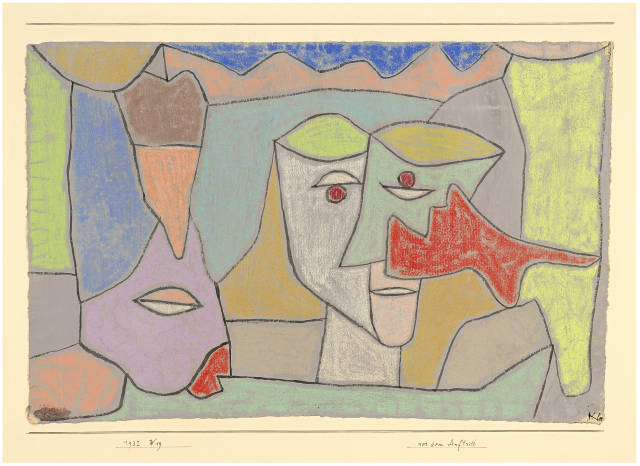


Münchenbuchsee bei Bern 1879 - 1940 Muralto


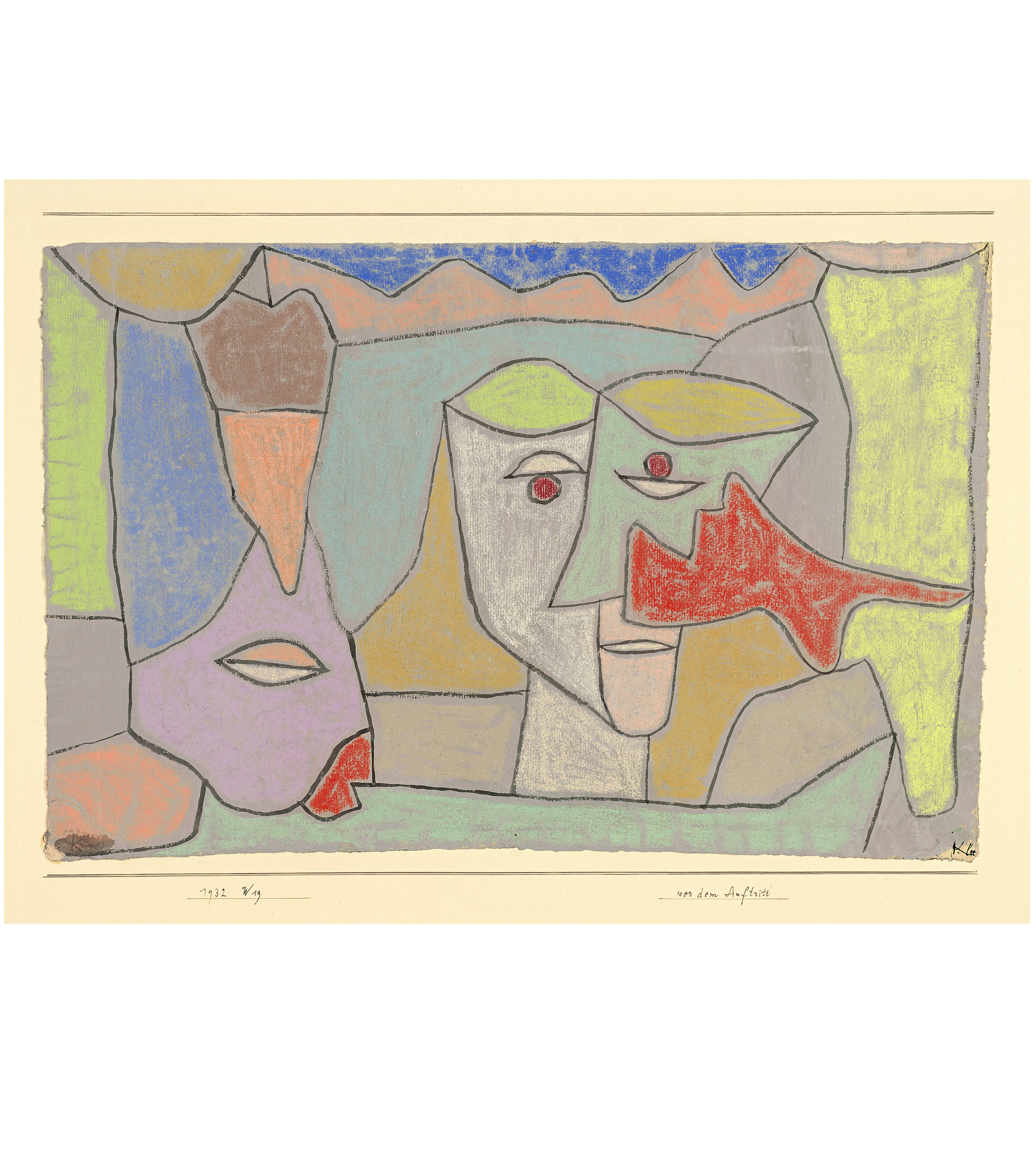
1932 – Work number 1932.259 (W 19)
Pastel and watercolour on grey priming on paper on cardboard
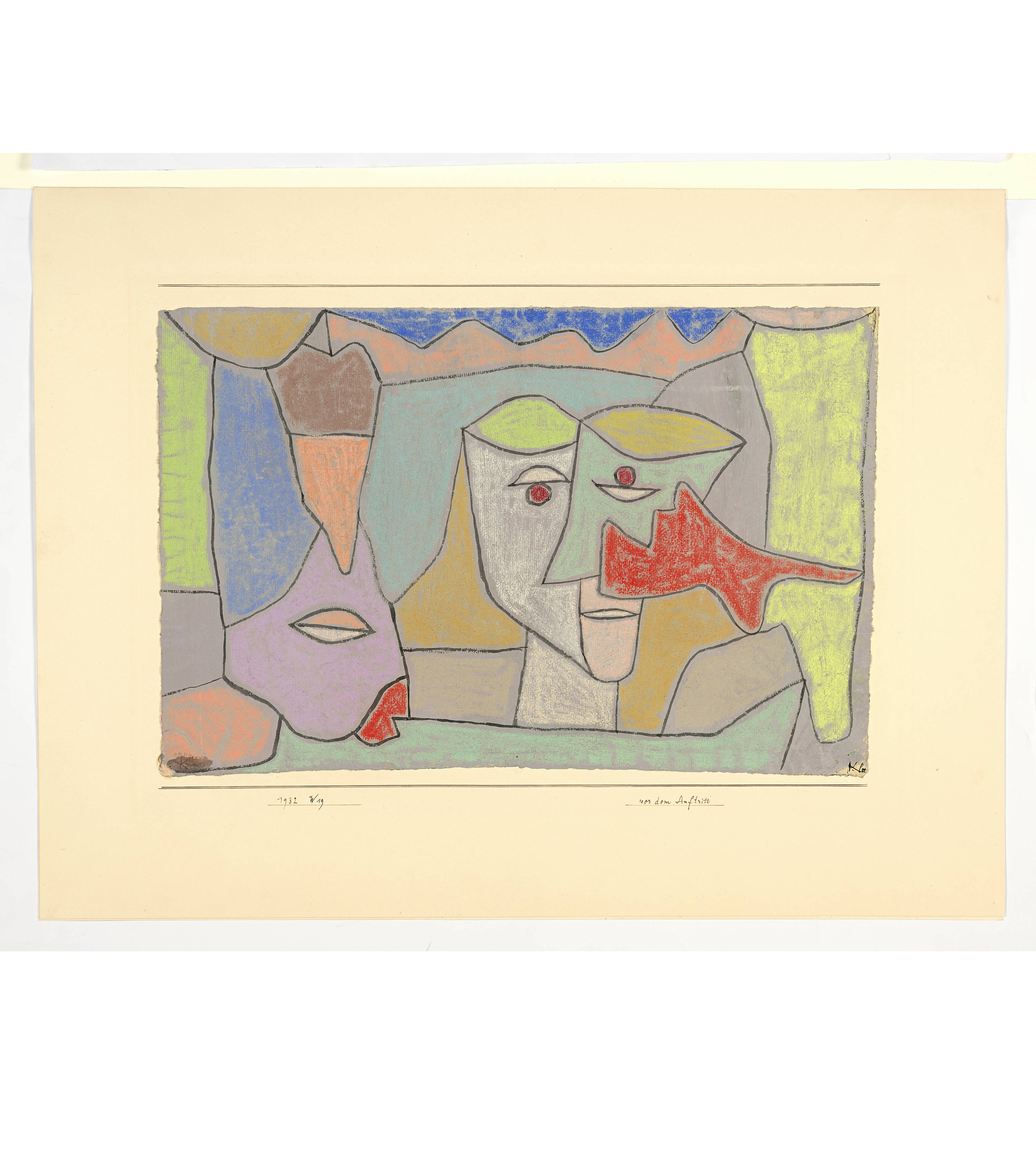
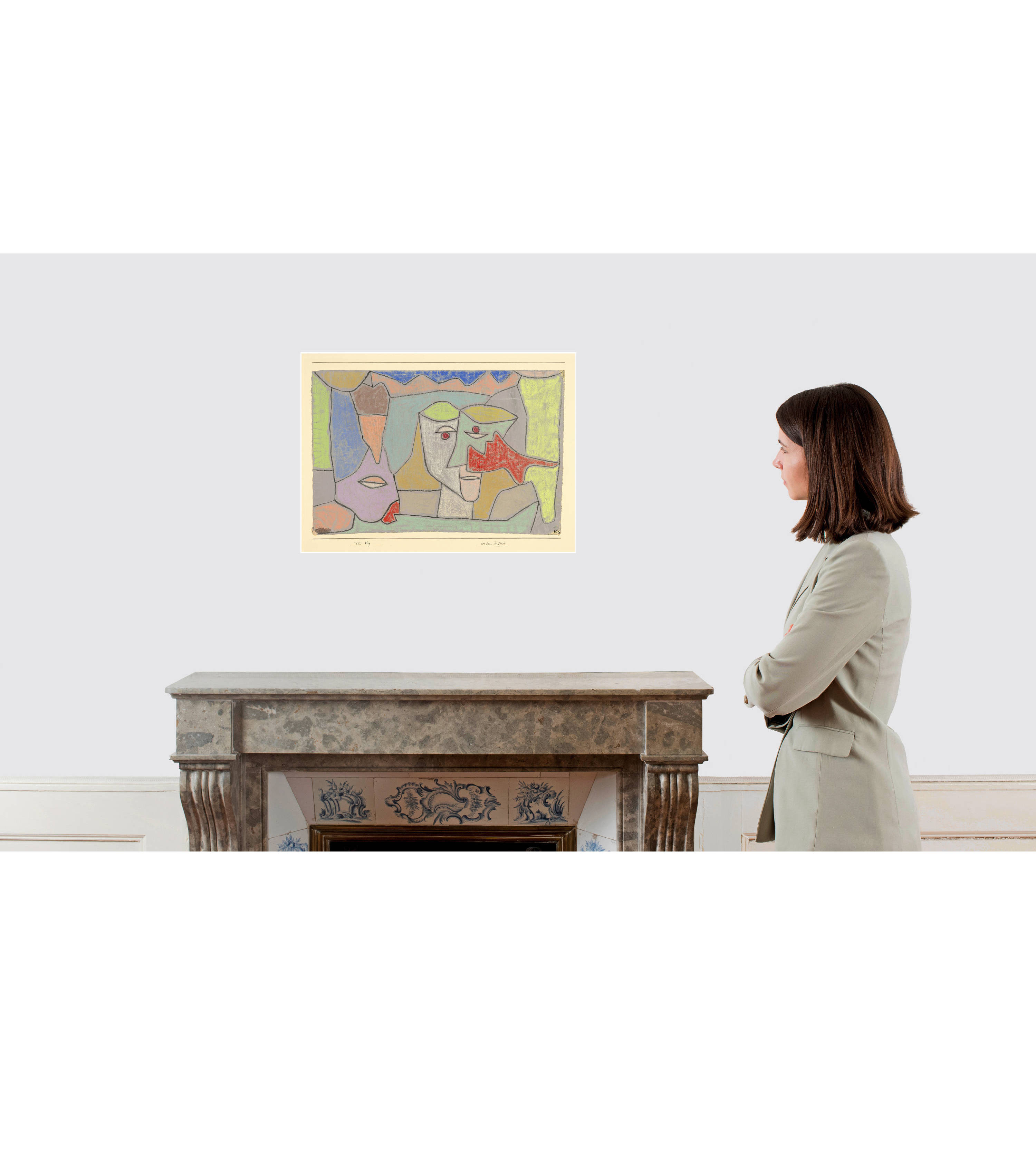
33.8x48.1 cm, incl. double end lines; 49x64.8 cm, support
Lower left and right signed by the artist in pen and ink "Klee", beneath the double end line in brown ink with the work number and the title "1932 W 19 vor dem Auftritt"
Paul Klee Stiftung, Catalogue raisonné, vol. 6, Werke 1931-1933, Bern 2002, no. 5955
Estate of the artist
Collection Lily Klee (1940-1946), Bern, there acquired by
Klee Society (1946-1952), Bern
Collection Felix Klee, Bern (1953-1990), by inheritance to
Private collection Switzerland
St. Gallen 1955, Kunstverein im Kunstmuseum, Klee, Werke aus dem Familienbesitz, cat. no. 278
Amsterdam 1963, Stedelijk Museum, Paul Klee, Tentoonstelling aquarellen, cat. no. 54
Munich 1970, Haus der Kunst, Paul Klee 1879–1940, cat. no. 144
Winterthur 1971, Kunstmuseum, Paul Klee und seine Malerfreunde, Die Sammlung Felix Klee, cat. no. 127
London 1971, Roland, Browse & Delbanco, Paul Klee, 60 Watercolours from the Collection of Felix Klee (on loan), cat. no. 36
Ravensburg 1972, Kreissparkasse, Paul Klee, cat. no. 40
Säckingen 1974, Kunstverein Hochrhein e.V., Paul Klee 1879-1940, Gemälde, Aquarelle, Zeichnungen, Druckgraphik, cat. no. 85
Milan/Bologna 1982, Galleria del Milione/Galleria Marescalchi, Paul Klee, L'annunciazione del segno, Disegni e acquarelli, p. 85
Paris 1985, Galerie Karl Flinker, Paul Klee, Les dix dernières années, cat. no. 11
Malmö 1991, Konsthall, Paul Klee, p. 230
Andros 1993, Museum of Modern Art, Basil & Elise Goulandris Foundation, Paul Klee, ... A Synthesis of Outward Sight and Inward Vision, cat. no. 74
Bern 2007, Zentrum Paul Klee, Paul Klee, Überall Theater, p. 58
Bern 2013, Zentrum Paul Klee, Paul Klee, Leben und Werk, without catalogue
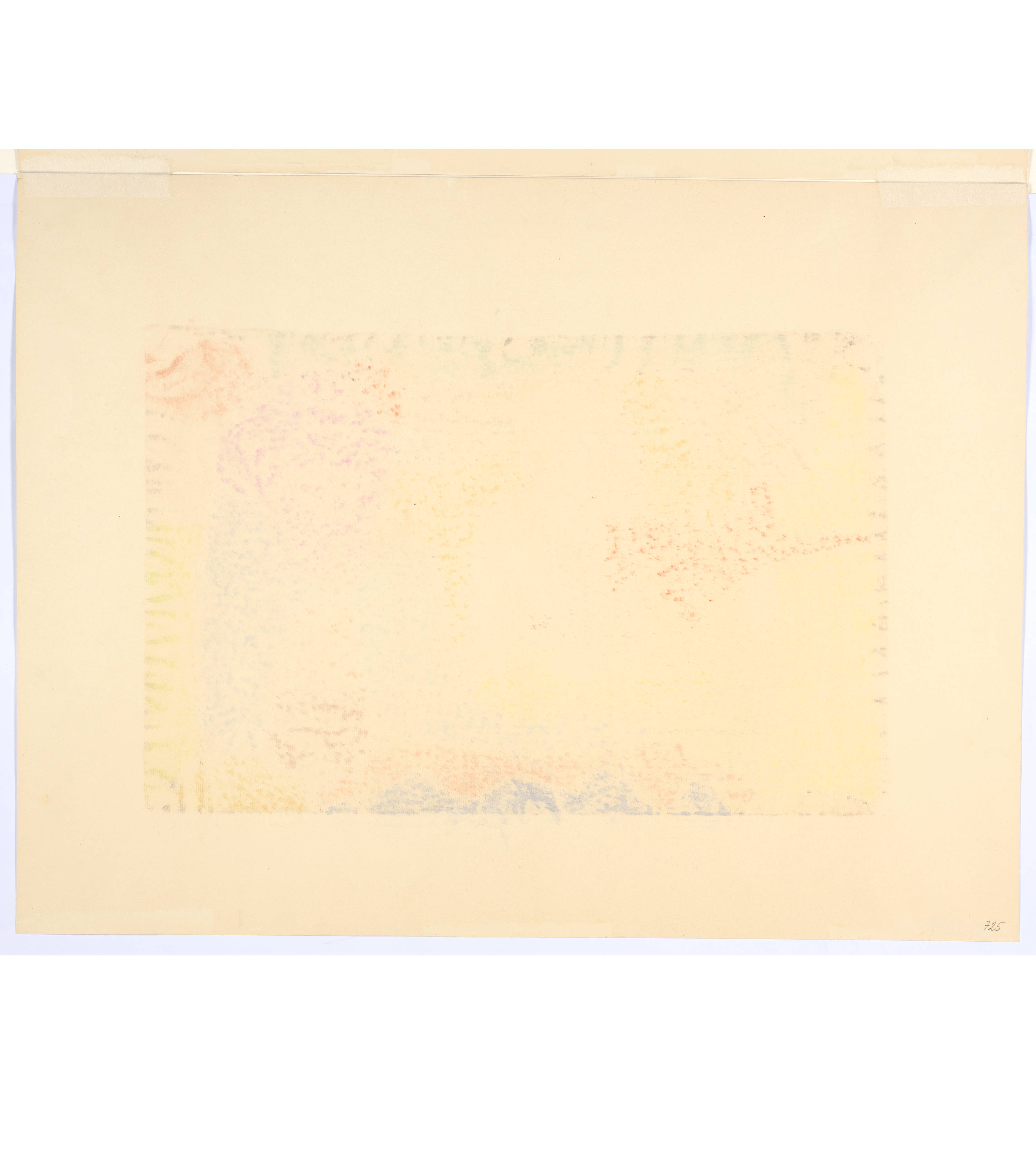
Extremely fresh in colour, in outstanding condition. Also included is the original cardboard, which Klee always placed over the image for pastels, in the same format as the backing cardboard, on which there is a slight offset of the motif
In the winter semester of 1931, Paul Klee began teaching at the Kunstakademie Düsseldorf with a course on painting technique. He rented a furnished room on Mozartstrasse, later on Goltsteinstrasse. Since he taught only a few students, he once again had the time and leisure to devote himself more to his own work.
With "Vor dem Auftritt" from 1932, Paul Klee takes up a motif that had accompanied his work since the early years: the theatre as a symbol of human existence. Stage, mask, and role-play do not appear as depictions of a concrete event, but as metaphors for the tension between inner experience and outward appearance. In Düsseldorf, Klee often attended theatre and opera performances, as he repeatedly mentioned in letters to his wife Lily, for example in the letter of 17 April 1932.
The title refers to a moment of pause. Not the actual performance is at the centre, but the moment immediately before it—that fleeting transition between expectation and action. The painting thus becomes a reflection on concentration, transformation, and the relationship between individual and role. As so often in his work, the title opens up a poetic space for interpretation without defining its meaning.
The composition lives from a finely balanced equilibrium between order and movement. Pastel-coloured fields, linear elements, and symbolic forms condense into a pictorial structure whose rhythm is reminiscent of musical structures. Two masks stand like stage props in a theatre space. Klee understood colour as an independent constructive means and, in this context, spoke in the above-mentioned letter to Lily of "Polyphonie", a harmony of several equally weighted pictorial planes. This creates an atmosphere of quiet tension, which forms the actual subject of the work: the invisible before the visible, the inner composure before the public appearance.
1932 - Werknummer 1932.259 (W 19)
Pastell und Aquarell auf graue Grundierung auf Papier auf Karton
33,8x48,1 cm, inkl. doppelte Abschlussstriche; 49x64,8 cm, Unterlage
Unten links und rechts vom Künstler in Feder in Tusche signiert "Klee", unter dem doppelten Abschlusstrich in brauner Tinte mit der Werknummer und dem Titel "1932 W 19 vor dem Auftritt"
Paul Klee Stiftung, Catalogue raisonné, Band 6, Werke 1931-1933, Bern 2002,
Nachlass des Künstlers
Slg. Lily Klee (1940-1946), Bern, dort erworben von
Klee-Gesellschaft (1946-1952), Bern
Slg. Felix Klee, Bern (1953-1990), durch Erbschaft an
Privatsammlung Schweiz
St. Gallen 1955, Kunstverein im Kunstmuseum, Klee, Werke aus dem Familienbesitz,
Amsterdam 1963, Stedelijk Museum, Paul Klee, Tentoonstelling aquarellen,
München 1970, Haus der Kunst, Paul Klee 1879–1940,
Winterthur 1971, Kunstmuseum, Paul Klee und seine Malerfreunde, Die Sammlung Felix Klee,
London 1971, Roland, Browse & Delbanco, Paul Klee, 60 Watercolours from the Collection of Felix Klee (on loan),
Ravensburg 1972, Kreissparkasse, Paul Klee,
Säckingen 1974, Kunstverein Hochrhein e.V., Paul Klee 1879-1940, Gemälde, Aquarelle, Zeichnungen, Druckgraphik,
Mailand/Bologna 1982, Galleria del Milione/Galleria Marescalchi, Paul Klee, L'annunciazione del segno, Disegni e acquarelli,
Paris 1985, Galerie Karl Flinker, Paul Klee, Les dix dernières années,
Malmö 1991, Konsthall, Paul Klee,
Andros 1993, Museum of Modern Art, Basil & Elise Goulandris Foundation, Paul Klee, ... A Synthesis of Outward Sight and Inward Vision,
Bern 2007, Zentrum Paul Klee, Paul Klee, Überall Theater,
Bern 2013, Zentrum Paul Klee, Paul Klee, Leben und Werk, ohne Katalog
Äusserst farbfrisch, in hervorragender Erhaltung. Mit dabei ist auch der originale, von Klee jeweils bei Pastellen auf die Darstellung gelegte Karton im selben Format wie der Unterlagekarton, auf dem sich ein leichter Abklatsch des Motivs befindet
Im Wintersemester 1931 begann Paul Klee seine Unterrichtstätigkeit an der Kunstakademie Düsseldorf mit einem Kurs über Maltechnik. Er mietete ein möbliertes Zimmer in der Mozartstrasse, später in der Goltsteinstrasse. Da er nur wenige Schüler unterrichtete, hatte er wieder Zeit und Musse, sich vermehrt den eigenen Arbeiten zu widmen.
Mit "Vor dem Auftritt" aus dem Jahr 1932 greift Paul Klee ein Motiv auf, das sein Schaffen seit den frühen Jahren begleitet hatte: das Theater als Sinnbild menschlicher Existenz. Bühne, Maske und Rollenspiel erscheinen bei ihm nicht als Darstellung eines konkreten Geschehens, sondern als Metaphern für die Spannung zwischen innerem Erleben und äusserer Erscheinung. Klee besuchte in Düsseldorf oft Theater- und Opernaufführungen, wie er immer wieder in Briefen an seine Frau Lily bemerkte, etwa im Brief vom 17. April 1932.
Der Titel bezeichnet einen Augenblick des Innehaltens. Nicht der eigentliche Auftritt steht im Mittelpunkt, sondern der Moment unmittelbar davor - jener flüchtige Übergang zwischen Erwartung und Handlung. Das Bild wird damit zu einer Reflexion über Konzentration, Verwandlung und das Verhältnis zwischen Individuum und Rolle. Wie so häufig in seinem Werk eröffnet der Titel einen poetischen Deutungsraum, ohne dessen Bedeutung festzulegen.
Die Komposition lebt von einem fein austarierten Gleichgewicht zwischen Ordnung und Bewegung. Pastellfarbene Felder, lineare Elemente und zeichenhafte Formen verdichten sich zu einem Bildgefüge, dessen Rhythmus an musikalische Strukturen erinnert. Zwei Masken stehen wie Kulissen in einem Theaterraum. Klee verstand Farbe als ein eigenständiges konstruktives Mittel und sprach in diesem Zusammenhang im oben aufgeführten Brief an Lily von "Polyphonie", einem Zusammenklang mehrerer gleichwertiger Bildebenen. Dadurch entsteht eine Atmosphäre stiller Spannung, die den eigentlichen Gegenstand des Werkes bildet: das Unsichtbare vor dem Sichtbaren, die innere Sammlung vor dem öffentlichen Erscheinen.
| Suisse | CHF | 170 |
| Europe | CHF | 270 |
| USA | CHF | 360 |
| Outre-mer | CHF | 380 |