- FR


 S’inscrire
-
- Ventes Classiques
- Ventes passées
- Plus
- Acheter
- Vendre
- Plus
- Galerie
- Commerce d'art
- Maison d'Édition
- Kornfeld aujourd’hui
- L'histoire de la Maison
- Informations


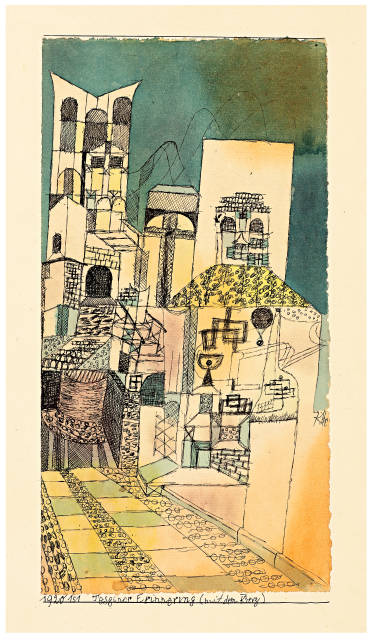


Münchenbuchsee bei Bern 1879 - 1940 Muralto


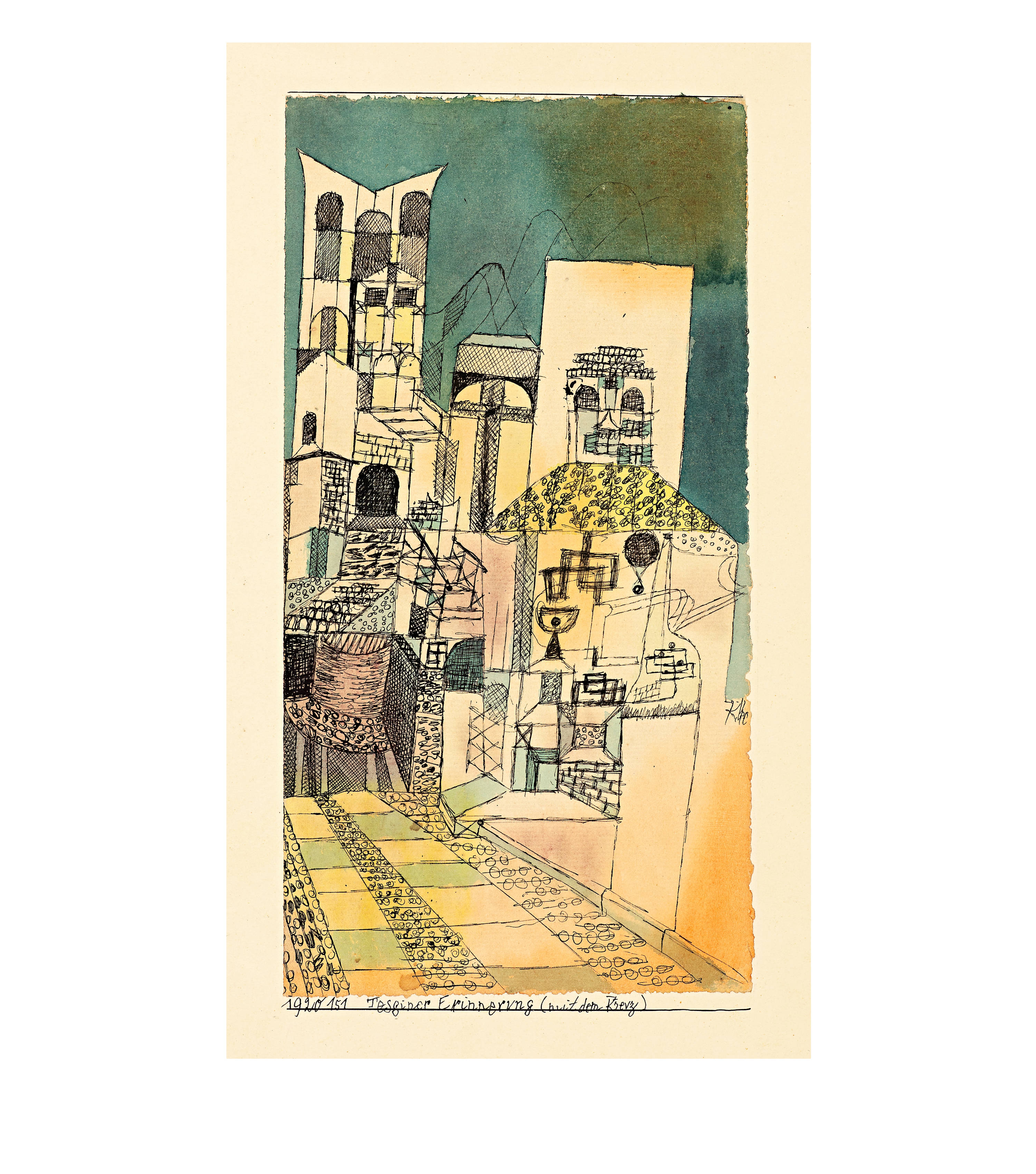
1920 – Work number 1920.151
Watercolour over pen drawing in ink on paper on cardboard
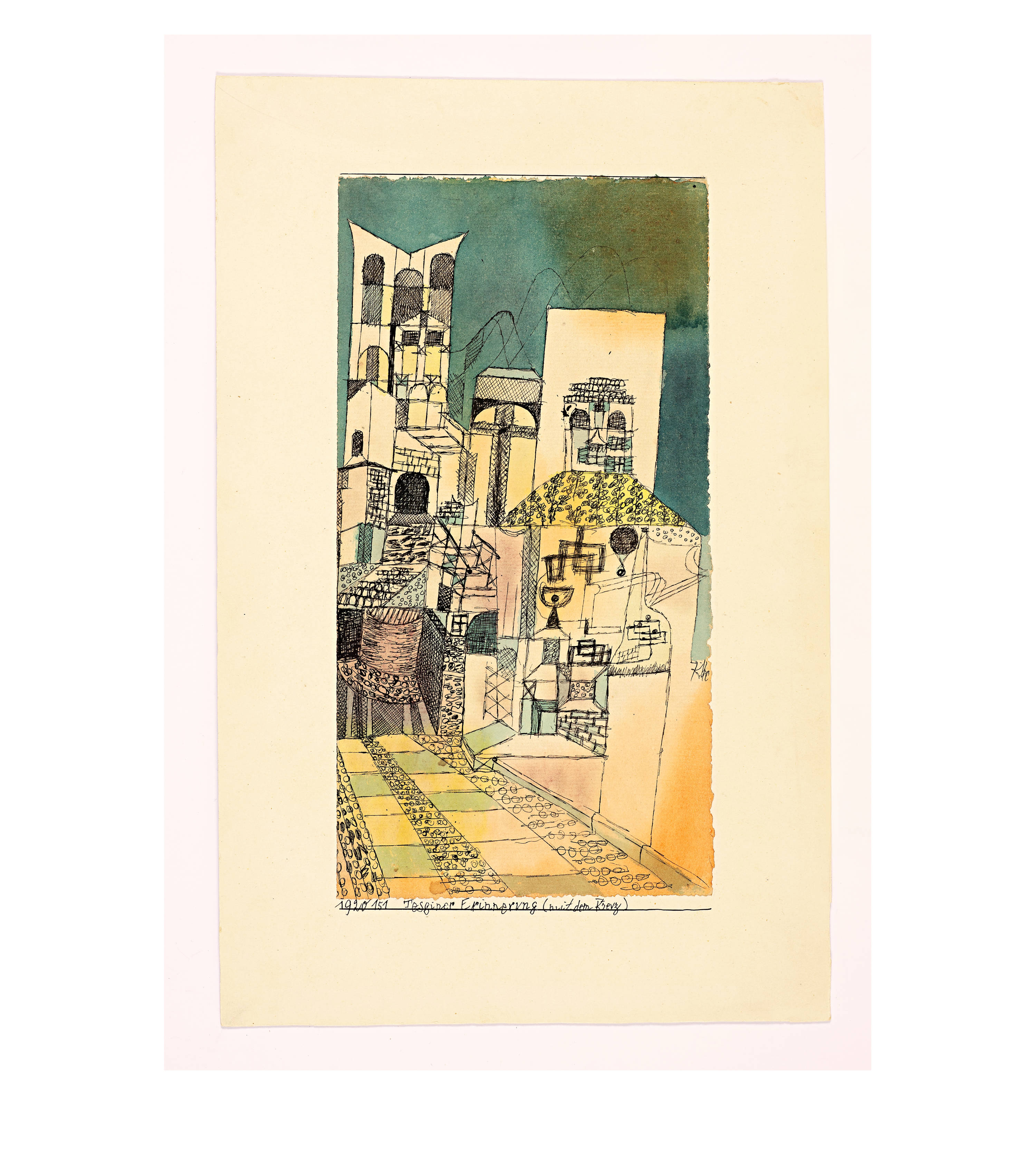
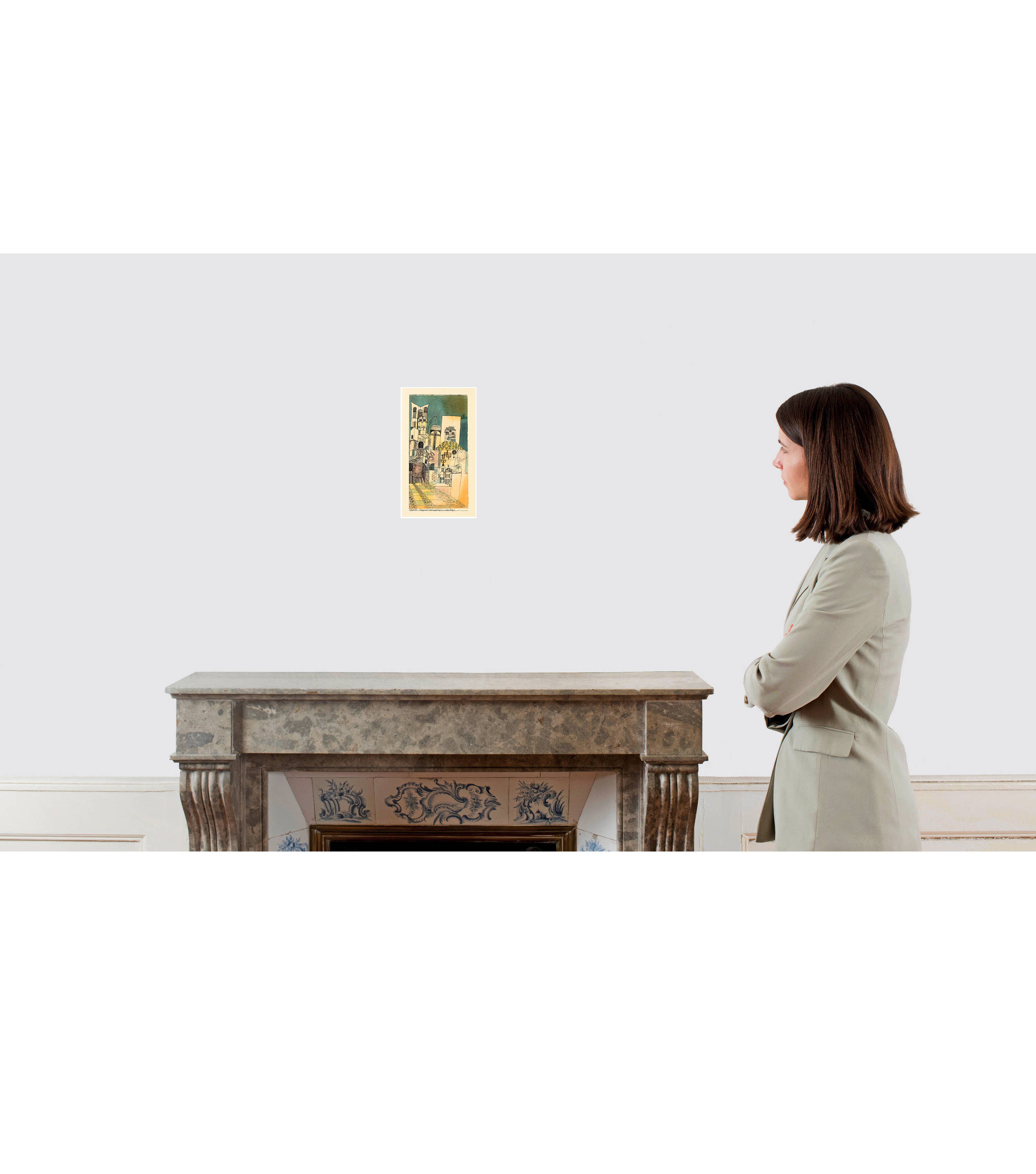
25x12.9 cm, incl. end line; 32.1x20.8 cm, support
Right margin signed in pen and ink "Klee". On the backing cardboard above the end line on the left with the work number and the title "1920 151 Tessiner Erinnerung (mit dem Kreuz)"
Paul Klee Stiftung, Catalogue raisonné, vol. 3, Werke 1919-1922, Bern 1999, no. 2496
Galka [Emmy Esther] Scheyer, San Francisco/Carmel/Los Angeles, on commission from Paul Klee, Dessau, there acquired in 1932 by
Putzel Gallery, Hollywood
Private collection USA
Auction Sotheby Parke Bernett, Los Angeles, 6 November 1978, lot 226, probably there acquired by
Berggruen & Cie, Paris, auctioned at
Auction Galerie Kornfeld, Bern, 19 June 1980, lot 681, there acquired by
Galerie Wilhelm Grosshennig, Düsseldorf, there acquired by
Private collection Germany, by inheritance to
Private collection Switzerland
Bern 1921, Kunsthalle, Ausstellung der Gesellschaft Schweizer Maler Bildhauer u. Architekten, cat. no. 241
Hollywood 1930, Braxton Gallery, The Blue Four, Paul Klee, cat. no. 9
San Francisco 1931, California Palace of the Legion of Honor, The Blue Four, Jawlensky, Paul Klee, cat. no. 5
Oakland 1931, The Oakland Art Gallery, The Blue Four, cat. no. 11
Osaka 1979, Gallery Kasahara, Paul Klee, cat. no. 2
Hamburg 1979, Galerie Levy, Deutsche Kunst 1900-1930, cat. no. 152
Düsseldorf 1981, Galerie Wilhelm Grosshennig, Ausstellungs- und Angebotskatalog deutscher und französischer Meisterwerke, fig. on cover
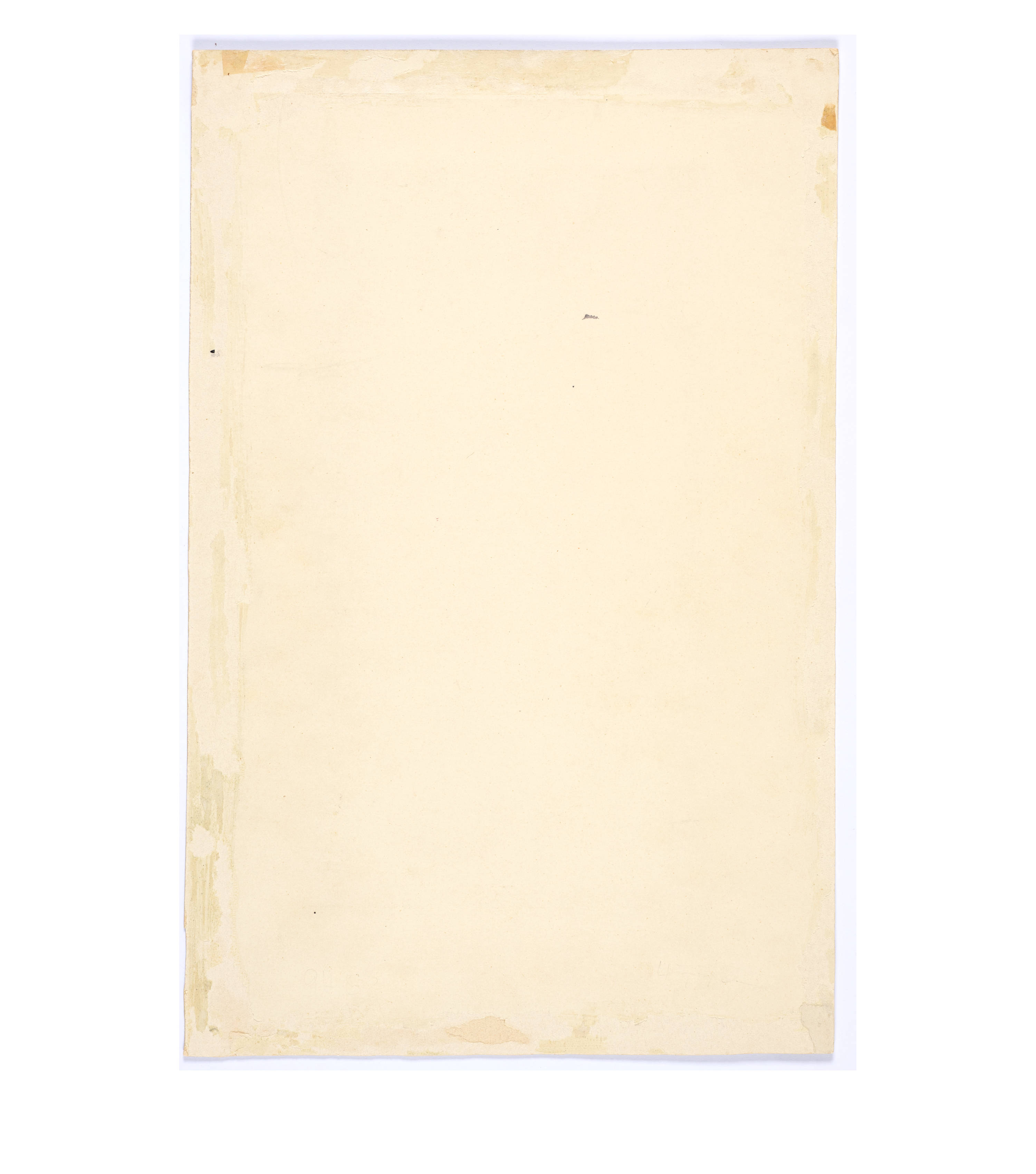
Traces of old mounting on the reverse. Fresh in colour and in very good condition
Towards the end of the First World War, Paul Klee achieved his artistic and commercial breakthrough, supported above all by Herwarth Walden and his gallery Der Sturm. He lived and worked in Munich with his wife Lily and their son Felix, born in 1907. In May 1920, the first retrospective solo exhibition with 371 works took place at Galerie Goltz. At the end of 1920, while visiting Marianne von Werefkin and Alexej von Jawlensky in Ascona, Klee also received the telegram appointing him as a master at the Bauhaus in Weimar.
With "Tessiner Erinnerung (mit dem Kreuz)", Paul Klee processed impressions of a landscape that occupied him for years until his death. However, the title does not refer to the direct observation of a specific place, but to a pictorial process of memory. As is often the case with Klee, the landscape becomes an inner experiential space in which observation of nature and artistic invention merge inseparably.
The typical paving with river pebbles, the winding stairs, and the architecture become an archetypal vision of a small town in Ticino. In the background, the mountains rise up, and the cross stands prominently, as seen at so many stations of the cross or churches. However, the present work did not arise directly from nature, but from the distance of memory. As the title suggests, Klee is less concerned with depicting a specific place than with the poetic condensation of an inner landscape.
The painting falls into a phase of extraordinary creative intensity. After the experiences of the First World War, Klee developed a new pictorial language in which observation of nature and abstraction are closely united. The landscape increasingly detaches itself from its topographical ties and becomes the bearer of rhythmic and chromatic orders. The southern landscape does not appear as a nature study, but as a spiritual space of experience, in which color, rhythm, and signs merge into a new reality. It is precisely this combination of personal memory and universal pictorial order that gives the work its special appeal. An exciting, almost surreal pictorial composition.
1920 - Werknummer 1920.151
Aquarell über Federzeichnung in Tusche auf Papier auf Karton
25x12,9 cm, inkl. Abschlussstrich; 32,1x20,8 cm, Unterlage
Rechts im Rand in Feder in Tinte signiert "Klee". Auf dem Unterlagekarton oberhalb des Abschlussstriches links mit der Werknummer und dem Titel "1920 151 Tessiner Erinnerung (mit dem Kreuz)"
Paul Klee Stiftung, Catalogue raisonné, Band 3, Werke 1919-1922, Bern 1999,
Galka [Emmy Esther] Scheyer, San Francisco/Carmel/Los Angeles, in Kommission von Paul Klee, Dessau, dort 1932 erworben von
Putzel Gallery, Hollywood
Privatsammlung USA
Auktion Sotheby Parke Bernett, Los Angeles, 6. November 1978, Los 226, dort wohl erworben von
Berggruen & Cie, Paris, versteigert bei
Auktion Galerie Kornfeld, Bern, 19. Juni 1980, Los 681, dort erworben von
Galerie Wilhelm Grosshennig, Düsseldorf, dort erworben von
Privatsammlung Deutschland, durch Erbschaft an
Privatsammlung Schweiz
Bern 1921, Kunsthalle, Ausstellung der Gesellschaft Schweizer Maler Bildhauer u. Architekten,
Hollywood 1930, Braxton Gallery, The Blue Four, Paul Klee,
San Francisco 1931, California Palace of the Legion of Honor, The Blue Four, Jawlensky, Paul Klee,
Oakland 1931, The Oakland Art Gallery, The Blue Four,
Osaka 1979, Gallery Kasahara, Paul Klee,
Hamburg 1979, Galerie Levy, Deutsche Kunst 1900-1930,
Düsseldorf 1981, Galerie Wilhelm Grosshennig, Ausstellungs- und Angebotskatalog deutscher und französischer Meisterwerke,
Rückseitig Spuren alter Montierungen. Farbfrisch und in sehr guter Erhaltung
Gegen Ende des Ersten Weltkriegs erreicht Paul Klee seinen künstlerischen und kommerziellen Durchbruch, vor allem gefördert durch Herwarth Walden und dessen Galerie Der Sturm. Mit seiner Ehefrau Lily und dem 1907 geborenen Sohn Felix lebt und arbeitet er in München. Im Mai 1920 findet in der Galerie Goltz die erste retrospektive Einzelausstellung mit 371 Werken statt. Ende 1920 erreicht Klee, bei einem Besuch in Ascona bei Marianne von Werefkin und Alexej von Jawlensky, auch das Berufungstelegramm als Meister an das Bauhaus in Weimar.
Mit "Tessiner Erinnerung (mit dem Kreuz)" verarbeitet Paul Klee Eindrücke einer Landschaft, die ihn über Jahre hinweg bis zu seinem Tod beschäftigte. Der Titel verweist jedoch nicht auf die unmittelbare Anschauung eines bestimmten Ortes, sondern auf einen erinnernden Bildprozess. Wie häufig bei Klee wird die Landschaft zum inneren Erfahrungsraum, in dem Naturbeobachtung und bildnerische Erfindung untrennbar miteinander verschmelzen.
Die typische Pflästerung mit Flusskieseln, die verschlungenen Treppen und die Architektur werden zu einer archetypischen Vorstellung eines Tessiner Städtchens. Im Hintergrund erheben sich die Berge, dominant steht das Kreuz, das an so vielen Kreuzwegstationen oder Kirchen zu sehen ist. Das vorliegende Werk entstand jedoch nicht unmittelbar vor der Natur, sondern aus der Distanz der Erinnerung. Wie der Titel erkennen lässt, geht es Klee weniger um die Wiedergabe eines bestimmten Ortes als um die poetische Verdichtung einer inneren Landschaft.
Das Bild fällt in eine Phase aussergewöhnlicher schöpferischer Intensität. Nach den Erfahrungen des Ersten Weltkriegs entwickelte Klee eine neue Bildsprache, in der sich Naturbeobachtung und Abstraktion zu einer engen Einheit verbinden. Die Landschaft löst sich zunehmend von ihrer topografischen Bindung und wird zum Träger rhythmischer und farblicher Ordnungen. Die südliche Landschaft erscheint nicht als Naturstudie, sondern als geistiger Erfahrungsraum, in dem Farbe, Rhythmus und Zeichen zu einer neuen Wirklichkeit verschmelzen. Gerade diese Verbindung von persönlicher Erinnerung und allgemeingültiger Bildordnung macht den besonderen Reiz des Werkes aus. Eine spannende, fast surreale Bildanlage.
| Suisse | CHF | 130 |
| Europe | CHF | 200 |
| USA | CHF | 250 |
| Outre-mer | CHF | 255 |