- FR


 S’inscrire
-
- Ventes Classiques
- Ventes passées
- Plus
- Acheter
- Vendre
- Plus
- Galerie
- Commerce d'art
- Maison d'Édition
- Kornfeld aujourd’hui
- L'histoire de la Maison
- Informations









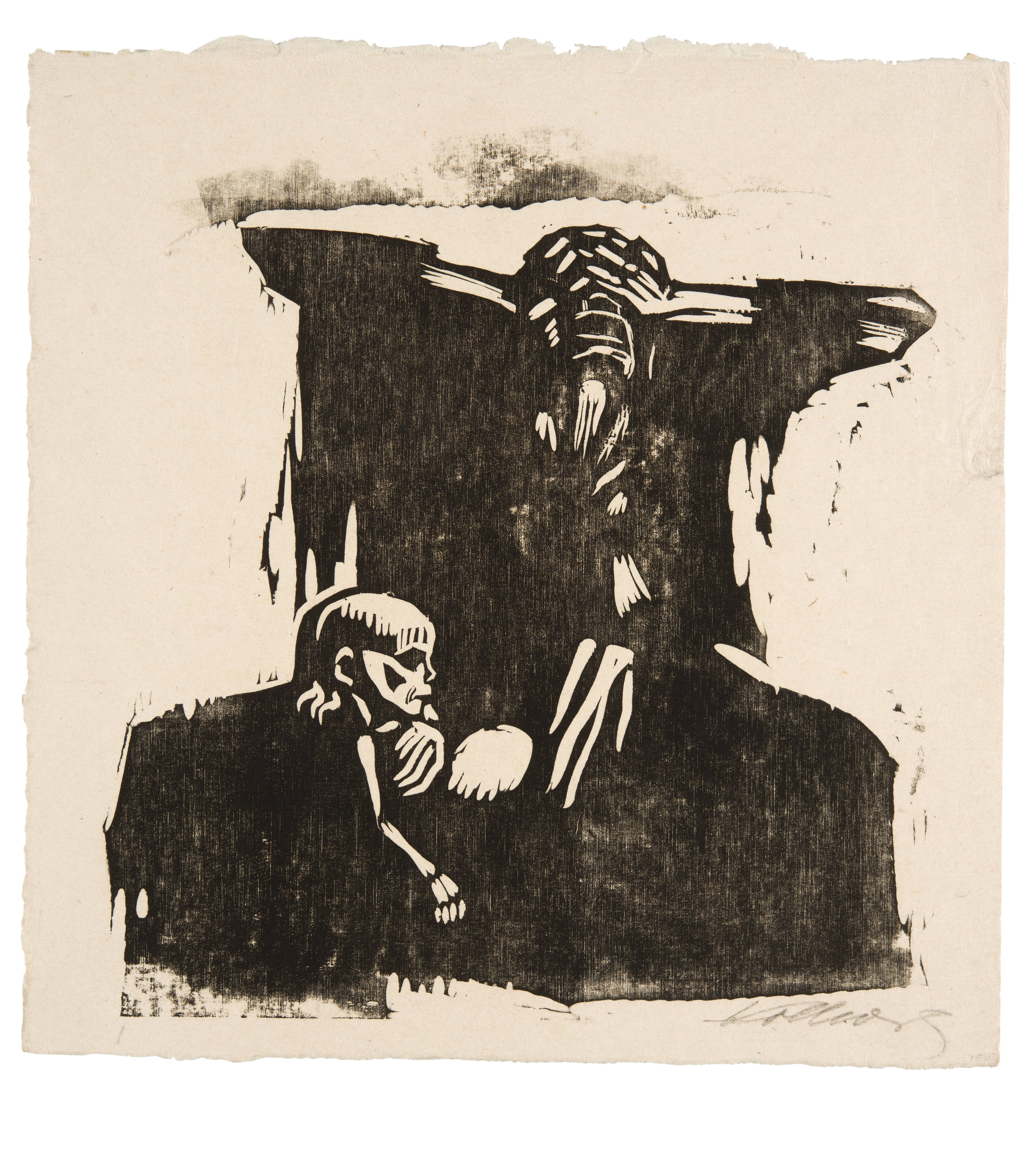
Königsberg 1867 - 1945 Moritzburg



Spring 1922
Woodcut on Japan paper
22.8x24 cm, image; 28.8x28 cm, sheet size
Lower right signed by the artist in pencil "Kollwitz", left inscribed "I"
Knesebeck 182/I (of VI)
Collection Salman Schocken, Zwickau/Jerusalem and New York
Auction Dr. Ernst Hauswedell, Hamburg, 5 June 1967, lot 833
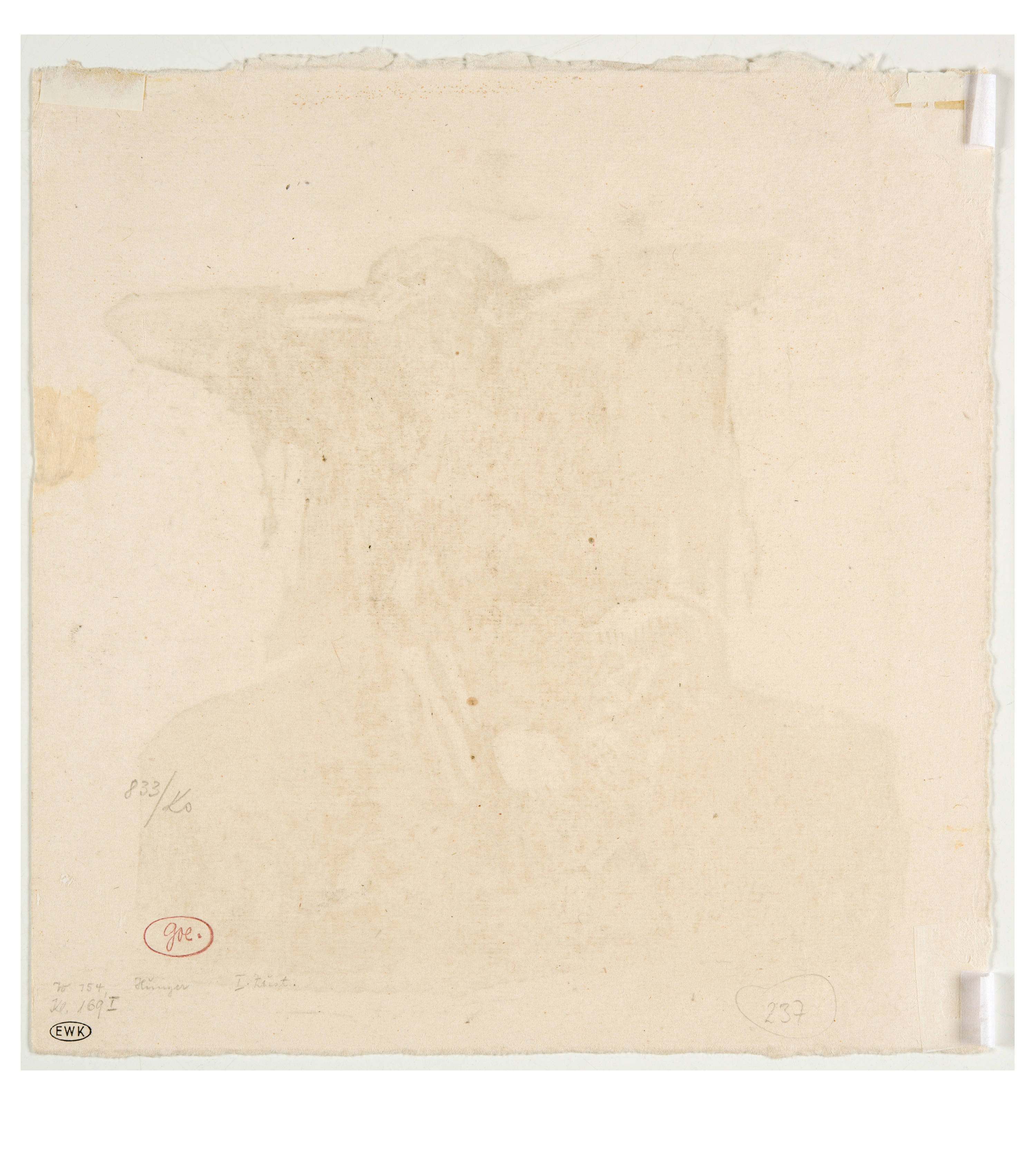
Collection Helmut Goedeckemeyer, with the collector's stamp on the reverse , Lugt 6239
Collection Eberhard W. Kornfeld, Bern, with the collector's stamp on the reverse , Lugt 913b
The thick, soft Japan paper at the right paper edge with a compressed area, this supported, here and there with minimal creases, overall in very good condition
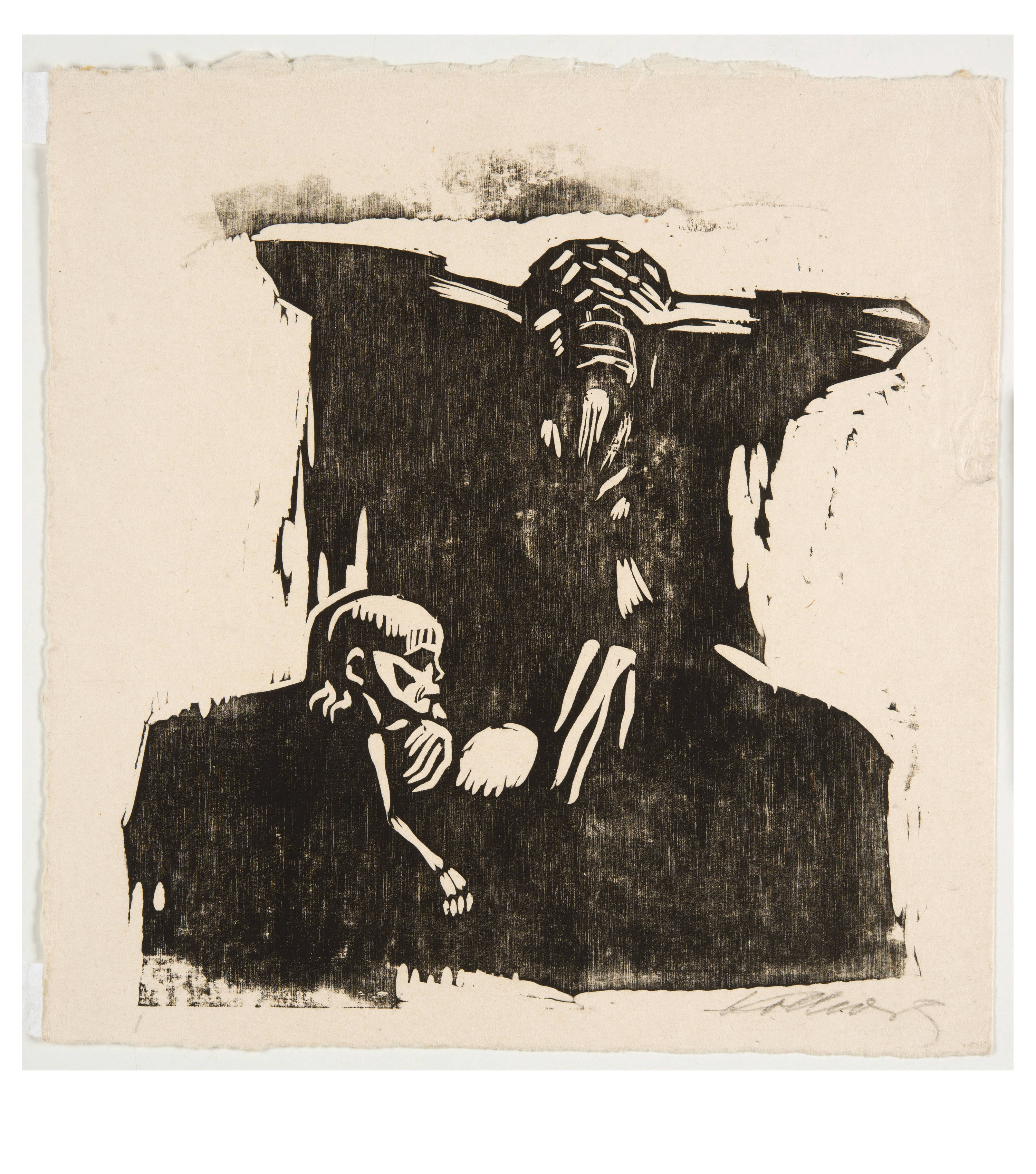
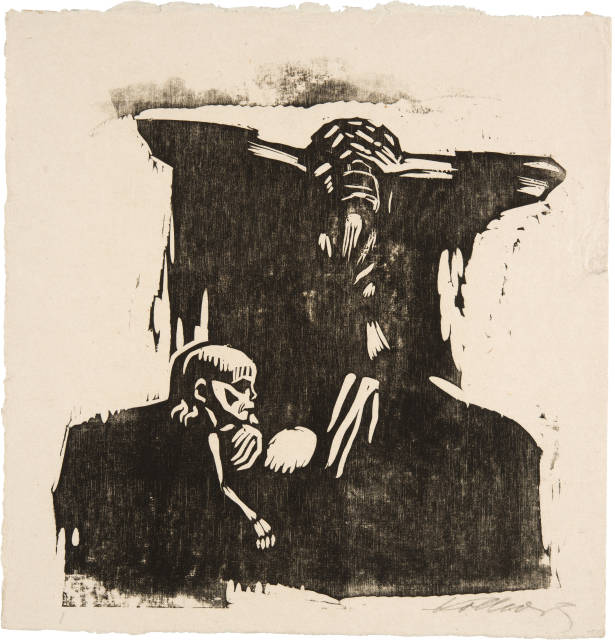
Of this deeply moving subject, Käthe Kollwitz created several variations; the author of the catalogue raisonné was able to document six states in total. We have the woodcut in the first state. This is extremely rare and is distinguished by the fact that it precedes all woodcut lettering and the elaboration of the mother's ribs and right breast. The lower edge of the woodblock is still almost straight and shows an indentation beneath the child's body. There are only three copies of this early impression in total, including the present one. "Hunger" powerfully expresses the despair of a mother who does not have enough to eat for herself and her child.
Frühjahr 1922
Holzschnitt auf Japan
22,8x24 cm, Darstellung; 28,8x28 cm, Blattgrösse
Unten rechts von der Künstlerin in Bleistift signiert "Kollwitz", links bezeichnet "I"
Knesebeck 182/I (v. VI)
Slg. Salman Schocken, Zwickau/Jerusalem und New York
Auktion Dr. Ernst Hauswedell, Hamburg, 5. Juni 1967, Los 833
Slg. Helmut Goedeckemeyer, rückseitig mit dem Sammlerstempel, Lugt 6239
Slg. Eberhard W. Kornfeld, Bern, rückseitig mit dem Sammlerstempel, Lugt 913b
Das dicke, weiche Japan am rechten Papierrand mit einer gestauchten Stelle, diese hinterlegt, vereinzelt mit minimen Knittern, insgesamt in sehr schöner Erhaltung
Von diesem zutiefst erschütternden Sujet hat Käthe Kollwitz mehrere Varianten geschaffen, insgesamt konnte die Autorin des Werkverzeichnisses sechs Zustände nachweisen. Uns liegt der Holzschnitt im I. Zustand vor. Dieser ist äusserst selten und zeichnet sich dadurch aus, dass er noch vor aller in Holz geschnittener Schrift und vor der Ausarbeitung der Rippen und der rechten Brust der Mutter ist. Der untere Abschlussrand des Holzstockes ist noch fast gradlinig und weist unter dem Körper des Kindes eine Einbuchtung auf. Es gibt insgesamt nur drei Exemplare dieses frühen Abzugs, der vorliegende eingeschlossen. "Hunger" bringt die Verzweiflung einer Mutter, nicht genug für sich und ihr Kind zum Essen zu haben, auf eindrückliche Weise zum Ausdruck.
| Suisse | CHF | 150 |
| Europe | CHF | 250 |
| USA | CHF | 320 |
| Outre-mer | CHF | 325 |