- FR


 S’inscrire
-
- Ventes Classiques
- Ventes passées
- Plus
- Acheter
- Vendre
- Plus
- Galerie
- Commerce d'art
- Maison d'Édition
- Kornfeld aujourd’hui
- L'histoire de la Maison
- Informations


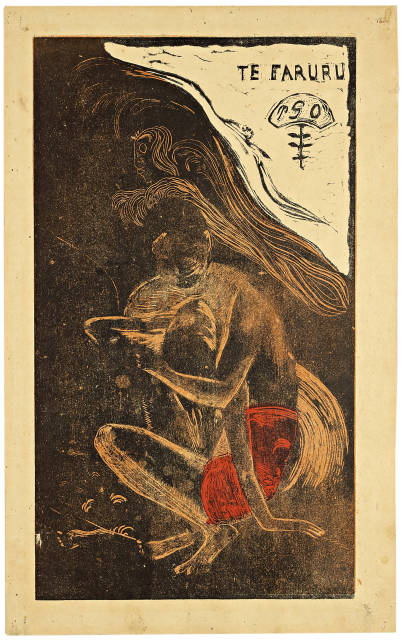







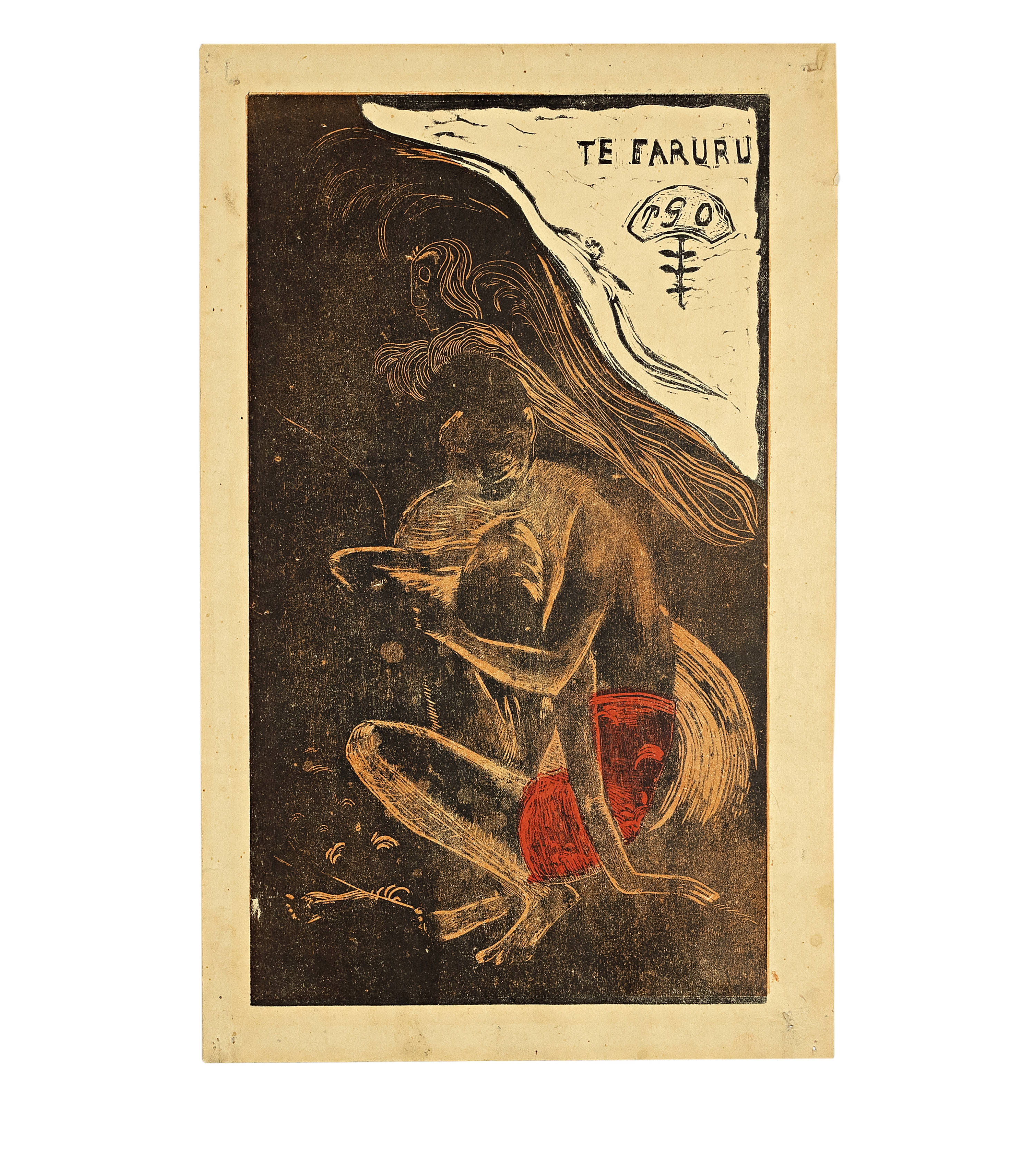
Paris 1848 - 1903 Hiva-Hoa (Marquesas)



Paris, winter 1893/1894
Colour woodcut on strong Japan paper
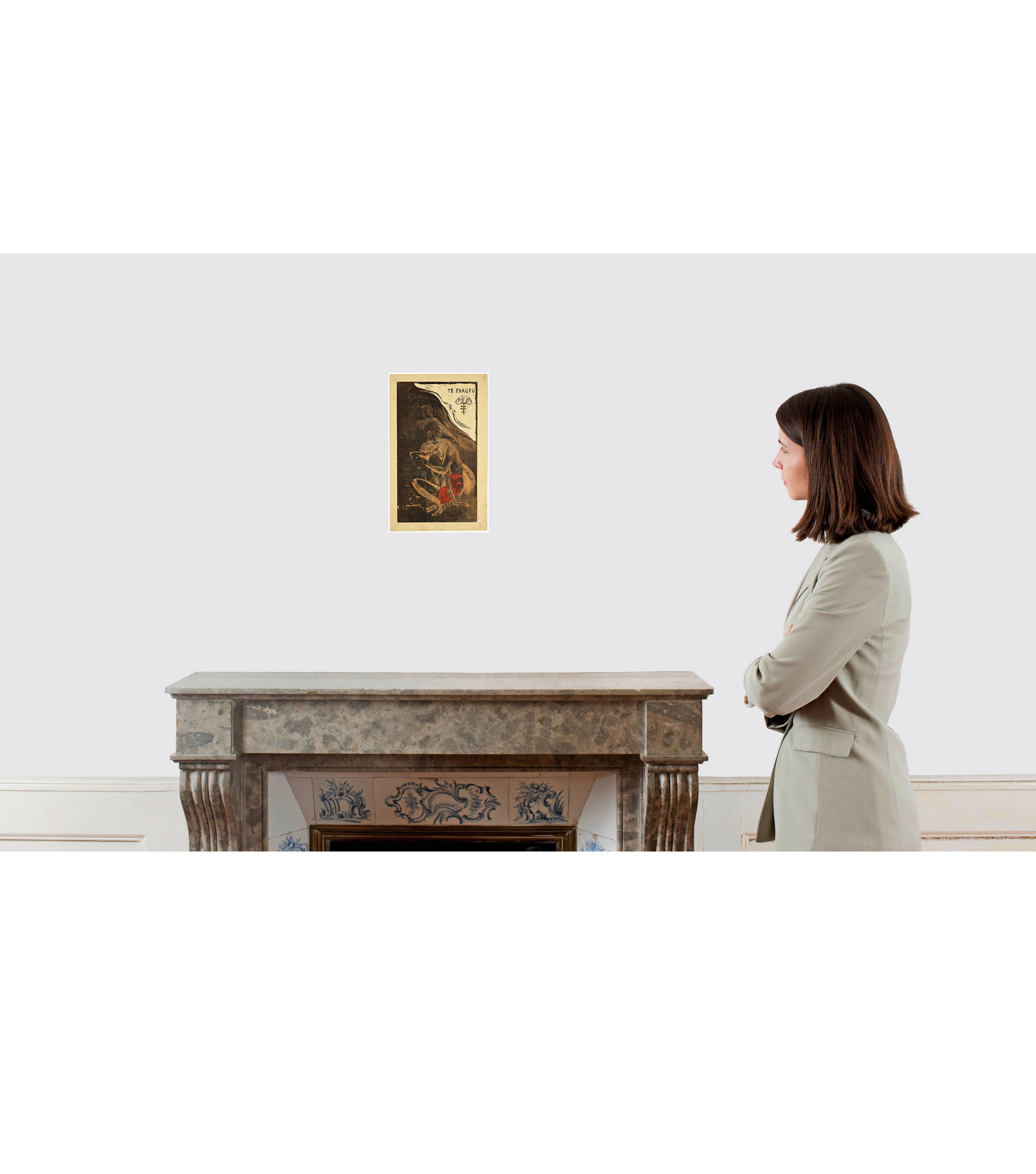
35.7x20.4 cm, printing block; 39.8x24.9 cm, sheet size
Mongan/Kornfeld/Joachim 15/V (of VI/C/c)
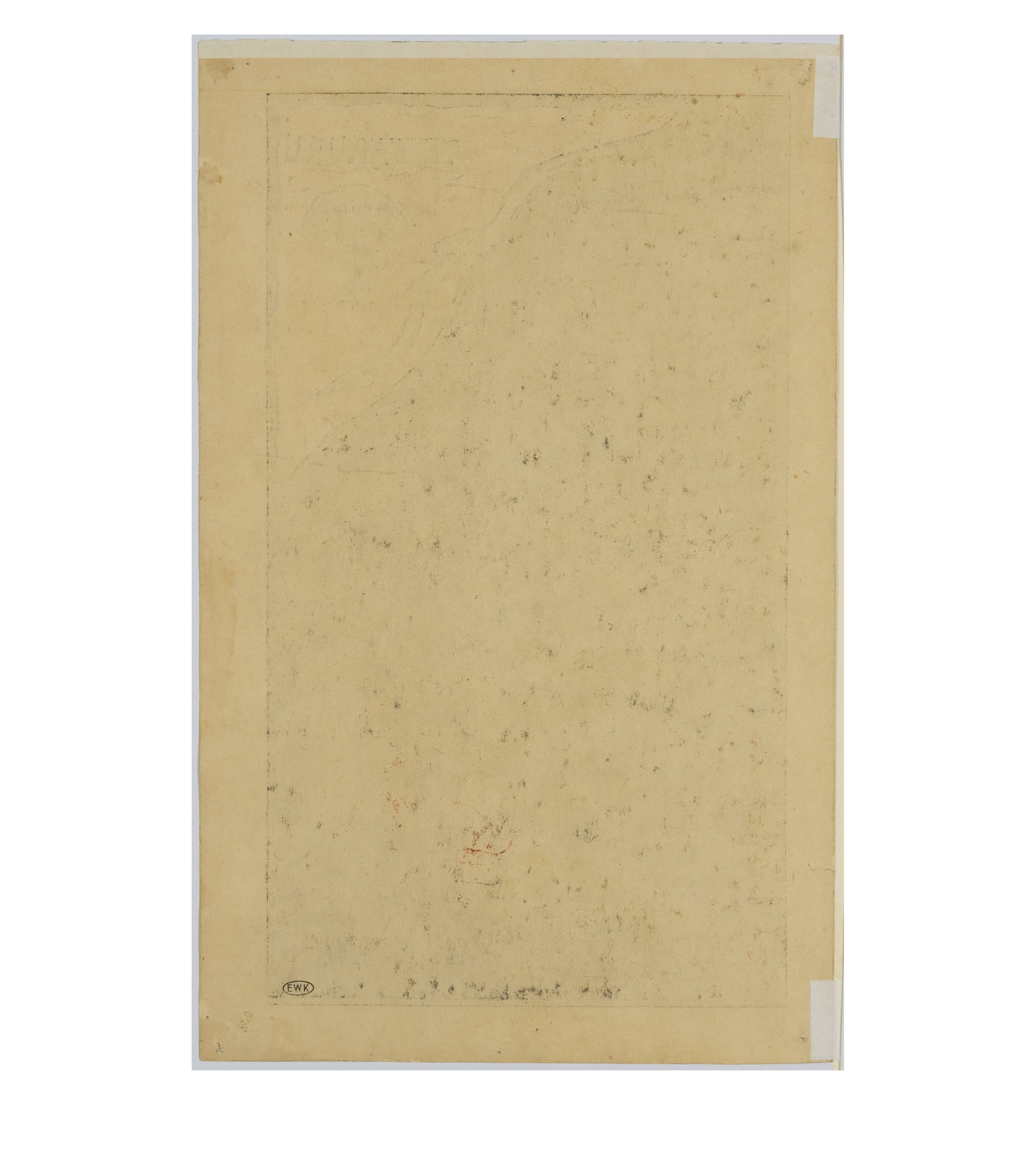
The Eberhard W. Kornfeld Collection, Bern, with the collector's stamp on the reverse , Lugt 913b
With pinholes in the corners and at the edge, slightly stained, on the reverse with traces of old mounting, overall in good print quality and condition, with wide paper margin
In August 1893, Paul Gauguin returned to Paris from his first trip to Tahiti and planned to record his experiences in a book. In a letter to his wife from October 1893, he wrote: "Je prépare en outre un livre sur Tahiti et qui sera très utile pour faire comprendre ma peinture. Que de travail." In exchange with the writer Charles Morice, he worked during the winter of 1893/1894 on the texts that were to appear under the title "Noa Noa", and for this purpose he created a series of ten woodcuts in which he artistically captured his impressions, all created in the same format. From this series, which was planned as a special edition, Gauguin himself pulled individual trial proofs, but entrusted the printing of the edition, which was originally limited to 25 to 30 copies, to his artist friend Louis Roy. The planned book was never realized in this form; however, the manuscript "Noa Noa. Voyage de Tahiti" is known, which is now in the Louvre in Paris.
The present sheet "Te Faruru" is a print by Louis Roy in black, orange, and red. Scholars assume that it is the last sheet of the series. Depicted is an intimate love scene on the beach. Above the man's head floats an angelic spirit, and the artist's initials are carved into a tree. The upper right corner is not printed in color. The authors of the catalogue raisonné were able to identify 18 impressions of the fifth state of this sheet, all printed by Louis Roy in similar coloring.
Paris, Winter 1893/1894
Farbholzschnitt auf festem Japan
35,7x20,4 cm, Druckstock; 39,8x24,9 cm, Blattgrösse
Mongan/Kornfeld/Joachim 15/V (v. VI/C/c)
Slg. Eberhard W. Kornfeld, Bern, rückseitig mit dem Sammlerstempel, Lugt 913b
Mit Reissnagellöchern in den Ecken und am Rand, leicht fleckig, rückseitig mit Spuren einer alten Montierung, insgesamt in guter Druckqualität und Erhaltung, mit breitem Papierrand
Im August 1893 kam Paul Gauguin von seiner ersten Tahiti-Reise nach Paris zurück und plante seine Erlebnisse in einem Buch festzuhalten. In einem Brief an seine Frau vom Oktober 1893 schrieb er: "Je prépare en outre un livre sur Tahiti et qui sera très utile pour faire comprendre ma peinture. Que de travail." Im Austausch mit dem Schriftsteller Charles Morice arbeitete er im Winter 1893/1894 an den Texten, die unter dem Titel "Noa Noa" erscheinen sollten, dazu schuf er eine Reihe von zehn Holzschnitten, in denen er seine Eindrücke künstlerisch festhielt, alle im gleichen Format geschaffen. Von dieser Reihe, die als Vorzugsausgabe geplant war, zog Gauguin einzelne Probedrucke selbst ab, übergab den Druck der Auflage, die ursprünglich auf 25 bis 30 Exemplare limitiert war, jedoch seinem Künstlerfreund Louis Roy. Das geplante Buch wurde in dieser Form nie realisiert, bekannt ist jedoch das Manuskript "Noa Noa. Voyage de Tahiti", das sich heute im Louvre in Paris befindet.
Bei dem vorliegenden Blatt "Te Faruru" handelt es sich um einen Druck von Louis Roy in Schwarz, Orange und Rot. Die Forschung geht davon aus, dass es sich um das letzte Blatt der Folge handelt. Dargestellt ist eine intime Liebesszene am Strand. Über dem Kopf des Mannes schwebt ein engelhafter Geist und in einem Baum sind die Initialen des Künstlers eingeritzt. Die rechte obere Ecke ist farblich nicht bedruckt. Die Autoren des Werkverzeichnisses konnten von diesem Blatt 18 Drucke des V. Zustands nachweisen, alle wurden von Louis Roy in ähnlicher Farbgebung gedruckt.
| Suisse | CHF | 130 |
| Europe | CHF | 200 |
| USA | CHF | 250 |
| Outre-mer | CHF | 255 |