- FR


 S’inscrire
-
- Ventes Classiques
- Ventes passées
- Plus
- Acheter
- Vendre
- Plus
- Galerie
- Commerce d'art
- Maison d'Édition
- Kornfeld aujourd’hui
- L'histoire de la Maison
- Informations


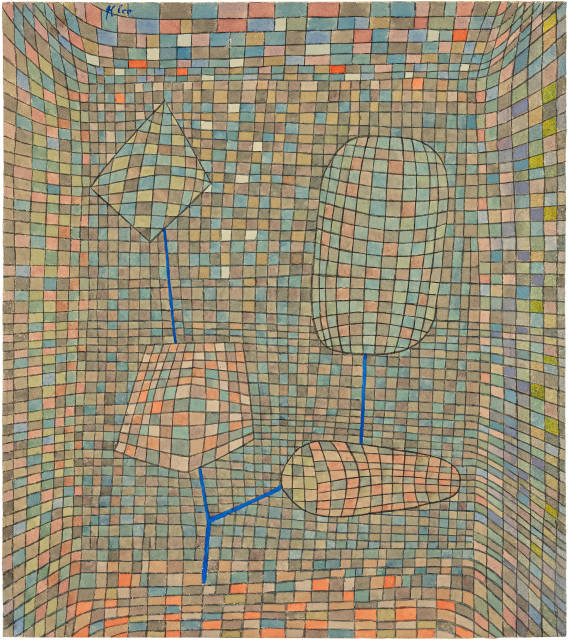







Münchenbuchsee bei Bern 1879 - 1940 Muralto


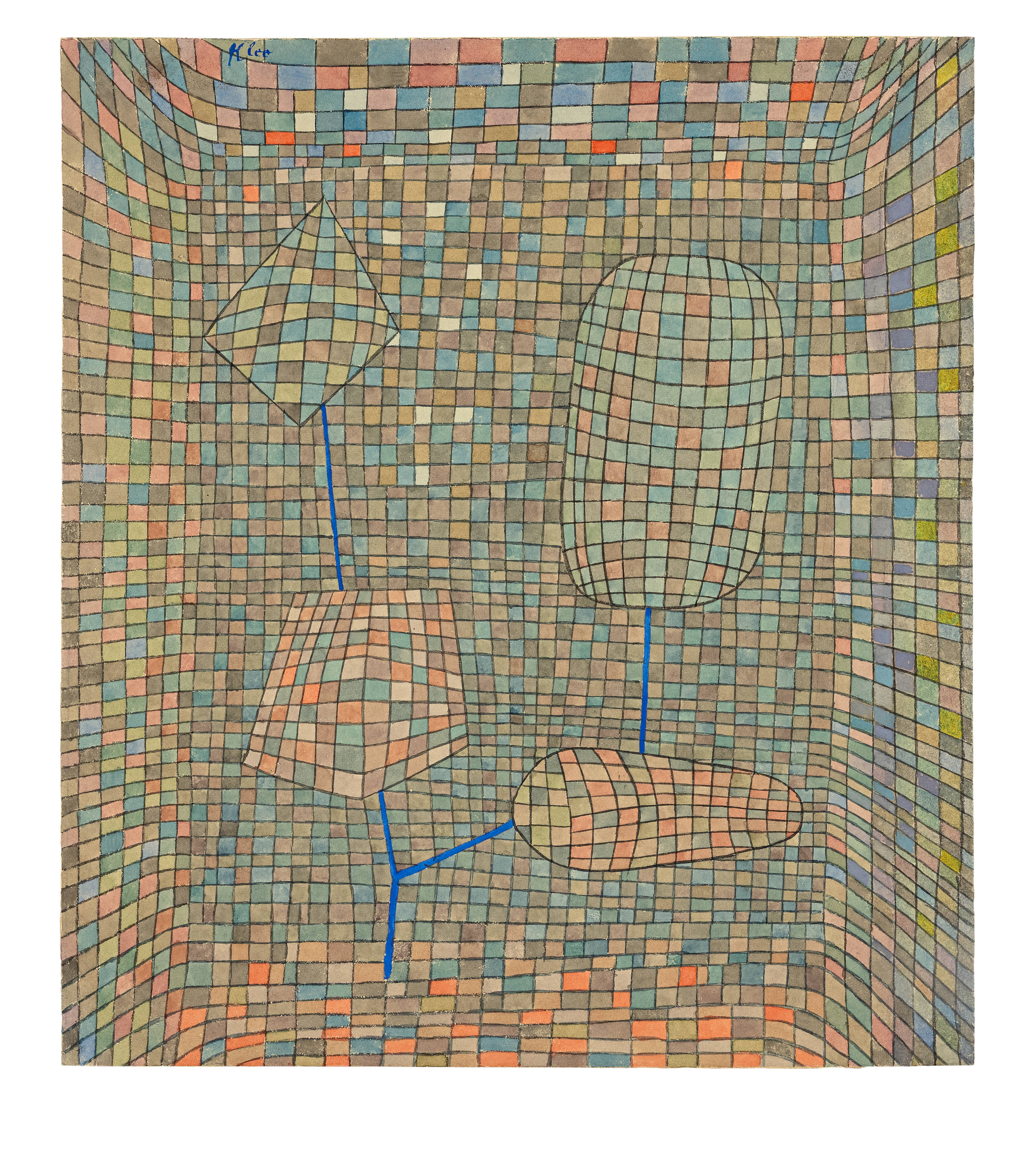
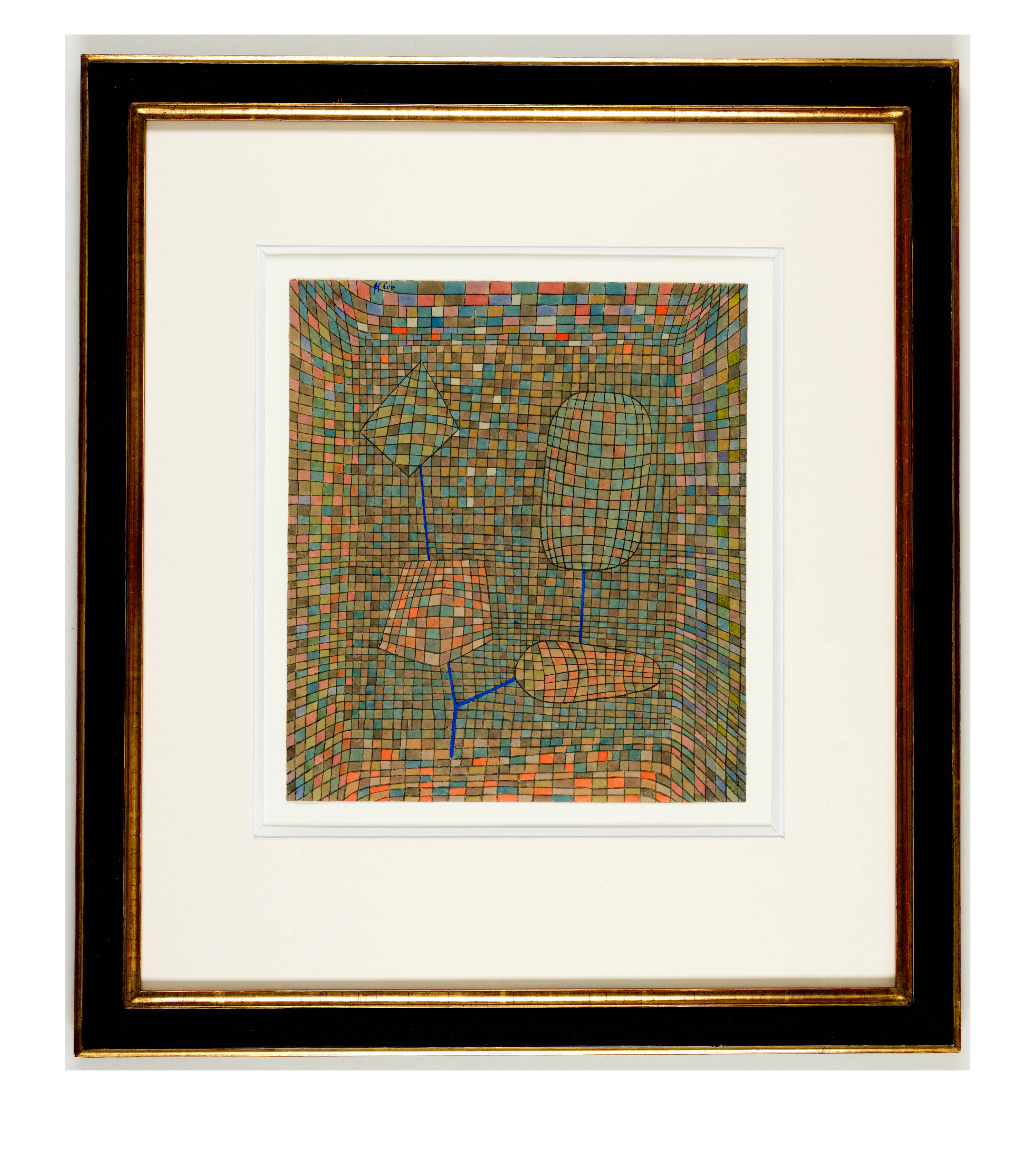
1934. Work number 1934.7
Watercolour and gouache on paper
32.2x28.4 cm
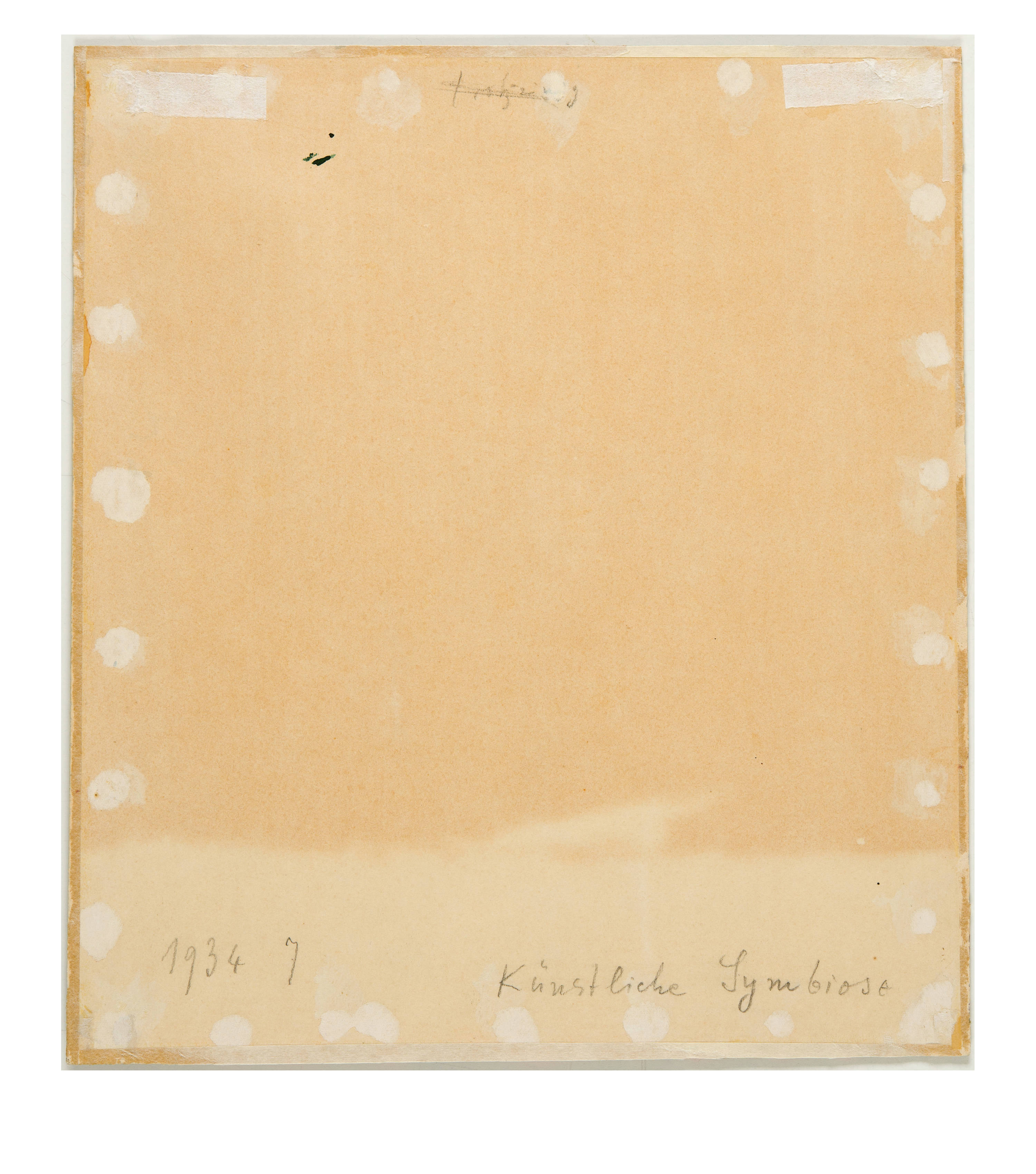
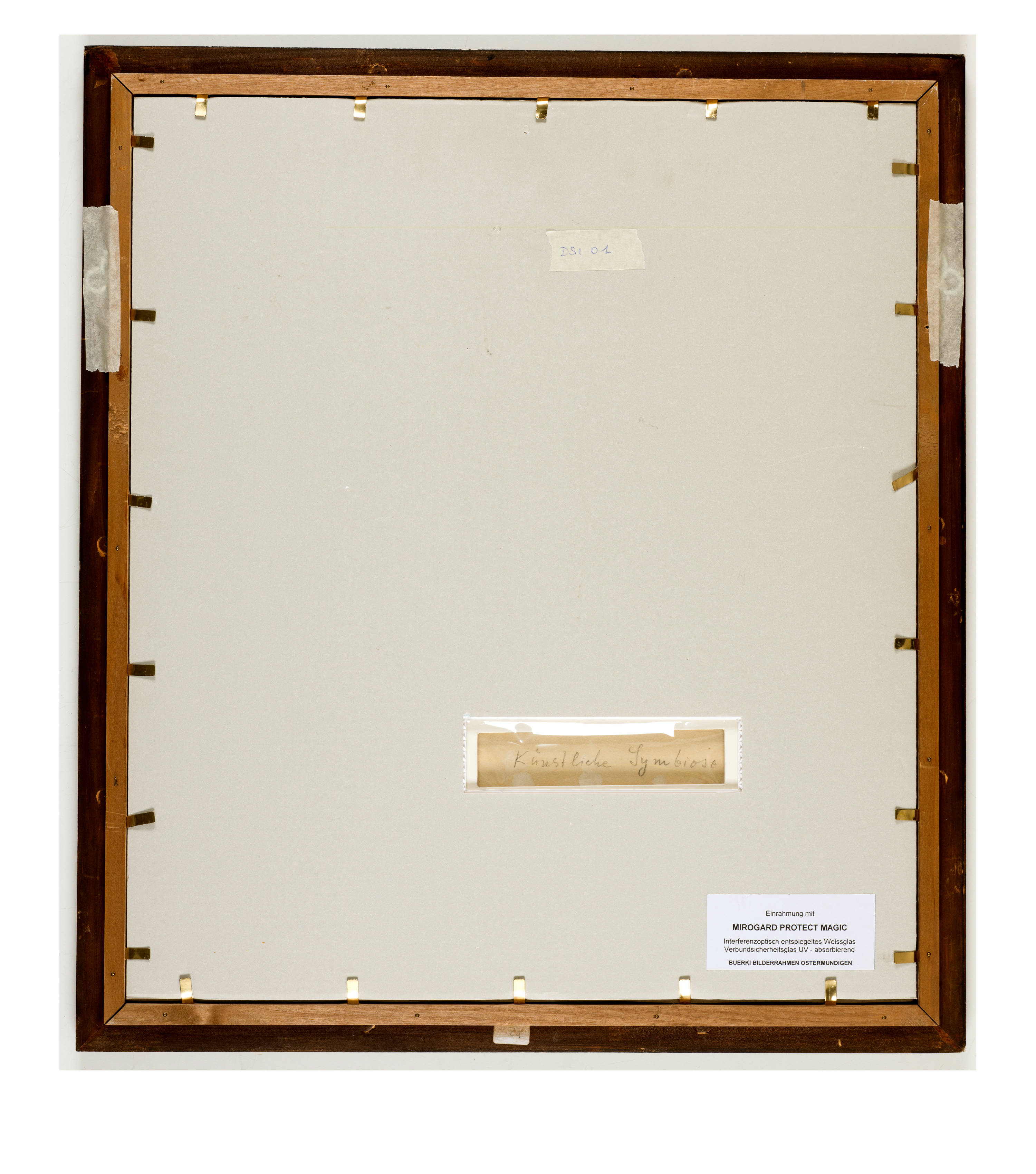
Upper left within the image signed by the artist in pen and ink 'Klee', on the reverse lower left inscribed in pencil with the work number '1934.7', lower right titled 'Künstliche Symbiose'
Paul Klee Stiftung, Catalogue raisonné, Werke 1934-1938, Bern 2003, vol. 7, no. 6545
Daniel-Henry Kahnweiler, Paris (until 1937)
Karl Nierendorf, Cologne/Berlin/New York (1937-1938)
Galka E. Scheyer, Brunswick/New York/San Francisco/Hollywood (from 1938)
Earl Stendhal Gallery, Los Angeles
Eugen Victor Thaw & Co., New York
Sidney Berkowitz (until 1973)
Auction Galerie Kornfeld, Bern, 20 June 1973, lot 420
Yasuji Hatano, Tokyo (until 1999)
Auction Galerie Kornfeld, Bern, 25 June 1999, lot 82, acquired there by
Private collection, Switzerland, by inheritance to
Private collection, Switzerland
Richard Verdi, Klee and Nature, London 1984, p. 195f.
Christian Rümelin, Klees Umgang mit seinem eigenen Œuvre, in: Paul Klee, Jahre der Meisterschaft 1917-1933, Balingen/Munich/London/New York 2001, p. 21-37, 218
Zentrum Paul Klee, Bern (ed.), Paul Klee, Leben und Werk, Ostfildern 2012, p. 265
Marie Kakinuma, Paul Klees Rezeption im heutigen Japan, in: Vom Japonismus zu Zen, Paul Klee und der Ferne Osten, Bern/Cologne/Zurich 2013/2014, p. 130
Michael Baumgartner, Work Processes and Retrospection, in: The EY Exhibition - Paul Klee, Making Visible, London 2014, p. 207
Prague 1936, Budova Mánesa, Mezinárodní Výstava I., cat. no. 26
Copenhagen 1937, Den frie Udstillings bygning, Efter-Expressionisme, Abstrakt Kunst, Neoplasticisme, Surrealisme, cat. no. 50
San Francisco 1939, Museum of Modern Art, Paul Klee, without cat. no.
Los Angeles 1940, Stendhal Galleries, Sixty Years Anniversary Exhibition with Recent Works of Paul Klee, without cat. no.
New York 1941, Nierendorf Gallery, Paul Klee, cat. no. 27
Cincinnati 1942, Art Museum, Paintings by Paul Klee and Mobiles and Stabiles by Alexander Calder
Bern 2006/2007, Zentrum Paul Klee, Paul Klee, Melodie und Rhythmus, p. 175
Salzburg 2008/2009, Museum der Moderne, Paul Klee, Melodie, Rhythmus, Tanz, p. 193
Bern/Cologne 2013/2014/2015, Zentrum Paul Klee/Museum für Ostasiatische Kunst, Vom Japonismus zu Zen, Paul Klee und der Ferne Osten, cat. no. 57
Bern 2021, Zentrum Paul Klee, Ich will nichts wissen, p. 99
Lille 2021/2022, Musée d'art moderne, d'art contemporain et d'art brut, cat. no. 58
The sheet was detached from the cardboard support by the artist in 1935 and inscribed on the reverse. Fresh in colours and in very good condition
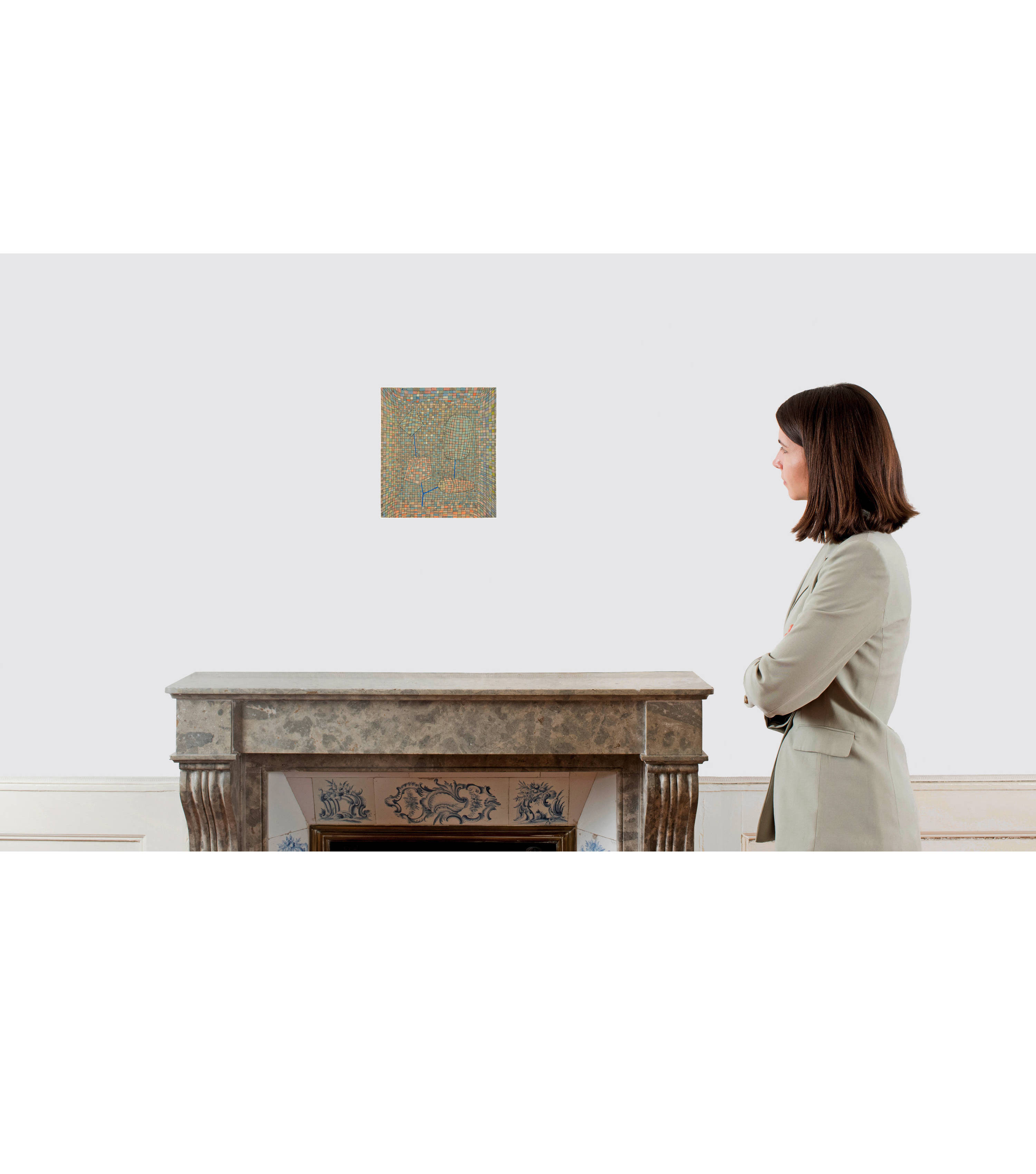
In 'Künstliche Symbiose', Paul Klee impressively combines biological metaphor with pictorial construction. The watercolour shows four shadowy, organism-like figures in a pictorial space distorted at the edges. On the right, they are organically rounded, on the left angular. The bodies are connected by a fine blue line. This graphically conceived connection appears both lively and technically mediated, as the title suggests. The composition thus becomes an 'artificial' relationship between two or four units that do not naturally belong together.
This watercolour dates from a period of political and personal upheaval. Following his time at the Bauhaus, Paul Klee became a professor at the Düsseldorf Academy of Art. With the National Socialists' rise to power at the end of January 1933, a changed understanding of art began to emerge. Ultimately, this led to the artist's summary dismissal on 21 April, as he was deemed 'politically unreliable'. Realising that he had no future in Germany, Klee vacated the Düsseldorf apartment on 23 December 1933, the same day he and his wife emigrated to Switzerland. The following year, they moved into a studio apartment on Kistlerweg in the Elfenau district of Bern.
His works from this period are often characterised by abstract, sometimes enigmatic symbolism. In 'Künstliche Symbiose', the fragile connection between individuals, systems and life forms can be interpreted as a metaphorical commentary on the artificial social constructs of the time.
Stylistically, the work is typical of Klee's middle period and belongs to the so-called mosaic pictures. These consist of closely set fields of colour - mostly rectangles or squares - that structure the image like a rhythmic grid. Inspired by music, architecture and nature, Klee creates a kind of painterly polyphony. Each colour segment acts like a note in a composition. The 'mosaic technique' allowed him to combine structure with intuitive use of colour, varying between mathematical clarity and poetic openness.
The present sheet was detached from its cardboard backing and inscribed on the reverse by the artist in preparation for the exhibition at Daniel-Henry Kahnweiler in Paris (together with numerous other works). Since 1935, the watercolour has circulated without its cardboard backing. D.-H. Kahnweiler acknowledged the consignment, among other things, with the remark: 'Es ist eine wunderschöne Serie und ich danke herzlichst dafür'.
1934. Werknummer 1934.7
Aquarell und Gouache auf Papier
32,2x28,4 cm
Oben links in der Darstellung vom Künstler in Feder in Tinte signiert "Klee", rückseitig unten links in Bleistift bezeichnet mit der Werknummer "1934.7", unten rechts betitelt "Künstliche Symbiose"
Paul Klee Stiftung, Catalogue raisonné, Werke 1934-1938, Bern 2003, Bd. 7,
Daniel-Henry Kahnweiler, Paris (bis 1937)
Karl Nierendorf, Köln/Berlin/New York (1937-1938)
Galka E. Scheyer, Braunschweig/New York/San Francisco/Hollywood (ab 1938)
Earl Stendhal Gallery, Los Angeles
Eugen Victor Thaw & Co., New York
Sidney Berkowitz (bis 1973)
Auktion Galerie Kornfeld, Bern, 20. Juni 1973, Los 420
Yasuji Hatano, Tokyo (bis 1999)
Auktion Galerie Kornfeld, Bern, 25. Juni 1999, Los 82, dort erworben von
Privatsammlung, Schweiz, durch Erbschaft an
Privatbesitz, Schweiz
Richard Verdi, Klee and Nature, London 1984, S. 195f.
Christian Rümelin, Klees Umgang mit seinem eigenen Œuvre, in: Paul Klee, Jahre der Meisterschaft 1917-1933, Balingen/München/London/New York 2001, S. 21-37, 218
Zentrum Paul Klee, Bern (Hrsg.), Paul Klee, Leben und Werk, Ostfildern 2012,
Marie Kakinuma, Paul Klees Rezeption im heutigen Japan, in: Vom Japonismus zu Zen, Paul Klee und der Ferne Osten, Bern/Köln/Zürich 2013/2014,
Michael Baumgartner, Work Processes and Retrospection, in: The EY Exhibition - Paul Klee, Making Visible, London 2014,
Prag 1936, Budova Mánesa, Mezinárodní Výstava I.,
Kopenhagen 1937, Den frie Udstillings bygning, Efter-Expressionisme, Abstrakt Kunst, Neoplasticisme, Surrealisme,
San Francisco 1939, Museum of Modern Art, Paul Klee, ohne Kat.
Los Angeles 1940, Stendhal Galleries, Sixty Years Anniversary Exhibition with Recent Works of Paul Klee, ohne Kat.
New York 1941, Nierendorf Gallery, Paul Klee,
Cincinnati 1942, Art Museum, Paintings by Paul Klee and Mobiles and Stabiles by Alexander Calder
Bern 2006/2007, Zentrum Paul Klee, Paul Klee, Melodie und Rhythmus,
Salzburg 2008/2009, Museum der Moderne, Paul Klee, Melodie, Rhythmus, Tanz,
Bern/Köln 2013/2014/2015, Zentrum Paul Klee/Museum für Ostasiatische Kunst, Vom Japonismus zu Zen, Paul Klee und der Ferne Osten,
Bern 2021, Zentrum Paul Klee, Ich will nichts wissen,
Lille 2021/2022, Musée d'art moderne, d'art contemporain et d'art brut,
Das Blatt wurde 1935 vom Künstler von der Kartonunterlage abgelöst und rückseitig beschriftet. Farbfrisch und in sehr guter Erhaltung
In "Künstliche Symbiose" verknüpft Paul Klee auf eindrucksvolle Weise biologische Metaphorik mit bildnerischer Konstruktion. Das Aquarell zeigt vier schemenhafte, organismenähnliche Figuren in einem an den Rändern verzogenen Bildraum. Rechts sind sie organisch rund, links eckig. Die Körper sind durch eine feine, blaue Linie miteinander verbunden. Diese graphisch durchdachte Verbindung wirkt zugleich lebendig und technisch vermittelt, wie der Titel andeutet. Die Komposition wird so zu einer "künstlichen" Beziehung zwischen zwei bzw. vier Einheiten, die ursprünglich nicht zusammengehören.
Das Aquarell stammt aus einer Phase politischer und persönlicher Zäsuren. Nach seiner Tätigkeit am Bauhaus war Paul Klee Professor an der Kunstakademie Düsseldorf. Mit der Machtübernahme der Nationalsozialisten Ende Januar 1933 zeichnete sich ein verändertes Kunstverständnis ab, was schliesslich zur fristlosen Entlassung des als "politisch unzuverlässig" eingestuften Künstlers am 21. April führte. Ohne Zukunft in Deutschland wurde die Düsseldorfer Wohnung am 23. Dezember 1933 geräumt und das Ehepaar Klee emigrierte noch am selben Tag in die Schweiz. Im Jahr darauf bezogen Klees die Atelierwohnung am Kistlerweg im Berner Elfenauquartier.
Seine Arbeiten aus dieser Zeit sind oft von abstrakter, teils rätselhafter Symbolik geprägt. In "Künstliche Symbiose" lässt sich die fragile Verbindung zwischen Individuen, Systemen oder Lebensformen als metaphorischer Kommentar zu den künstlichen gesellschaftlichen Konstruktionen der Zeit deuten.
Stilistisch ist das Werk typisch für Klees mittlere Phase und gehört zu den sogenannten Mosaikbildern. Diese bestehen aus eng gesetzten Farbfeldern - meist Rechtecken oder Quadraten -, die wie ein rhythmisches Raster das Bild strukturieren. Inspiriert von Musik, Architektur und Natur, erzeugt Klee darin eine Art malerische Polyphonie. Jedes Farbsegment wirkt wie ein Ton in einer Komposition. Die "Mosaiktechnik" erlaubte es ihm, Struktur mit intuitiver Farbigkeit zu verbinden und dabei zwischen mathematischer Klarheit und poetischer Offenheit zu variieren.
Das vorliegende Blatt wurde im Hinblick auf die Ausstellung bei Daniel-Henry Kahnweiler in Paris (zusammen mit zahlreichen anderen Werken) vom Künstler von der Kartonunterlage losgelöst und rückseitig beschriftet. Seit 1935 zirkuliert das Aquarell ohne Kartonunterlage. D.-H. Kahnweiler verdankte die Sendung unter anderem mit der Bemerkung: "Es ist eine wunderschöne Serie und ich danke herzlichst dafür".
| Suisse | CHF | 130 |
| Europe | CHF | 200 |
| USA | CHF | 250 |
| Outre-mer | CHF | 255 |