- FR


 S’inscrire
-
- Ventes Classiques
- Ventes passées
- Plus
- Acheter
- Vendre
- Plus
- Galerie
- Commerce d'art
- Maison d'Édition
- Kornfeld aujourd’hui
- L'histoire de la Maison
- Informations


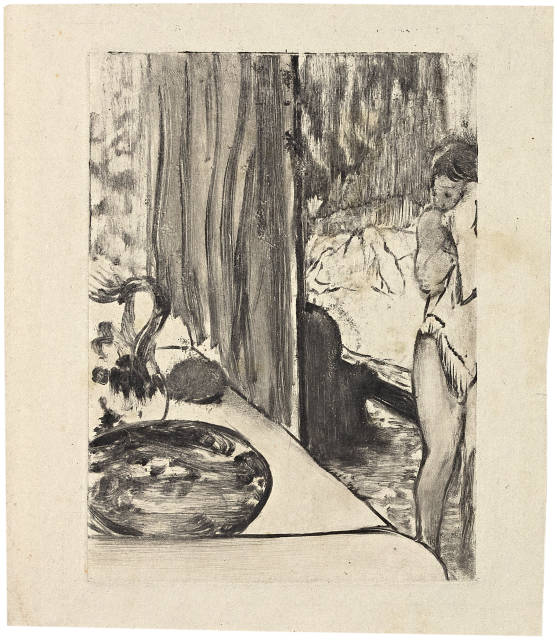







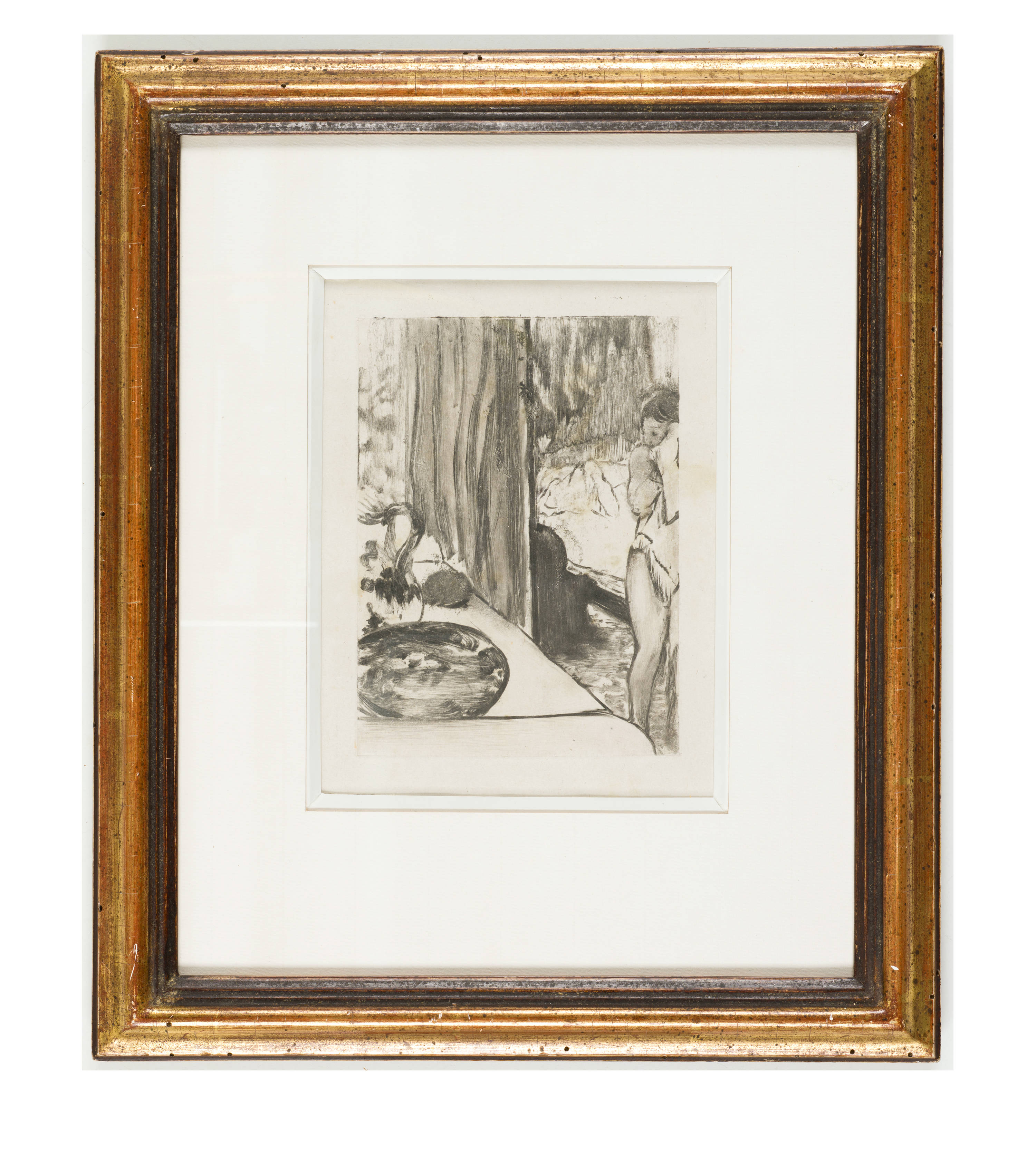
1834 Paris 1917



Circa 1879
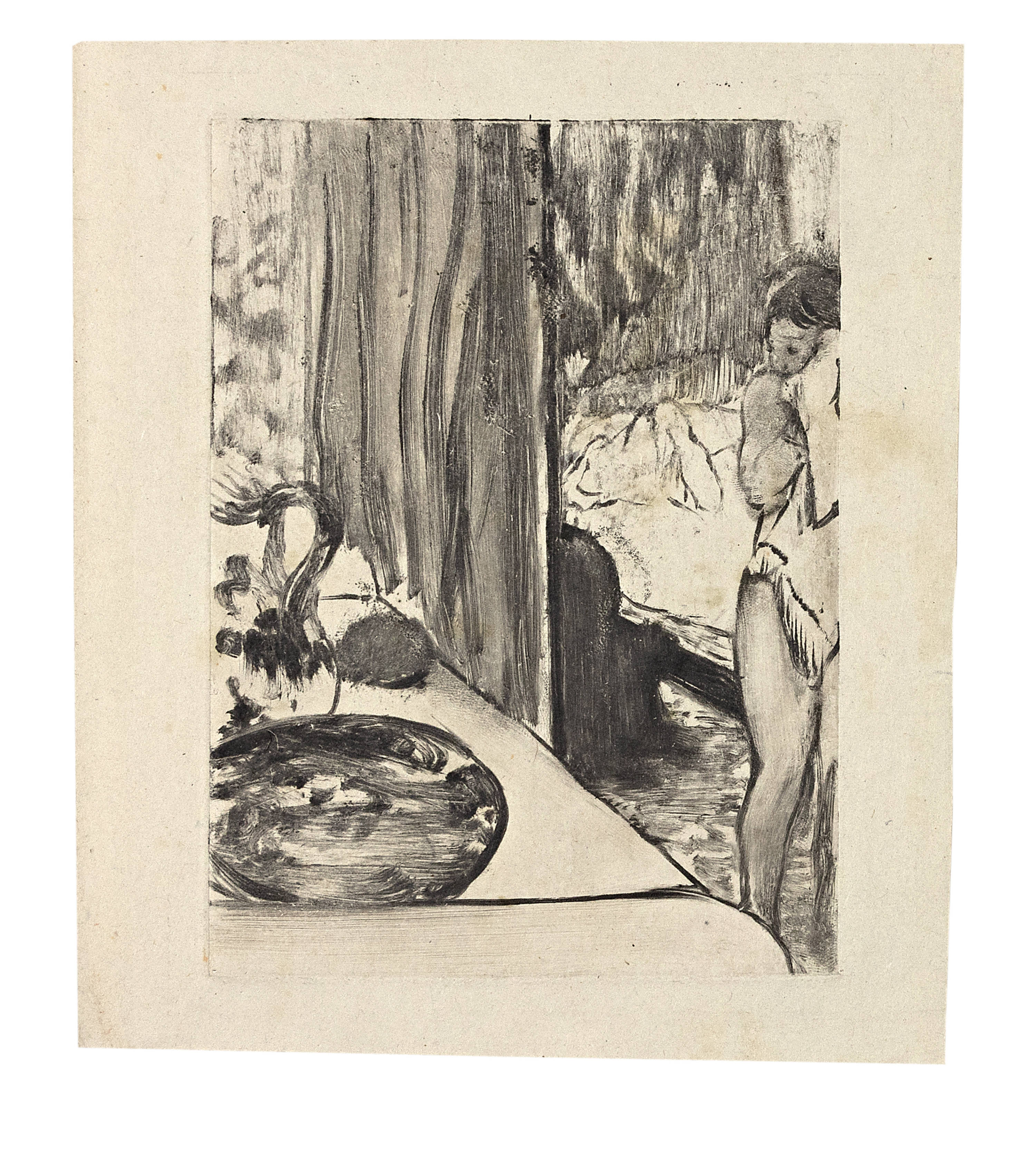
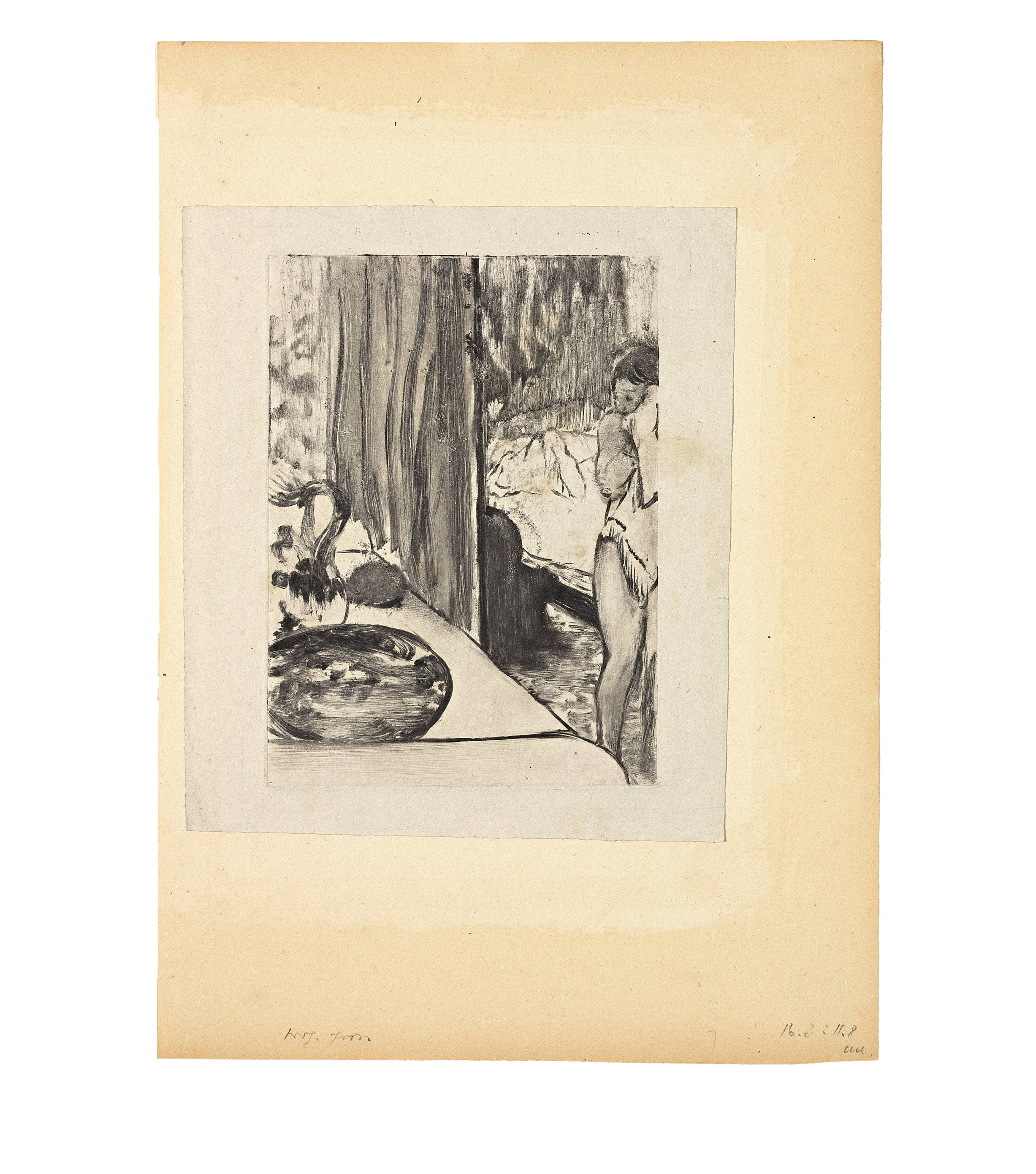
Monotype on thin china paper, mounted on support
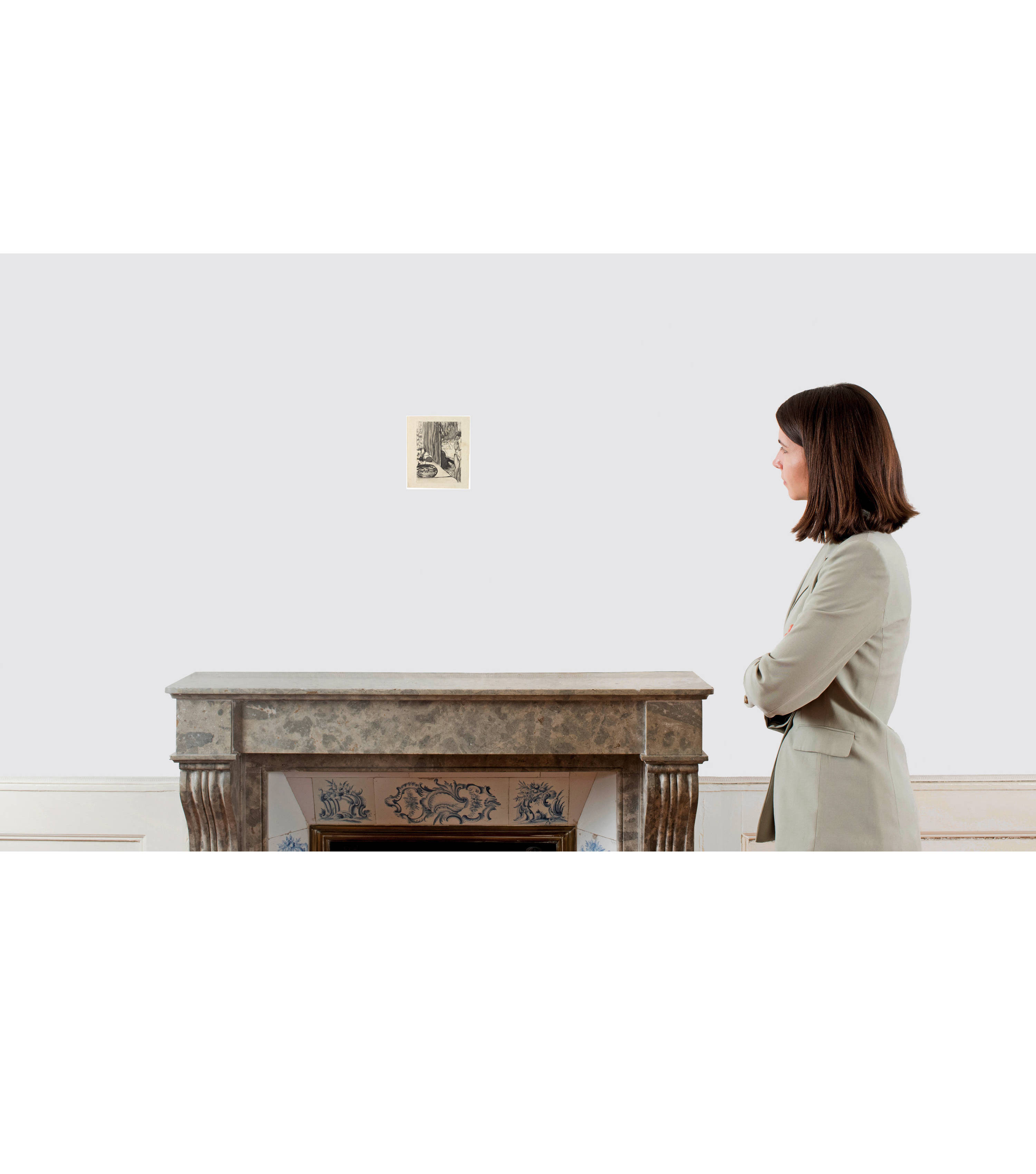
16.1x11.9 cm, plate mark; 18.9/19.3x16.7/16.3 cm, sheet size
Eugenia Parry Janis, Degas Monotypes, Essay, Catalogue & Checklist, Cambridge 1968, no. 113
Jean Adhémar/Françoise Cachin, Edgar Degas, Gravures et Monotypes, Paris 1973, no. 124
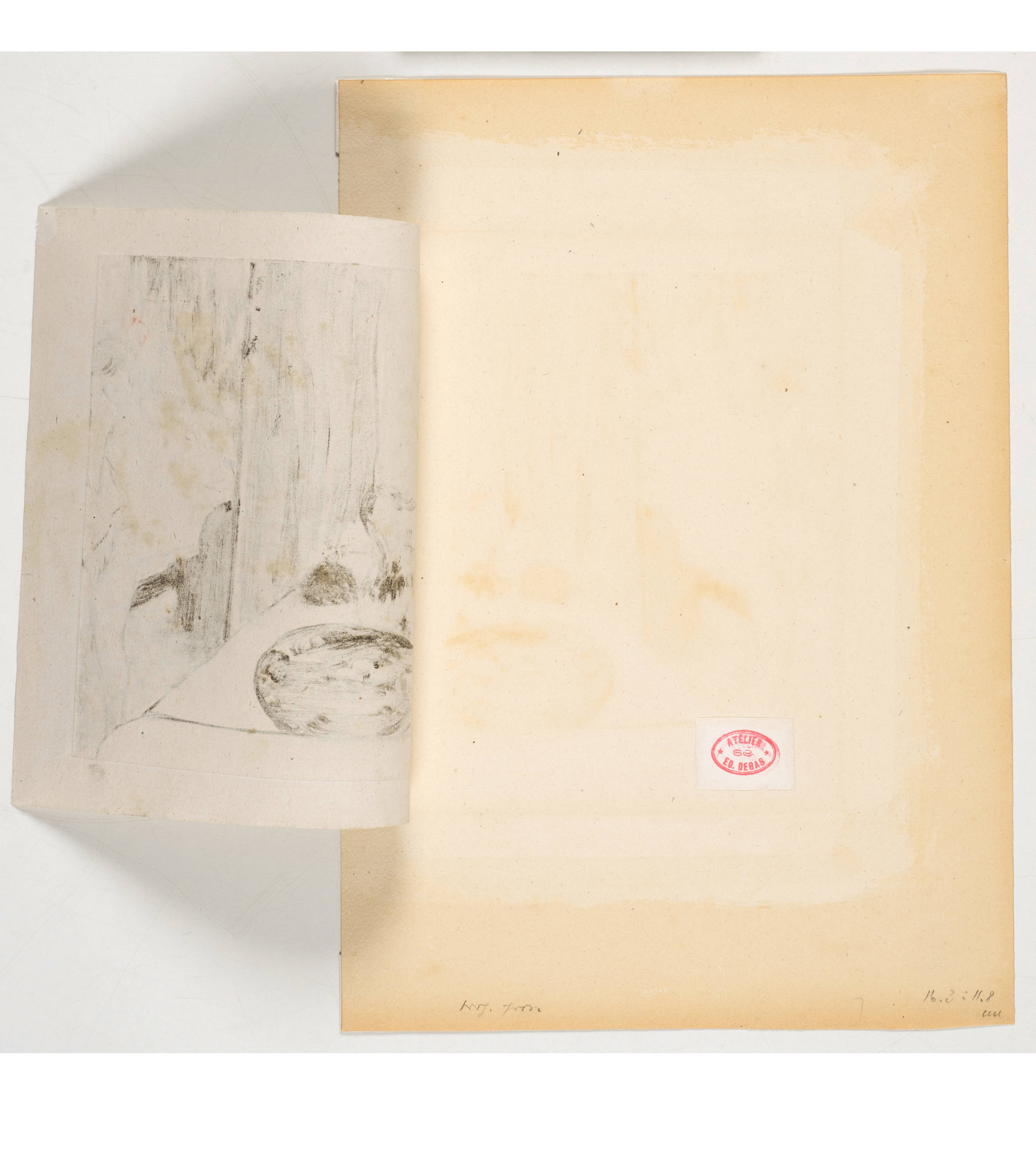
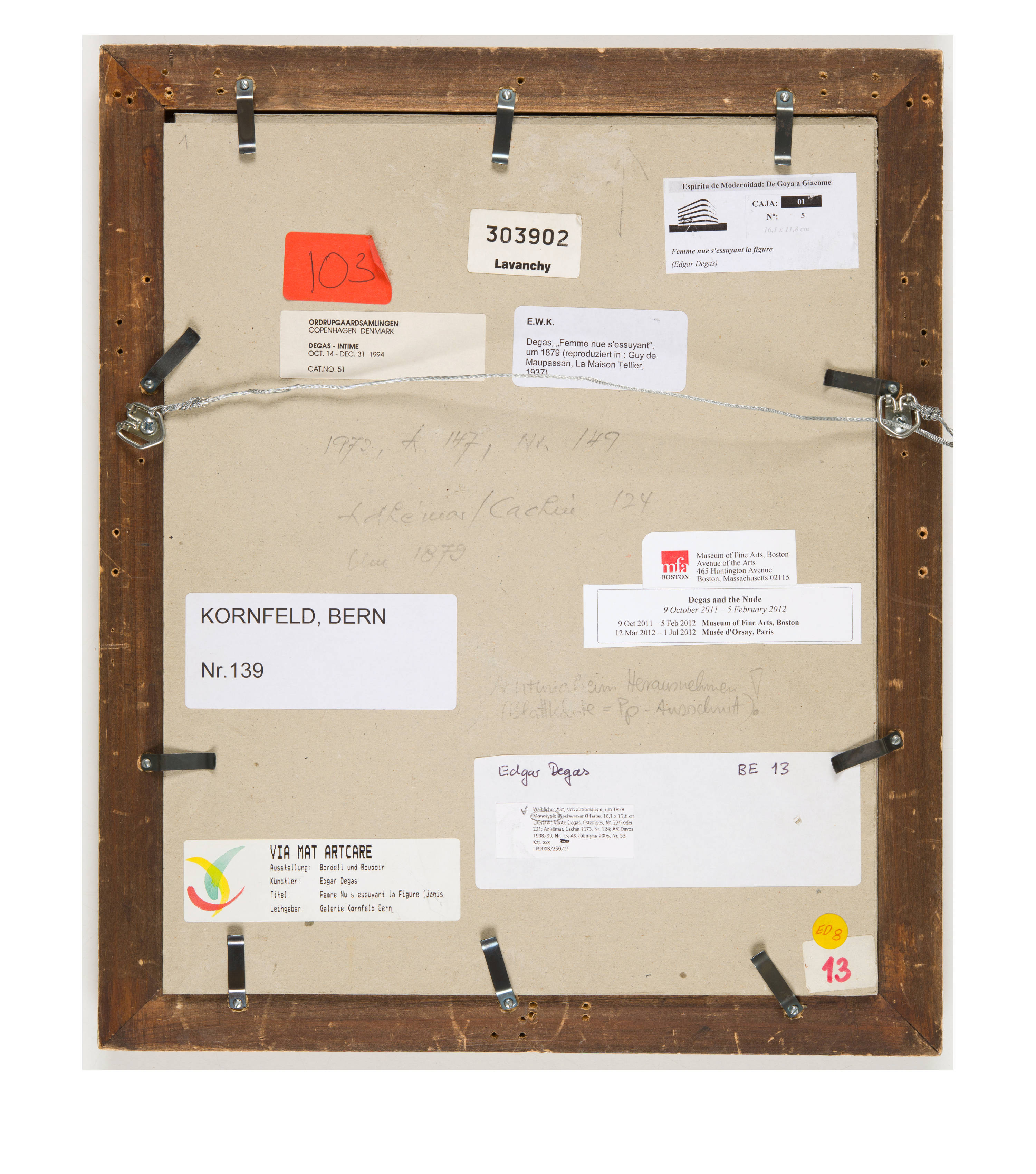
Auction Galerie Manzi-Joyant, Paris, 22-23 November 1918, Estampes par Edgar Degas, from lot 220 or 221, with the stamp of the Vente Degas on the backing, Lugt 657, acquired there by
Ambroise Vollard, Paris
Collection Edmée Maus (1905-1971), Geneva
Edwin Engelberts, Geneva, and Jean Hugues, Galerie Le Point Cardinale, Paris, sold at the
Auction Kornfeld und Klipstein, Bern, 20 June 1973, lot 149, acquired there by
The Eberhard W. Kornfeld Collection, Bern, with the collector's stamp on the backing, Lugt 913b
Guy de Maupassant, La Maison Tellier, Illustrations d'Edgar Degas, Paris, Ambroise Vollard Éditeur, 1934, fig. vis-à-vis p. 44
Eros, Volume One, Number One, Spring 1962, New York 1962, fig. p. 69
Anthony Griffiths, Degas' Monotypes, in: Degas Monotypes, London 1985, p. 6-13
Paris 1984, Centre culturel du Marais, Degas, Le modelé et l’espace, no. 283, There titled 'Femme à sa toilette'
Bern 1989, Kunstmuseum, Von Goya bis Tinguely, watercolours and drawings from a private collection [The Eberhard W. Kornfeld Collection], cat. no. 13
Martigny 1993, Fondation Pierre Gianadda, Degas, cat. no. 103
Copenhagen 1994, Ordrupgaardsamlingen, Degas intime, cat. no. 51
Madrid 2003, Fundación Juan March, Espíritu de modernidad: de Goya a Giacometti, Obra sobre papel de la colección Kornfeld, cat. no. 5
Tübingen 2005, Kunsthalle, Bordell und Boudoir, Schauplätze der Moderne, Cézanne, Degas, Toulouse-Lautrec, Picasso, cat. no. 53
Baden/Vevey 2006, Museum Langmatt/Musée Jenisch, Renoir, Cézanne, Picasso und ihr Galerist Ambroise Vollard, fig. p. 49
Vienna 2008/2009, Albertina, Wege der Moderne, from the Eberhard W. Kornfeld Collection, cat. no. 11
Baden 2011, Museum Langmatt, Baden, p. 62
Boston/Paris 2011/2012, Museum of Fine Arts/Musée d’Orsay, Degas et le nu, cat. no. 107
Karlsruhe 2014/2015, Staatliche Kunsthalle, Edgar Degas, Klassik und Experiment, cat. no. 123
New York 2016, The Museum of Modern Art, Edgar Degas: A Strange New Beauty, cat. no. 95
The ultra-thin china paper with slight stains, mounted on the left side on a wove support. The cream-coloured wove paper around the monotype sheet slightly lightened. The print overall in fine condition
Degas' oeuvre of etchings and lithographs is manageable, with just over 60 works, but monotypes play a significant role in his work. In total, Degas probably created around 400 impressions, of which 262 alone appeared in the 'Vente Degas' of 1918; see lot 118. At the exhibition at the Fogg Art Museum in Cambridge, which was dedicated to this technique, Eugenia Parry Janis was able to list 321 prints. Anthony Griffiths writes in his 1985 essay that, with the exception of Giovanni Battista Castiglione (1609-1664) and William Blake (1757-1827), there were hardly any artists before 1870 who created monotypes.
Degas brought the technique of monotype to a new peak. Thus, there are prints from a positive drawing, meaning the artist applied the lines or washes directly onto the plate with a brush. The forms were created by working with the handle or bristles of the brush, by smearing with a rag, or by dabbing with the thumb or fingers. For prints from a negative drawing, on the other hand, the plate is first covered with an even layer of paint. The motif is created by partially or completely removing the paint with rags, fine or coarse points, or the finger. Both techniques can be combined. The one thing they have in common is that it is only possible to make one good impression on paper. A second impression is never as as rich as the first, which is why monotypes are considered unique works of art.
Degas' first monotypes date from around 1875 and focus on the world of the 'Café-Concert' and the theatre. These are followed by sheets from the 'Maisons closes', the 'Danseuses', and the 'Femmes à leur toilette' created between 1878 and 1890, to which our example can be counted. The figures are shown in intimate scenes: washing, drying themselves, or combing their hair. The viewers become voyeuristic eyewitnesses to these actions. The provenance and reception of our sheet are noteworthy: Ambroise Vollard purchased a group of Degas' monotypes at the 'Vente Degas' in 1918 and used individual subjects for a book project in 1934: He illustrated Guy de Maupassant's erotic novel 'La Maison Tellier' with 35 monotypes by the artist, which were reproduced from the original templates as woodcuts or intaglio prints. It should be noted that Degas did not conceive these sheets as illustrations for this novel. According to the description in the 1973 auction catalogue, the present monotype comes from a bound copy, an 'exemplaire truffé' of 'La Maison Tellier', and is of great distinction.
Um 1879
Monotypie auf dünnem China, auf Unterlage aufgelegt
16,1x11,9 cm, Plattenkante; 18,9/19,3x16,7/16,3 cm, Blattgrösse
Eugenia Parry Janis, Degas Monotypes, Essay, Catalogue & Checklist, Cambridge 1968,
Jean Adhémar/Françoise Cachin, Edgar Degas, Gravures et Monotypes, Paris 1973,
Auktion Galerie Manzi-Joyant, Paris, 22.-23. November 1918, Estampes par Edgar Degas, aus Los 220 oder 221, rückseitig auf der Unterlage mit dem Stempel der Vente Degas, Lugt 657, dort erworben von
Ambroise Vollard, Paris
Slg. Edmée Maus (1905-1971), Genf
Edwin Engelberts, Genf, und Jean Hugues, Galerie Le Point Cardinale, Paris, verkauft an der
Auktion Kornfeld und Klipstein, Bern, 20. Juni 1973, Los 149, dort erworben von
Slg. Eberhard W. Kornfeld, Bern, rückseitig auf der Unterlage mit dem Sammlerstempel, Lugt 913b
Guy de Maupassant, La Maison Tellier, Illustrations d'Edgar Degas, Paris, Ambroise Vollard Éditeur, 1934, Abb. vis-à-vis
Eros, Volume One, Number One, Spring 1962, New York 1962,
Anthony Griffiths, Degas' Monotypes, in: Degas Monotypes, London 1985, S. 6-13
Paris 1984, Centre culturel du Marais, Degas, Le modelé et l’espace,
Bern 1989, Kunstmuseum, Von Goya bis Tinguely, Aquarelle und Zeichnungen aus einer Privatsammlung [Slg. Eberhard W. Kornfeld],
Martigny 1993, Fondation Pierre Gianadda, Degas,
Kopenhagen 1994, Ordrupgaardsamlingen, Degas intime,
Madrid 2003, Fundación Juan March, Espíritu de modernidad: de Goya a Giacometti, Obra sobre papel de la colección Kornfeld,
Tübingen 2005, Kunsthalle, Bordell und Boudoir, Schauplätze der Moderne, Cézanne, Degas, Toulouse-Lautrec, Picasso,
Baden/Vevey 2006, Museum Langmatt/Musée Jenisch, Renoir, Cézanne, Picasso und ihr Galerist Ambroise Vollard,
Wien 2008/2009, Albertina, Wege der Moderne, Aus der Sammlung Eberhard W. Kornfeld,
Baden 2011, Museum Langmatt, Baden,
Boston/Paris 2011/2012, Museum of Fine Arts/Musée d’Orsay, Degas et le nu,
Karlsruhe 2014/2015, Staatliche Kunsthalle, Edgar Degas, Klassik und Experiment,
New York 2016, The Museum of Modern Art, Edgar Degas: A Strange New Beauty,
Das hauchdünne China mit leichten Flecken, mit der linken Seite auf Velin-Unterlage montiert. Das cremefarbene Velin um das Monotypie-Blatt leicht aufgehellt. Der Druck insgesamt in sehr schöner Erhaltung
Degas' Œuvre an Radierungen und Lithographien ist mit über 60 Arbeiten überschaubar, die Monotypien spielen jedoch eine bedeutende Rolle in seinem Werk. Gesamthaft hat Degas wohl ca. 400 Abzüge geschaffen, wovon 262 allein in der "Vente Degas" von 1918 figurierten, vgl. Los 118. Anlässlich der Ausstellung im Fogg Art Museum in Cambridge, die dieser Technik gewidmet war, konnte Eugenia Parry Janis 321 Drucke aufführen. Anthony Griffiths schreibt in seinem 1985 erschienenen Aufsatz, dass es mit Ausnahme von Giovanni Battista Castiglione (1609-1664) und William Blake (1757-1827) kaum Künstler vor 1870 gab, die Monotypien schufen.
Degas führte die Technik der Monotypie zu einem neuen Höhepunkt. So existieren Drucke von einer Positivzeichnung, das heisst, der Künstler trug die Linien oder Lavierungen mit dem Pinsel direkt auf die Platte auf. Die Formen entstanden durch die Bearbeitung mit einem Pinselstiel oder den Borsten, durch Verschmieren mit einem Lappen oder durch Tupfen mit dem Daumen oder den Fingern. Bei Drucken von einer Negativzeichnung hingegen wird die Platte zuerst mit einer gleichmässigen Farbschicht bedeckt. Das Motiv entsteht durch teilweises oder vollständiges Entfernen der Farbe mit Lappen, feinen oder groben Spitzen oder dem Finger. Beide Techniken können kombiniert werden. Ihnen gemeinsam ist, dass jeweils nur ein guter Abzug auf Papier möglich ist. Ein zweiter Abzug ist nicht mehr so satt wie der erste, weshalb Monotypien wie Unikate zu betrachten sind.
Die ersten Monotypien Degas' stammen aus der Zeit um 1875 und thematisieren die Welt des "Café-Concert" und des Theaters. Es folgen die Blätter aus den "Maisons closes", die "Danseuses" sowie die zwischen 1878 und 1890 entstandenen "Femmes à leur toilette", zu denen unser Exemplar gezählt werden kann. Die Figuren werden in intimen Szenen dargestellt: beim sich Waschen, sich Abtrocknen oder sich Kämmen. Die Betrachtenden werden zu voyeuristischen Augenzeugen dieser Handlungen. Erwähnenswert ist die Provenienz und Rezeption unseres Blattes: Ambroise Vollard kaufte an der "Vente Degas" 1918 eine Gruppe von Degas' Monotypien und verwendete einzelne Sujets für ein Buchprojekt im Jahr 1934: Er illustrierte Guy de Maupassants erotischen Roman "La Maison Tellier" mit 35 Monotypien des Künstlers, die nach den Originalvorlagen als Holzschnitt oder als Tiefdruck reproduziert wurden. Zu erwähnen ist, dass Degas diese Blätter nicht als Illustrationen zu diesem Roman konzipiert hatte. Die vorliegende Monotypie stammt laut der Beschreibung im Auktionskatalog von 1973 von einem gebundenen Exemplar, einem "exemplaire truffé" von "La Maison Tellier", und ist von grosser Besonderheit.
| Suisse | CHF | 130 |
| Europe | CHF | 200 |
| USA | CHF | 250 |
| Outre-mer | CHF | 255 |