- FR


 S’inscrire
-
- Ventes Classiques
- Ventes passées
- Plus
- Acheter
- Vendre
- Plus
- Galerie
- Commerce d'art
- Maison d'Édition
- Kornfeld aujourd’hui
- L'histoire de la Maison
- Informations


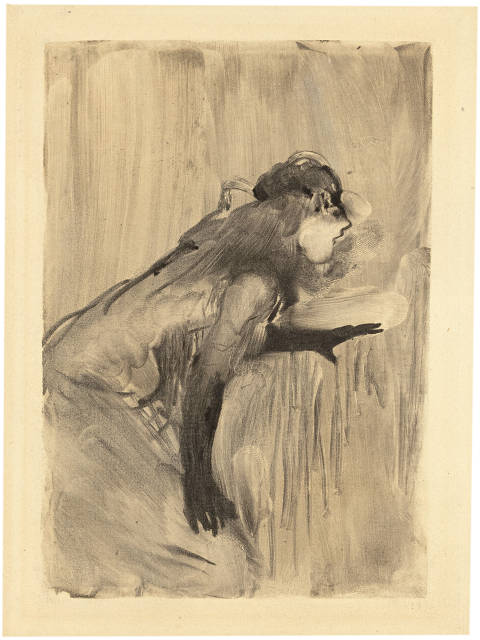







1834 Paris 1917



1877-1878
Monotype on laid paper, mounted on support
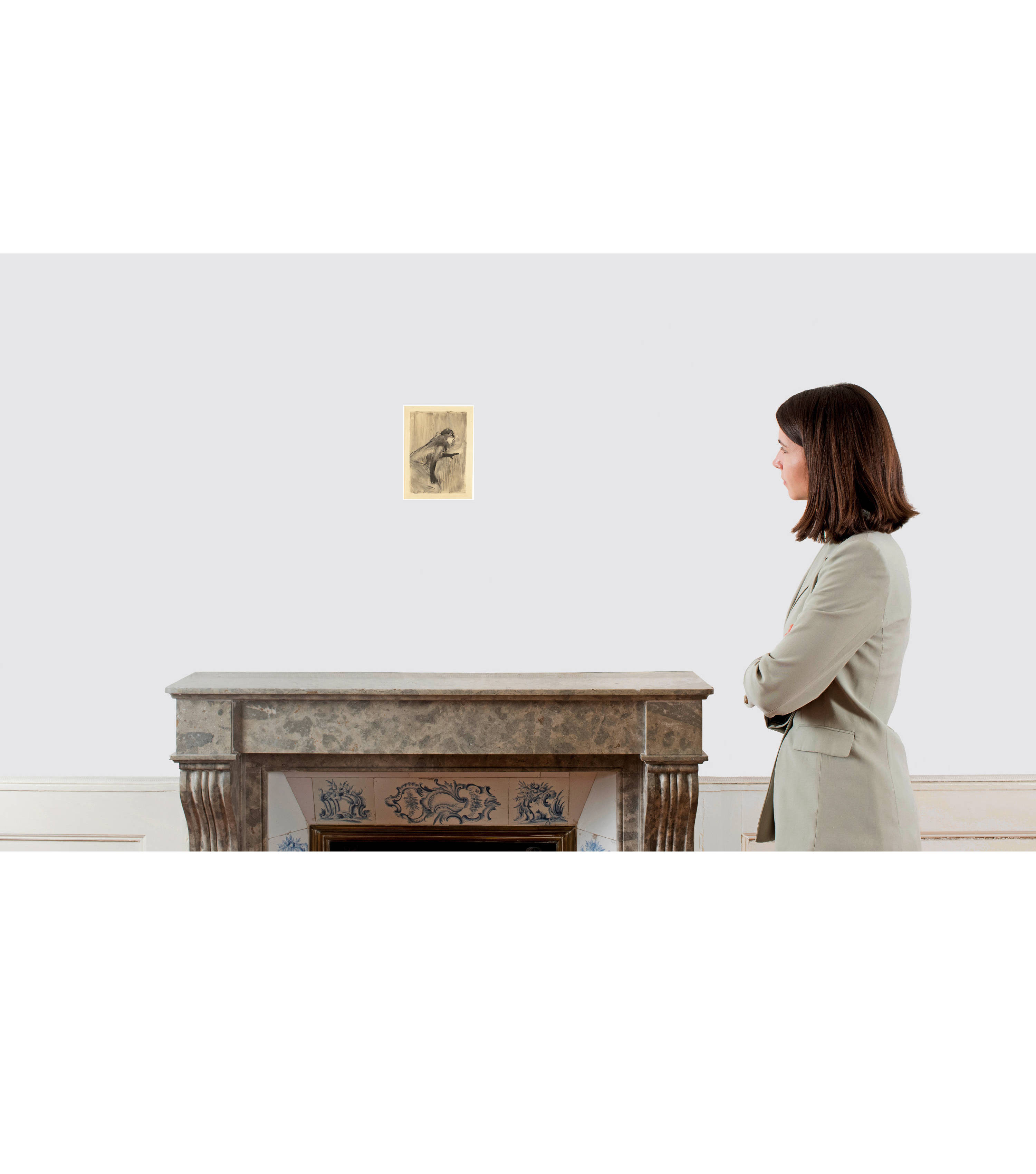
18.4x12.9 cm, plate mark; 23.5x17.4/17 cm, sheet size
Eugenia Parry Janis, Degas Monotypes, Essay, Catalogue & Checklist, Cambridge 1968, no. 47
Jean Adhémar/Françoise Cachin, Edgar Degas, Gravures et Monotypes, Paris 1973, no. 14
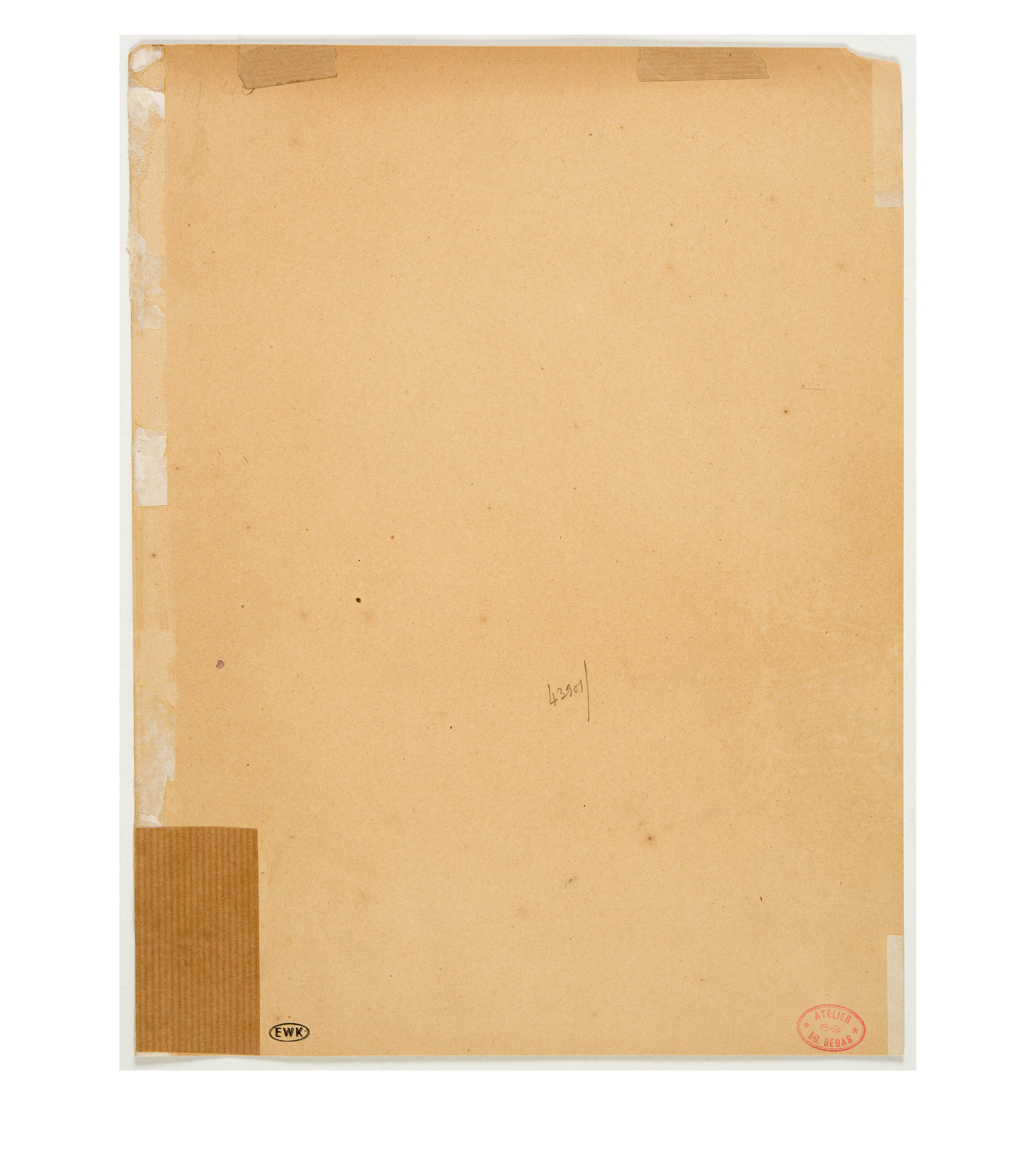
Auction Galerie Manzi-Joyant, Paris, 22-23 November 1918, Estampes par Edgar Degas, lot 275, with the stamp of the Vente Degas on the backing, Lugt 657
Roland Nepveu de Gas, Paris
Auction Hôtel Drouot, Paris, 9 May 1958, lot 86
Galerie Charpentier, Paris, probably acquired there in 1961 by
Kornfeld und Klipstein, Bern
The Eberhard W. Kornfeld Collection, Bern, with the collector's stamp on the backing, Lugt 913b
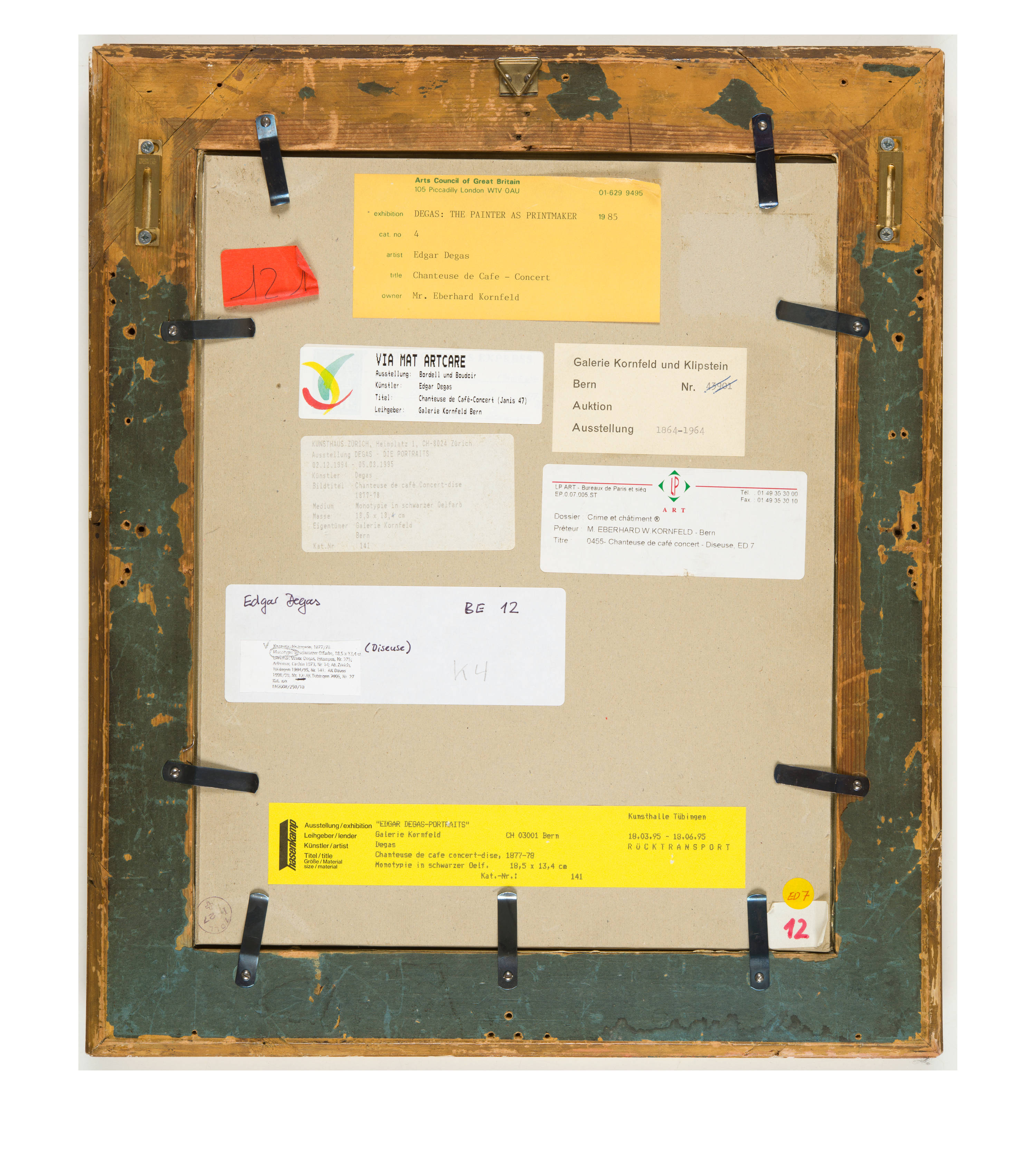
Paris 1943, Galerie Charpentier, Scènes et figures parisiennes, on the backing cardboard with label
Bern 1964, Kornfeld und Klipstein, Exhibition 1864-1964, drawings, watercolours, for the 100th anniversary of the founding of the house H.G. Gutekunst, cat. no. 8
Cambridge 1968, Fogg Art Museum, Harvard University, Degas Monotypes, Essay, Catalogue, Checklist, cat. no. 12
Paris 1984, Centre culturel du Marais, Degas, le modelé et l'espace, no. 260
London 1985, Arts Council of Great Britain, Degas, The Painter as Printmaker, cat. no. 4
Bern 1989, Kunstmuseum, Von Goya bis Tinguely, watercolours and drawings from a private collection [The Eberhard W. Kornfeld Collection], cat. no. 12
Martigny 1993, Fondation Pierre Gianadda, Degas, cat. no. 121
Zurich/Tübingen 1994/1995, Kunsthaus/Kunsthalle, Degas, Die Portraits, cat. no. 141
Tübingen 2005, Bordell und Boudoir, Schauplätze der Moderne, Cézanne, Degas, Toulouse-Lautrec, Picasso, cat. no. 27
Vienna 2008/2009, Albertina, Wege der Moderne, from the Eberhard W. Kornfeld Collection, cat. no. 10 (Shown in reverse)
Paris 2010, Musée d'Orsay, Crime et Chatiment, De Goya à Picasso, cat. no. 400
Karlsruhe 2014/2015, Staatliche Kunsthalle, Edgar Degas, Klassik und Experiment, cat. no. 53
New York 2016, The Museum of Modern Art, Edgar Degas, A Strange New Beauty, cat. no. 36
Cambridge 2017/2018, The Fitzwilliam Museum, Degas, A Passion for Perfection, cat. no. 90
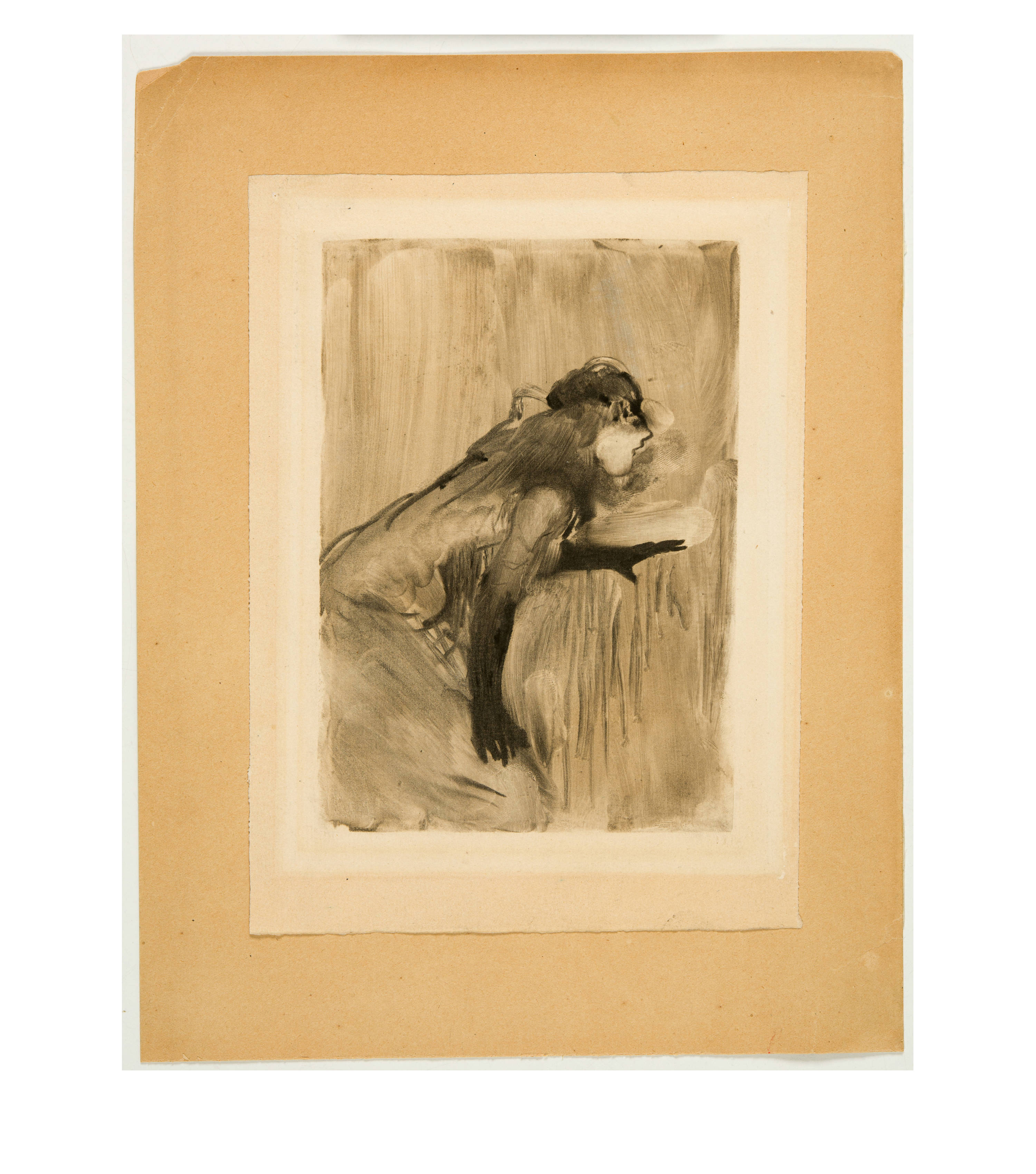
The laid paper mounted along the upper edge on a thin cardboard support, the upper left corner of which with paper loss. The sheet around the monotype slightly lightened with colour, minimal studio traces. The print in fine condition
In the 19th century, Edgar Degas was among the most creative users of monotype, a technique that is classified as printmaking but is, strictly speaking, a hybrid form; see lot 119. In this process, drawings are usually made in greasy ink or diluted oil paint on a copper or zinc plate and then printed onto paper using a press or by hand rubbing. As long as the paint on the plate remains wet, the artist can intervene creatively with various tools.
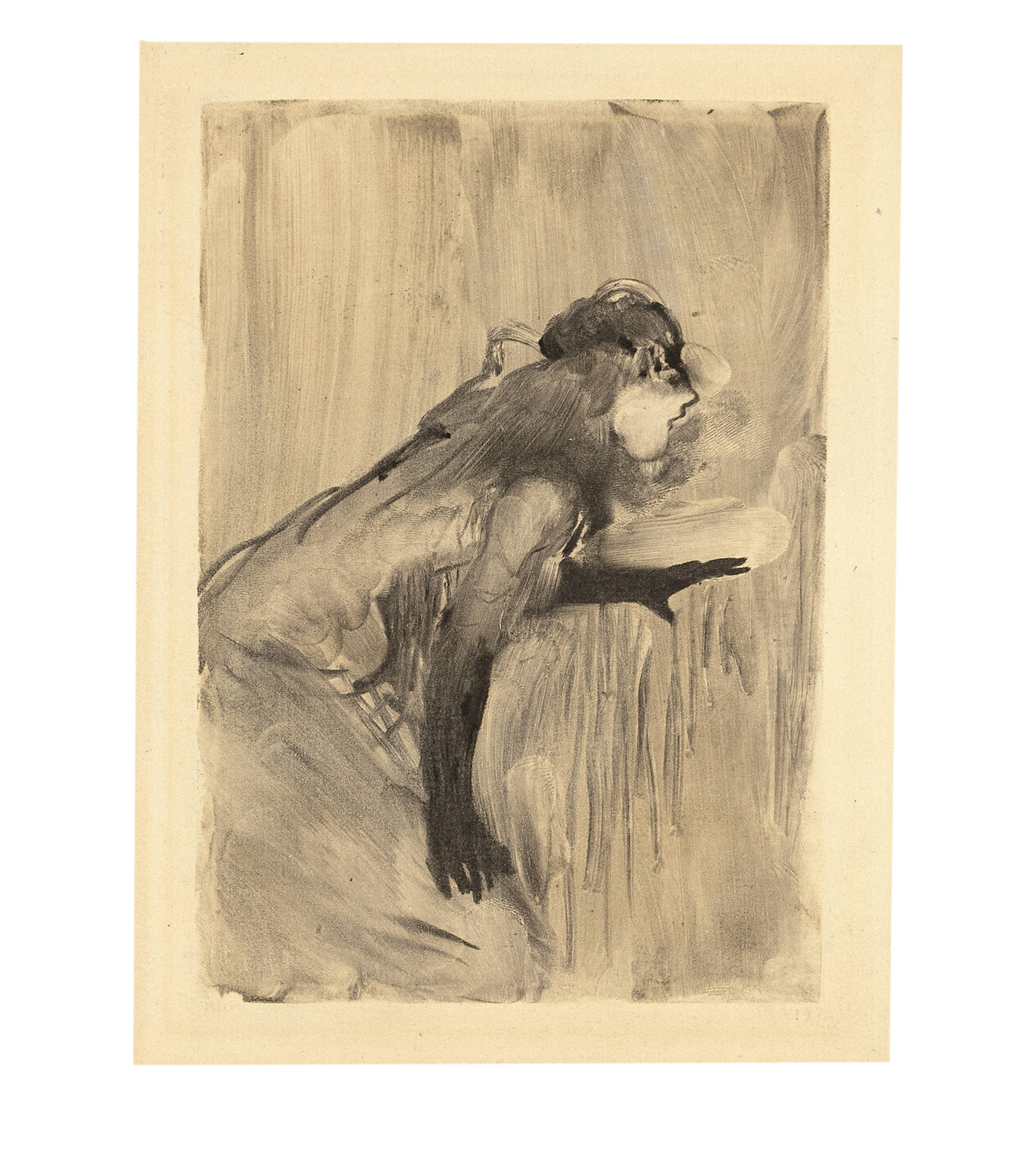
Among the first subjects Degas realised in this technique are scenes from Parisian nightlife, especially from the popular café-concerts. These were open-air stage performances illuminated by gas lamps, featuring performers from the demi-monde. In the present work, the artist captures a singer's expressive gestures and facial expressions in the chiaroscuro of the stage. For this monotype, he used the 'procédé negativ' by wiping the image from the previously blackened plate with rags and fingers - his fingerprints are clearly visible. Monotypes are well known for producing only one good impression from the plate; each subsequent impression is significantly weaker. Degas often used monotypes as a basis for further reworking with pastel crayons.
1877-1878
Monotypie auf Büttenpapier, auf Unterlage aufgelegt
18,4x12,9 cm, Plattenkante; 23,5x17,4/17 cm, Blattgrösse
Eugenia Parry Janis, Degas Monotypes, Essay, Catalogue & Checklist, Cambridge 1968,
Jean Adhémar/Françoise Cachin, Edgar Degas, Gravures et Monotypes, Paris 1973,
Auktion Galerie Manzi-Joyant, Paris, 22.-23. November 1918, Estampes par Edgar Degas, Los 275, rückseitig auf der Unterlage mit dem Stempel der Vente Degas, Lugt 657
Roland Nepveu de Gas, Paris
Auktion Hôtel Drouot, Paris, 9. Mai 1958, Los 86
Galerie Charpentier, Paris, wohl dort 1961 erworben von
Kornfeld und Klipstein, Bern
Slg. Eberhard W. Kornfeld, Bern, rückseitig auf der Unterlage mit dem Sammlerstempel, Lugt 913b
Paris 1943, Galerie Charpentier, Scènes et figures parisiennes, auf dem Rückenkarton mit Etikett
Bern 1964, Kornfeld und Klipstein, Ausstellung 1864-1964, Zeichnungen, Aquarelle, Zur 100-Jahr-Feier der Gründung des Hauses H.G. Gutekunst,
Cambridge 1968, Fogg Art Museum, Harvard University, Degas Monotypes, Essay, Catalogue, Checklist,
Paris 1984, Centre culturel du Marais, Degas, le modelé et l'espace,
London 1985, Arts Council of Great Britain, Degas, The Painter as Printmaker,
Bern 1989, Kunstmuseum, Von Goya bis Tinguely, Aquarelle und Zeichnungen aus einer Privatsammlung [Slg. Eberhard W. Kornfeld],
Martigny 1993, Fondation Pierre Gianadda, Degas,
Zürich/Tübingen 1994/1995, Kunsthaus/Kunsthalle, Degas, Die Portraits,
Tübingen 2005, Bordell und Boudoir, Schauplätze der Moderne, Cézanne, Degas, Toulouse-Lautrec, Picasso,
Wien 2008/2009, Albertina, Wege der Moderne, Aus der Sammlung Eberhard W. Kornfeld,
Paris 2010, Musée d'Orsay, Crime et Chatiment, De Goya à Picasso,
Karlsruhe 2014/2015, Staatliche Kunsthalle, Edgar Degas, Klassik und Experiment,
New York 2016, The Museum of Modern Art, Edgar Degas, A Strange New Beauty,
Cambridge 2017/2018, The Fitzwilliam Museum, Degas, A Passion for Perfection,
Das Büttenpapier an der oberen Kante auf eine dünne Kartonunterlage aufgelegt, dessen linke obere Ecke mit Papierverlust. Das Blatt um die Monotypie leicht mit Farbe aufgehellt, minime Atelierspuren. Der Druck in sehr schöner Erhaltung
Edgar Degas gehörte im 19. Jahrhundert zu den kreativsten Nutzern der Monotypie, einer Technik, die zwar der Druckgraphik zugeordnet wird, streng genommen jedoch eine Mischform darstellt, vgl. Los 119. Dabei werden Zeichnungen meist in Fetttusche oder verdünnter Ölfarbe auf eine Kupfer- oder Zinkplatte aufgetragen und mittels Presse oder Handabreibung auf das Papier gedruckt. Solange die Farbe auf der Platte noch feucht ist, kann der Künstler mit verschiedenen Mitteln künstlerisch eingreifen.
Zu den ersten Motiven, die Degas in dieser Technik realisierte, zählen Szenen aus dem Pariser Nachtleben, vor allem aus den beliebten Café-Concerts. Bei diesen handelte es sich um unter freiem Himmel stattfindende Bühnenprogramme, die durch Gaslampen beleuchtet wurden, und bei denen Akteure aus der Halbwelt auftraten. In der vorliegenden Arbeit hält der Künstler eine Sängerin mit ausdrucksstarker Gestik und Mimik im Helldunkel der Bühne fest. Für diese Monotypie wendete er das "Procédé negativ" an, indem er mit Lappen und Fingern die Darstellung der zuvor schwarz eingefärbten Platte herauswischte - seine Fingerabdrücke sind eindeutig erkennbar. Das Besondere an Monotypien ist, dass es jeweils nur einen guten Abzug von der Platte gibt; jeder weitere Abzug wird deutlich schwächer. Degas verwendete Monotypien oft als Grundlage für eine weitere Überarbeitung mit Pastellkreiden.
| Suisse | CHF | 150 |
| Europe | CHF | 250 |
| USA | CHF | 320 |
| Outre-mer | CHF | 325 |