- FR


 S’inscrire
-
- Ventes Classiques
- Ventes passées
- Plus
- Acheter
- Vendre
- Plus
- Galerie
- Commerce d'art
- Maison d'Édition
- Kornfeld aujourd’hui
- L'histoire de la Maison
- Informations




Cateau 1869 - 1954 Nizza



1946
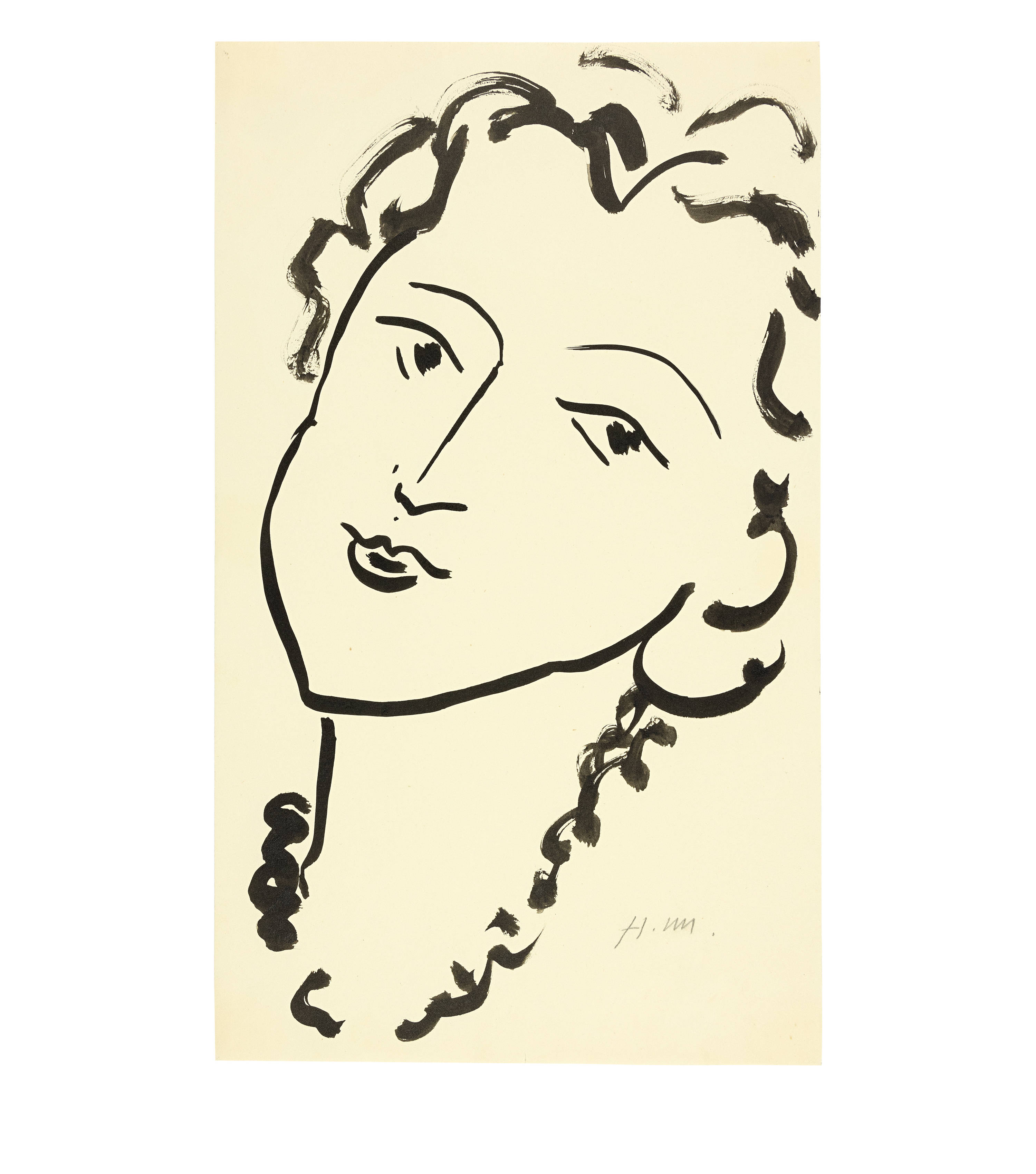
Brush and ink drawing on wove paper
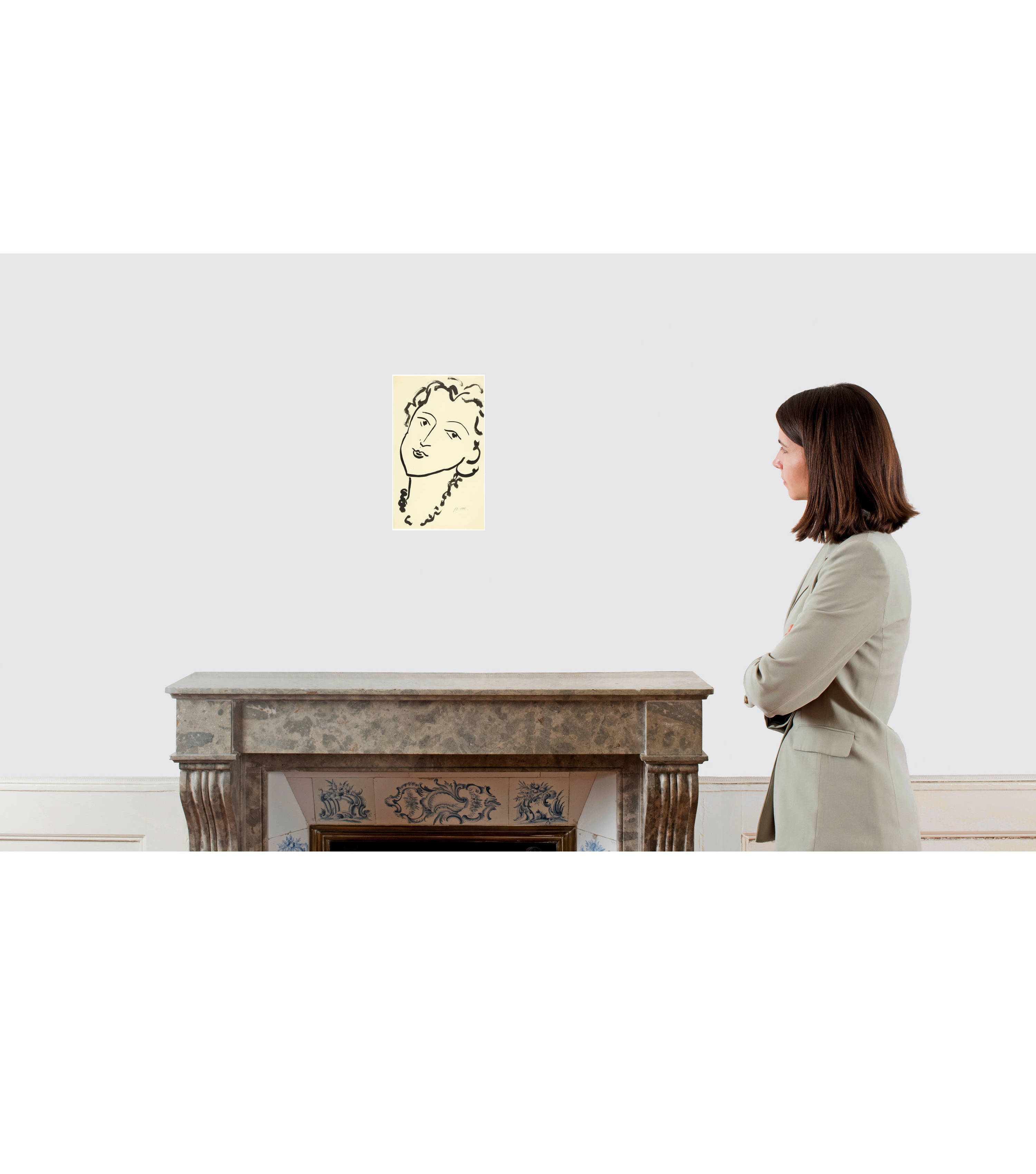
38.6x23.2 cm
Lower right monogrammed by the artist in pencil 'H. M.'
Confirmation by email, dated 30 June 2025, that Georges Matisse is familiar with the drawing offered and that a currently missing confirmation of authenticity has already been issued. The buyer may request a confirmation from the Archives Matisse upon request.
Estate of the artist
Private collection
Frank Perls, New York (from 1966)
Albert Loeb, New York (from 1967)
Kornfeld und Klipstein, Bern (from 1970)
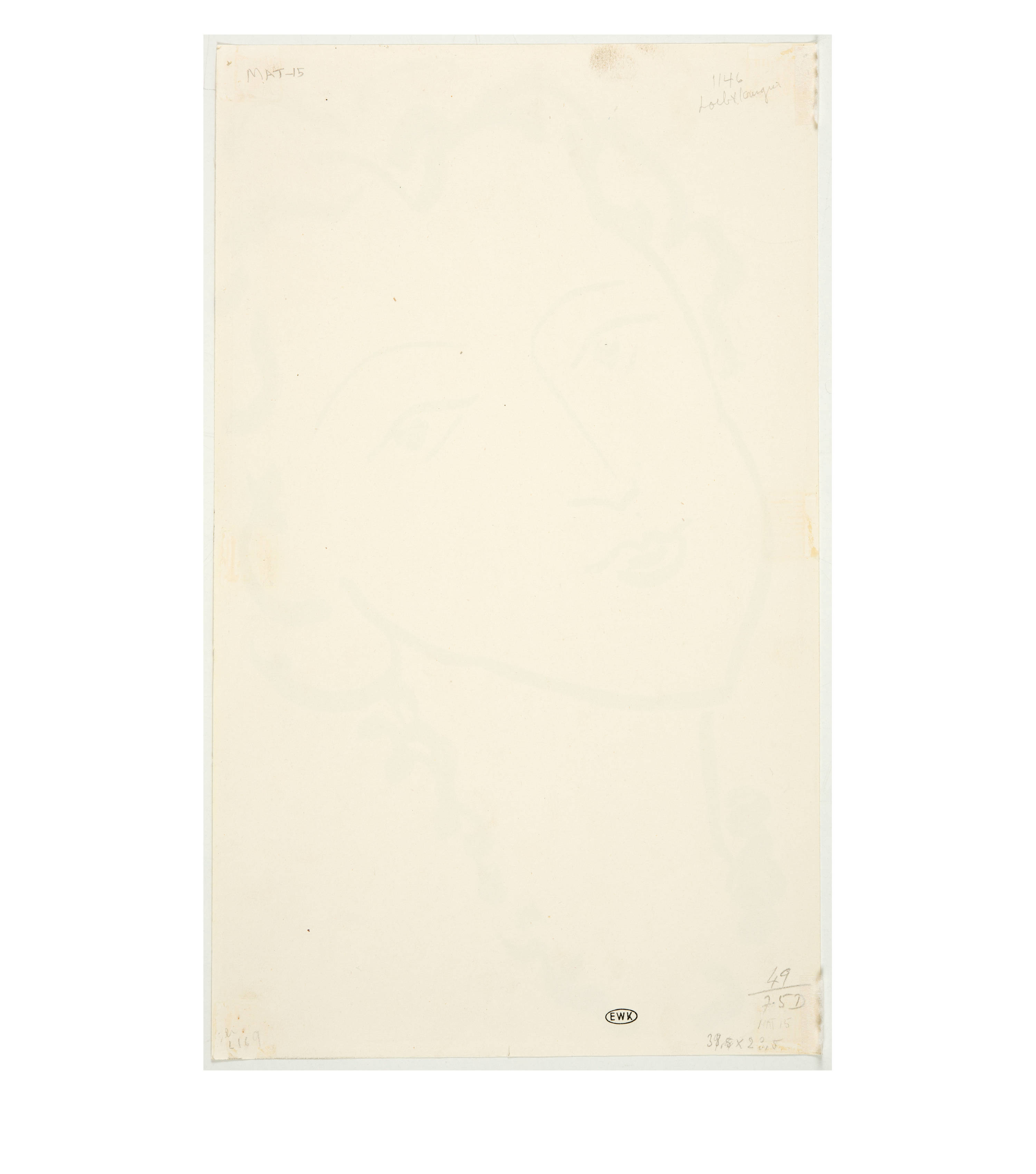
The Eberhard W. Kornfeld Collection, Bern, with the collector's stamp on the back, Lugt 913b
New York 1967, Albert Loeb & Krugier Gallery, Matisse, Drawings, cat. no. 35
Zurich/Bremen/Bielefeld 1982/1983, Kunsthaus/Kunsthalle/Kunsthalle, Nabis und Fauves, cat. no. 84
Stockholm/Humlebaek 1984/1985, Moderna Museet/Louisiana, Henri Matisse, cat. no. 146
Andros 1988, Museum of Contemporary Art, Basil et Elise Goulandris Foundation, Henri Matisse, fig. p. 38
Bern 1989, Kunstmuseum, Von Goya bis Tinguely, Aquarelle und Zeichnungen aus einer Privatsammlung [The Eberhard W. Kornfeld Collection], cat. no. 180
Linz 1995/1996, Neue Galerie der Stadt Linz, Henri Matisse, cat. no. 99
Rome 2006/2007, Complesso del Vittoriano, Bonnard - Matisse, cat. no. 166
Vienna 2008/2009, Albertina, Wege der Moderne, Aus der Sammlung Eberhard W. Kornfeld, cat. no. 26
Le Cateau-Cambrésis 2011/2012, Musée Matisse, Les dessins au pinceau de Matisse, p. 187, fig. in prospectus
With traces of old mounting on the reverse. Impeccable condition
This ink drawing from 1946 by Henri Matisse is a prime example of his late creative work. During this period, he increasingly focused on the reduction of form and line. He created his famous 'ligne claire', or clear, reduced line, which has a strong emotional effect. In this way, he captures the woman's head with just a few flowing brushstrokes and yet presents it in an expressive form. Using ink allowed Matisse to produce a direct, spontaneous line. This demonstrates the artist's high level of skill, since corrections are impossible. In 1946, Matisse was in his late creative phase. Physically already limited by his illness, this period is nonetheless considered one of the most creative of his life.
1946
Tuschpinselzeichnung auf Velin
38,6x23,2 cm
Unten rechts vom Künstler in Bleistift monogrammiert "H. M."
Bestätigung per Email, datiert vom 30. Juni 2025, dass Georges Matisse die angebotene Zeichnung kennt und dass bereits eine zurzeit vermisste Echtheitsbestätigung ausgestellt worden sei. Der Käufer kann auf Anfrage eine Bestätigung bei den Archives Matisse beantragen
Nachlass des Künstlers
Privatbesitz
Frank Perls, New York (ab 1966)
Albert Loeb, New York (ab 1967)
Kornfeld und Klipstein, Bern (ab 1970)
Slg. Eberhard W. Kornfeld, Bern, rückseitig mit dem Sammlerstempel, Lugt 913b
New York 1967, Albert Loeb & Krugier Gallery, Matisse, Drawings,
Zürich/Bremen/Bielefeld 1982/1983, Kunsthaus/Kunsthalle/Kunsthalle, Nabis und Fauves,
Stockholm/Humlebaek 1984/1985, Moderna Museet/Louisiana, Henri Matisse,
Andros 1988, Museum of Contemporary Art, Basil et Elise Goulandris Foundation, Henri Matisse,
Bern 1989, Kunstmuseum, Von Goya bis Tinguely, Aquarelle und Zeichnungen aus einer Privatsammlung [Slg. Eberhard W. Kornfeld],
Linz 1995/1996, Neue Galerie der Stadt Linz, Henri Matisse,
Rom 2006/2007, Complesso del Vittoriano, Bonnard - Matisse,
Wien 2008/2009, Albertina, Wege der Moderne, Aus der Sammlung Eberhard W. Kornfeld,
Le Cateau-Cambrésis 2011/2012, Musée Matisse, Les dessins au pinceau de Matisse,
Rückseitig mit Montierungsresten. Tadellos in der Erhaltung
Diese 1946 in Tusche entstandene Zeichnung von Henri Matisse ist ein exemplarisches Werk seiner späten Schaffensperiode. In dieser konzentrierte er sich zunehmend auf die Reduktion von Form und Linie. Er zeichnete mit seiner berühmten "ligne claire", also einer klaren, reduzierten Linie, die eine starke emotionale Wirkung entfaltet. So fängt er den Frauenkopf mit wenigen fliessenden Pinselstrichen ein und stellt ihn dennoch in ausdrucksstarker Form dar. Die Verwendung von Tusche erlaubt Matisse eine direkte, spontane Linie. Dies zeugt vom hohen Können des Künstlers, da Korrekturen nicht möglich sind. 1946 befand sich Matisse in seiner späten Schaffensphase. Körperlich durch seine Krankheit bereits eingeschränkt, zählt diese Periode dennoch zu einer der kreativsten seines Lebens.
| Suisse | CHF | 150 |
| Europe | CHF | 250 |
| USA | CHF | 320 |
| Outre-mer | CHF | 325 |