- FR


 S’inscrire
-
- Ventes Classiques
- Ventes passées
- Plus
- Acheter
- Vendre
- Plus
- Galerie
- Commerce d'art
- Maison d'Édition
- Kornfeld aujourd’hui
- L'histoire de la Maison
- Informations









Witebsk 1887 - 1985 Saint-Paul-de-Vence



1911
Gouache on laid paper
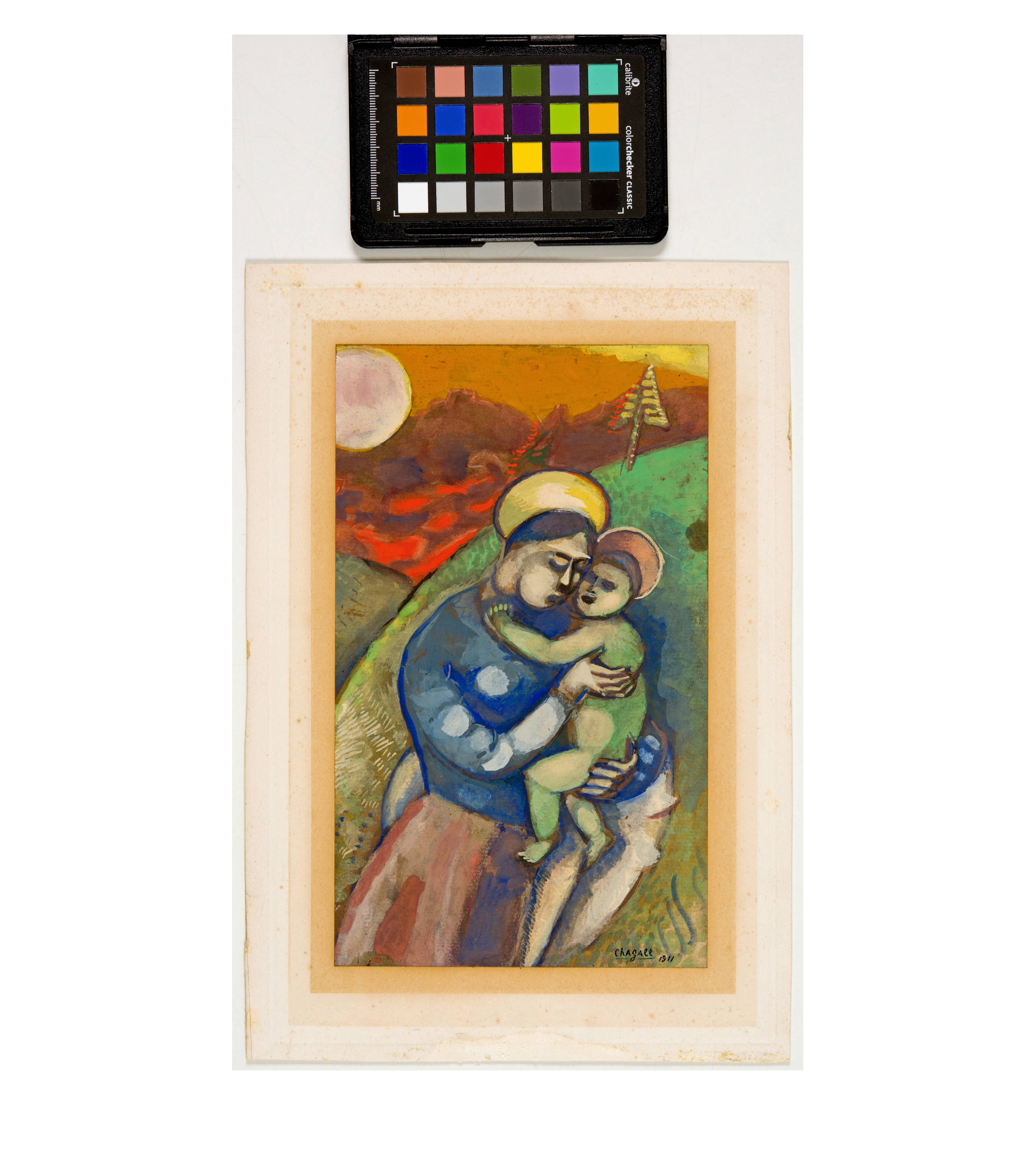
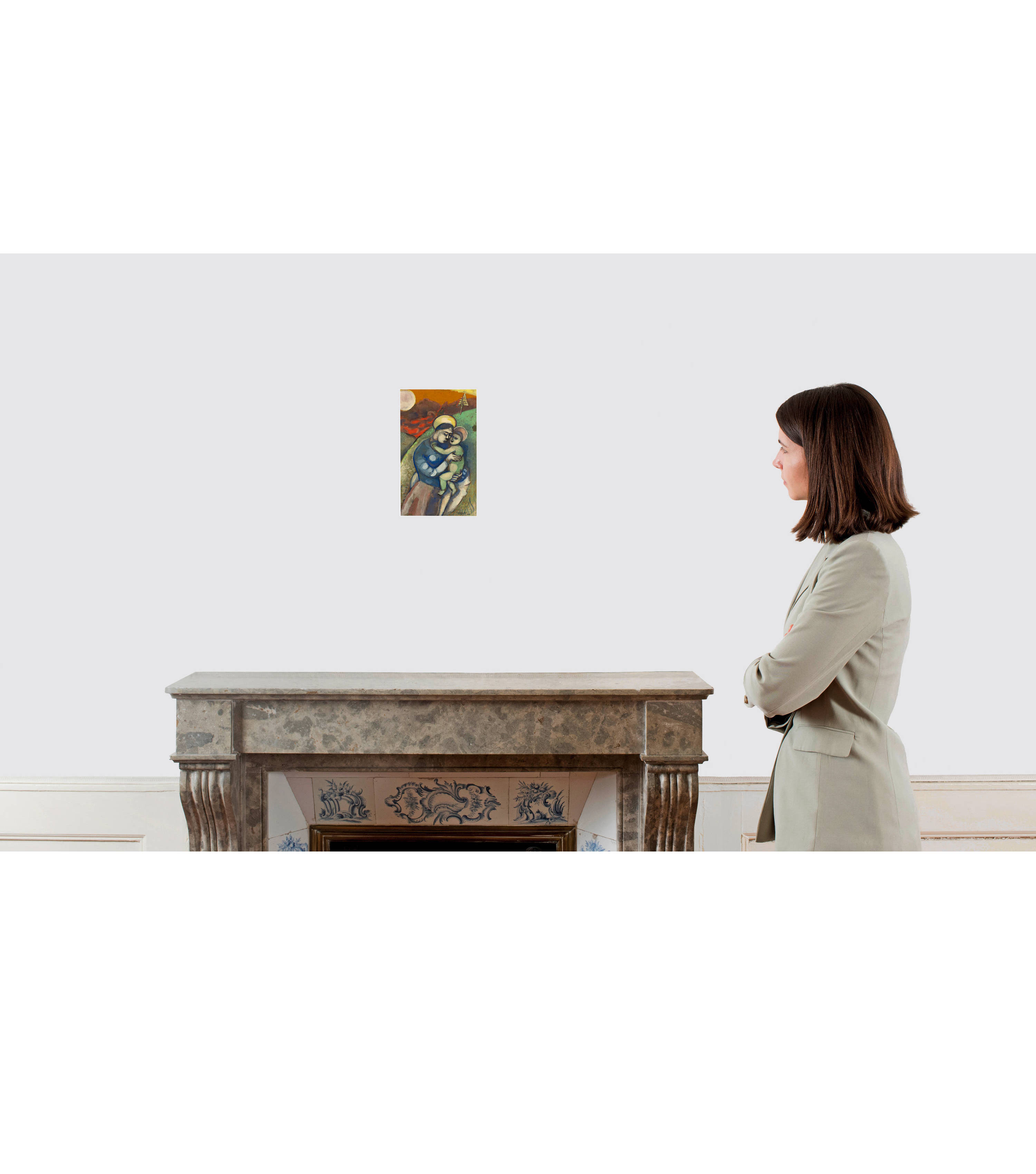
24.5x14.7 cm, sheet size; 31.4x21.5 cm, backing cardboard
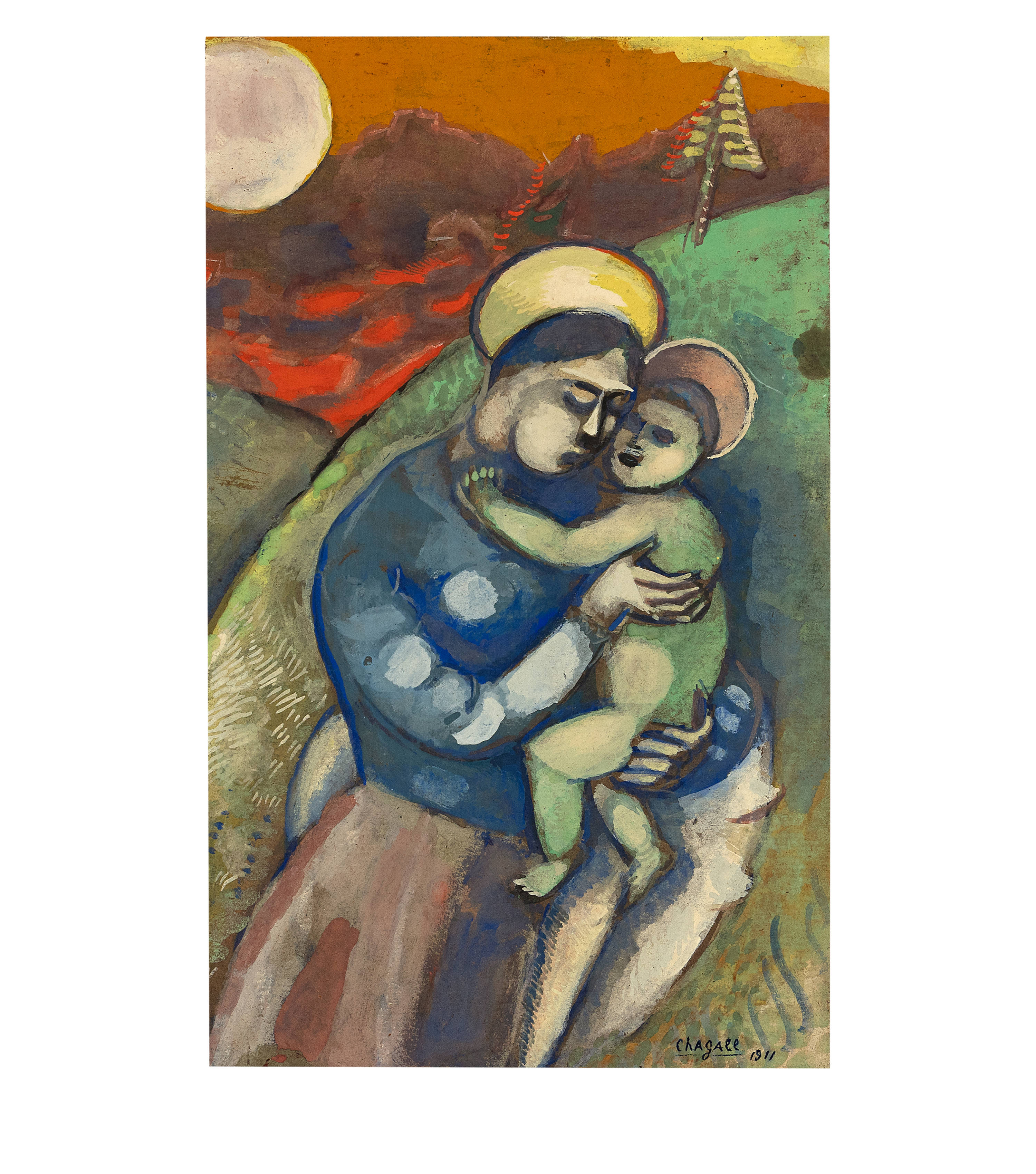
Lower right signed and dated by the artist in ink 'Chagall / 1911'. However, the signature and date were added later, certainly before the auction in 1959
Confirmation of authenticity (no. 2025097) from the Comité Marc Chagall, Paris, dated 3 July 2025, is available
Auction Galerie Charpentier, Paris, 10 December 1959, lot 6, titled 'Vierge à l'enfant', acquired there by
Klipstein und Kornfeld, Bern
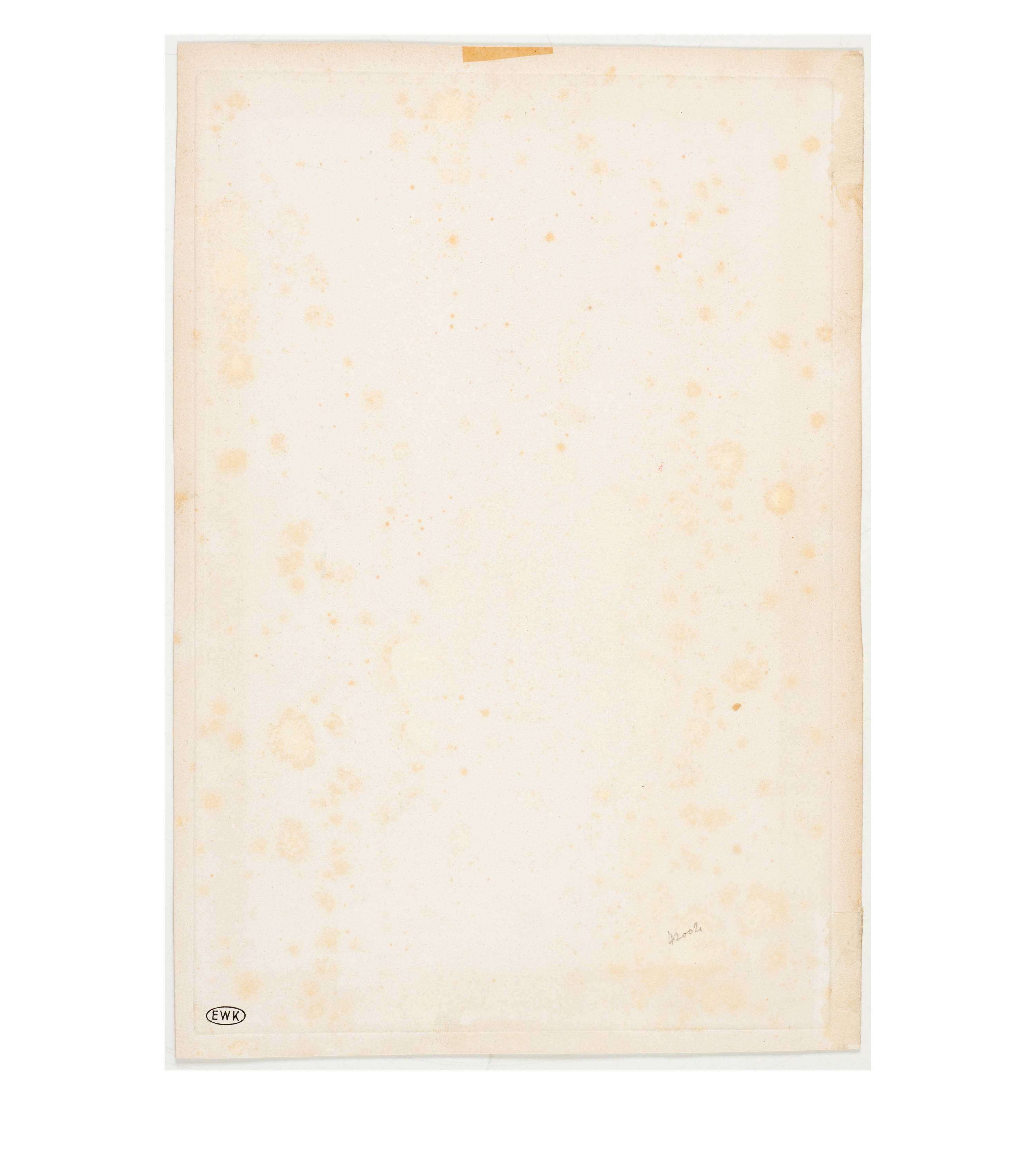
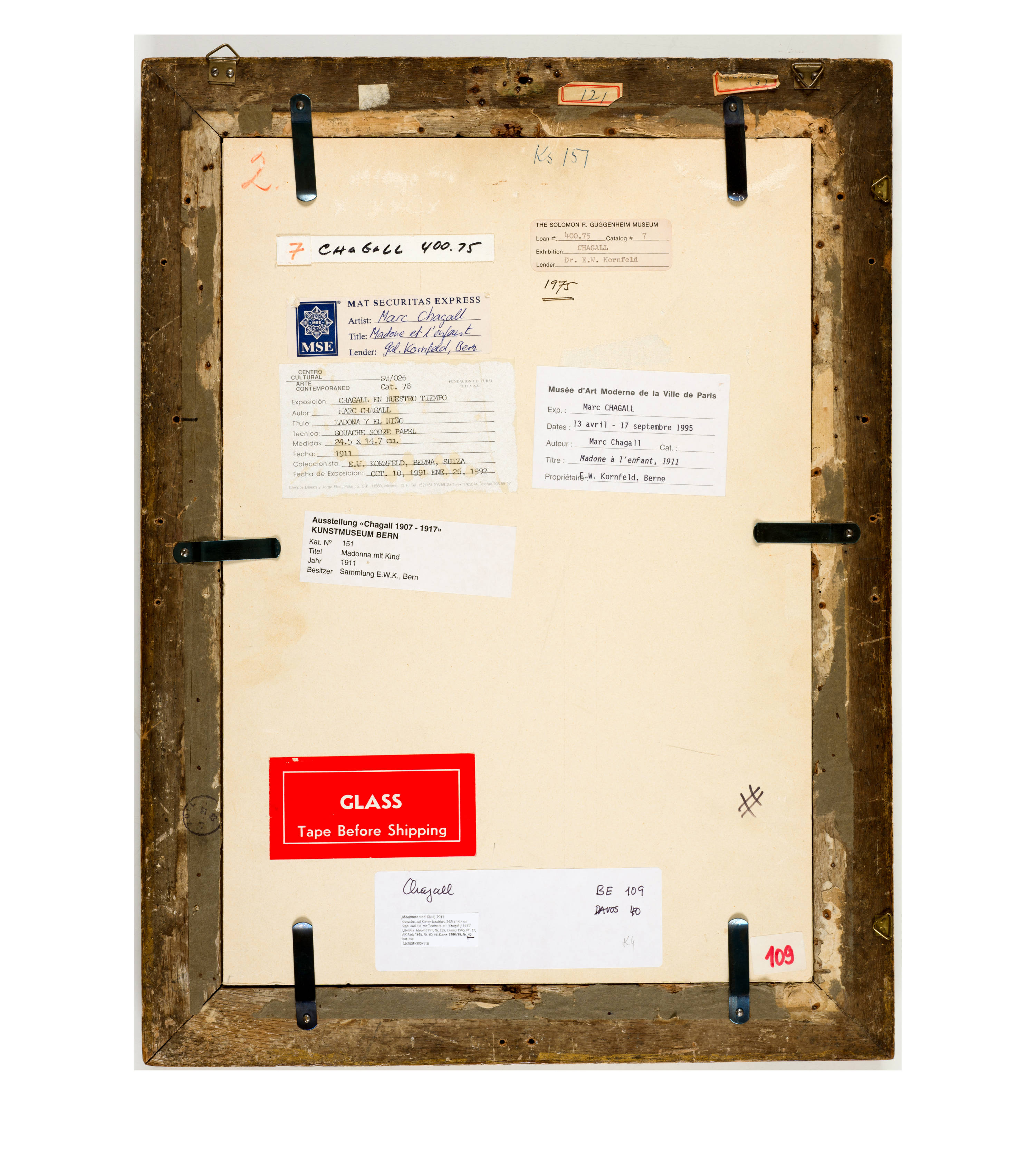
Collection Eberhard W. Kornfeld, Bern, with the collector's stamp on the back of the mount, Lugt 913b
Franz Meyer, Marc Chagall, Leben und Werk, Cologne 1961, no. 129, there titled 'Madonna mit Kind'
Jean Cassou, Chagall, New York/Washington 1965, no. 17, fig. p. 33
Bern 1960, Klipstein und Kornfeld, Marc Chagall, cat. No. 3, there titled 'Die Madonna mit dem Kinde'
Copenhagen 1960, Kunsthal Charlottenborg, Marc Chagall/Oskar Kokoschka, cat. no. 2
Geneva 1962, Musée Rath, Marc Chagall et la Bible, cat. no. 4, there titled 'Madone et enfant'
Tokyo/Kyoto 1963, National Museum of Western Art/Municipal Museum, Marc Chagall, cat. no. 121
New York 1975, The Solomon R. Guggenheim Museum, Marc Chagall, Works on Paper, cat. no. 7
Bern 1989, Kunstmuseum, Von Goya bis Tinguely, Aquarelle und Zeichnungen aus einer Privatsammlung [Slg. Eberhard W. Kornfeld], cat. No. 109, there titled 'Madone à l'enfant'
Mexico City 1991/1992, Centro Cultural Arte Contemporaneo, Chagall en nuestro siglo, cat. no. 78
Paris 1995, Musée d'Art Moderne de la Ville de Paris, Marc Chagall, Les années russes, 1907-1922, cat. no. 60
Bern 1995/1996, Kunstmuseum, Chagall 1907-1917, cat. no. 151
Davos 1998/1999, Kirchner Museum, Werke aus der Sammlung Eberhard W. Kornfeld, cat. no. 40
Vienna 2008/2009, Albertina, Wege der Moderne, Aus der Sammlung Eberhard W. Kornfeld, cat. no. 45
Basel 2017/2018, Kunstmuseum, Chagall, Die Jahre des Durchbruchs 1911-1919, cat. no. 61
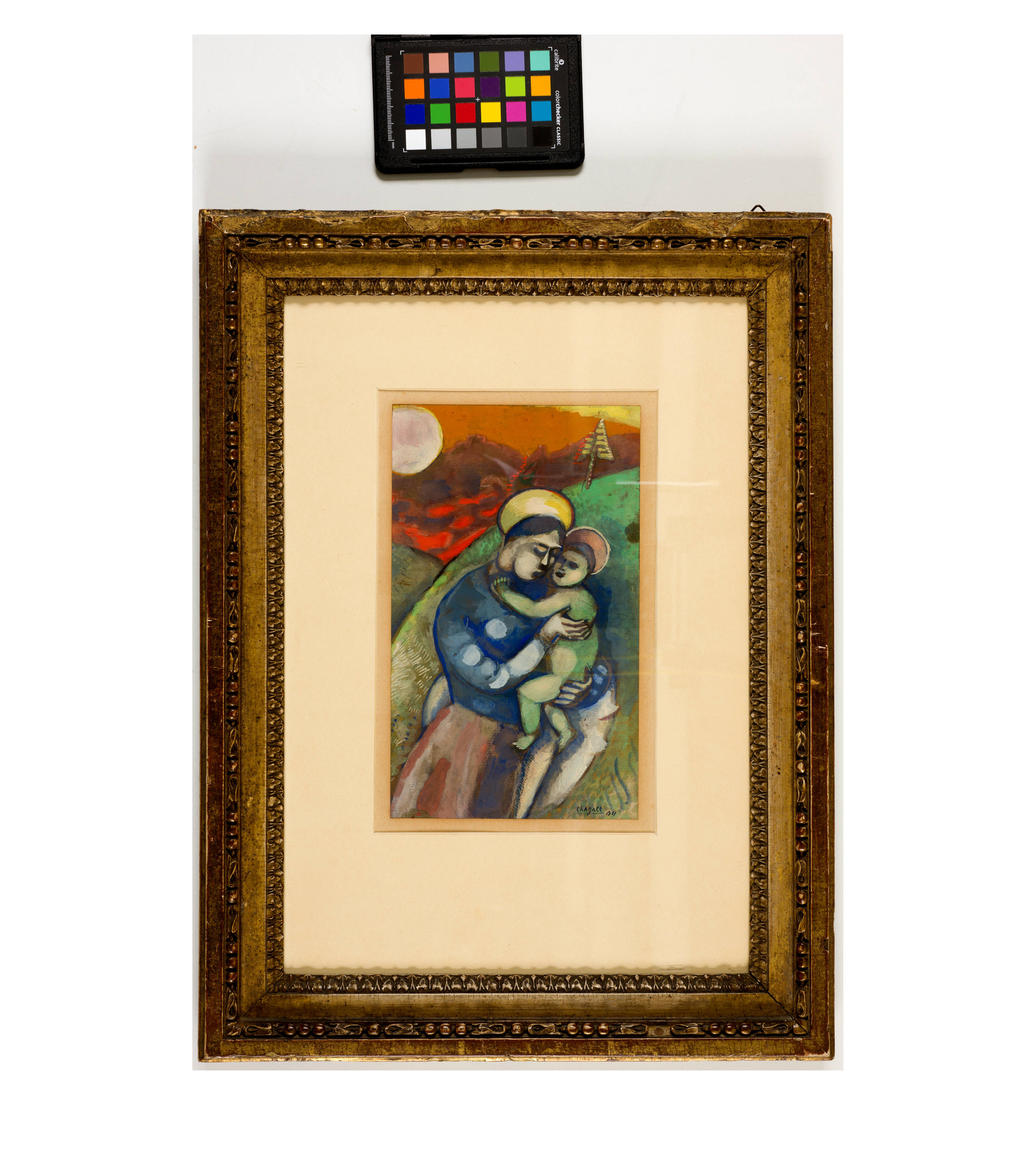
Laid down on support cardboard. With old discolouration at the upper right margin. The support browned, with light-struck area and foxing, especially at the upper margin. Verso with traces of old mounting. Fresh in colour and in very fine condition
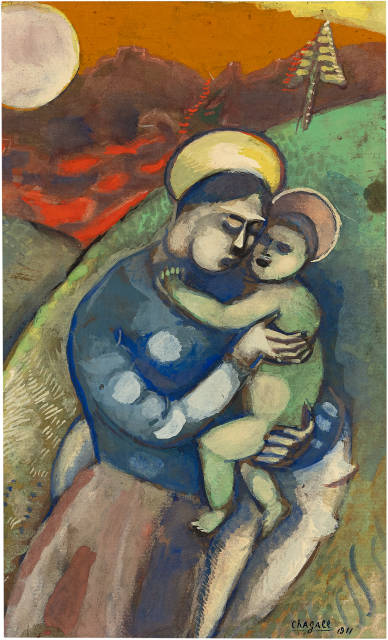
Marc Chagall's gouache 'Vierge à l'enfant ou Madone à l'enfant' from 1911 is an impressive, multi-layered depiction that combines Christian Russian Orthodox iconography with sentiment from Jewish culture and modern visual language. The painting shows a mother figure as the Virgin Mary with a child in her arms, in an apparently calm and almost floating posture against the backdrop of a landscape reduced to geometric forms. In the background, the full moon rises; to the right in the valley, there are shapes in contrasting red, from which the Madonna and child may have escaped. Although the motif of the Madonna with the child is traditional, Chagall consciously breaks with realistic and dogmatic forms of depiction. He creates a personal and extremely concise formal vision of motherhood in an almost abstract metaphorical landscape.
Pastel tones dominate the colour scheme, immersing the scene in a dreamlike atmosphere. The figures are simplified but powerful. This ambivalence between tender care and spiritual grandeur is typical of Chagall's works from these years. Although the work is based on Christian iconography, it is not a religious depiction in the classical sense. Chagall, who came from a Jewish family, uses the Madonna figure as a universal symbol of motherhood and protection, not as an act of faith. In this sense, he connects Jewish and Christian pictorial traditions, transcending cultural boundaries and formulating a deeply humanistic, personal image of security.
The work was created shortly after Chagall's arrival in Paris, during a time of upheaval and artistic development. "Vierge à l'enfant ou Madone à l'enfant" impressively demonstrates how the artist combined Western art forms, spiritual themes, and his Eastern European roots into a new, symbolically charged and unique visual language.
1911
Gouache auf Bütten
24,5x14,7 cm, Blattgrösse; 31,4x21,5 cm, Unterlagekarton
Unten rechts vom Künstler in Tusche signiert und datiert "Chagall / 1911". Signatur und Datum wurden jedoch nachträglich angebracht, sicherlich vor der Auktion 1959
Echtheitsbestätigung (Nr. 2025097) des Comité Marc Chagall, Paris, datiert vom 3. Juli 2025, liegt vor
Auktion Galerie Charpentier, Paris, 10. Dezember 1959, Los 6, betitelt "Vierge à l'enfant", dort erworben von
Klipstein und Kornfeld, Bern
Slg. Eberhard W. Kornfeld, Bern, rückseitig auf der Unterlage mit dem Sammlerstempel, Lugt 913b
Franz Meyer, Marc Chagall, Leben und Werk, Köln 1961,
Jean Cassou, Chagall, New York/Washington 1965,
Bern 1960, Klipstein und Kornfeld, Marc Chagall,
Kopenhagen 1960, Kunsthal Charlottenborg, Marc Chagall/Oskar Kokoschka,
Genf 1962, Musée Rath, Marc Chagall et la Bible,
Tokyo/Kyoto 1963, National Museum of Western Art/Municipal Museum, Marc Chagall,
New York 1975, The Solomon R. Guggenheim Museum, Marc Chagall, Works on Paper,
Bern 1989, Kunstmuseum, Von Goya bis Tinguely, Aquarelle und Zeichnungen aus einer Privatsammlung [Slg. Eberhard W. Kornfeld],
Mexico City 1991/1992, Centro Cultural Arte Contemporaneo, Chagall en nuestro siglo,
Paris 1995, Musée d'Art Moderne de la Ville de Paris, Marc Chagall, Les années russes, 1907-1922,
Bern 1995/1996, Kunstmuseum, Chagall 1907-1917,
Davos 1998/1999, Kirchner Museum, Werke aus der Sammlung Eberhard W. Kornfeld,
Wien 2008/2009, Albertina, Wege der Moderne, Aus der Sammlung Eberhard W. Kornfeld,
Basel 2017/2018, Kunstmuseum, Chagall, Die Jahre des Durchbruchs 1911-1919,
Auf Unterlagekarton aufgezogen. Im rechten Rand oben mit alter Verfärbung. Die Unterlage gebräunt, mit Lichtrand und stockfleckig, insbesondere im oberen Rand. Rückseitig mit Spuren einer alten Montierung. Farbfrisch und in sehr schönem Erhaltungszustand
Marc Chagalls Gouache "Vierge à l'enfant ou Madone à l'enfant" von 1911 ist eine eindrucksvolle, vielschichtige Darstellung, die christliche, russisch orthodoxe Ikonografie mit Empfindung aus jüdischer Kultur und moderner Bildsprache verbindet. Das Bild zeigt eine Mutterfigur als "Jungfrau Maria" mit einem Kind auf dem Arm in einer scheinbar ruhigen, fast schwebenden Haltung vor einer stark auf geometrische Formen reduzierten Landschaft. Im Hintergrund geht der Vollmond auf; rechts im Tal Formen in kontrastreichem Rot, denen die Madonna mit Kind möglicherweise entkommen ist. Obwohl das Motiv der Madonna mit dem Kind traditionell ist, bricht Chagall bewusst mit realistischen und dogmatischen Darstellungsweisen. Er erschafft eine persönliche und äusserst prägnante formelle Vision von Mutterschaft in einer beinahe abstrakten metaphorischen Landschaft.
Farblich dominieren Pastelltöne, die die Szene in eine entrückte Atmosphäre tauchen. Die Figuren sind vereinfacht, aber kraftvoll. Diese Ambivalenz zwischen zärtlicher Fürsorge und spiritueller Grösse ist typisch für Chagalls Arbeiten dieser Jahre. Obwohl das Werk auf christlicher Ikonografie basiert, ist es keine religiöse Darstellung im klassischen Sinne. Chagall, der aus einer jüdischen Familie stammte, benutzt die Madonna-Figur als universales Symbol der Mutterschaft und des Schutzes, nicht als Akt des Glaubens. In diesem Sinn verbindet er jüdische und christliche Bildtraditionen, überschreitet kulturelle Grenzen und formuliert ein zutiefst humanistisches, persönliches Bild des Geborgenseins.
Das Werk entstand kurz nach Chagalls Ankunft in Paris, in einer Zeit des Umbruchs und der künstlerischen Entfaltung. "Vierge à l'enfant ou Madone à l'enfant" zeigt eindrucksvoll, wie der Künstler westliche Kunstformen, spirituelle Themen und seine osteuropäischen Wurzeln zu einer neuen, symbolisch aufgeladenen und einzigartigen Bildsprache verband.
| Suisse | CHF | 150 |
| Europe | CHF | 250 |
| USA | CHF | 320 |
| Outre-mer | CHF | 325 |