- FR


 S’inscrire
-
- Ventes Classiques
- Ventes passées
- Plus
- Acheter
- Vendre
- Plus
- Galerie
- Commerce d'art
- Maison d'Édition
- Kornfeld aujourd’hui
- L'histoire de la Maison
- Informations









Borgonovo 1901 - 1966 Chur



Ca. 1950
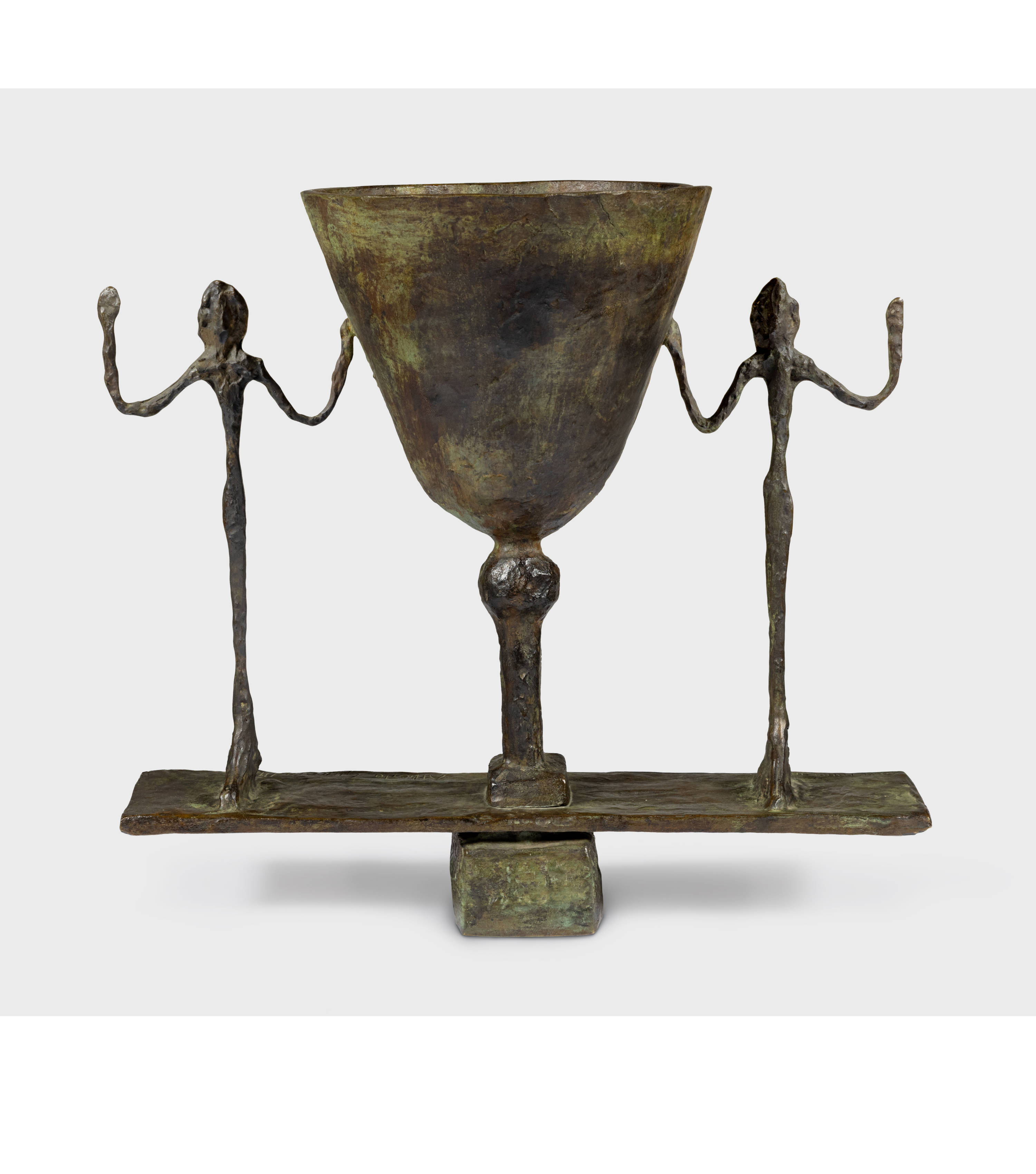
Bronze
33.8x37x18.5 cm
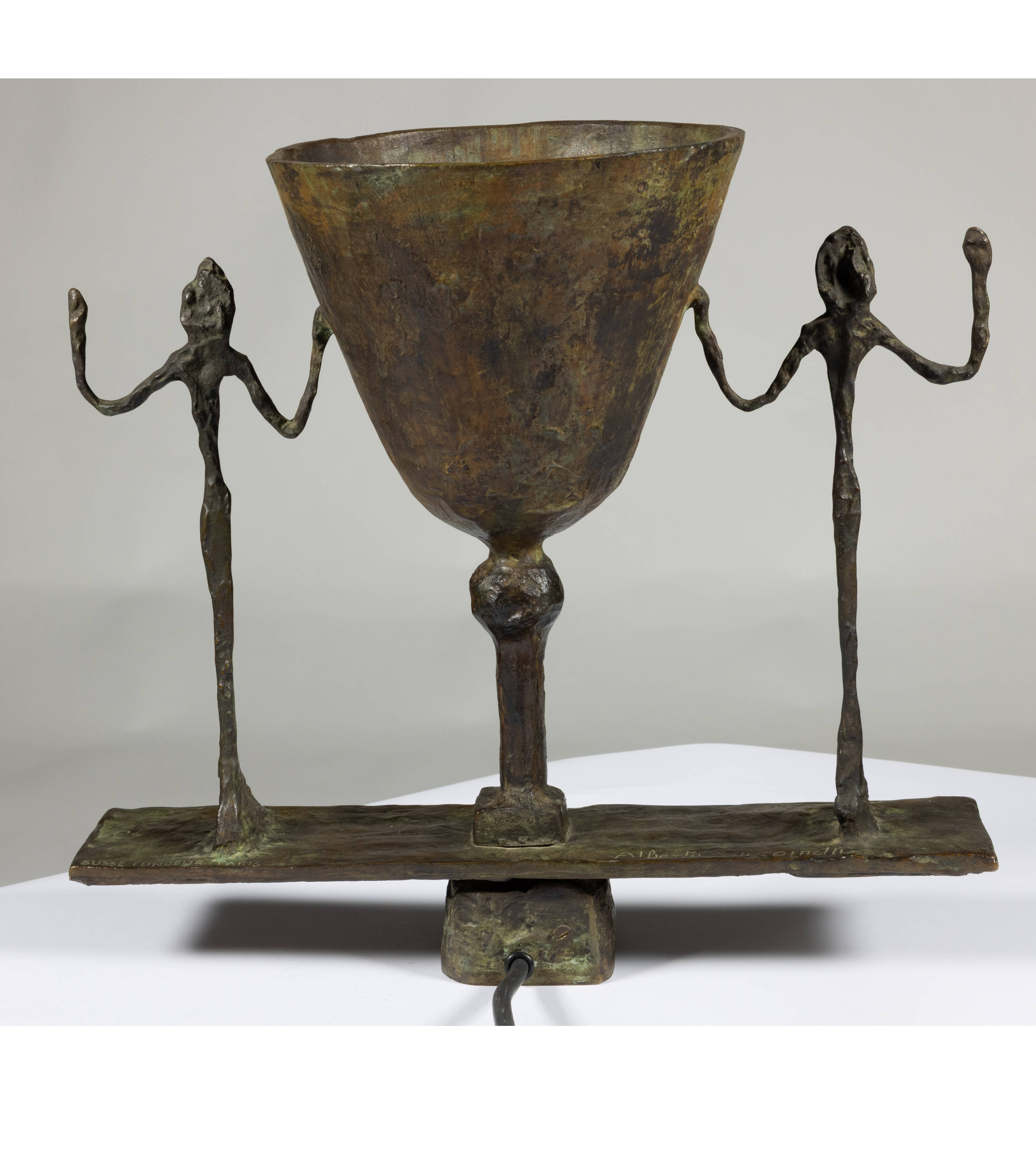
Signed on the base plate 'Alberto Giacometti', with the foundry mark 'Susse Fondeur'. Under the base plate with the stamped number '04'
Confirmation of authenticity from the Comité Giacometti, Paris, dated April 2018, is available.
The bronze is registered in the online catalogue raisonné of the Fondation Alberto et Annette Giacometti under the number AGD 3936
Auction Palais Galliera, Paris, Succession de Madame Lang, 4 March 1972, lot 77, acquired there by
The Eberhard W. Kornfeld Collection, Bern
Basel 1966, Kunsthalle, Alberto Giacometti, cat. no. 66
Paris 1969/1970, Orangerie des Tuileries, Alberto Giacometti, cat. no. 74
Rome 1970, Villa Medici, Alberto Giacometti, cat. no. 27
Vevey 1971, Musée Jenisch, Alberto Giacometti, cat. no. 15
Lugano 1973, Museo Civico di Belle Arti, Alberto Giacometti, cat. no. 16
Berlin/Stuttgart 1987/1988, Nationalgalerie/Staatsgalerie, Alberto Giacometti, cat. no. 149
Davos 1998/1999, Kirchner Museum, Works from the Eberhard W. Kornfeld Collection, cat. no. 133
Bern 2003, Kunstmuseum, Hommage an 'E.W.K.', Masterpieces by Giovanni Giacometti, Alberto and Diego Giacometti from the Collection of Eberhard W. Kornfeld, cat. no. 56
Bern 2017, Galerie Kornfeld, Alberto Giacometti, no. 70
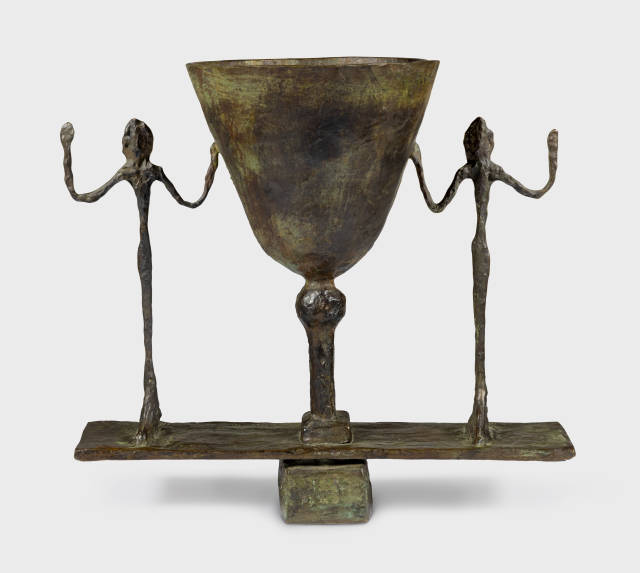
Very fine, impeccable cast with brown and greenish patina and minimal signs of wear
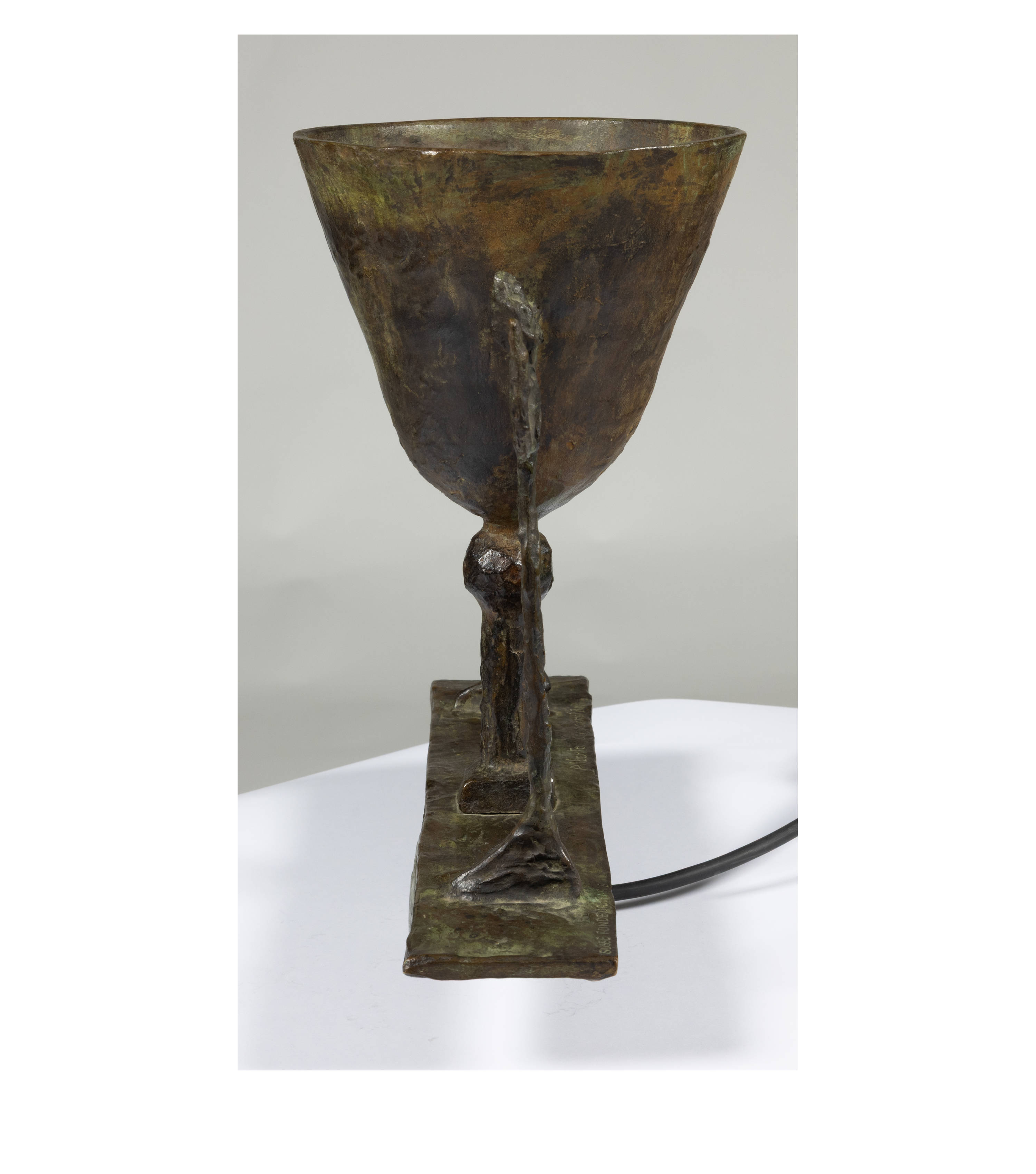
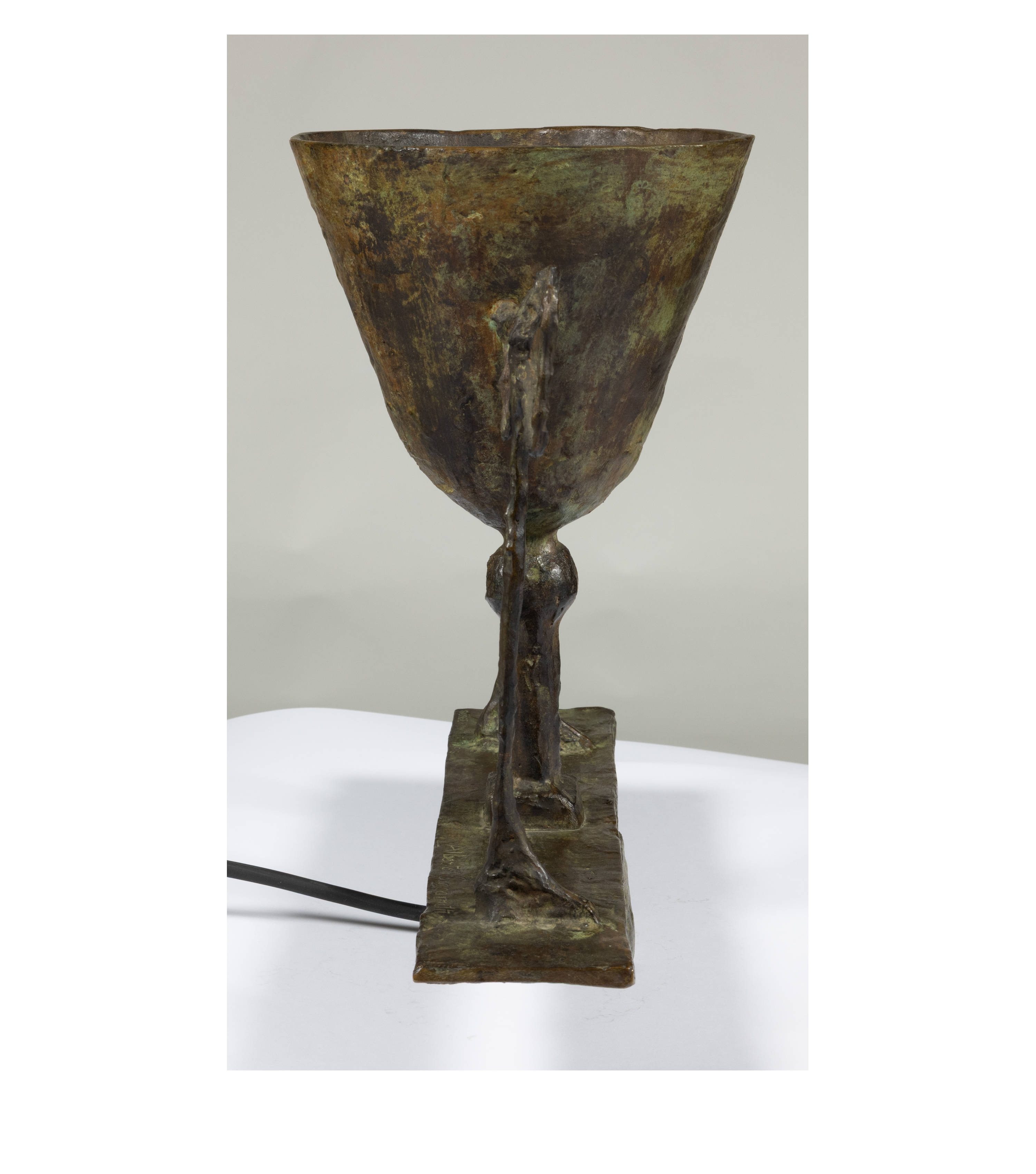
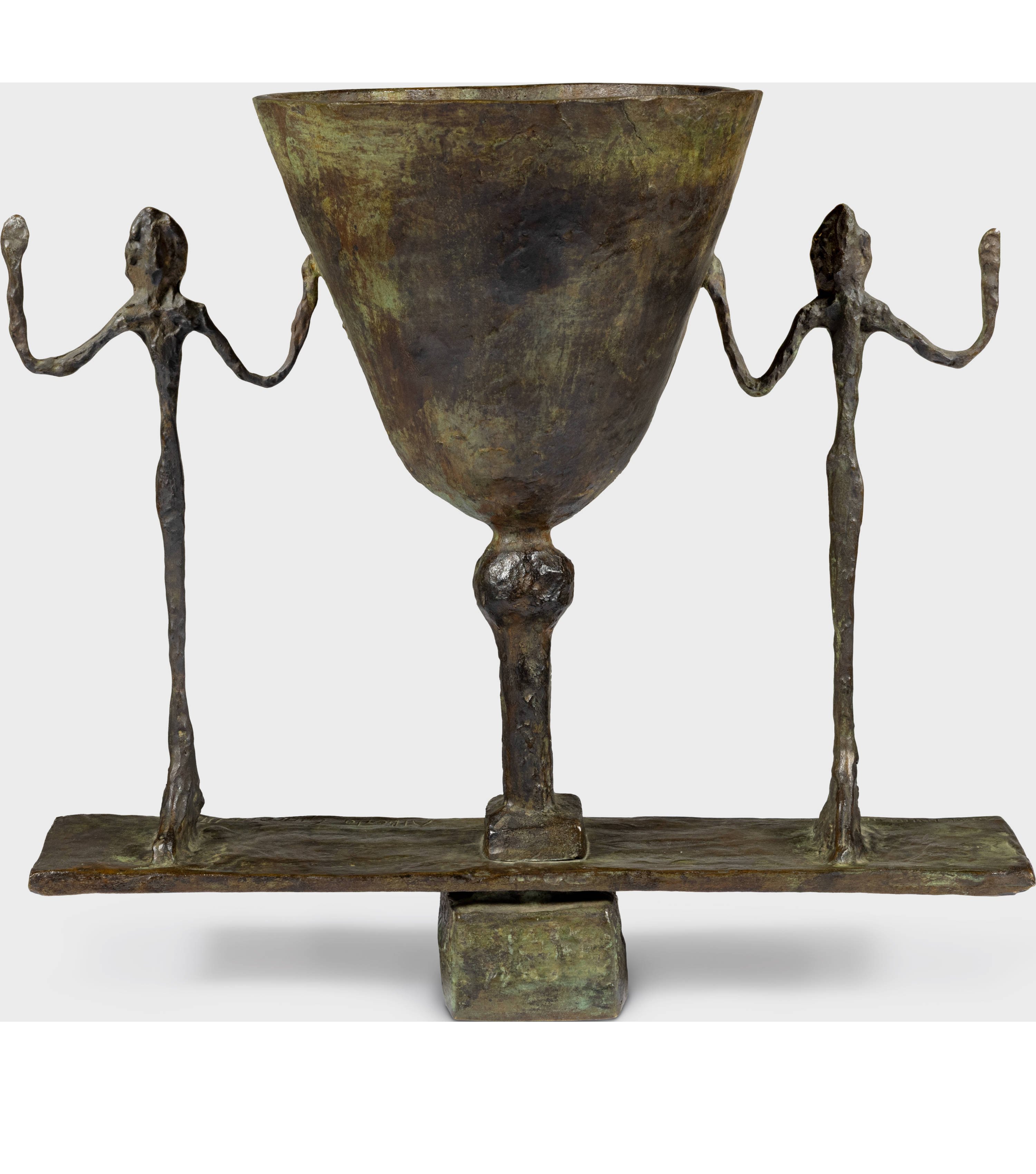
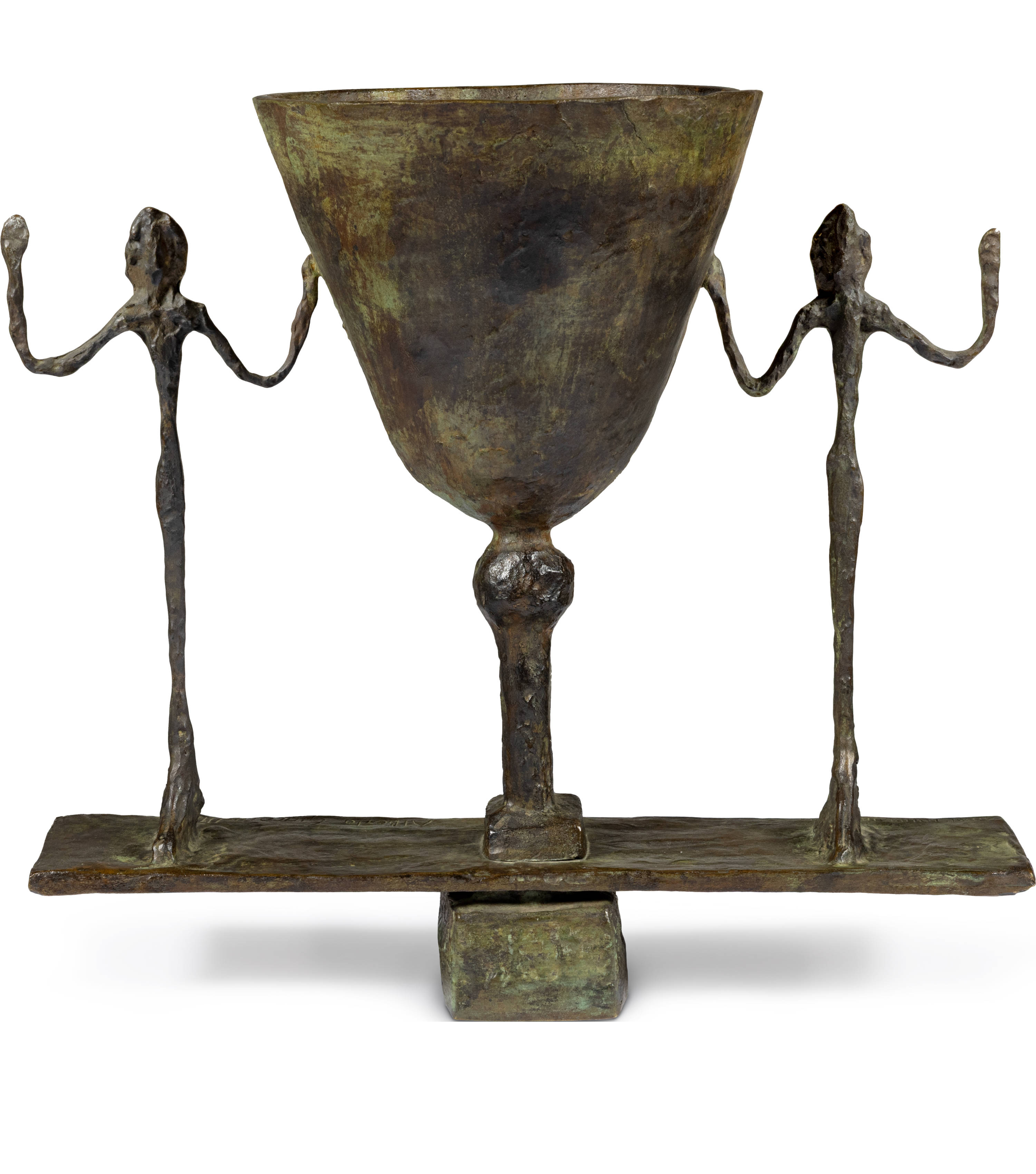
Alberto Giacometti's first decorative objects were created in the early 1930s as a result of his collaboration with the Parisian interior designer Jean-Michel Frank (1895-1941). In a second creative phase towards the end of the 1940s, he accepted private commissions to produce decorative objects in limited editions, including the 'Lampe avec deux figures'. The arrangement is reminiscent of drawings the artist made in the Egyptian department of the Louvre. The posture of the figures with their raised arms appears sacral. Figures with raised arms also feature in iconic sculptures from this period, such as 'Homme qui chavire', 'Le chariot' or 'La cage (première version)'. The figures and the light chalice stand on a plinth, which is placed on a cube-shaped base. While the ensemble appears static at first glance, it is simultaneously dynamic in the balance defined by the artist. 'Lampe avec deux figures' thus becomes a striking example of Alberto Giacometti's endeavour to create a balance between movement and stability.
Um 1950
Bronze
33,8x37x18,5 cm
Auf der Sockelplatte signiert "Alberto Giacometti", mit dem Giesserstempel "Susse Fondeur". Unter der Sockelplatte mit der gestanzten Nummer "04"
Echtheitsbestätigung des Comité Giacometti, Paris, datiert vom April 2018, liegt vor.
Die Bronze ist im Online Werkverzeichnis der Fondation Alberto et Annette Giacometti unter der Nummer AGD 3936 registriert
Auktion Palais Galliera, Paris, Succession de Madame Lang, 4. März 1972, Los 77, dort erworben von
Slg. Eberhard W. Kornfeld, Bern
Basel 1966, Kunsthalle, Alberto Giacometti,
Paris 1969/1970, Orangerie des Tuileries, Alberto Giacometti,
Rom 1970, Villa Medici, Alberto Giacometti,
Vevey 1971, Musée Jenisch, Alberto Giacometti,
Lugano 1973, Museo Civico di Belle Arti, Alberto Giacometti,
Berlin/Stuttgart 1987/1988, Nationalgalerie/Staatsgalerie, Alberto Giacometti,
Davos 1998/1999, Kirchner Museum, Werke aus der Sammlung Eberhard W. Kornfeld,
Bern 2003, Kunstmuseum, Hommage an "E.W.K.", Meisterwerke von Giovanni Giacometti, Alberto und Diego Giacometti aus der Sammlung von Eberhard W. Kornfeld,
Bern 2017, Galerie Kornfeld, Alberto Giacometti,
Sehr schöner, tadelloser Guss mit brauner und grünlicher Patina und minimen Gebrauchsspuren
Alberto Giacomettis erste dekorative Objekte entstanden Anfang der 1930er Jahre aufgrund seiner Zusammenarbeit mit dem Pariser Innenarchitekten Jean-Michel Frank (1895-1941). In einer zweiten Schaffensphase gegen Ende der 1940er-Jahre nahm er private Auftragsarbeiten zur Herstellung von Dekorationsobjekten in limitierter Auflage an, darunter die "Lampe avec deux figures". Die Anordnung erinnert an Zeichnungen, die der Künstler in der ägyptischen Abteilung des Louvre geschaffen hat. Die freie Armhaltung der Figuren wirkt sakral. Figuren mit erhobenen Armen finden sich in den zur gleichen Zeit entstehenden ikonischen Plastiken "Homme qui chavire", "Le chariot" oder "La cage (première version)". Die Figuren und der Lichtkelch stehen auf einem Sockelbrett, das wiederum auf einem würfelförmigen Sockel platziert ist. Das Ensemble wirkt zwar auf den ersten Blick statisch, in der vom Künstler definierten Balance aber gleichzeitig bewegt. Die "Lampe avec deux figures" wird somit zu einem eindrücklichen Beispiel für Alberto Giacomettis Bestreben, einen Ausgleich zwischen Bewegung und Stabilität zu schaffen.
| Suisse | CHF | Offre individuelle |
| Europe | CHF | Offre individuelle |
| USA | CHF | Offre individuelle |
| Outre-mer | CHF | Offre individuelle |