- FR


 S’inscrire
-
- Ventes Classiques
- Ventes passées
- Plus
- Acheter
- Vendre
- Plus
- Galerie
- Commerce d'art
- Maison d'Édition
- Kornfeld aujourd’hui
- L'histoire de la Maison
- Informations









Lausanne 1865 - 1925 Paris


1904
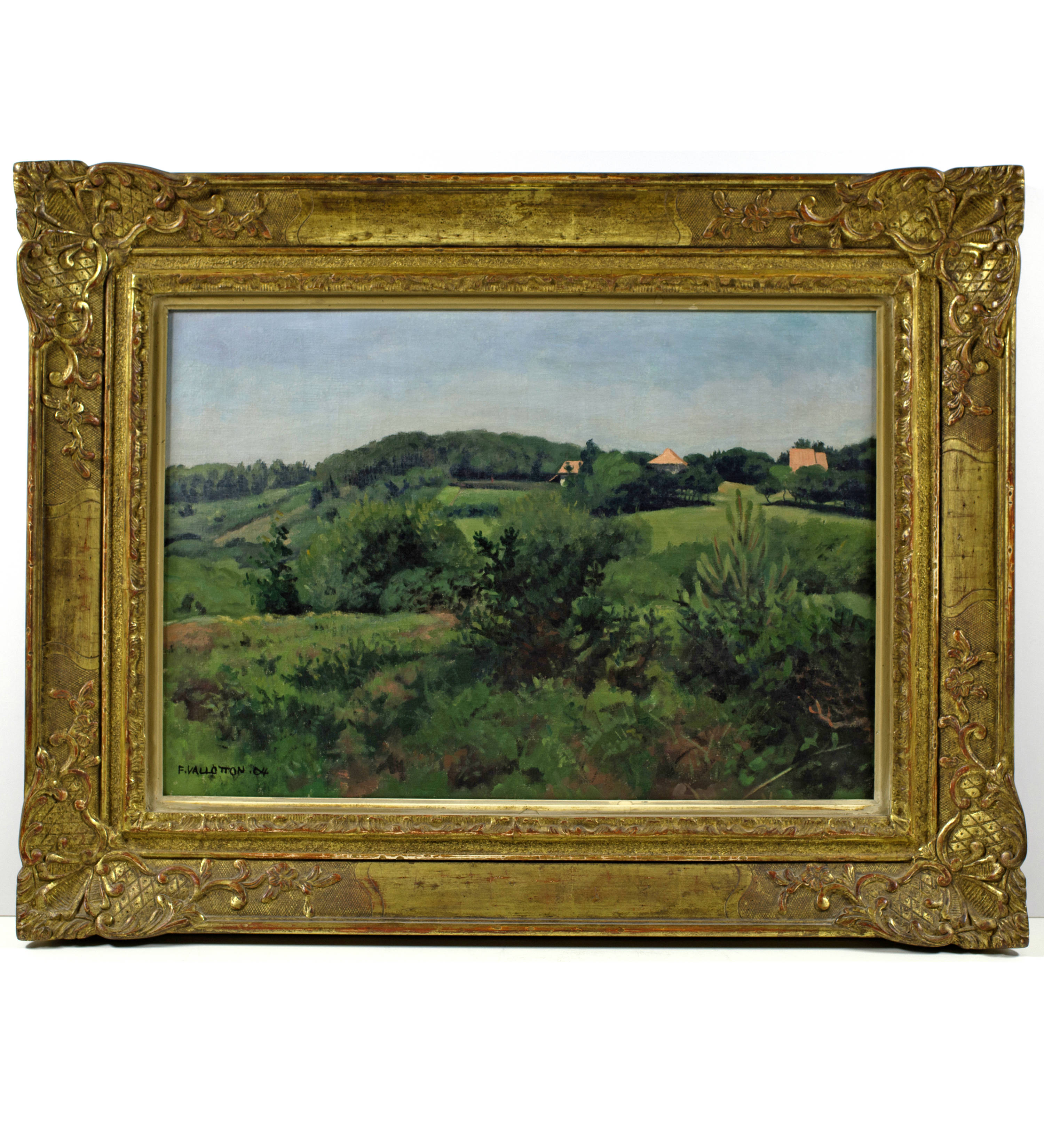
Oil on canvas
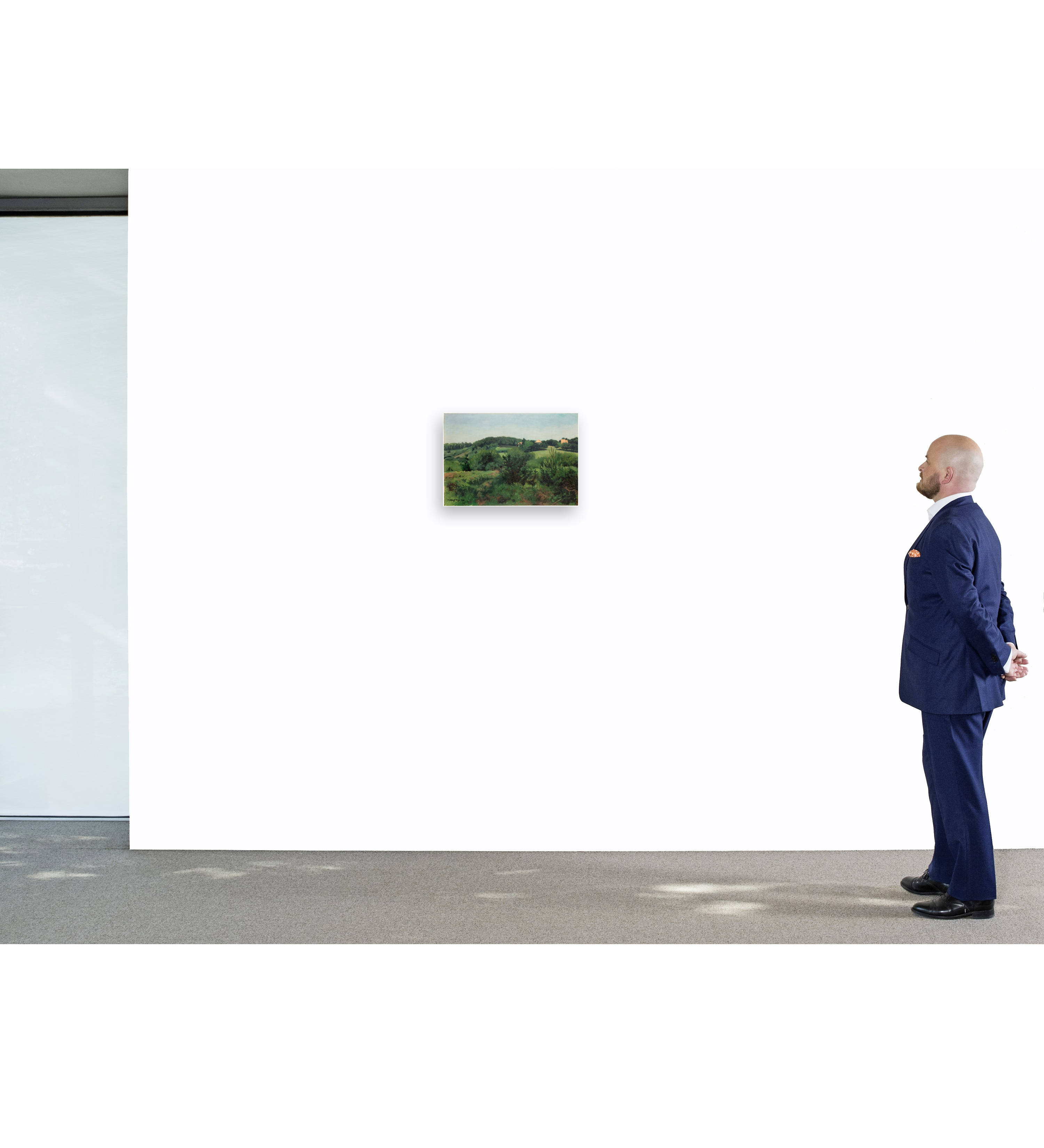
41x59.5 cm
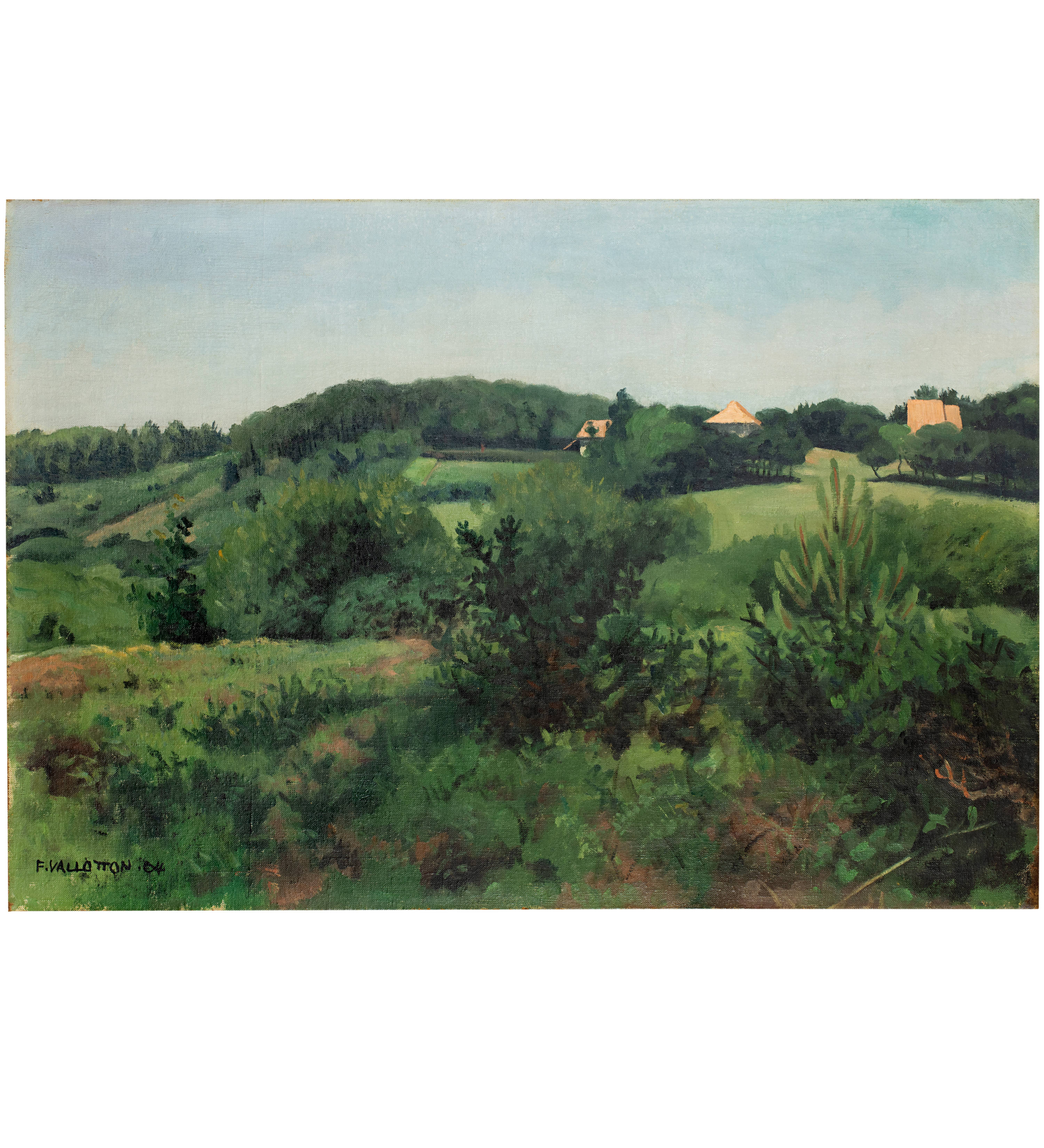
Signed and dated by the artist lower left "F. VALLOTTON. 04"
Marina Ducrey, Félix Vallotton, L'œuvre peint, vol. II, Zurich/Lausanne 2005, no. 511
Livre de raison (Hedy Hahnloser-Bühler), no. 530 (21 études paysage faites à Varengeville)
Private collection Switzerland (1910, mediated by Hedy Hahnloser).
Galerie Neupert, Zurich, Félix Vallotton 1865-1925. Special exhibition, cat. no. 27 (1942)
Galerie Vallotton, Lausanne, Inv. no. 7931, (1943)
Galerie Kurt Meissner, Zurich (1959)
Jean Andereggen, Zurich, purchased there by
Private collection Switzerland (1969)
Rudolf Koella, Das Bild der Landschaft im Schaffen von Félix Vallotton. Wesen, Bedeutung, Entwicklung. Abhandlung zur Erlangung der Doktorwürde an der Philosophischen Fakultät I der Universität Zürich, 1969 (not published), list of works LK 116 (there titled and dated "Paysage, 1904").
Zurich 1909, Künstlerhaus, Félix Vallotton, Paris, cat. no. 33
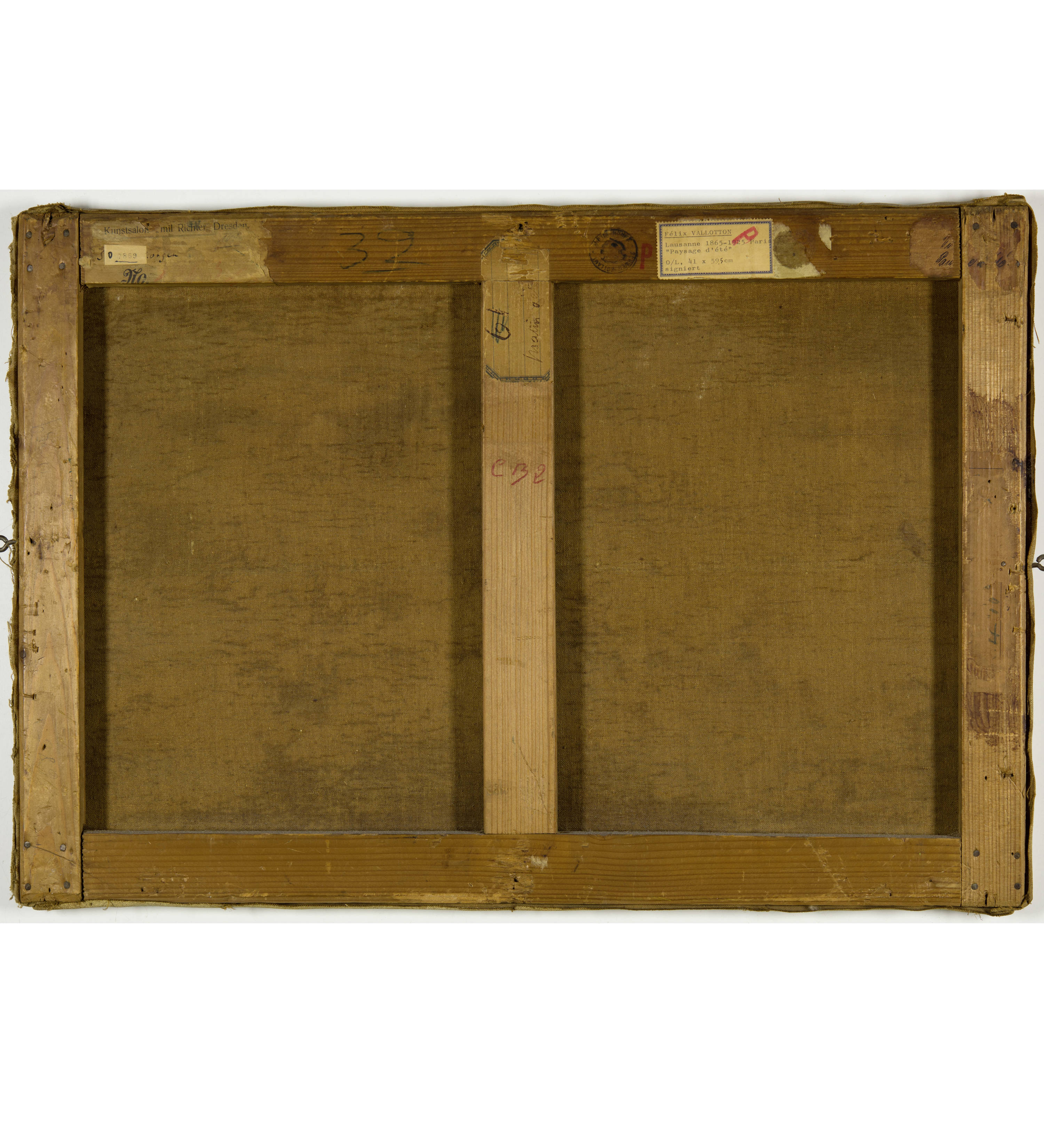
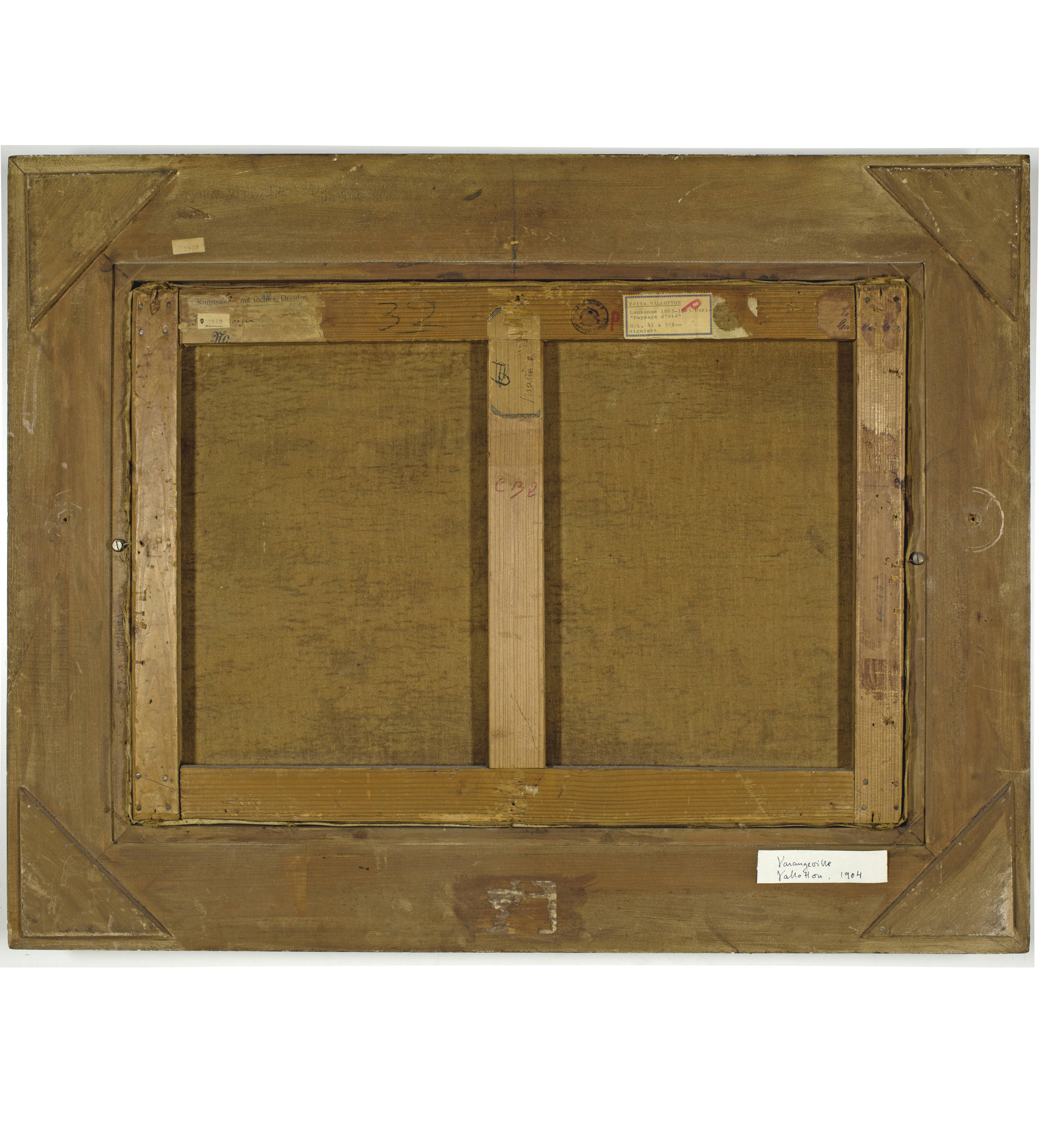
Munich/Dresden 1910, Moderne Galerie (Heinrich Thannhauser)/Kunstsalon Emil Richter (with label)
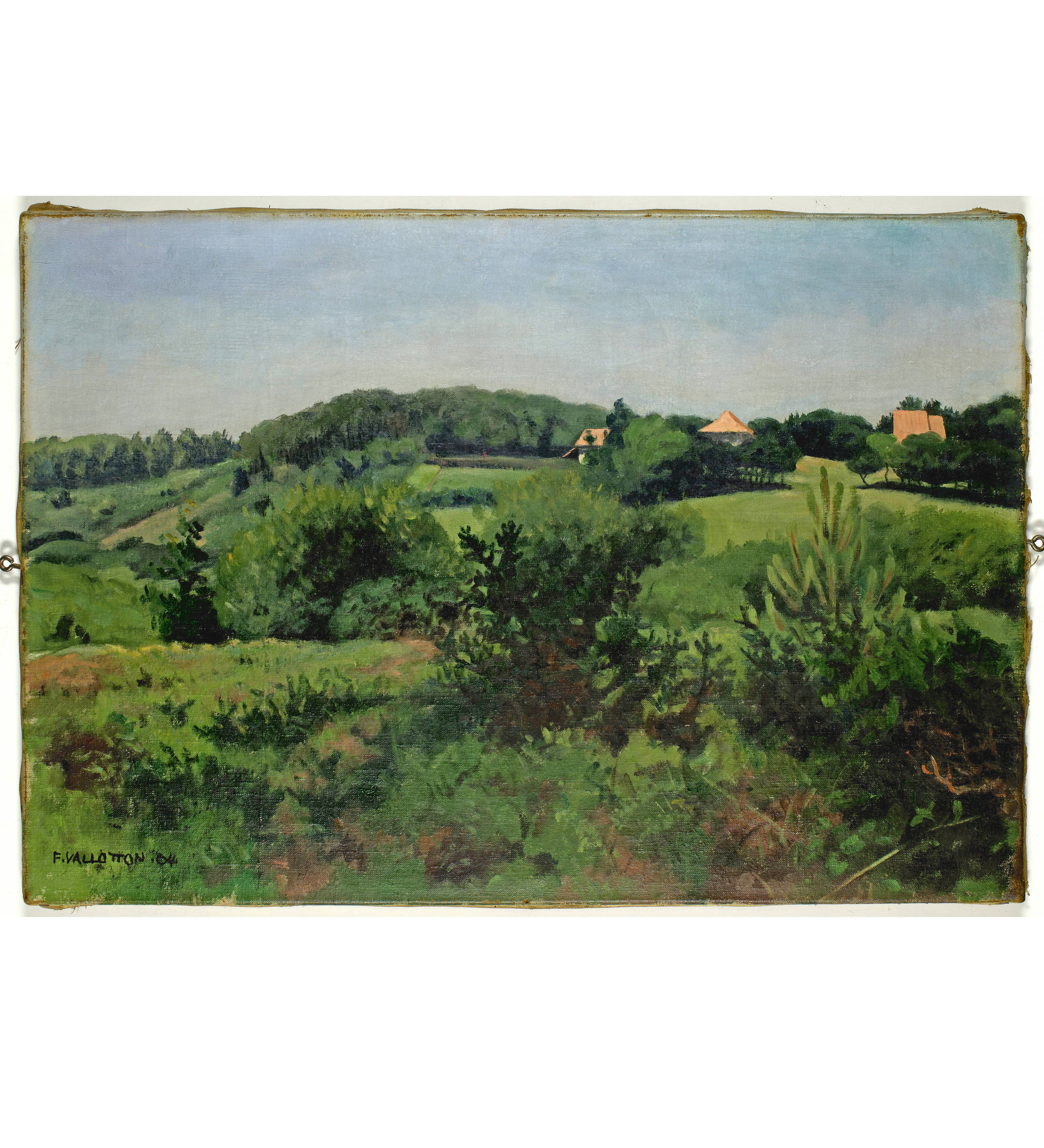
On the original stretcher, in the old nailing. In very good condition and fresh in colour
The work can be counted among the earliest works from the so-called group of "paysages composés", a term Vallotton himself used. According to Dr Rudolf Koella's dissertation on "Das Bild der Landschaft im Schaffen von Félix Vallotton" (The Image of Landscape in the Work of Félix Vallotton), these appear from 1903 onwards with the pictures painted from exact preliminary sketches in nature and then later in the studio according to memory. The term does not refer to the actual genre of the works, but to their working method. In the painting offered here, the roofs of the farmhouses stand out strongly against the lush green of the meadows and the trees, so that it seems as if they are lit up directly by the sun's rays. According to Marina Ducrey, the author of the catalogue raisonné, one of these houses is supposed to be the one Vallotton rented for the summer. According to Félix Vallotton's "Livre de raison", a group of landscape paintings was created in the area of Varengeville, to which the present work can be counted. Varengeville-sur-Mer is located in Normandy and, with its beach, cliffs and lush vegetation, was a popular subject and place to stay among artists such as Claude Monet, Joan Miró and Georges Braque, who is buried there.
1904
Öl auf Leinwand
41x59,5 cm
Unten links vom Künstler signiert und datiert "F. VALLOTTON. 04"
Marina Ducrey, Félix Vallotton, L’œuvre peint, Band II, Zürich/Lausanne 2005,
Livre de raison (Hedy Hahnloser-Bühler),
Privatsammlung Schweiz (1910, vermittelt durch Hedy Hahnloser)
Galerie Neupert, Zürich, Félix Vallotton 1865-1925. Sonderausstellung,
Galerie Vallotton, Lausanne, Inv.
Galerie Kurt Meissner, Zürich (1959)
Jean Andereggen, Zürich, dort angekauft von
Privatsammlung Schweiz (1969)
Rudolf Koella, Das Bild der Landschaft im Schaffen von Félix Vallotton. Wesen, Bedeutung, Entwicklung. Abhandlung zur Erlangung der Doktorwürde an der Philosophischen Fakultät I der Universität Zürich, 1969 (nicht publiziert), Werkliste LK 116 (dort betitelt und datiert "Paysage, 1904")
Zürich 1909, Künstlerhaus, Félix Vallotton, Paris,
München/Dresden 1910, Moderne Galerie (Heinrich Thannhauser)/Kunstsalon Emil Richter (mit Etikett)
Auf dem originalen Chassis, in der alten Nagelung. In sehr guter und farbfrischer Erhaltung
Das Werk kann zu den frühsten Werken aus der sogenannten Gruppe der "paysages composés", ein Begriff wie ihn Vallotton selbst verwendet hat, gezählt werden. Diese treten gemäss der Dissertation von Dr. Rudolf Koella über "Das Bild der Landschaft im Schaffen von Félix Vallotton" ab 1903 mit den nach exakten Vorzeichnungen in der Natur und dann später im Atelier nach der Erinnerung gemalten Bildern auf. Der Ausdruck bezeichnet nicht die eigentliche Gattung der Werke, sondern deren Arbeitsweise. Im hier angebotenen Gemälde stechen die Dächer der Bauernhäuser stark aus dem satten Grün der Wiesen und der Bäume hervor, so dass es scheint, als würden sie direkt von Sonnenstrahlen erleuchtet werden. Gemäss Marina Ducrey, der Autorin des Werkkataloges, soll eines dieser Häuser das für den Sommer von Vallotton gemietete Haus sein. Nach dem "Livre de raison" von Félix Vallotton entstand eine Gruppe von Landschaftsbildern in der Gegend von Varengeville, zu welchen das vorliegende Werk gezählt werden kann. Varengeville-sur-Mer befindet sich in der Normandie und war mit seinem Strand, den Klippen und der üppigen Vegetation unter Künstlern wie Claude Monet, Joan Miró sowie Georges Braque, welcher dort beerdigt ist, ein beliebtes Sujet und ein beliebter Aufenthaltsort